Maria couldn’t make it last night, so it was just Andrew, John, and I.
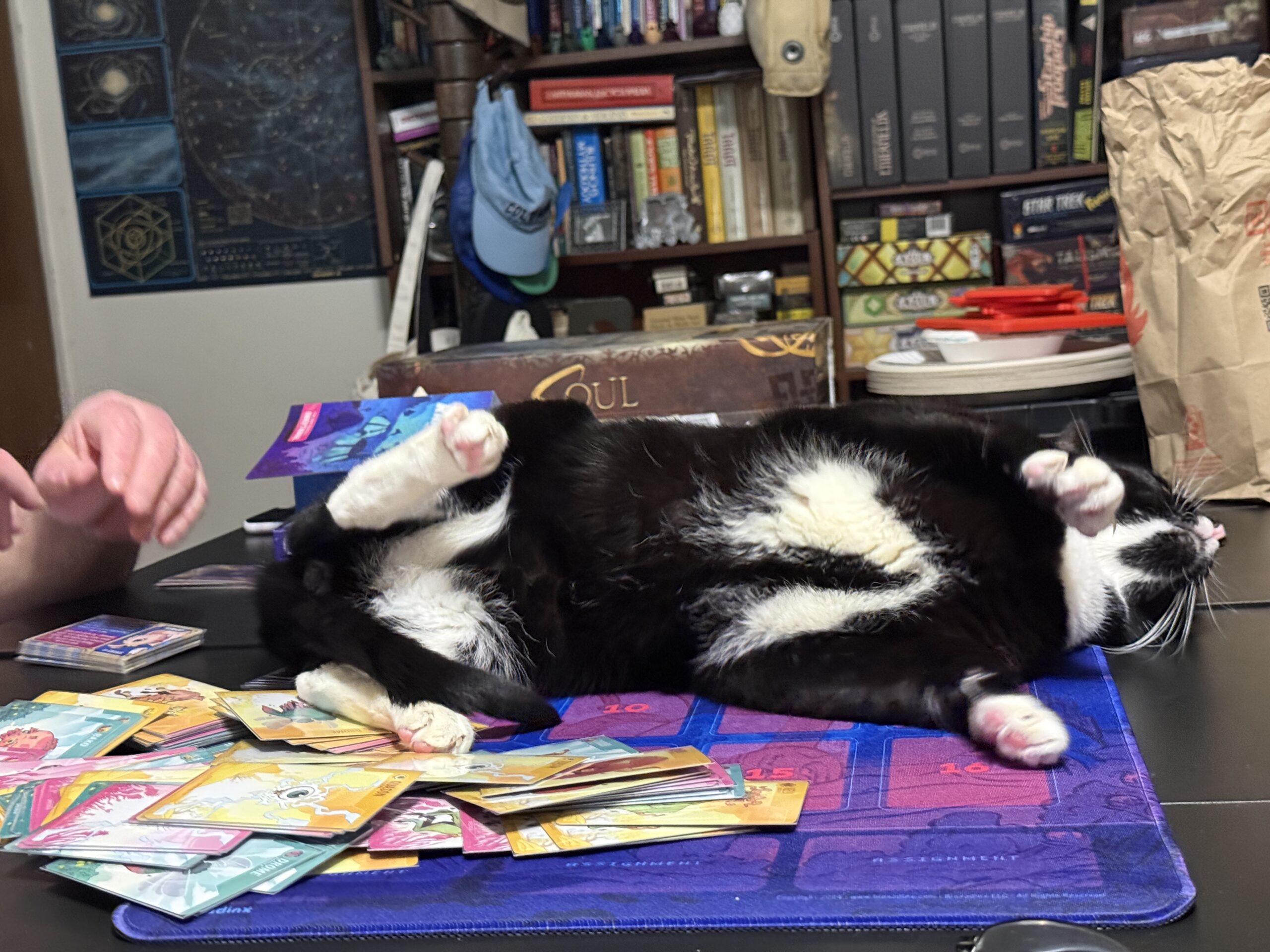
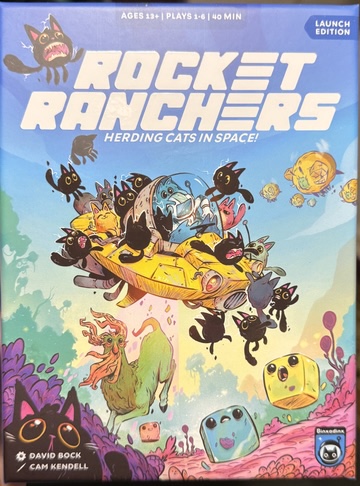
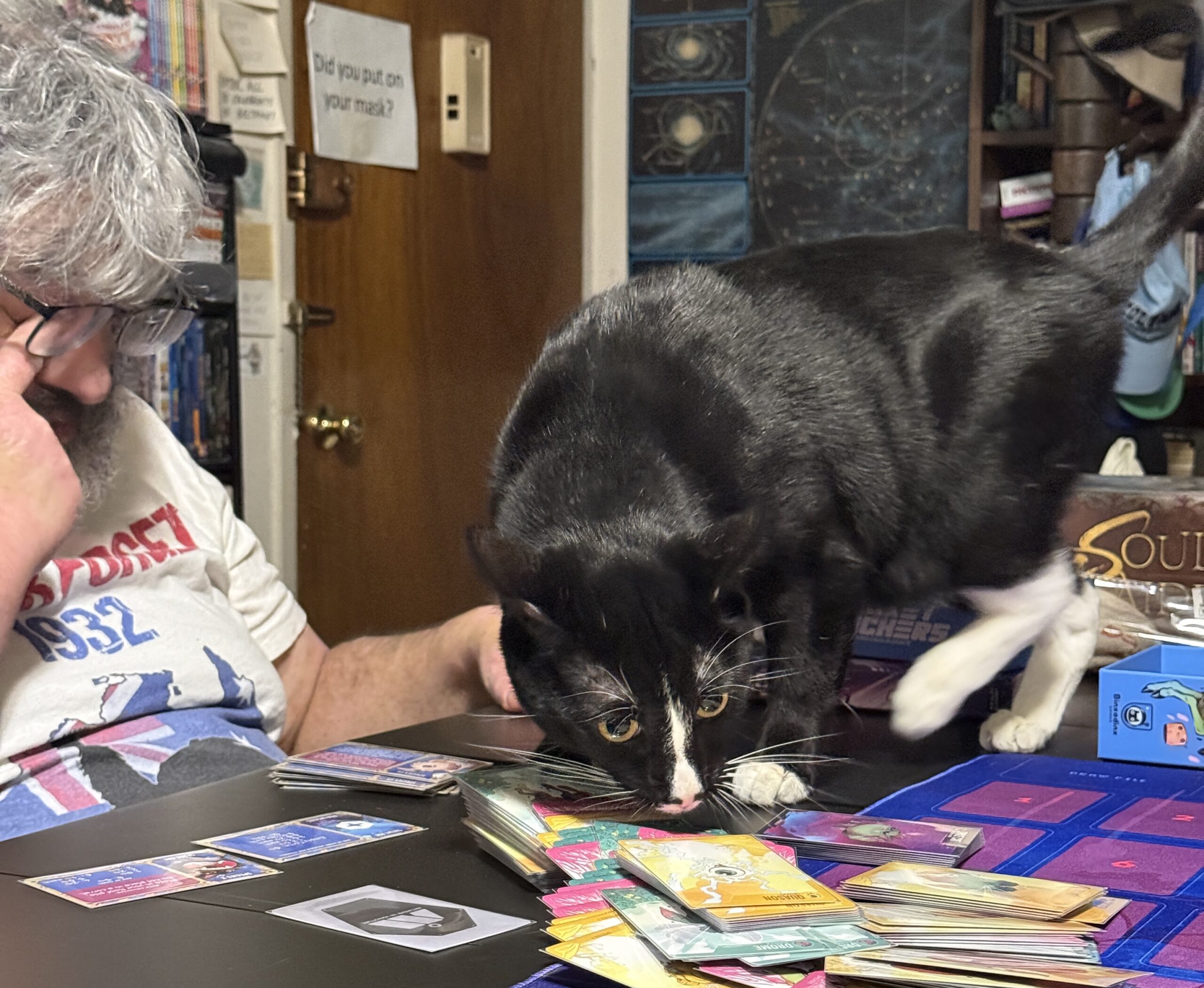
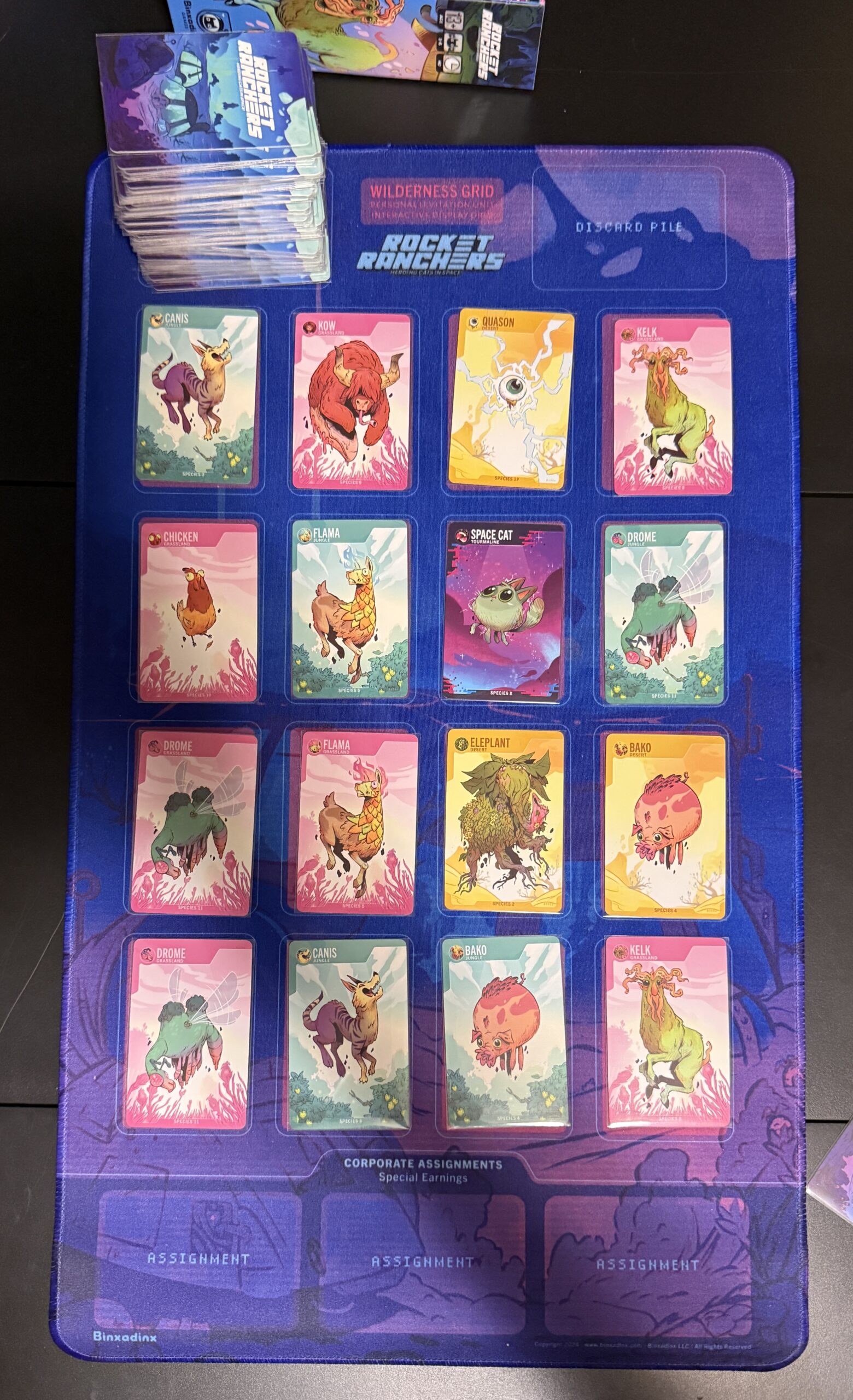
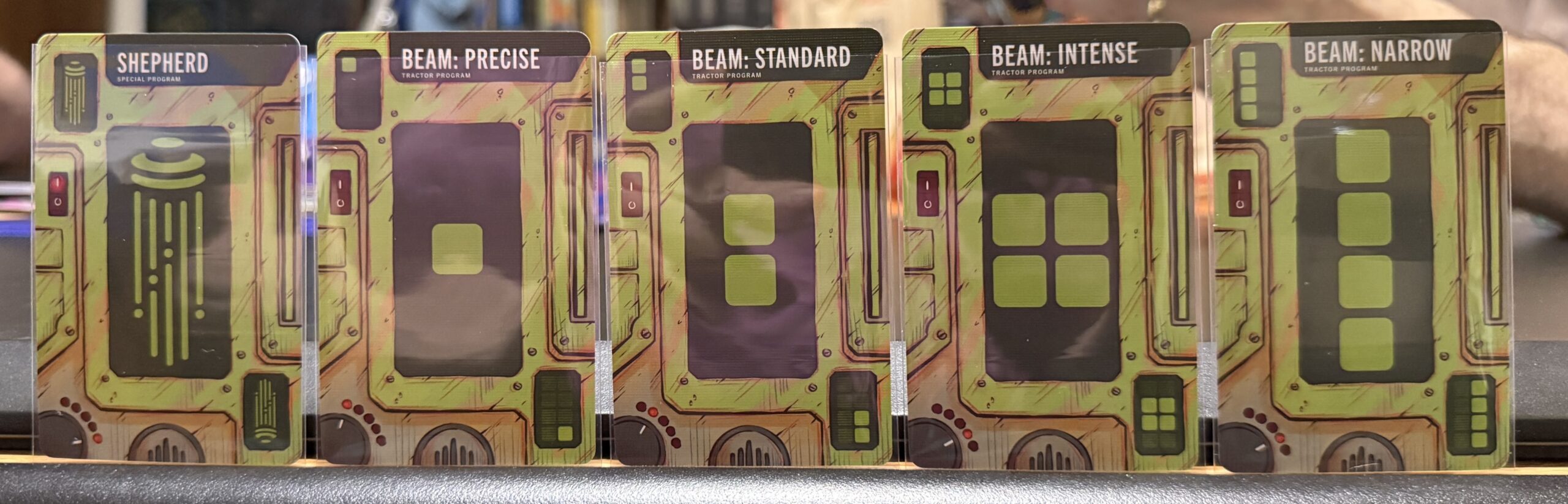
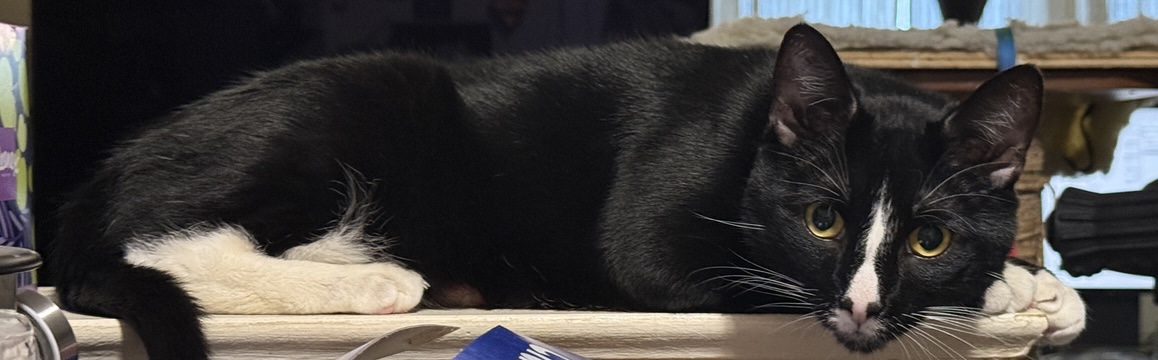
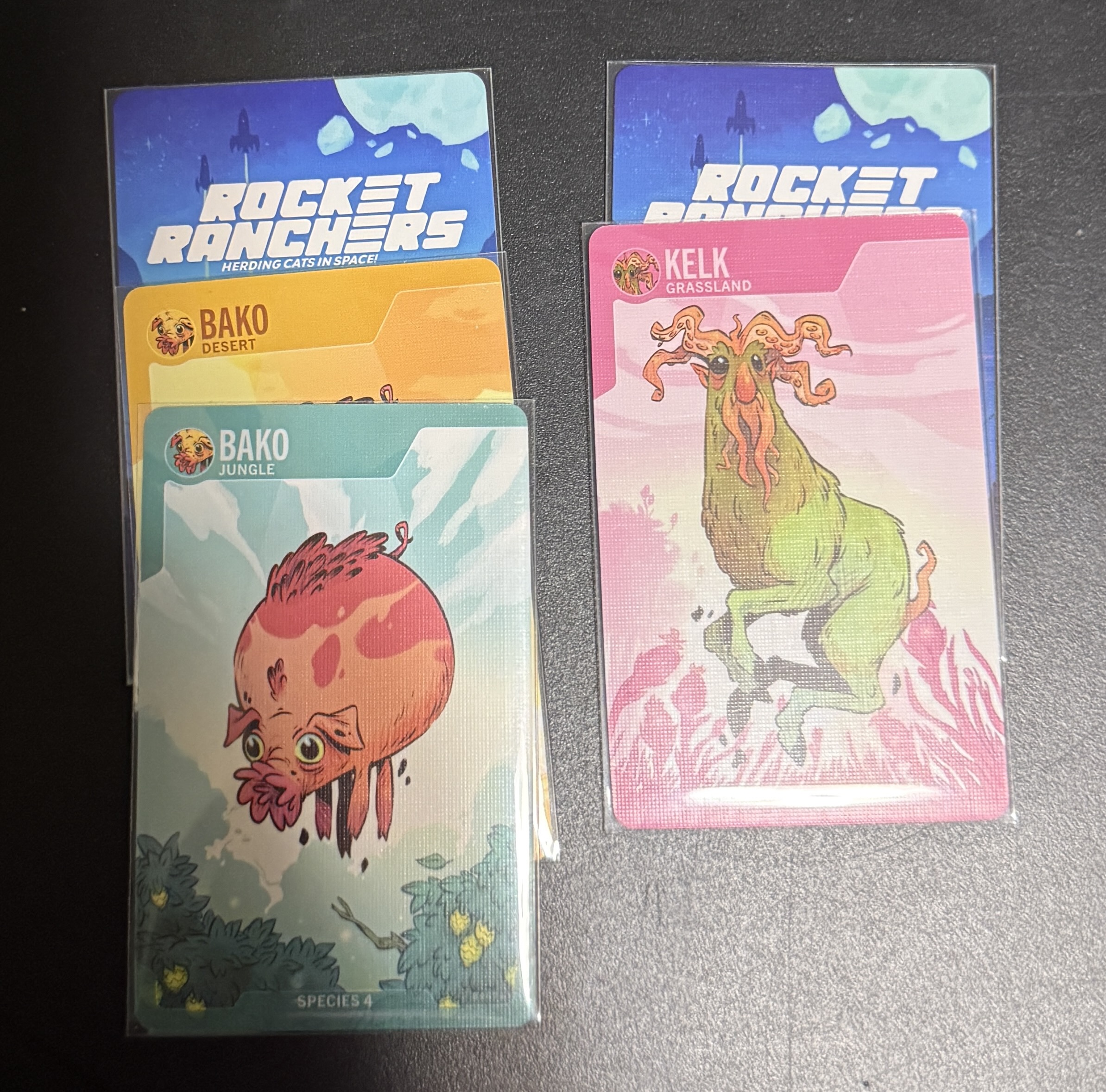
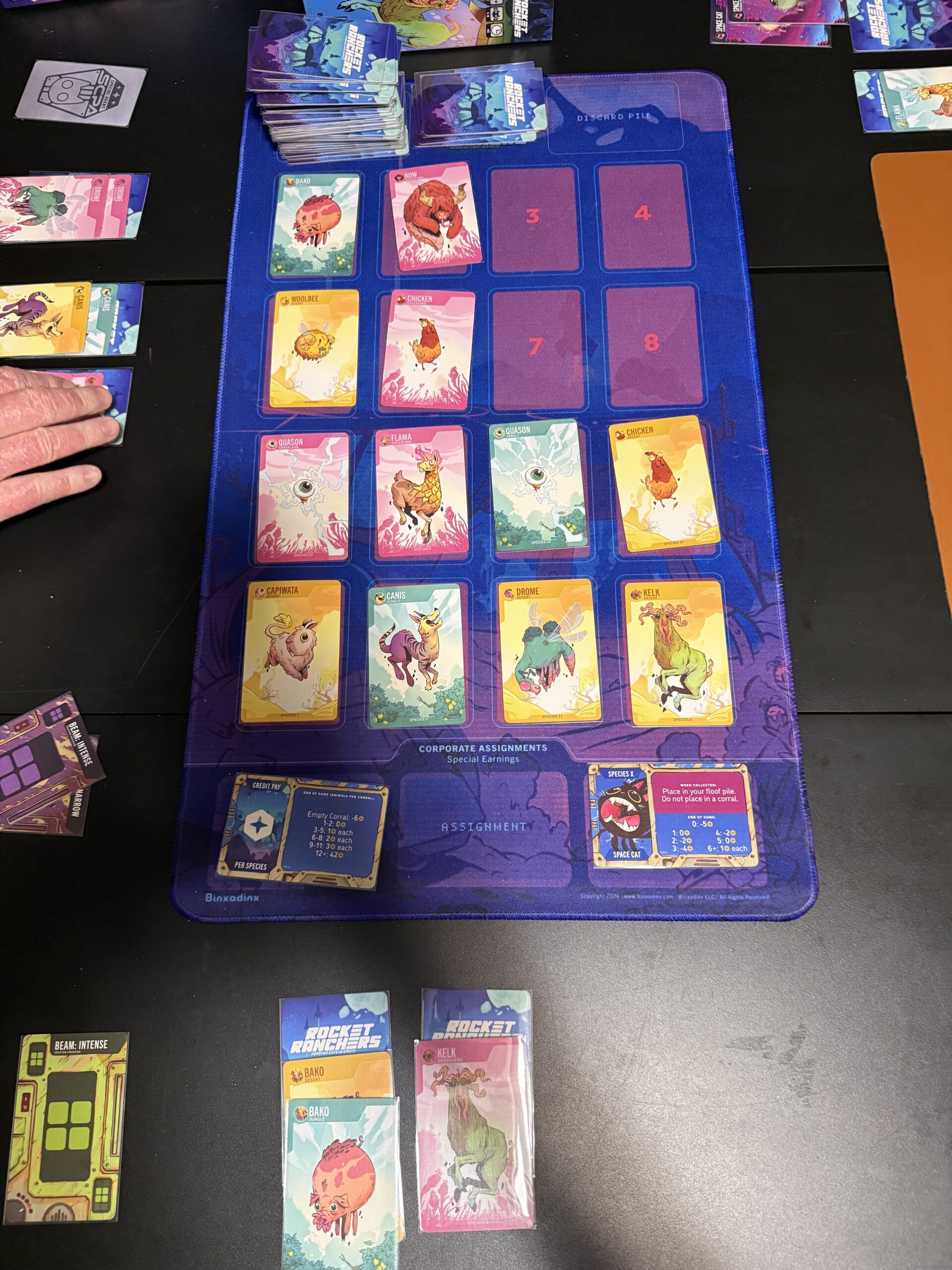
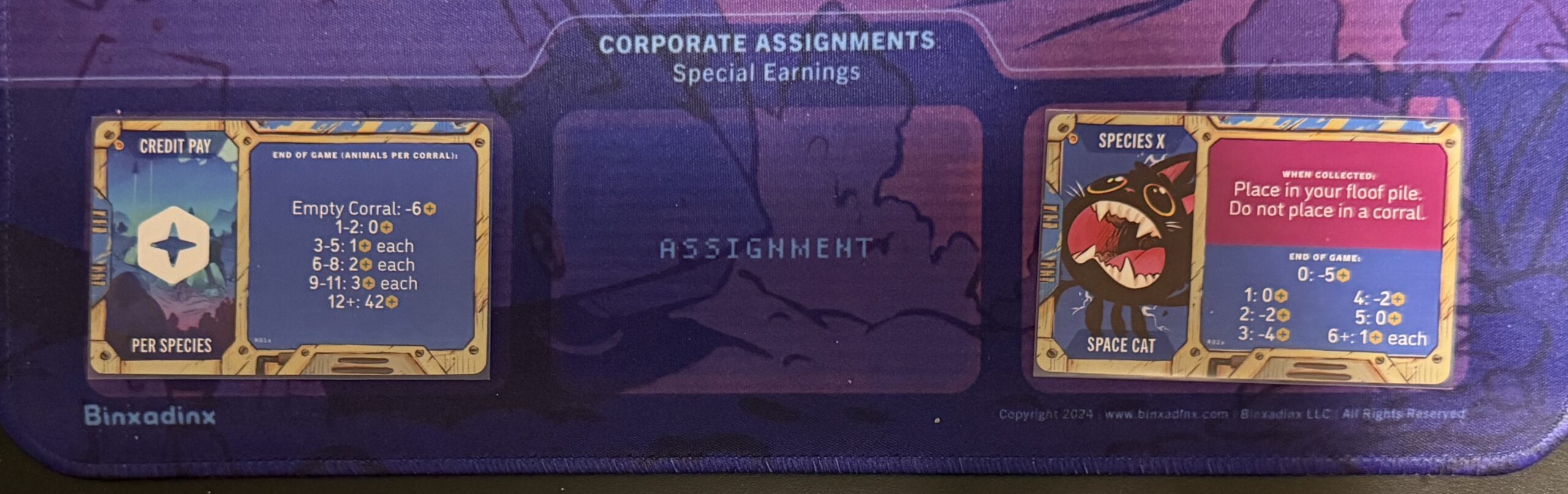
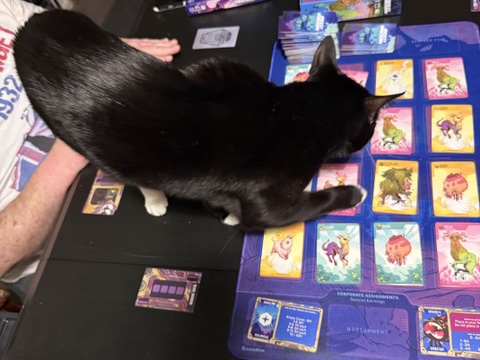
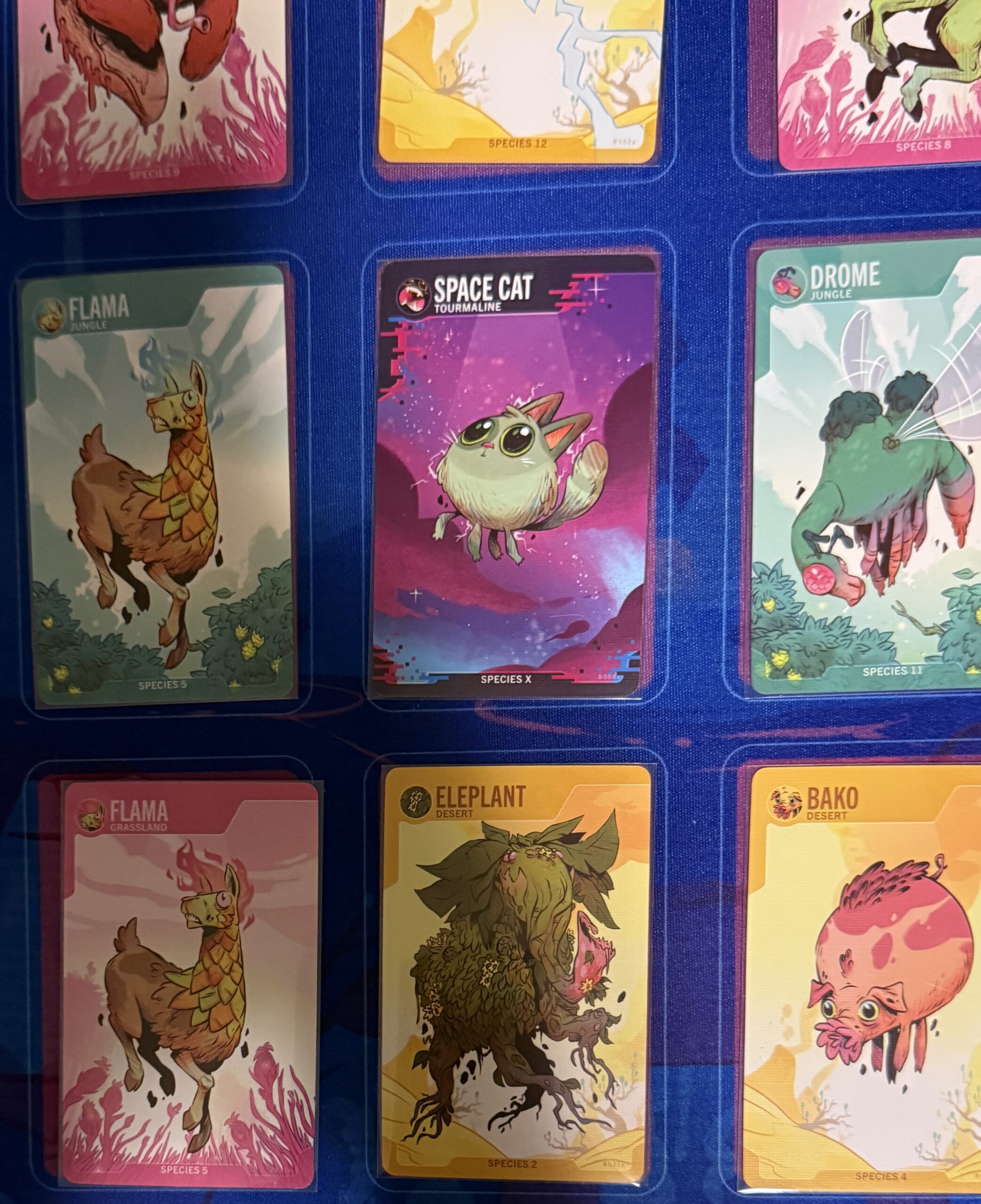
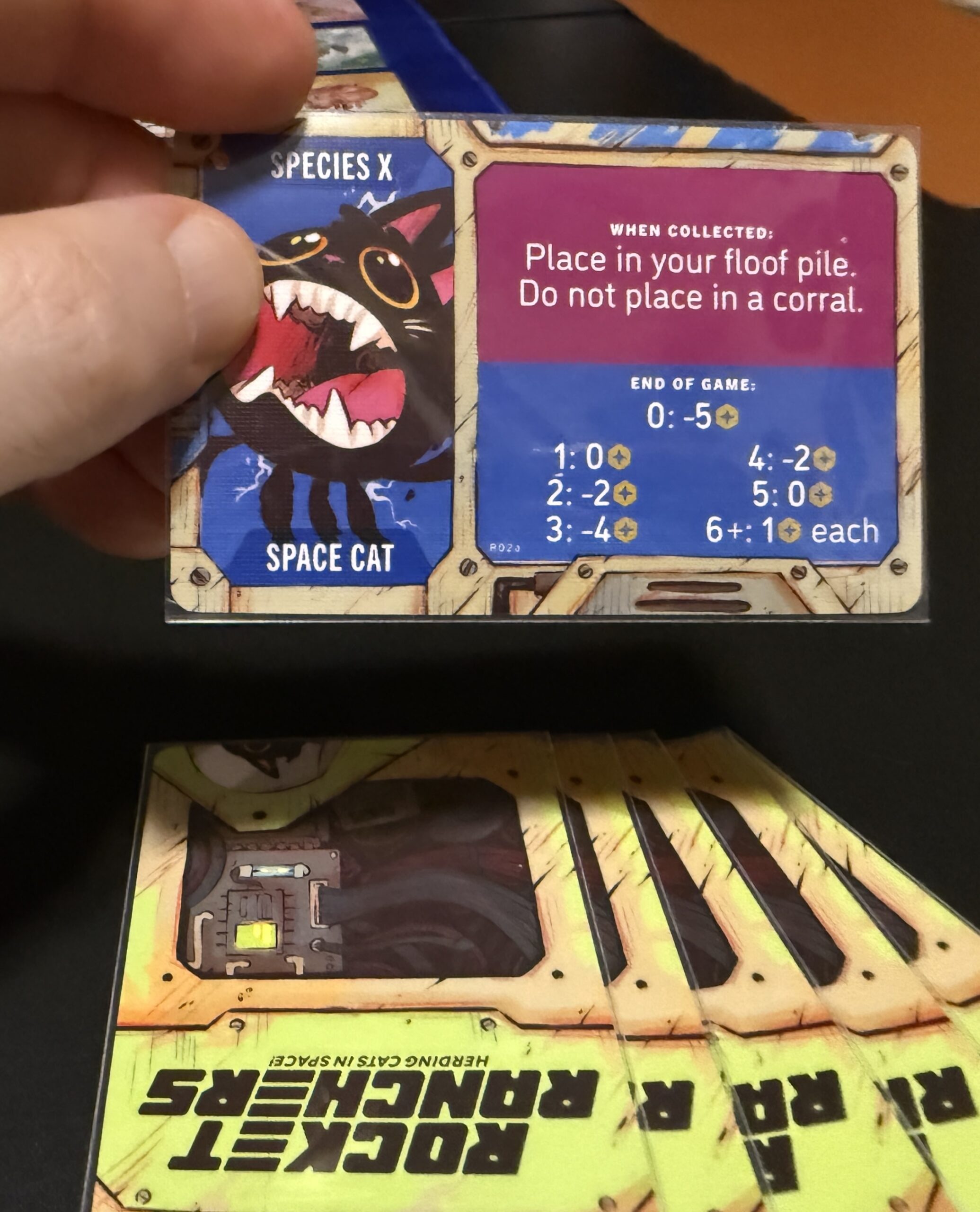
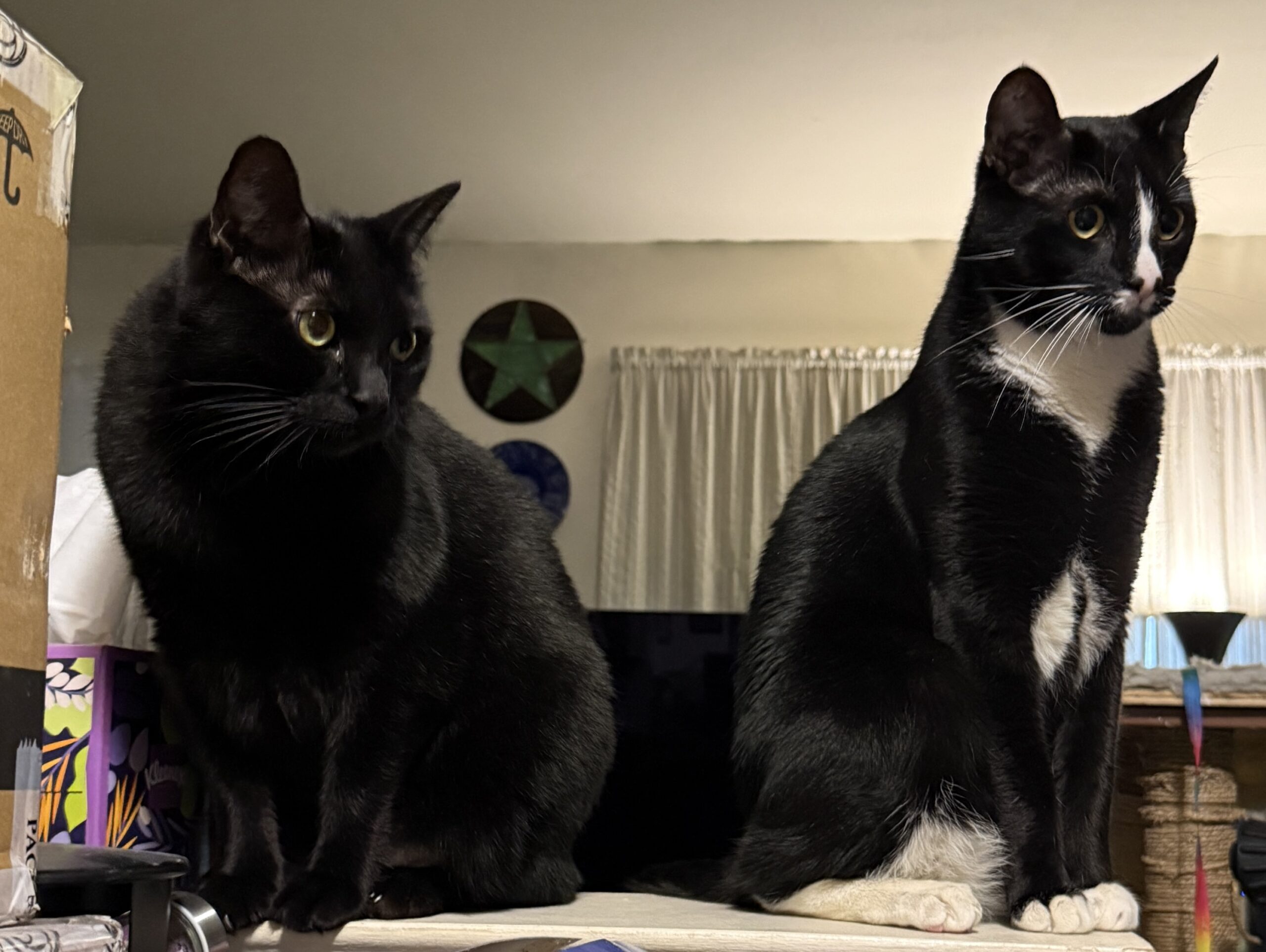
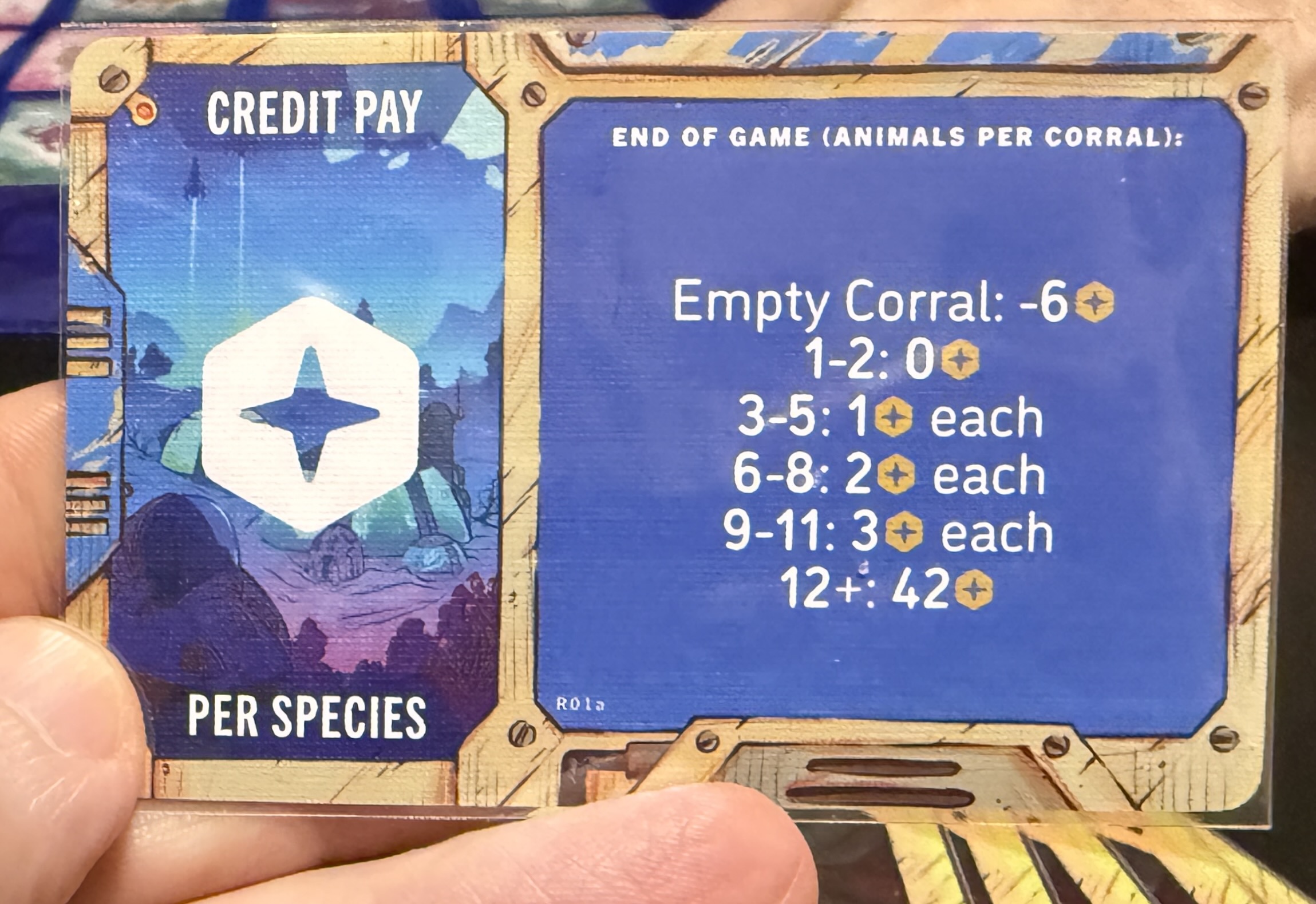
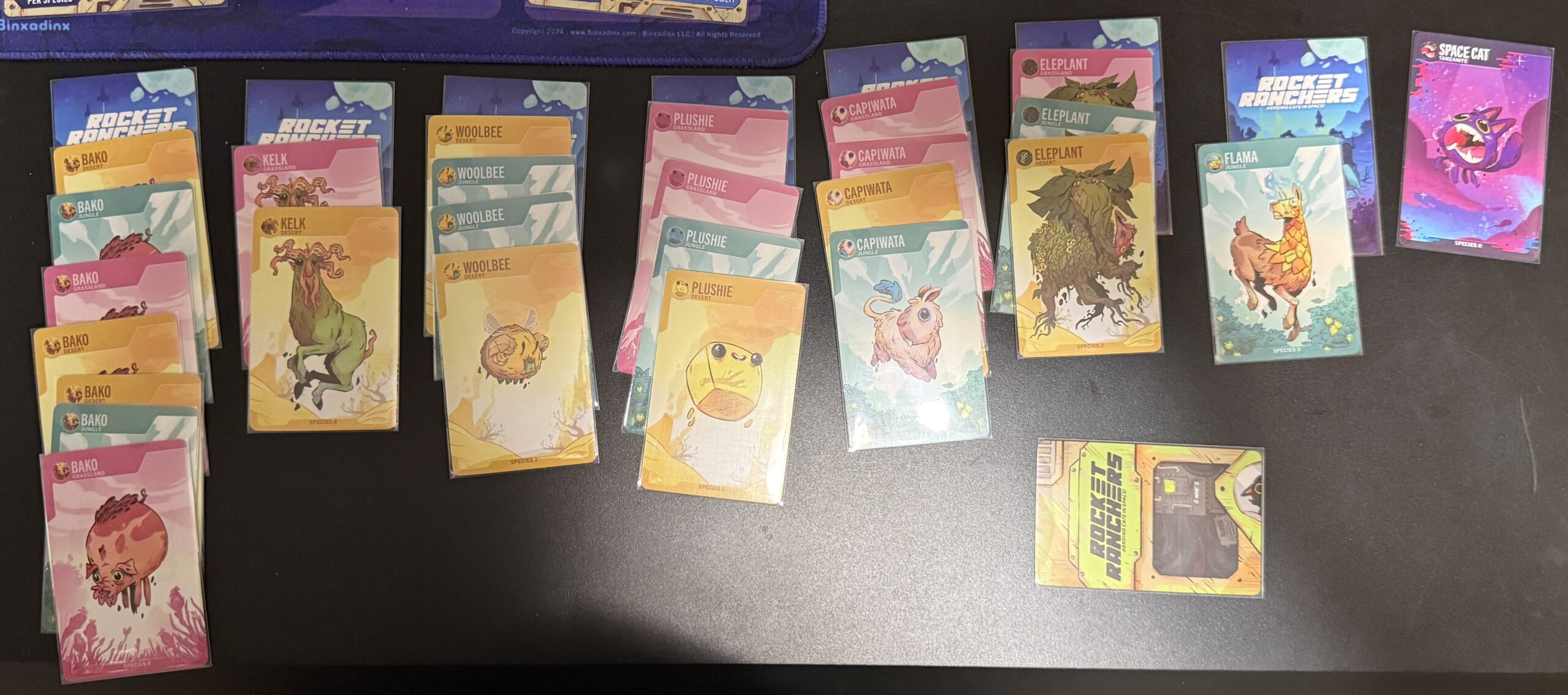
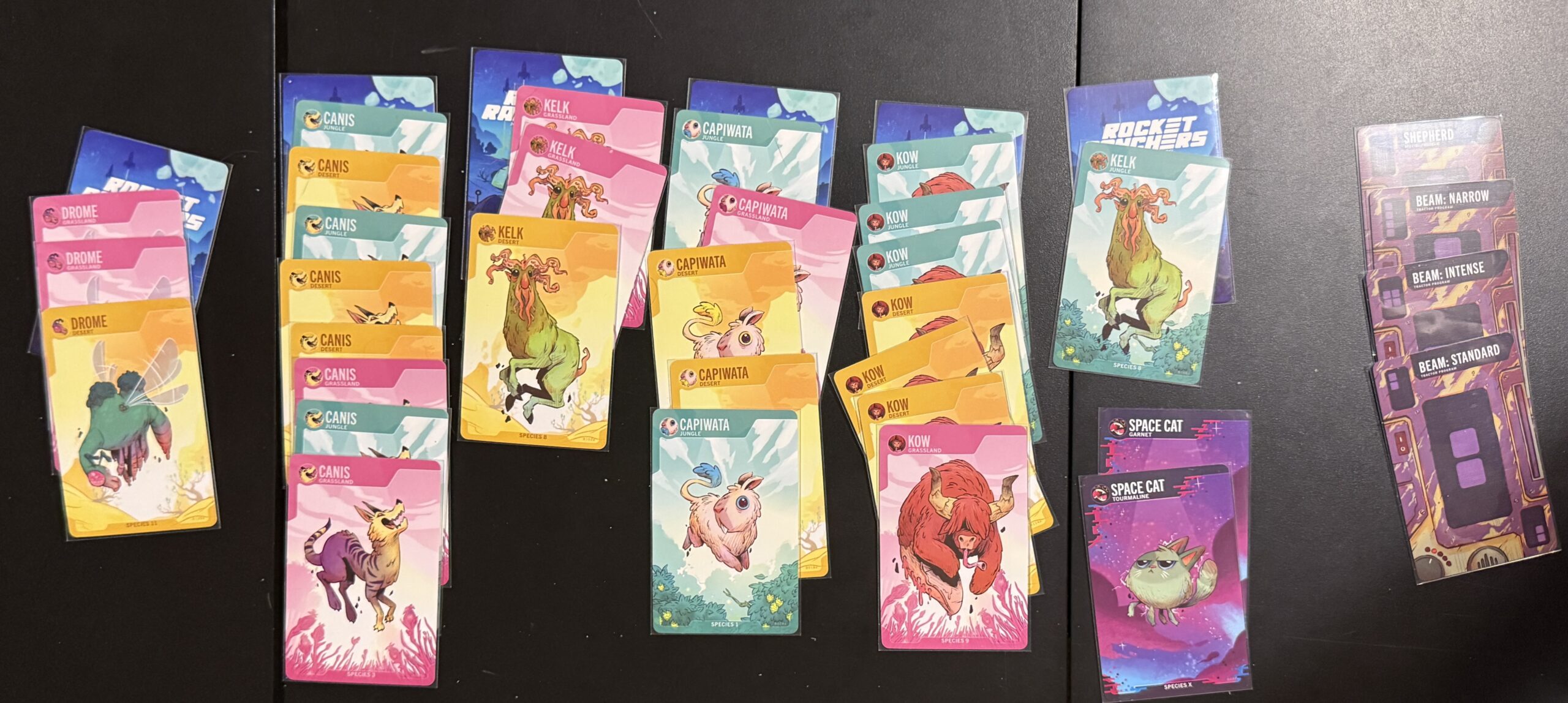
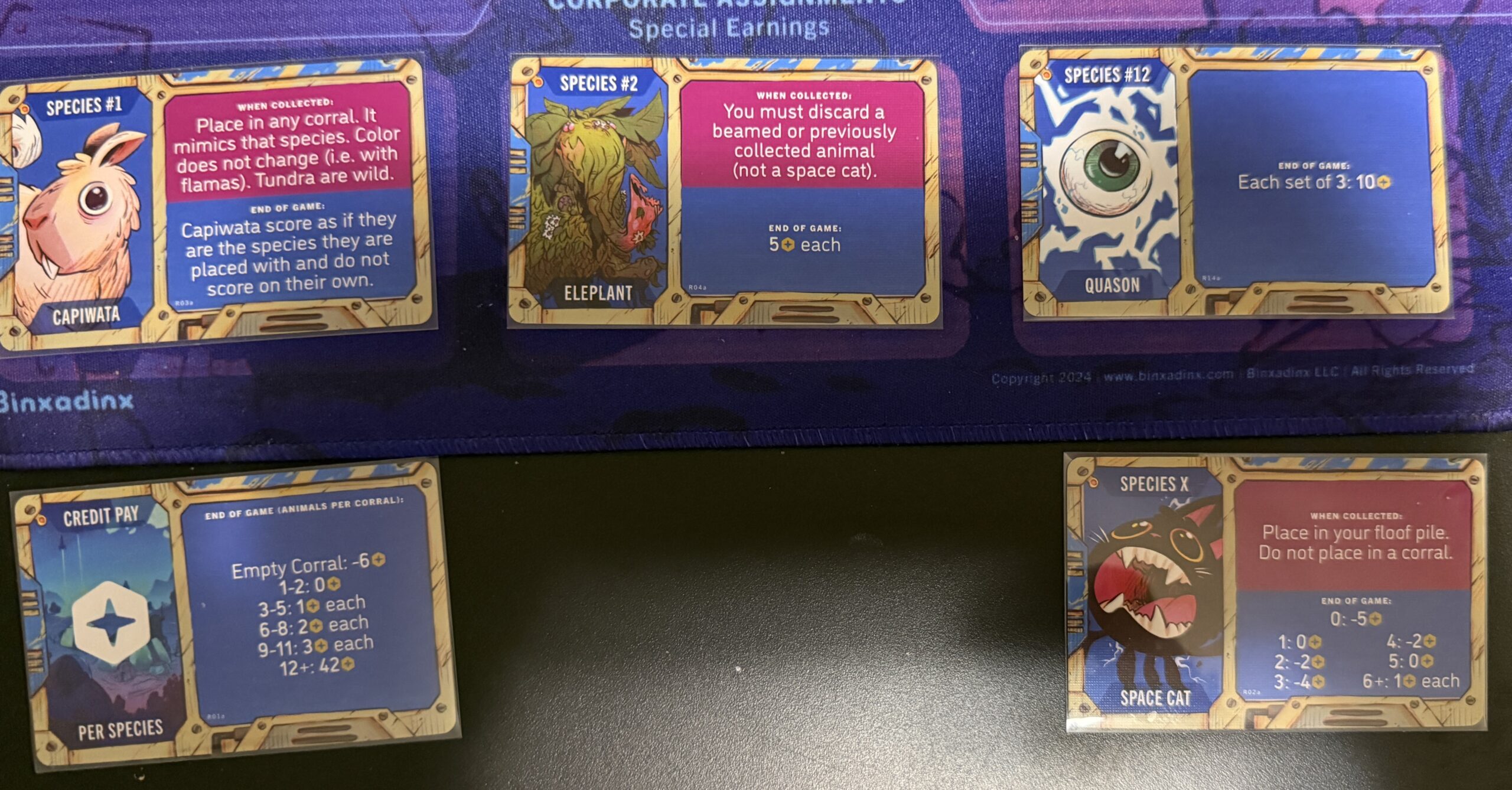
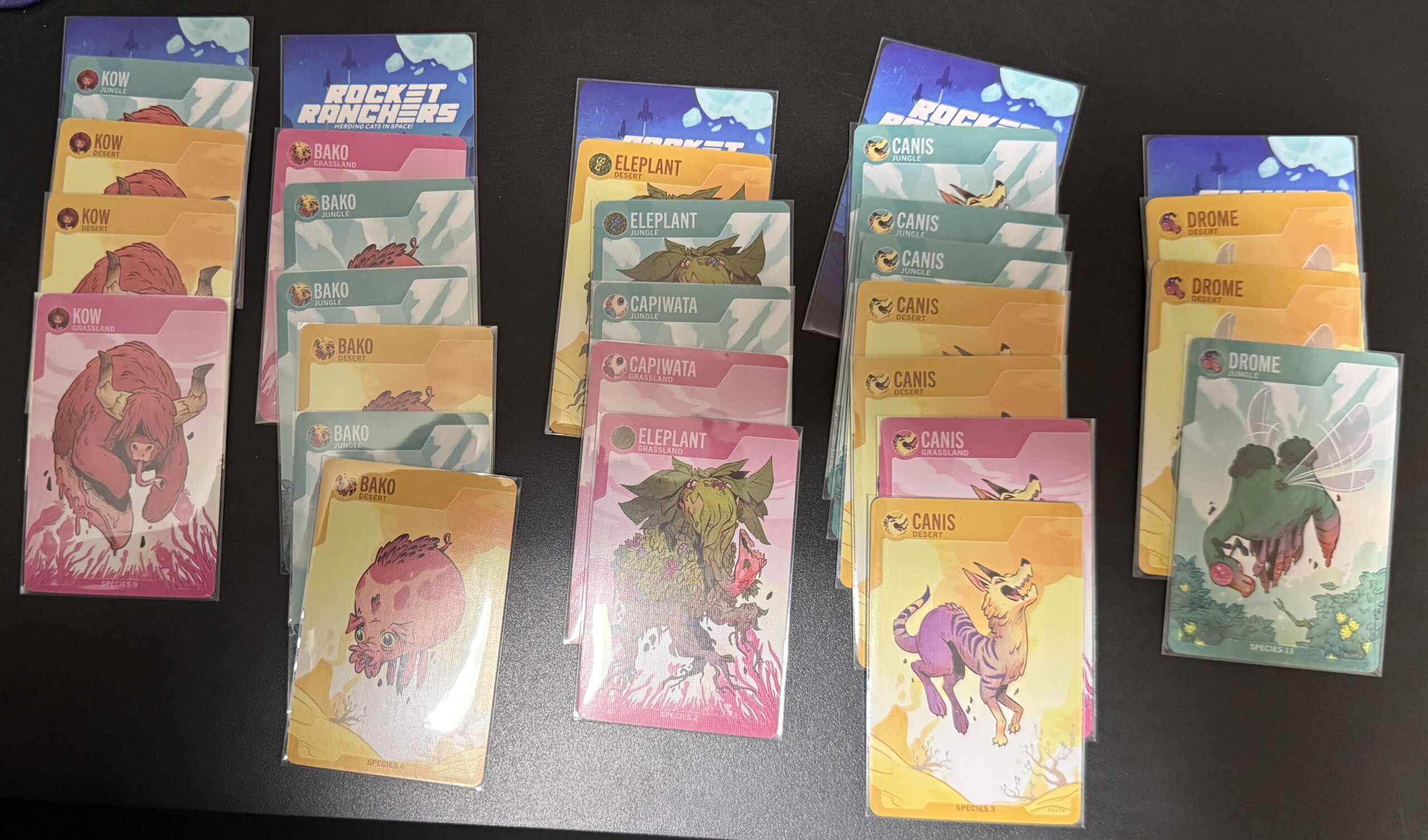
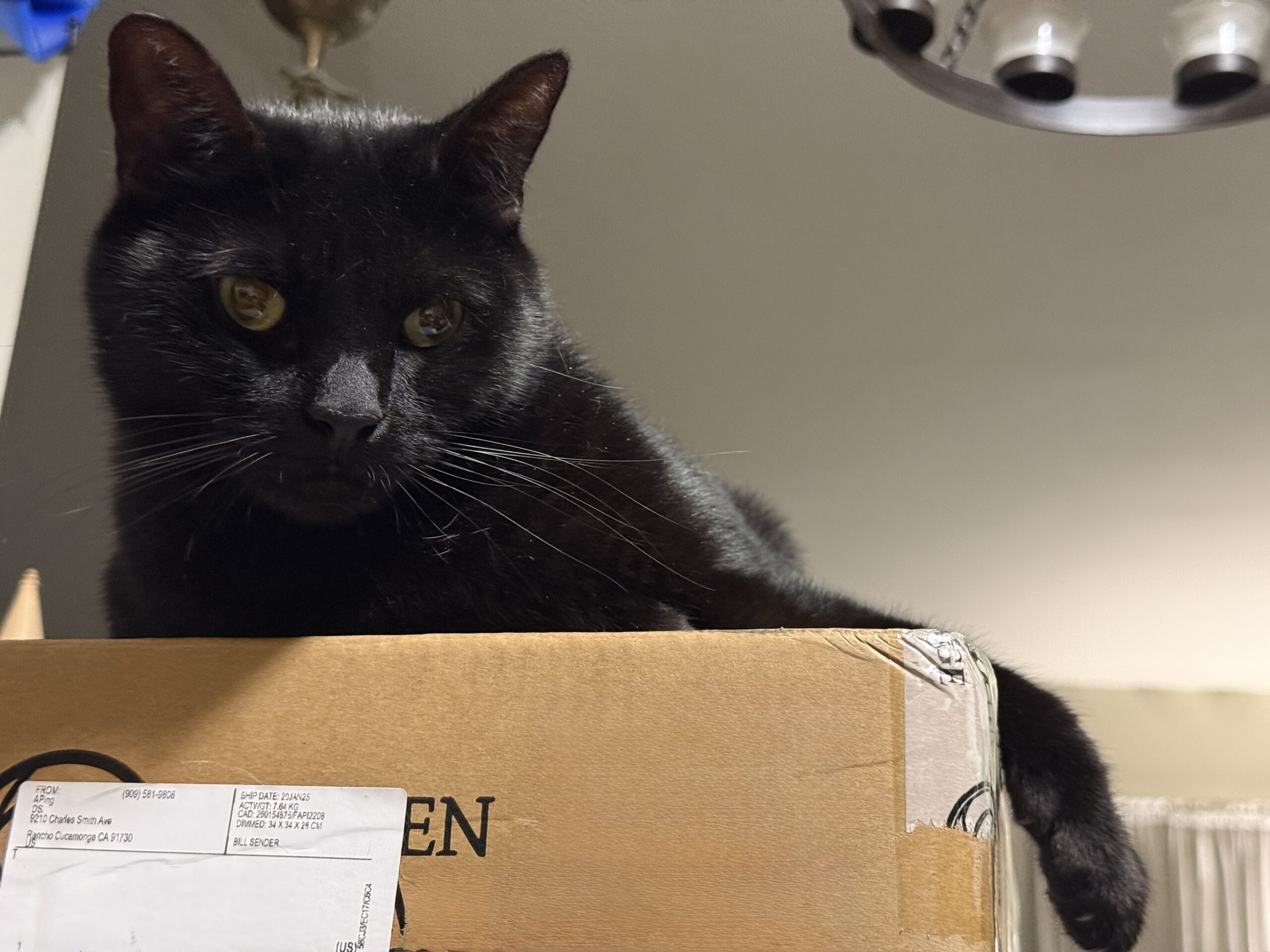
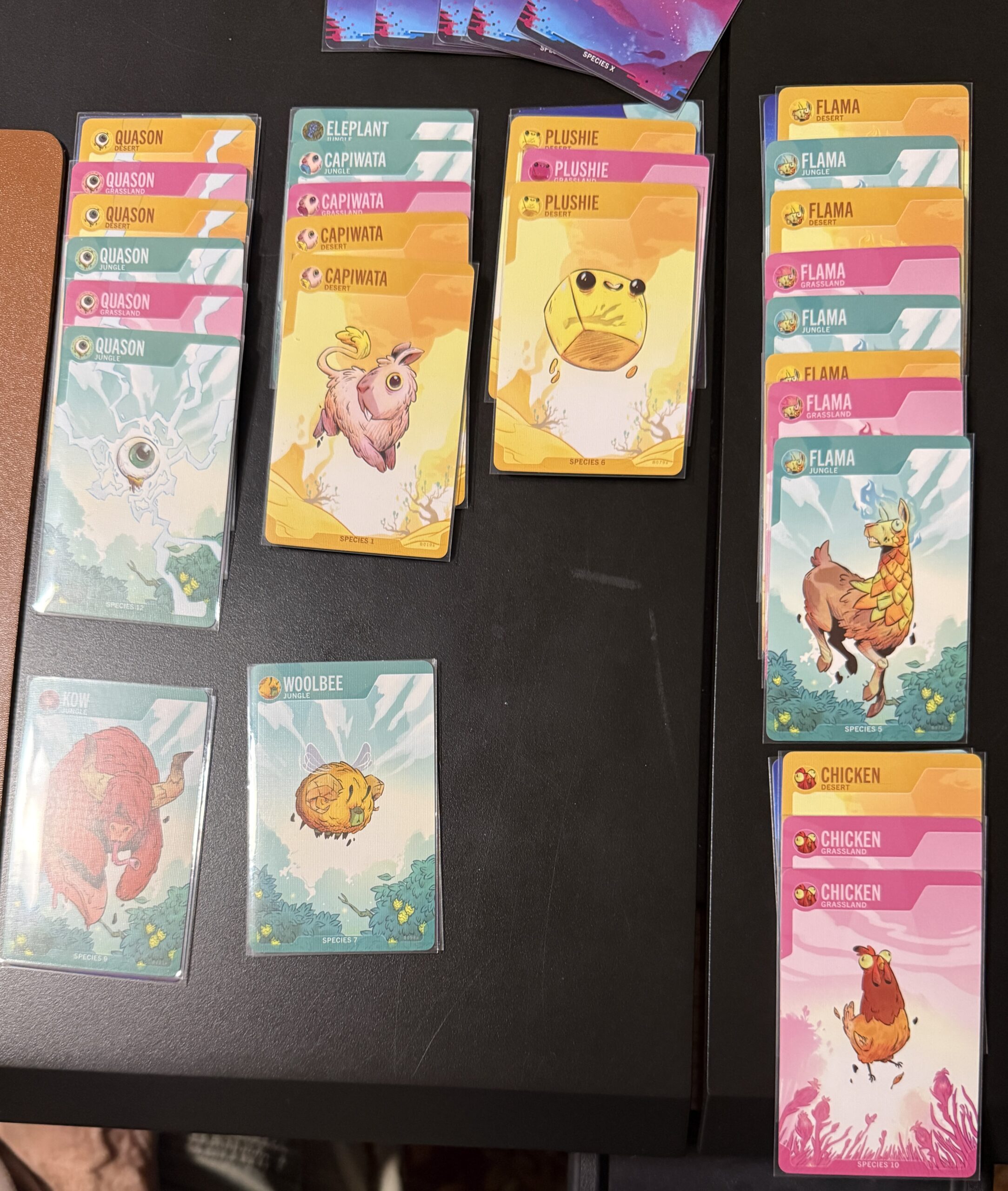
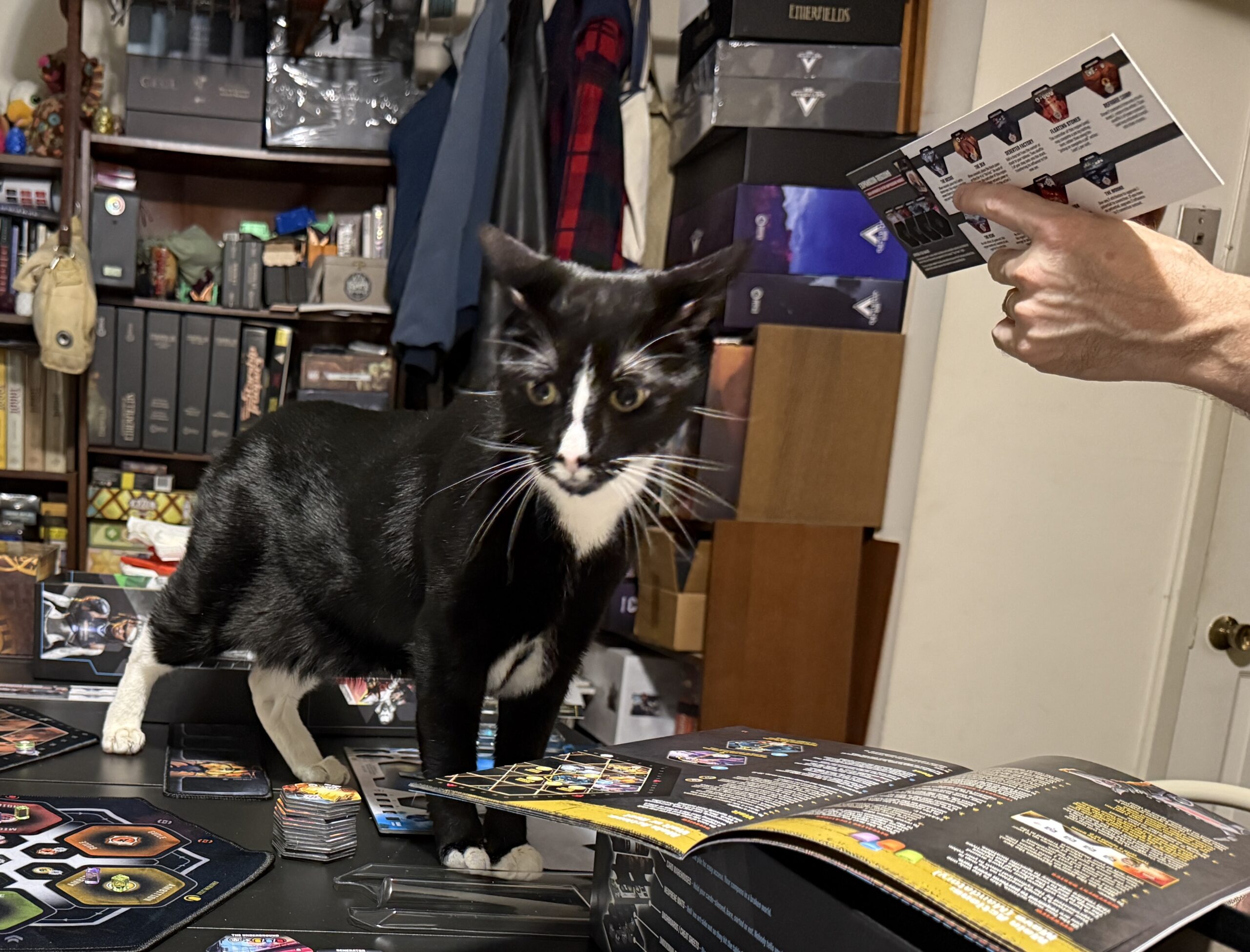
Oops! I forgot an important attendee, Shuba. Perhaps in reaction to Maria’s absence, he was especially attention-seeking.Our first game was Rocket Ranchers, a card-based set-collection game.As John explained the rules to us, Shuba offered to assist. After all, the subtitle of the game was “Herding Cats in Space.”Players collect animal cards from this central board area. For the most part, they collect groups of cards at one time.Every player has a deck of action cards. When it’s their turn, they play an action card to pick up the animal cards in the pattern shown on the card. The Shepherd card lets them swap two cards on the board before they beam up any animals.Shuba is philosophically opposed to any form of “beaming up.” He’s quite content where he is.Every player starts with one face-down card as a starting “corral.” When you collect cards, you can put one or more of them face down as a new corral to hold a given species. Otherwise, you place the cards you’ve gathered into a corral with a matching species. Here you see my play area near the start of the game. I’ve placed a couple of Bako cards on my first corral, and started a new corral for Kelks.In case it’s not clear: Here, a player has just used a “Beam: Intense” card to pick up a 2×2 group of cards, which they must place into their tableau. After that, the central board is immediately re-filled.The rules for our first game. On the left you can see the standard end-game scoring for the corrals you’ve collected. The more animals you’ve gathered into a corral, the more points it’s worth.Shuba is confused. Isn’t there a rule involving Space Cats? He doesn’t see any.There are Space Cats, Shuba, just not in those particular cards. Here’s a picture of the board at a different time. If a Space Cat is within, or adjacent to, a group of cards you collect, you pick up the Space Cat as well. They don’t go into a corral; you keep them in a separate “floof pile.”The end-game scoring for Space Cats is a bit complicated. If you have none, you lose 6 points; if you have one, your score is unaffected. Otherwise, if you have fewer than six you get scoring penalties unless you can manage to get six or more.Jiku was offended by the idea that having one Cat is necessary, but two Cats give a penalty.Another look at end-game corral scoring, which is about to become relevant…My tableau at the end of the game. On the far left, my corral of seven Bako was worth 14 points at 2 points each; the Flama corral at the far right was worth zero points since it had only one occupant. The single Space Cat was worth zero points as well.Behold the tableau of the winner, John. He had two Space Cats worth -2 points, but more than compensated with three larger corrals.We decided to play the game again, this time with some optional randomly-selected rules. Look at the Eleplant / Capiwata combo: After you’ve started an Eleplant corral, you can place Capiwatas on it with each card also worth 5 points.My tableau at the end of that game. You can see how I tried to take advantage of that combo. But you can also see that I lacked something important: I have no Space Cats!In protest, Jiku lays on top of my still-unopened Dragon Eclipse boxes and glares balefully at his silly human and his games.Behold the tableau of the winner, Andrew. He took much better advantage of that combo. You can just make out at the top that he collected five Space Cats as well, but that was only worth zero points. (John collected the other five Cats.)
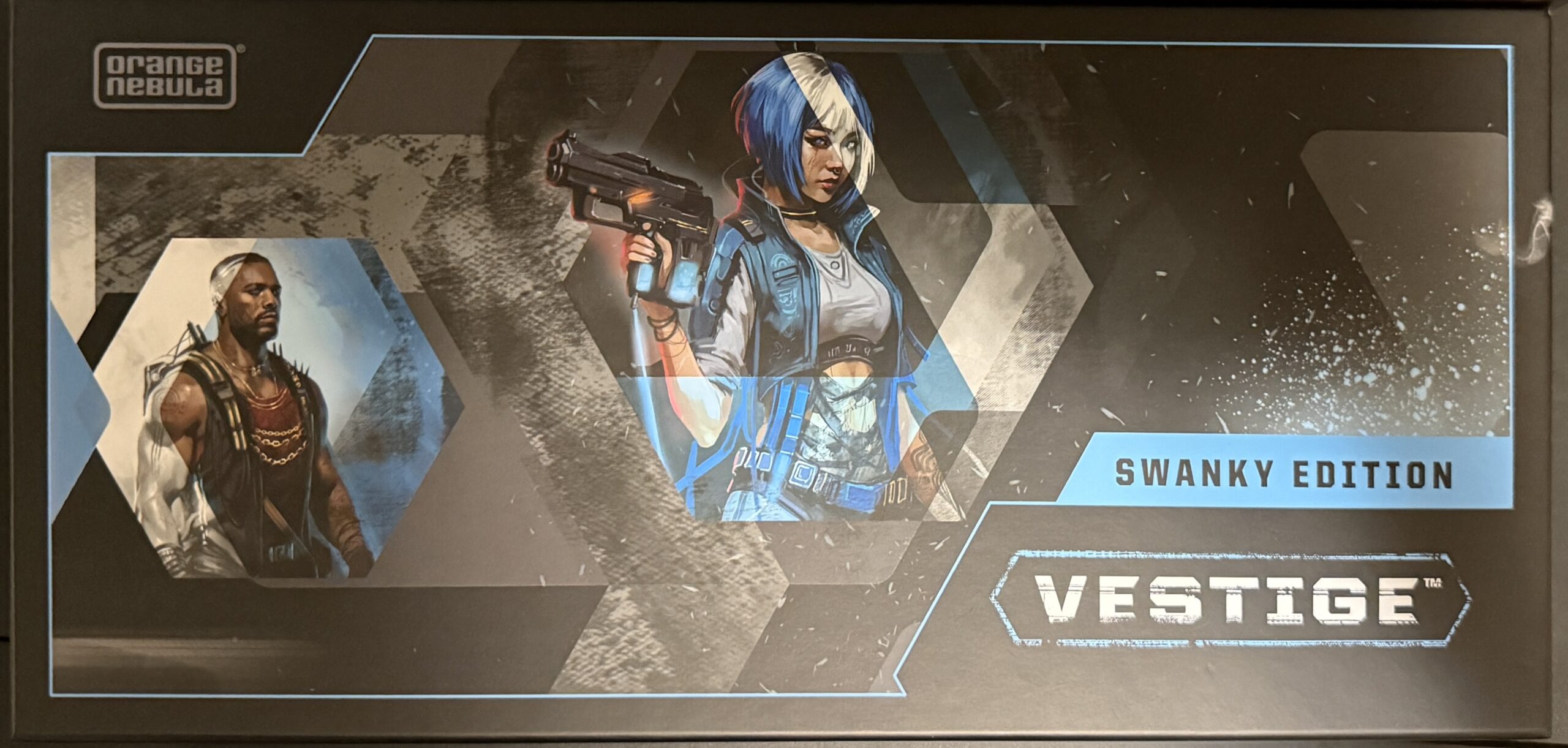
After Space Cats, we tried to move on to a different board game, Vestige.
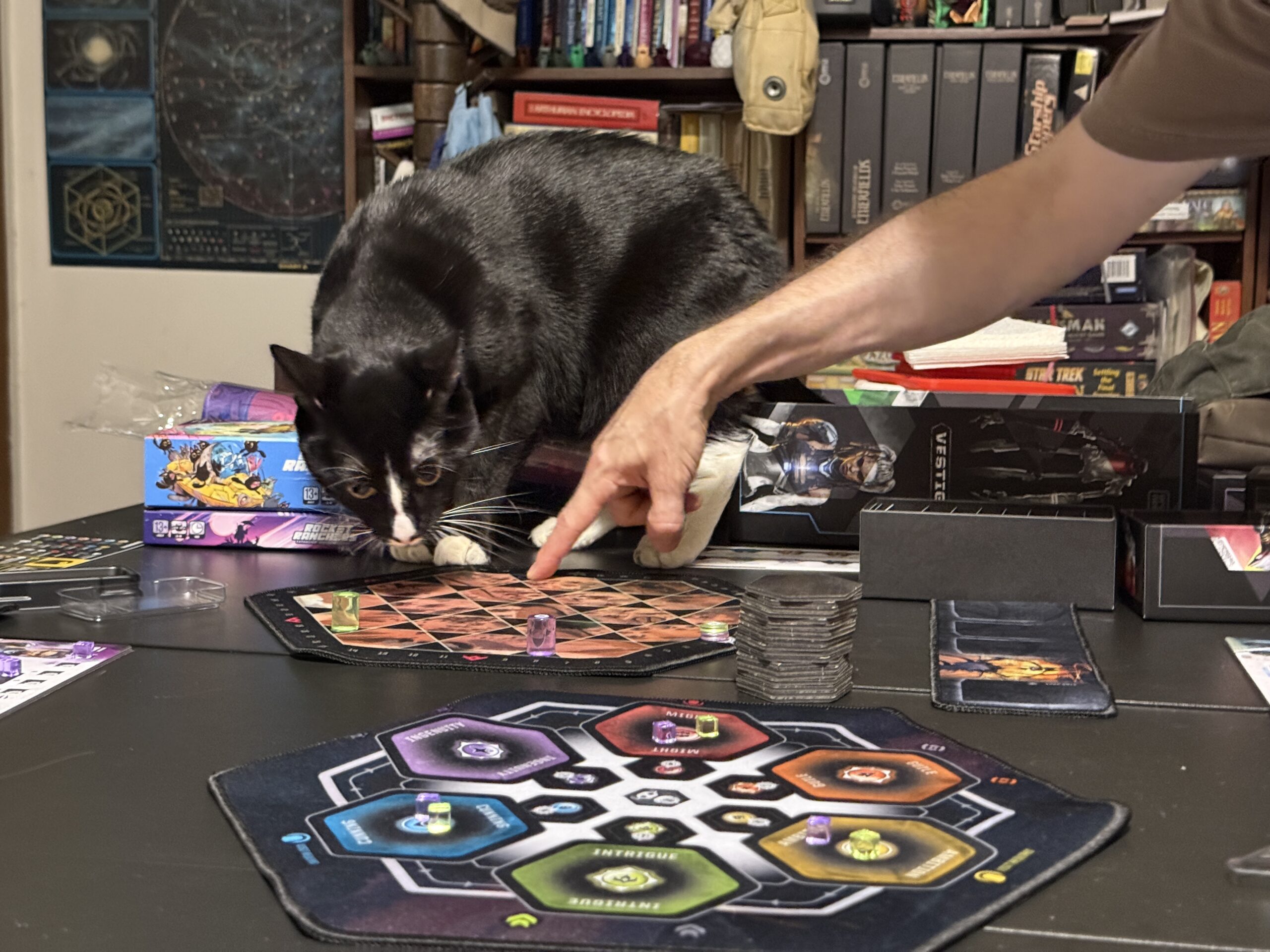
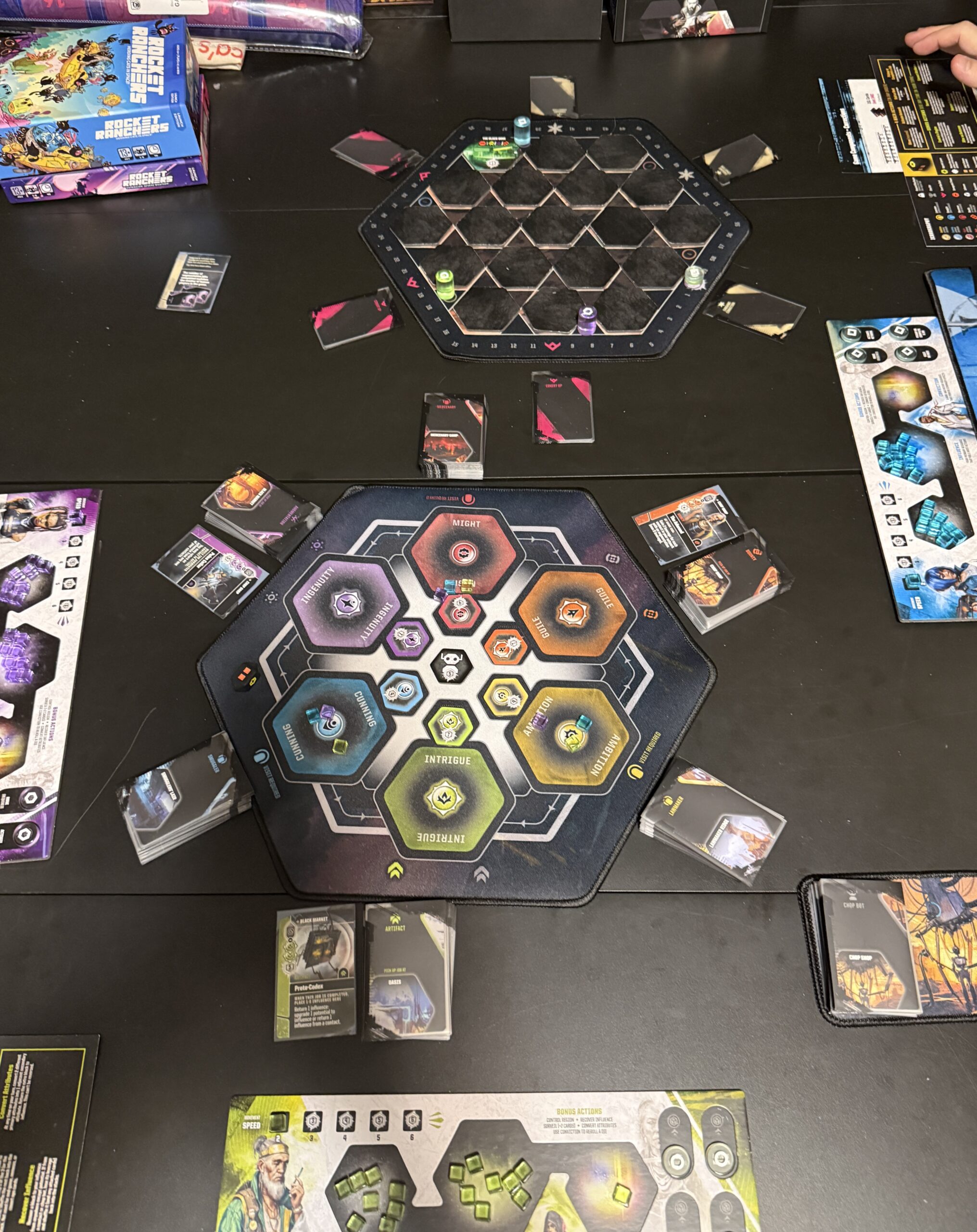
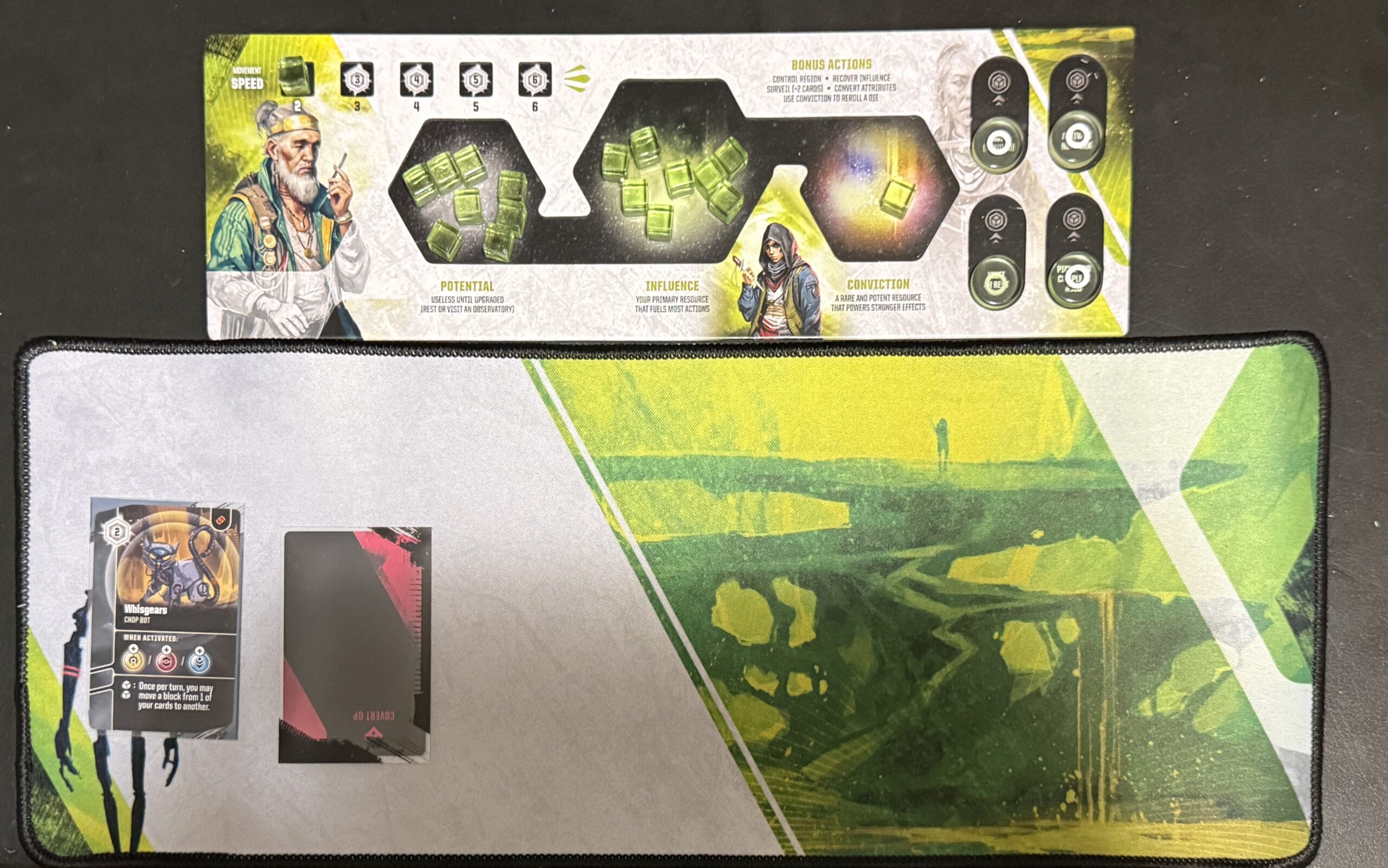
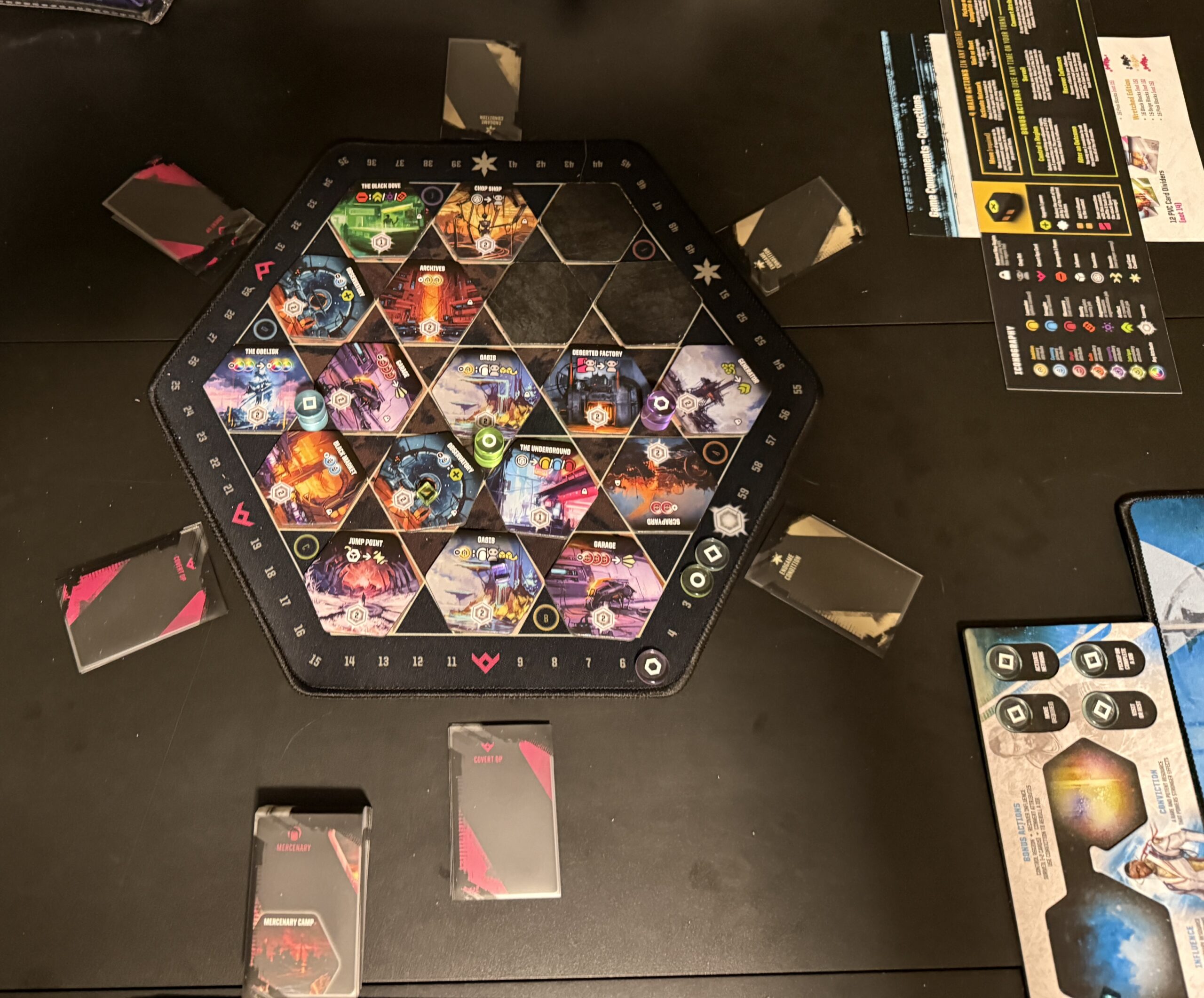
Roughly speaking, Vestige is the science-fiction version of Vindication, which is one of my favorite games. There are significant differences, however.Andrew points out to Shuba that he has the Swanky edition, with translucent pieces, a 5-6 player expansion, and game trays to organize pieces.To anyone who’s played Vindication, this is a familiar sight. The upper hexagonal map contains the locations the players can visit. The lower hexagonal area indicates the players’ attributes organized on a color wheel.My player area at the start of the game. You can’t tell in this photo, but another benefit of the Swanky edition is a dual-layered board to organize the cubes.The map board after about three turns into the game. I’m yellow/green (circle) near the middle of the map. I’ve taken control of the Observatory, as indicated by the presence of my cube on its tile. On the scoring track on the rim, John (purple) is ahead with 5 points; I’ve got 2, Andrew (blue) has 1.
It was at that point that Andrew realized that it was getting late, and there was no way we were going to finish this game at a reasonable hour. We’ll have to try to play Vestige again some other time.
Shuba was disappointed. He really wanted to know how the game would turn out.
Pingback: Last Night’s Game – Vestige again – The Argothald Journal