TL;DR: Hades II is like Hades, with a better story and more complex gameplay.
I wrote a review of Hades in 2021. I hadn’t expected to like a rogue-lite so much.
Hades II requires good twitch reflexes. In general, I’m lousy at such games. The only reason I spent time with Hades is the story was engaging. The same is true of Hades II: I stick with it to see how the story comes out.

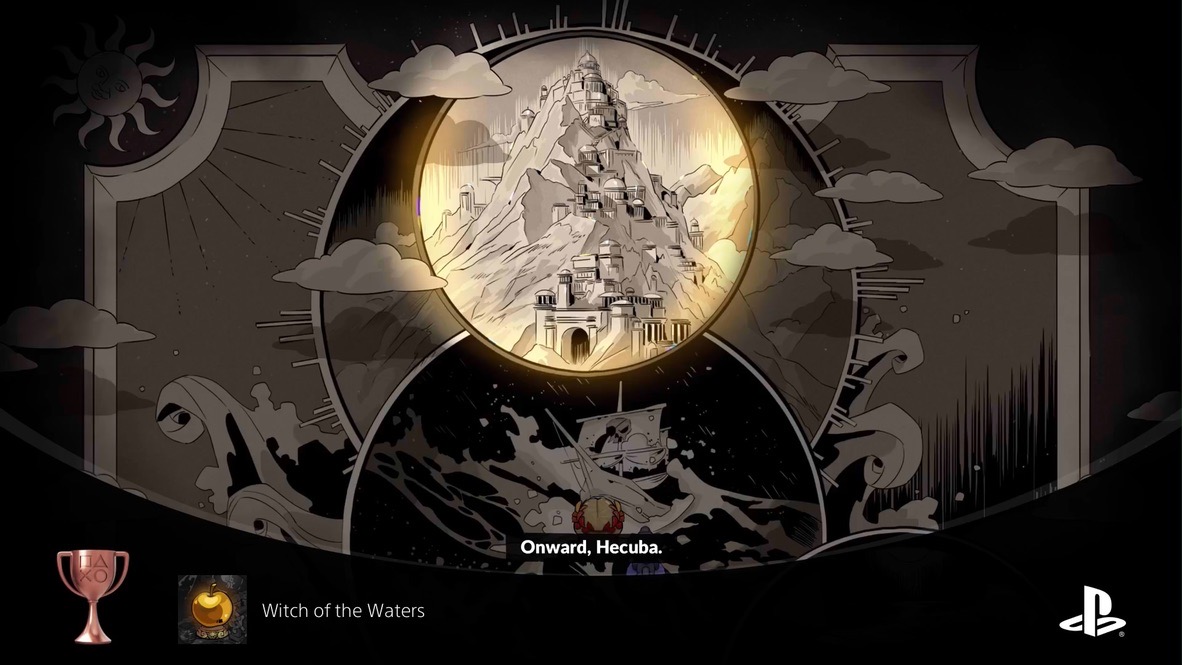
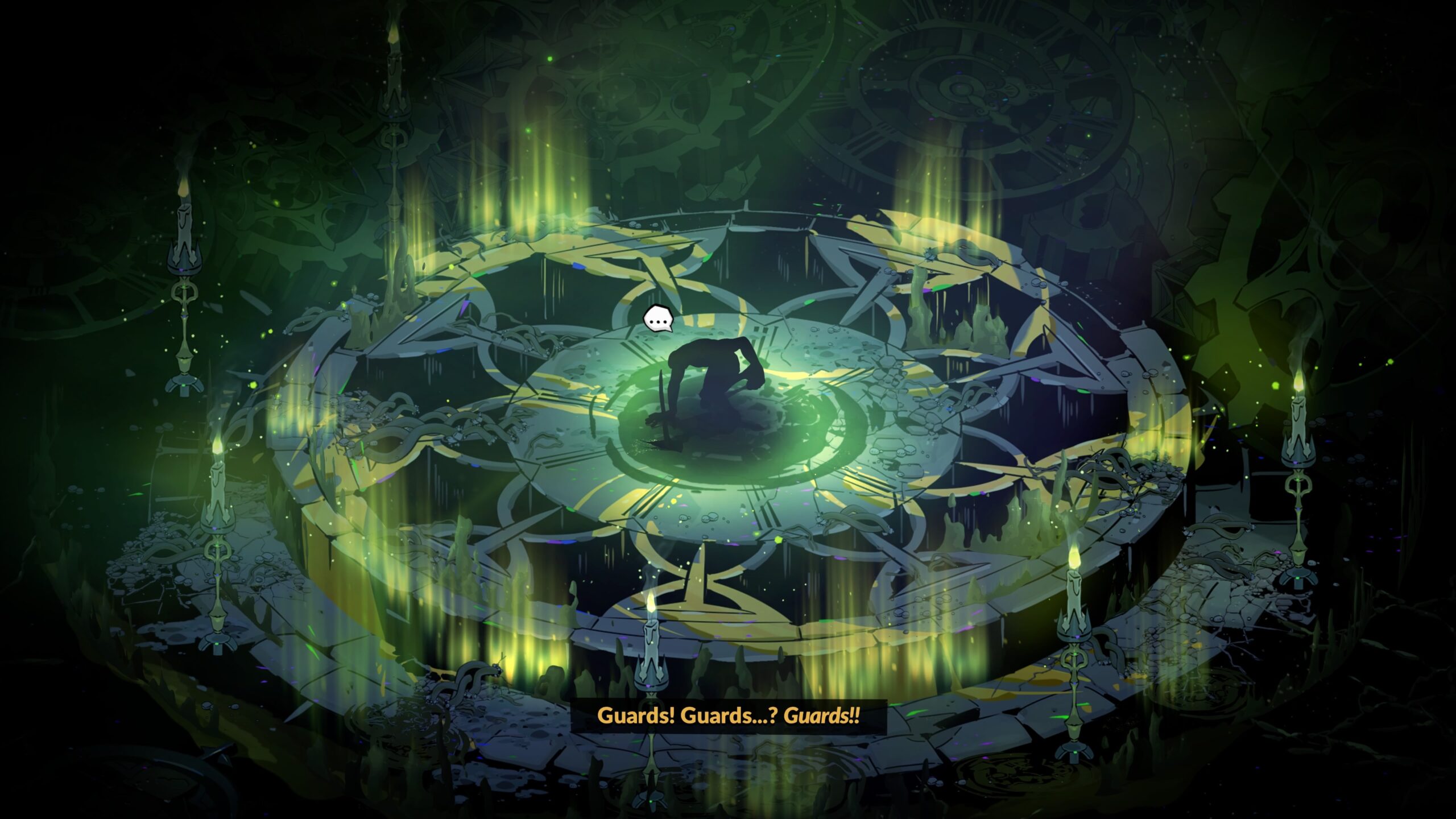
The story: You play Melinoë, the sister of Hades’ son Zagreus, who was the protagonist of the earlier game. You’ve never met your brother. While you were a baby, Chronos the God of Time attacked the House of Hades, capturing the main characters from the first game, including Zagreus and Hades.
Hecate took the baby Melinoë and escaped Chronos’ attack. She raised Melinoë and taught her to be a skilled magician. The goal of Melinoë’s training: Death to Chronos. The main impetus for the repeated runs is to try to reach Chronos and slay him.
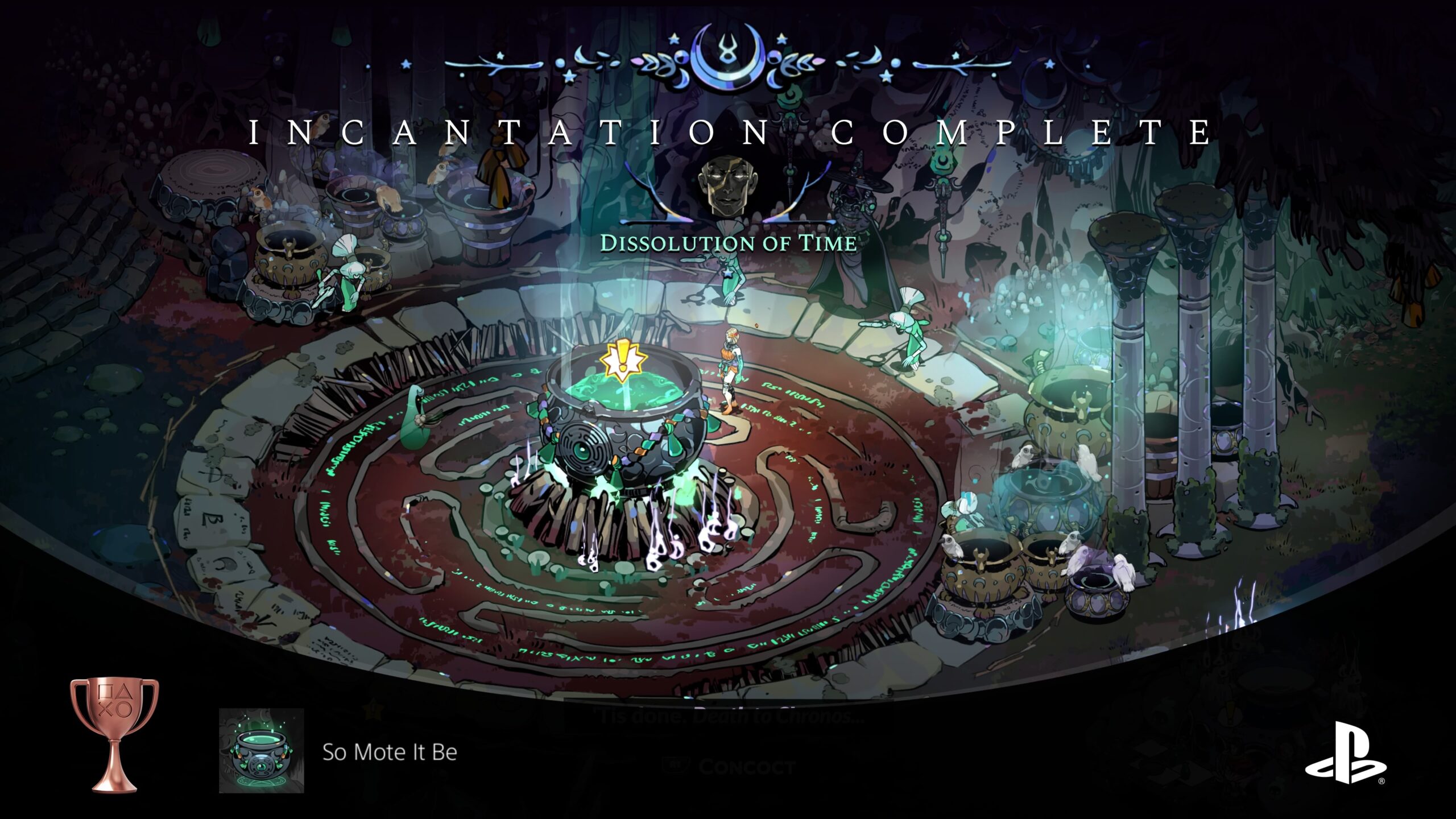
Eventually Melinoë succeeds, but Chronos is a Titan of Time. To defeat him once and for all will take more than simply winning repeated battles with him…
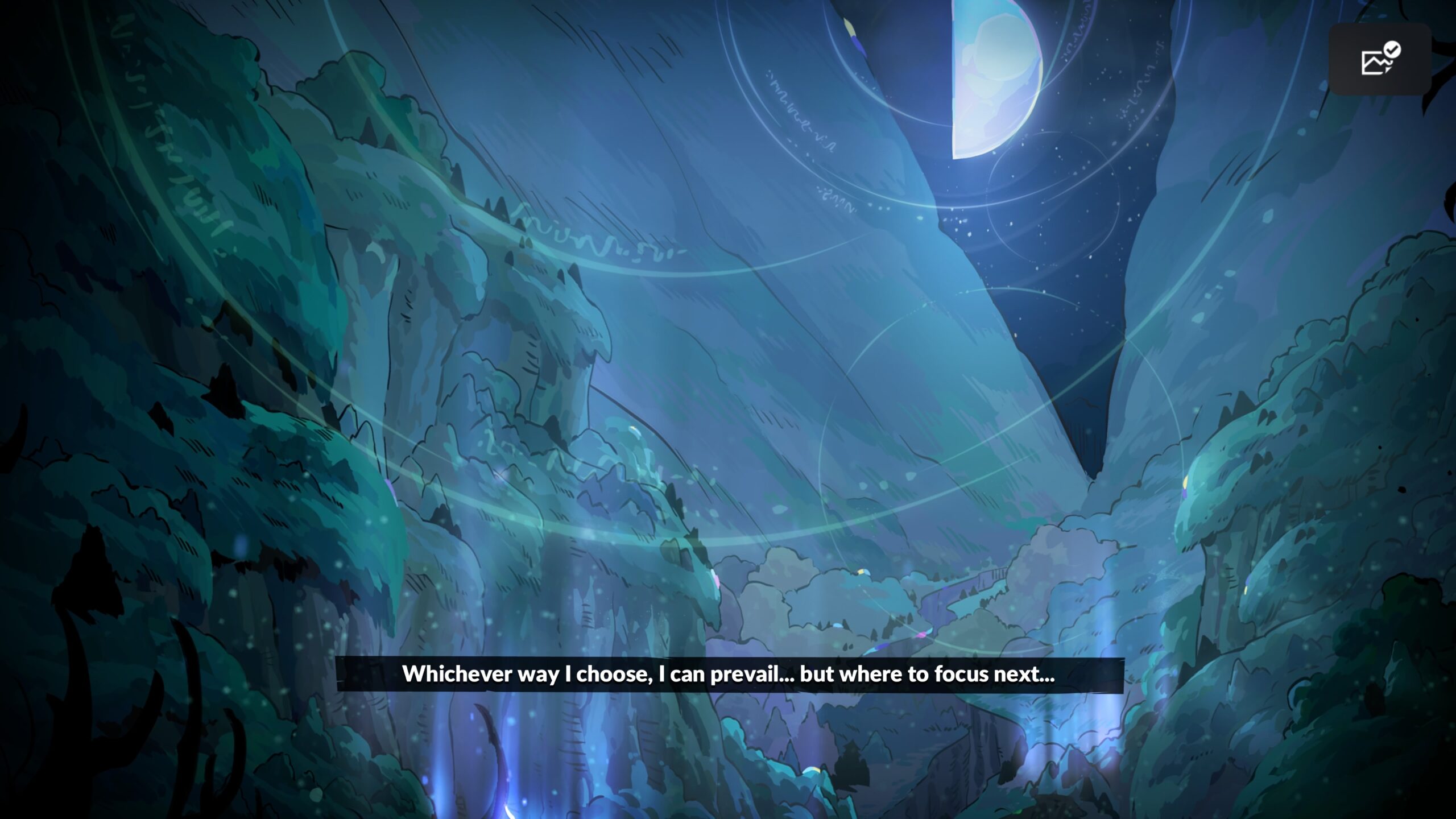
The progressive story makes use of Greek legend, heavily adjusted to fit the modern tropes of gradual videograme revelation. A scholar of mythology would weep. For someone like me, who gets a simple delight from figuring out who a character named “Dora” is, it’s simply fun.

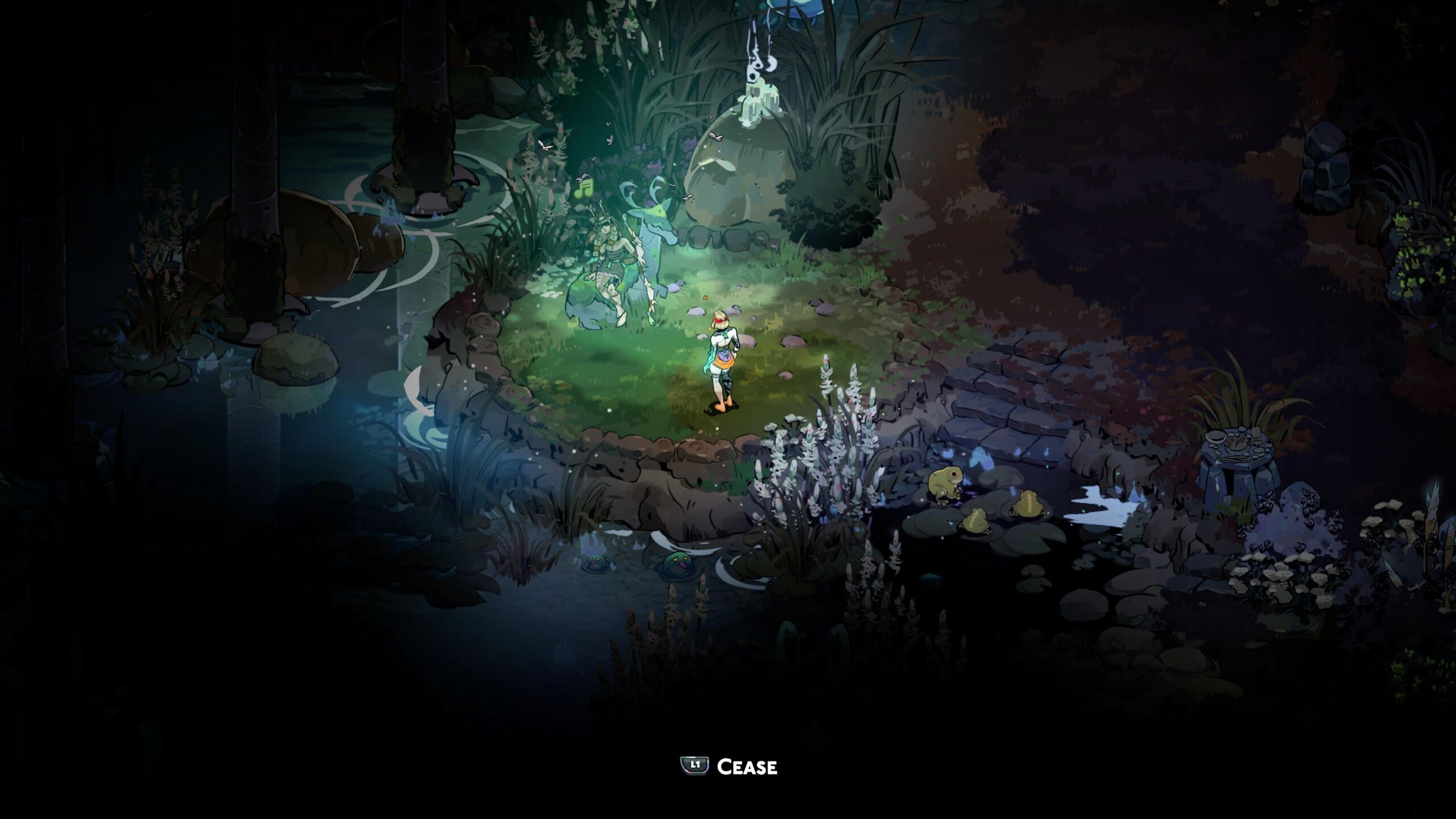
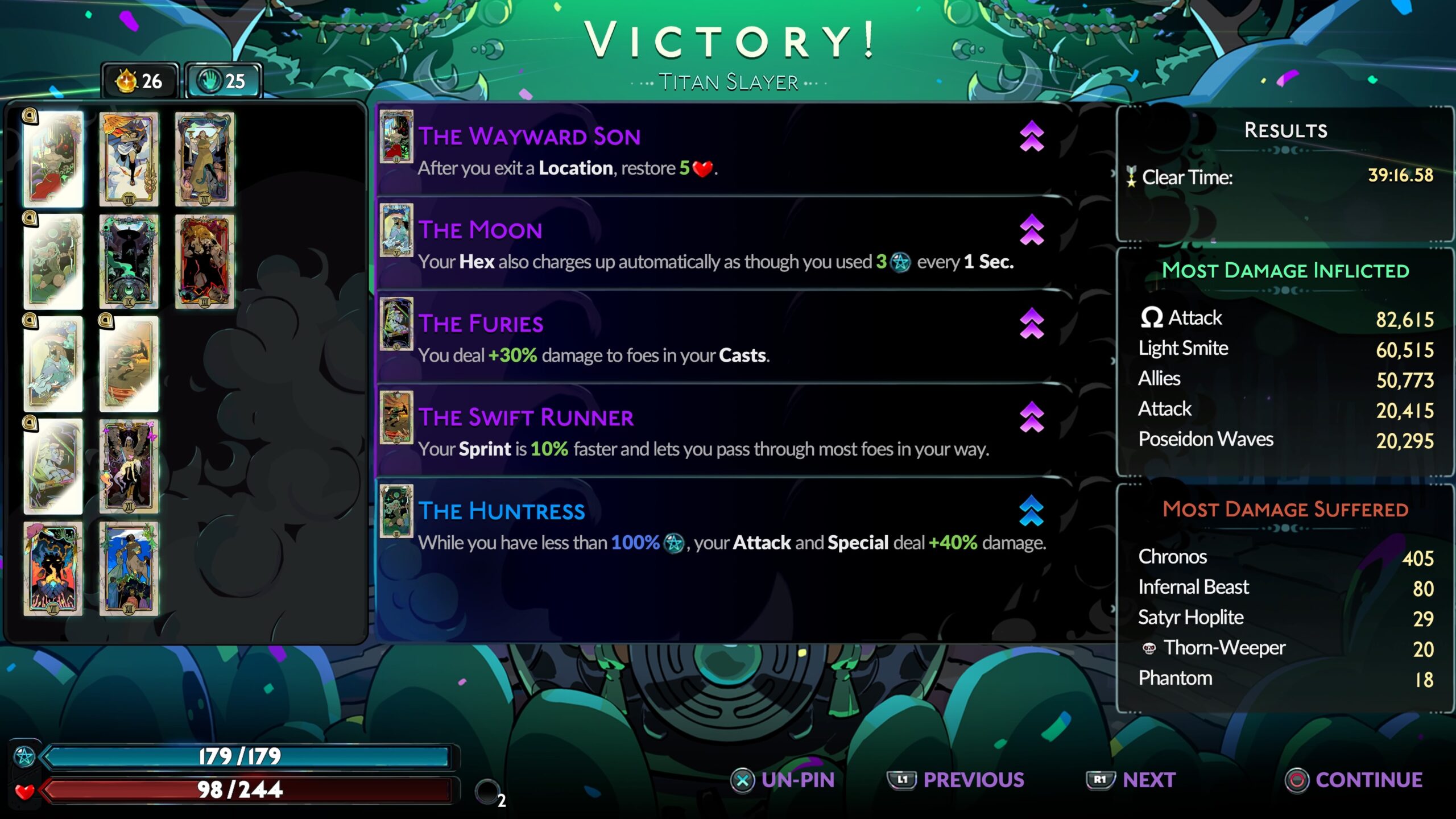
It’s the story that drives me through the repeated runs. Like the earlier game, Hades II offers a “God mode”: You start at 20% damage resistance; if you fail a run, you become 2% more resistant to damage, up to maximum of 80%. I was at 78% at the end of my first successful run. The math says it took me 29 runs to get to that point; my current run count is in the 70s after about 70 hours of gameplay.
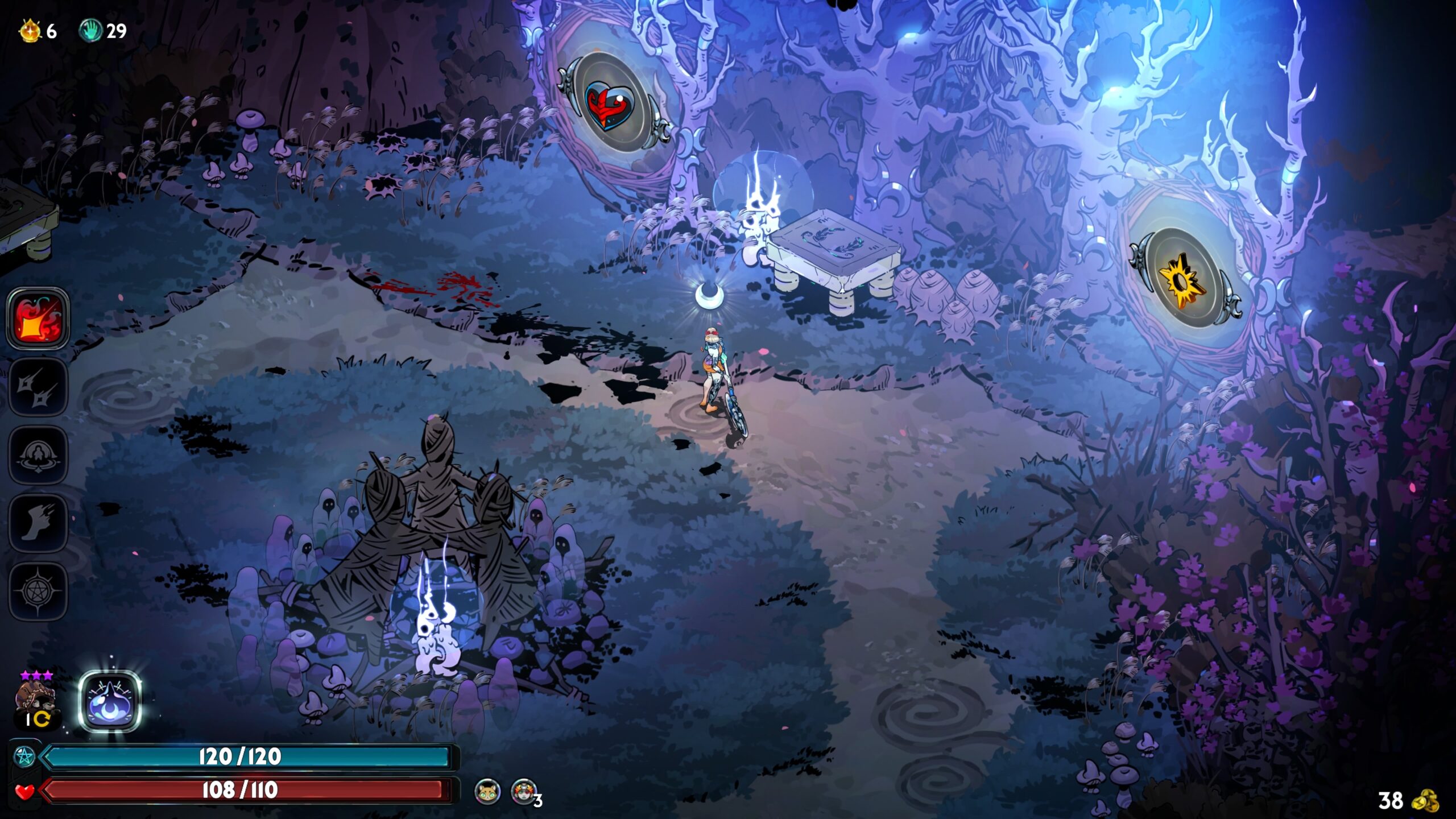
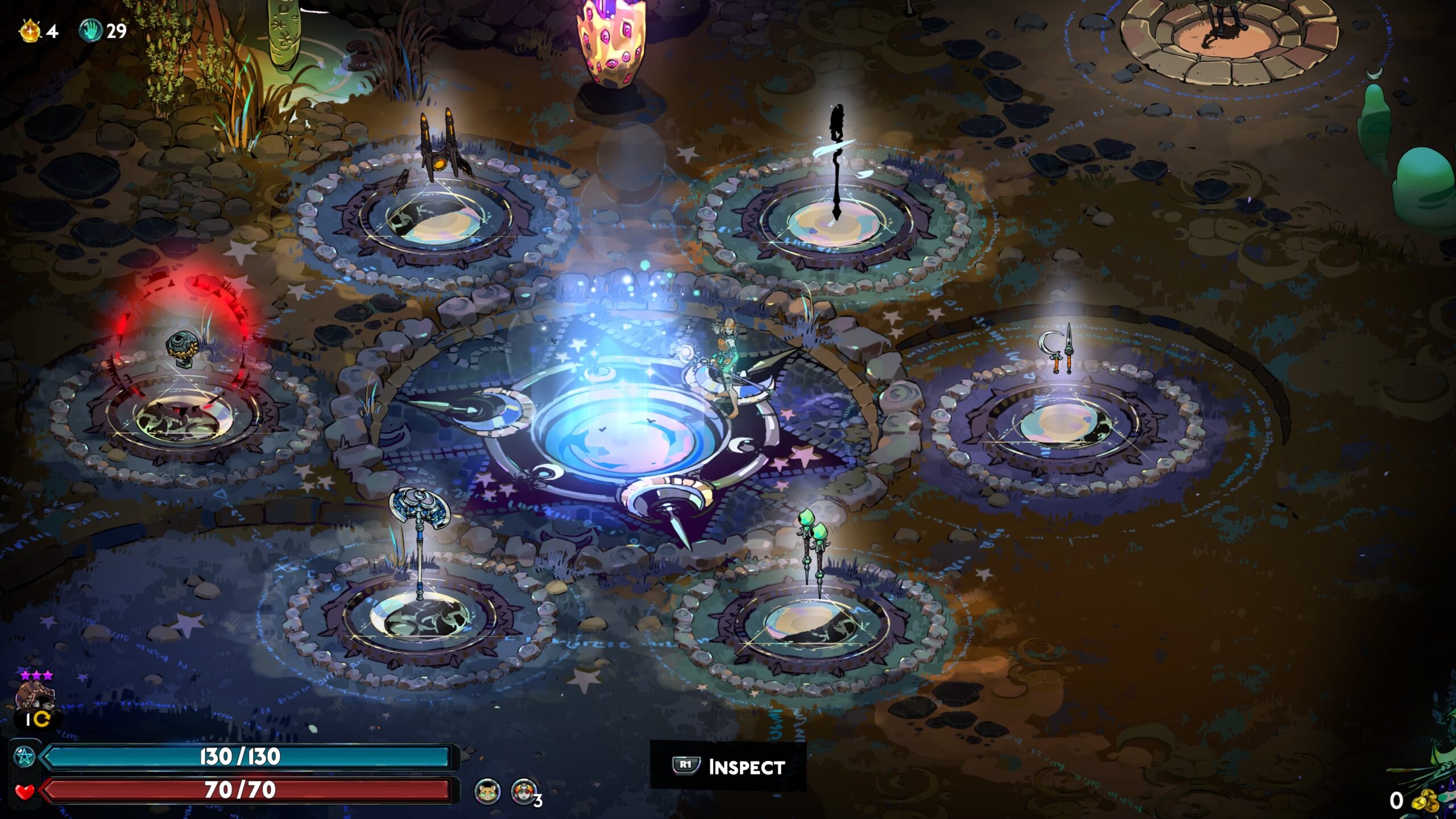
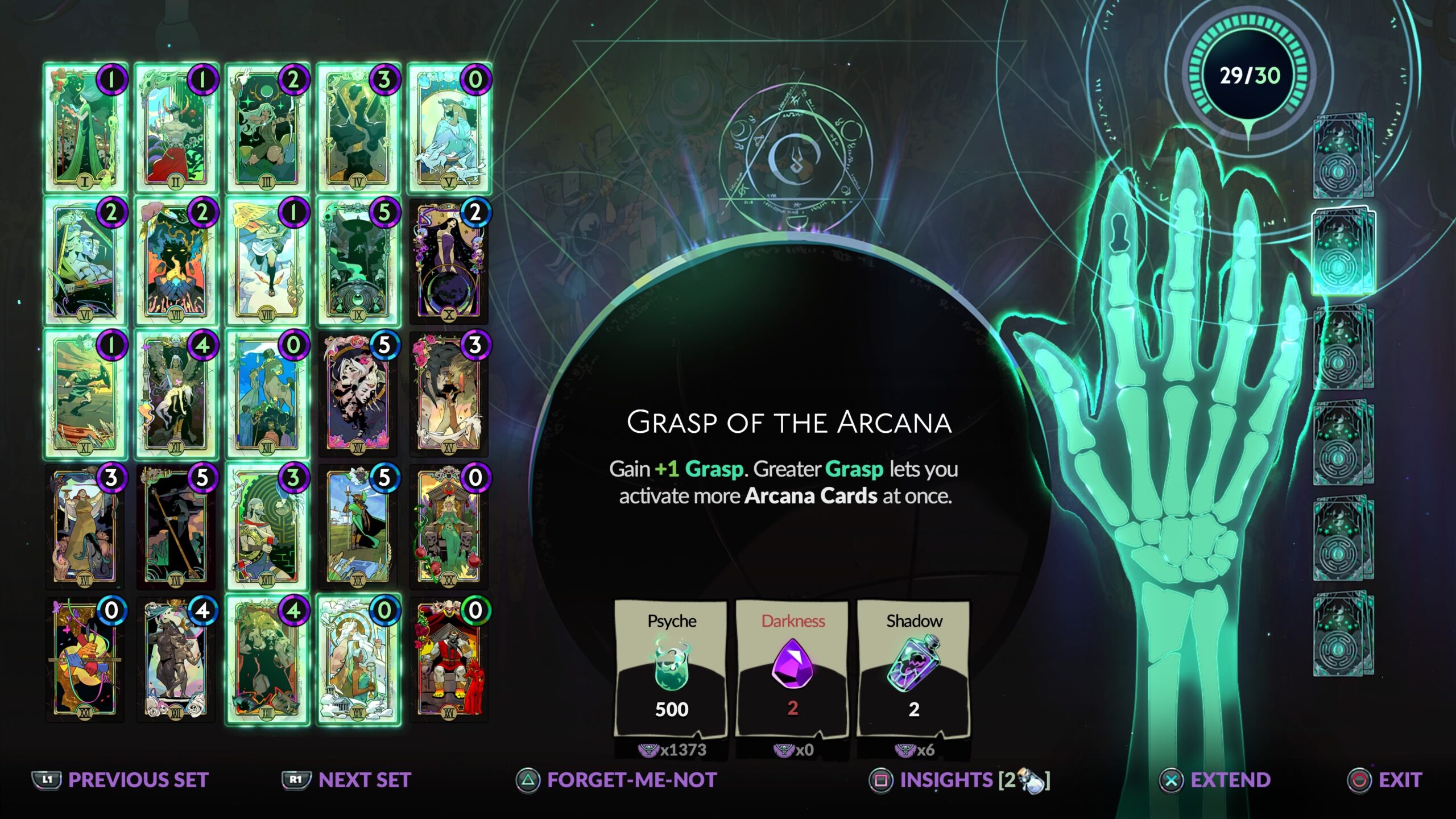
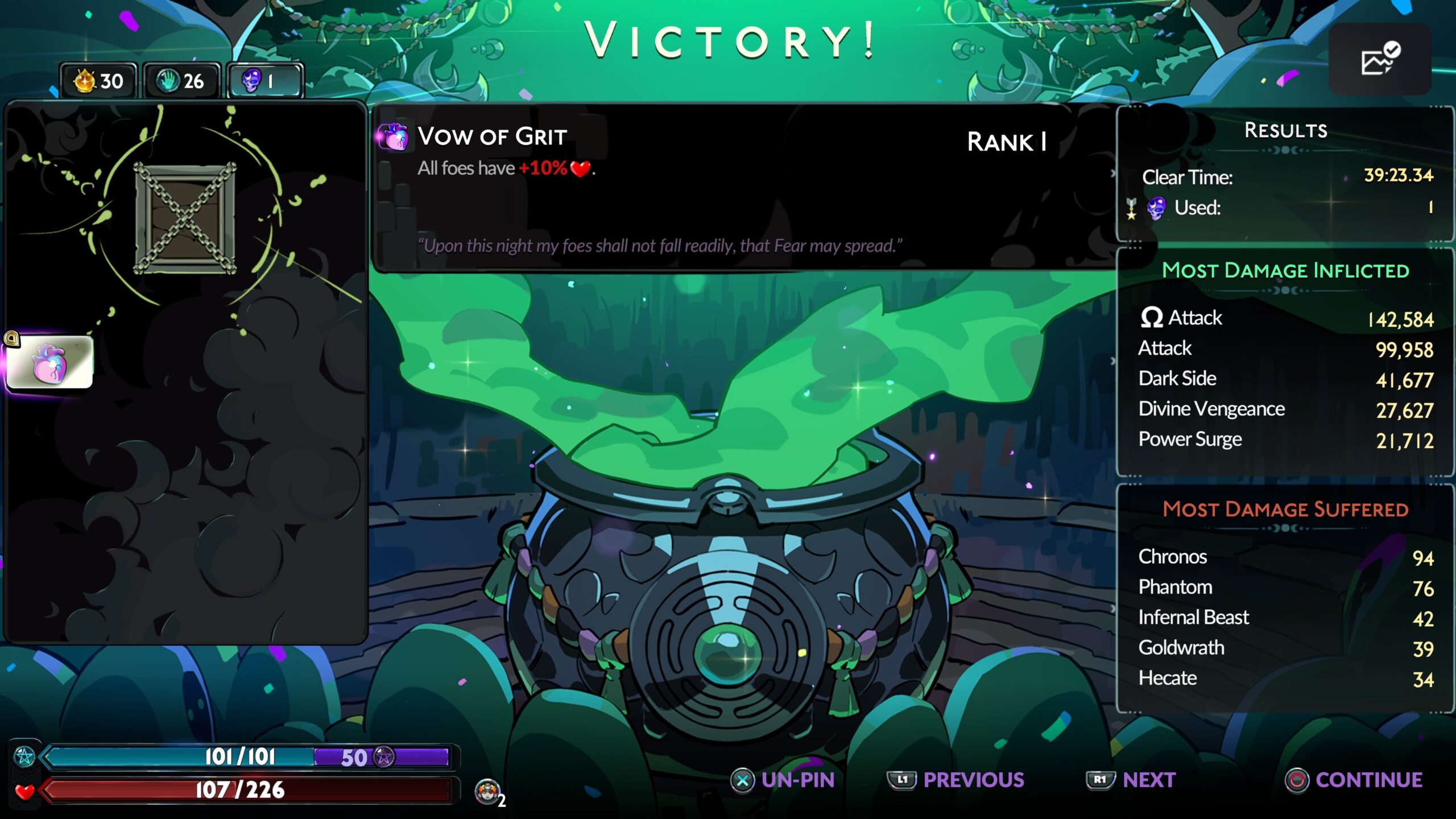
What makes Hades II a “rogue-lite” instead of a “rogue-like” is that your character gathers resources during the runs that are used to improve Melinoë for subsequent runs. These improvements include better weapons and “keepsakes,” which are gifts from the gods that you can improve.
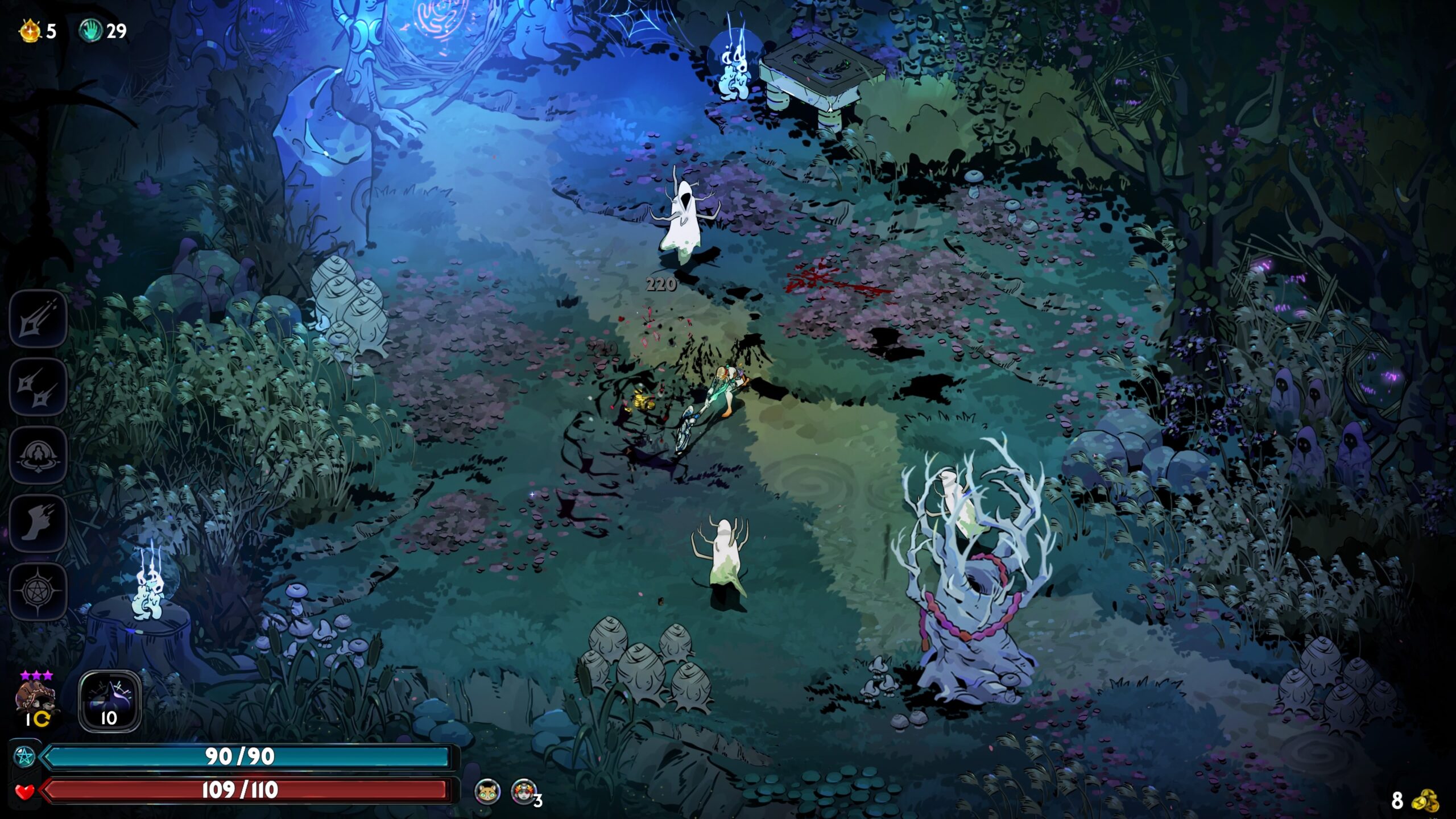
Gradually, through both increasing damage resistance, better gear, resource grinding, and a general sense of how the encounters work, I managed to progress the story.
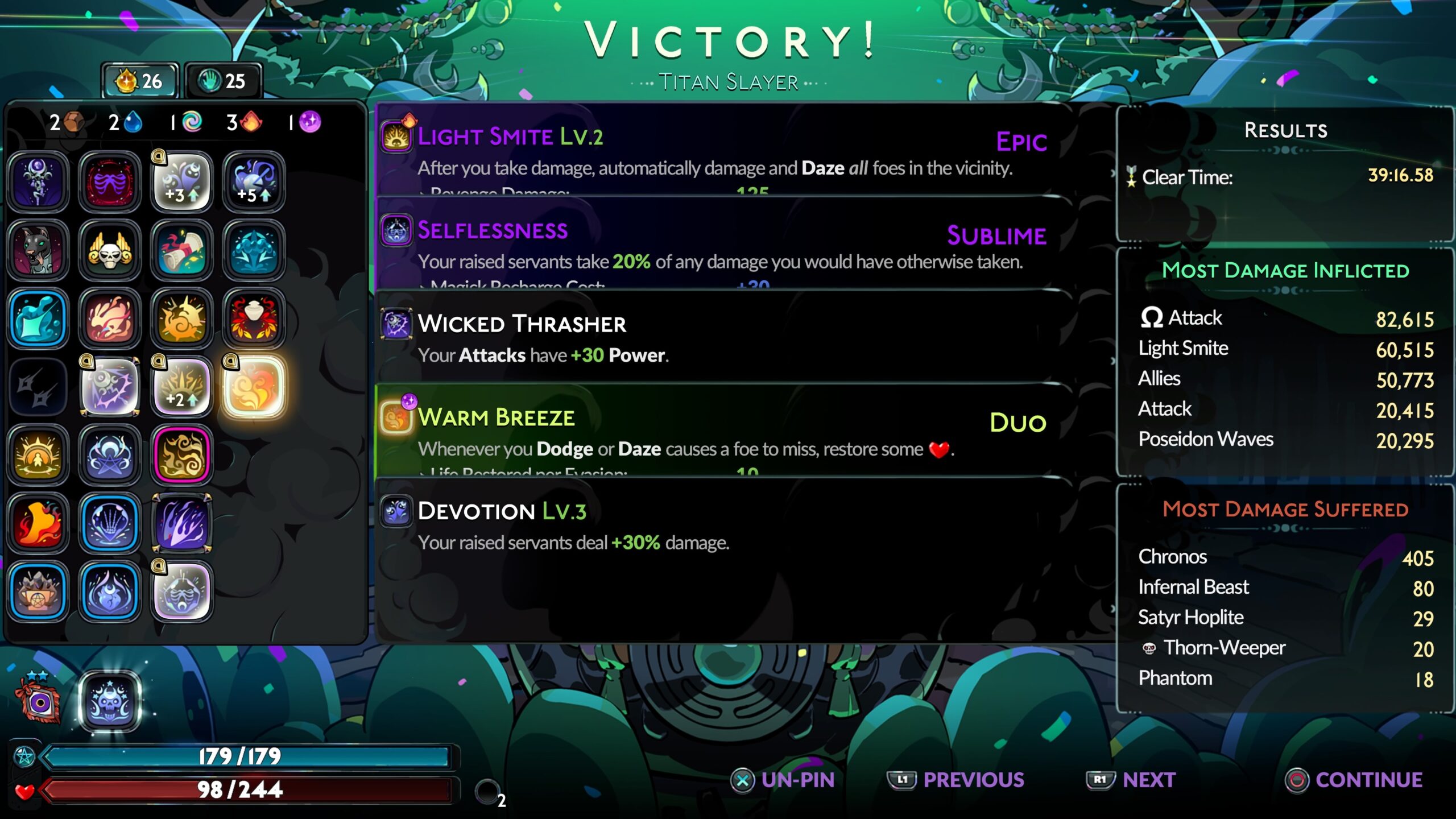
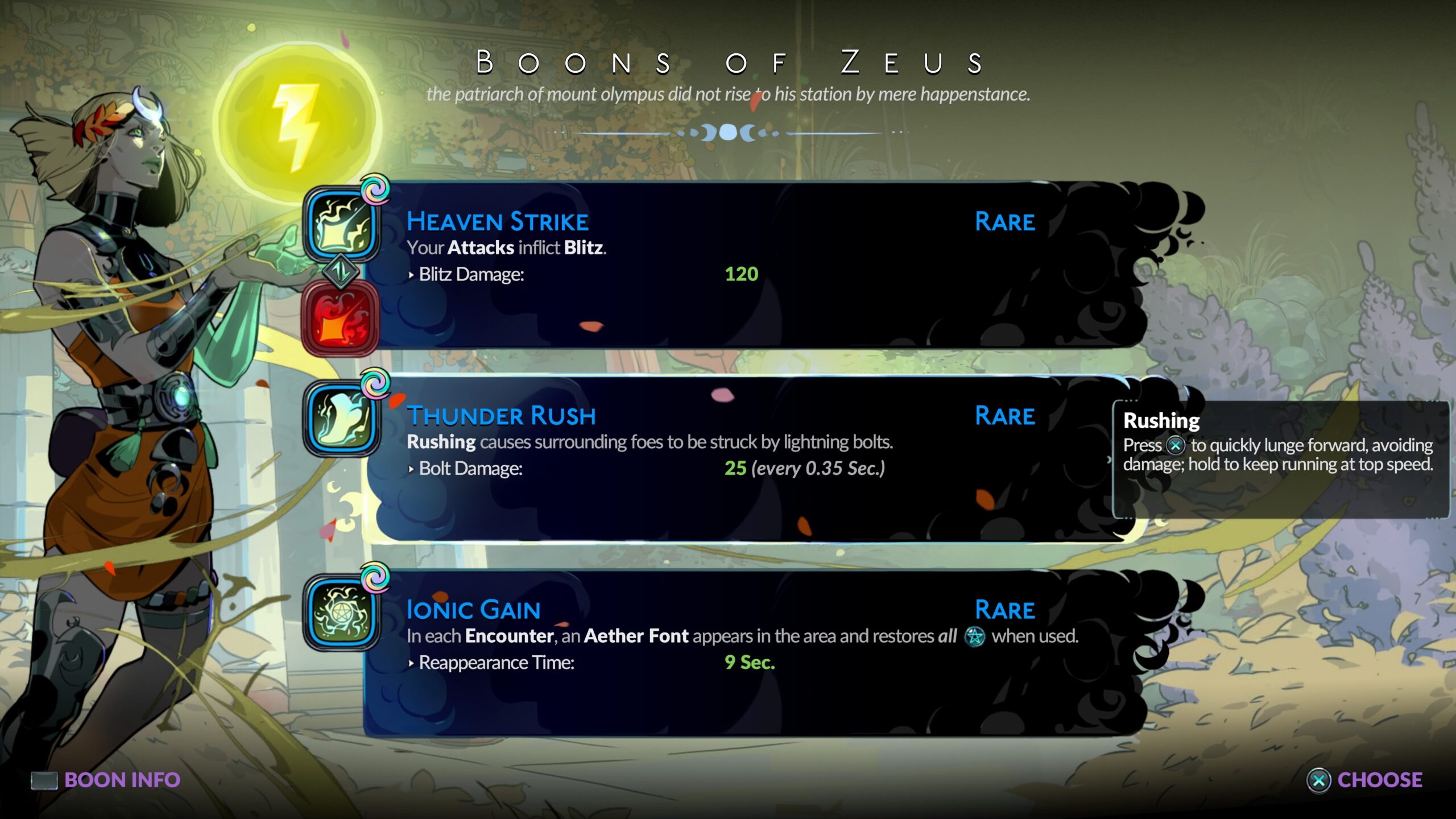
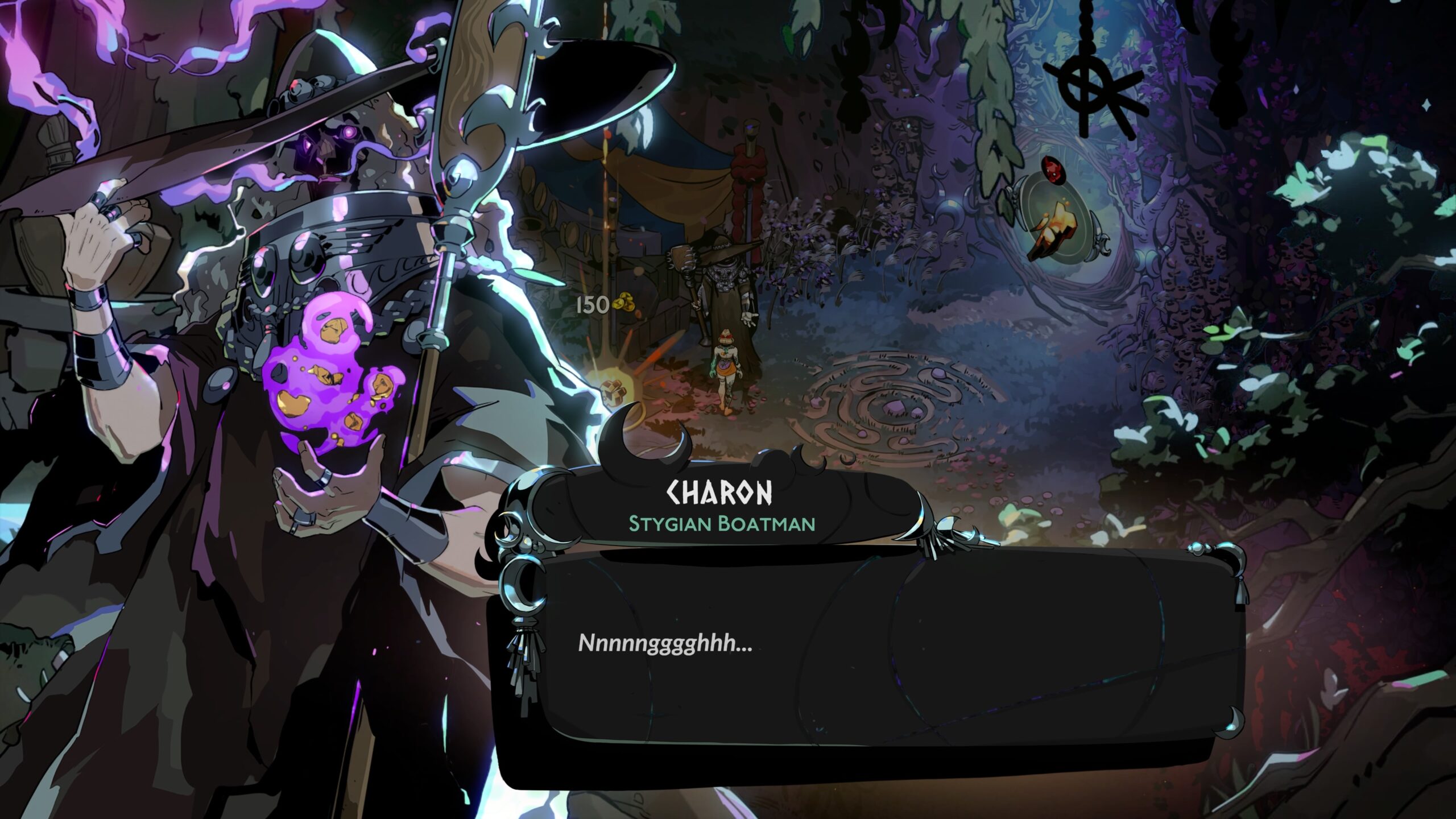
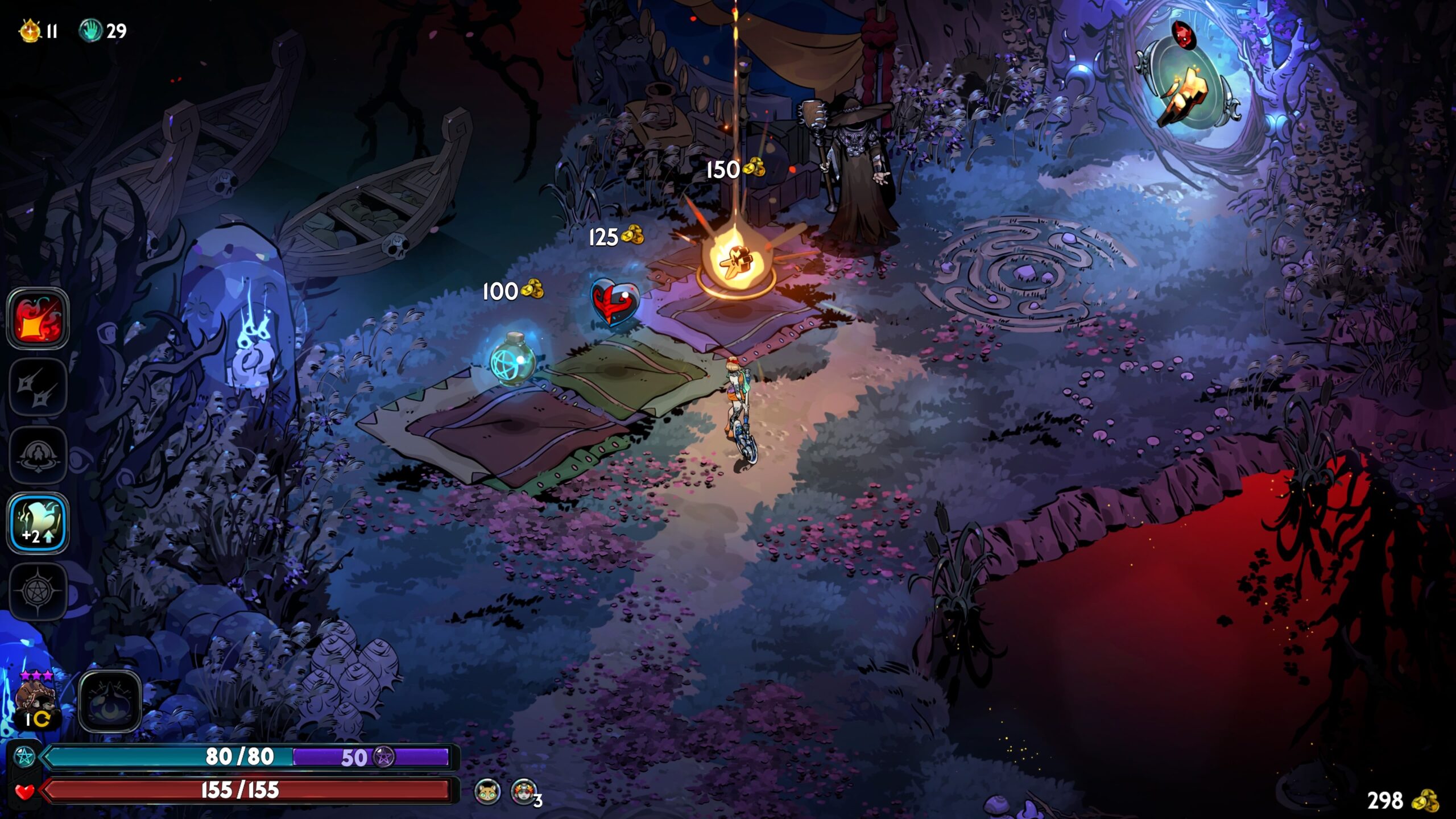
As I’ve said, it’s the story that’s the reason why I’ve spent time with Hades II. The gameplay itself is just within my limits. After about 70 runs, I’ve finally grasped the concept of “builds” within the game, based on deliberately seeking particular Boons from specific gods.
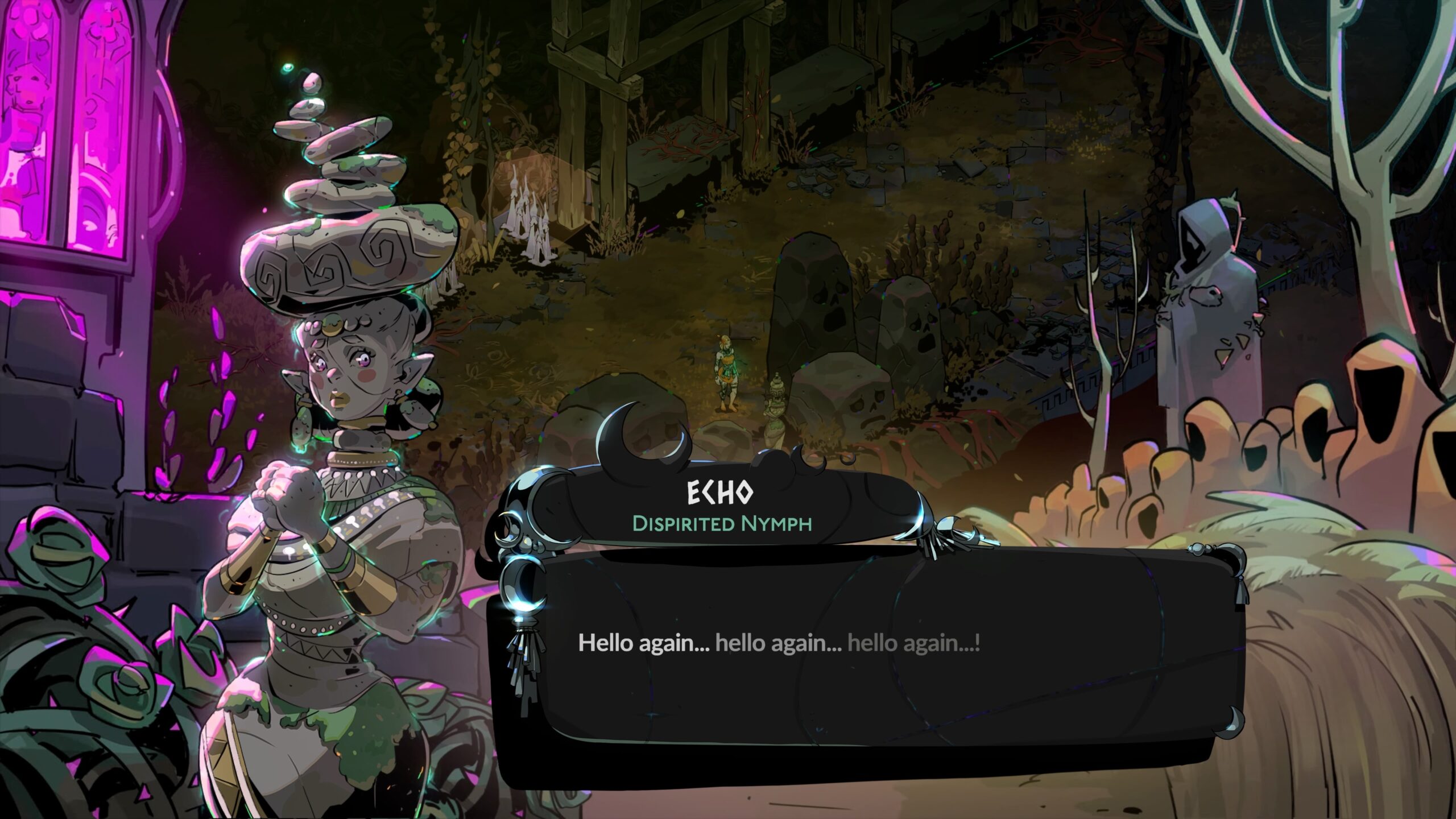
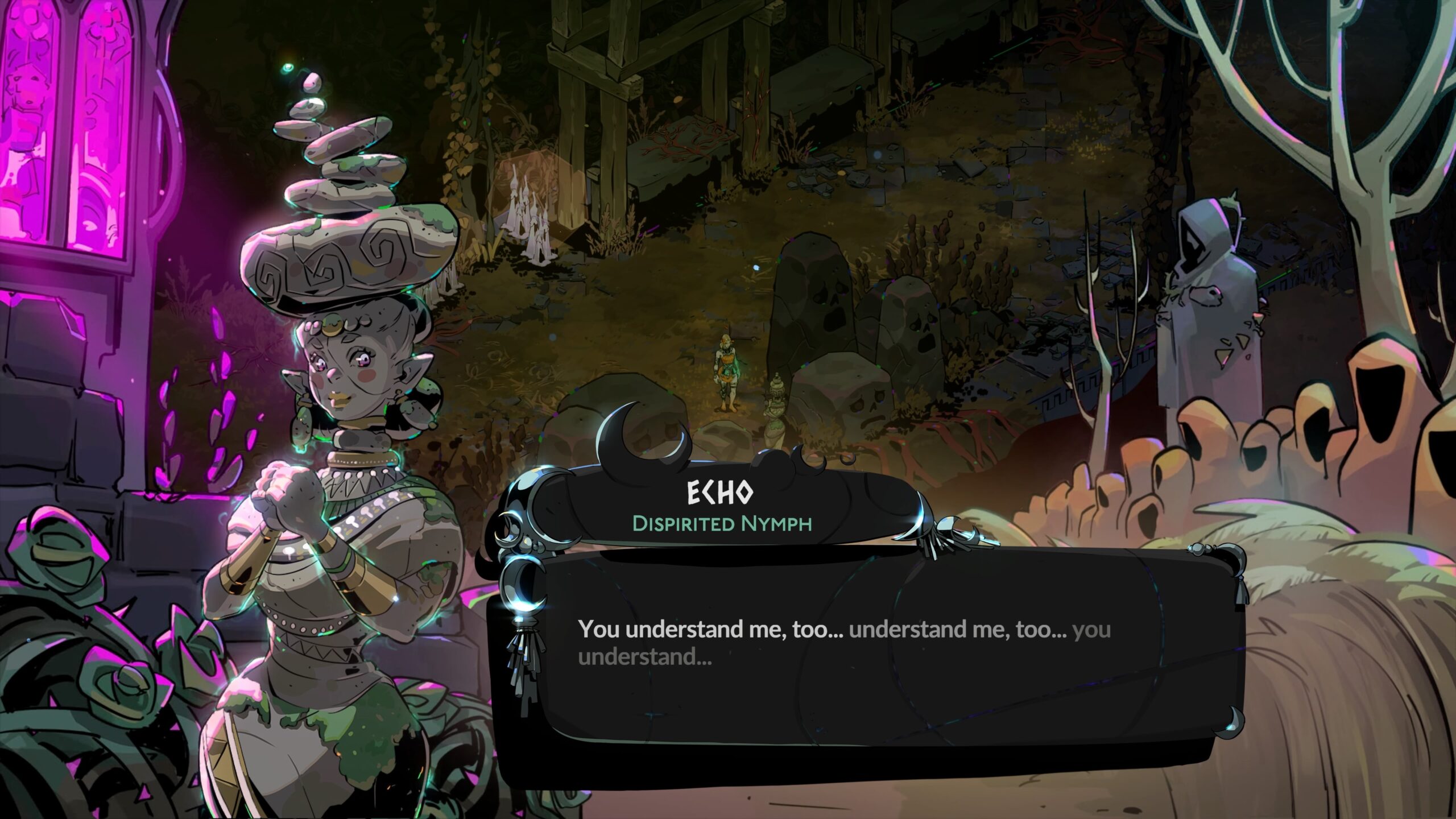
As for the combat: If you liked Hades for the fighting, you’ll like Hades II. A new mechanic, Hexes, is introduced with this game. You don’t have to use it if you just want to duplicate the Hades experience. For my part, I found myself getting chummy with Selene, the goddess who grants you Hex abilities and improvements to them.
Do I like Hades II better than Hades? I flip back-and-forth on my answer to this question.
- On the one hand, I think the story is better, and I play for the story. Even after Chronos is finally dealt with, there are still enough story elements (Who is Dora? How do I wake up Hypnos? Can the Fates be rescued?) to keep me playing to see them resolved.
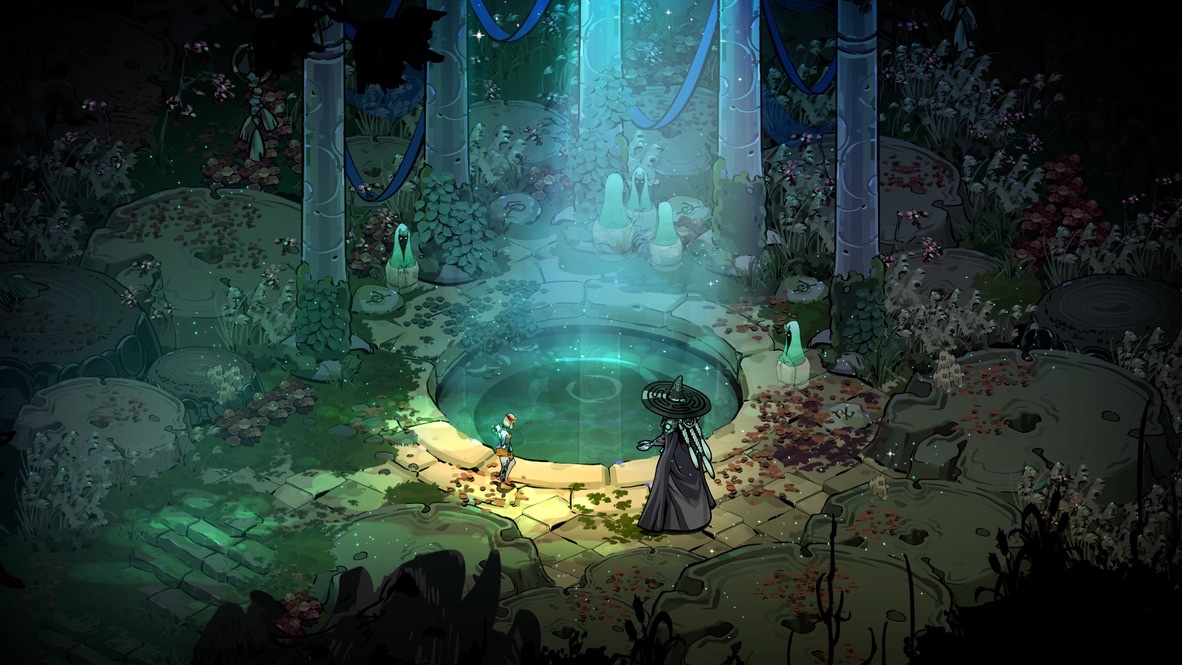
A new story mechanic introduced in Hades II are the steam baths. To improve your connection to the characters, and to advance the games “clock,” you can sweat away tensions while having conversations with the game’s other characters. The hot springs are yet another game element that must be earned by grinding resources through repeated runs. 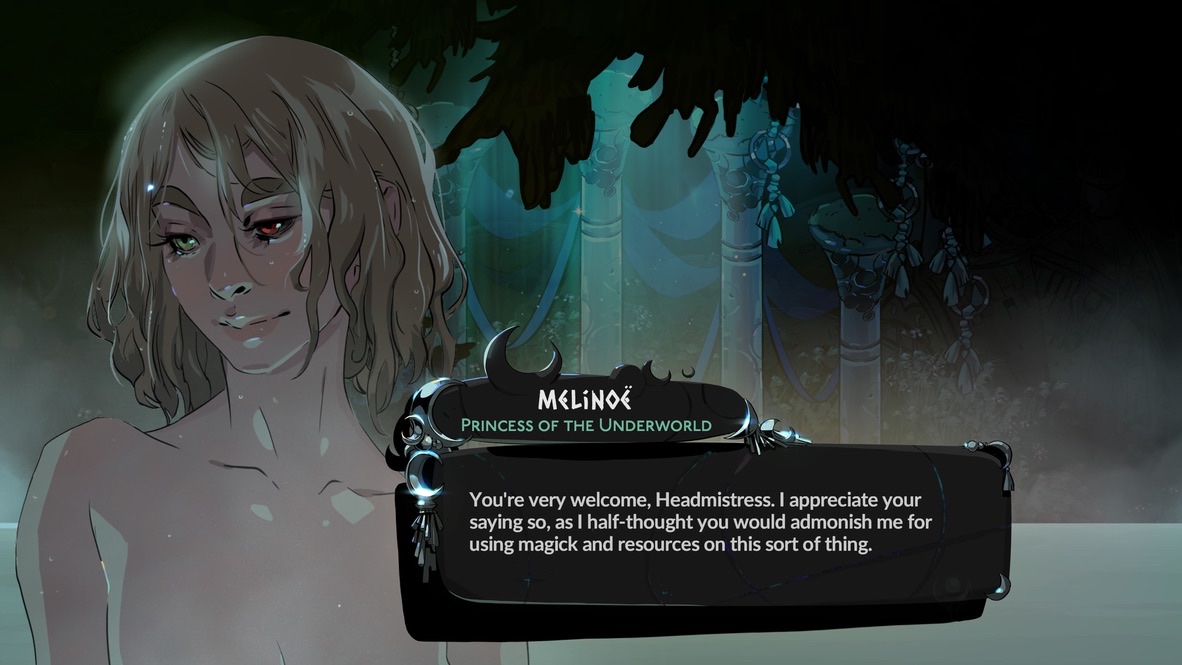
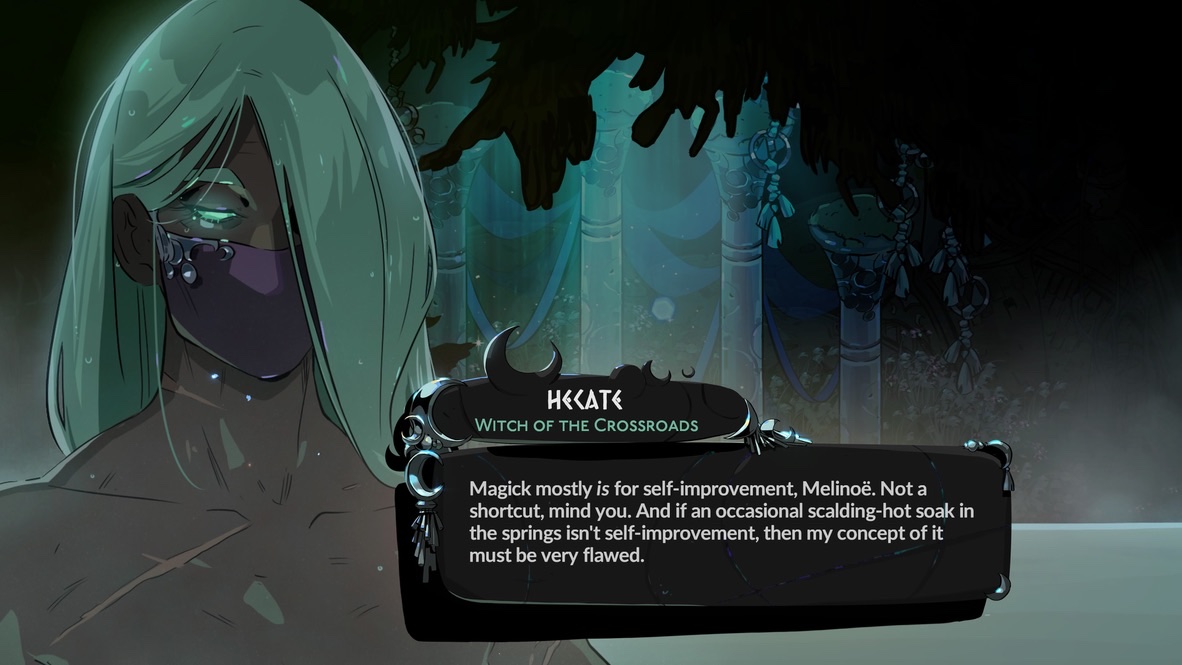
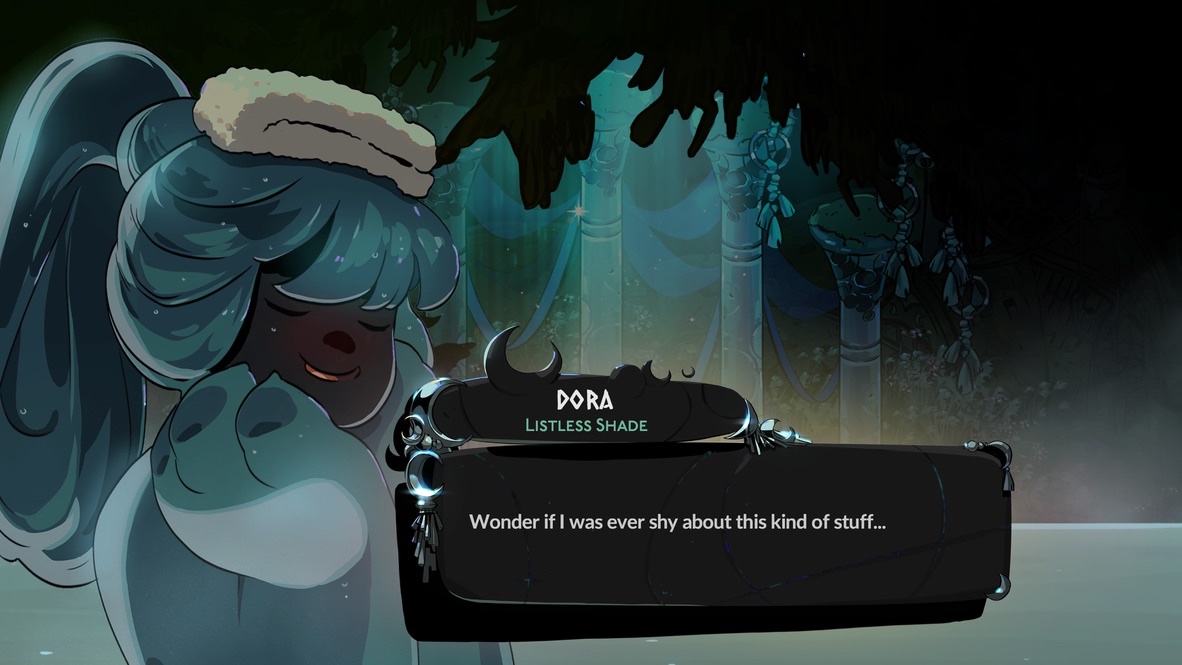
You can share a hot soak with Dora, which might give further insight into who she is. 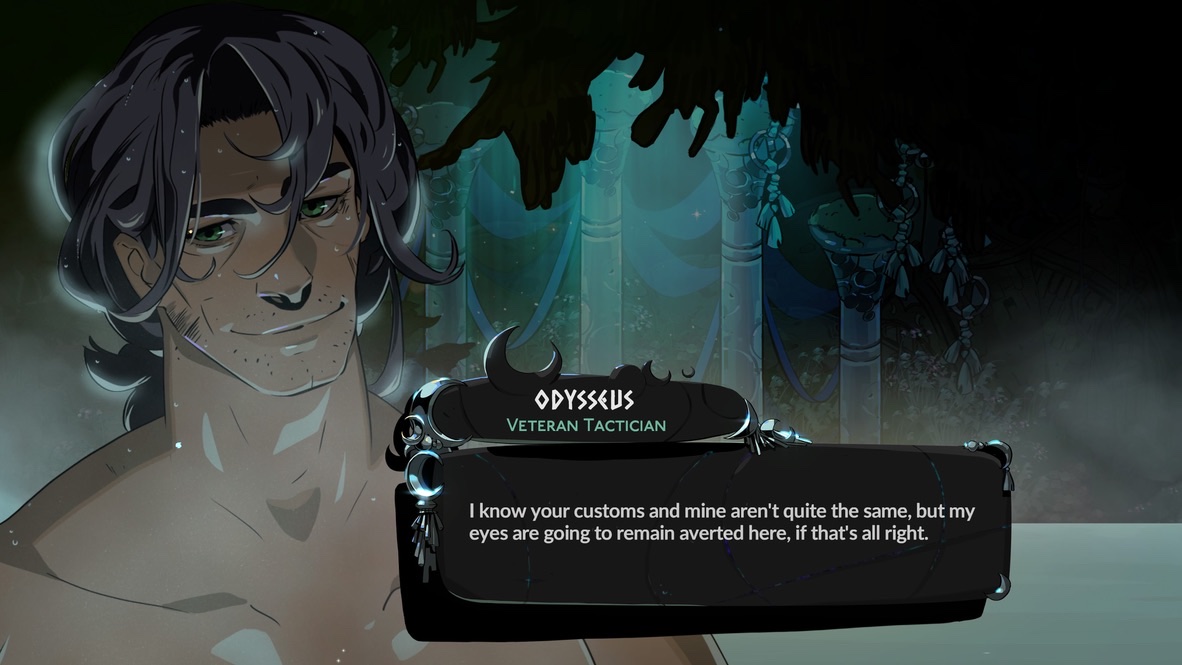
For those with different tastes than mine, you can also have a pleasant conversation with the Heroes of Greek legend. -
On the other hand, Hades II is more complex than Hades. There’s a greater variety of resources available. This means that resolving story elements (e.g., discovering the fate of the Fates) can become tedious as you gather one kind of resource to enable a different resource to uncover a single plot point that might lead to the next stage of the story.
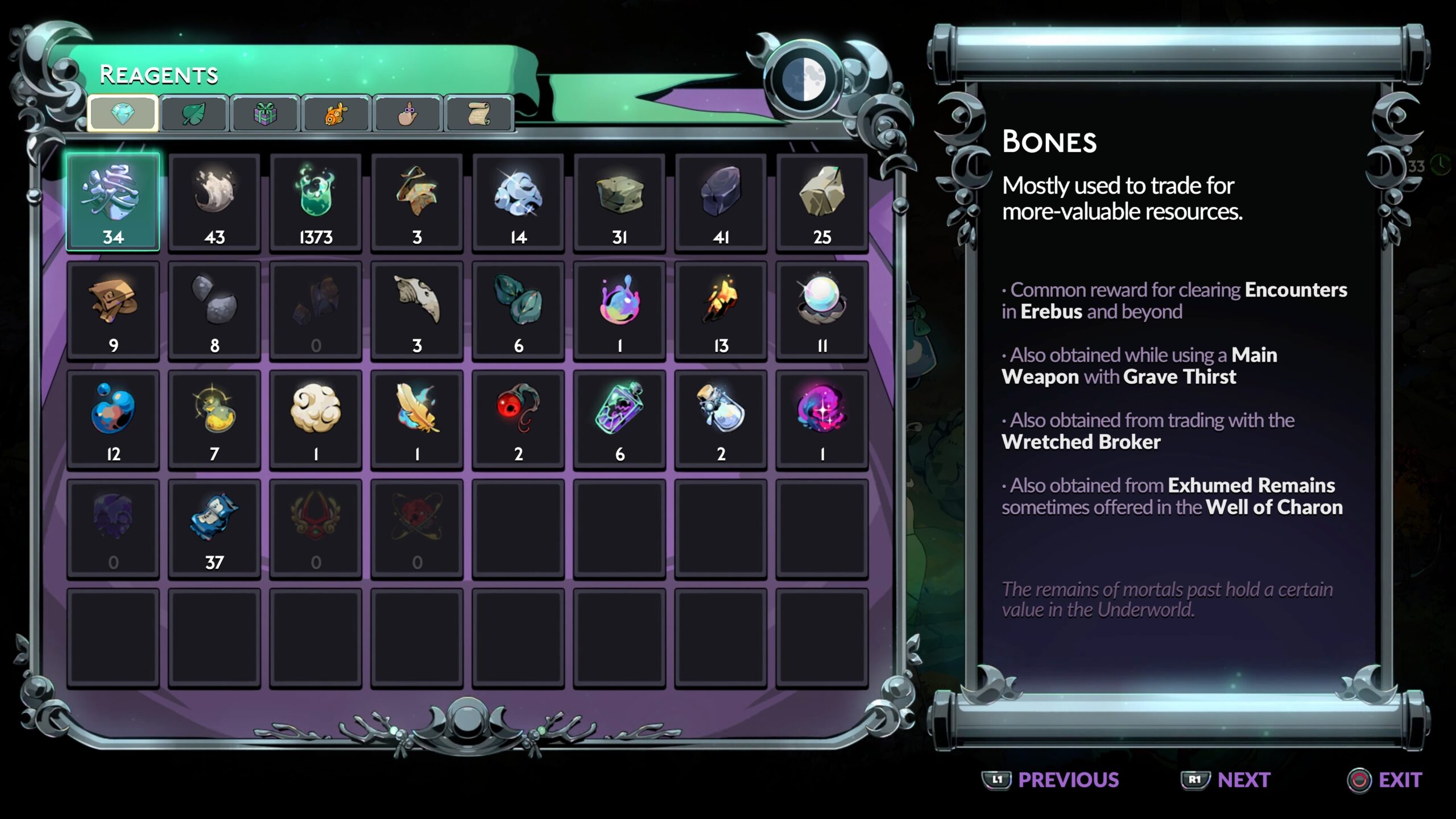
So many different kinds of resources… 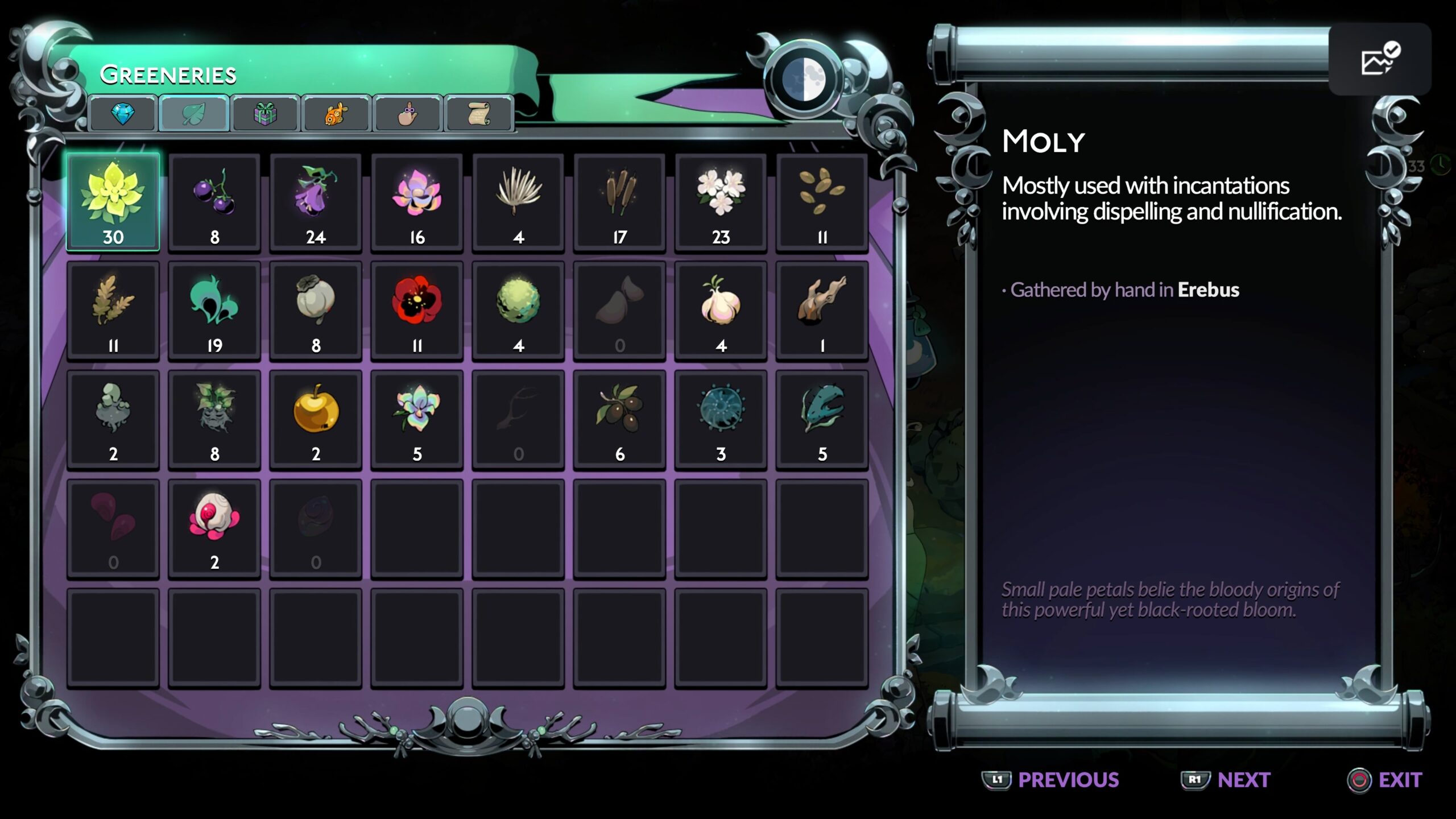
… and different kinds of plants that you can either find during your runs or grow in a garden … 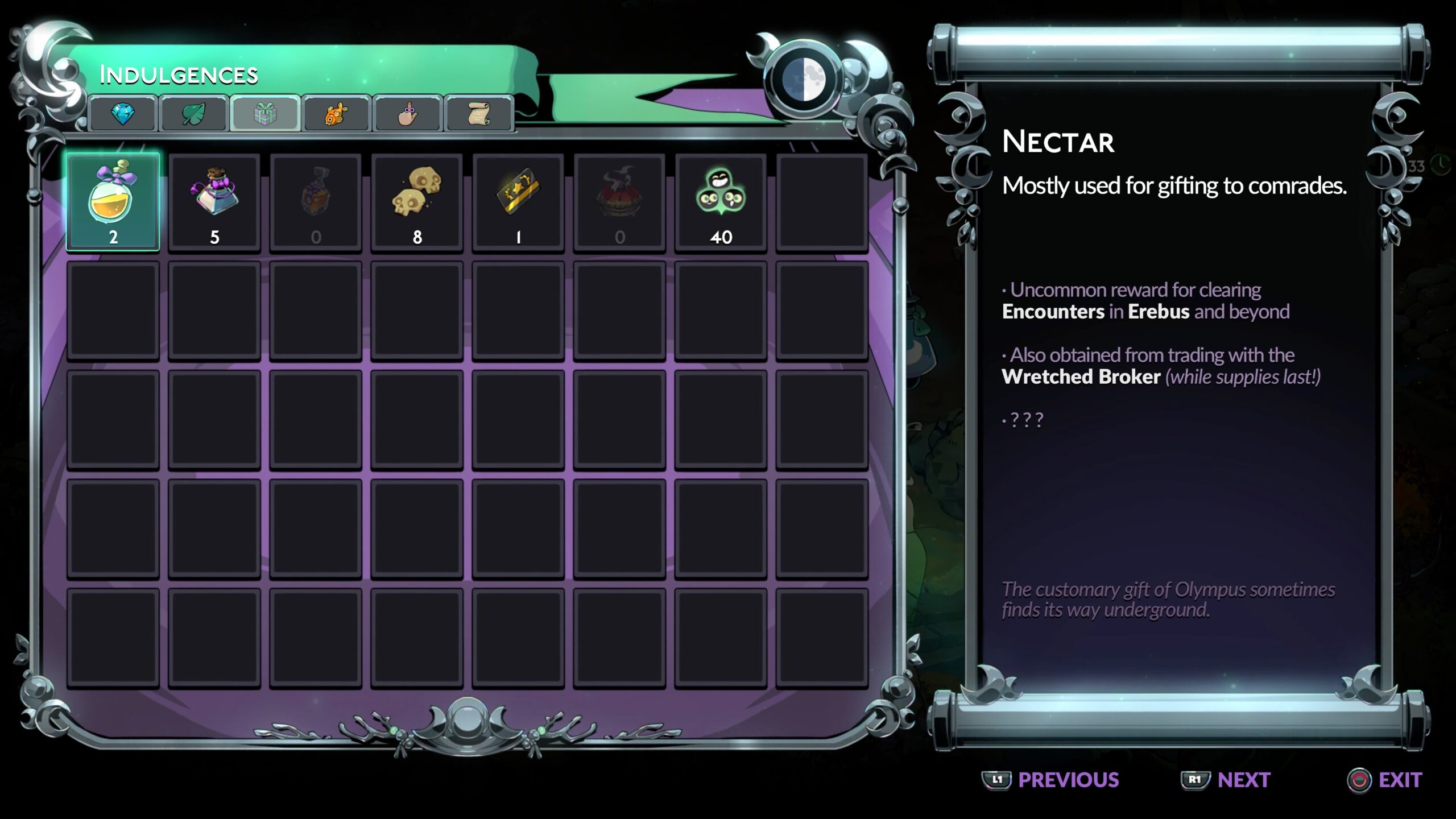
… and even more kinds of resources to improve other characters’ opinions of Melinoë. To focus on the Fates storyline for a moment, I glanced through the Hades II wiki and saw that its quest chain is quite long and grindy. I don’t know if the game will hold my interest for that long.
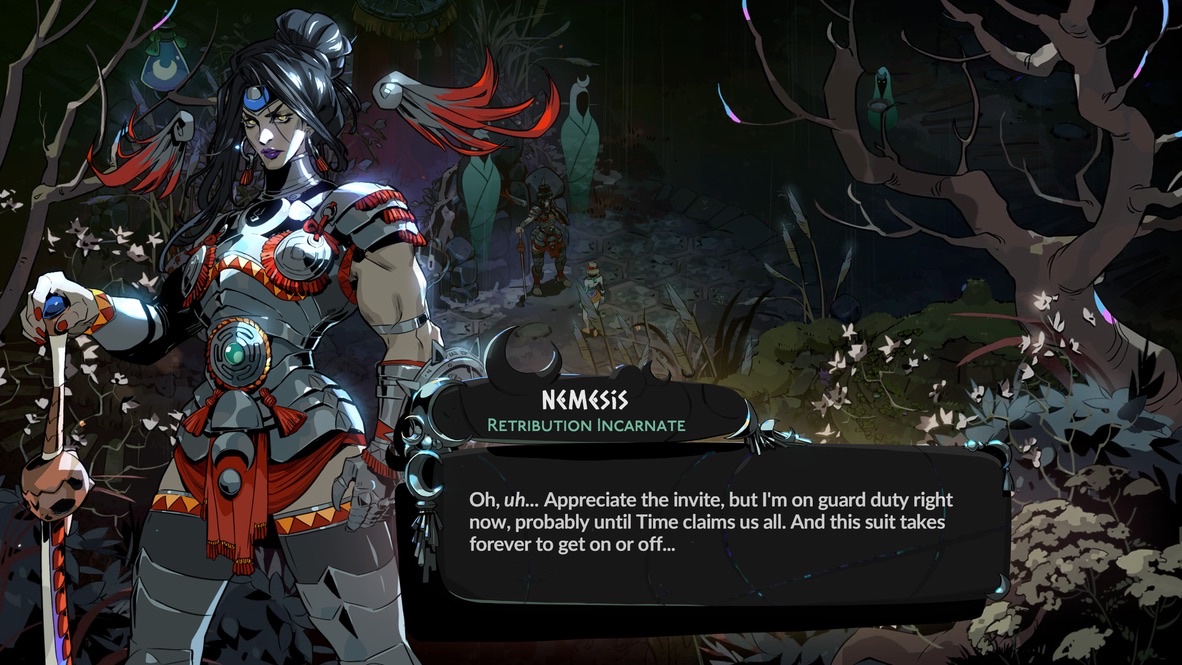
In Hades, you could have a romantic relationship with one or two characters. This hasn’t come up yet in my Hades II gameplay. A couple of characters, like Nemesis, drop hints. 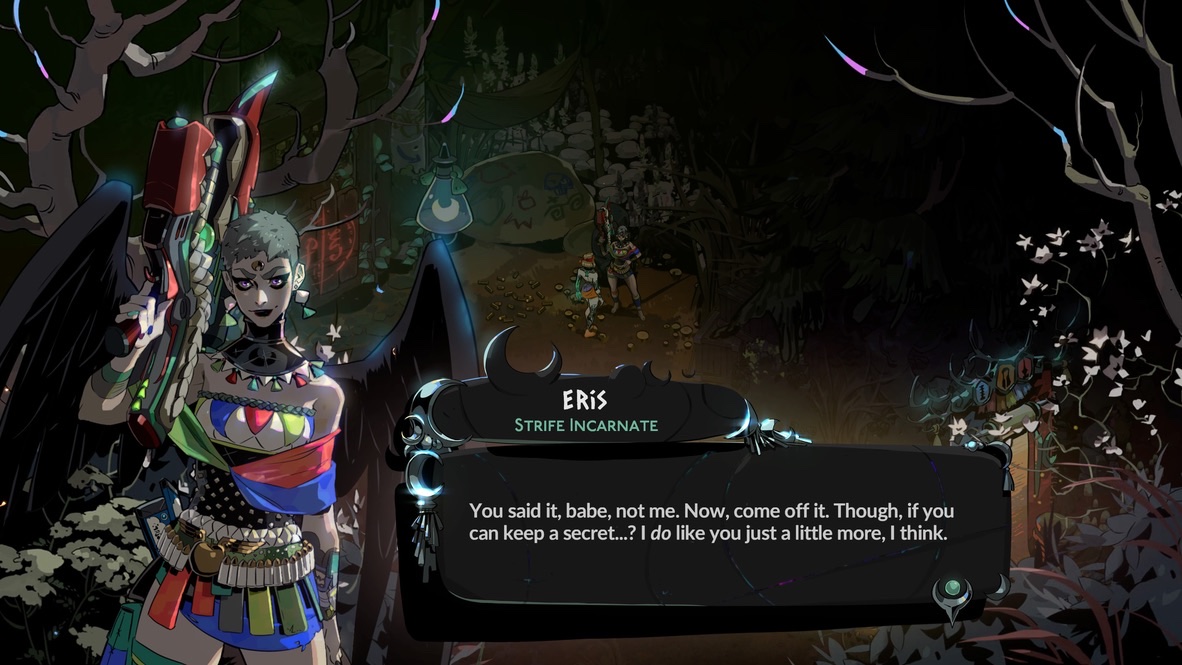
One of rules of relationships is don’t sleep with someone whose eyes are crazier than yours are. Eris definitely has “crazy eyes.” Still, there’s potential here. 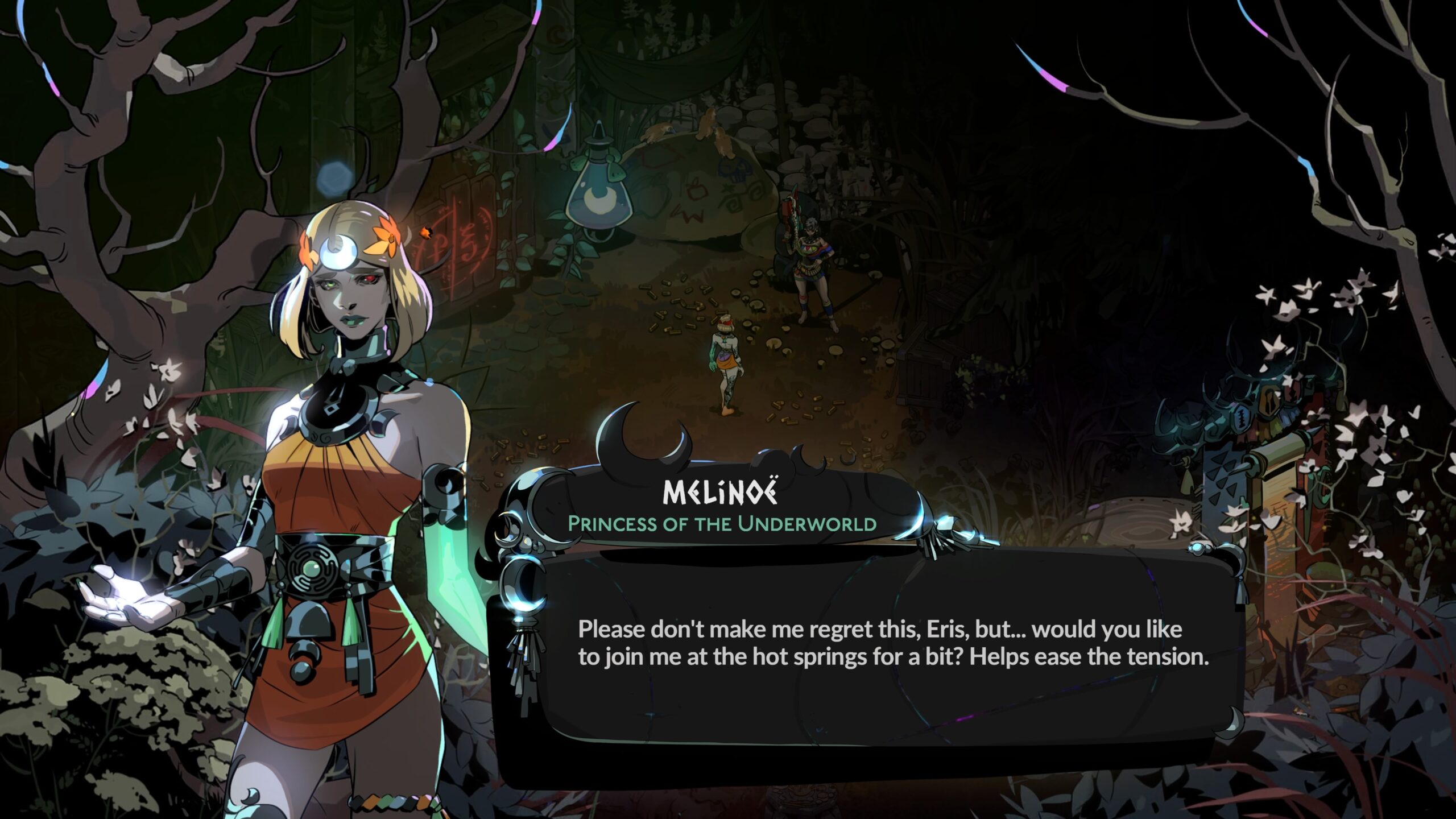
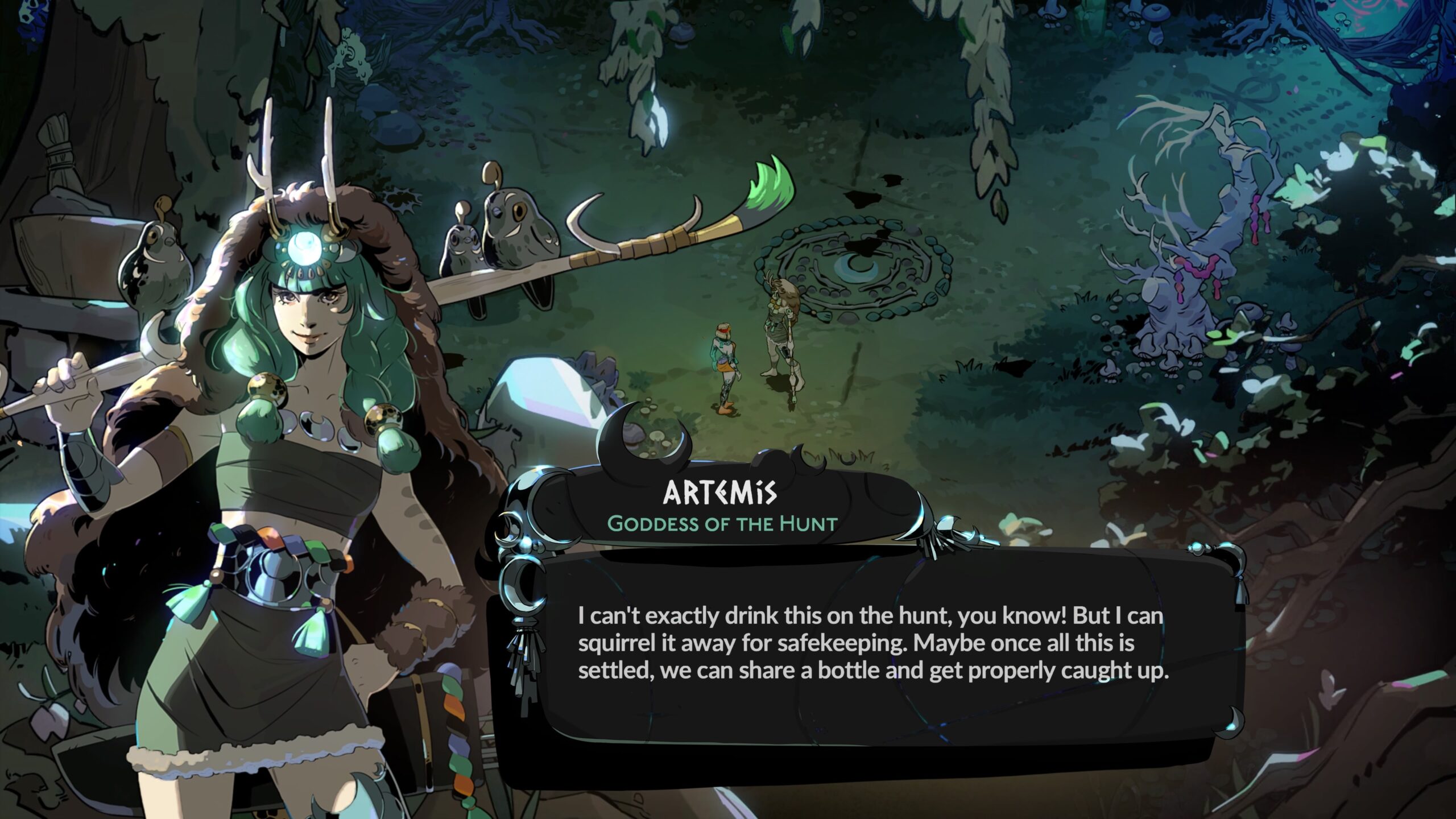
Artemis is clearly a more sensible choice. She sings and she smashes monsters. What more could one look for in a partner? (If you’re wondering why there isn’t a steam-bath screenshot of Artemis, it’s because to ask a character to join you there, you have to earn their approval to a certain level, which requires resources you have to grind for.) As a curmudgeon, I’m irritated that the Hades II team seems to have made the same assumption that Larian did with Divinity: Original Sin II: that a “better” system means a more complex one.
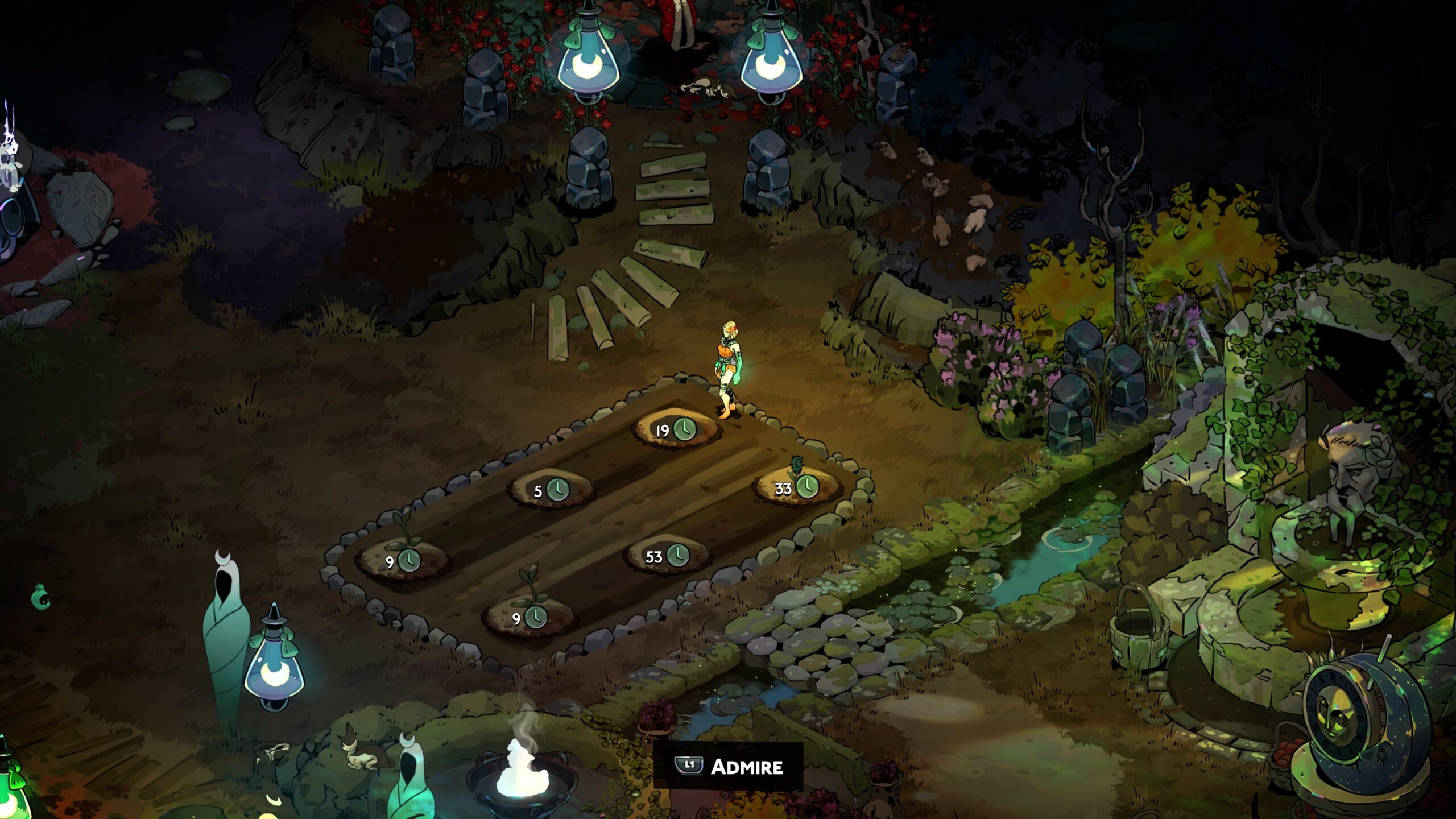
Melinoë regards her garden, in which she grows herbs for her enchantments. The clocks above the mounds are the number of encounters within a run that must pass until the plant grows. You can also pass time through certain activities like the steam baths, which in turn require more resources to create and use. 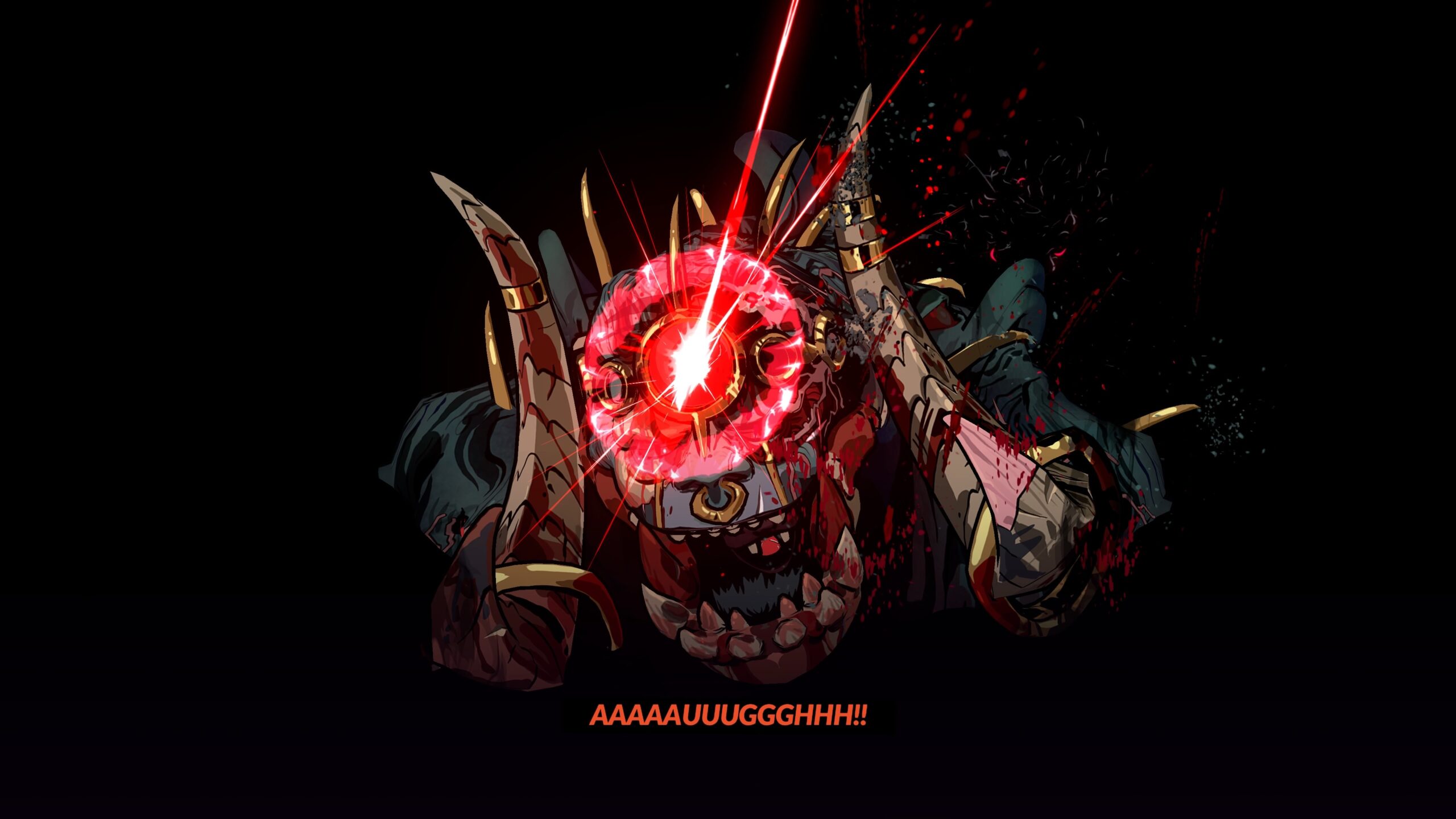
I agree, monster. Sometimes it’s best to keep things simple.
I’ll offer one more caution: The story of Hades II is a continuation of that in Hades. I strongly suggest playing the earlier game first. However, if you’re playing just to beat up the monsters, you won’t be bothered when Zeus says “You’re like your brother Zageus, so here’s the same blessing I gave him.”