Yesterday we made an attempt at Chapter 3 of Soul Raiders.
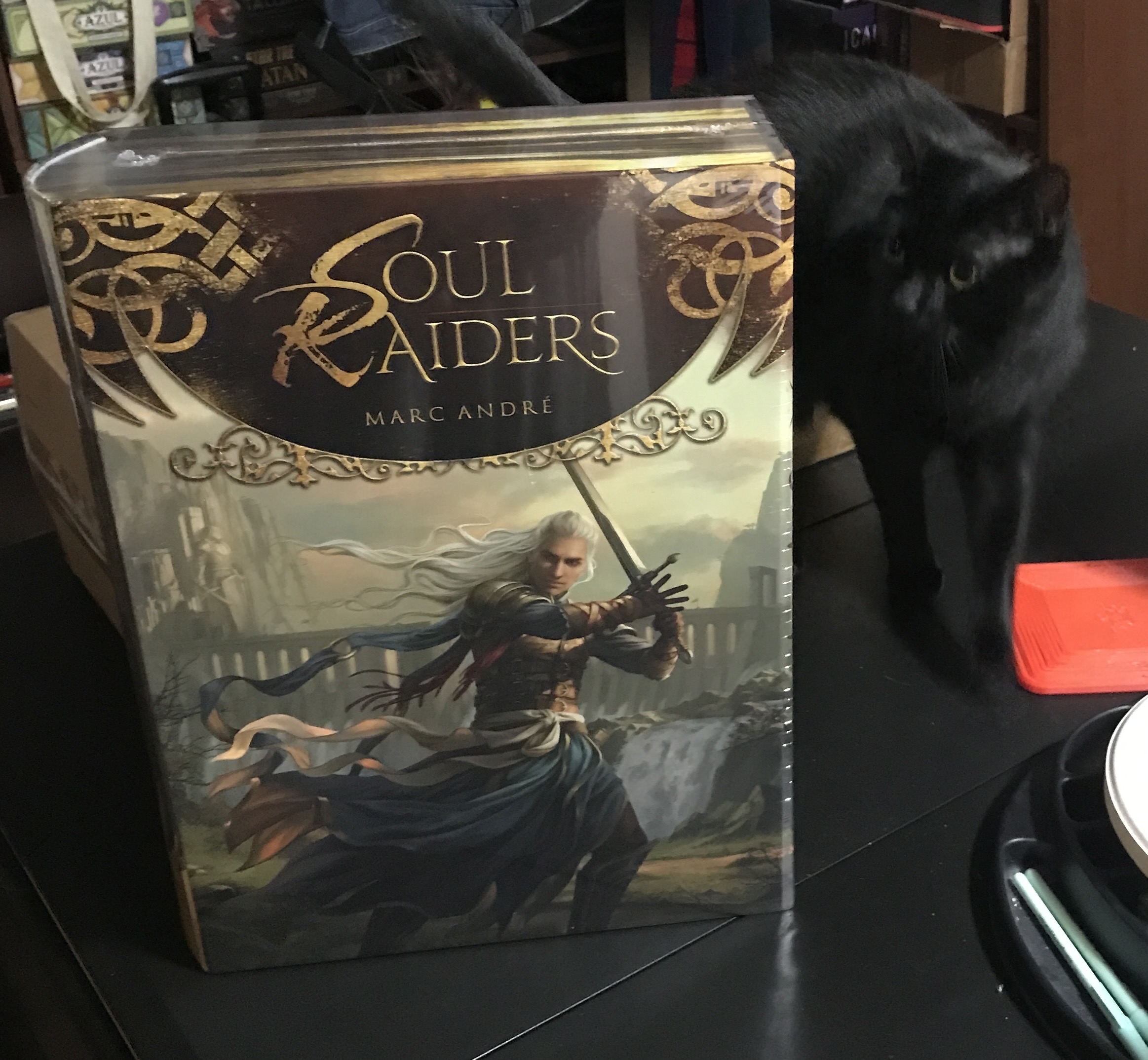
To remind you of the “story so far”:
- In August 2025 we played Chapter 1 and got through it successfully in a single night.
- In September 2025 we started on Chapter 2. It’s a bigger and more complex story. We were only able to go part of the way before we had to call it a night.
- In December 2025 we were able to continue with Chapter 2. We lost.
- June 2026 we tried Chapter 2 again. This time, armed with the knowledge of the previous attempt, we succeeded handily.
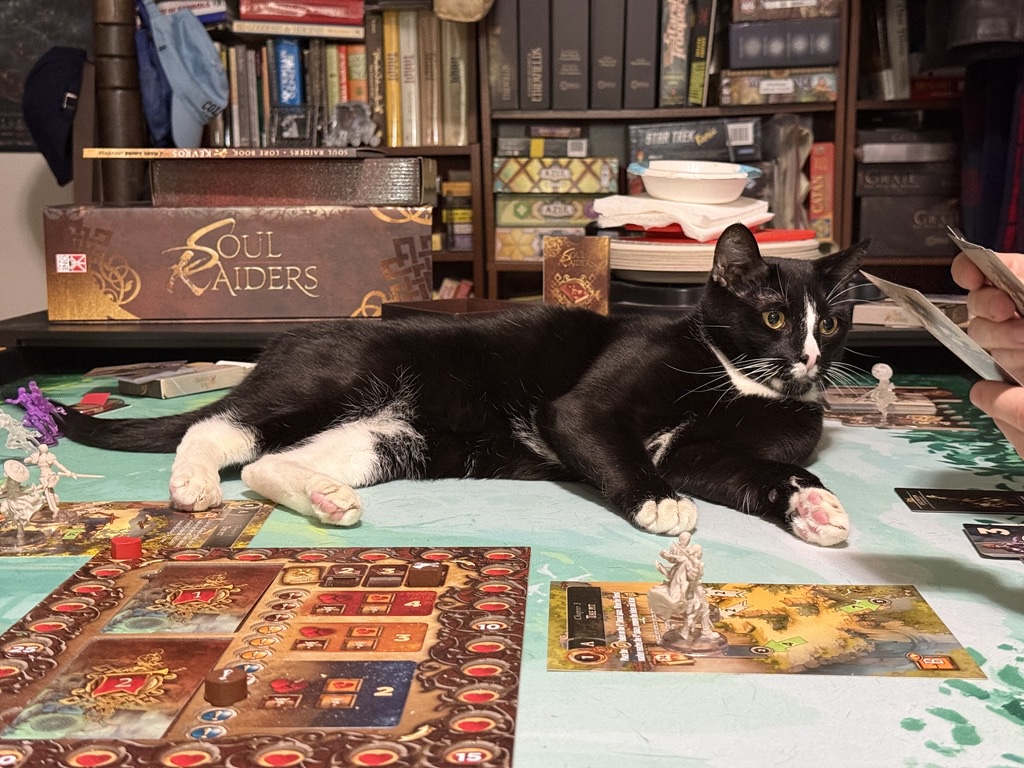
During the game, something happened that we never experienced during one of our play sessions: There was a power black-out.
I took whatever pictures I could:

It was only later that I realized that I never turned on the flash…
OK, enough of that particular joke.
Here’s the unpleasant truth: We did not have a good time with Chapter 3. That’s why I didn’t take any pictures.
Soul Raiders Chapter 3 is punishing. By the end of our first round, the game’s Threat level was already half-way to maximum. By the end of the second round, it was obvious we were going to lose. We went into the third round with the intent of learning more about the scenario for a future attempt; we were dispirited and gave up before the end of that round.
As far as John is concerned, there will be no future attempt. I’ll have to talk with Maria and Andrew about it, to see if they want to try again.
What happened?
-
Even at the start, it’s clear that Chapter 3 is intended to be far more challenging than anything we experienced thus far. From what we could tell, the intent of the game’s designer, Marc André, was that we should replay Chapters 1 and 2 repeatedly to improve our decks before engaging with Chapter 3.
In particular, we had no means to deal with the rapid increase in Threat that slammed us right at the start.
-
We hit some bad luck. We pulled every Threat card in the standard monster deck during our first two rounds. Of the other standard monster cards, most of them were the ones with two Shields and Rage. The story monsters we encountered in those first rounds each had two or three Shields with Rage.
In other words, our Vitae (the measure of character health) was rapidly going down. At the end of the second round, we lost 22 Vitae (out of 30) in addition to other losses, such as a loss due to a group of monsters with Ambush.
- I had made a choice near the end of our Chapter 2 playthrough. I didn’t realize at the time that a consequence of that choice would lead to making things much harder in Chapter 3. It was a major contributing factor to the difficulties in the previous two points.
-
There was what turned out to be misleading labeling on a couple of the Location cards.
Let me set this up: At the start of the game, each Hero has the choice of their starting Location. John and Maria chose Location A; Andrew and I went to B. (I’m obfuscating to avoid spoilers.)
In Location A there’s an indicator: For 14 movement, pull a particular Story Card. In John’s very first hand in the game, he happened to have more than 14 movement. He took that option because, like any of us would have if we’d been in his position, he wanted to advance the story. That took him into Interesting Place™.
The location card for Interesting Place™ had a similar marking: spend 14 movement to pull a different Story Card. In an attempt to push the story more quickly (since things were getting rough by then), he spend 14 movement on his second round. His hope to was to go to Another Interesting Place™.
No. The result of this effort was to dump him back to Location A. This triggered a new set of monsters, which he had no chance to defeat in the second round and which he probably couldn’t manage in the third round.
If those indicators had been “Spend 14 movement to go to Interesting Place™; spend 14 movement to go to Location A” then he wouldn’t have wasted time and cards. Instead, out of a legitimate desire to move the game’s story forward, the game handed him a hazard that sped us toward a loss.
-
Maria didn’t have 14 movement, so she left Location A to try to rendezvous with Andrew and I as we explored the areas around Location B. She triggered more monsters and more Threat.
Meanwhile, Andrew and I triggered traps, wounds, and monsters. We tried to support each other, but that became impossible when a card plunges you down several floors that requires an item that you don’t have to get you out, or a triggered story monster blocks the exit out of the Location that you’d been counting on.
If we do a subsequent playthrough, we have an idea of what to avoid and what to pursue.
The question for us: Do we want to potentially expose ourselves to this level of disappointment again?
Thematically what we experienced made sense. As Soul Raiders, we were going deep into dangerous enemy territory.
As a game what we experienced was unpleasant.
Look again at that timetable near the top of the post. We don’t often play big cooperative narrative games like Soul Raiders. It took us a year to get to the start of Chapter 3.
Frankly, there may be better ways to spend our time.
We’ll talk about it. Maybe we’ll feel differently in a few months.
The game session didn’t end then. The power had come back on, we had dinner, the cats had been petted. We moved onto a different game and a much more pleasant experience.
My copy of Wingspan sat on my game shelf for several years. I’d played the game only once before, but that was online using Tabletop Simulator on Steam. When Maria opened the box, she was surprised to discover that all the cards were still shrink-wrapped and the cardboard game pieces had to be punched out.
She also observed that there seemed to be a lot more cards than she remembered. It wasn’t until after we finished the game that we understood that there were two sets of cards in the box. One set was the original that came from an early printing of the game. The other was a later printing of the cards. My guess was that I purchased the revised printing, tossed it into the box, and completely forgot it.
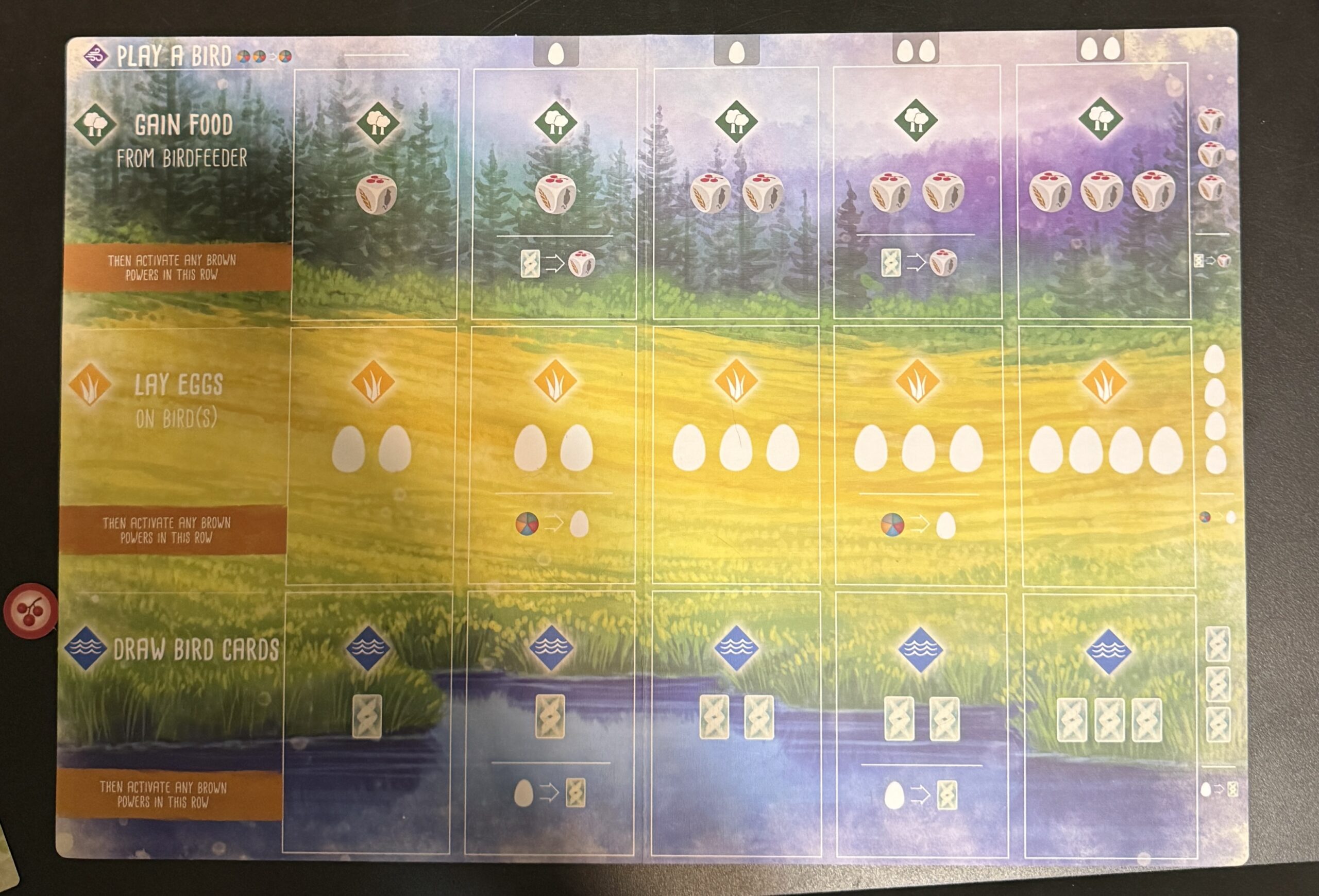
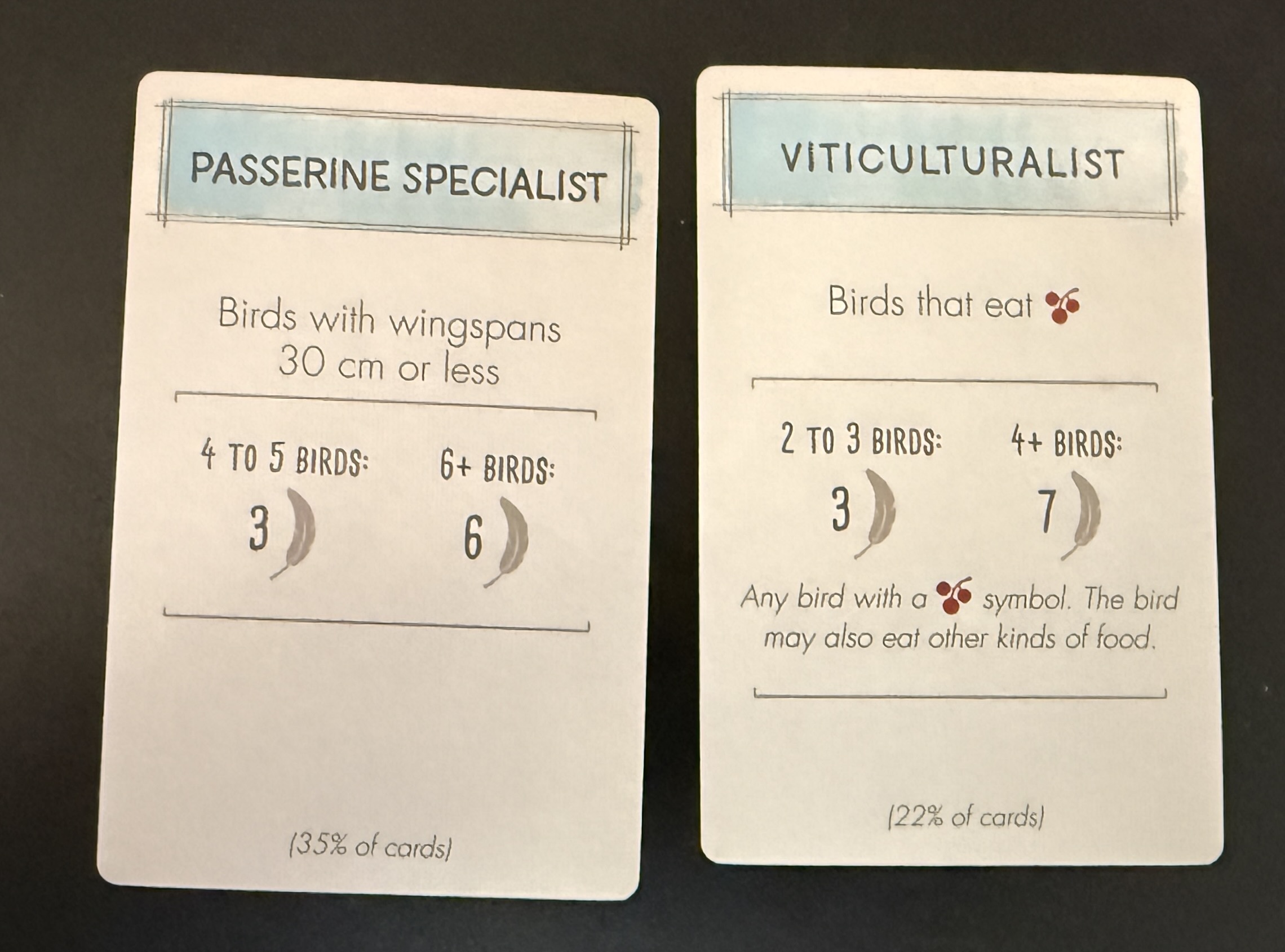
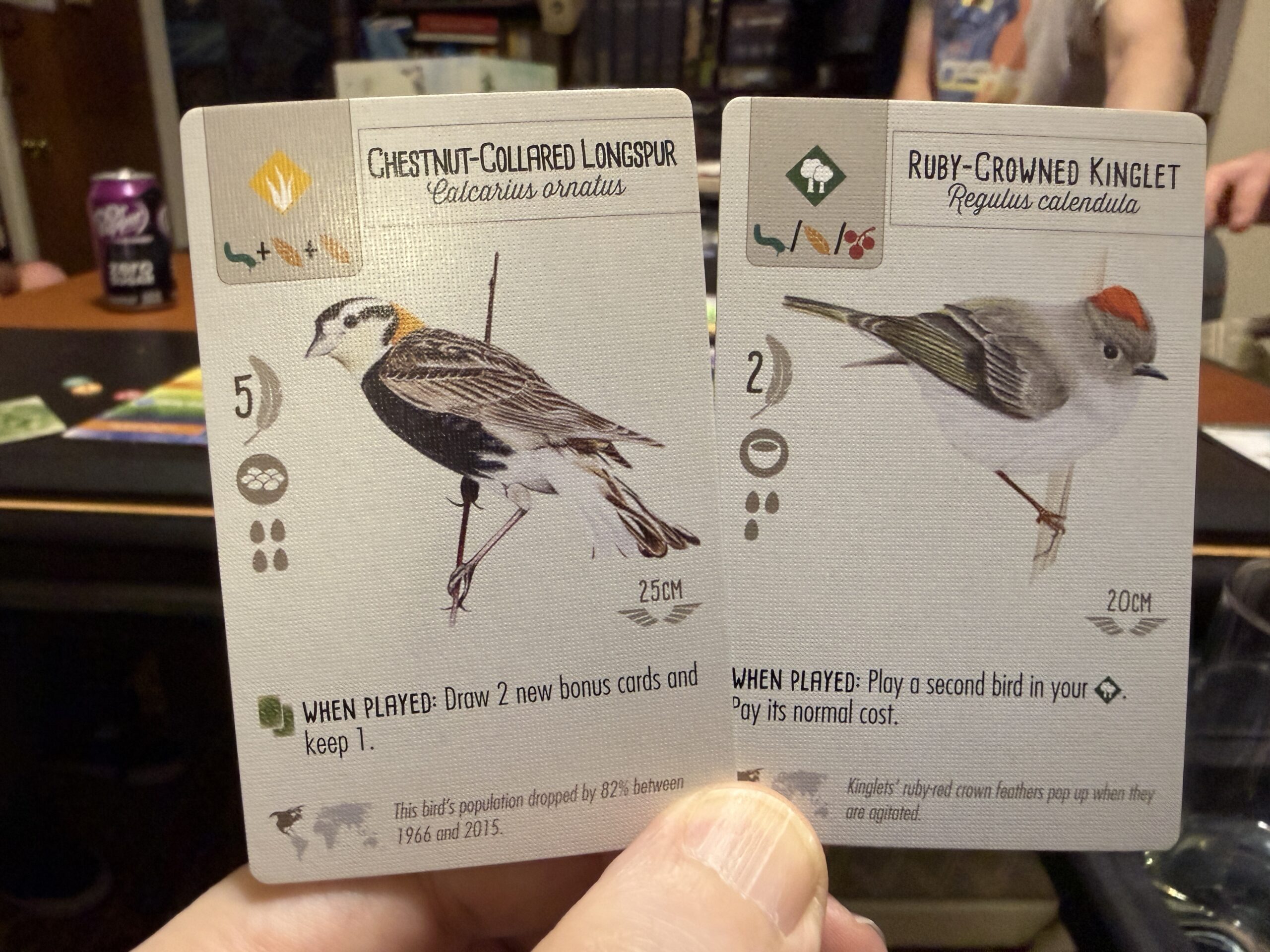
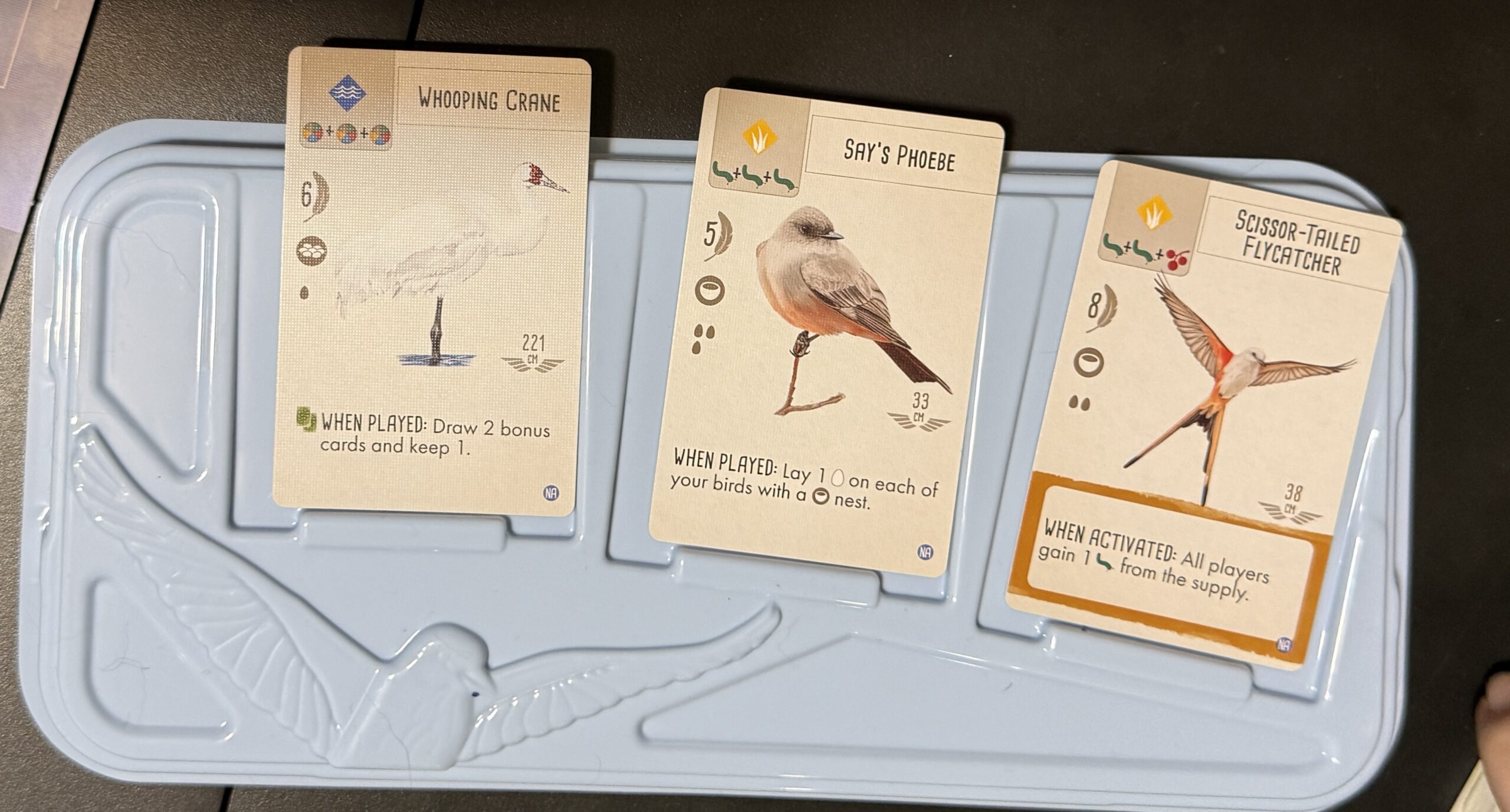
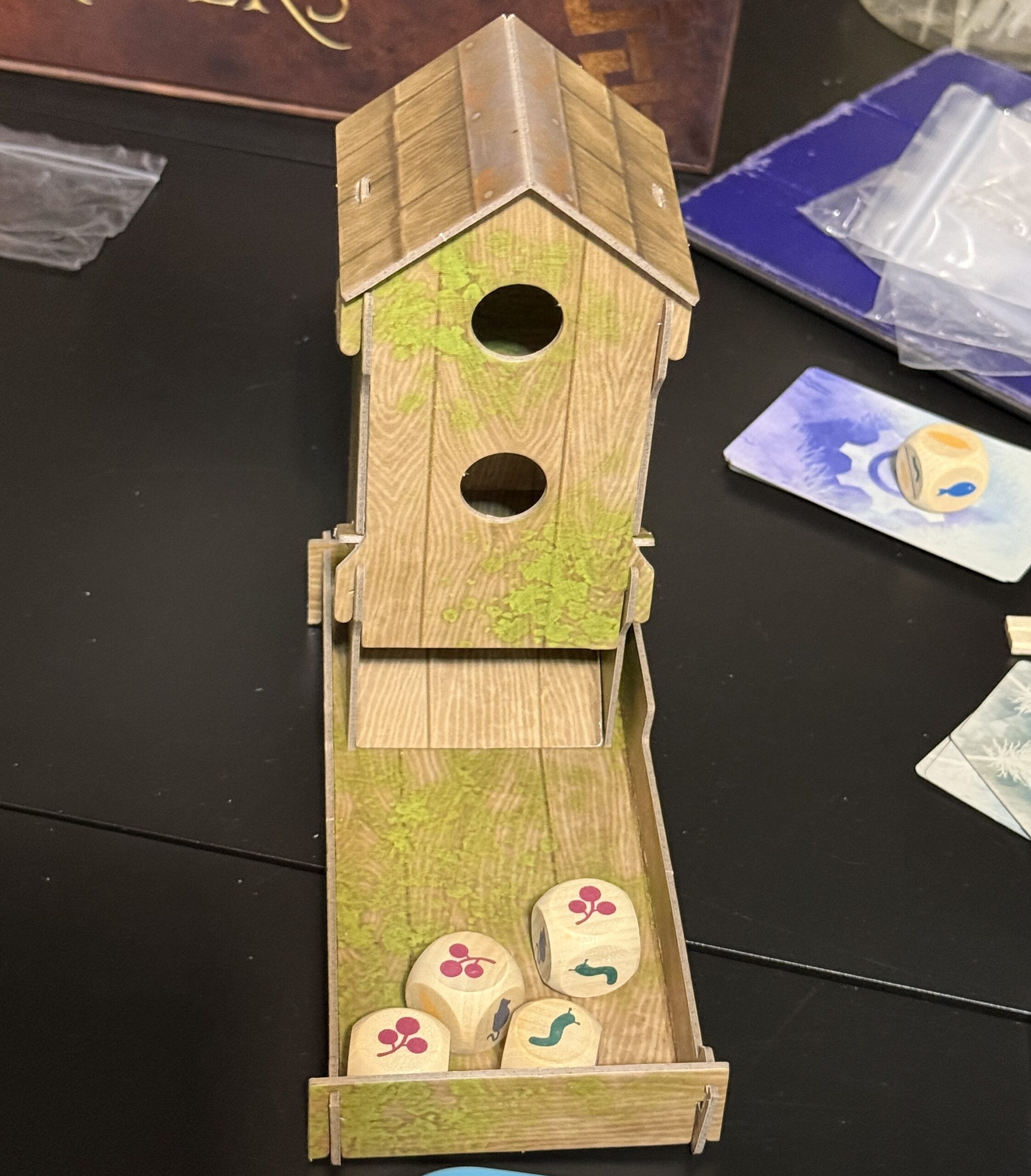
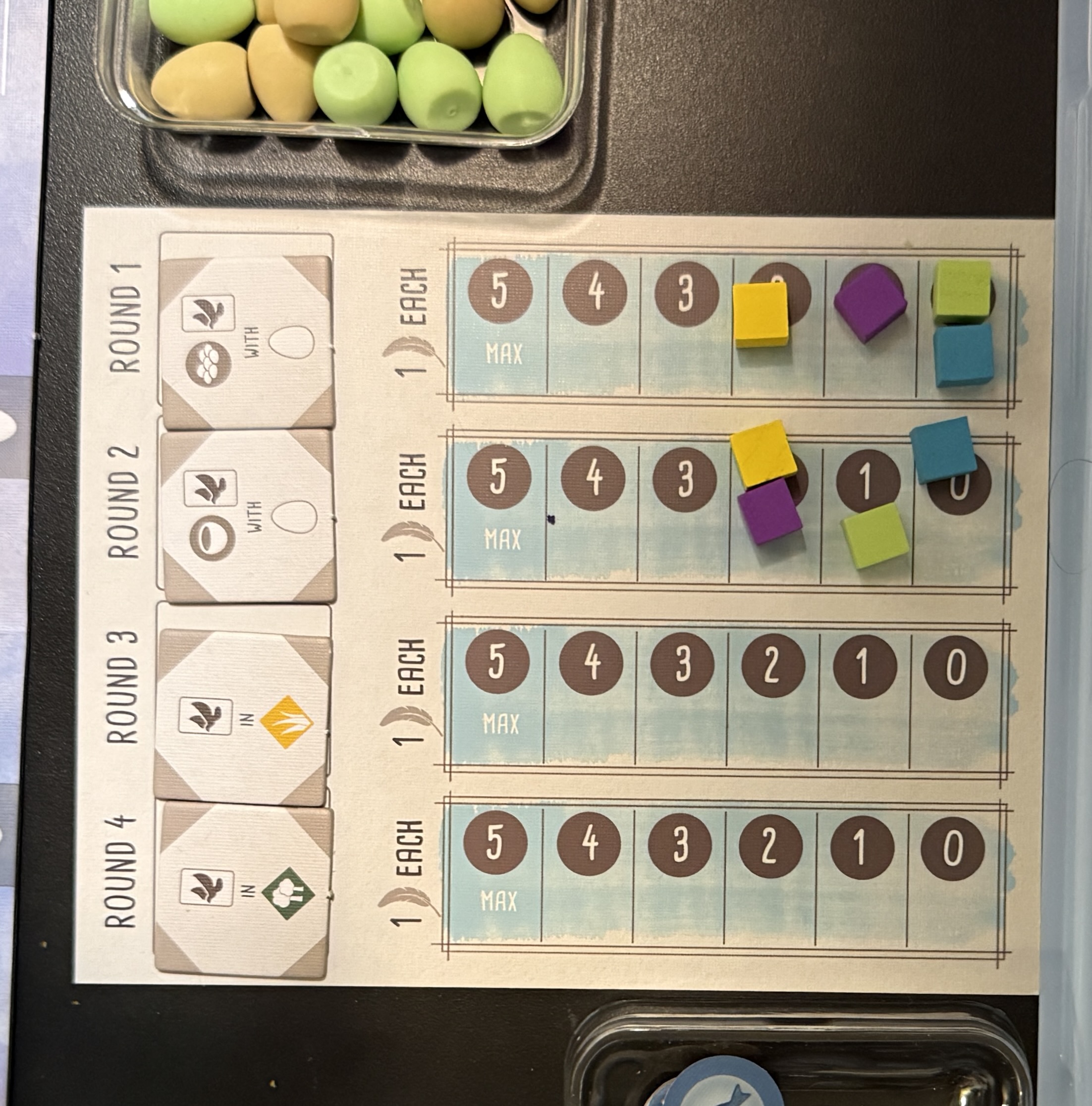
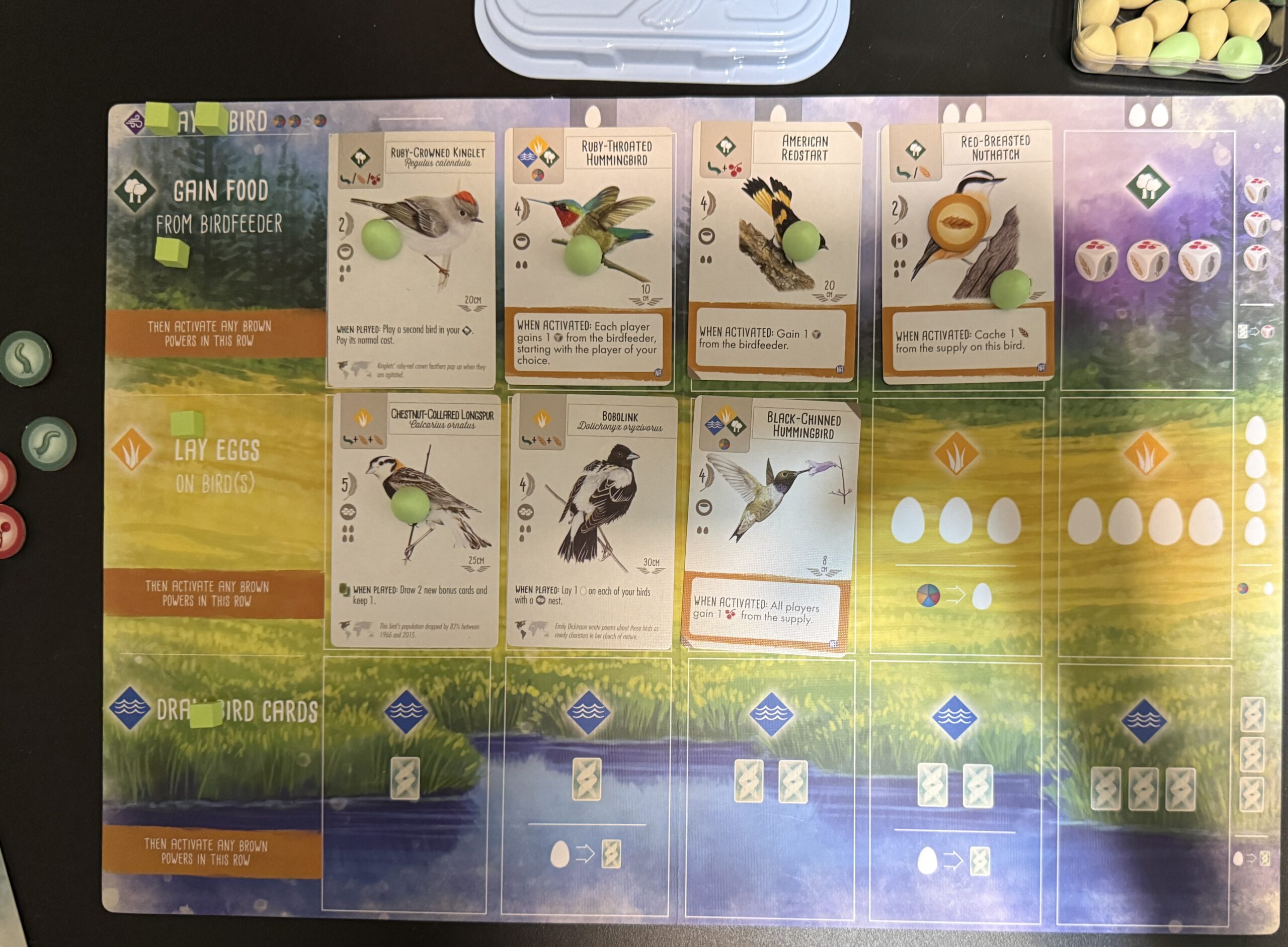
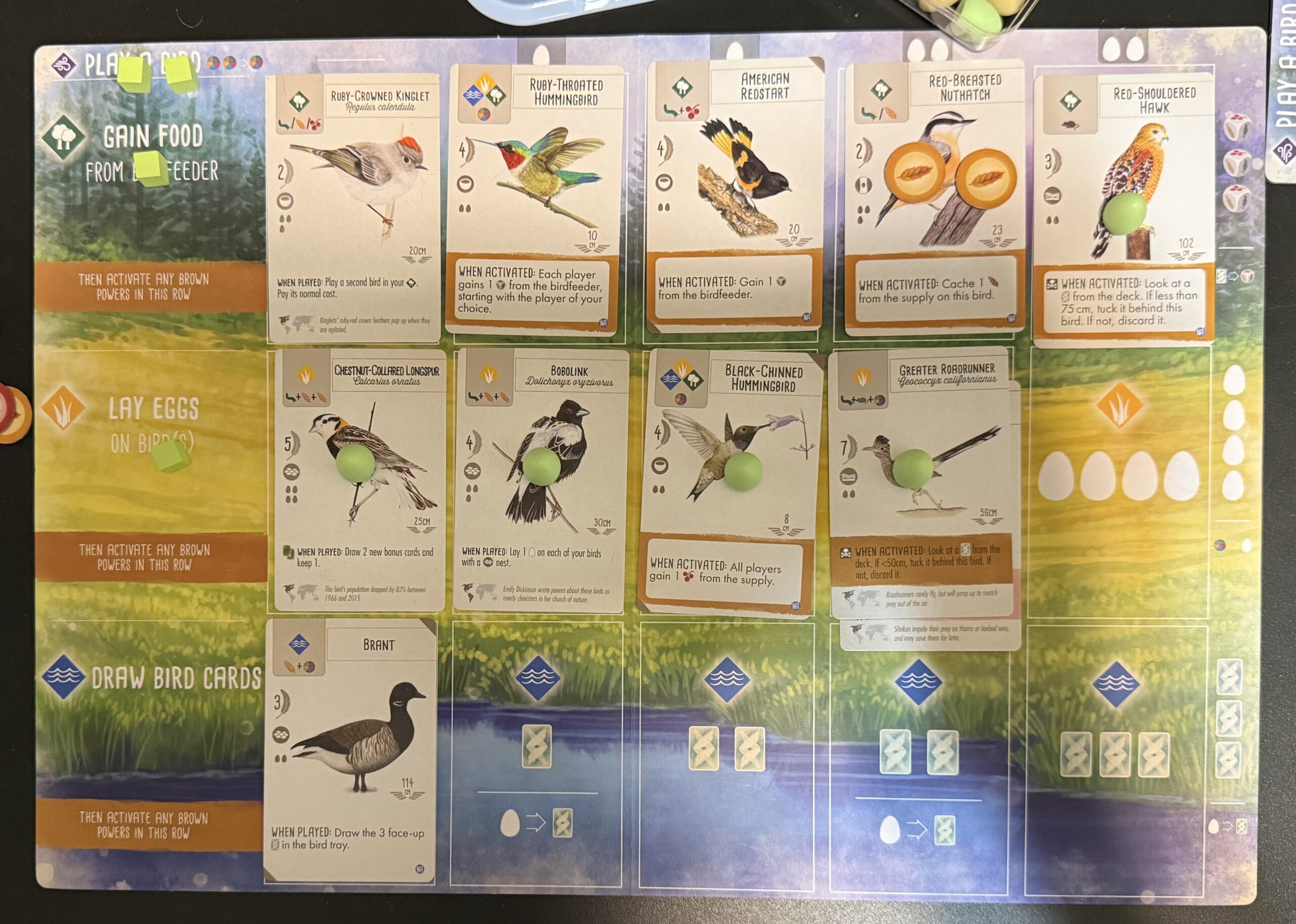
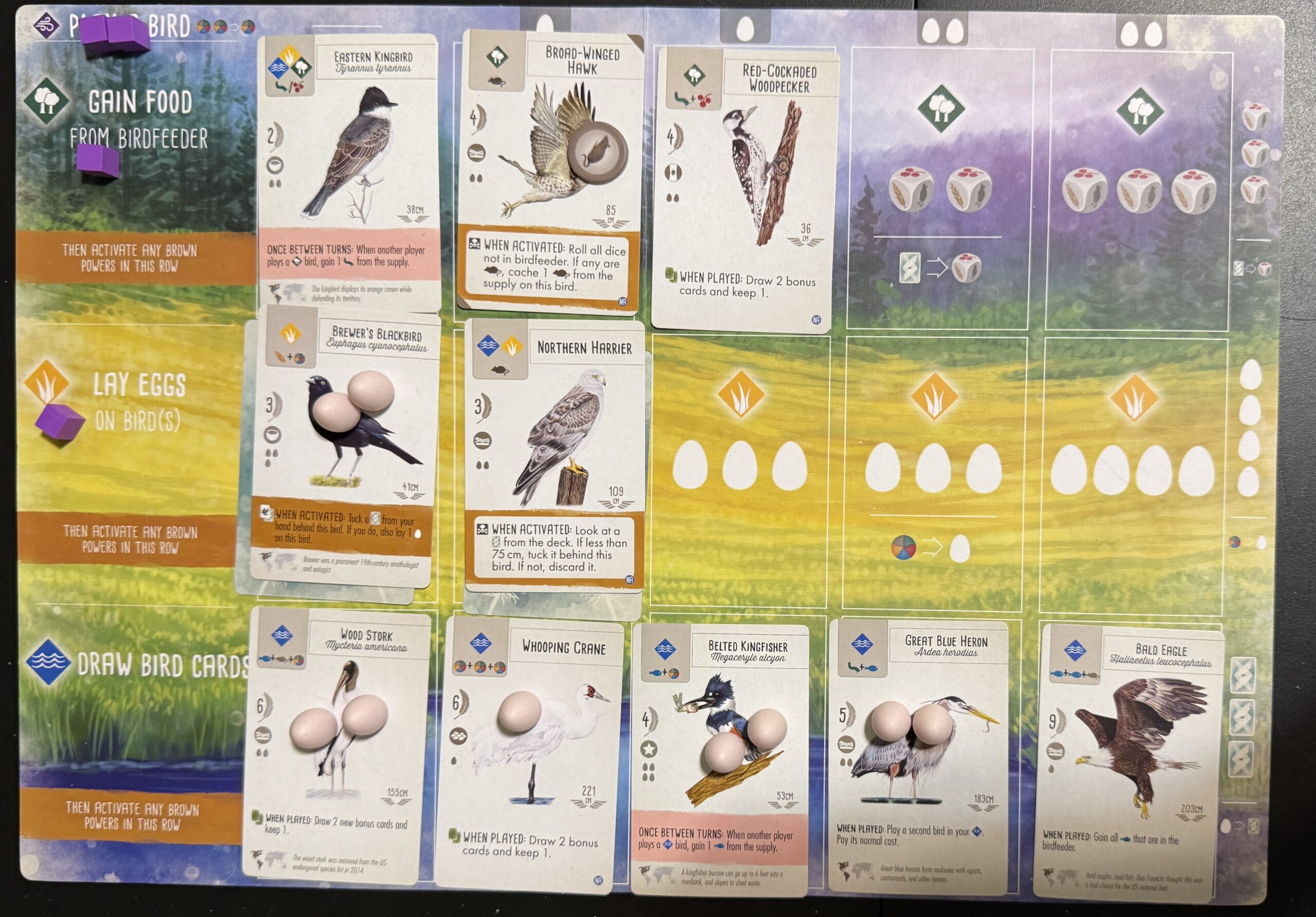
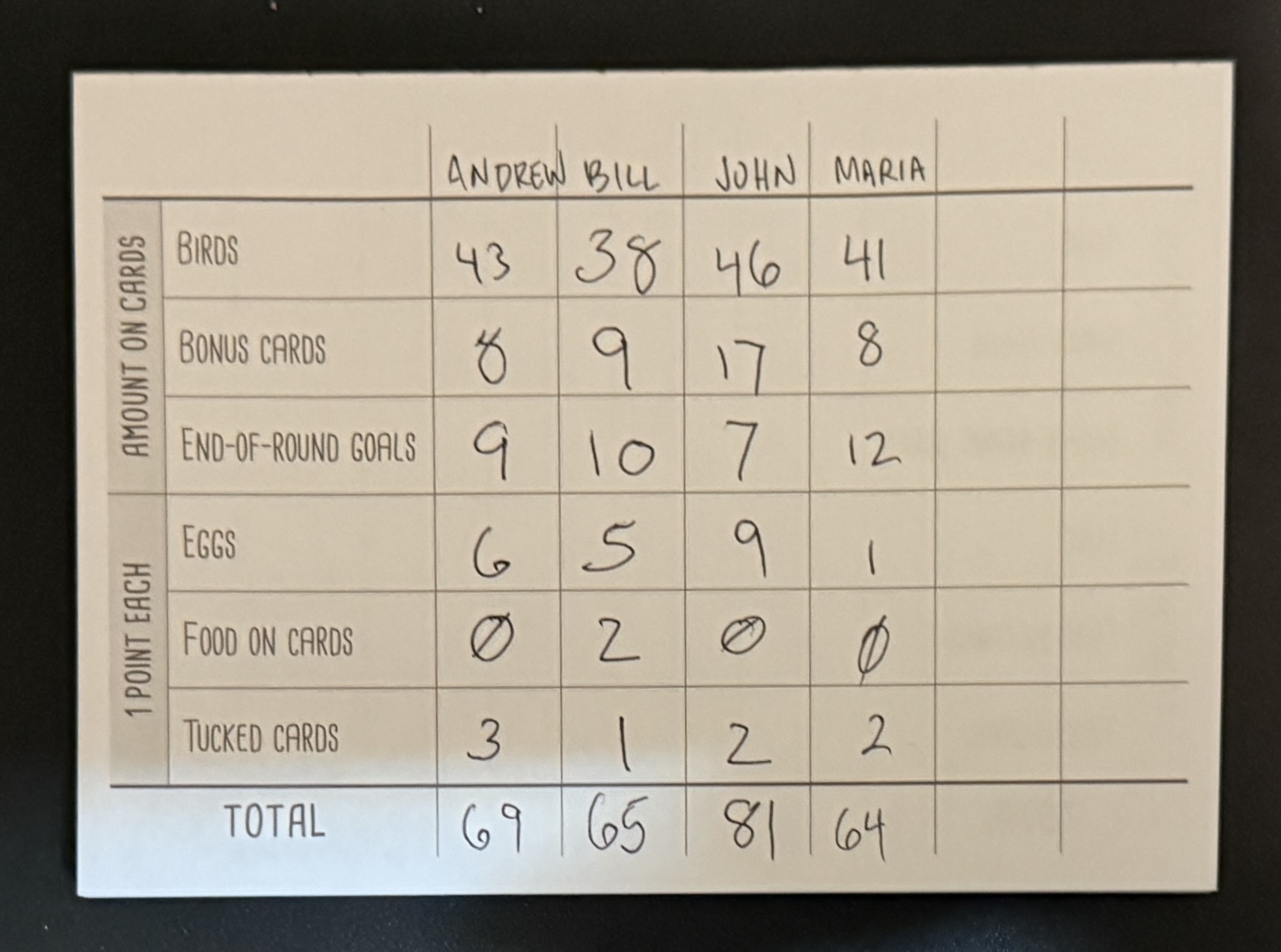
While the fate of Soul Raiders is in question, there’s no doubt that we’d play Wingspan again.
Pingback: Last Night’s Game – Ark Nova – The Argothald Journal