Maria and Andrew are fans of Ark Nova. They’ve played the digital version many times. Last night, they brought their copy of the physical game for all four of us to play. Like Wingspan on our previous game night, the game components had not been touched before and required some unwrapping and punching.
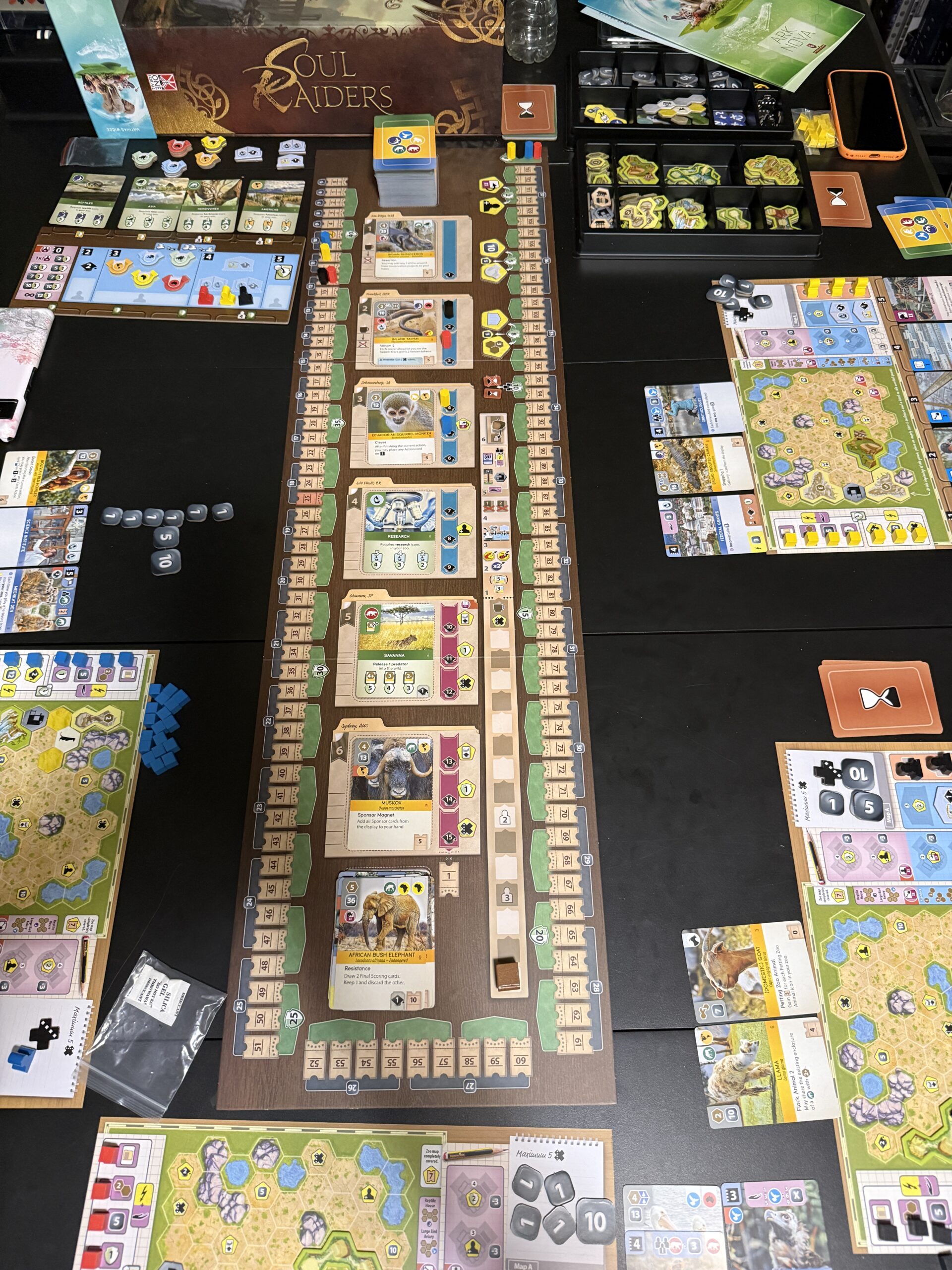
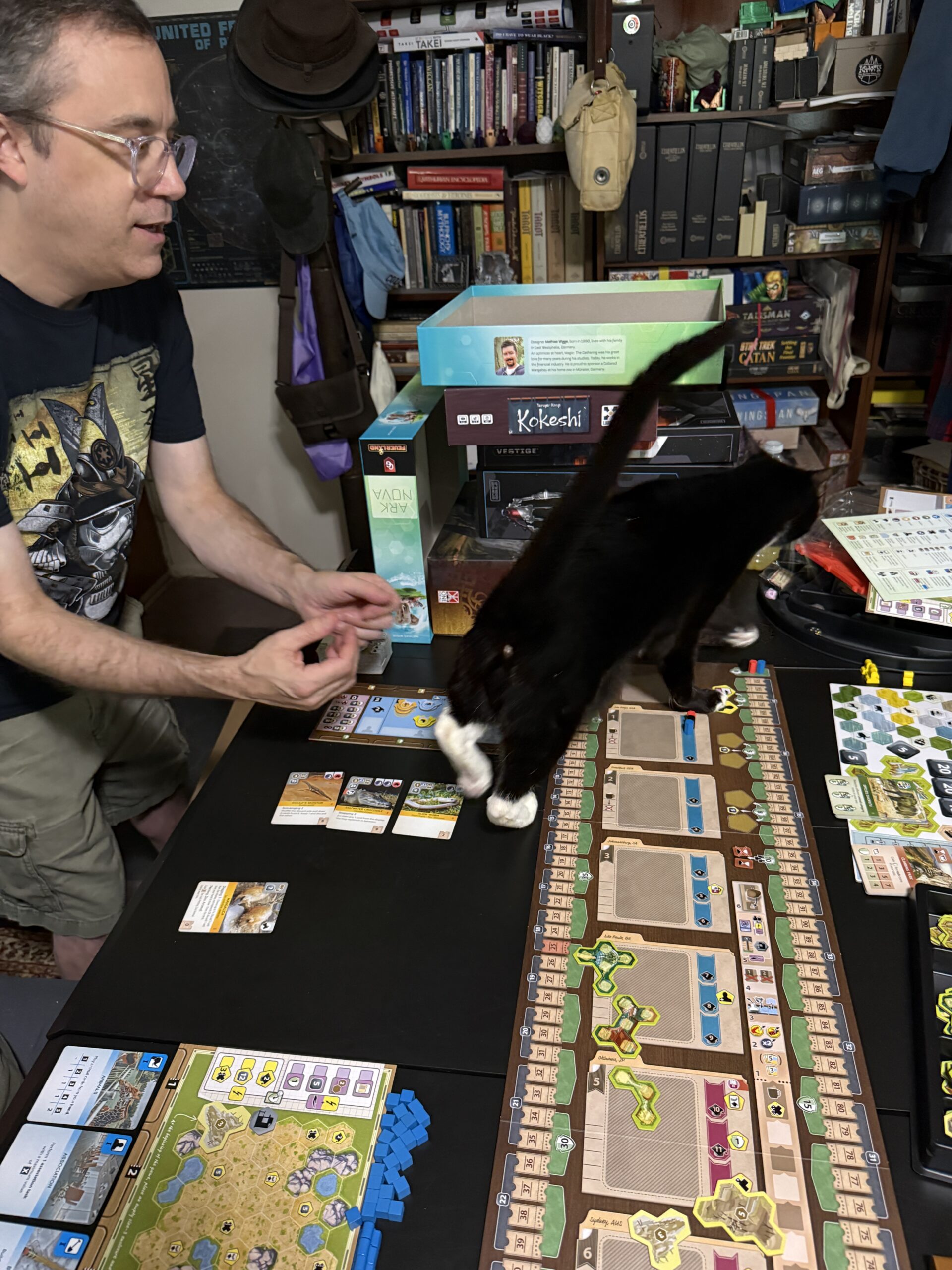
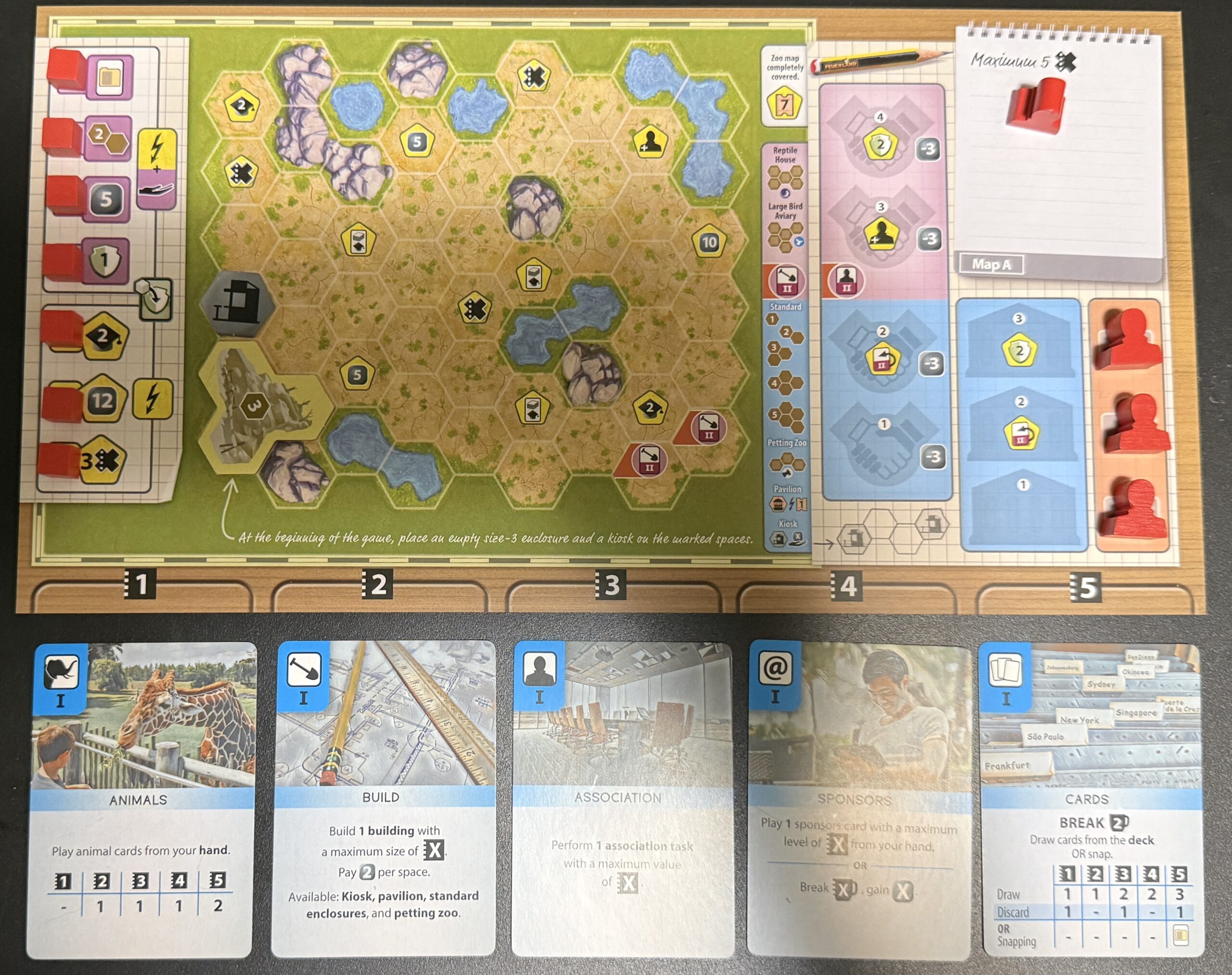
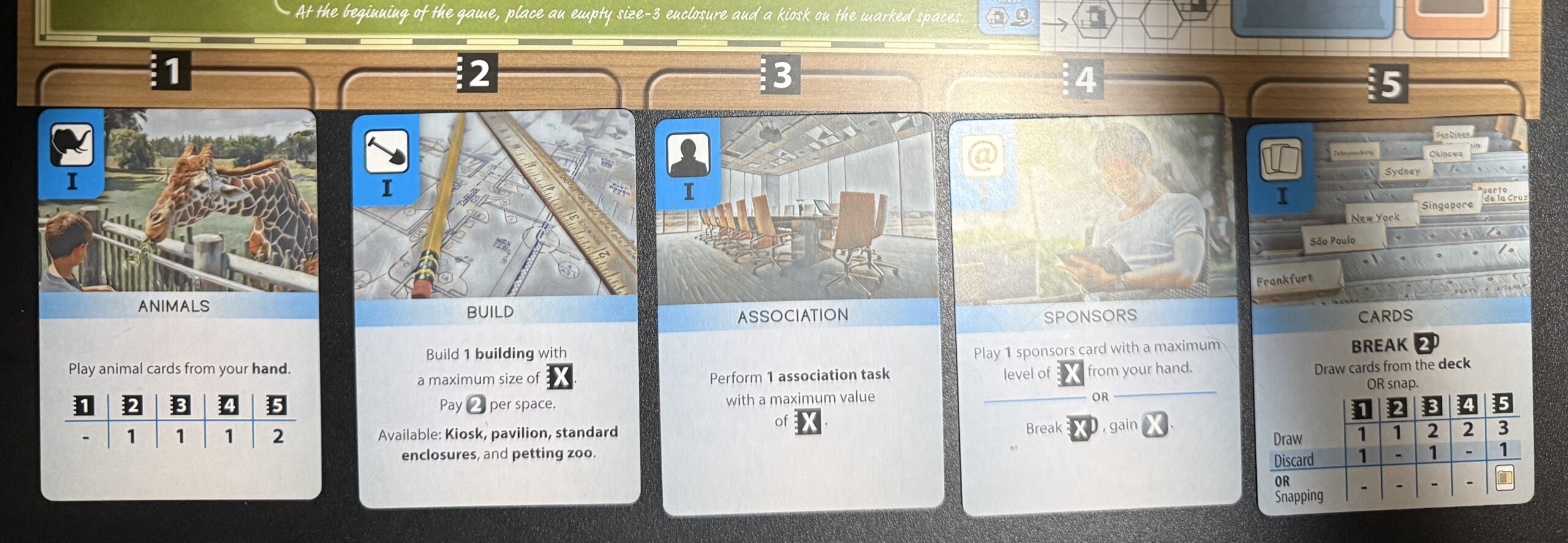
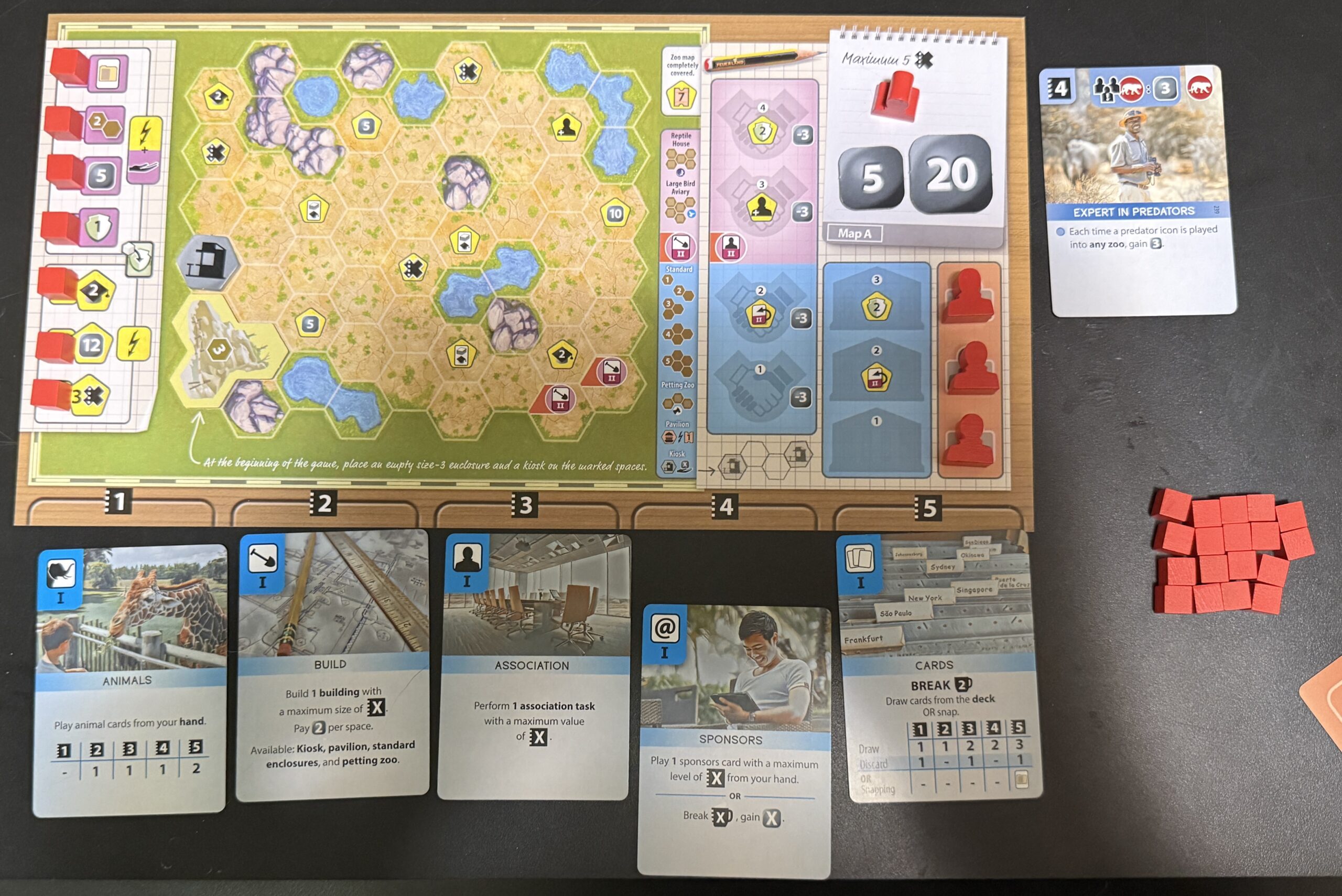
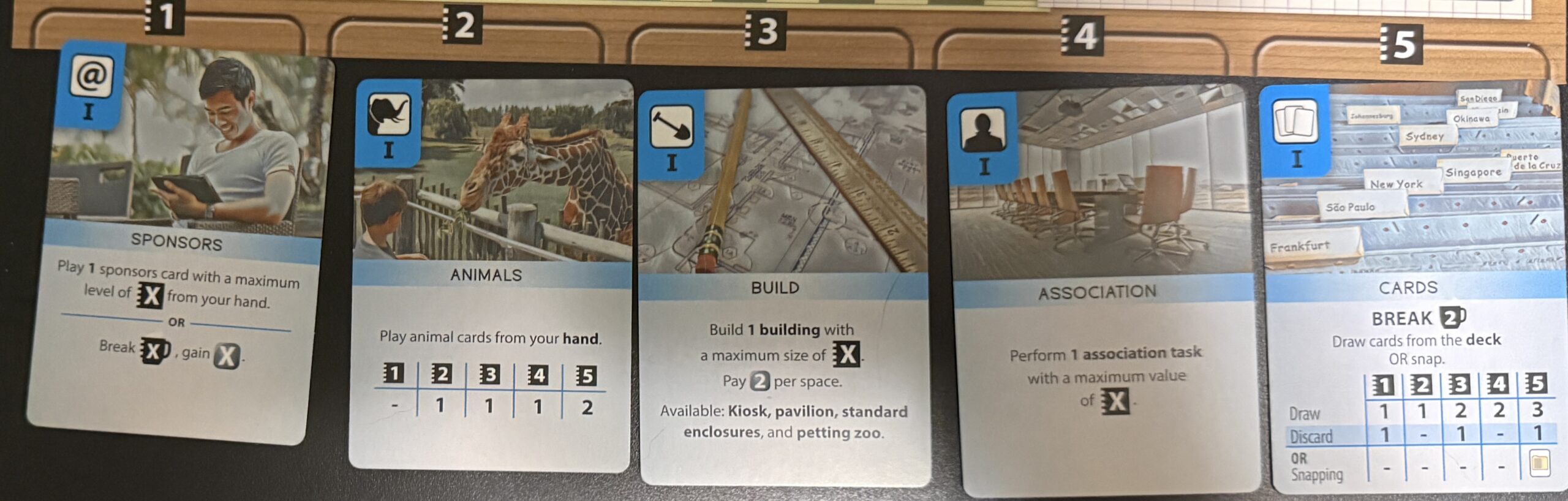
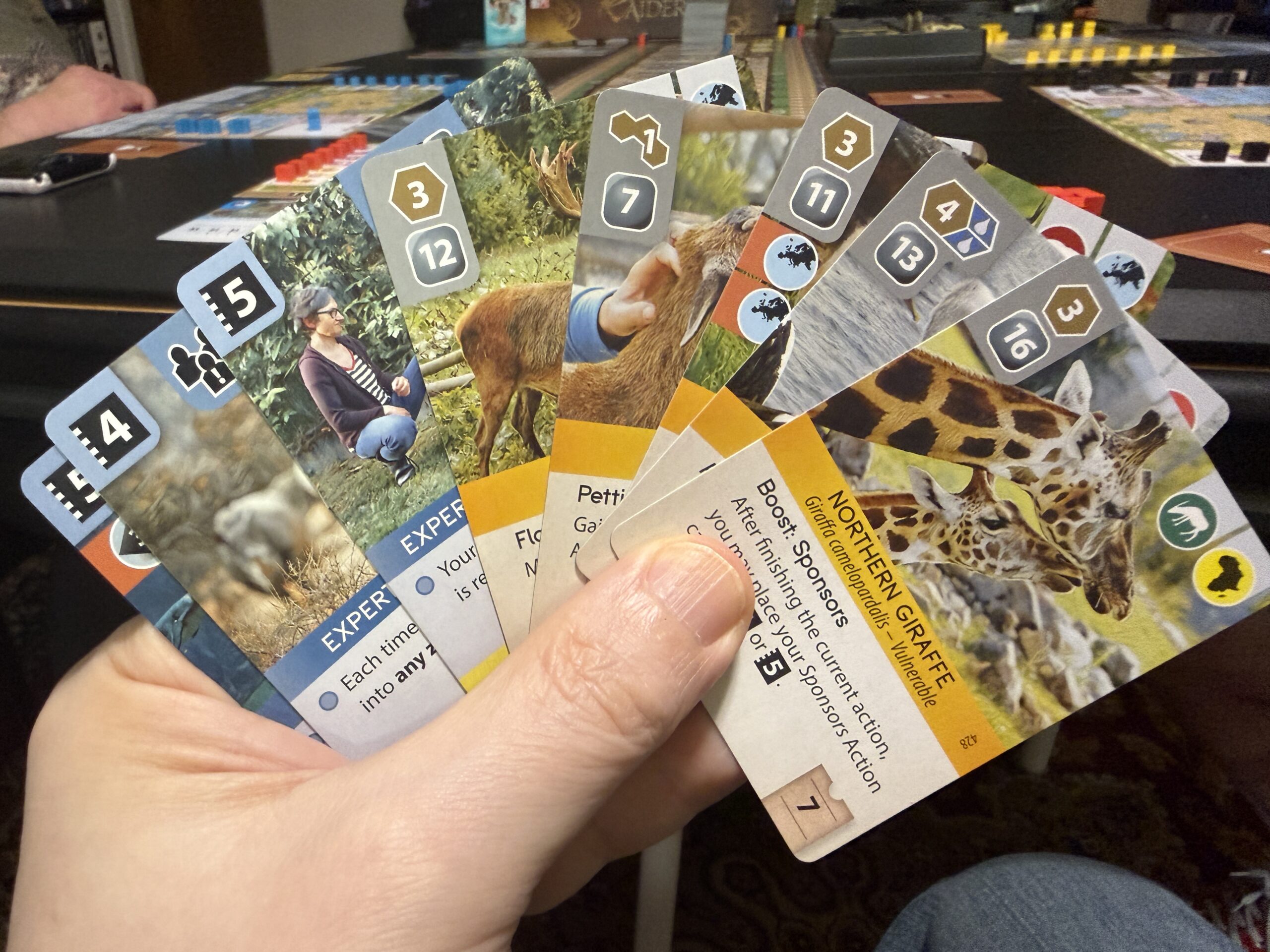
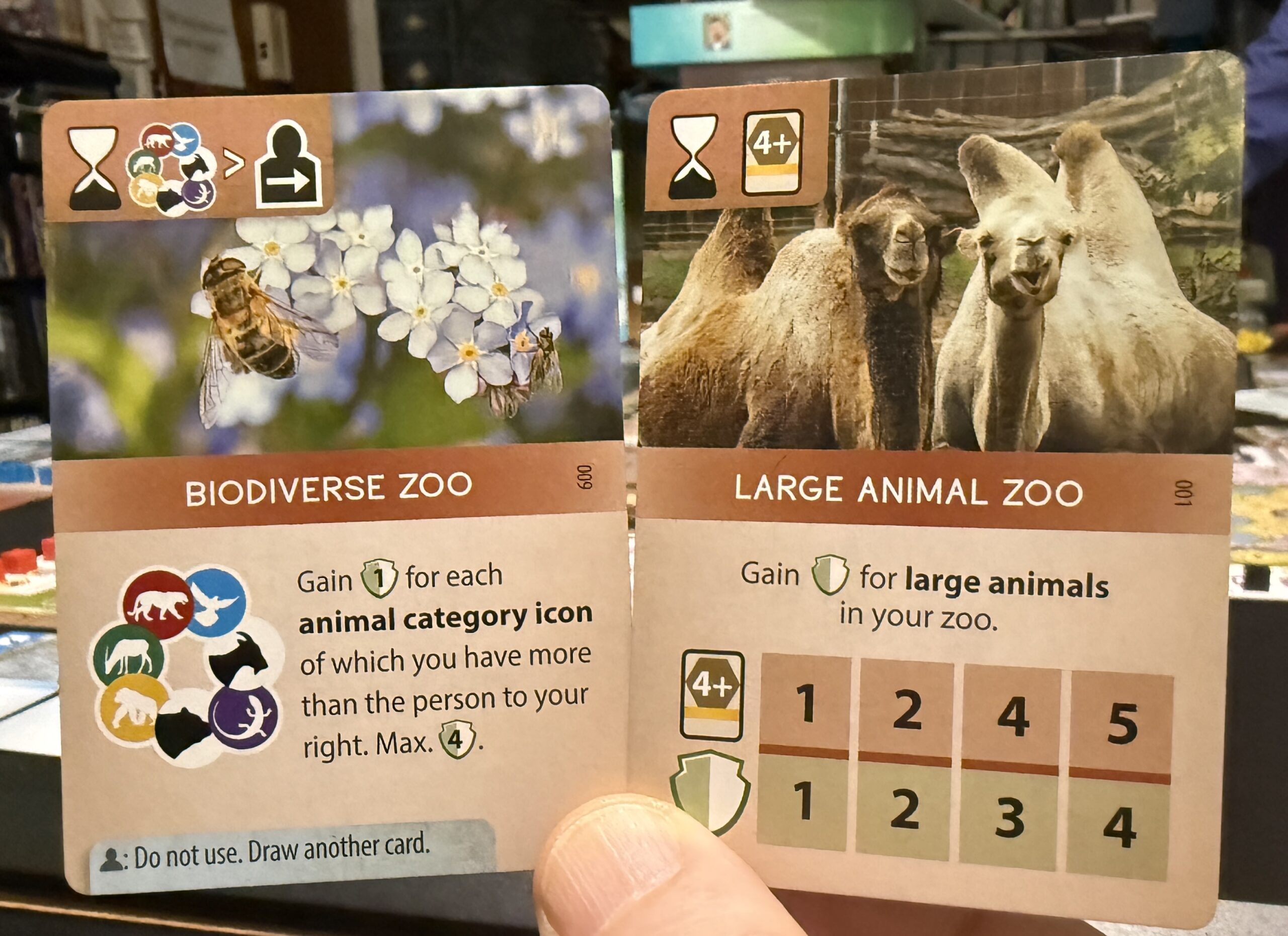
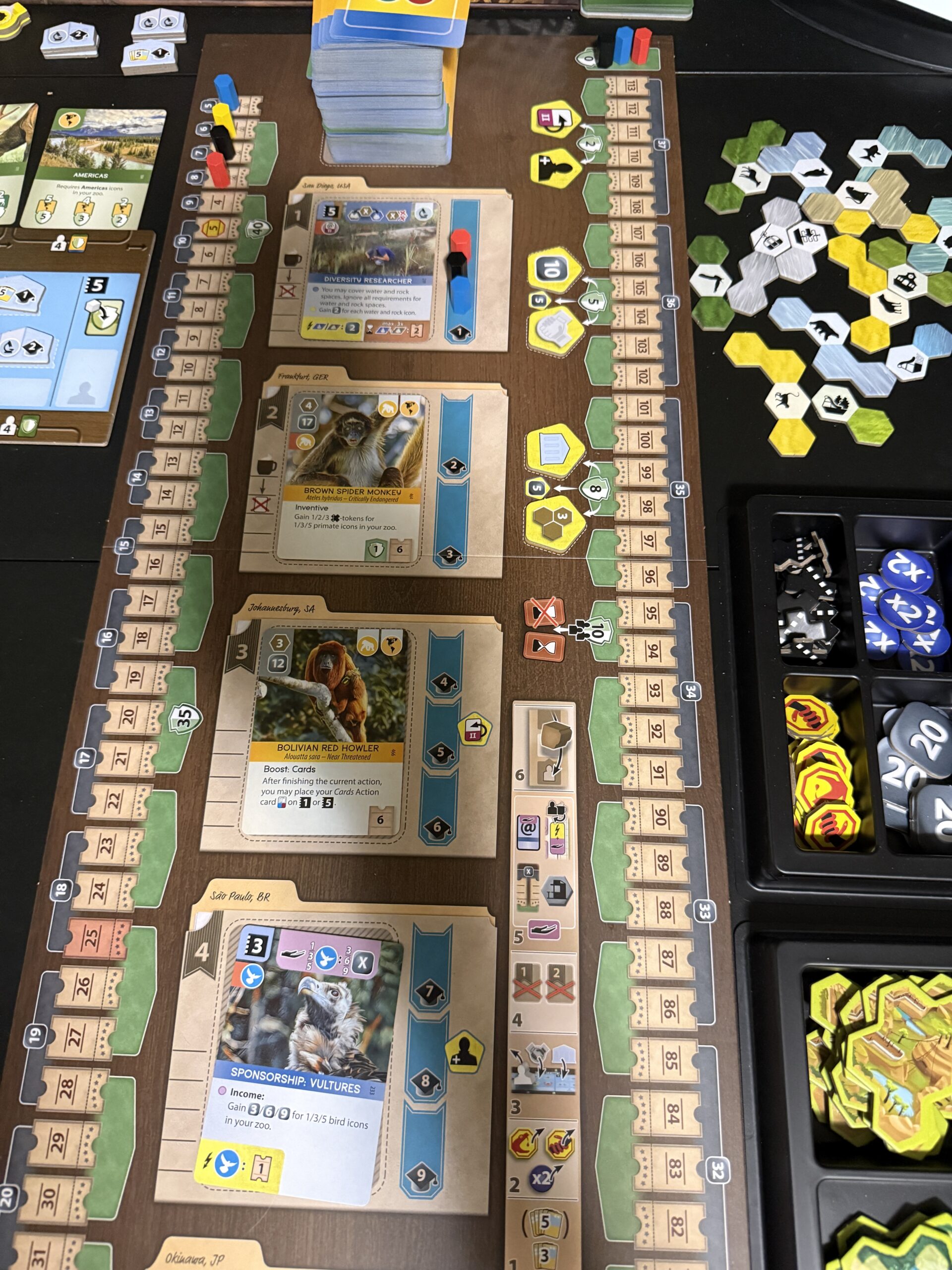
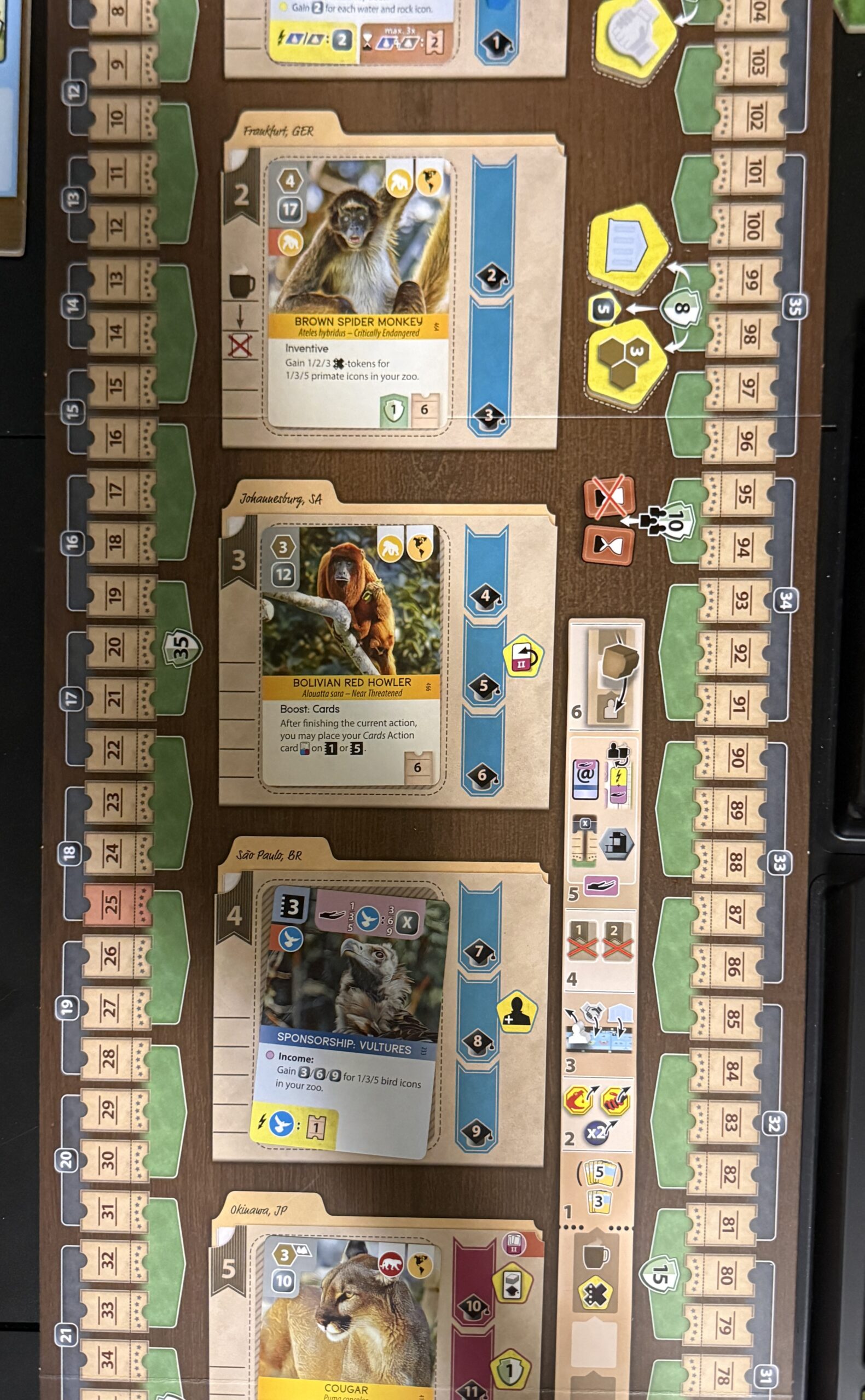
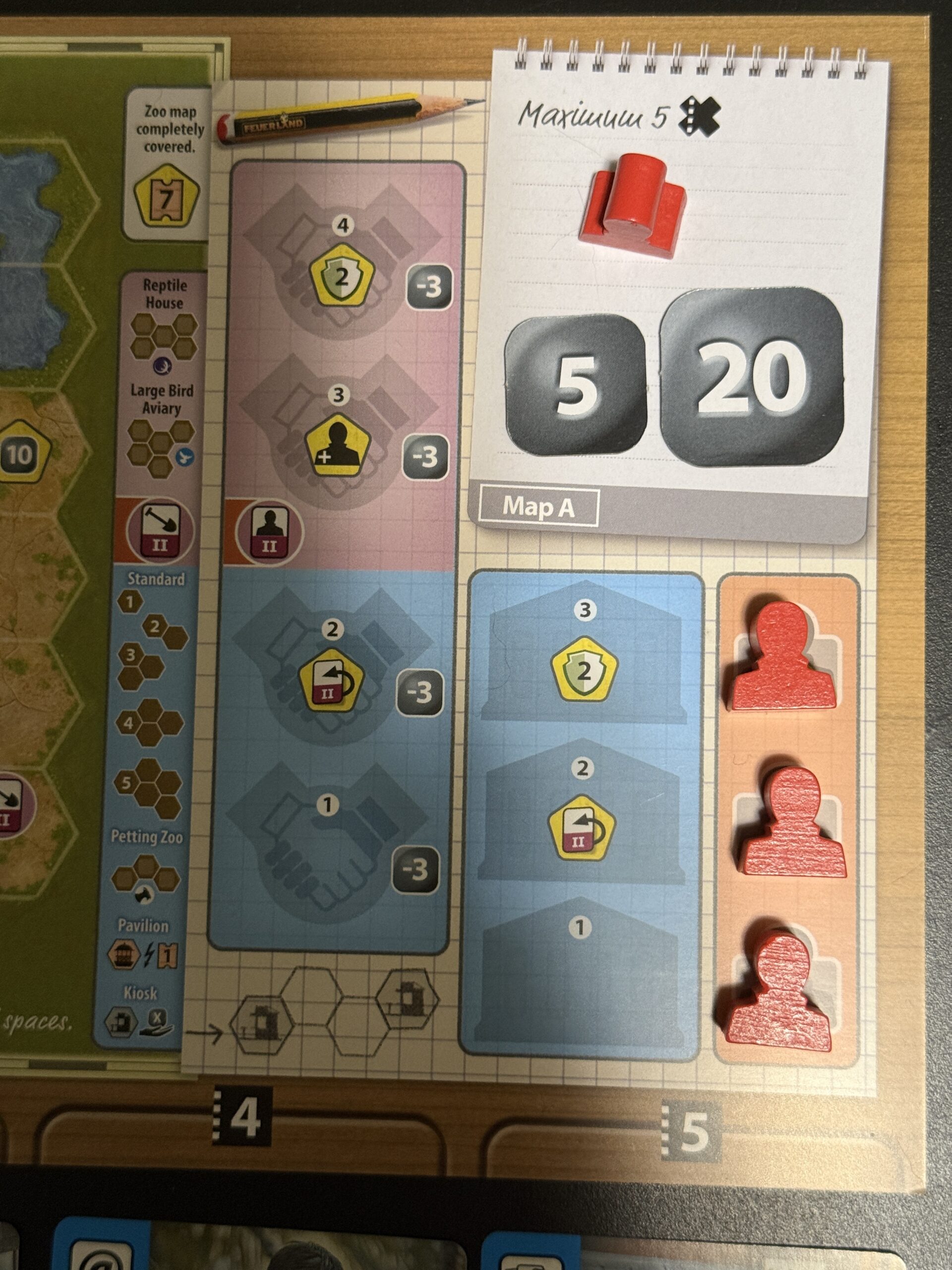
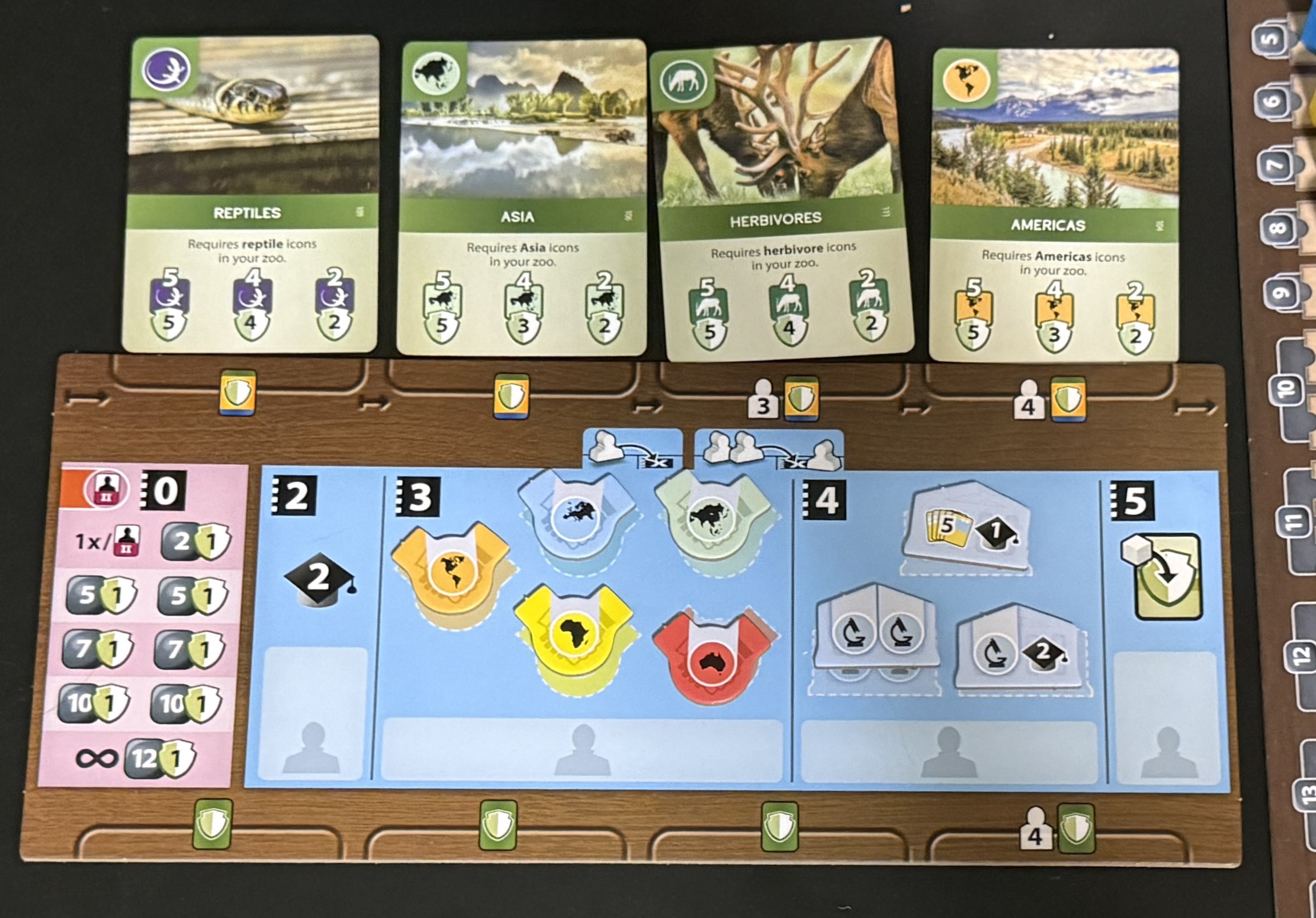
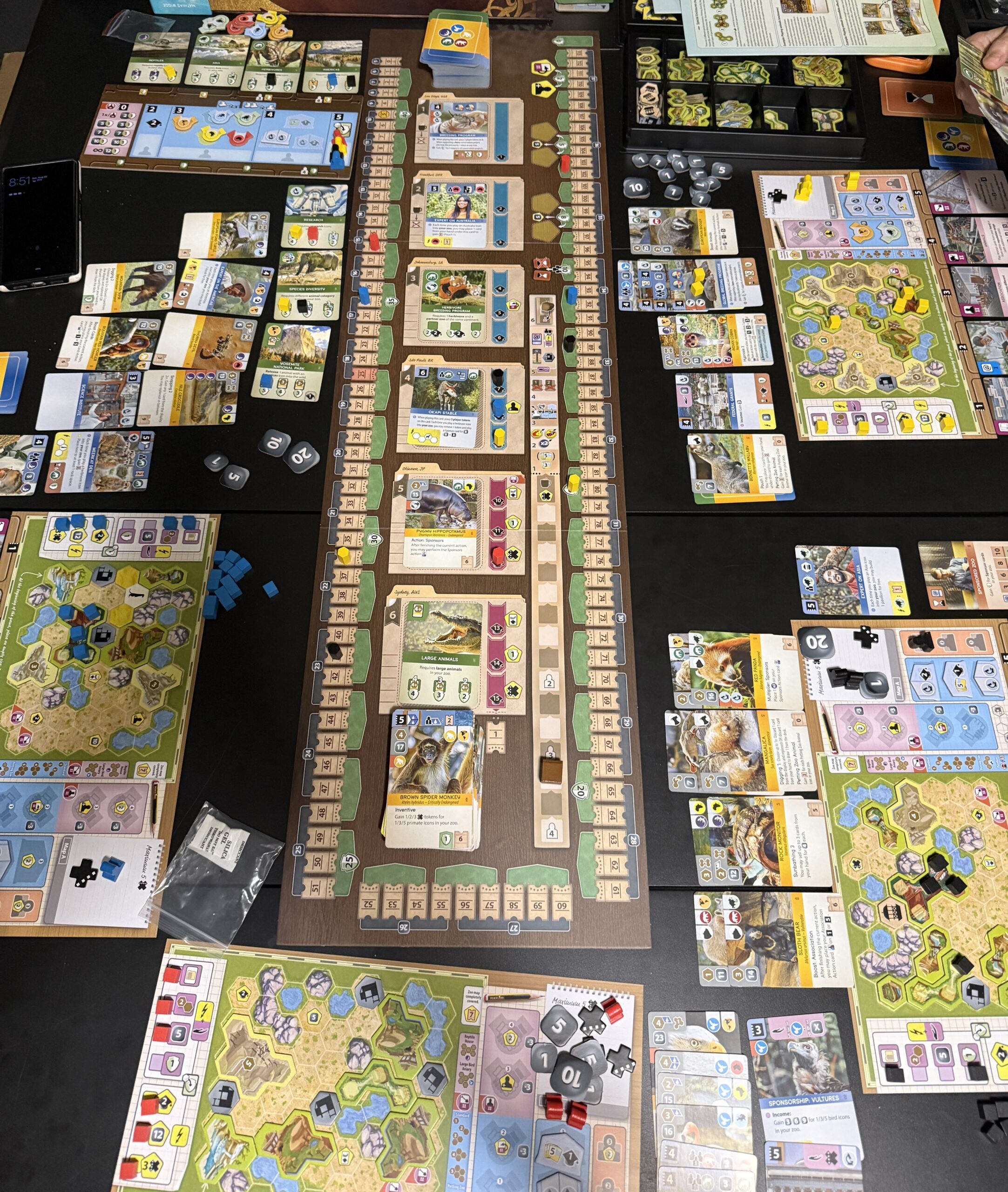
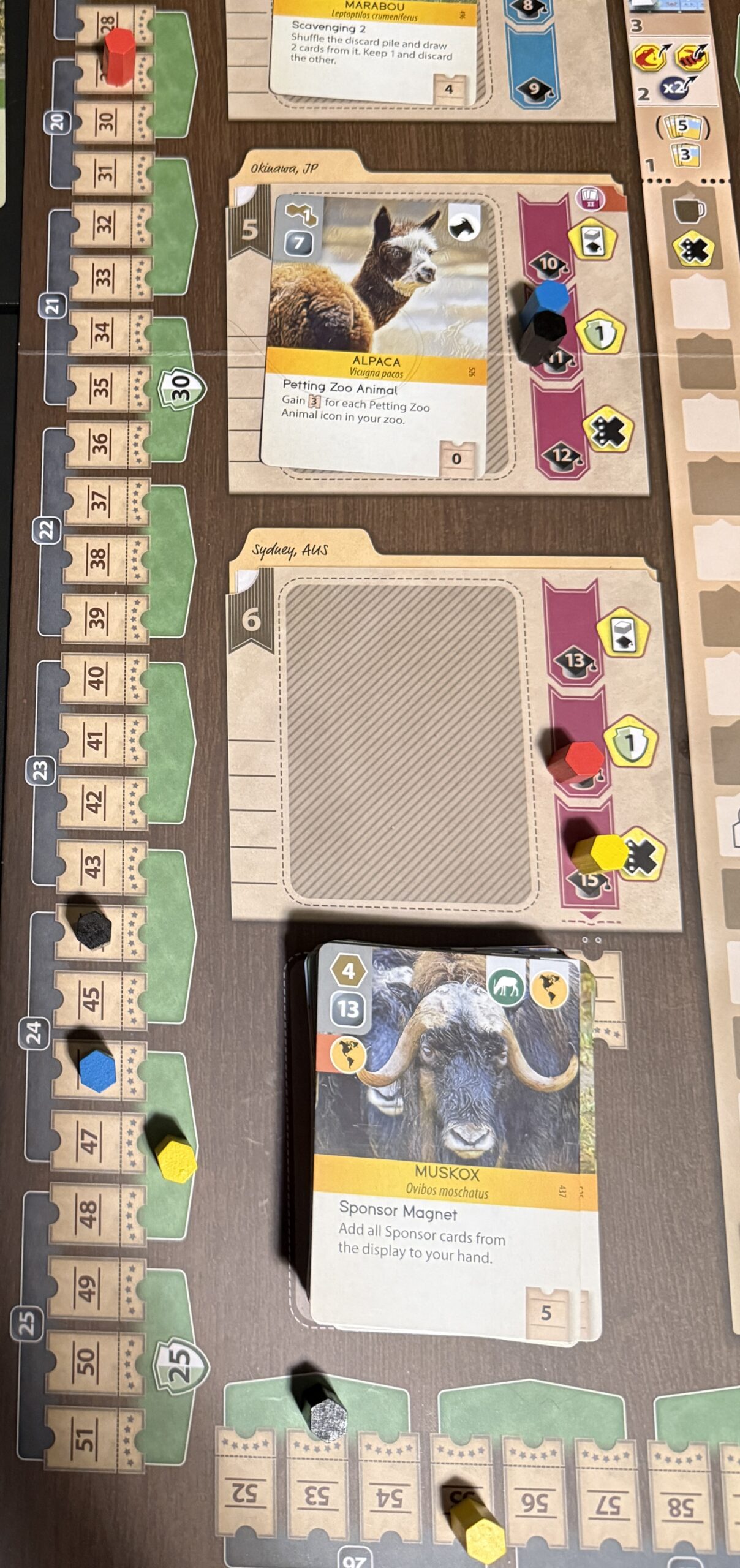
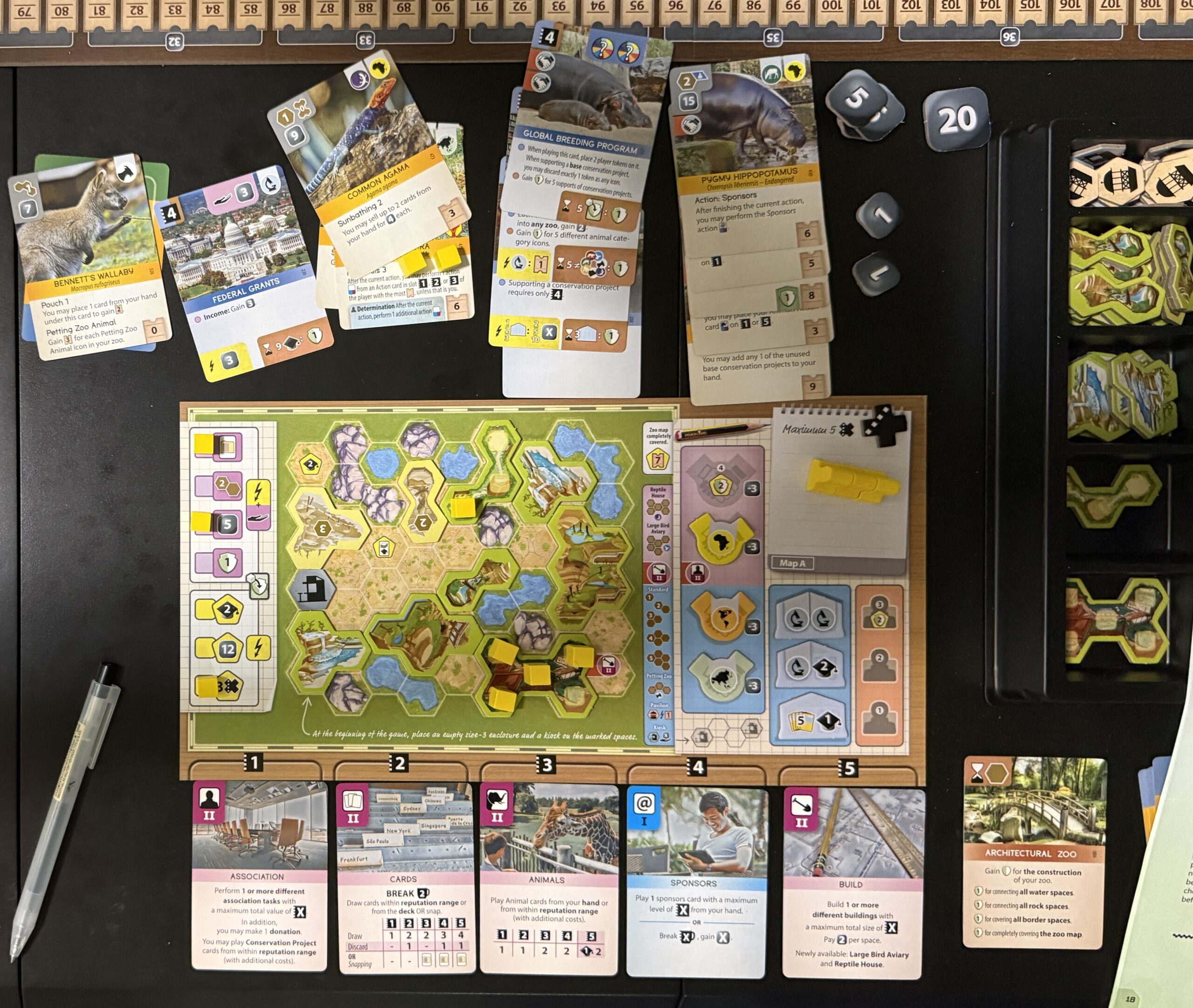
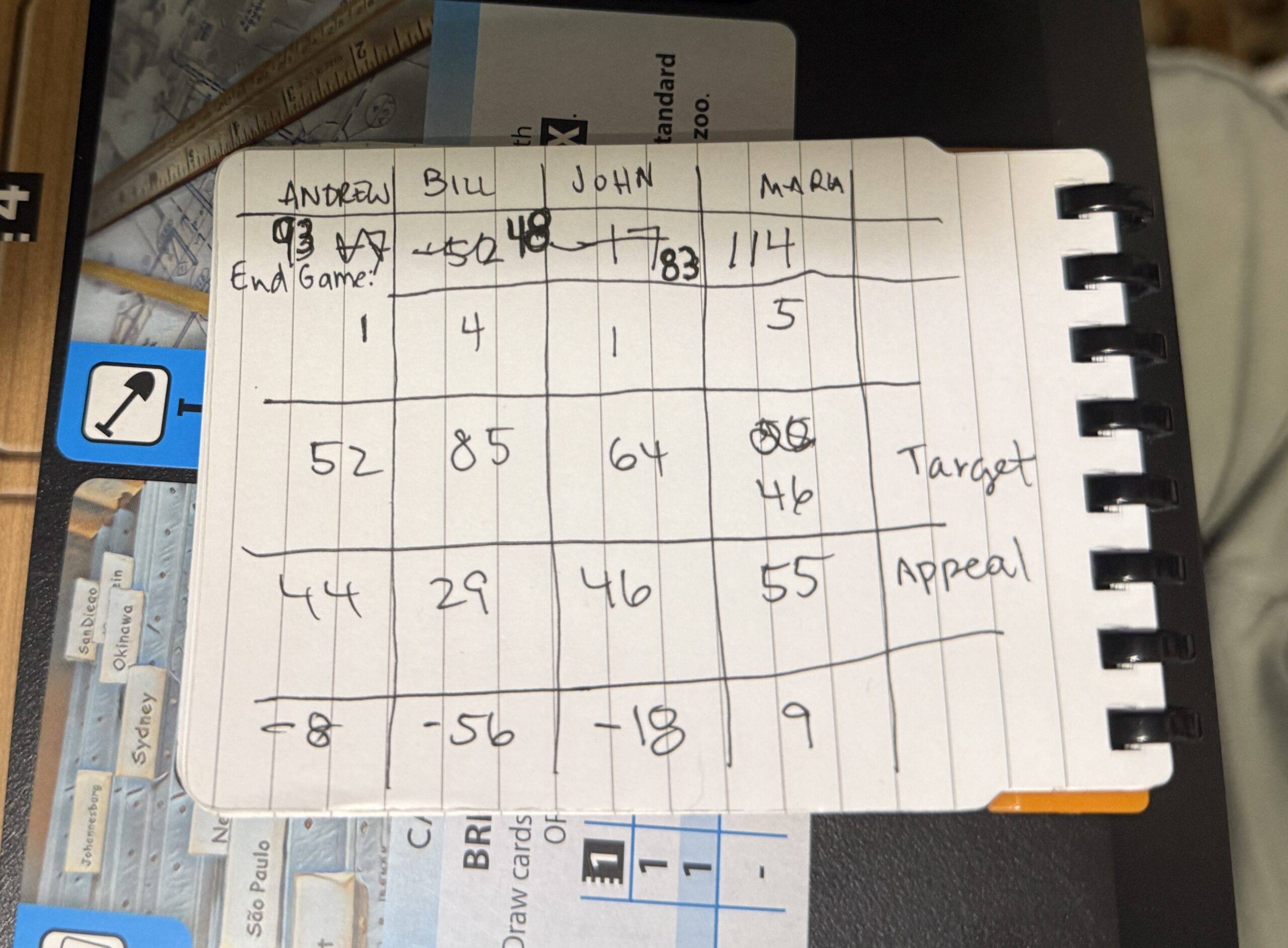
Ark Nova is a big game, both from the gameplay and physical perspective. It needed all the available space on my gaming table. Maria and Andrew frequently commented that it was much easier to play on the app.There wasn’t enough space for Shuba, our rules adherence supervisor, to maintain a close view of our gameplay. Here we see Andrew engaged in what became frequent attempts to evict him. As a result, by the end of the game session we discovered that we’d made some significant rules mistakes, doubtless due to the lack of feline supervision.We played the basic game, in which we all had the same play area at the start. The goal of Ark Nova is to create the best zoo. In the lower left of the map you can see the starting “enclosure,” awaiting occupancy by an animal that I’d have to place myself. I’ll also build additional enclosures and populate them with animals throughout the rest of the game.One way our starting setups differed from each other are the order of these action cards. During their turn, a player activates one of those cards. The position of the card in the line (see the “notebook” icons above the cards) determines how powerful the action is.Here’s an example. In my starting hand, I had a level 4 sponsor. So I activated my Sponsors Action at level 4 to place it; you can see it on the upper right.At the end of a turn, a player moves the action card they used to the 1 position, shifting any other action cards to the right to fill the gap. Part of the game’s strategy is figuring out which actions to perform to enhance the level of actions in subsequent turns. For example, my Association Action is now at level 4, so I might do a level 4 Association next turn.At the start of the game, each player gets eight zoo cards, out of which they pick four to start. If I knew then what I know now, I would have made different choices.At the start of the game each player gets two “final scoring” cards. They don’t have to choose which one will apply to them until roughly the mid-point of the game. In my case, I picked “Large Animal Zoo.” It wasn’t a mistake exactly, but I spent too much time focusing on that card and not on Conservation Projects (more below).The central board area has multiple scoring tracks. On the left in this pictures are “tickets” that represent your zoo’s general appeal to the public. On the right are what we called “Shields” which represent conservation efforts. You can’t see it in this photo, but the two tracks overlap below this image. The end-game is triggered when a player’s markers on those two tracks cross each other.The middle track on that board represents academic study of your zoo animals. It’s also a potential source of zoo cards when you take a Cards Action.Back to my player board. The spaces on the left represent academic partnerships with zoos in different parts of the world. The track in the lower middle are for universities with which you’ve established affiliations. The meeples (red in my case) are workers used for Association Actions. Every player starts with 25 currency, in the upper right, and one active worker; the other workers can be activated in the course of the game.My main mistake in playing the game is that I didn’t realize the importance of this board, especially the “conservation cards” at the top. The bulk of the game’s points come from claiming places on these cards. I didn’t understand that, and wasted time building up zoo exhibits that ultimately contributed little to my final score.The game table roughly 2/3rd of the way through the game. This gives you some idea of how crowded the play areas had become. I don’t suggest playing Ark Nova until you have plenty of room on your own table.The bottom of the central game board at the end of the game. It’s Maria (yellow) whose markers have crossed on the tickets/conservation game tracks, and therefore triggered end-game. (John is blue, Andrew is black; I’m red.)Behold the player area of the winner, Maria. She’s activated all her workers, used those workers in Association Actions to create connections to other zoos and universities, built a respectable-sized zoo (note the Reptile House in the bottom right of her map with multiple occupants), and generally acquired zoo cards that worked well together.The final scores. In the edition of the rules we had, the final score is the value of the piece on the ticket/appeal track, minus the value on the conservation track. Maria was the only one with a positive score. A bit of web searching showed that later editions added 100 to this value, to avoid the indignity of negative score.
In addition to requiring quite a bit of table space, the game takes a while to play. It took us roughly six hours. My impression is that there wasn’t much “analysis paralysis”; the length of the game had more to do with its operational complexity.
As you might be able to tell from the above photos and captions (and I only went over half the game’s elements at most), this is a complex game. Clearly Ark Nova requires some experience to play well and to avoid the mistakes I made. (In that context, John’s score was quite respectable, given that Maria and Andrew had played the app version many times before.) However, I think the game is worth the effort.