In my previous Last Night’s Game post, I announced that Andrew and John gave their permissions for me to use their full first names in this series of post. Maria has completed list. M, J, and A were fun to play with, but I can now retire them with the knowledge that their task is done.
As for my first name: That is a deeply-held secret that can only be revealed by diligent examination of this page.
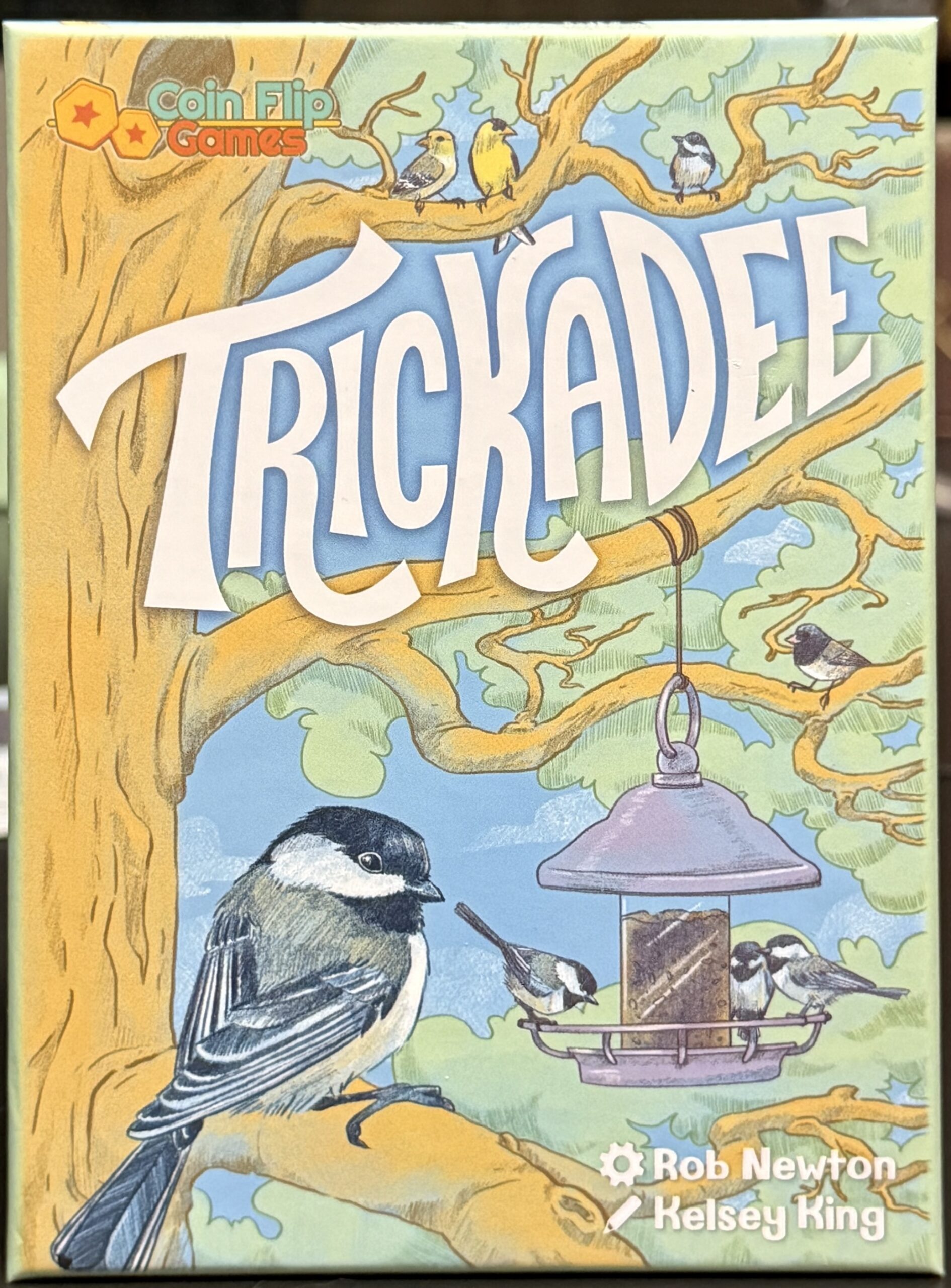
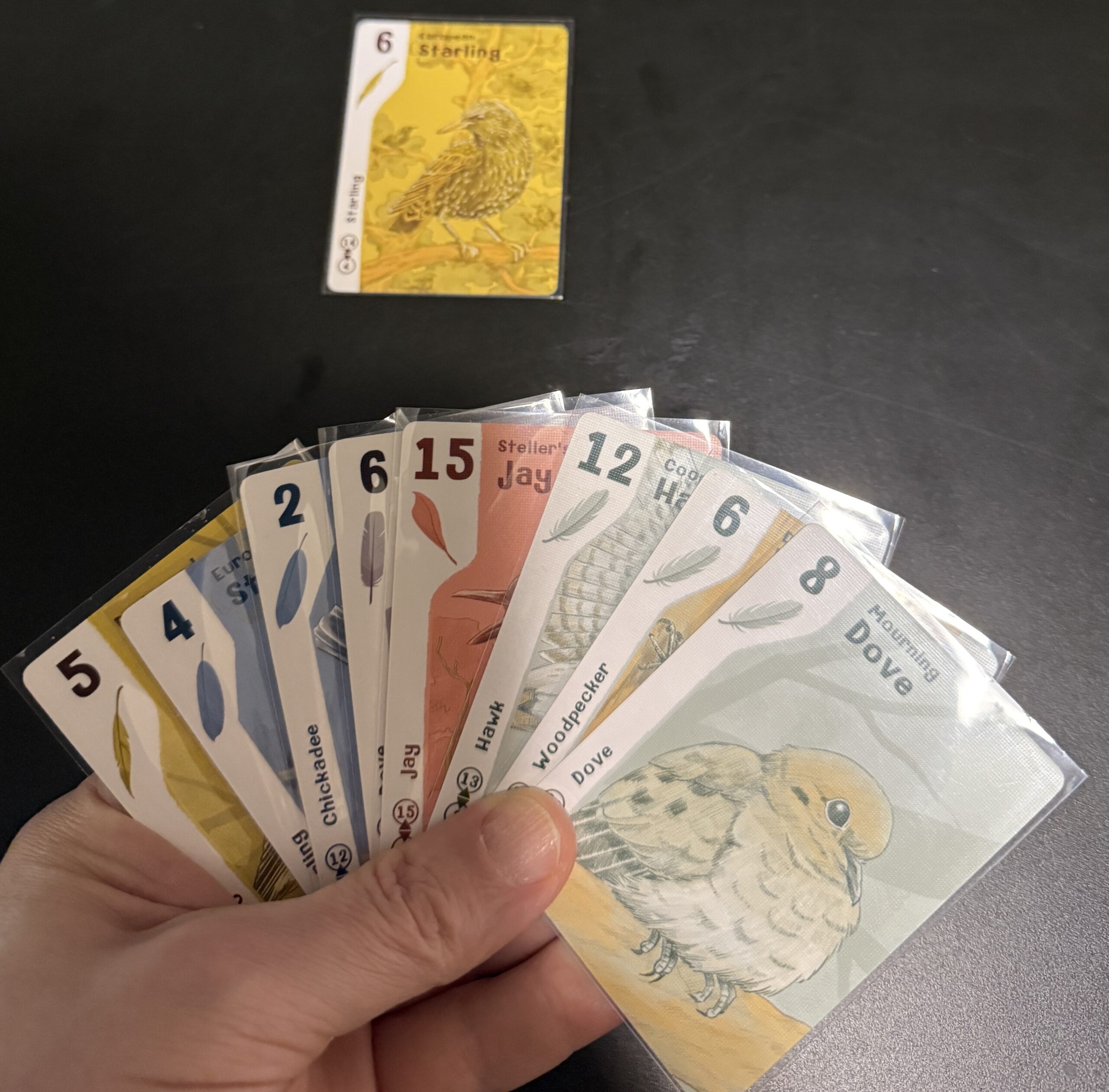
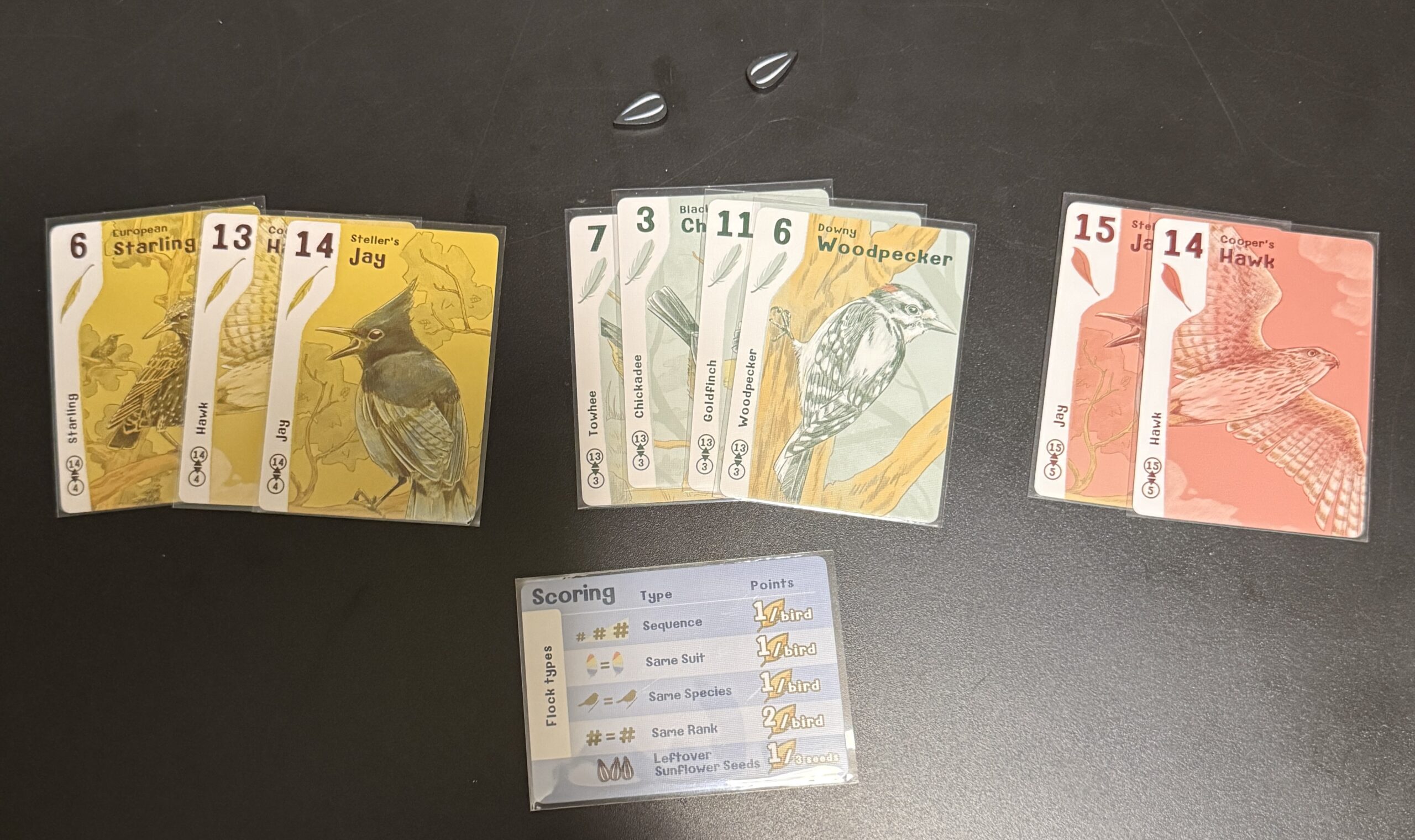
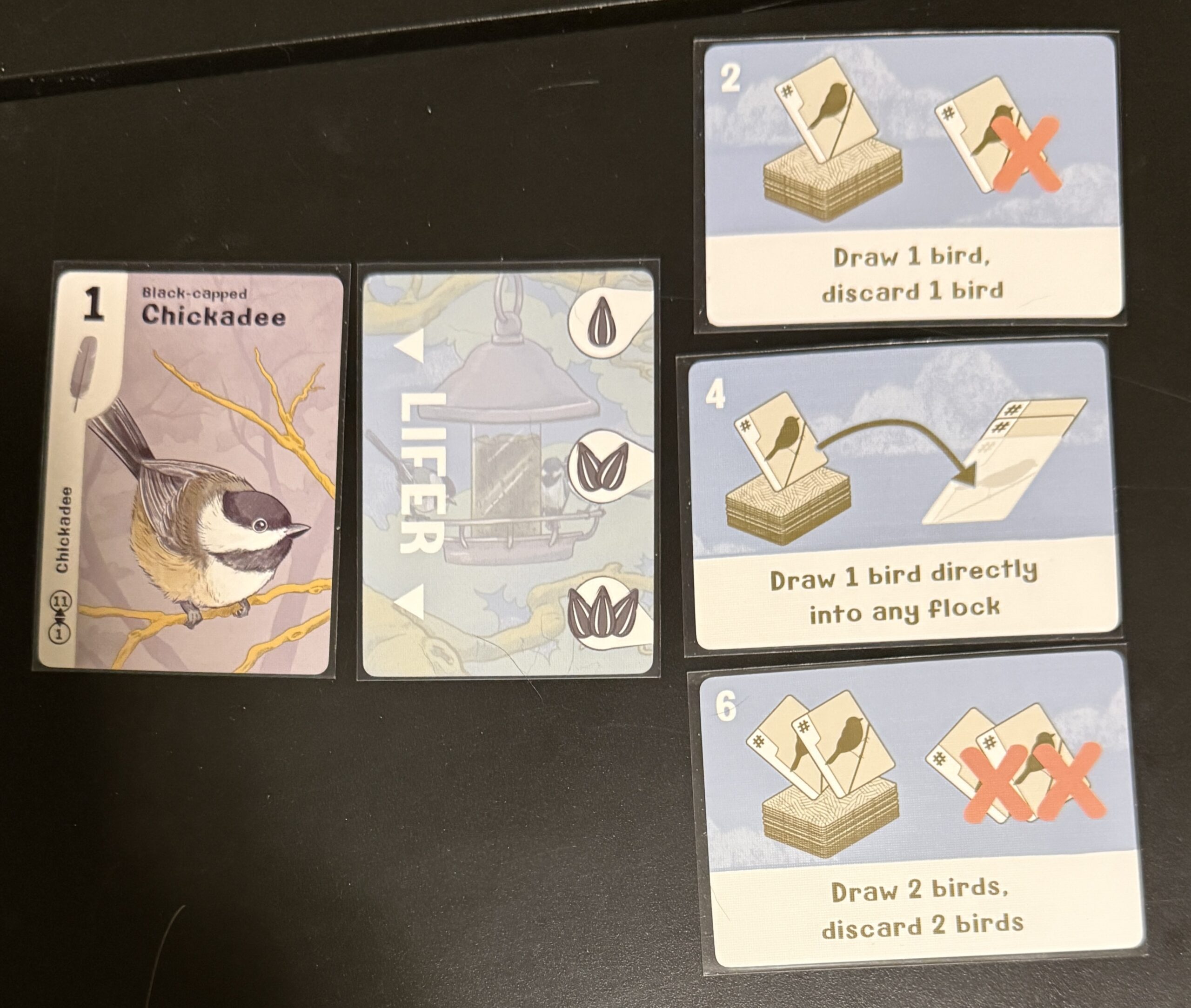
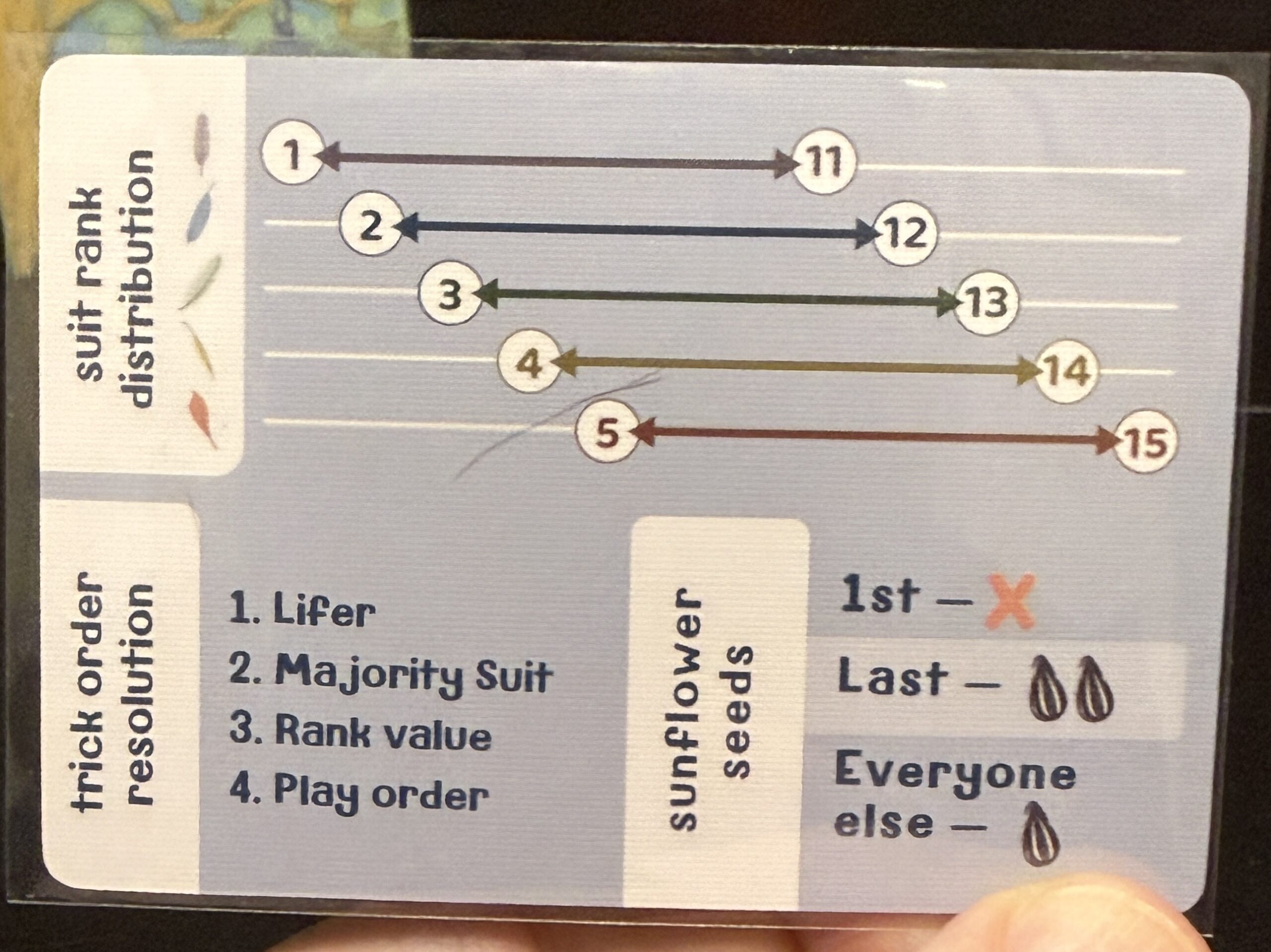
The first game we played was Trickadee. It’s a trick-taking game with a couple of unusual twists.This was my starting hand in the third round (and final) round of the game. Each card has a rank (number in the upper left), color (affirmed by the feather icon below the rank), and name of the species. In the background you can see a starting card for the tableau of flocks you’ll build during the course of the game.Here we see the tableau of flocks that I built during the third round. Trickadee is not just about winning tricks; in fact, like many trick-taking games, it’s possible to do quite well by “shooting” and aiming to lose every trick in a round. You’re looking to create flocks to maximize your victory points. Once you place a bird in a flock, only a special action can move it, so you have to think ahead. At the top you can see a couple of seeds; I’ll get to the earning and spending of seeds below.This is a central group of cards shared by all players. It’s refreshed at the start of each round. On the right are actions; they can be invoked by spending seeds. On the left is the “lifer”; it indicates the species (not the color or rank) that is trump for this round.One side of a helper card that each player gets. A regular playing-card deck has only two attributes for each card: suit and rank. Trickadee’s card have three: suit, rank, and species. The suits are not the same; for example, you can see that the purple suit has cards that rank from 1 to 11, while the red suit has cards with ranks from 5 to 15.
In the lower left you can see a summary of the rules for resolving tricks. Like Bridge, you have to play a card in a previously-played suit if you can; unlike bridge, those additional suits can contribute to who wins the trick.
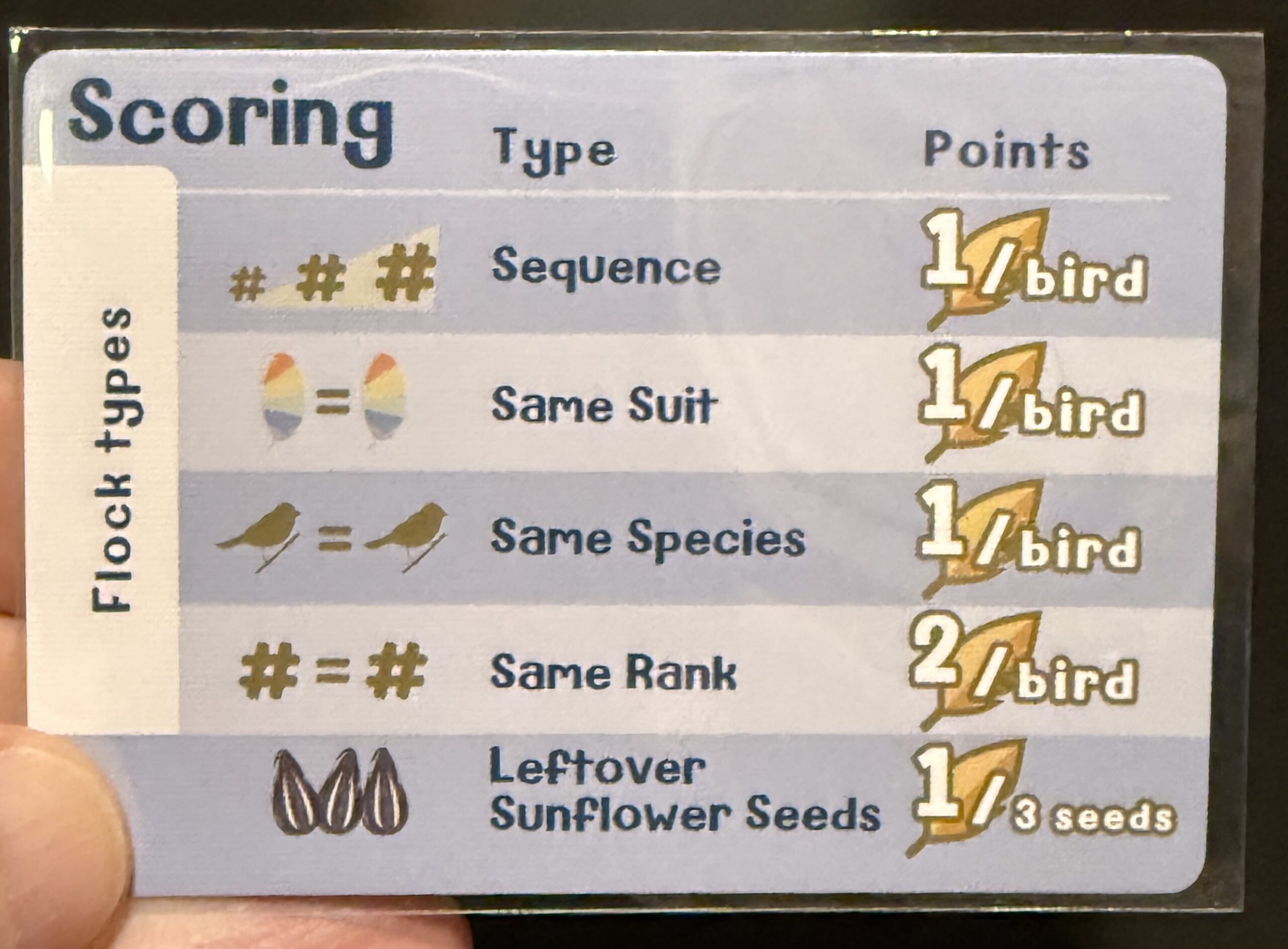
In the lower right, you can see the rules for getting seeds at the end of each trick: the winner of the trick gets none; the one who came in last gets two; everyone else gets 1. If you “shoot” you’ll gain a lot of seeds, and be able to use better actions at the end of each trick.The other side of the helper card shows end-of-round scoring. A flock scores a certain number of points based on how many conditions every card within it matches.
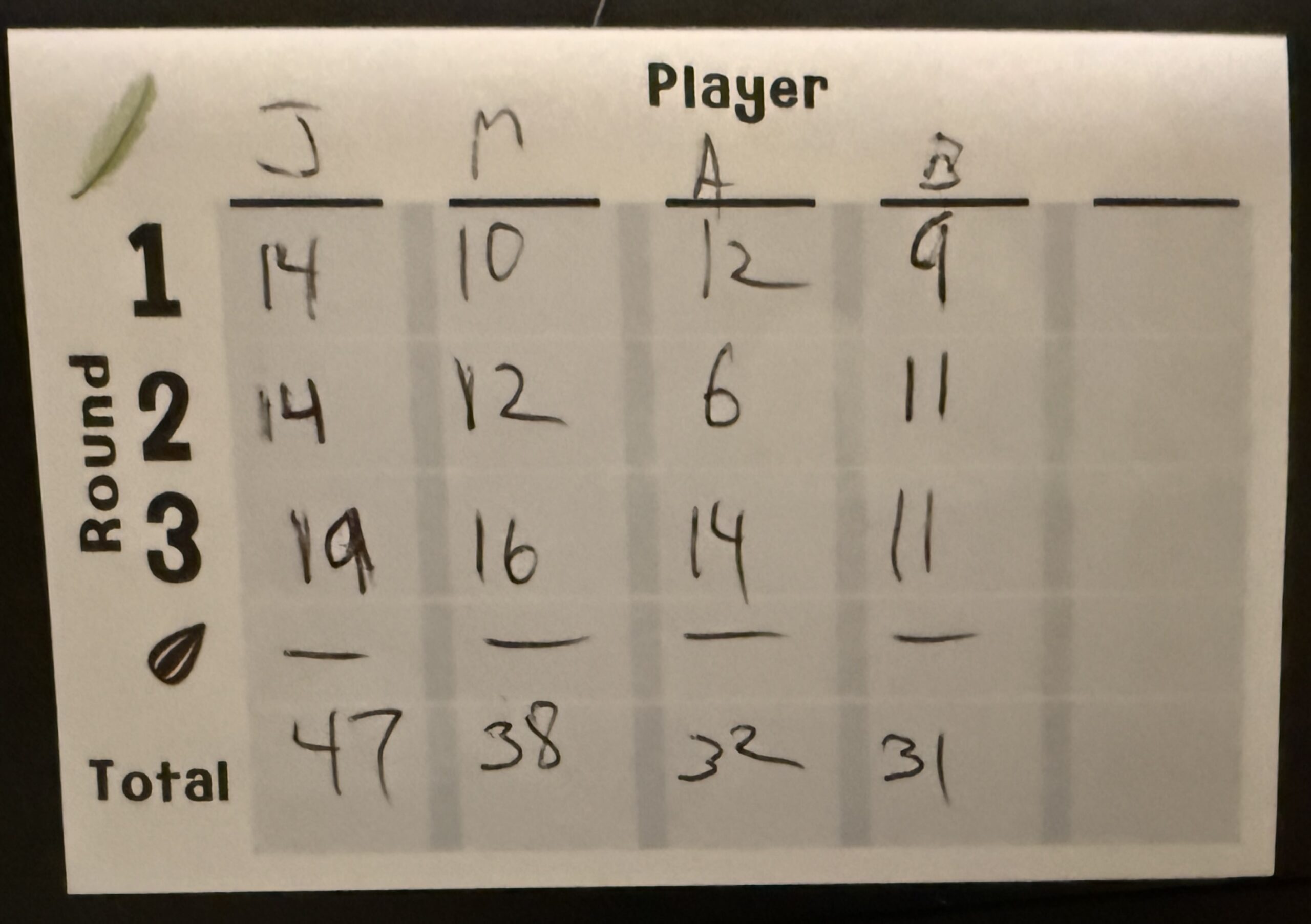
For example, if you look at the sample flock from a few pictures above, the red flock scores four points: two because there are two cards in sequence and two because there are two cards of the same suit. The yellow flock on the left scores only three points, because all three are the same suit; the 13 and 14 are in a sequence, but that sequence does not include all the cards in that flock and so does not apply.The end-game scoring, summing the point totals from the flocks from each round. John won; he understands the general principles of trick-taking.
I’m still on the fence of whether I enjoy trick-taking games in general, but I liked Trickadee. The extra “dimension” (species) of card-matching was fun, as well as figuring out how to make the randomly-assigned actions work as a round strategy.
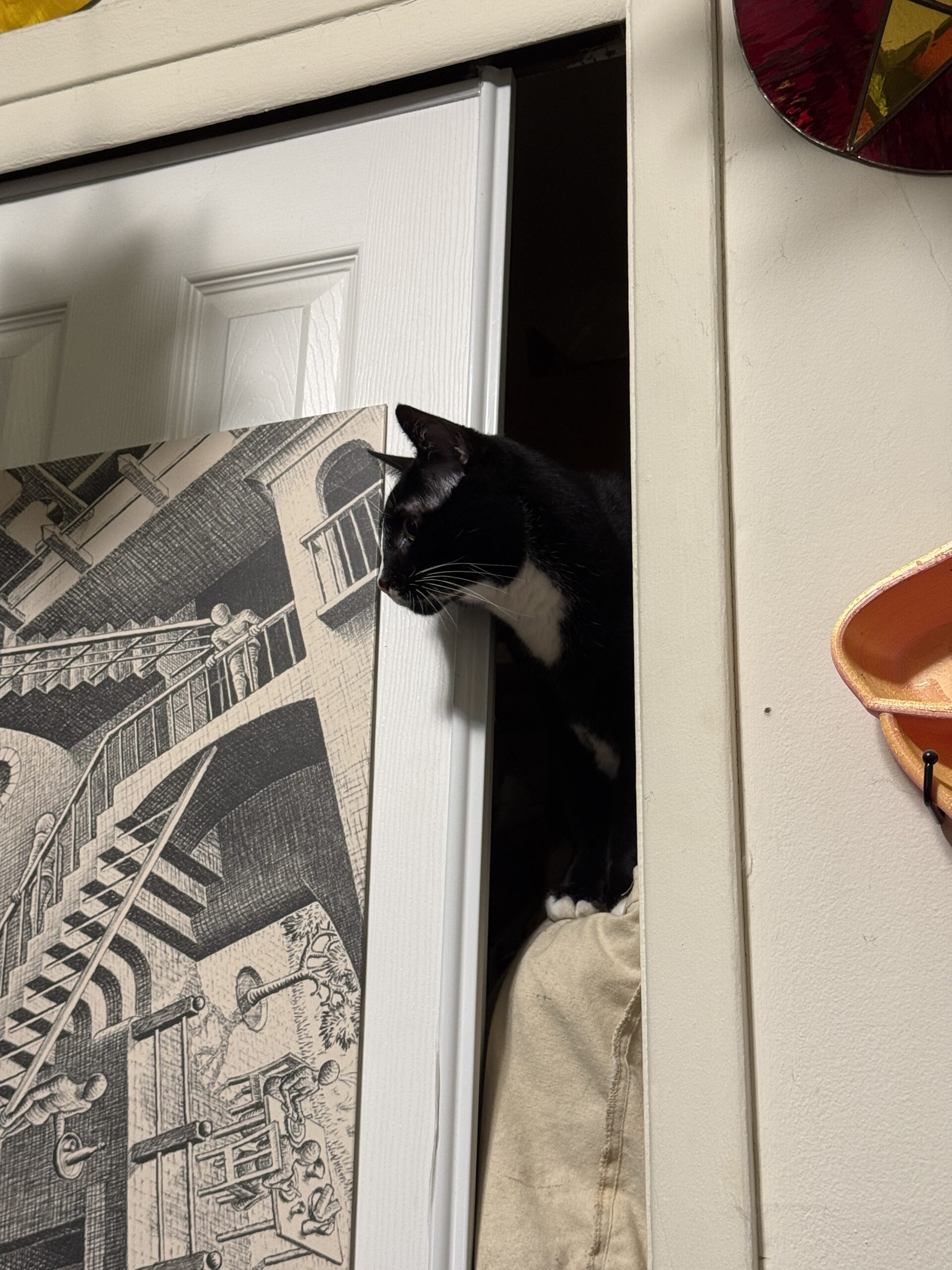
While we played, my cat Shuba kept careful watch on the proceedings. He’s climbed on top of the clothes hanging in my closet and is perched on top of a canvas bag of rags. Strangely, he only does this when Maria and Andrew are around, thus proving that they need to be carefully watched.
It was getting late, so we finished off the night with a quick game that we knew all too well.
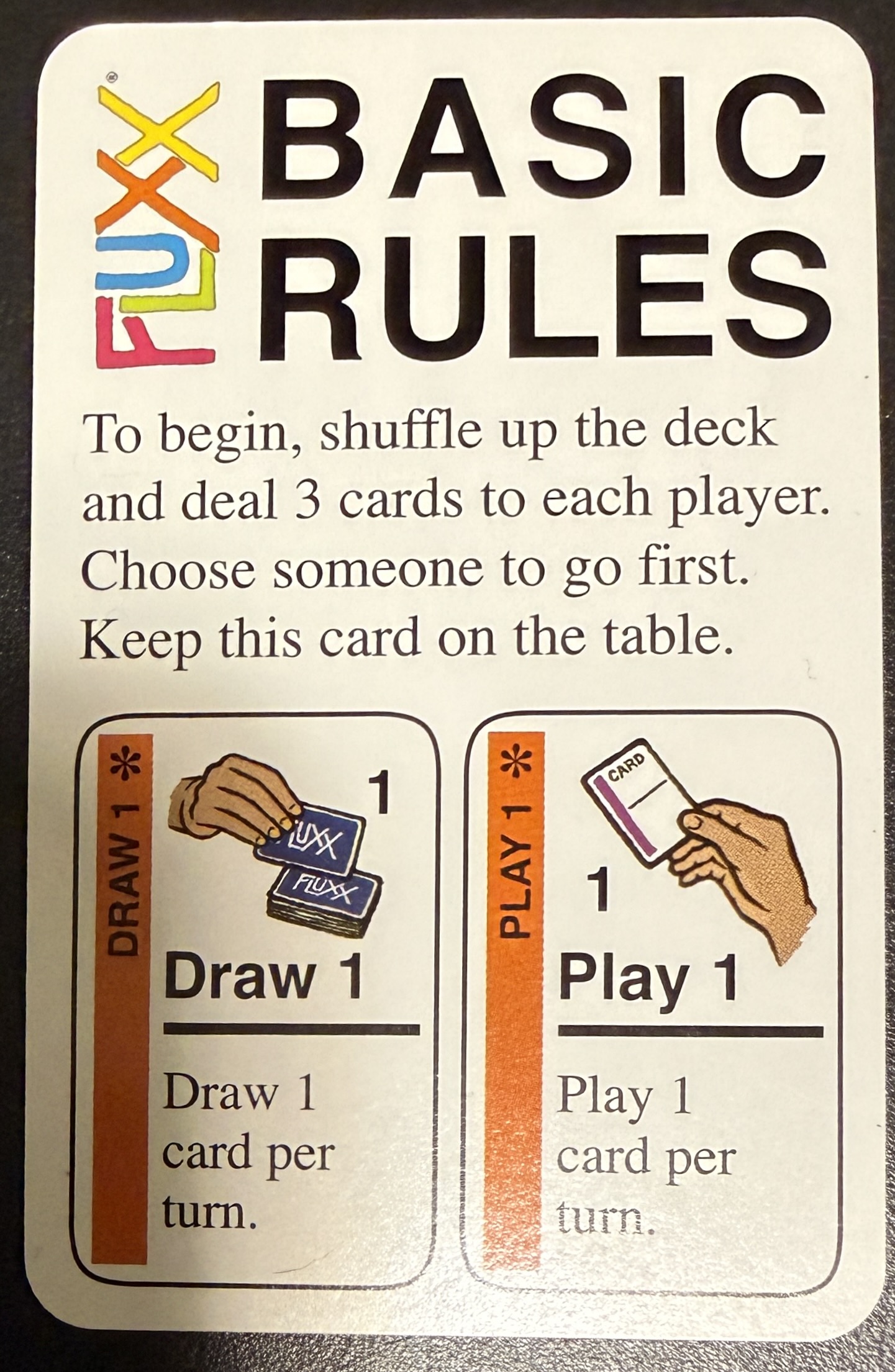
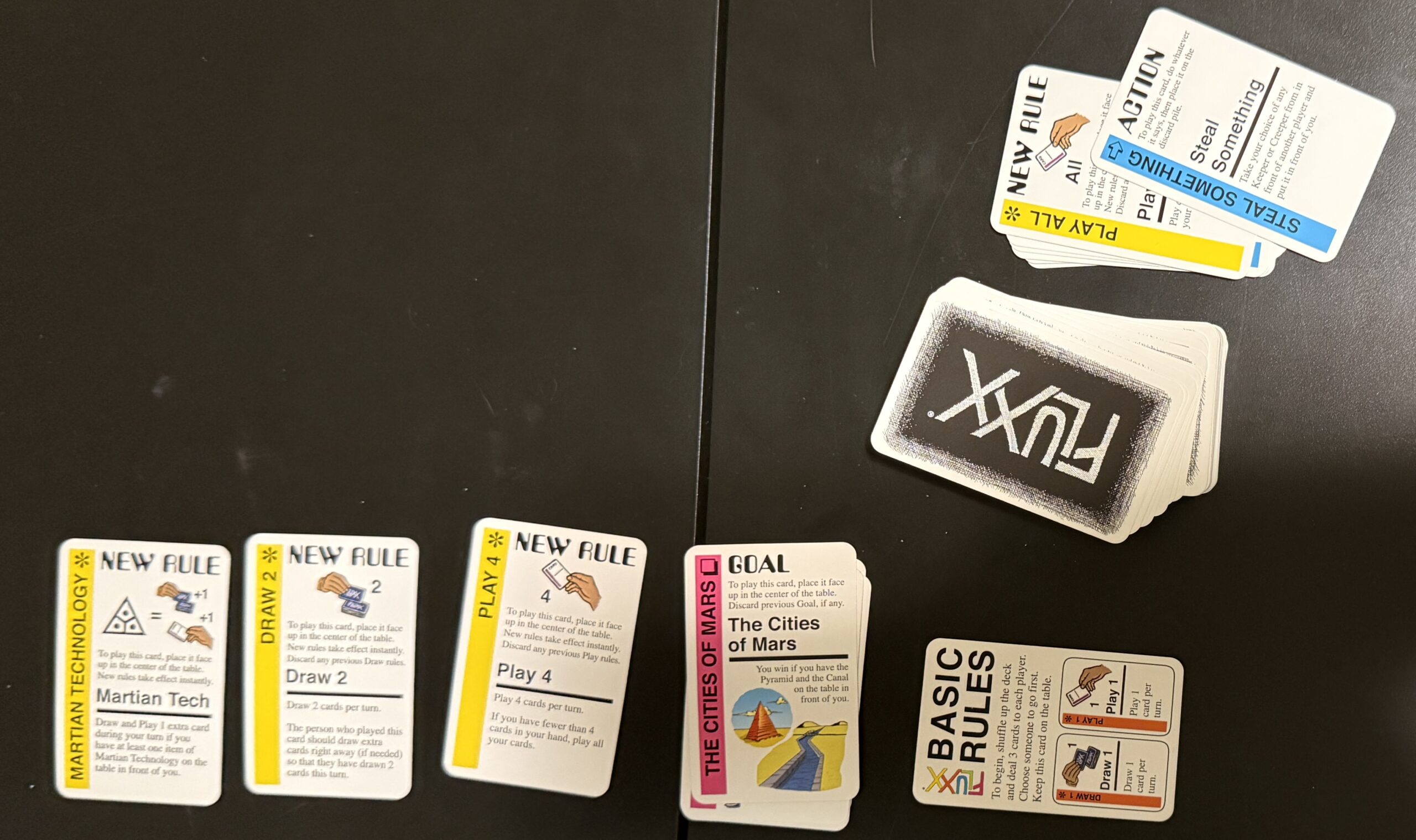
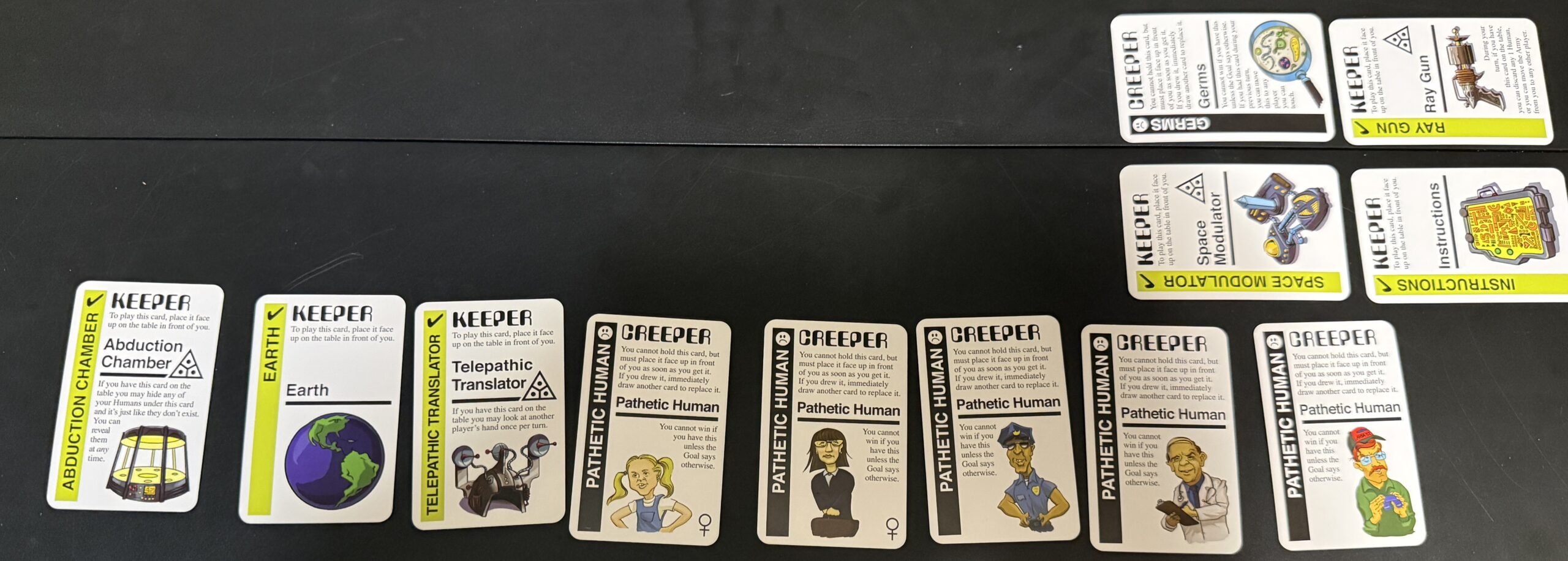
I should say that we all knew Fluxx games in general, not Martian Fluxx in particular. I’ve got a large stack of Fluxx games; Maria picked one at random.The rules of the game are… well, it doesn’t matter because they’re constantly changing. This card represents the only rules at the start: start with a hand of three cards; draw 1 card; play 1 card.Since the rules of the game keep changing, the victory conditions shift, and players can switch cards around, setting up a long-term strategy in Fluxx usually isn’t worth it. You just play and have fun.Behold the tableau of the winner, me. You can also see the tableau of Andrew’s cards on the upper right. I won because the current Goal (not shown) was to have the Keepers for both Earth and the Abduction Chamber. Normally, the presense of any Creepers in your tableau prevents you from winning. However, there was another New Rule card (also not shown) that said Pathetic Humans didn’t prevent one from achieving victory.
Gamers have widely different opinions about Fluxx games. Some don’t like games with wild swings and unpredictable consequences. I like that aspect of the game, because it means that even a relatively unskilled player (like me; see above) has a decent chance to win.