I’ve been playing Baldur’s Gate 3 with Actual Sabrina for a few weeks now. I’ve labeled this “playthrough 1/16”: Her first playthrough, and my sixteenth. She’s new to video games, and to the “Gygaxian” rules systems associated with both BG3 and D&D.

To help her out, I pointed her to the “rules tangents” I included in some of my earlier BG3 essays. (I don’t write such tangents anymore, since I got the impression that they were dull for most folks, and I’ve switched the emphasis of my BG3 posts to fanfic.)
Actual Sabrina clicked on the first link I sent her. But instead of taking her to a description of the BG3 action economy, it took her to the top of my write-up of playthrough 7. She became confused, as she didn’t understand why discussing a Retaliation Wizard or a relationship with Lae’zel had anything to do with the game rules.

For her, and for anyone else who’s interested in my (probably biased and possibly incorrect) take on aspects of these rules systems, I’ve put all the rules sub-sections of my previous essays into this post. I’ve made some minor formatting changes from the original essays, but otherwise the content is unchanged.
Action Economy in BG3 (and D&D5e)
D&D has a turn-based combat system. Within a turn, there are five basic resources your character has:
- Action – “the green icons”
- Bonus Action – “the orange icons”
- Reaction – “the purple star”
- Movement
- Concentration
You can do them in any order, or not do them at all.
Let’s take a look at each of these. As I go down the list, you may want to keep in mind that the action economy is one of the reasons why I loathe D&D.
Action
The idea behind an Action is that you’re doing something significant that turn. BG3 offers you a display of all your available actions; for some classes (spellcasters especially), that list can be quite long and hard to examine.
Examples of Actions: Attacking with a weapon; shooting with a bow; casting a spell.
Having a lot of choices doesn’t mean that every choice makes sense. For example, every character has a Hide Action available to them. But for most characters to Hide successfully, no one can be looking at you. If you’re in the middle of combat, trying to Hide will simply be a wasted Action.
The game offers you Actions, but doesn’t tell you which are useful at any given moment. That’s up to you.
At the start of the game, you can do only one Action every turn. There are skills, spells, and potions that offer additional Actions per turn, but they usually have some penalty; Haste spells and Speed potions cause you to miss a turn after their effects wear off, for example.
If someone offers tips on multi-classing, and they say “Take two levels of Fighter,” it’s because that at second level Fighter you get Action Surge, which lets you take an additional Action for one turn. You have to rest to do it again, so you can only do this once per fight.
Bonus Action
A Bonus Action is supposed to represent a minor form of Action, one that’s less powerful or takes less time than an Action.
That’s a mis-label. There are plenty of Bonus Actions, such as Jump or Shove, which can have effects that are more important to a situation than an action.
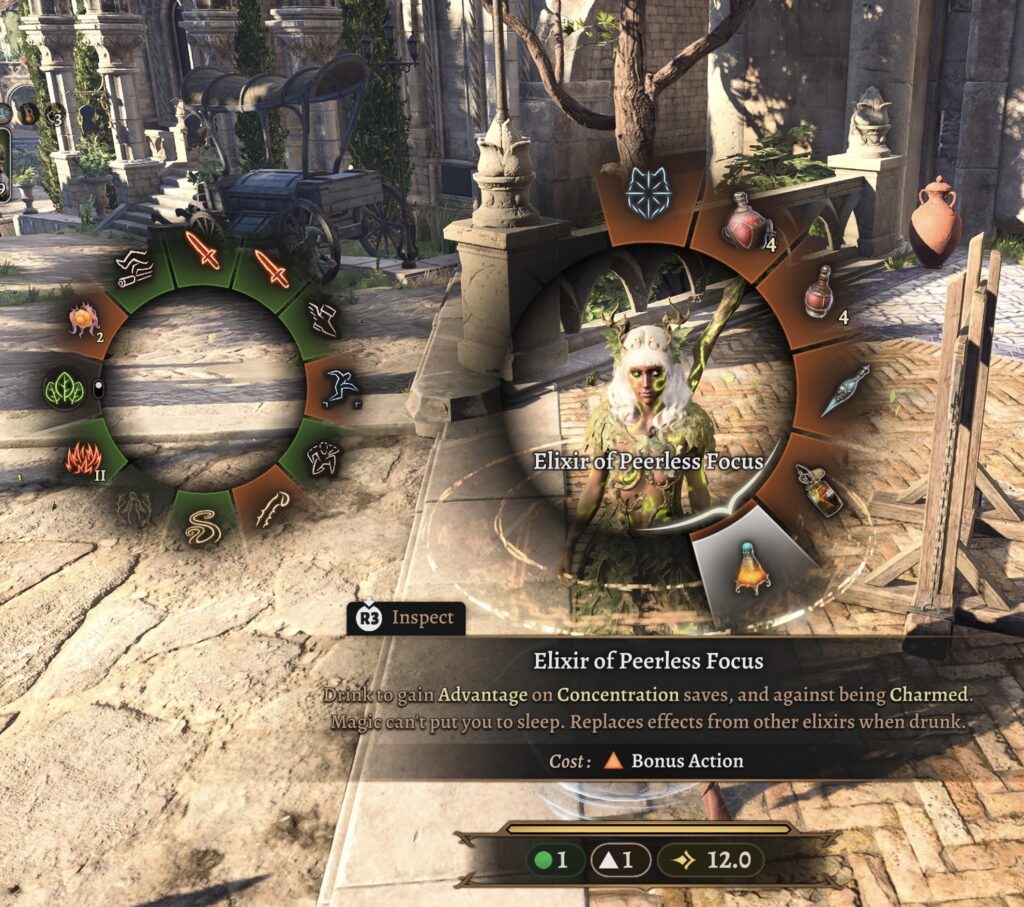
At Level 1 you can do only one Bonus Action per turn. As you advance in the game, there are many skill/item combination that grant additional Bonus Actions in a turn. For example, if a build tells you take three levels in Rogue, it’s because Rogue 3 lets you pick the Thief subclass, which gives you an extra Bonus Action every turn.
What’s perplexing and annoying about Bonus Actions is that you can’t do a Bonus Action as an Action. For example, both Jump and Shove are Bonus Actions. If you want to Jump to an enemy’s location and then Shove them off a cliff, you can’t in a single turn.
At this point, you may have understand why I never got Shadow Assassin Lae’zel to shoot an Arrow of Darkness, teleport into the Darkness, attack, then Hide: A Monk’s Shadow Step lets you teleport from shadow to shadow as a Bonus Action, but shooting a bow and attacking are both Actions, and Hide is yet another Bonus Action. Without a Speed potion or some other means of doing multiple attacks in a turn (such as Extra Attack), this is hard to set up.
Of course, you could be relying on a enemy to step out of the Darkness, giving you a chance to do an Opportunity Attack as a “Reaction”:
Reaction
A Reaction is something your character can do in response to what an enemy does. In most cases, you can’t do a Reaction during your turn; you do a Reaction during the enemy’s turn.
One of the most common Reactions is the Opportunity Attack: If A and B are fighting, and A tries to move outside of B’s reach, B can spend a Reaction to get an extra melee attack on them.
With few exceptions, you only get one Reaction per overall combat round. That means that if Strong Enemy moves away from you first during their turn, you might do an Opportunity Attack against them, doing a relatively small amount of damage to their health. If Weak Enemy moves away from you after that, you’ve spent your Reaction and there’s nothing you can do. In this case it might have better to wait until Small Enemy moves away so that you can get them off the battlefield. (Just because it’s a Small Enemy doesn’t mean it can’t do lots of damage; enemy spellcasters are the mischief.)
But you can’t always predict what enemies will do. What if Small Enemy doesn’t choose to move away from you? Then you’ve lost a chance at an Opportunity Attack.
There’s a wide range of Reactions that become available during the course of the game. My favorite is Counterspell, which can cancel a spell that an enemy is trying to cast. This costs you a spell, which means you’ll have fewer spells available for the rest of the combat.
What if you want to move away from an enemy during combat and you don’t want to take the damage from their Opportunity Attack? There’s an Action called Disengage that won’t provoke an enemy’s Opportunity Attack. Of course, Disengage is an Action, so you may not be able to do anything else that turn, except Movement:
Movement
All characters in the game have a Movement Speed, and there are a variety of effects that can affect that speed.
Movement in combat is extremely important. If you’re too far from an enemy, you can’t hit them with a melee weapon; if you want to attack an enemy with a bow or a spell and you’re outside the spell’s range, you can’t do it. Enemies can often see you before you’re in range of either, which means that one side or the other must waste a turn of movement before they can do anything else.
Of course, if you can turn invisible (see Shadow Assassin, for example), you can sneak up on an enemy before they know you’re there.
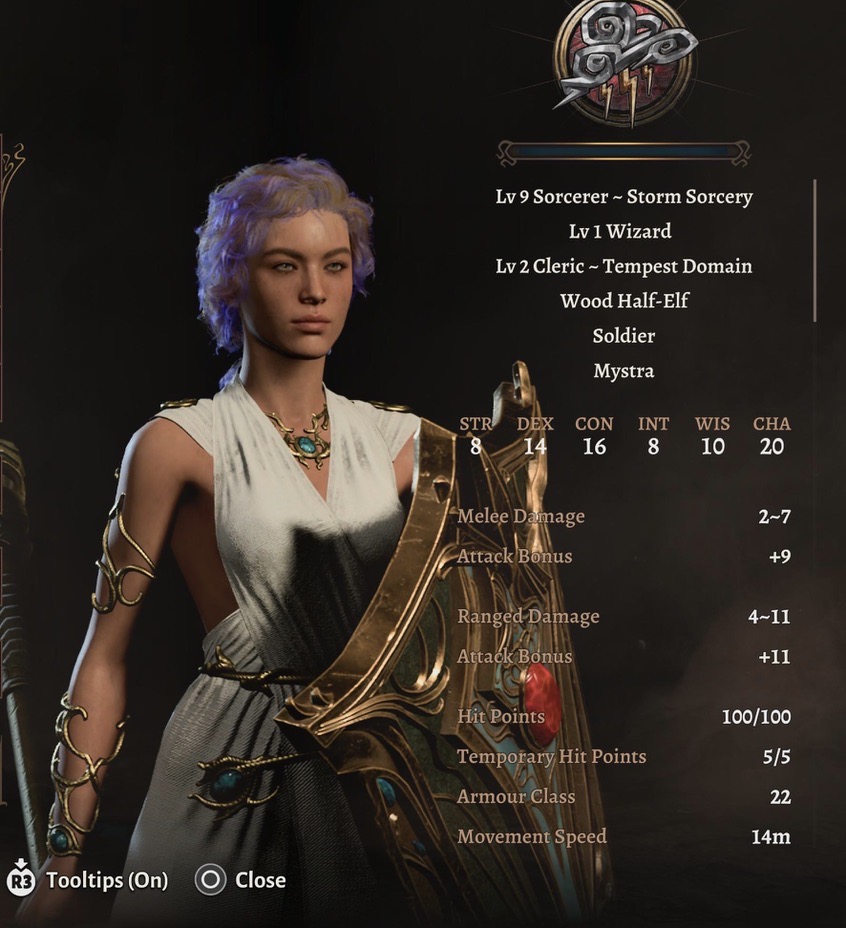
You can break up your movement into pieces with respect to any of the other items on the “action economy” list. For example, you can move to within the range of your spell, shoot at an enemy, then move out of range of the enemy’s spells or duck behind cover.
There’s Dash, which lets you double your movement speed. Of course, Dash in an Action, so you may not be able to do anything else that turn.
If you look through those build videos or web sites that I link to, you’ll see the same movement-based items listed over and over again: Haste Helm, Boots of Speed, Disintegrating Night Walkers, Boots of Genial Striding, Crusher’s Ring, and so on. The function of these items is help you move faster, or to prevent certain terrain (like mud) from slowing you down.
There’s a spell, Misty Step, that lets you teleport across the battlefield. It’s even a Bonus Action. Of course, to cast it you have to spend a spell slot.
Concentration
The concept is simple: Some spells, even those of finite duration, require the caster to Concentrate on keeping the spell active. You can only Concentrate on one thing at a time; there’s nothing in the game that allows an exception.
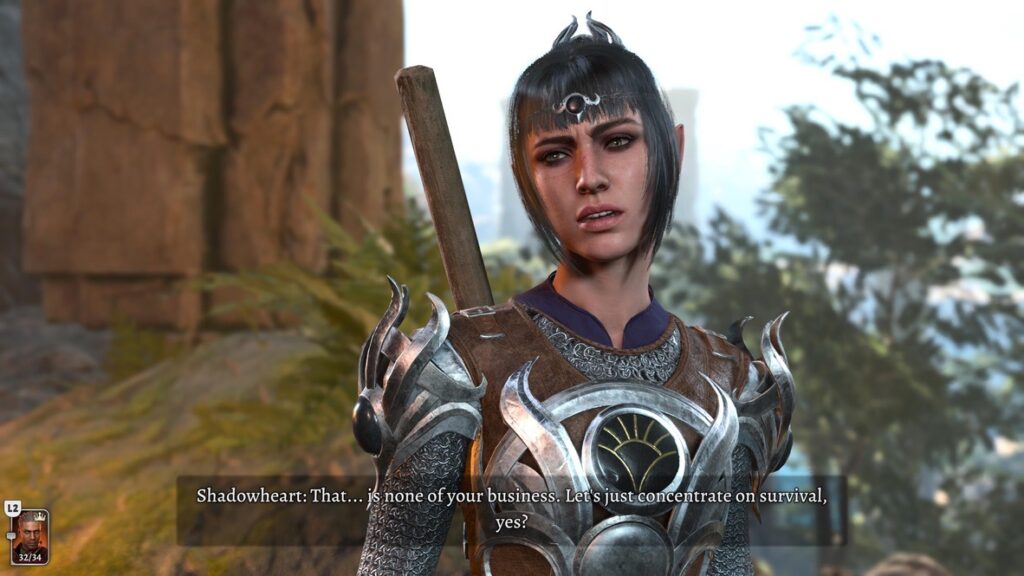
Suppose you’re a Wizard who knows both the spell Cloud of Daggers and the spell Protection from Evil and Good (the spell with the most awkward name in the game). You want to cast Cloud of Daggers to block an enemy from getting to you, and Protection on your melee fighter to protect them against attacks from the Undead enemy.
Both those spells require Concentration, so you can’t cast both and have them active at the same time. (You can’t cast them both in the same turn anyway, since casting a spell is an Action.) Once you cast the second one of those spells, you lose Concentration on the other.
You can also lose Concentration if you’re damaged. That’s why many builds talk about getting Constitution Proficiency or Advantage on Constitution Saving Throws: to minimize the odds that your Concentration will be interrupted by even a tiny amount of damage.
You will also lose Concentration if you fall Prone, which can happen any number of ways; slipping on ice for example.
Putting it all together
It’s a mess of rules to remember, and to get it right.
Now you know why I didn’t try to play a Dark Urge until my third playthrough, why my sixth playthrough on Balanced difficulty was problematic, why Shadow Assassin Lae’zel was not used to her full ability.
There’s a video streamer, Luality, who did a hardcore Honor Mode playthrough under extremely harsh restrictions: no character death, no Rests, no stealing, no purchasing items from vendors. I watched some of her livestream. It took her days spread out over several multi-hour sessions; here’s a summary. She might easily spend an hour contemplating her options for a single combat round, weighing the action economy against her resources.
If I were to spend more time analyzing my tactics, I’d probably be a better BG3 player. Maybe I’m just too impatient when I play. To quote Karlach, “Let’s go already!”
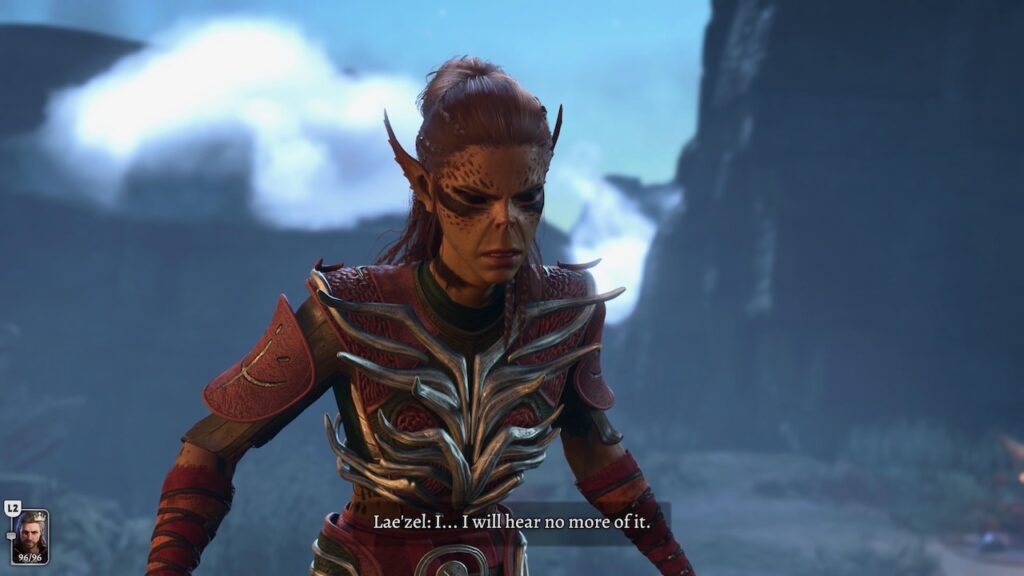
Short and Long Rests
To a large extent, tabletop role-playing games are about resource management: hit points, magic spells, etc. At some point during the game, there’s usually an opportunity to reset one’s resources to full.
In D&D5e, that opportunity is called a “Rest.” There are two kinds: Short and Long. During a Short Rest, there’s partial recovery of some resources (e.g., hit points) and full recovery of others (Warlock spells, a Monk’s Ki points). After a Long Rest, the resources are fully restored. (I may be a bit off here; in BG3 resources are fully restored, but that might not always be the case in D&D5e.)
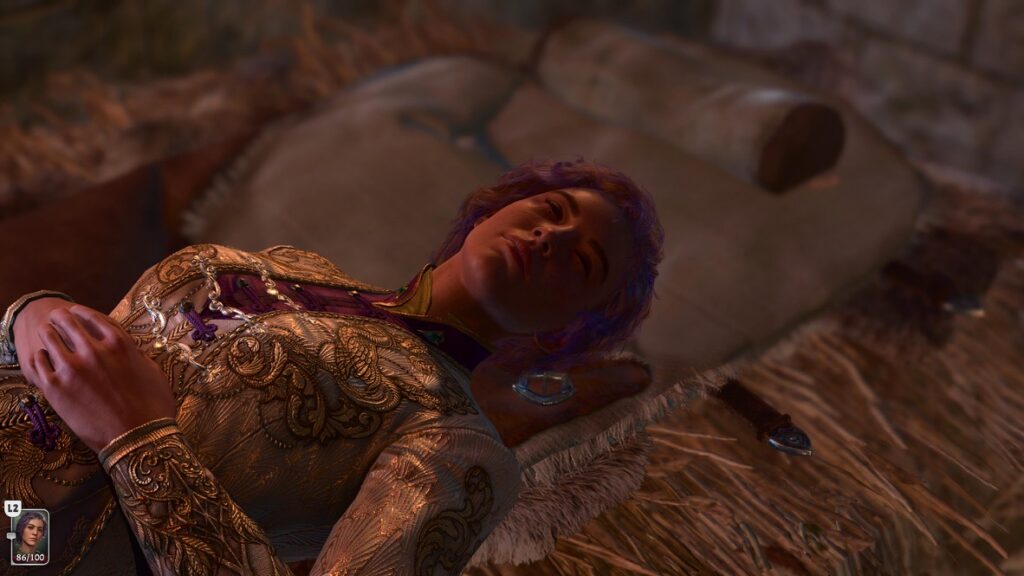
Canonically, a Short Rest takes an hour; a Long rest takes takes eight hours. What that’s meant in the D&D games I’ve seen is that the ability to Rest is dependent on how the GM chooses to run their campaign. Some GMs might simply accept “We’re resting now”; some may roll for random monster attacks during a Rest and declare that the Rest has failed if it’s interrupted; some may make it depend on the situation.
In BG3, a Short Rest takes no time at all, and can be done anywhere. You click the icon that’s for “Short Rest,” you see a graphic effect, and it’s done. You’re limited to two Short Rests per day (three if you’ve got a Bard in your party).
The typical pattern for a day’s activity: Combat, Short Rest, Combat, Short Rest, Combat, Long Rest. It’s possible to stretch that out if a given combat doesn’t use much resources, but sooner or later you’ll want to Long Rest.
The rules for a Long Rest in BG3 are far more lenient, and more interesting, than in D&D5e. In most regions of the game, you can Long Rest whenever and wherever you want. There are some areas in which this is not allowed; these are obvious high-risk zones. Otherwise, you can be in the Castle of Deathly Doom in the middle of the Land of Fatal Torment and still take a Long Rest.
When you take a Long Rest in BG3, you’re taken to a campsite. There are 17 such sites in the game:
If you’re in the Land of Milk and Honey, you’re taken to the Milk and Honey campsite. If you’re in the Land of Fatal Torment, you’re taken to the Fatal Torment site. If you’re in Deathly Doom Castle, you’re taken to that site, which might be in basement where no one would disturb you.
Each site has its own layout, but they all have common features: all the party members you’ve added so far will each have their own little tent areas; there’ll be a common area to store items that you don’t carry around with you (the Traveller’s Chest); there’ll be occasional guests; there’ll be this guy, from whom you can purchase resurrections and respecs:
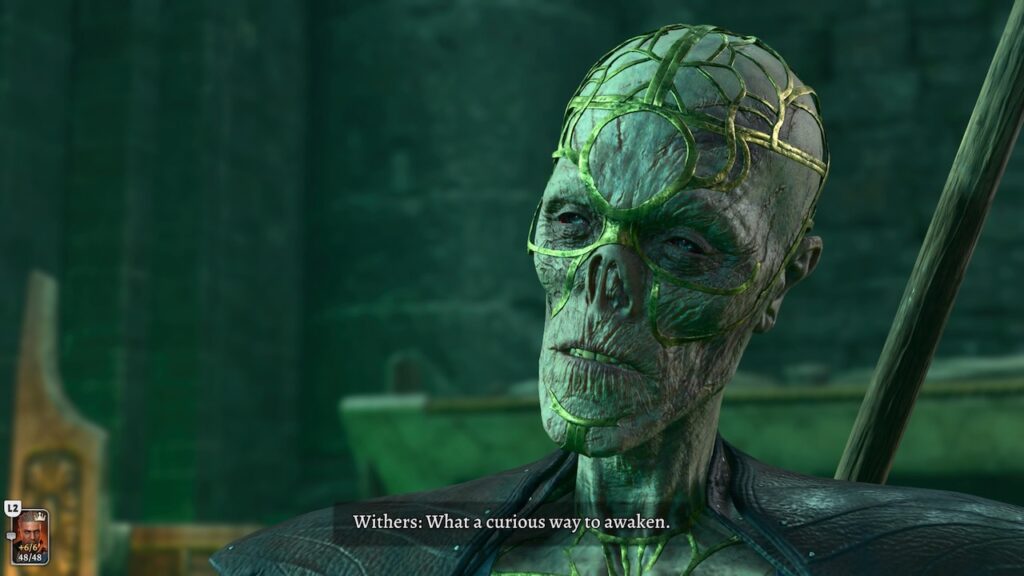
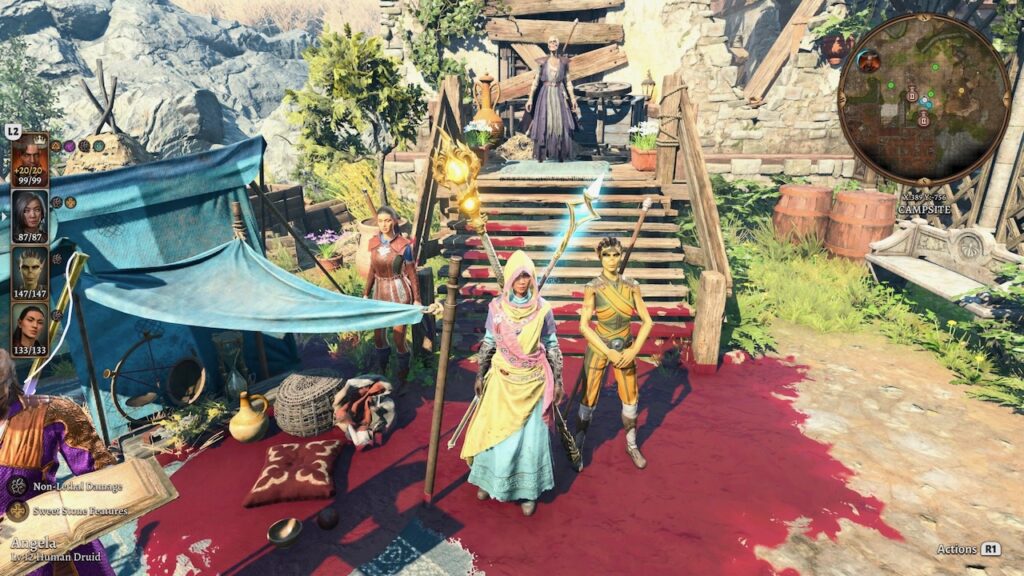
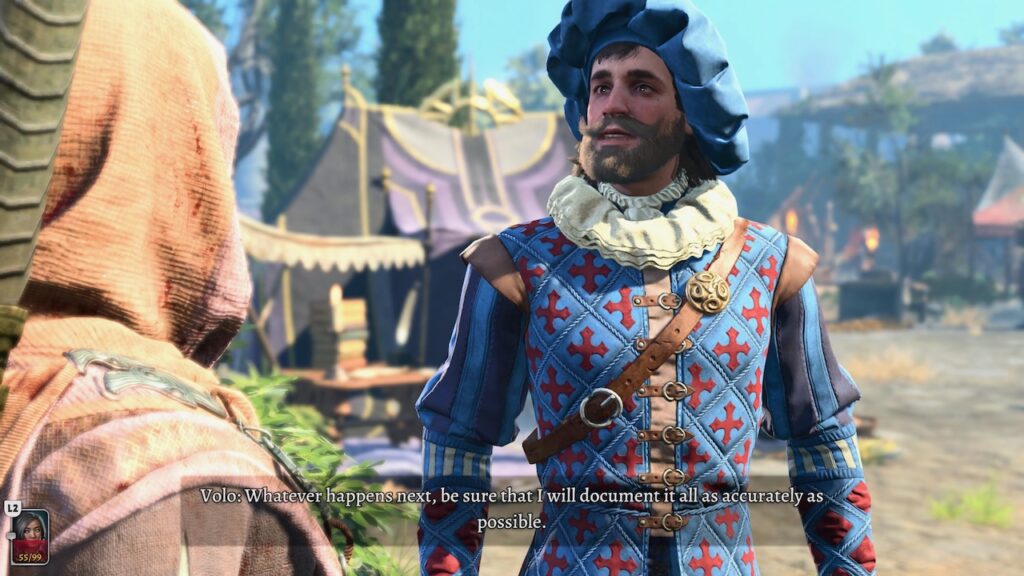
A major element of the camp sites that the game’s story can advance there. If you’ve destroyed the Altar of the Elder God, the Elder God might show up to express their displeasure. You can have conversations with your party members. Some of those conversations can lead to romance.
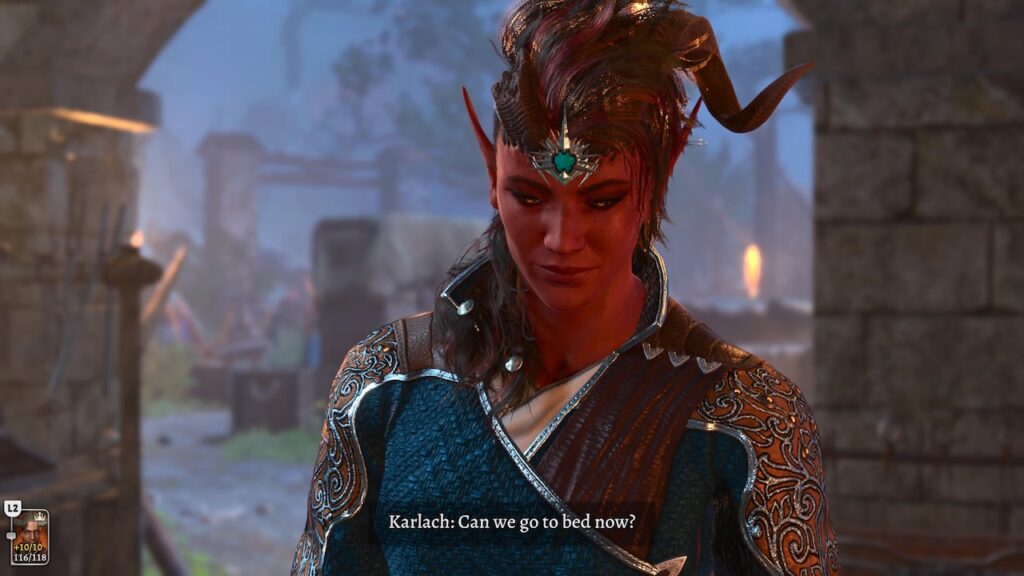
While it might seem you can do a Long Rest pretty much whenever you’d like, there are some limits:
- Every time you do a full Long Rest, it costs some Camp Supplies. These Supplies are easy to find (at least in Explorer and Balanced difficulty), but not infinite. (You can do “Partial Rests” by spending fewer than the quota of Camp Supplies, but I’ve never done so.)
- There’s one important resource that only lasts until the next Long Rest: Elixirs. There are a wide variety of Elixirs in BG3, ranging from the relatively useless Elixir of Barkskin to the critically important Elixir of Bloodlust. While the effects of an Elixir don’t go away until the next Long Rest, you may want to hold off on that Rest for as long as you can if you don’t have another bottle of that Elixir to use the next day.
- Depending on your game strategy, it may take a while to set up your party after a Long Rest. In my case, my set-up procedure was time-consuming: summoning minions, having hirelings cast buffs on characters and minions, using items like Drakethroat Glaive to enhance weapons. Because I’m a cautious and unskilled player, setting up for the day might take me 15 minutes of real time. I’m not going to do all that to adventure for only 10 minutes then take another Long Rest to recover spell slots.
Clerics as Healers
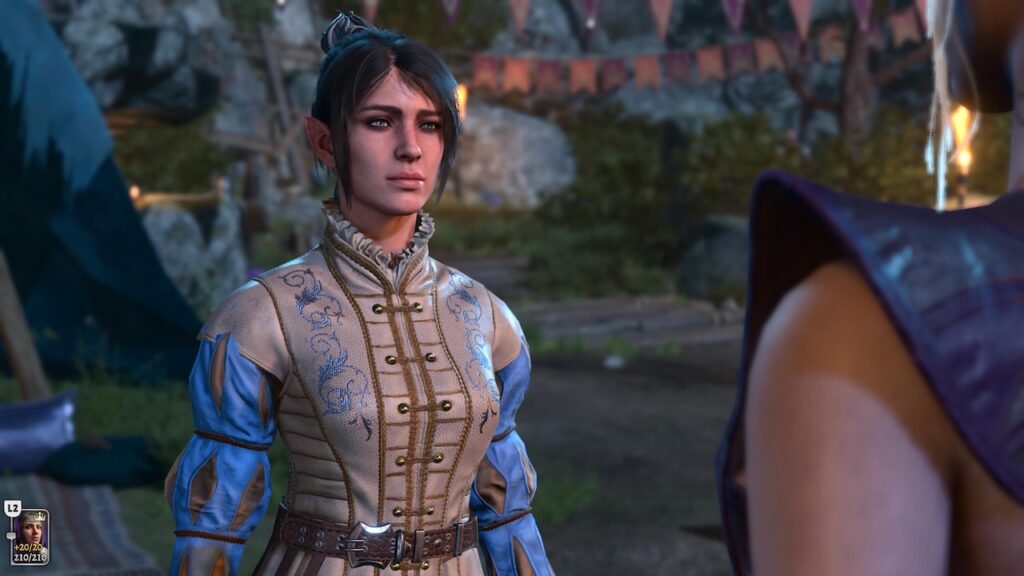
The reasons why Clerics are not usually not needed as healers in BG3:
- Short Rests are simple and take no time. At higher difficulty levels you might not get all your hit points back, but at Explorer or Balanced Difficulty you typically get them fully restored.
- Healing potions are plentiful. You can find them as loot, and they don’t cost much to purchase from merchants.
- If you need healing in the middle of combat, you can drink a healing potion at the cost of a Bonus Action.
- On the rare occasions you might need an emergency heal from another character, the “bread-and-butter” healing spell is Healing Word, which costs a Bonus Action. While Clerics can cast this spell, so can Druids and Bards.
- There’s the trick I only learned in playthrough 7, and actually started doing in playthrough 8: If you need someone else to spend an Action to heal you, they can throw a healing potion on you. If you only want to spend a Bonus Action, place the healing potion on the ground next to the target (which takes no action), then use an off-hand weapon as a Bonus Action to shatter the bottle.
With all these options, in BG3 healing is the least important benefit that a Cleric brings to the party. Of course, there are exceptions; Mass Healing Word can be a lifesaver for an entire party. But all things considered, I wouldn’t level up a Cleric solely to have access to that spell.
So I wouldn’t keep Shadowheart around as a healer. I’d keep her for her sense of humor.
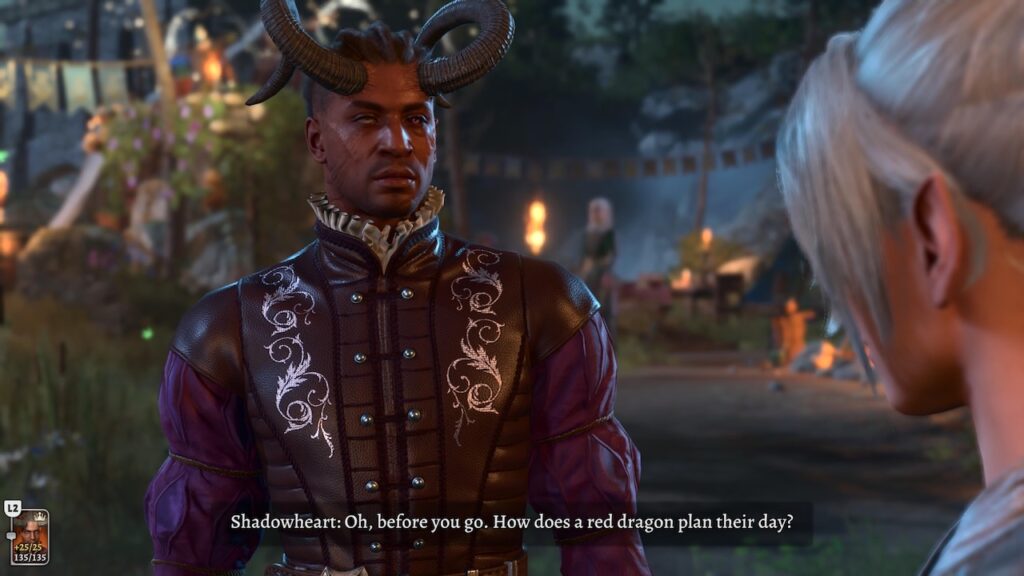
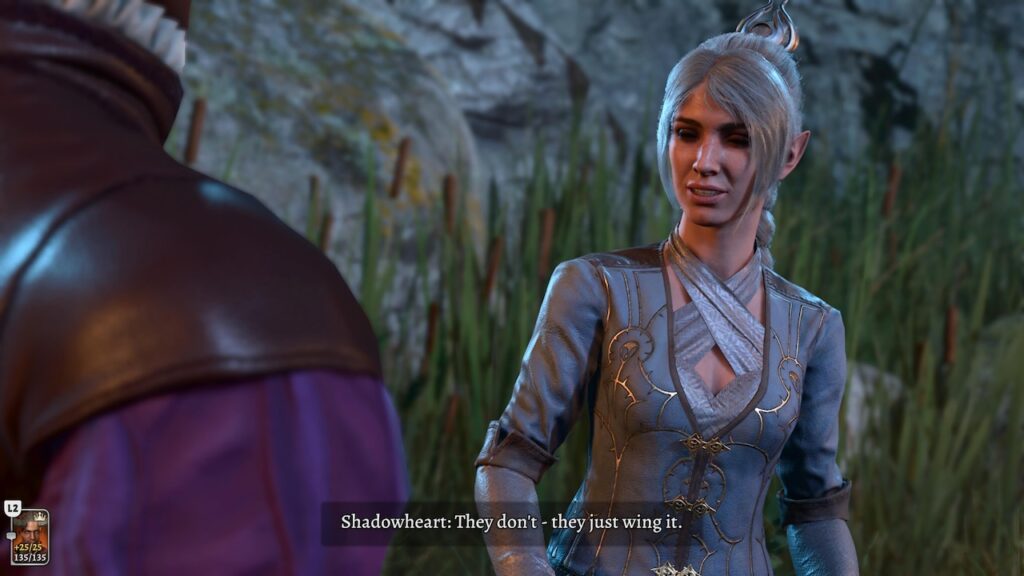
Or maybe not.
Spell slots
The origin of “spell slots” comes from the SF stories written by Jack Vance (no, not the 2024 VP nominee) in the 1950s and 1960s. In the The Dying Earth stories, magicians had to carefully pick which spells they’d memorize at the start of the day. The reason given was that the spells were so puissant (Vance had a marvelous gift for language) that even a highly-trained brain could only hold so many.
Fast forward to the early 70s. The originators of what would eventually be called the Dungeons & Dragons system had to find a way to limit spellcasters somehow. The “feel” of fantasy stories demanded that magic be powerful and impressive. But if you let a magic-user cast (e.g.) a Fireball every turn, no one would want to play any other class.
One solution is to limit the effects of the Fireball. This makes spells in general less impressive.
D&D‘s solution was to use the idea of magic from The Dying Earth: There were only so many spells that a magic-user could have prepared for given day.
Spell-casters also had books (generally called grimoires in fantasy literature, called “spellbooks” in D&D) from which a spell-caster could learn their spells. Part of the reason for this was to give magic-users another motive that’s found in fantasy literature: to go on a quest to learn a new spell to add to their grimoire.
As a spell-caster’s level increases, the number of “spell slots” they have increases. Some of the new spell slots can be used for more powerful spells.
A spell-caster in D&D is navigating a jigsaw puzzle: You can cast only so many spells per day, of a given power, from a given list.
A sub-essay within an essay
In 1978 the SF writer Larry Niven published a novella, The Magic Goes Away. In it, magic was a finite quantity that was spent every time a spell-caster used it. The name Niven gave to the measurement of this quantity was “mana”.
I don’t know if Niven knew this (he probably did, he’s quite a smart man): In Oceanian cultures, mana is the name of a spiritual force that permeates the universe. In Cunningham’s Guide to Hawaiian Magic & Spirituality, I learned that in the Hawai’ian culture there were those who were especially skilled at working with mana and applied it to their work (healing, craftsmanship, surfing, even hula).
(In this context, mana sounds like The Force. If Lucas had used “mana” instead of “midichlorians”, the world would be a better place.)
In 1978, Greg Stafford‘s game company Chaosium published a tabletop role-playing game called Runequest. As far as I know, that was the first published game to introduce a point-based system for limiting the use of magic by spell-casters. [Edit: In Oct-2025 I learned that point-based magic systems existed before Runequest, but I believe (without proof) that it was the first professionally-published game that used the concept.]
A spell-caster had a certain number of “mana points” (I assume the word came from Niven’s story). Each spell cost an amount of mana. More powerful spells cost more mana.
A spell-caster could decide how they wanted to spend their mana as the immediate situation required. They could cast many low-powered spells, or cast perhaps one or two high-powered spells, with the mana they had available.
In my mind, this is a more “rational” system for handling magic. It’s found in almost every fantasy tabletop role-playing game and video game except for D&D.
(See Isaac Bonewits’ Authentic Thaumaturgy for yet another approach to magic in a game system.)
Getting back to the original topic
Spell slots are yet another reason I hate D&D.

I find the system to be too restrictive. It makes it difficult to be a spell-caster for the first couple of character levels. I also think it’s a difficult system to explain to brand-new players.
Another reason I hate the D&D magic system is the rigid nature and names of the spells. You have to accept that there’s a ranged fire-based cantrip, but no ranged lightning-based cantrip.
Spells named “Otiluke’s Resilient Sphere”, “Tasha’s Hideous Laughter”, “Otto’s Irresistible Dance”, or “Melf’s Acid Arrow” imply that the game world had magicians named Otiluke, Tasha, Otto, and Melf. This ties the spells to a specific game universe; in modern D&D, this is the world of Forgotten Realms.
What if you want to set your campaign in a different universe? Then you have to go through all the spells and rename them, or accept that your game’s past includes the D&D past, or have some other contrivance.
I repeat what I said before: I play BG3 despite the system, not because of it. The spell system is the part I dislike the most.
OK, enough ranting.
Roguery
Here are a few instructional pictures on the life of a typical Rogue Thief.


That’s pretty much the life of the Rogue: use R3 a lot to see where I’d be spotted, Hide when I can, take what I need.

Combat is similar: A Rogue gets bonuses if they attack while they’re Hiding. However, I’ve found that screenshots of combat are even duller than these Pickpocket photos. I’ll spare you.

Anything else?
In addition to the previous excerpts from longer essays, there are essays I wrote solely on a particular rules topic:
- Summoned creatures and throwing potions
- Alternatives to Fly
- Die rolls. This includes a discussion of Difficulty Checks (DC), modifiers, and Advantage vs. Disadvantage.
At one point I intended to write something about the concepts of Saving Throws, Armor Class, and Resistance vs. Vulnerability. I may yet do so, if I hear from Actual Sabrina that it would be of value to her.
Pingback: BG3 – An explanation of Dice Checks – The Argothald Journal
Pingback: BG3 – Alchemy and Transmutation Wizardry – The Argothald Journal