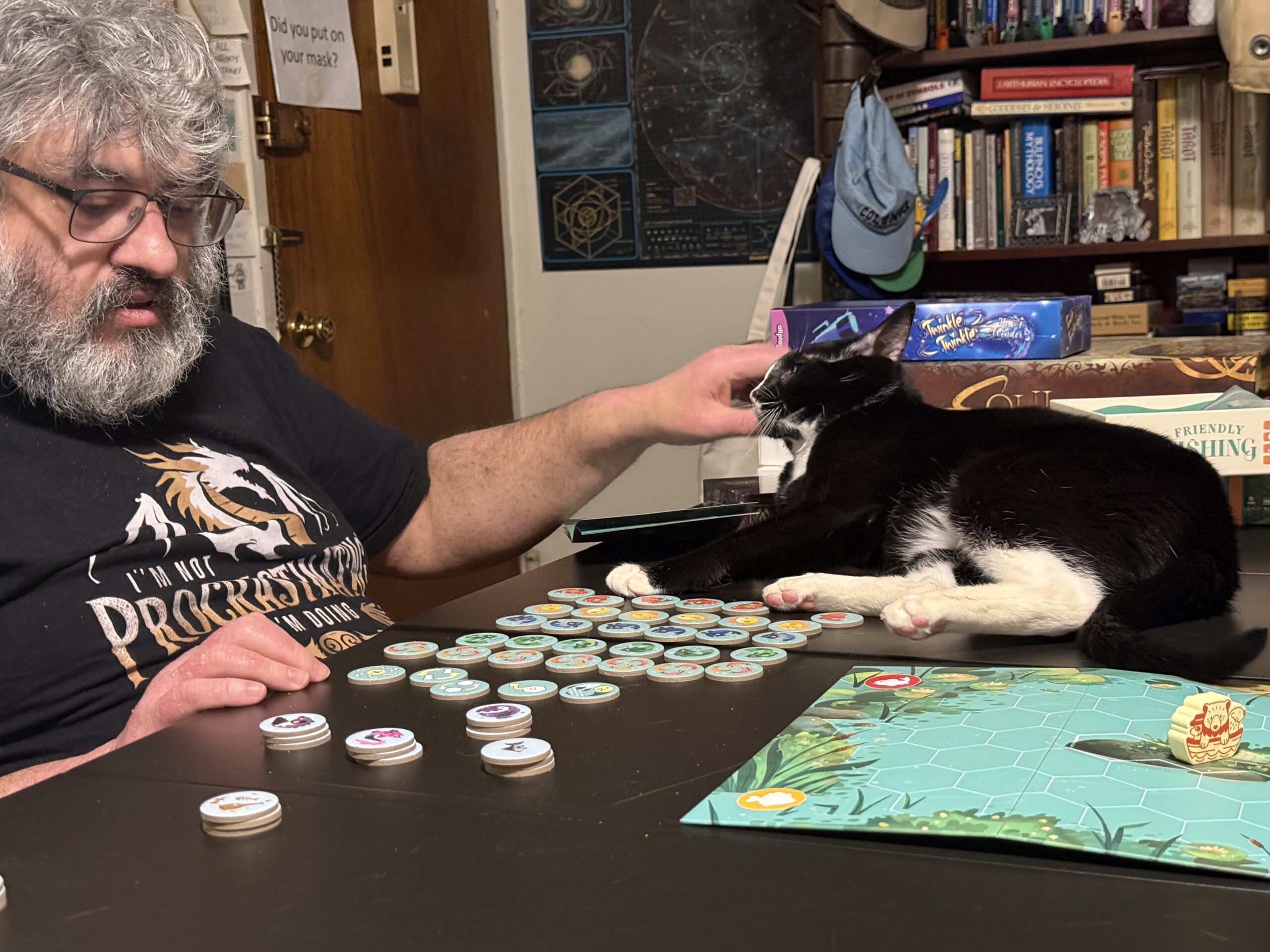
In my attempts to be a good host, I clean off my gaming table before my guests arrive.
According to Jiku and Shuba, any dirt the guests see on the table has nothing to do with them. It must be because Bill didn’t clean well enough.
Last night we managed to play three games in a single evening.
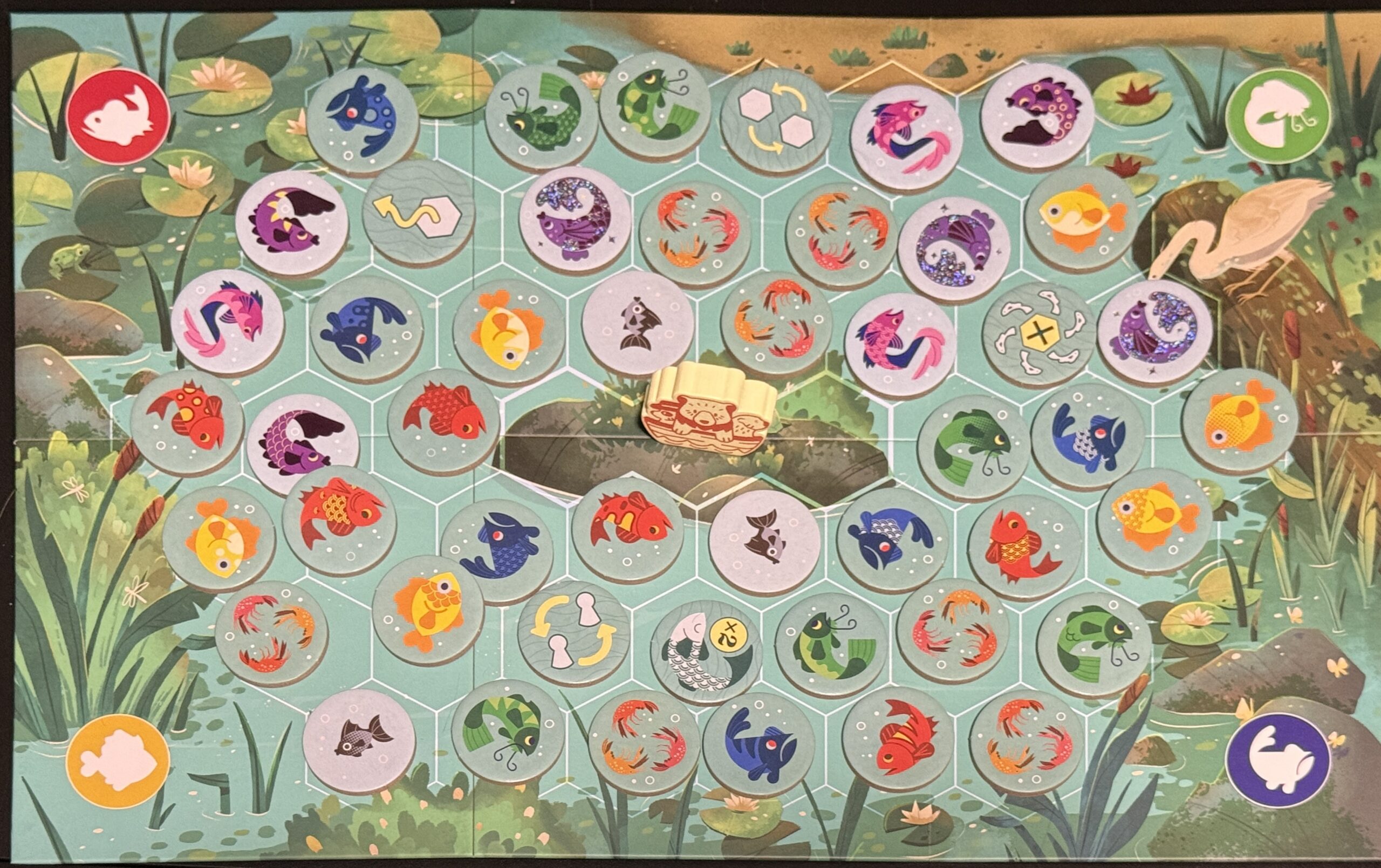
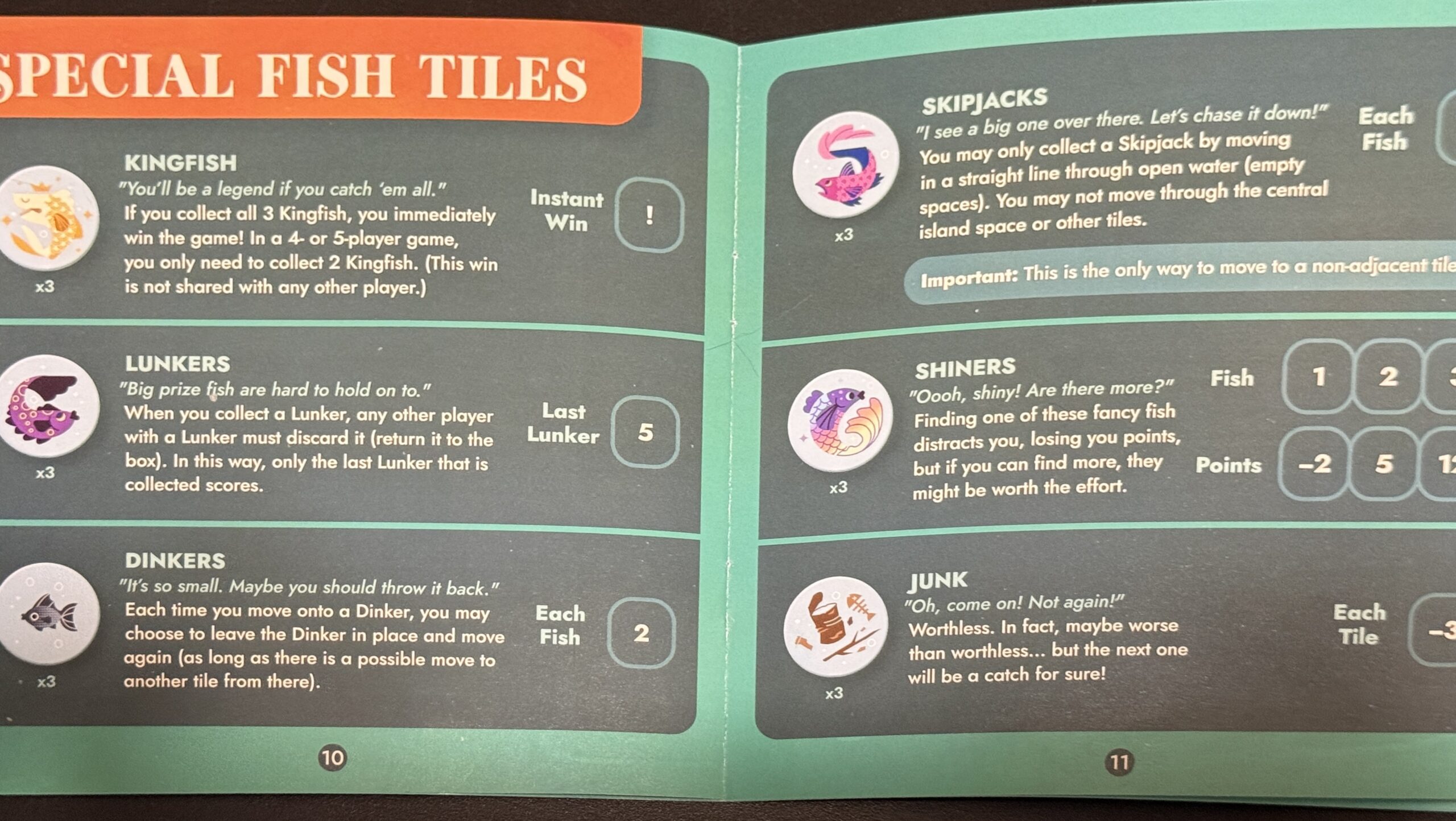
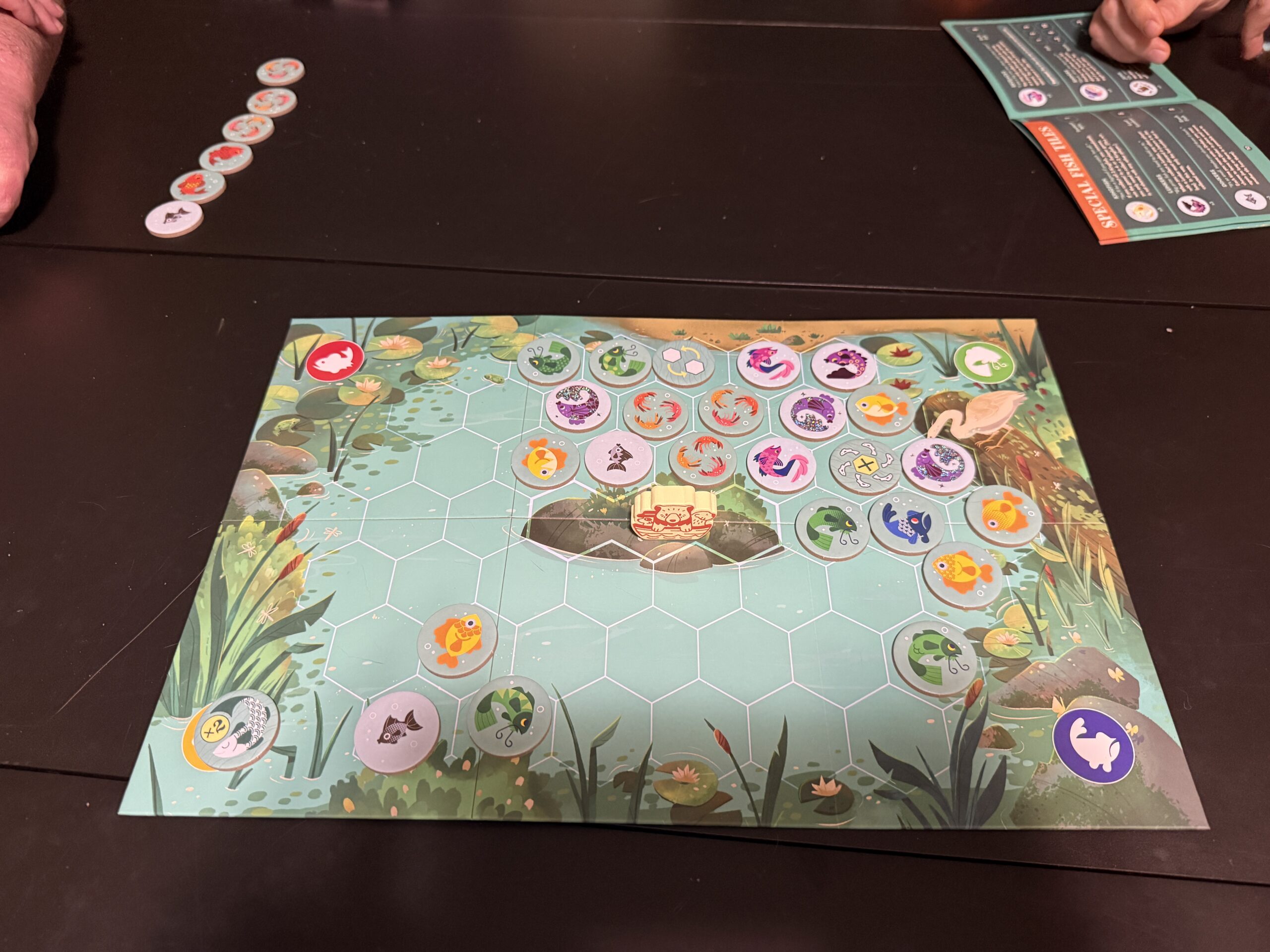
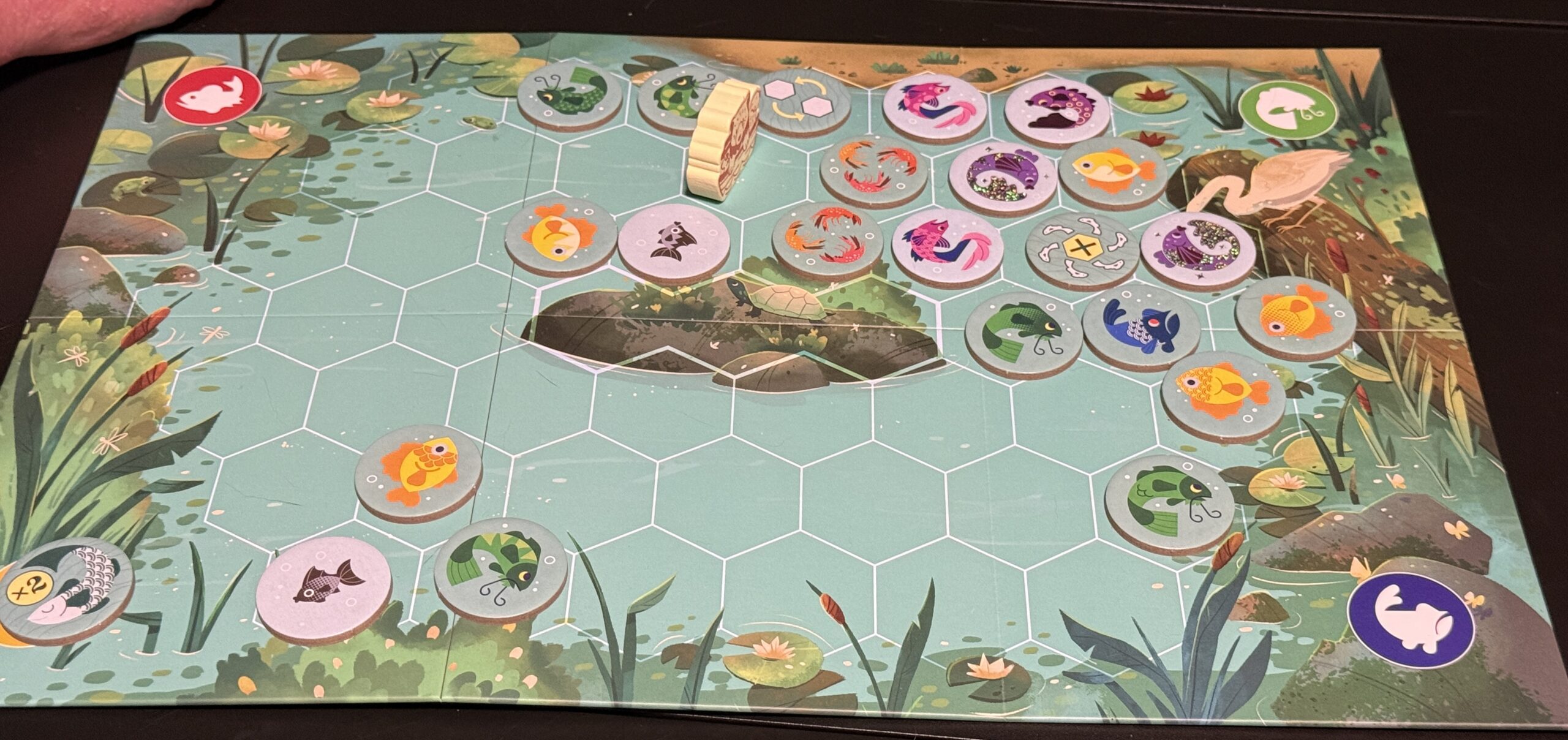
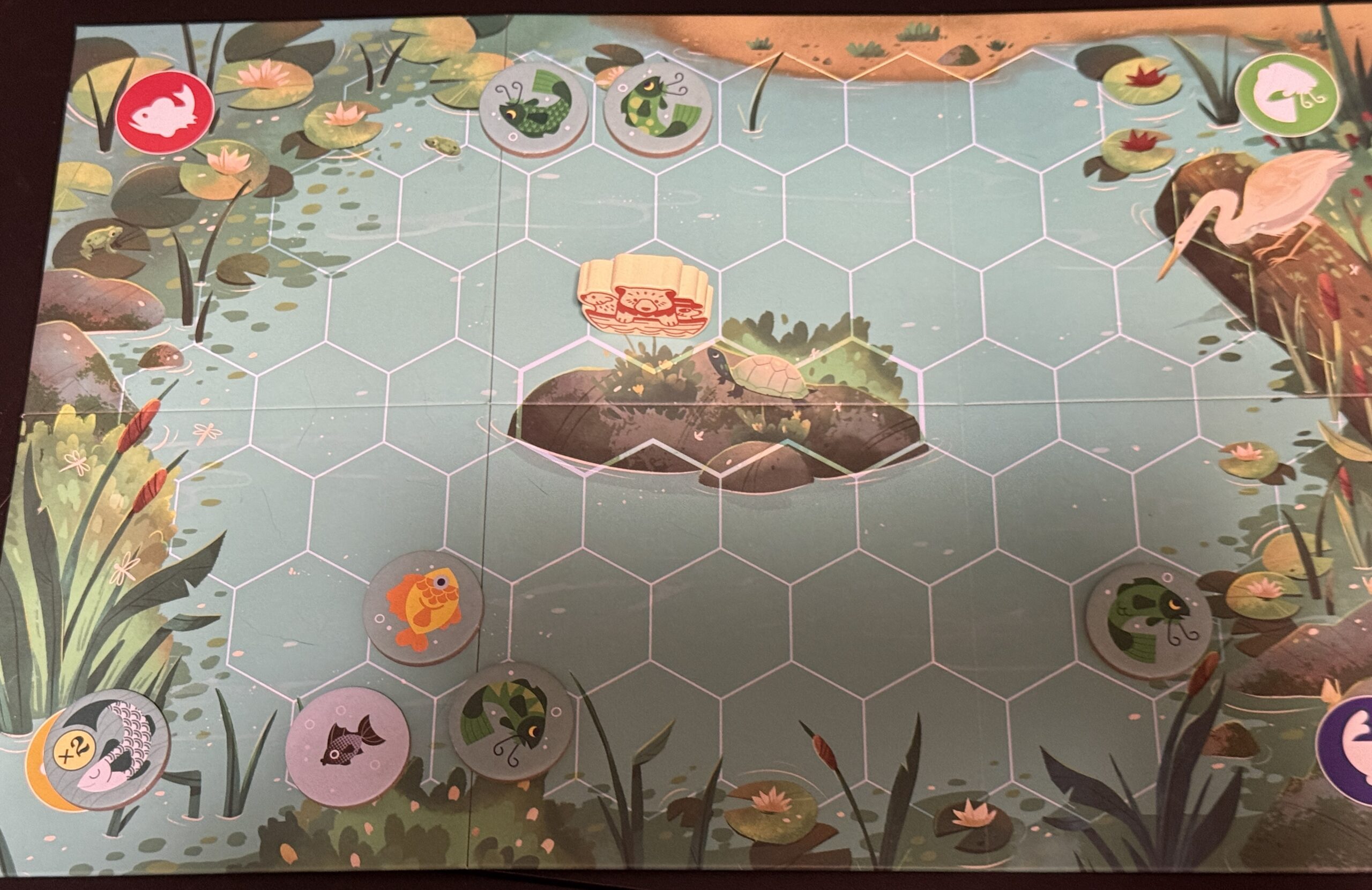
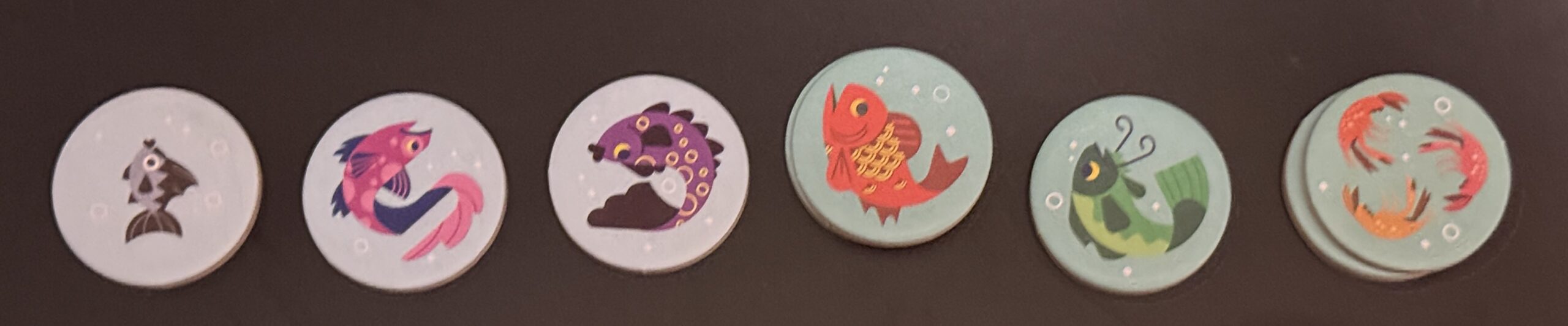
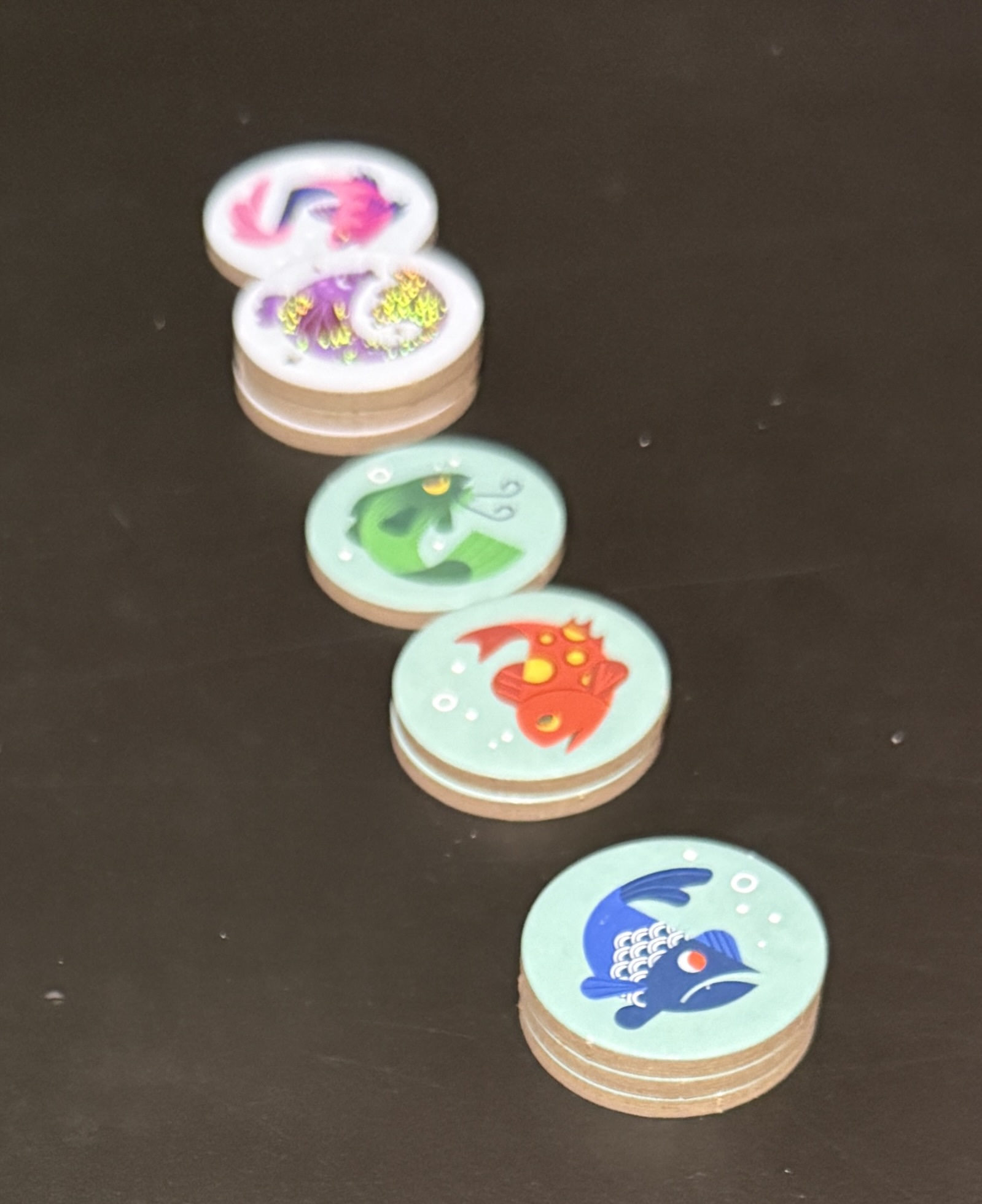
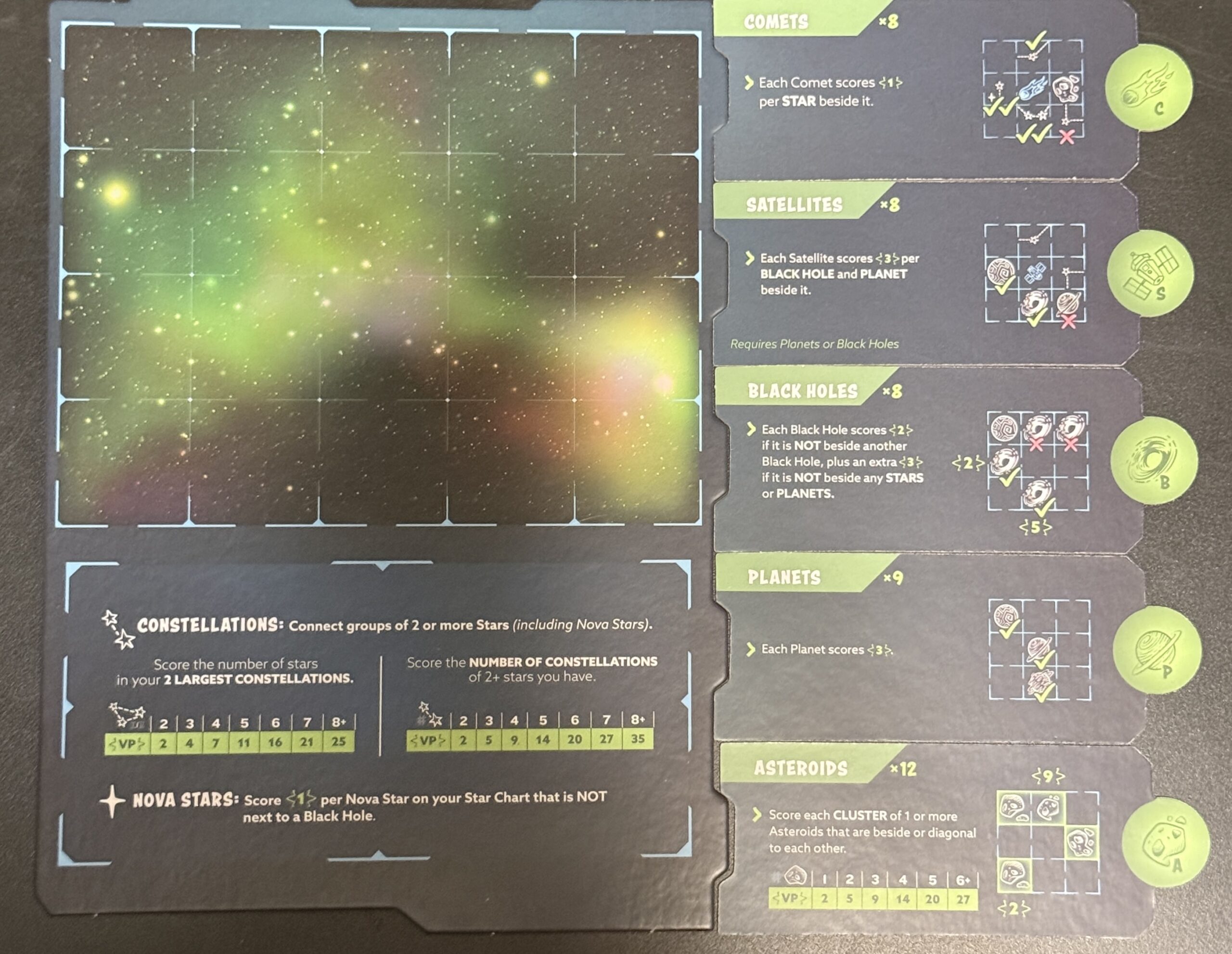
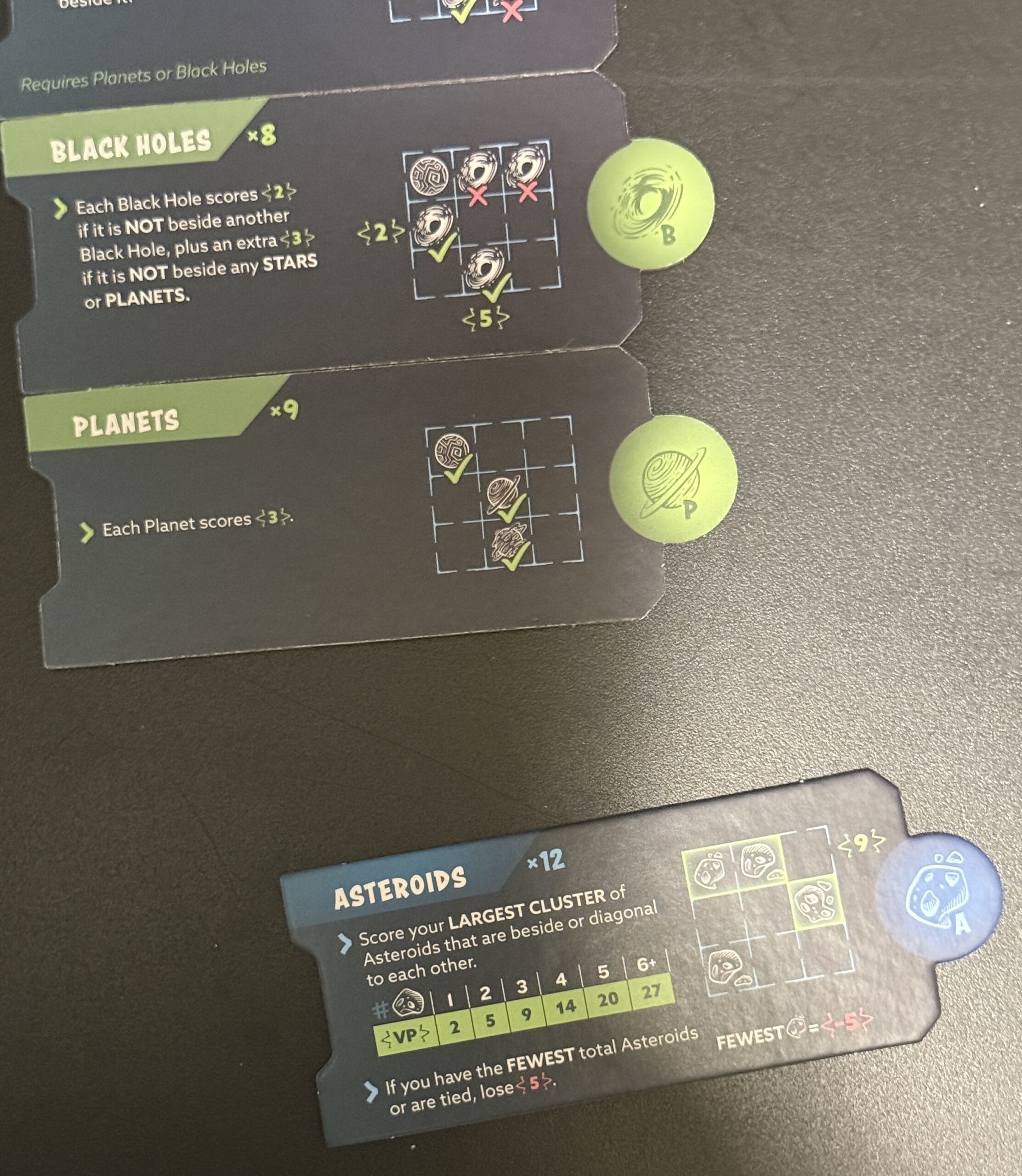
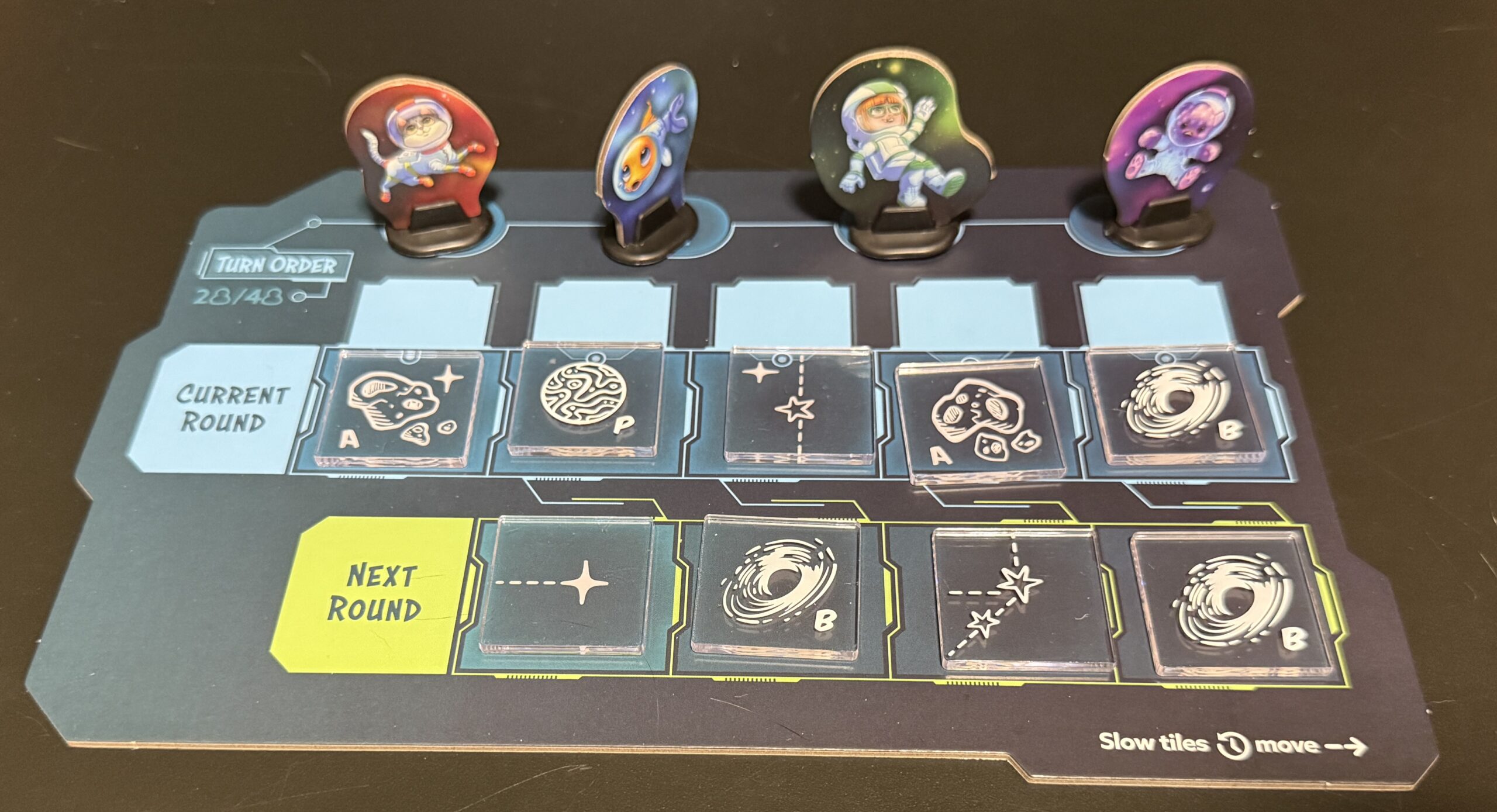
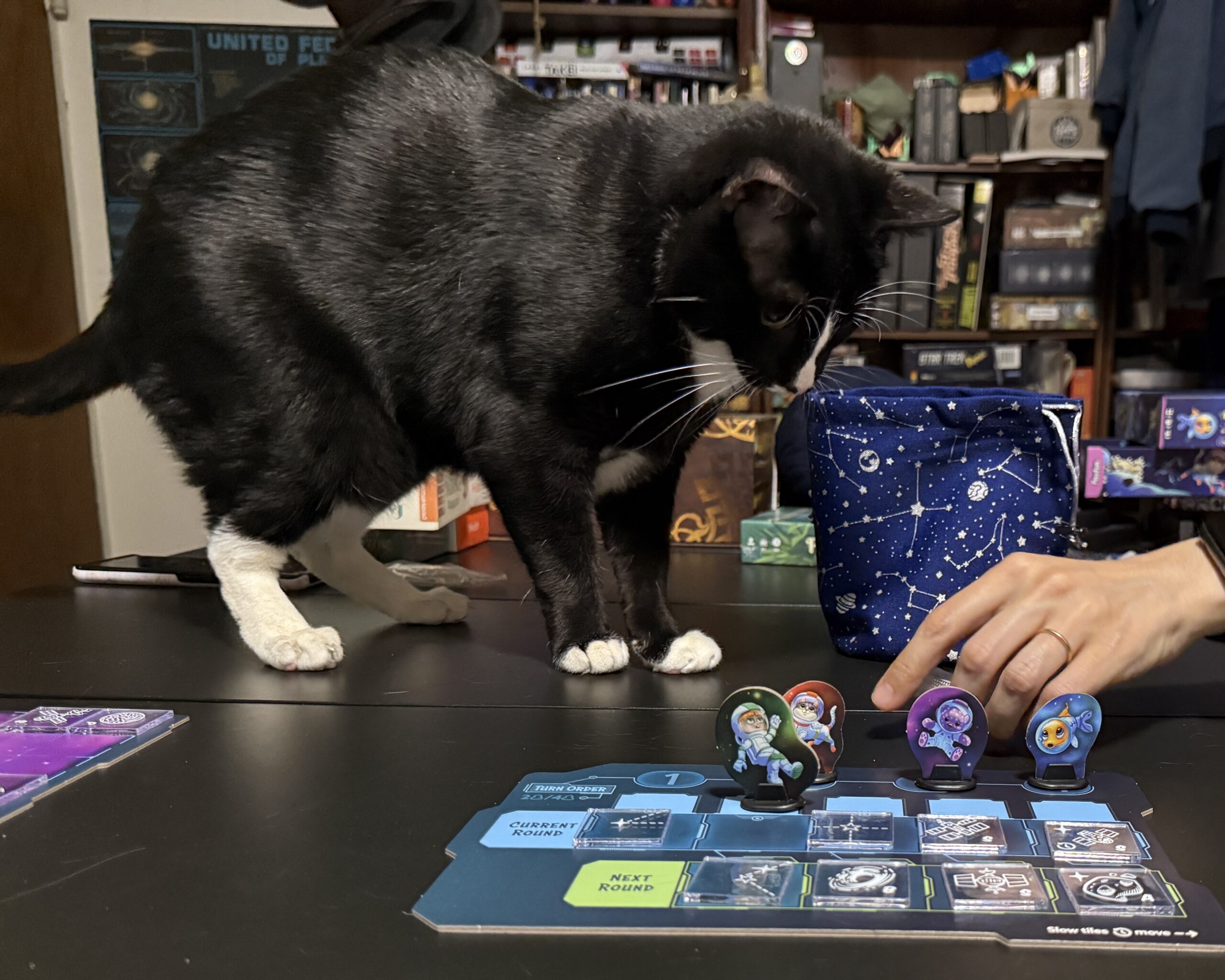
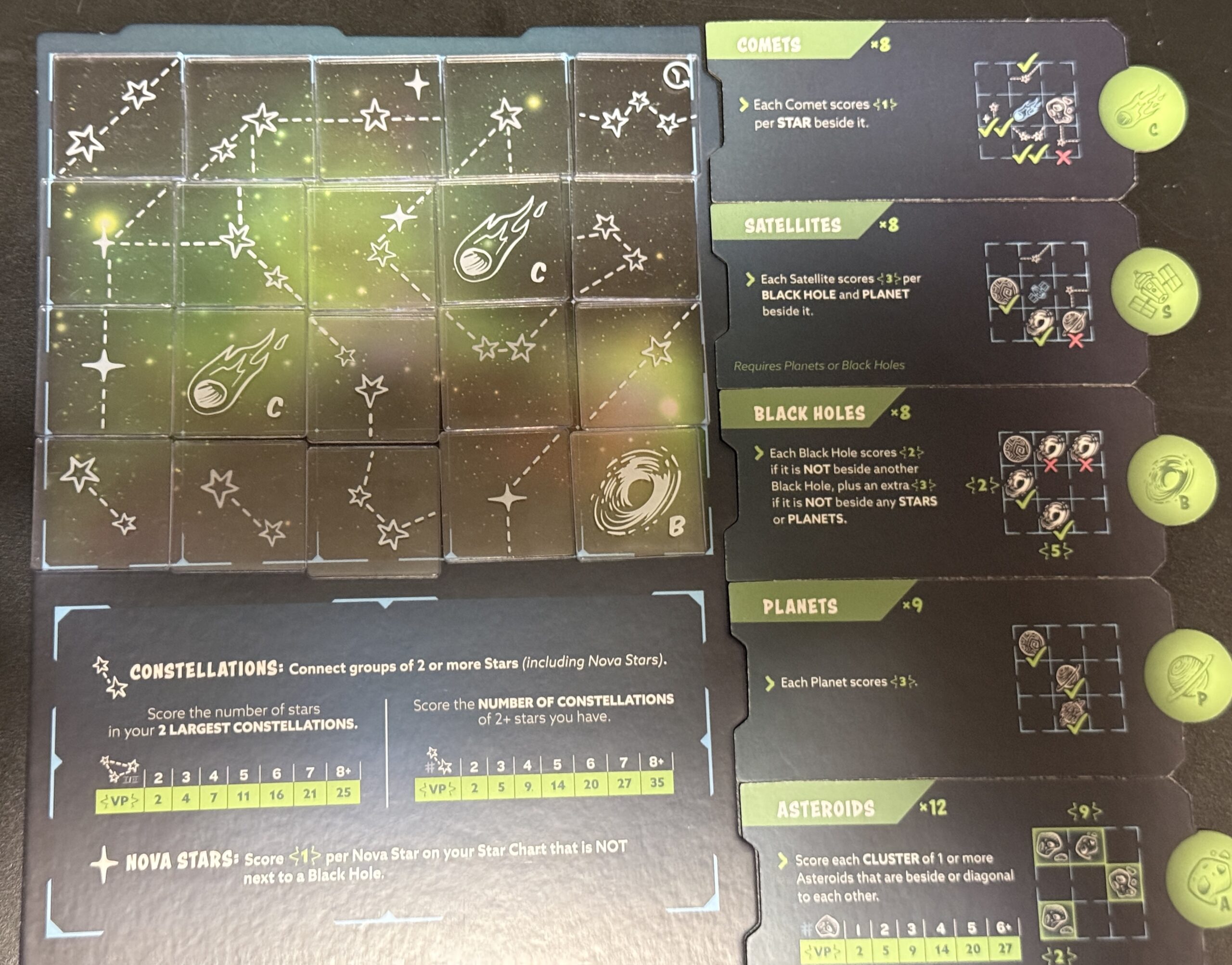
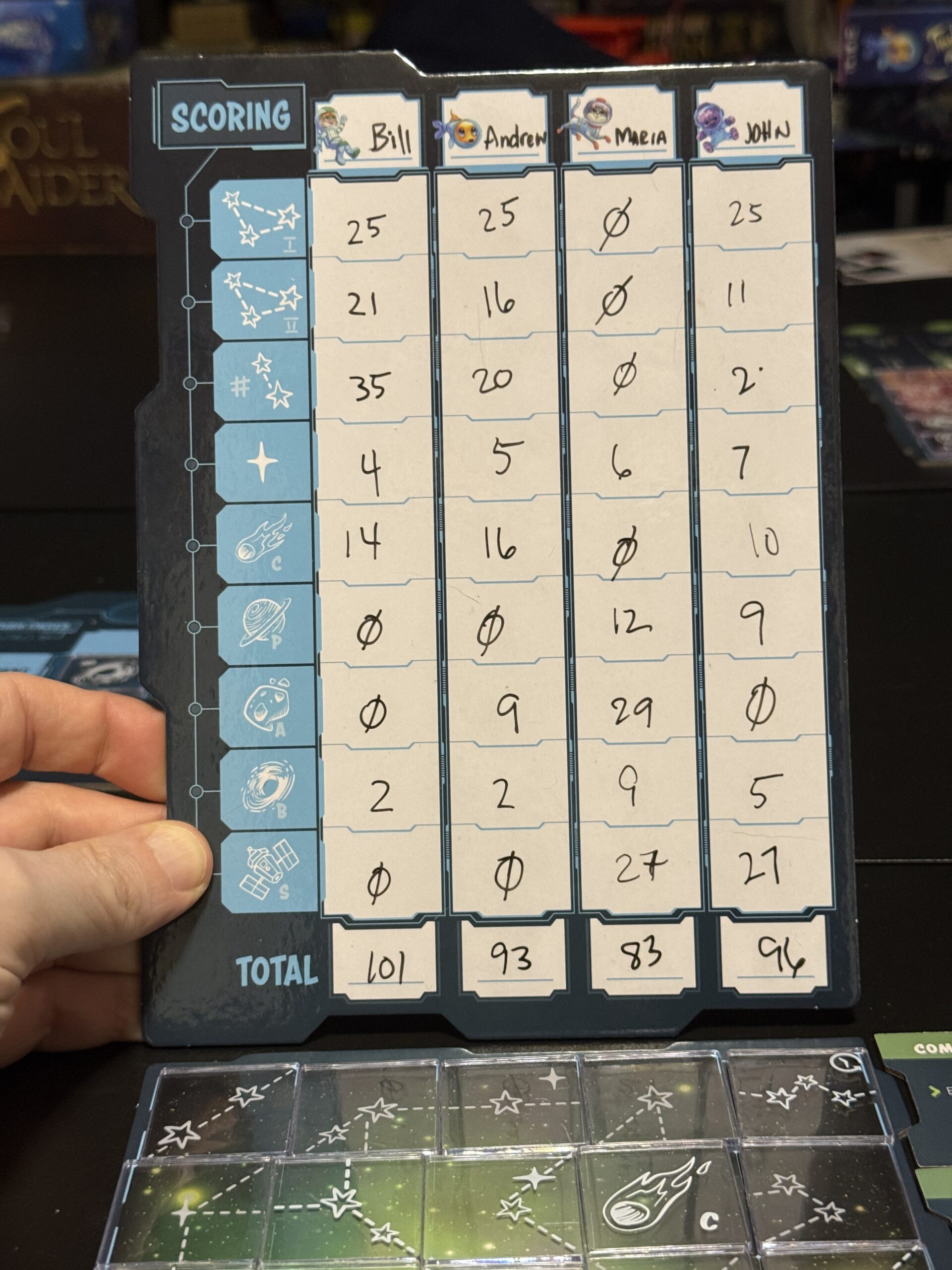
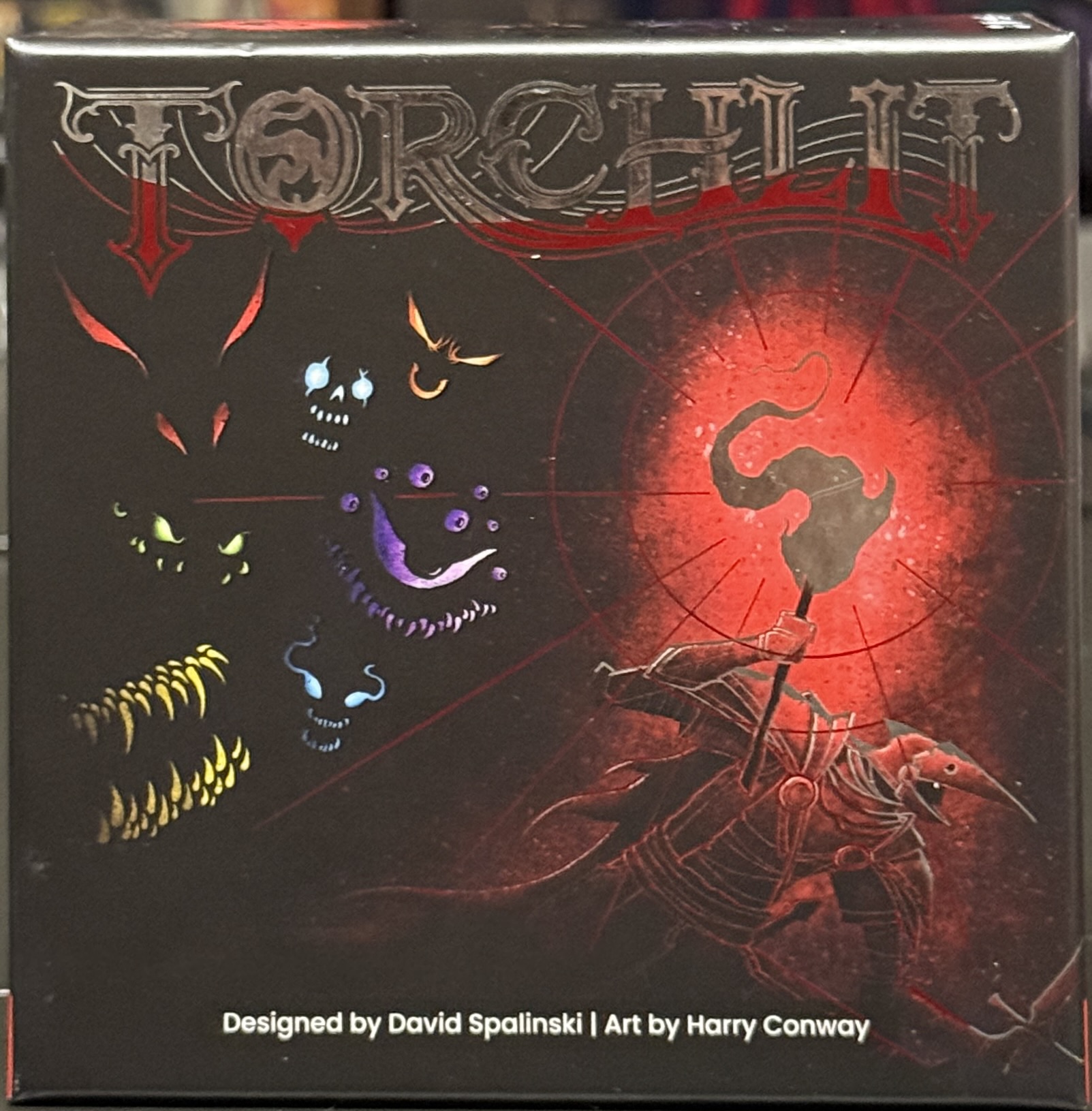
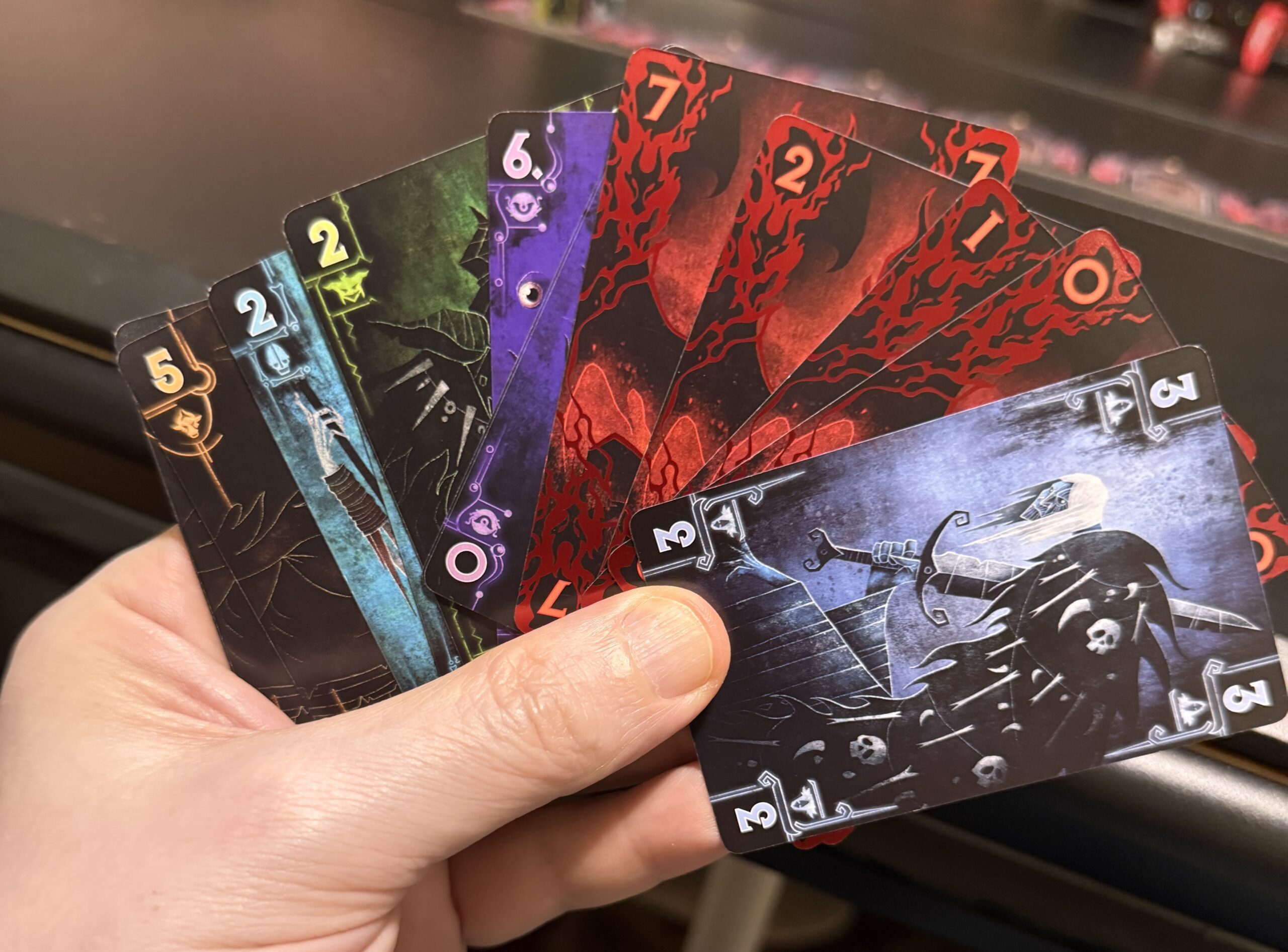
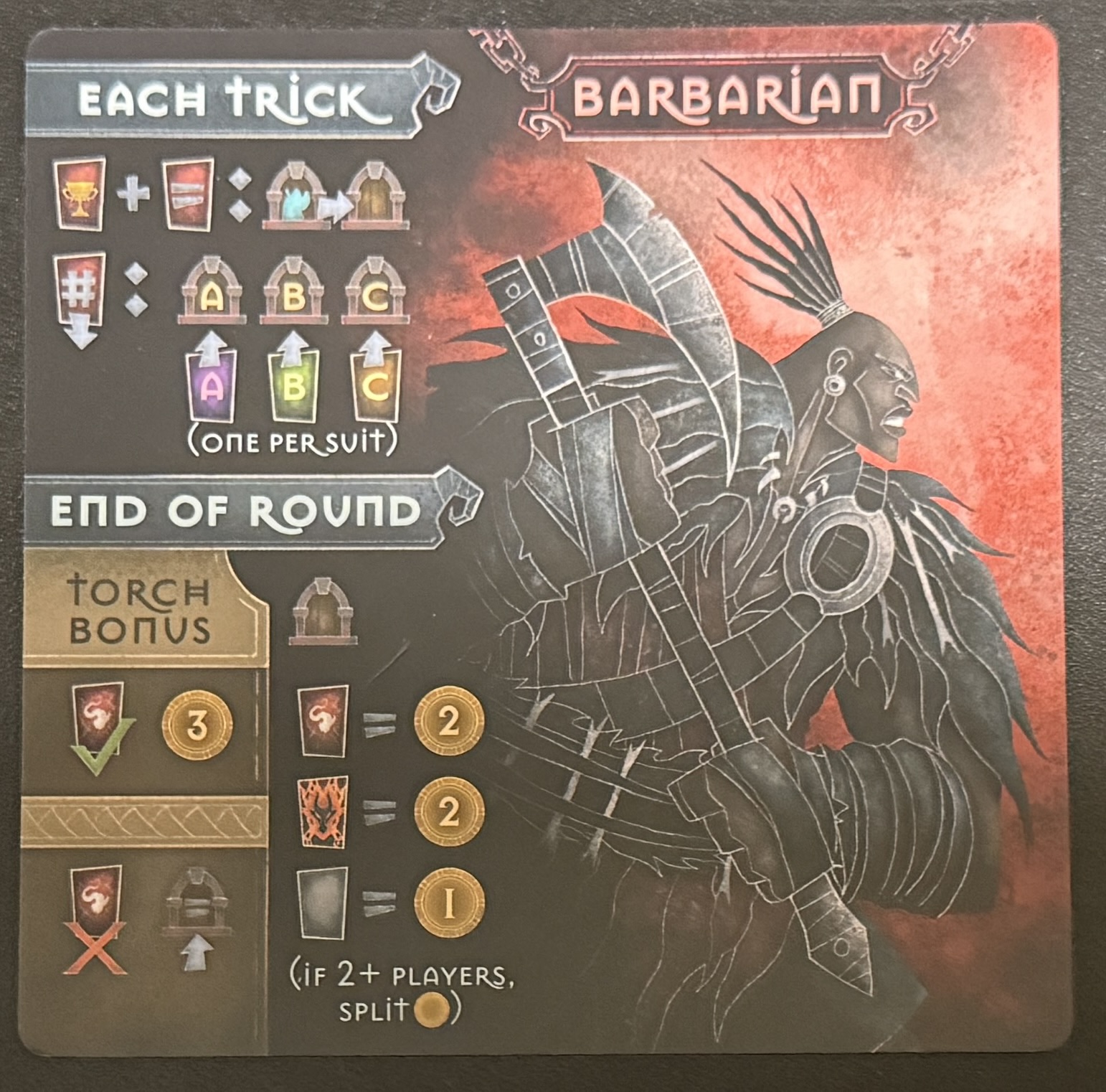
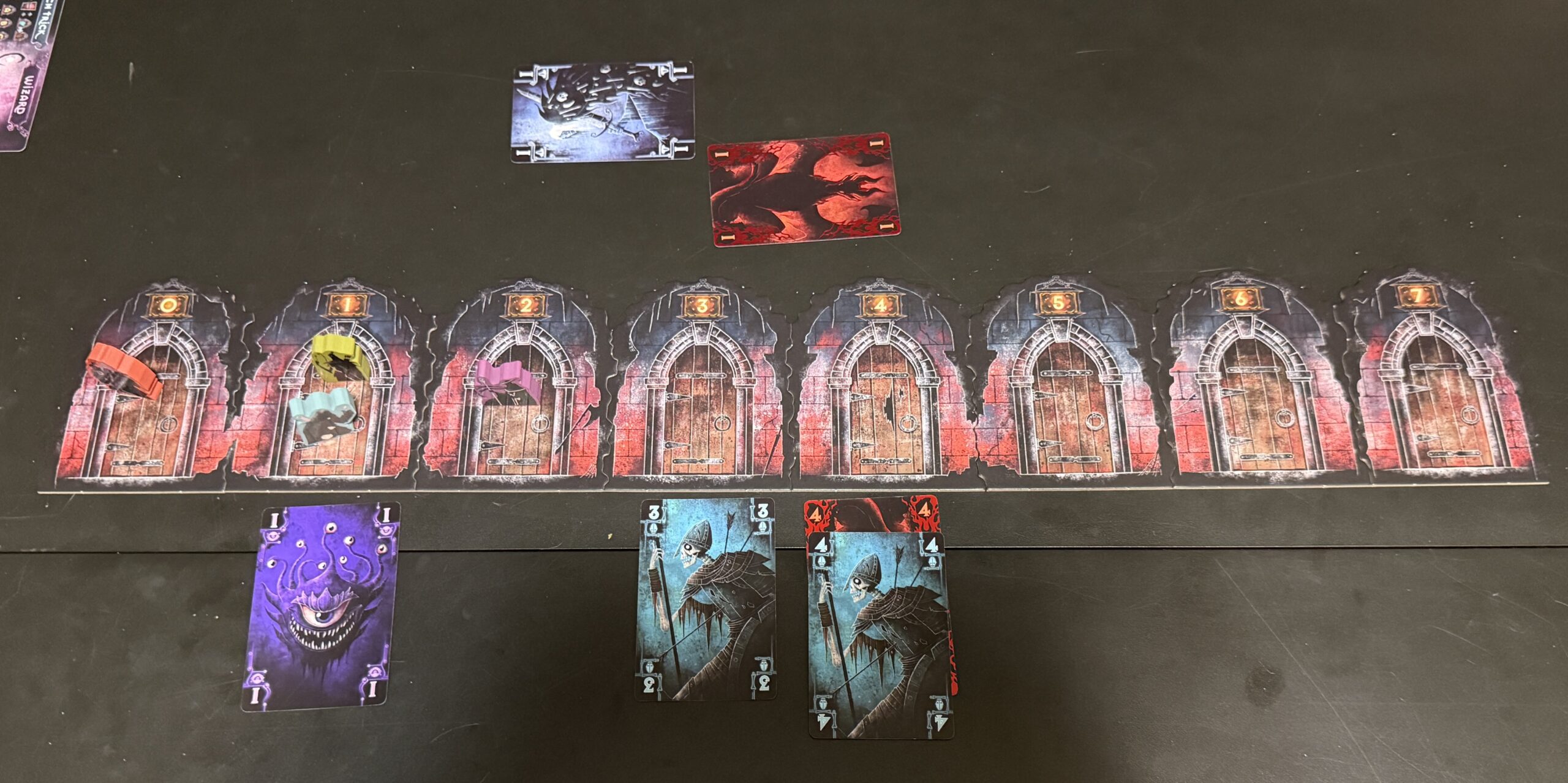
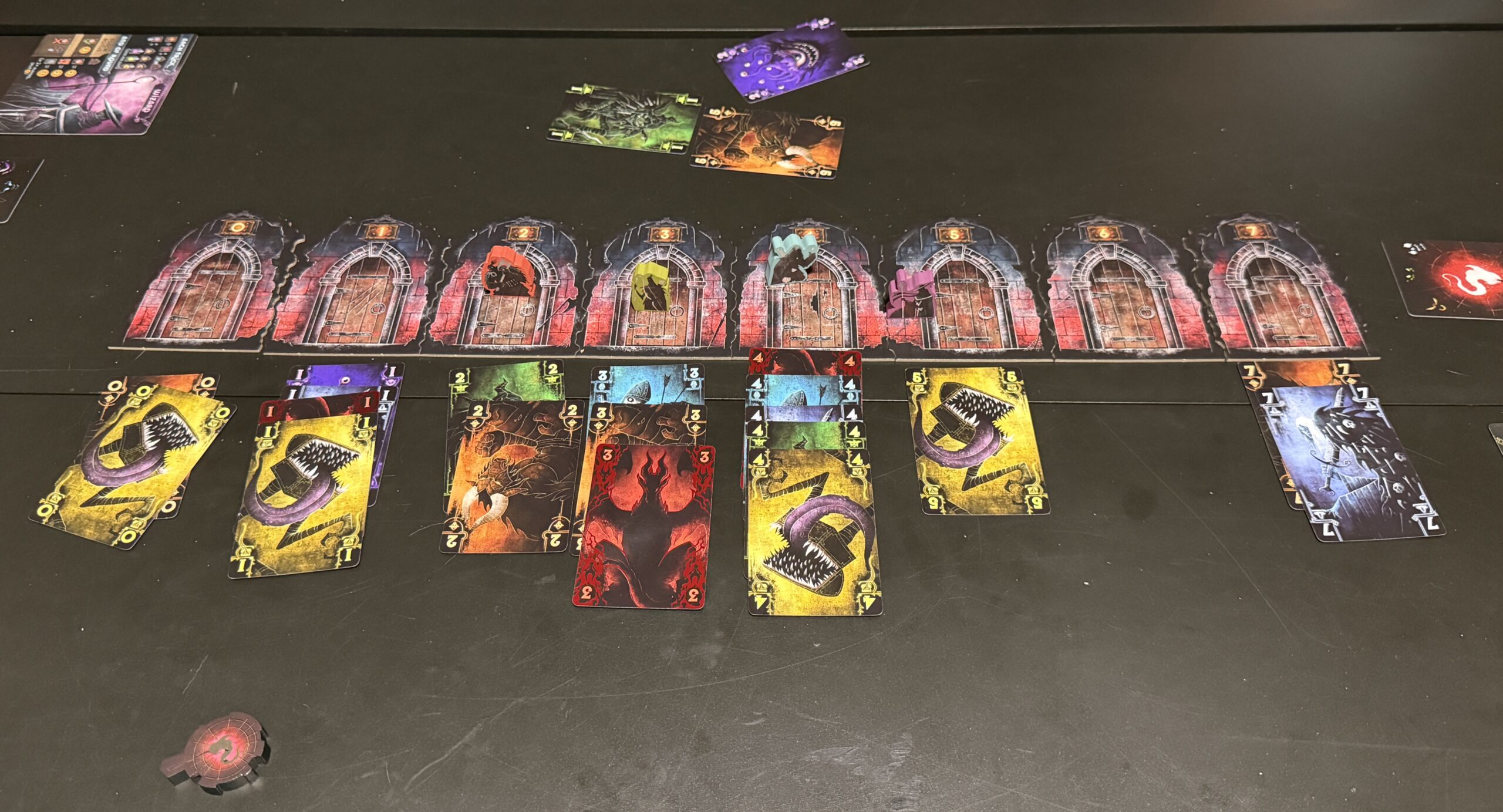
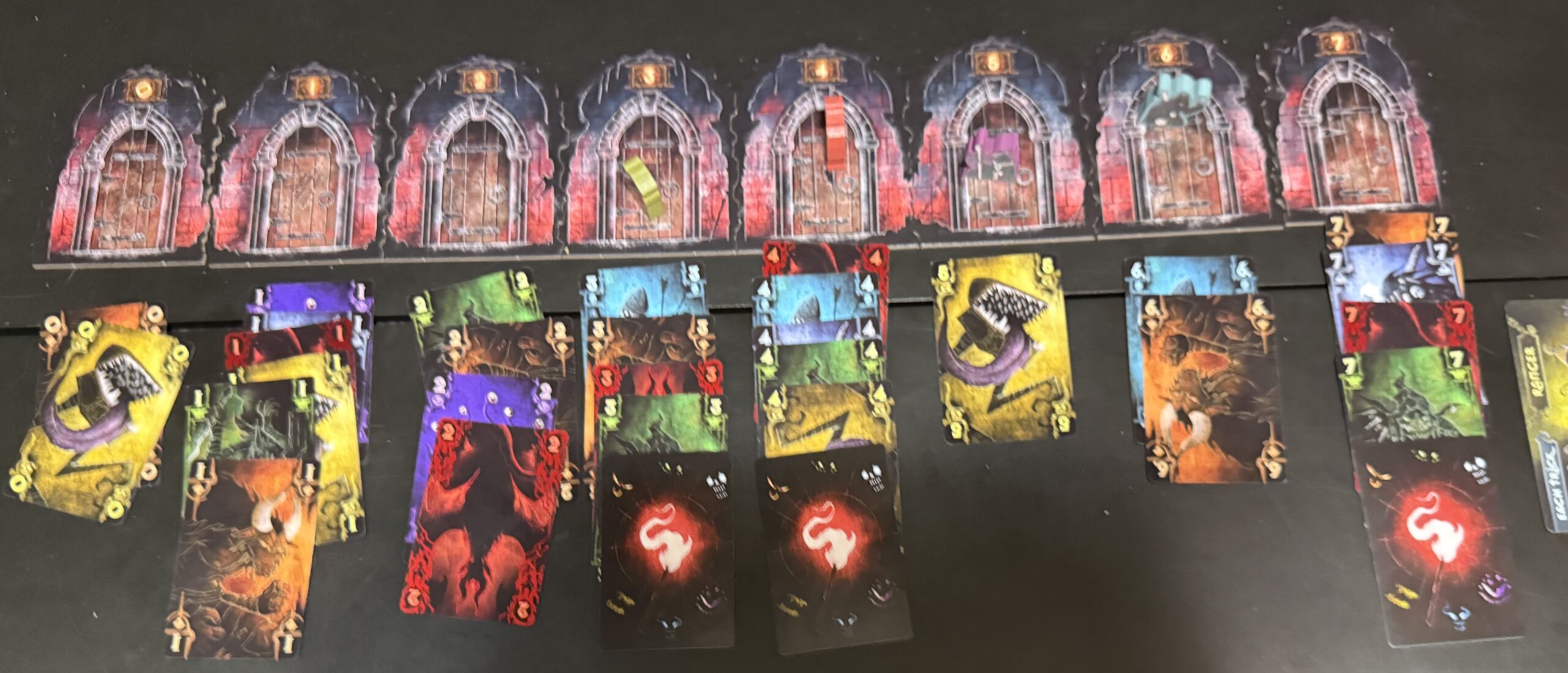
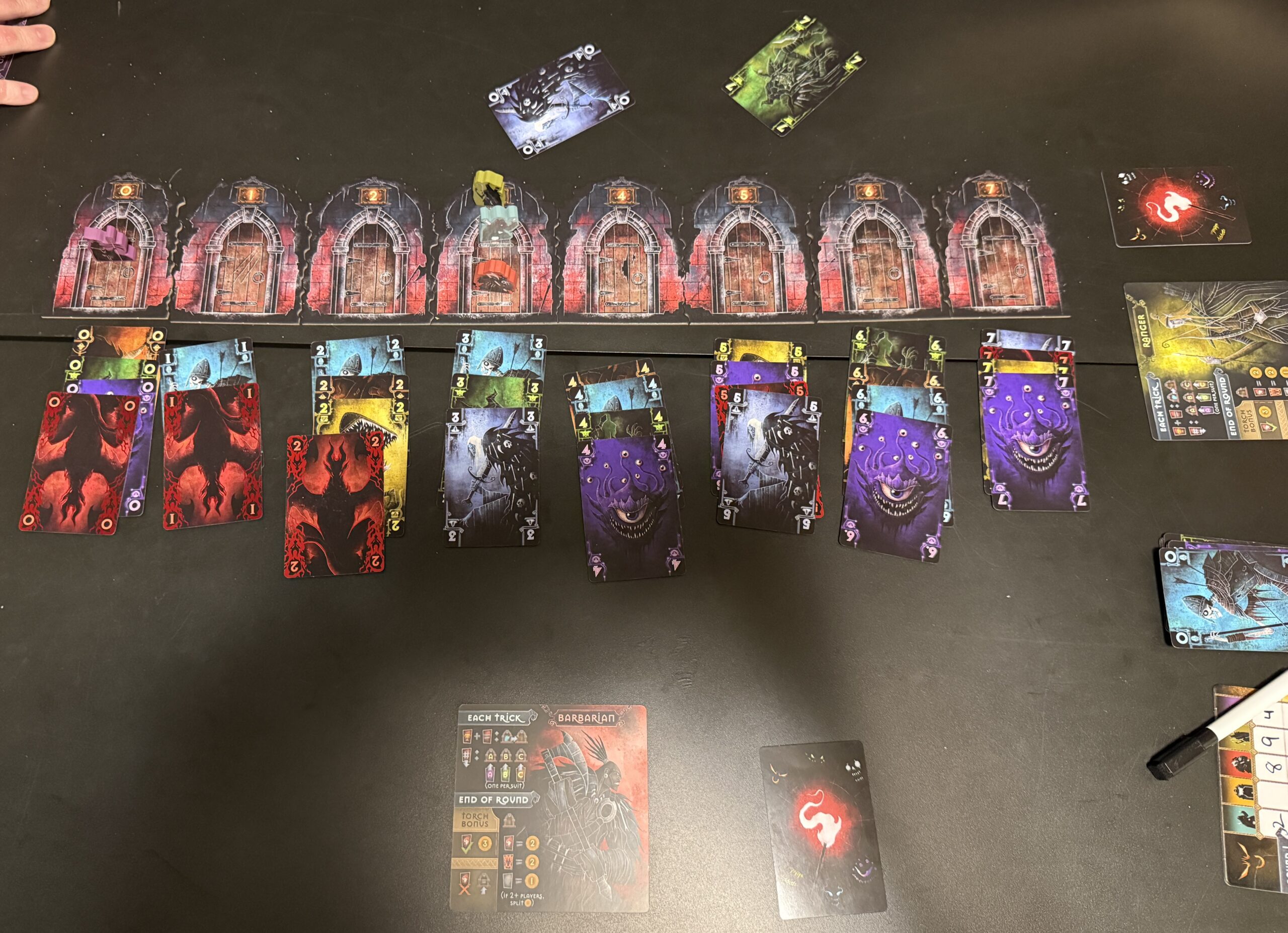
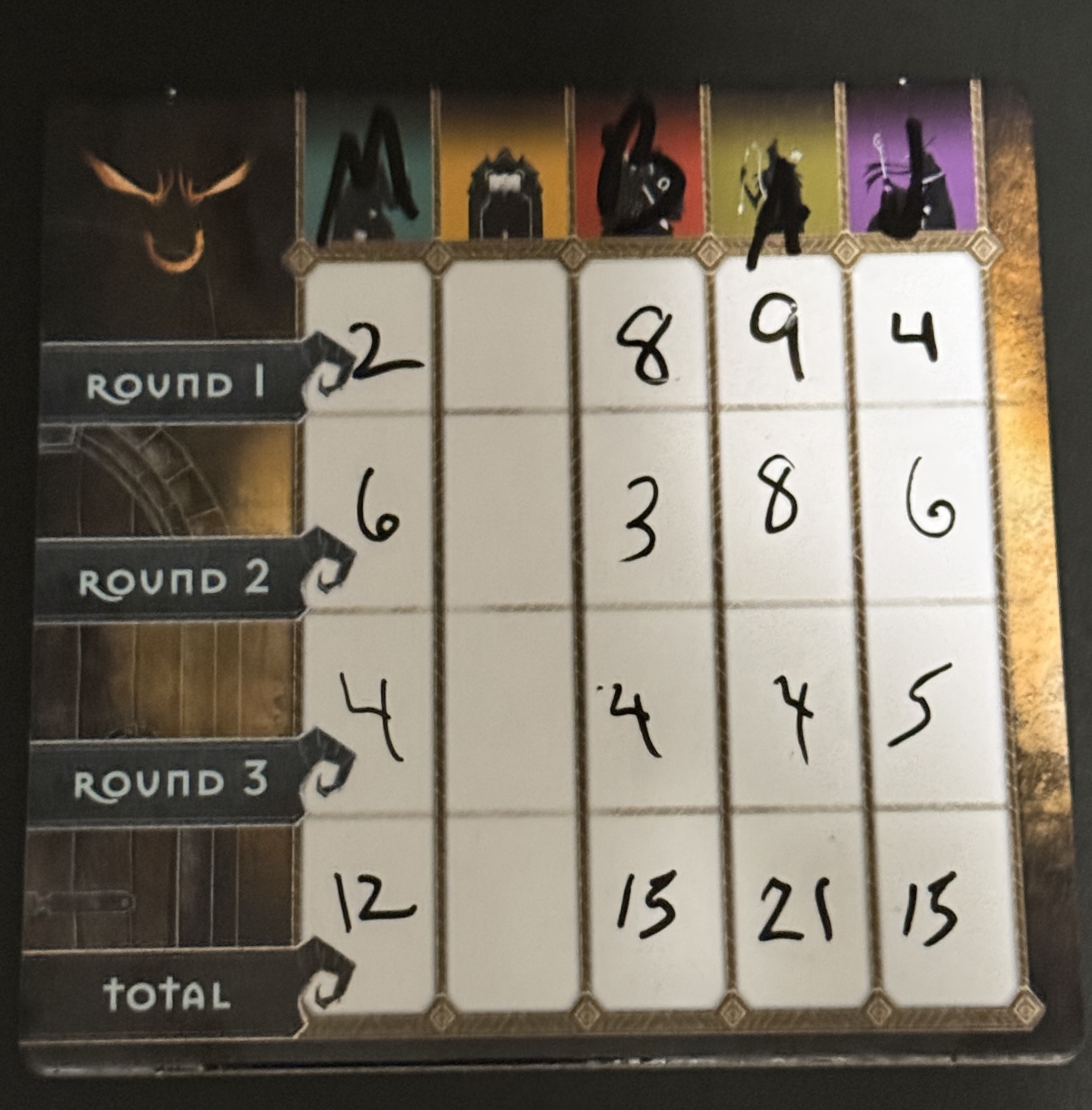
Friendly Fishing is a semi-cooperative game about fishing in a pond.As always, Shuba assisted John as he explained the rules.The central game board at the game’s start. Players take turns moving the boat to adjacent hexes, picking up the token they land on.The fish tokens have different properties. The game would seriously benefit from helper cards, since many of the fish have different effects when you collect them. We were passing around the rulebook constantly to look up what the tokens did.What makes the game “semi-cooperative” is that your final score is that you’ve earned with the tokens you collect plus the score of the player to your left. During this game, I was trying set things up so that the player to my left (John) would get a good score.If you move the boat into a hex where there are no adjacent tokens, the boat immediately relocates to the central island. That’s what’s happened in the previous photo. We’ve continued to move the boat to a new clump of fish.The game ends when the boat, after being relocated to the central island, has no possible remaining moves.My collection of tokens at the end of the game. I scored 20 points on my own, plus John’s 27 point made my final score 47…….which was not enough to defeat the game’s winner, Andrew. While I had focused on improving the score of the player to my left, Andrew concentrated on improving his own score.Our second game of the night was Twinkle Twinkle. It’s a tile-drafting game.The goal of the game is to get the highest score by placing tiles in the area to the upper left. On the right are the scoring rules for the individual playthrough. For example, if we chose, we could have flipped the Comet rule tile to make the game a bit tougher.For example, here’s the harder version of the Asteroids scoring rule.The drafting board. In turn order, players move their pieces down to select the tile they want. The order of those pieces on the drafting row determine the turn order for the following round. The tile that no one selects moves all the way over to the left of the track, so the player who chooses it the following round will definitely go first the round after that.Maria explains the drafting rules to Shuba.The tiles are transparent, which means you can flip them over. This was important to my strategy of building constellations. Other players went for placing Asteroids or Comets or Black Holes.My strategy won the game, but I wouldn’t be so bold to claim that building constellations was a sure-fire path to victory. It turns out that two stars on a tile by itself was a “constellation.” If the other players chose to be more aggressive about drafting those tiles, I don’t think I would have made it.The final game of the night was Torchlit, a trick-taking game with a “dungeon-crawl” theme. It was the game that took us the longest to play, primarily because of the time it took to decide which card to play.My starting hand. The Torchlit deck consists of seven suits of eight cards each. The red cards are Dragons, and they’re always trump.My helper card, which also serves to identify which color piece you’re playing; I’m red. The icons are a bit confusing; even after having played the game, I have to think for a while to understand what they mean.This is the dungeon. You move your piece forward if you win the trick, or you play a card with the same rank as the trick winner. Here, whoever played the 1 of Dragons is likely to win the trick (it’s trump), but the one who opened the trick by playing a 1 of Drow will also move forward because the ranks match.The one who played the lowest card in a trick becomes the lead for the next trick. They also distribute some of the cards from the trick just played onto the corresponding rooms of the dungeon.The strategy is to end the round in a room with a lot of monsters, so you get a higher score for defeating them. Here, my piece (red) ended the round in room 4. I got eight points: 1 point for each regular card, 2 points for the Dragon, and two points for a Torch that was placed in the room.At the start of the round, you take one card from your hand of 14 and set it face-down as your Torch. Basically, you’re making a hidden declaration of which room will be your final one. At the last trick of the round, you can swap your Torch with the remaining card in your hand. Here there are three players (red = me, green = Maria, blue = Andrew) all on Vault 3. This means we’d split the gold from the Vault, so we only get 1 point each. However, we all selected a Torch card with a value of 3, which means we each get three extra points. John (purple) got a total of five: 3 from regular cards and 2 from the Dragon.Despite the low score in the third round, it was Andrew who was the overall winner.
Of the three games, and among the trick-taking games we’ve played overall, Torchlit was my least favorite. The predictive strategy eluded me. However, I’m the minority opinion; the others felt it was the best.
Congratulations to Andrew on his double win for the night!