For the first time in a while, Maria was able to join us. She and Andrew brought a couple of new games for us to try.
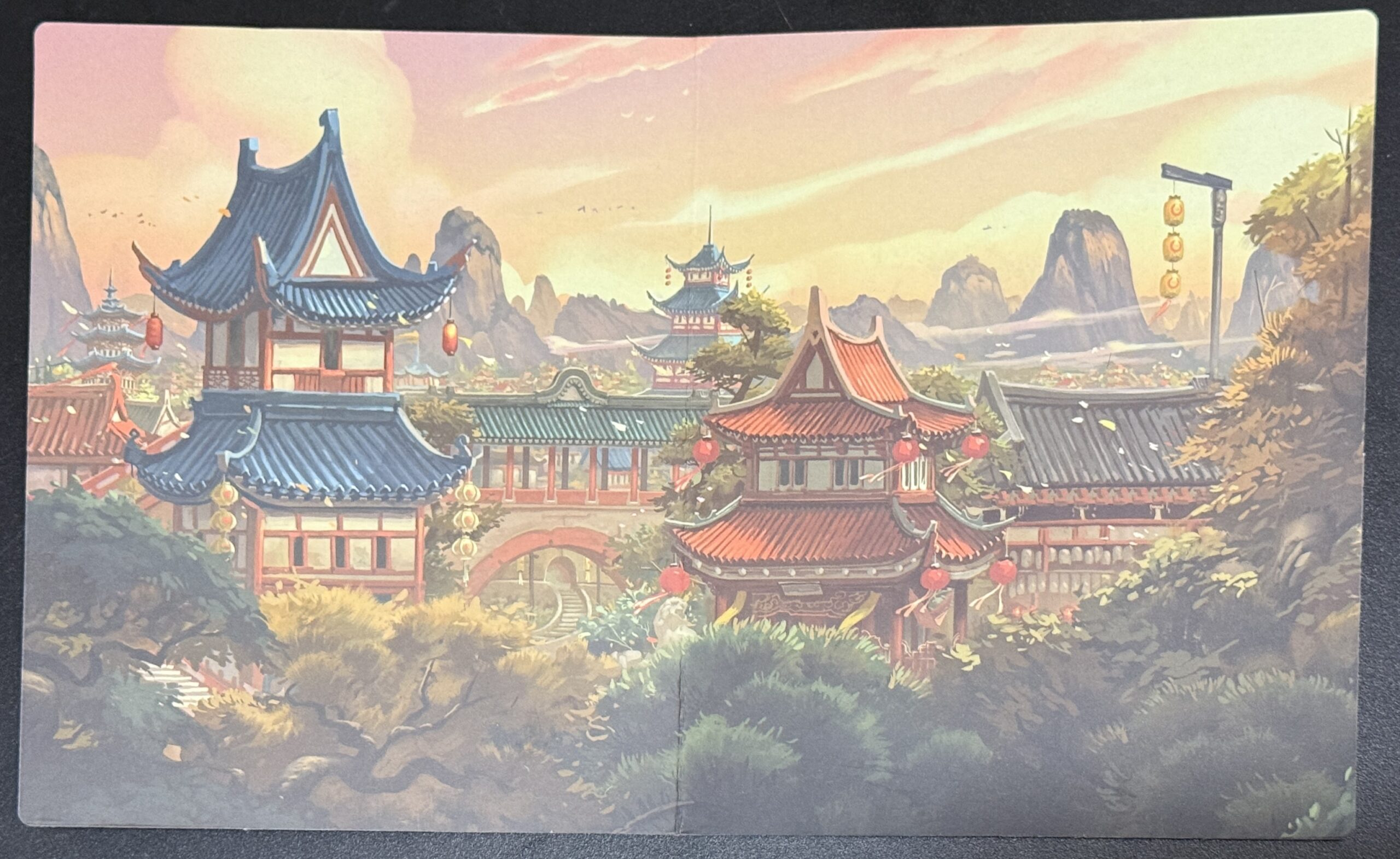
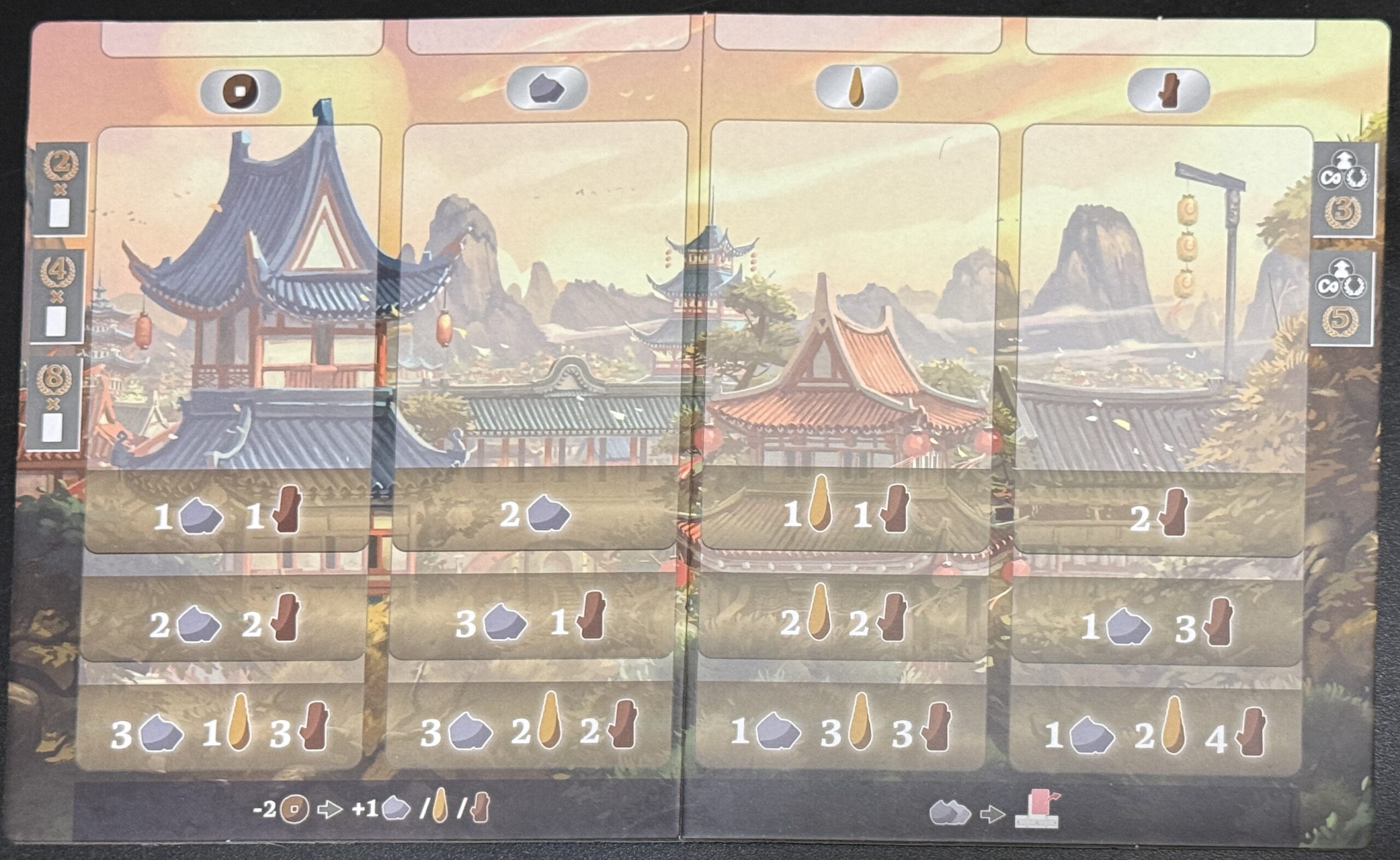
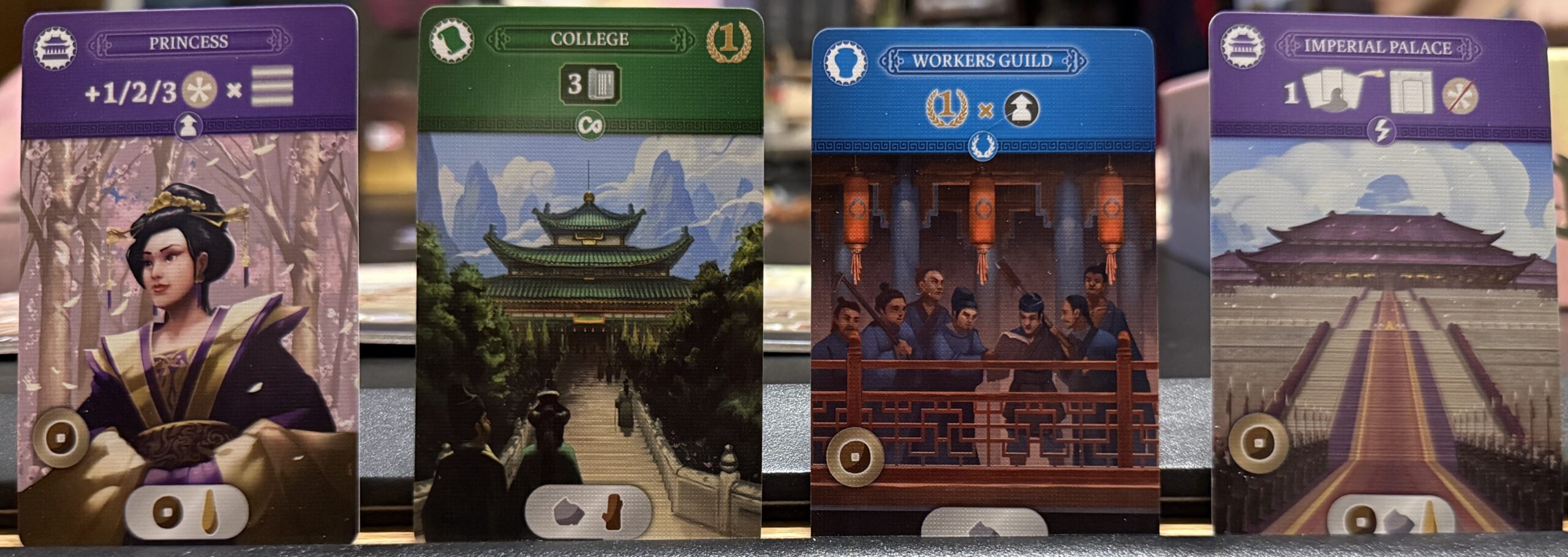
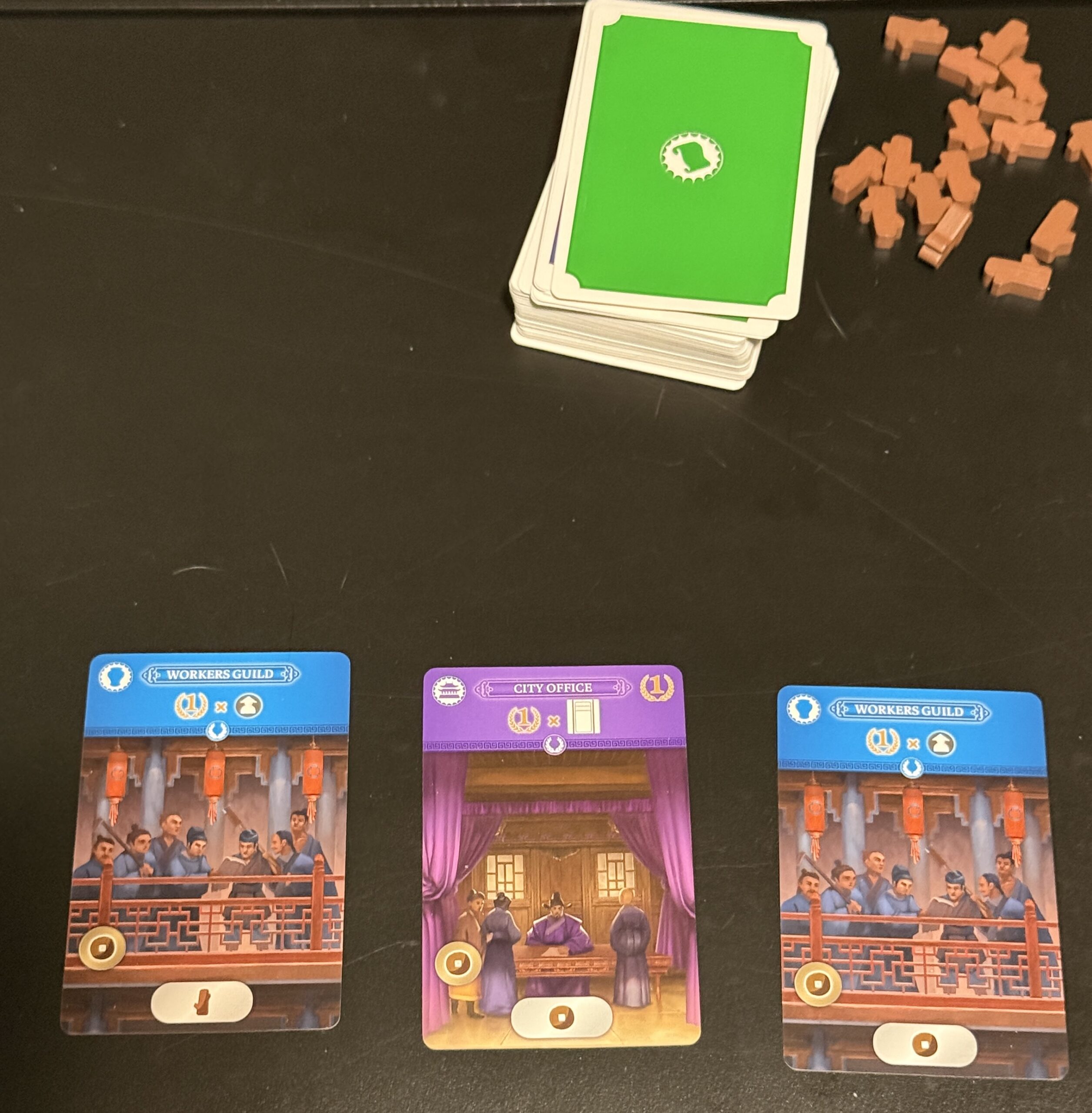
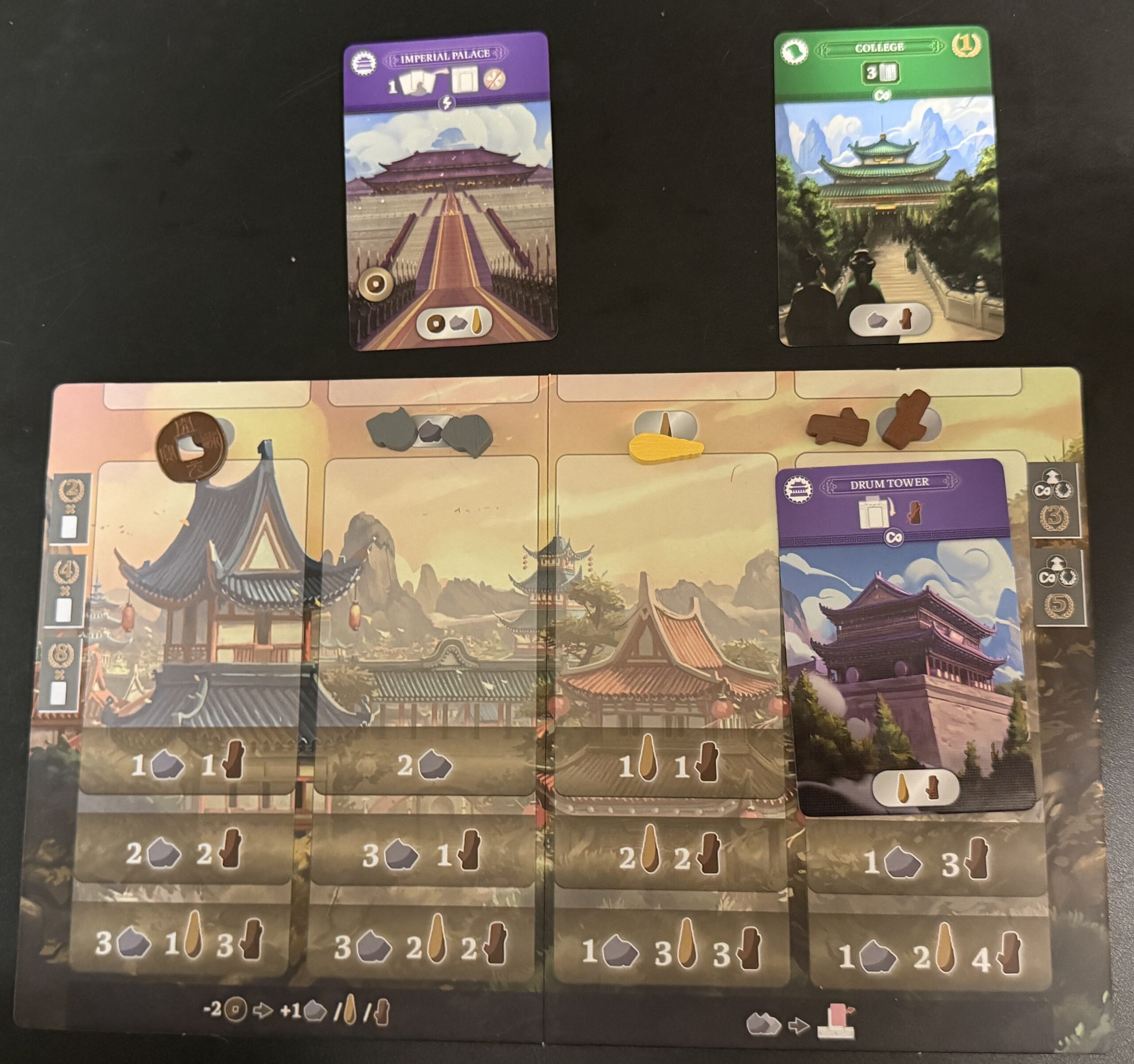
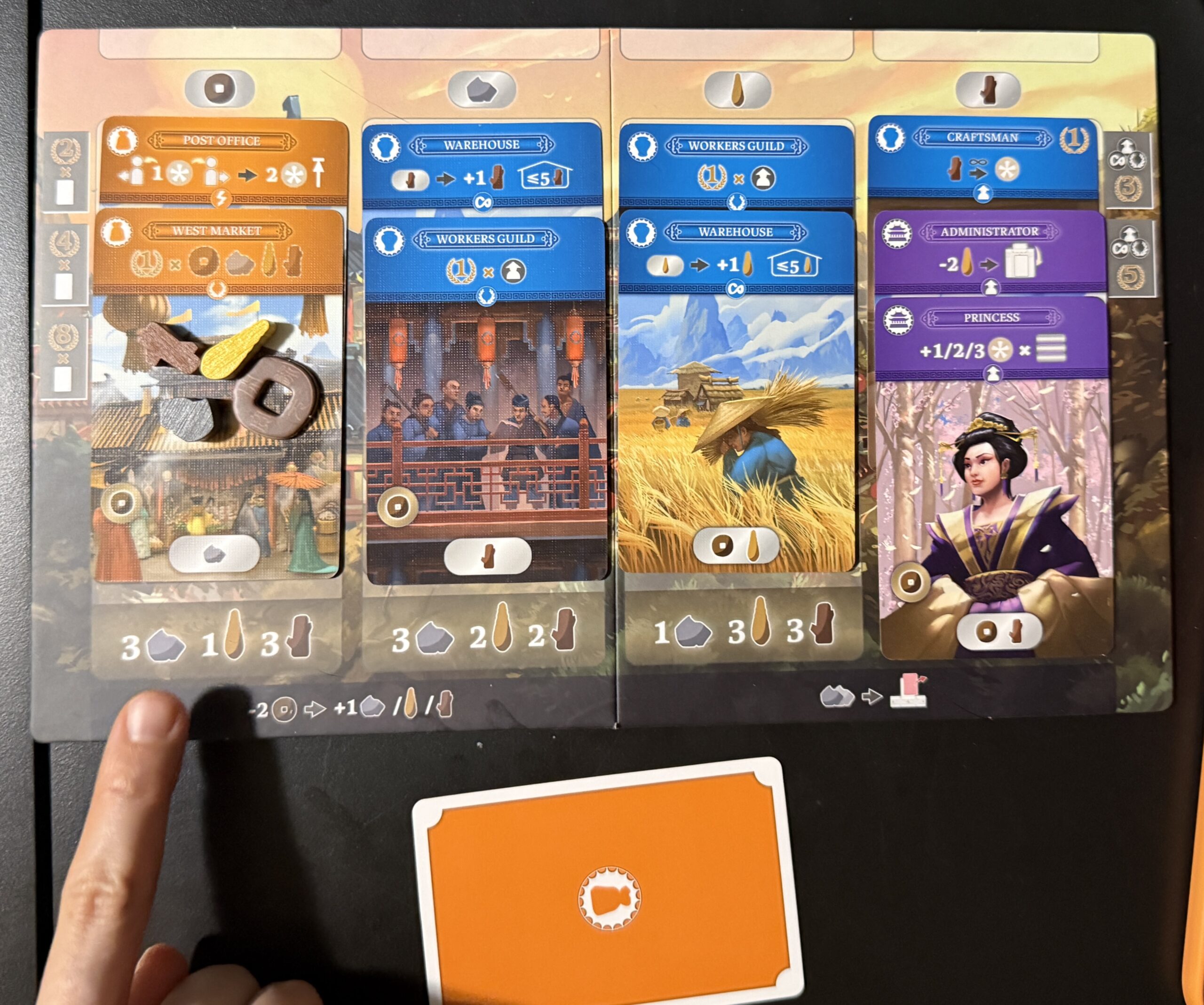
Before the first game, a cute hairy creature was thoroughly entertained. Also, there’s a cat in the picture.Cháng’ān is set in the time of China’s Tang dynasty. It’s a resource management and engine-building game.The reverse side of a player’s board. It’s always pleasant to see a bit of extra production effort, especially on artwork that won’t be seen during the actual play of the game.The “working” side of a player board. The city of Cháng’ān is divided into four districts. The card outlines show where you’ll place cards as you build them. There are four resources in the game: coins, stone, wheat, and wood. The build costs for each “card slot” are at the bottom of each slot.These were my starting hand of City cards. At the top of each card is what you’ll get when you build it. At the bottom of the card are potential resources you can get from a Produce phase before you place the card in the city.When it’s your turn, you choose whether to Research, Produce, or Build. Research just means taking one of the visible cards, or taking a card from the top of the City card deck, and adding it to your hand.If you Produce, you take a card from your hand nad place it above one of the districts. You then add the number of matching icons on the bottom of the card to the resource icon for that district. For example, when I placed the Imperial Palace card, I received two stone: one for the stone icon for that district, and one for stone icon on the bottom of the Imperial Palace card.
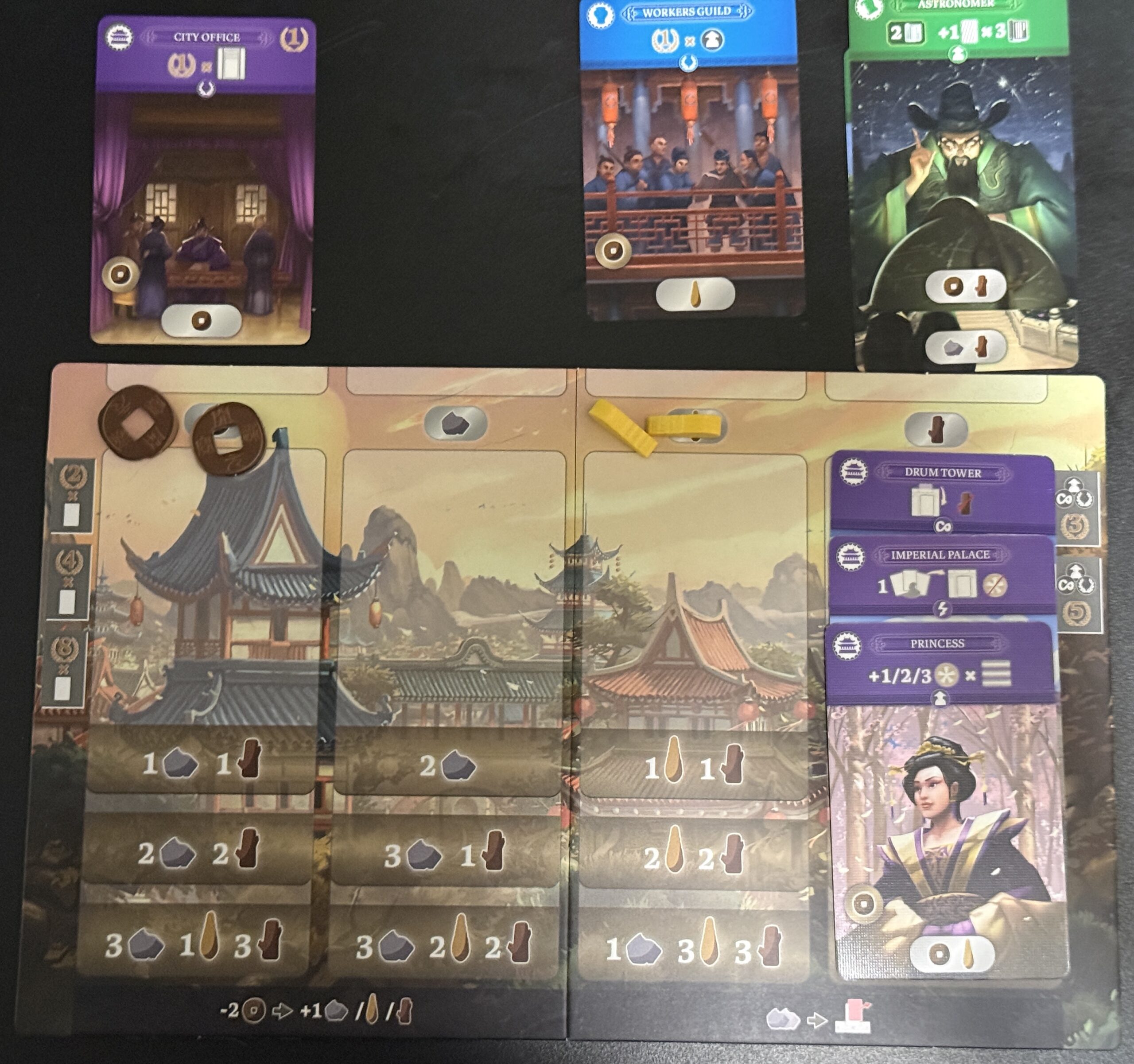
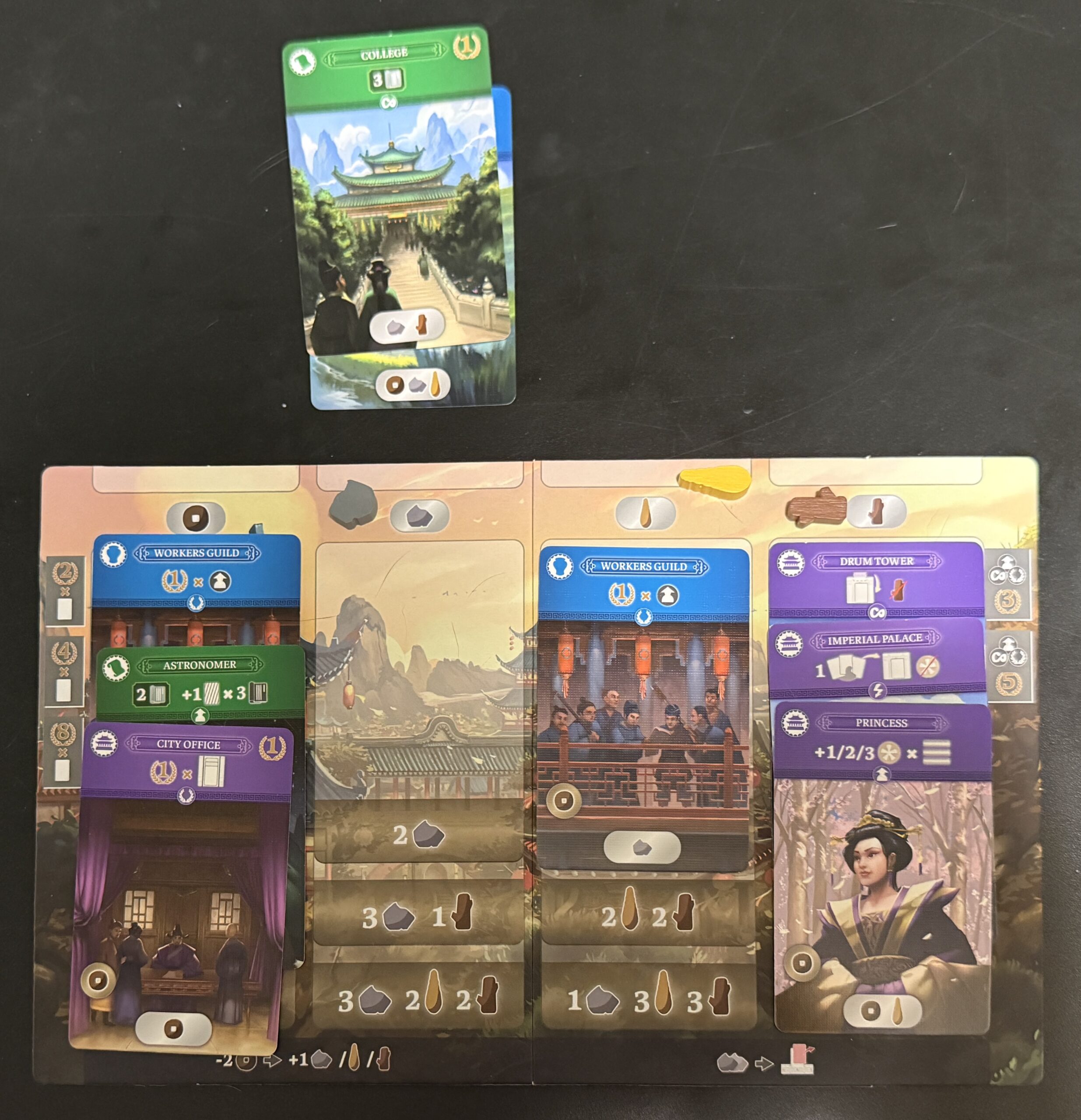
This image also illustrates the Build action. I had placed the Drum Tower above one of the districts in an earlier turn. When I built the card, I paid two wood (the cost of that slot on the player board) and placed it in the topmost available slot. Now that it’s placed, the icon at the top of the Drum Tower says that all future cards I build will cost one less wood.Here we see the beginnings of an engine. At the top you can see City cards I put down to gain resources. I’ve built three cards in the right-most district; they all happen to be purple (Politics), but in this case there’s no particular benefit to that. The icons on the card in the second row mean: When you place this card, take another card from your hand and build it with one fewer resource. The bottommost card’s icons mean: when you Produce, get a number of extra resources equal to which row the Princess card is on. Since the Princess is in the third row, every time I Produce for the rest of the game I’ll get three extra resources. Combined with the benefit from the Drum Tower (one less wood to build), I’ve got an engine good for easily adding more City cards to my board.My player board at the end of the game. If you compare this to the previous image, you’ll see that I built most of the City cards that I previously used to produce resources.Behold the player board of the winner, Maria. I goofed badly a couple of times, forgetting to use the Princess ability; Maria made no such mistake. She built a good engine, and used it to build more City cards (the game ends when a player builds nine); more cards on lower rows means a higher score.
Cháng’ān vaguely resembles Wingspan, in that the engine is built from cards that relate to resource production. However, the relationship between producing and engine creation is quite different.
The game has one major production flaw: It doesn’t have any help cards. The icon “clues” at the edges of the player board either give information for end-game scoring (top left and right) or reminders some edge-case options that we rarely used. There are no hints on the board for the main actions player perform during the game. Also, you can see the wide variety of icons on the City cards; we were constantly passing a list of icons between us in order to interpret what cards we wanted to pick up during the research phase. The game had a rocky production history, which perhaps contributed to lack of helper cards or a more helpful player board.
That said, once we got into the flow of the game, we enjoyed it. Congratulations to Maria on her victorious return to our game night!
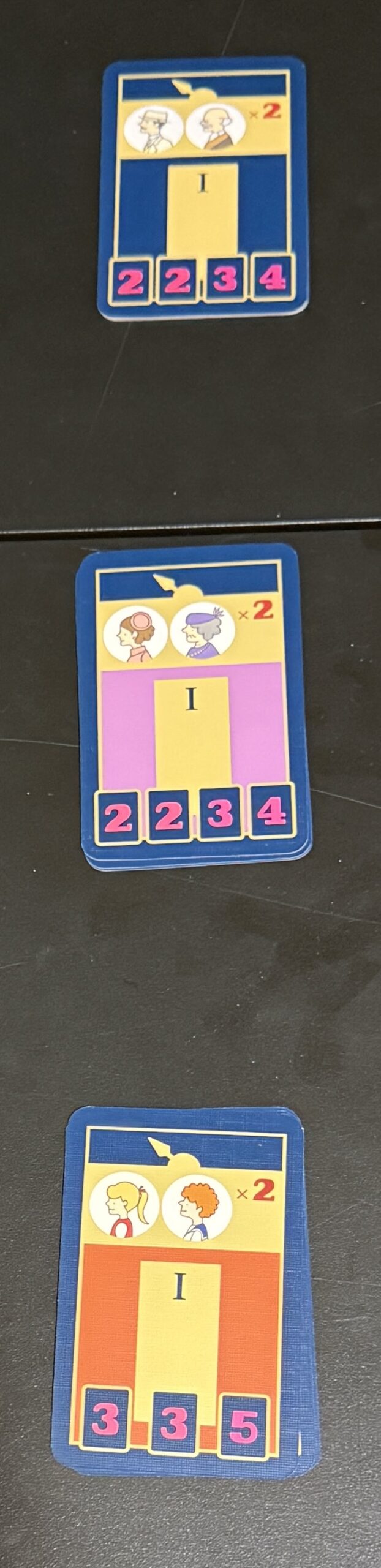
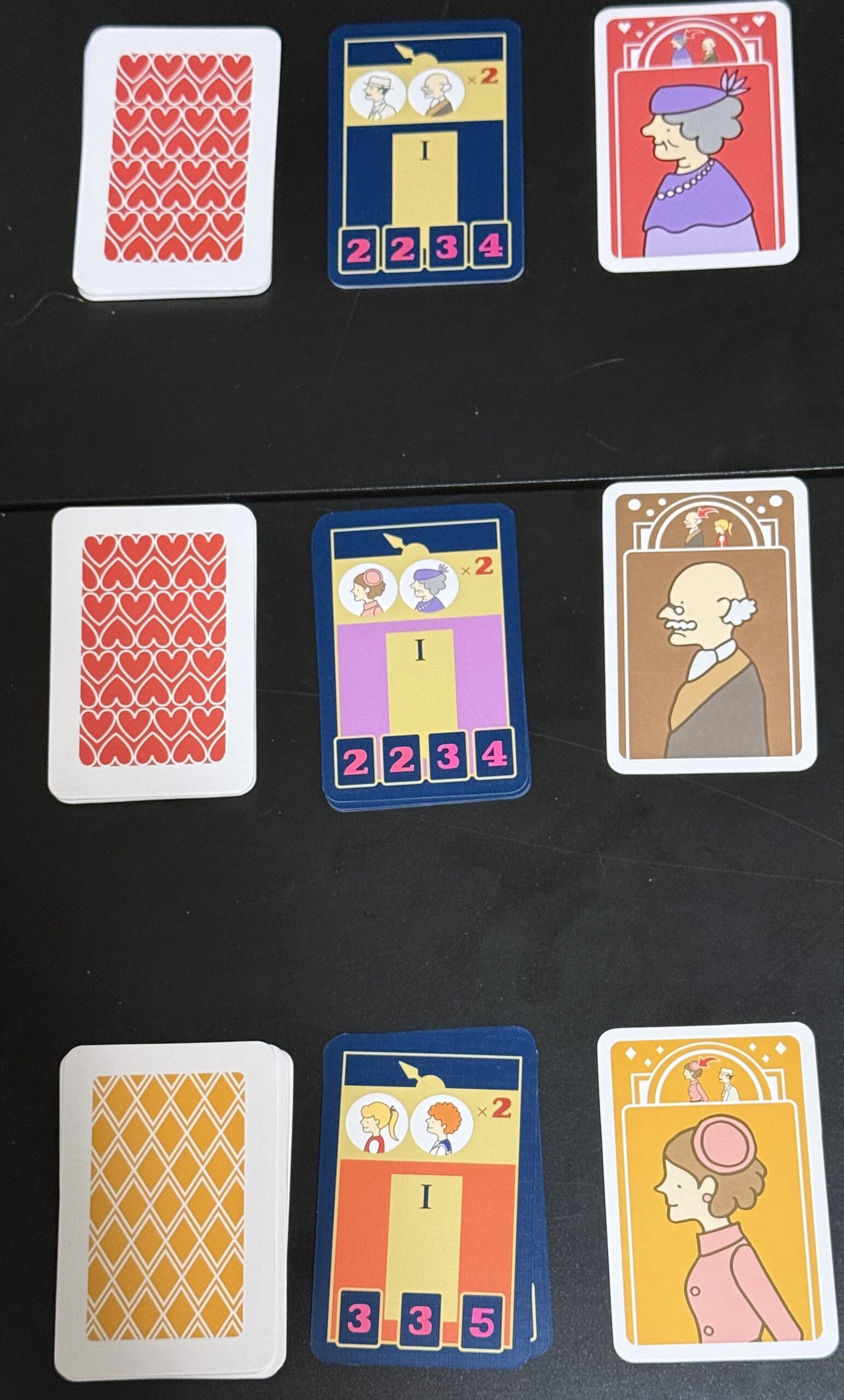
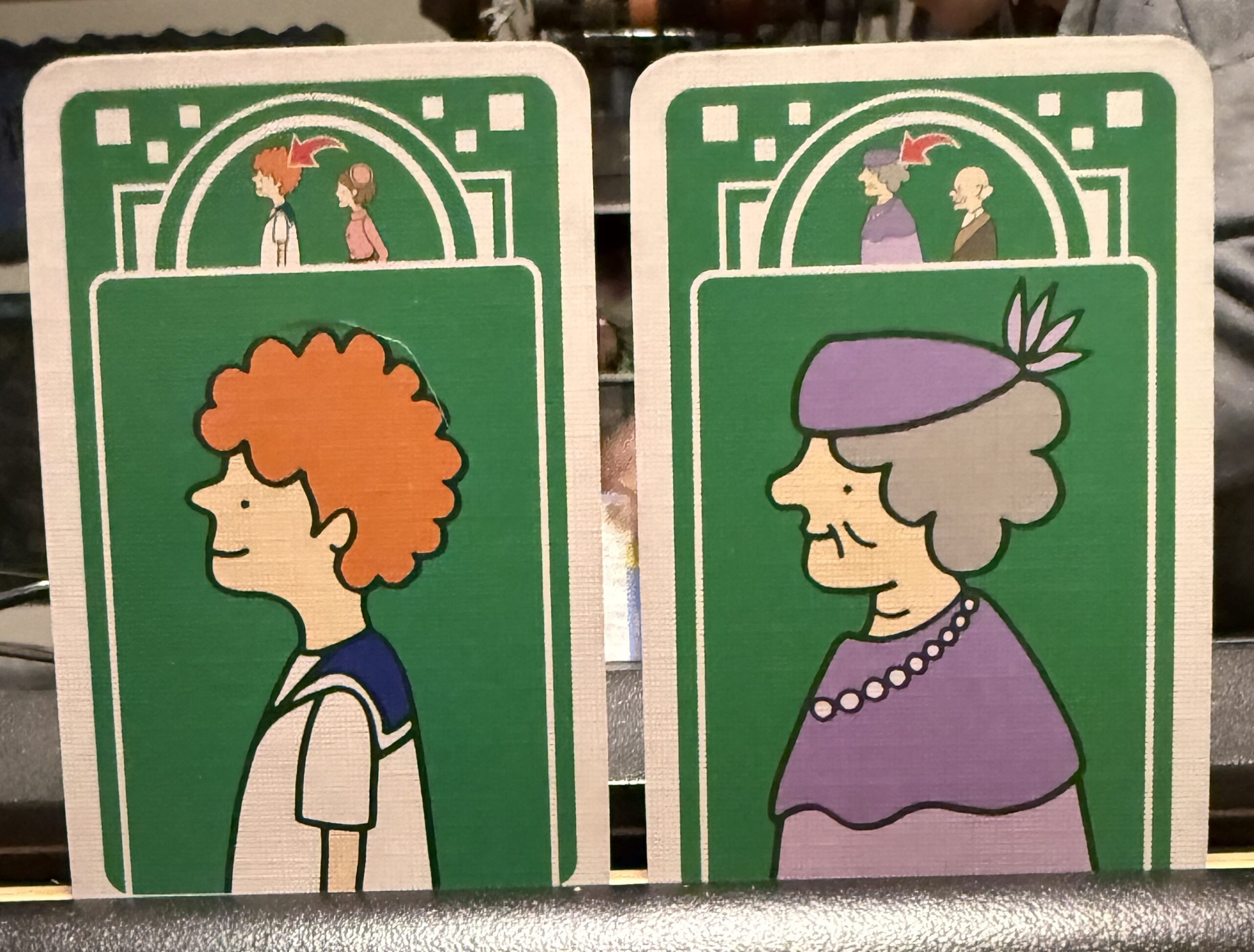
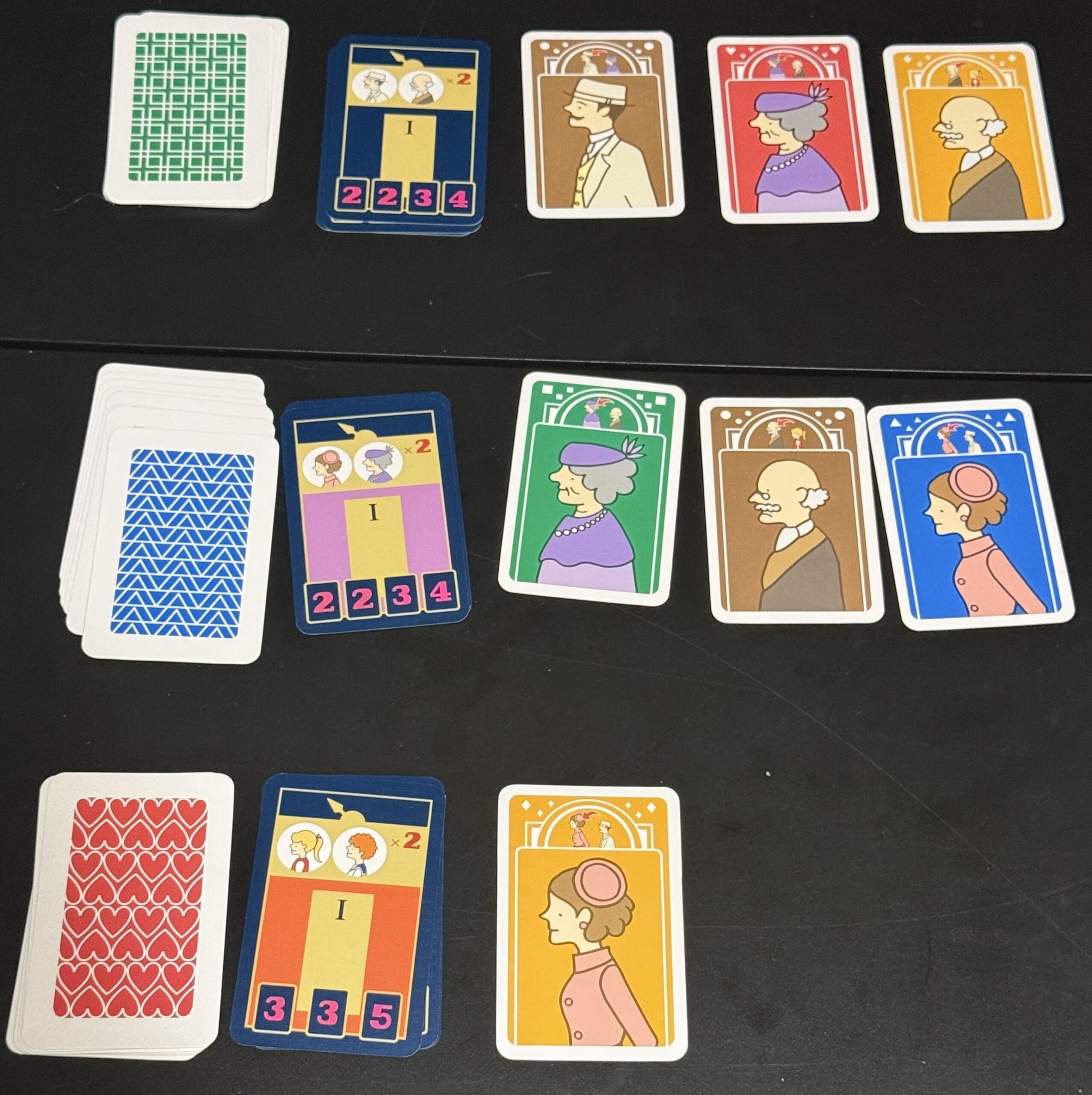
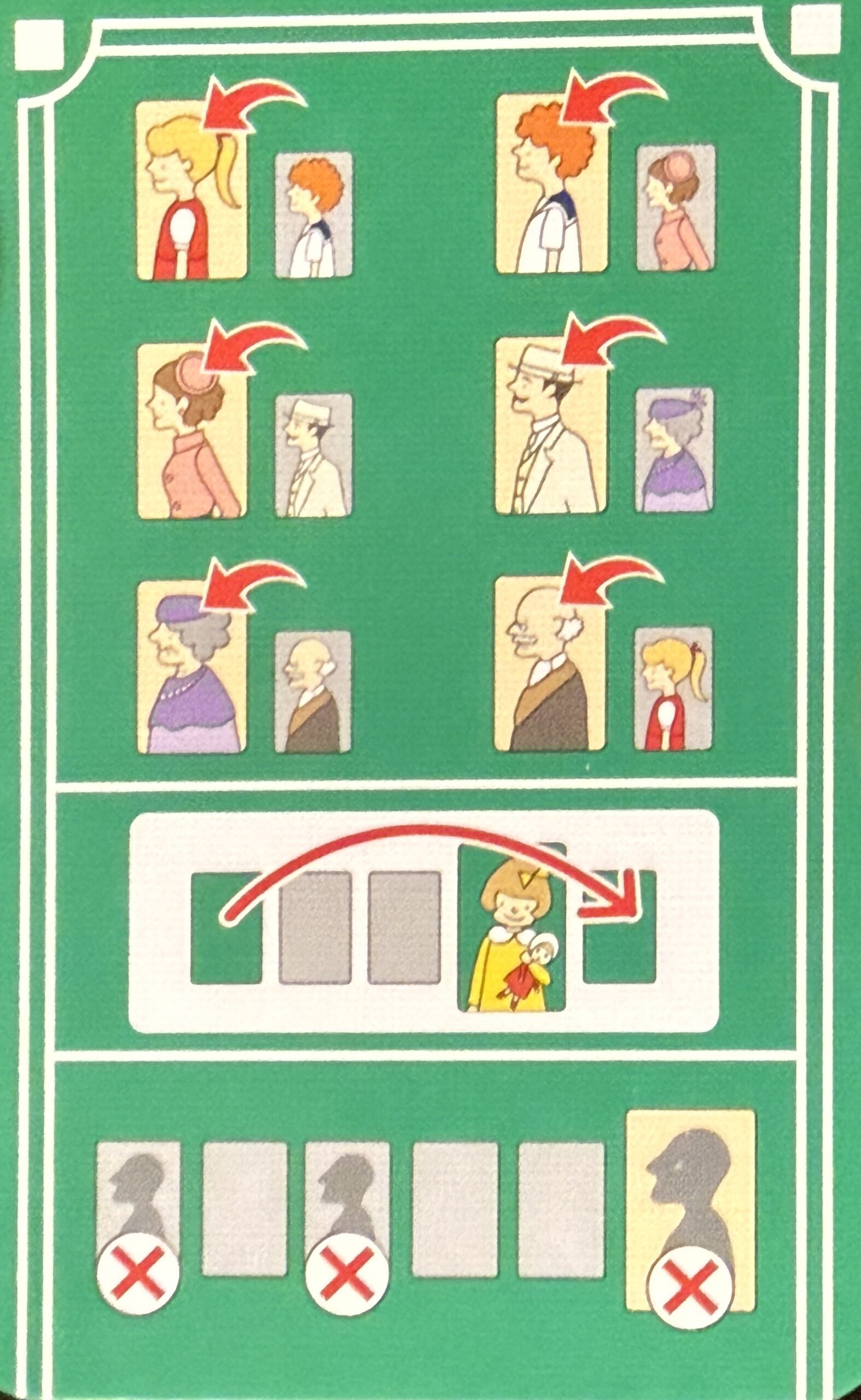
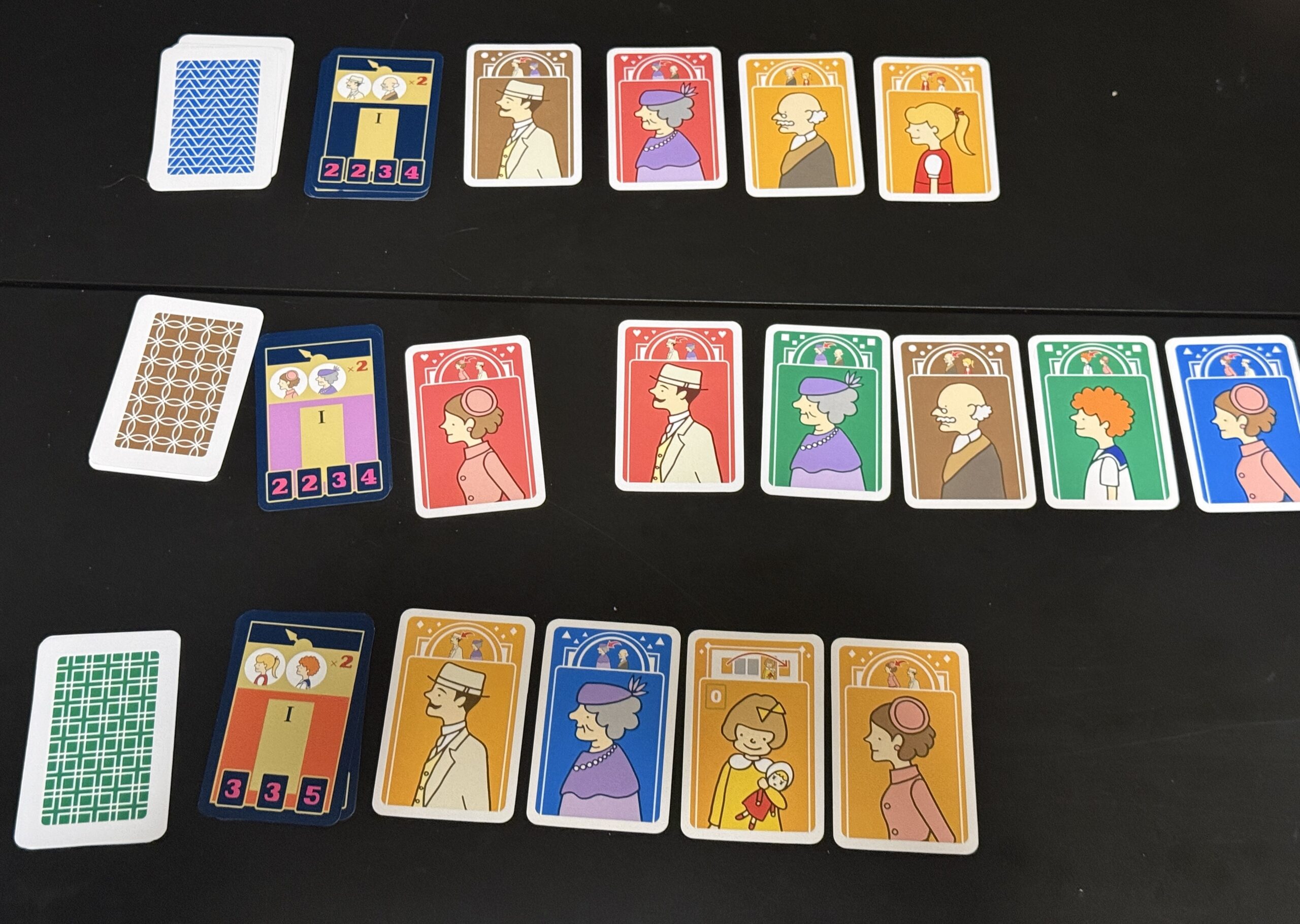
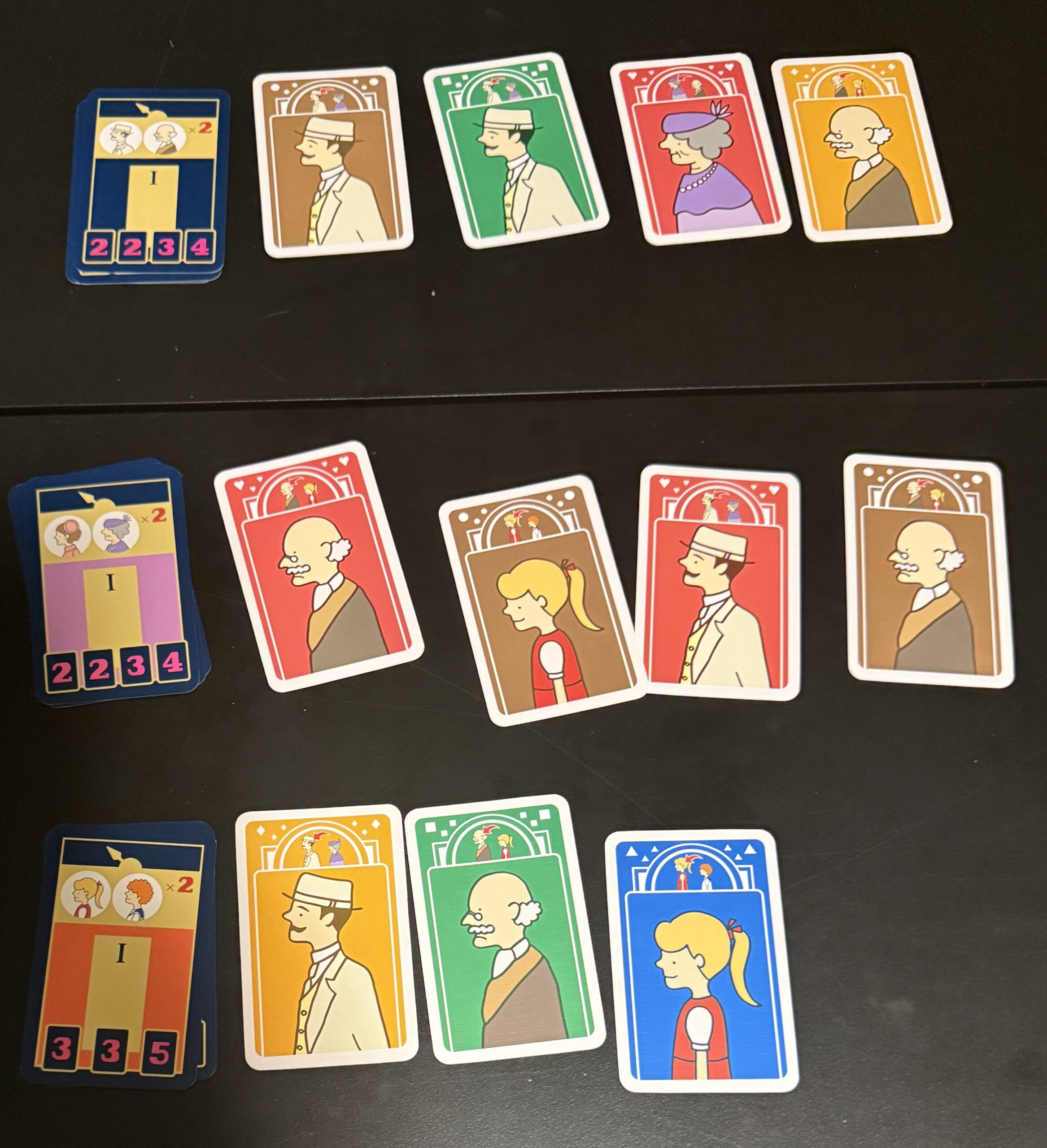
Shuba voted Cháng’ān the tastiest game we played that night.Our next game was In Front of the Elevators, a small fast card game.The game is about lining up to get on elevators. Of course, we start with the elevators themselves. These cards identify how many victory points a character gets for being the first, second, etc., to get in the elevator. If the character matches one of the icons on the card, their player earns double the points.Now we add the people initially in the front of the line. In this game, I’m green, Maria is yellow, Andrew is blue, and John is brown. There was no red player, but those cards turned out to be relevant to our strategy.Everyone starts with two cards of their own color. Here are mine: the young boy and the grandma. Until the end of the round, when it’s your turn you play a card then draw one from any of the face-down card piles in the previous picture.We begin to place our cards at the end of a line that we choose. But it’s not that simple.Unlike the previous game, In Front of the Elevators comes with a helper card for each player. It shows the jumping rules. For example, if you place a boy at the end of the line, the card immediately jumps in front of the front-most young girl in the line; a grandma jumps in front of a grandpa; etc. The card colors don’t matter for this rule.
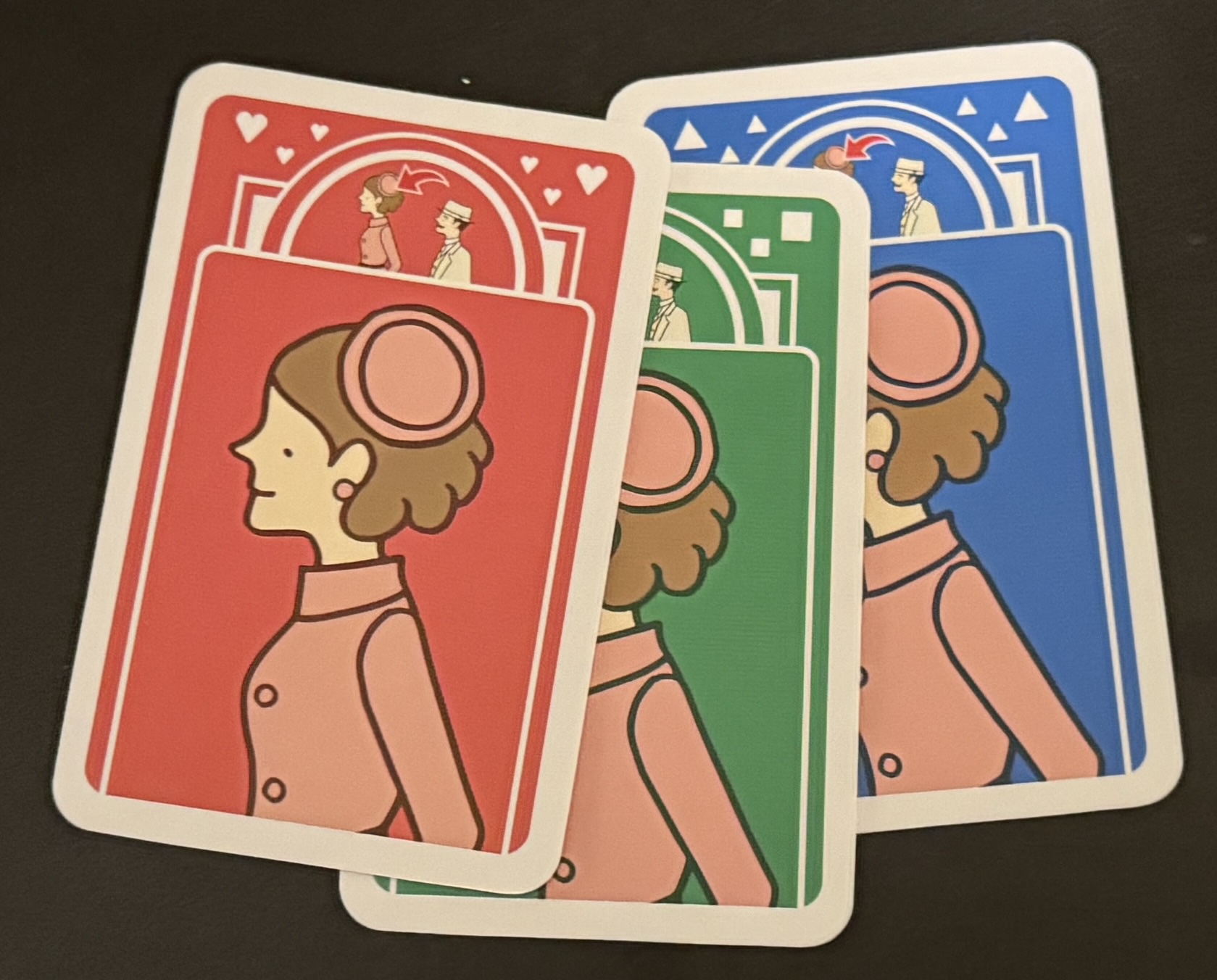
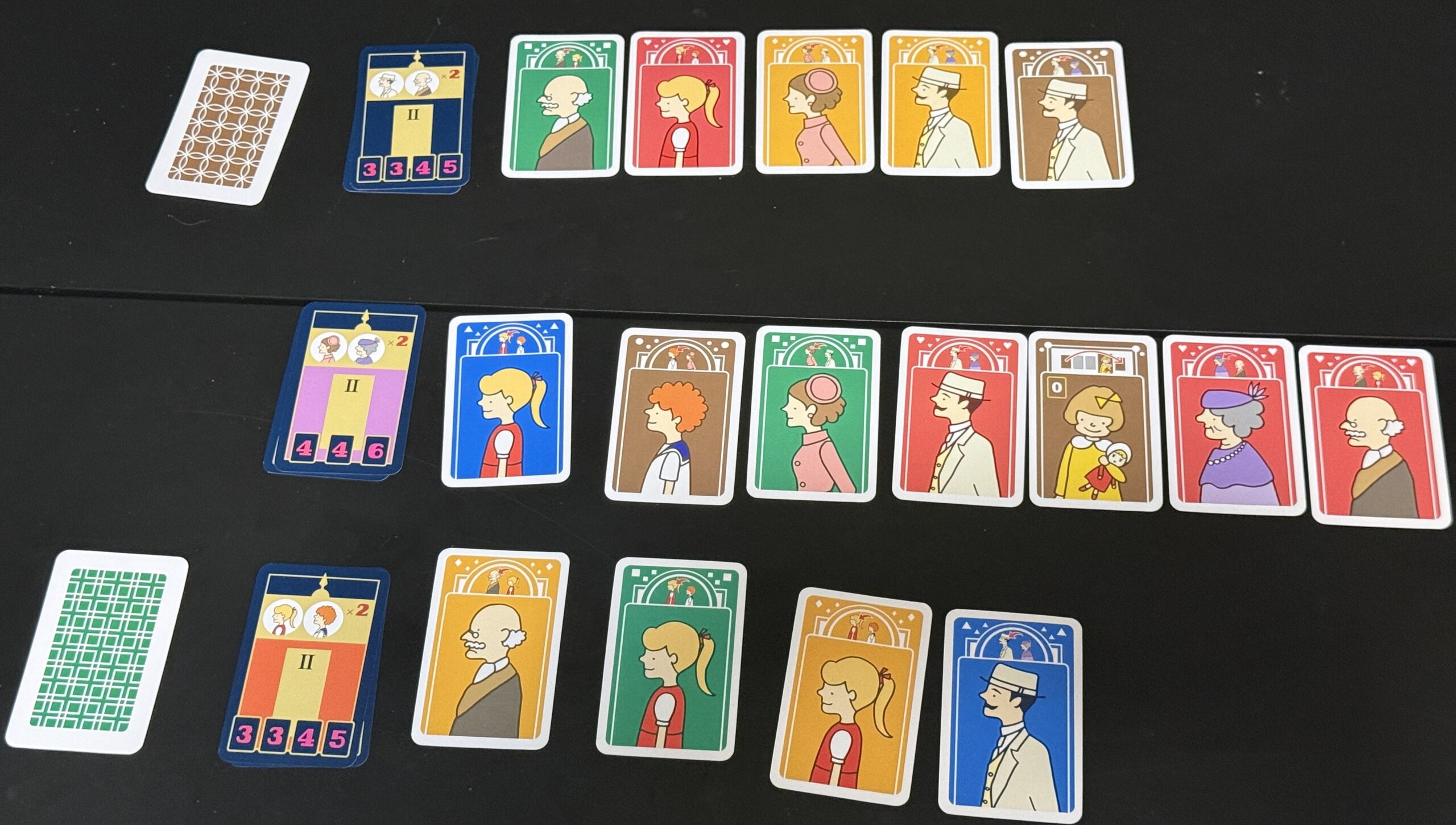
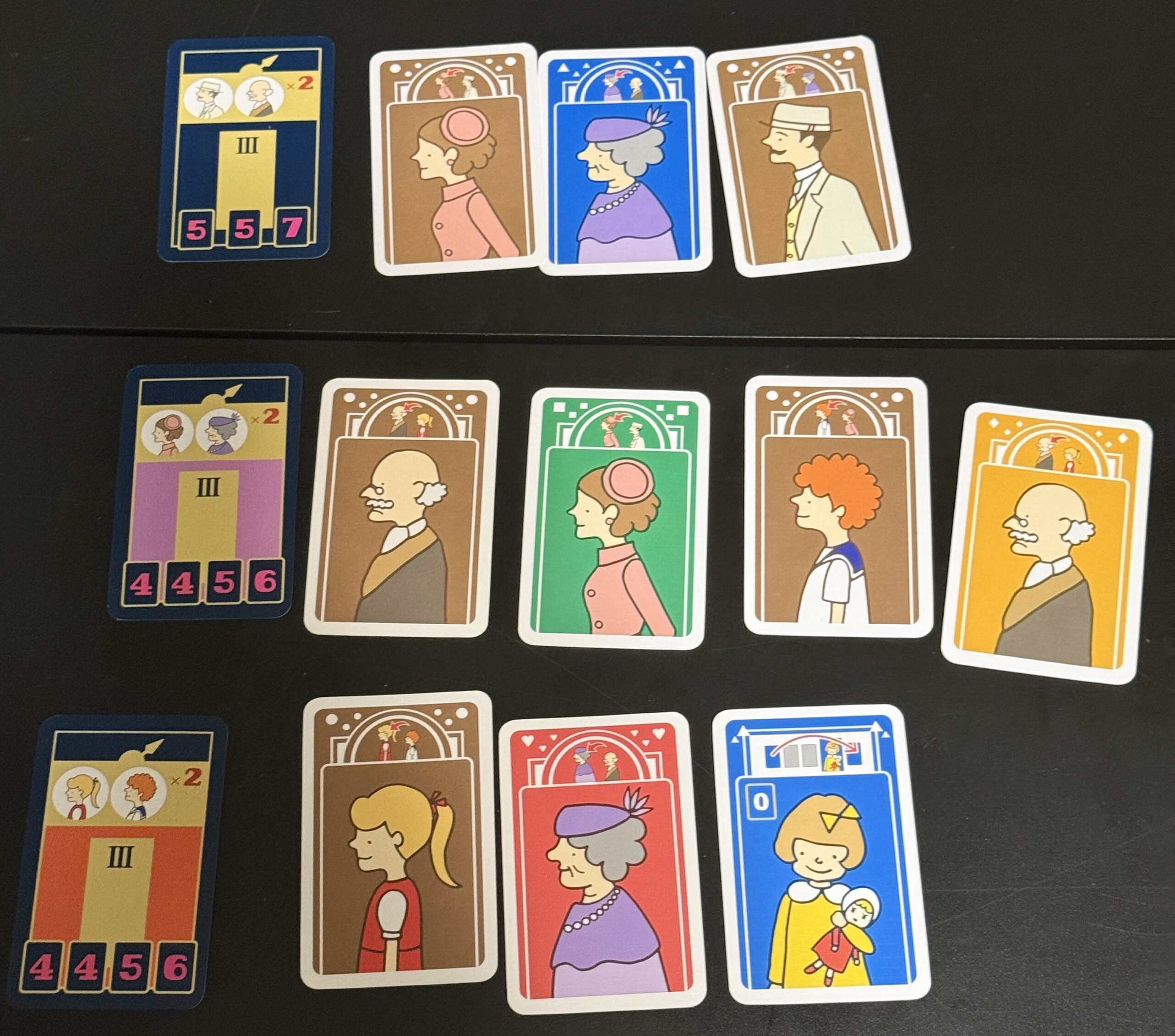
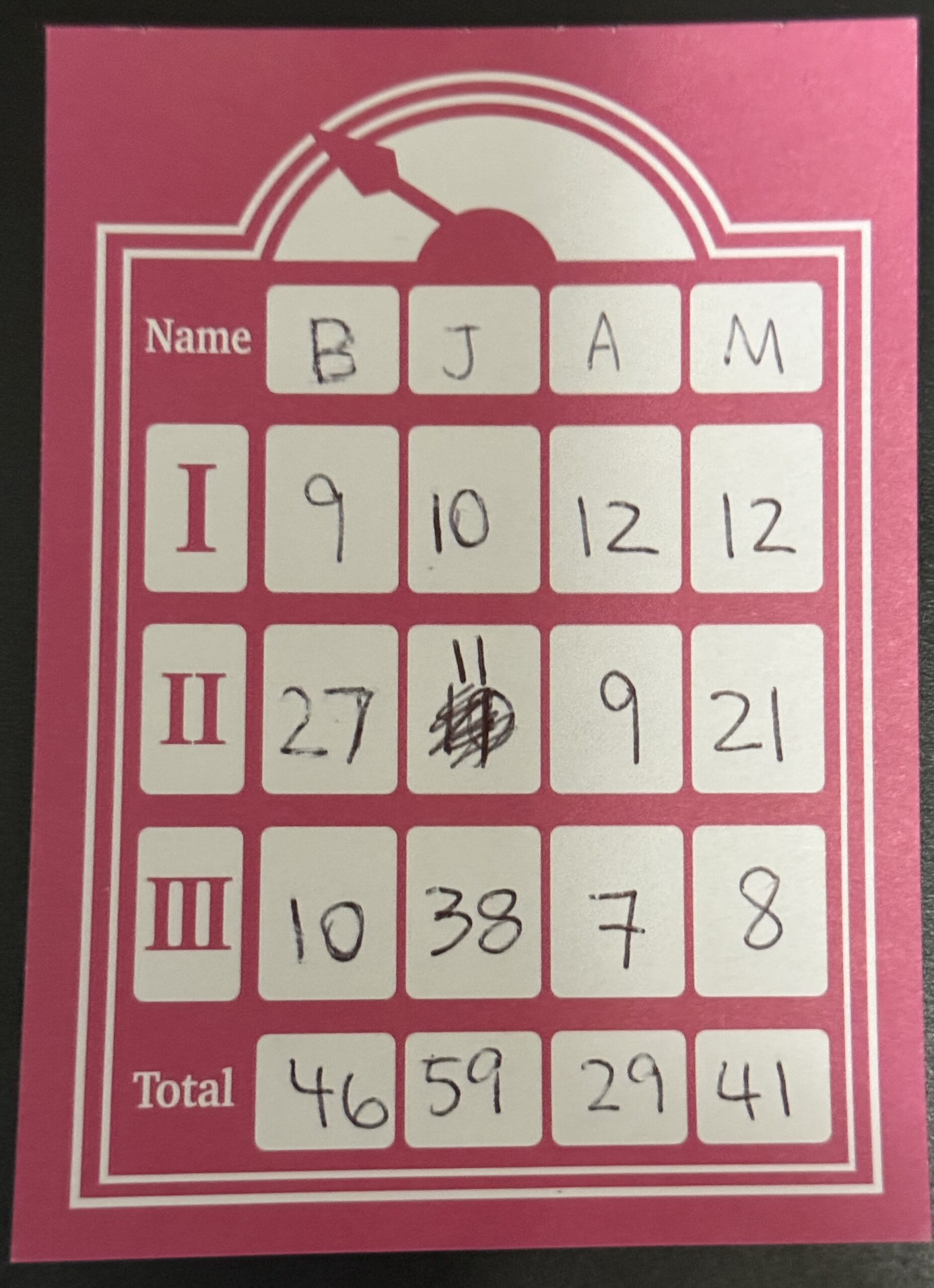
If a lost girl is placed at the end of a line, the front-most card with a matching color is moved to go behind her. You frequently want to place this card if it’s some other player’s color.The bottomost rule: If you place the third card of any given type in a line, you pull all three cards cards out of the line and put them in front of you. They “go into the cafe” and are worth one point at the end of the round; a group of three lost girls is worth two points. This is a form of “line thinning.” Here you see that I’ve collected three mothers from a line.The lines grew longer as the round continued. You can see a bit of strategy here: I added red cards that jumped to the front of line: the father in front of the grandma; the mother in front of the father. The red cards don’t score anyone points, but my green grandma is now in the third slot. If she got on the elevator now, she’d score six points: three for being in the third slot, and double that for matching one of the icons on the top of the elevator card.Best laid plans and all that. These are the cards at the end of the first round, triggered by all the face-down cards being picked up and all players having only one card left in their hand. Not shown: Any groups of cards in the players’ cafes.There are a total of three rounds. The elevators yield more points from round to round. In the second round, I earned a whopping 27 points. Surely that will lead me to victory!Not if someone is skilled enough to think ahead. John placed characters in both the first and third slots in two of the elevators.Behold the end-game scoring sheet that reveals that John was the winner. Congratulations!
In Front of the Elevators is very much a player-versus-player game, but the theme was so light-hearted and the rules so playful that none of us minded. It made a for a great filler game.