If a picture has a blue border, it’s a link. You can click on it to learn (maybe) the context of the image.
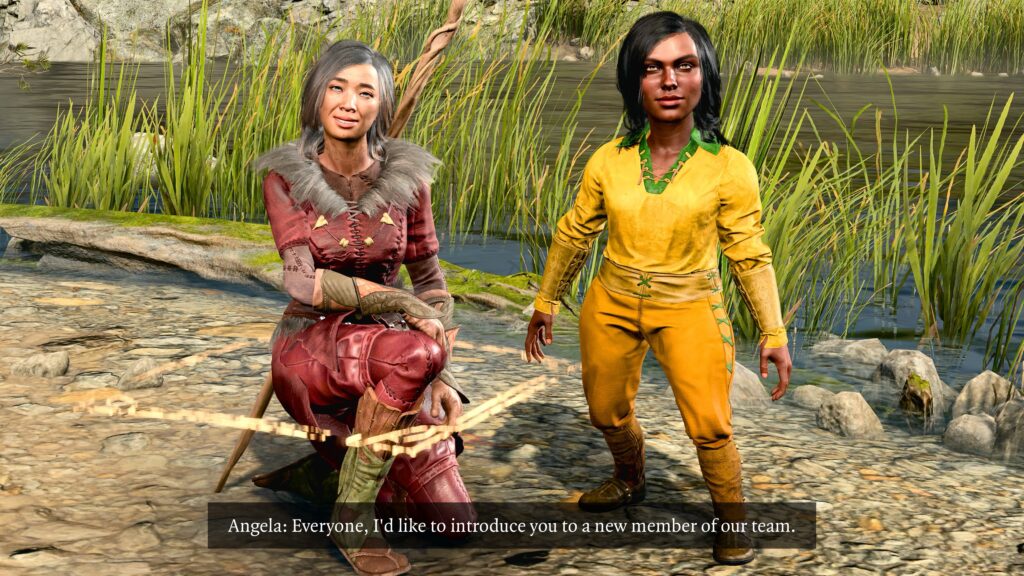
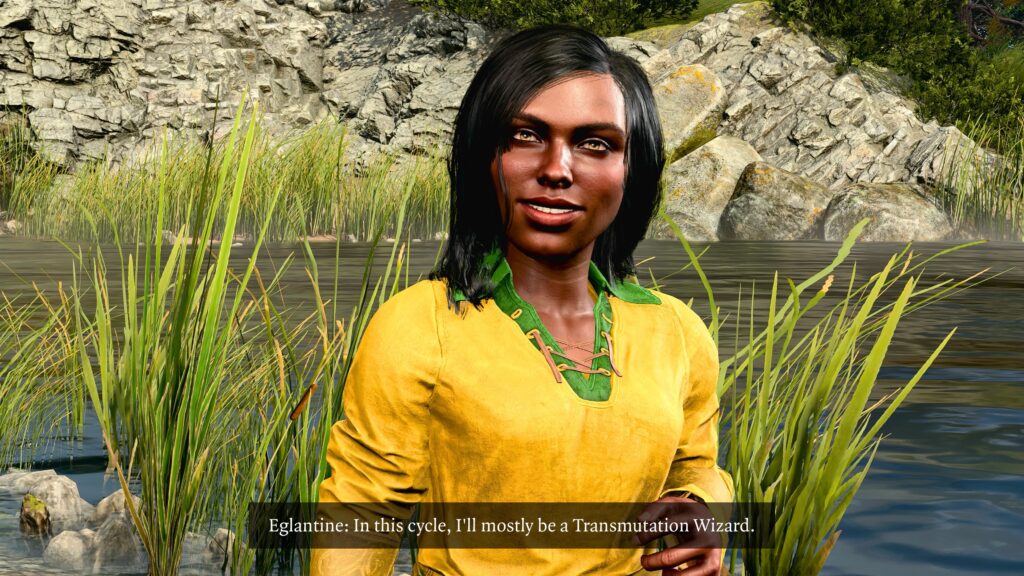
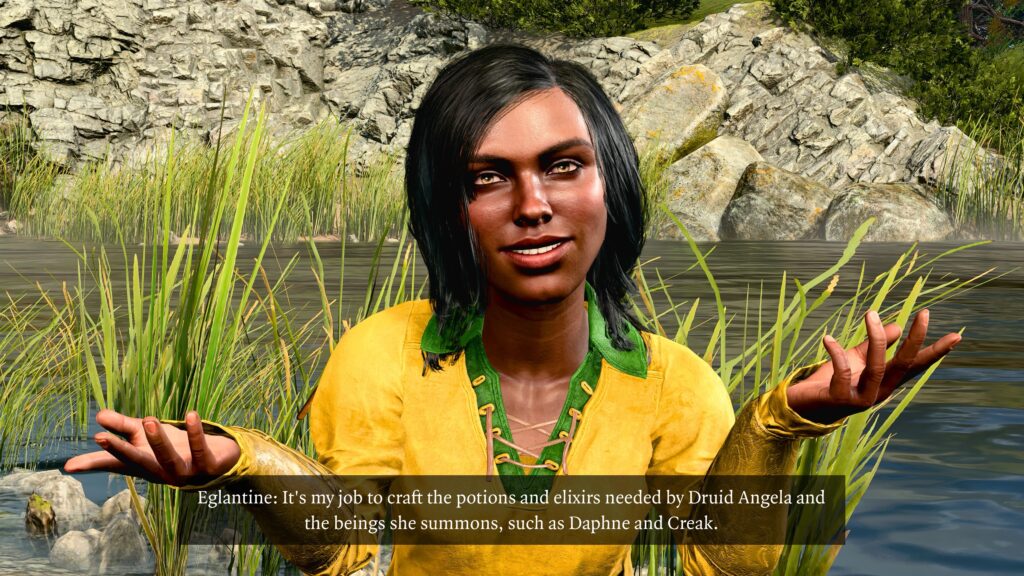
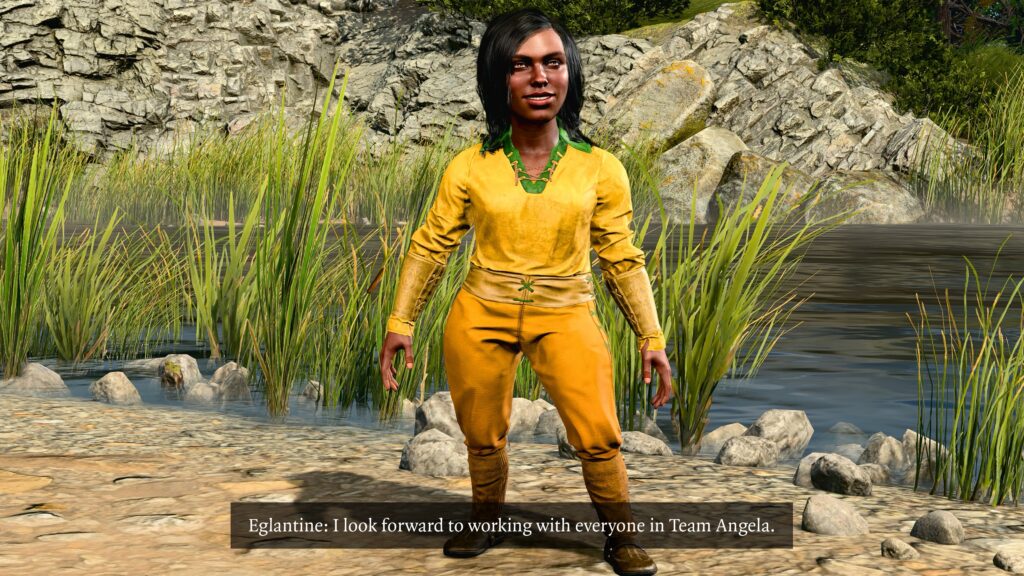
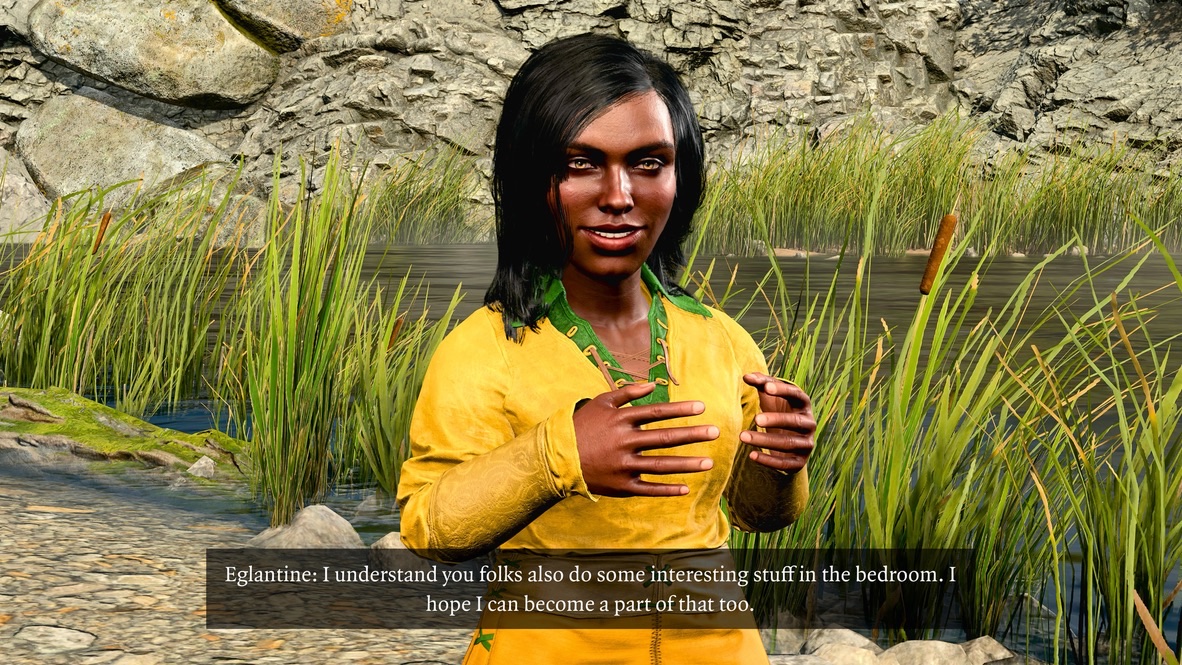
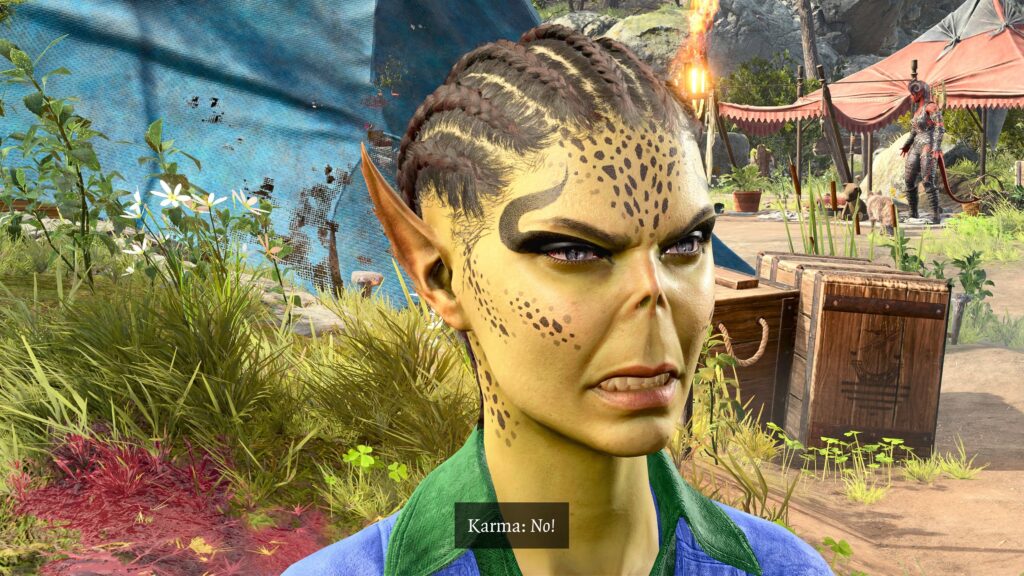
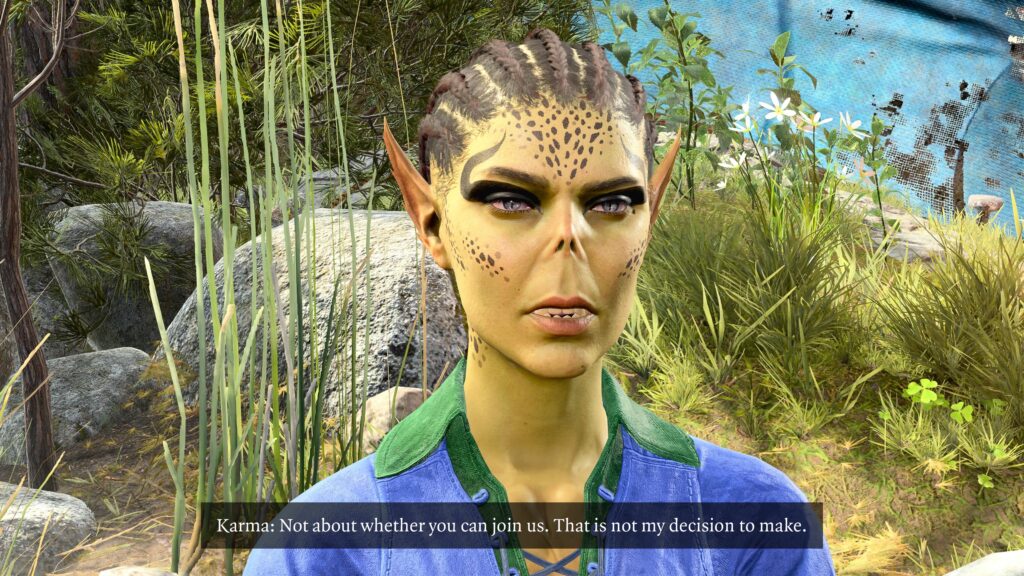
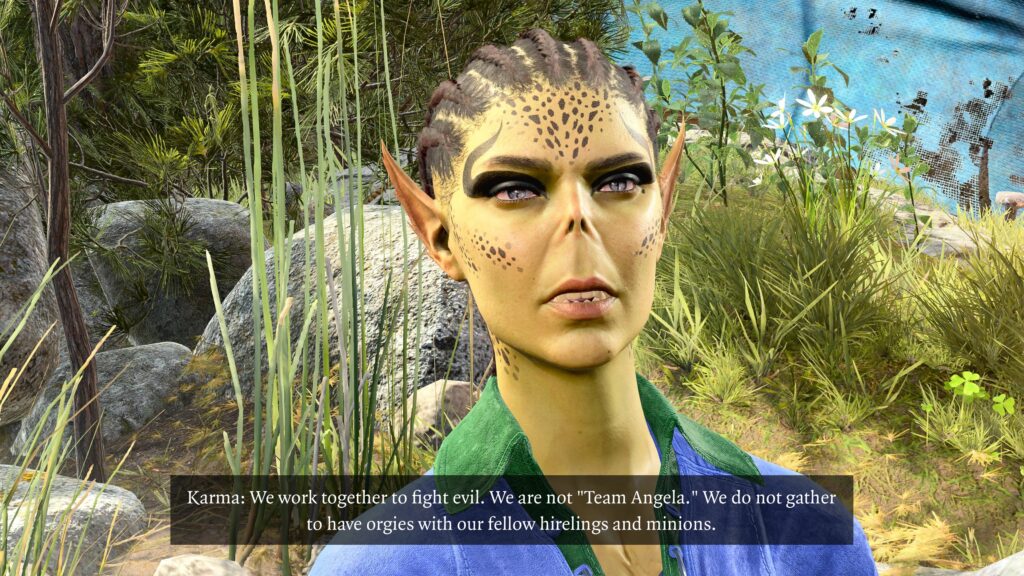
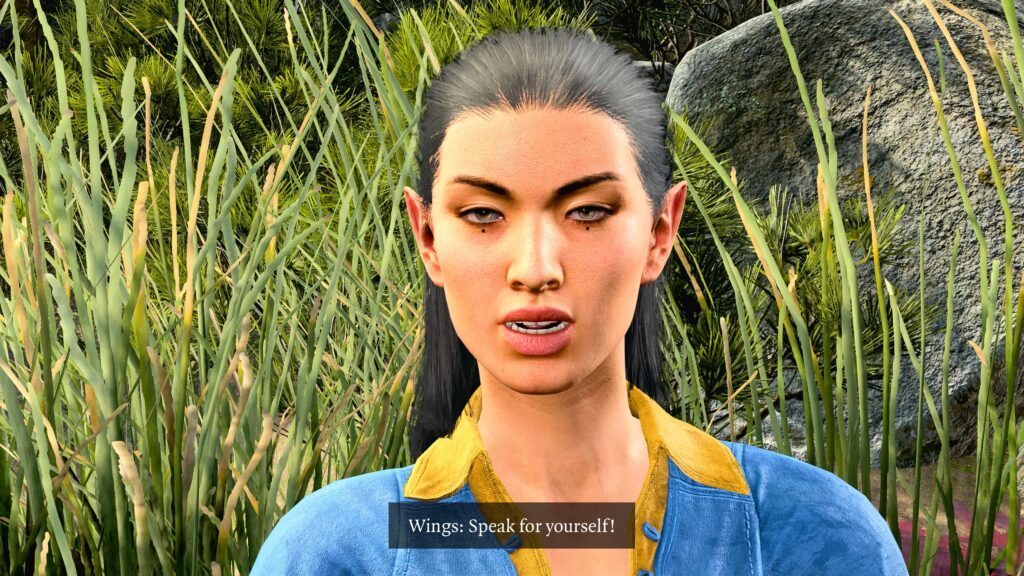
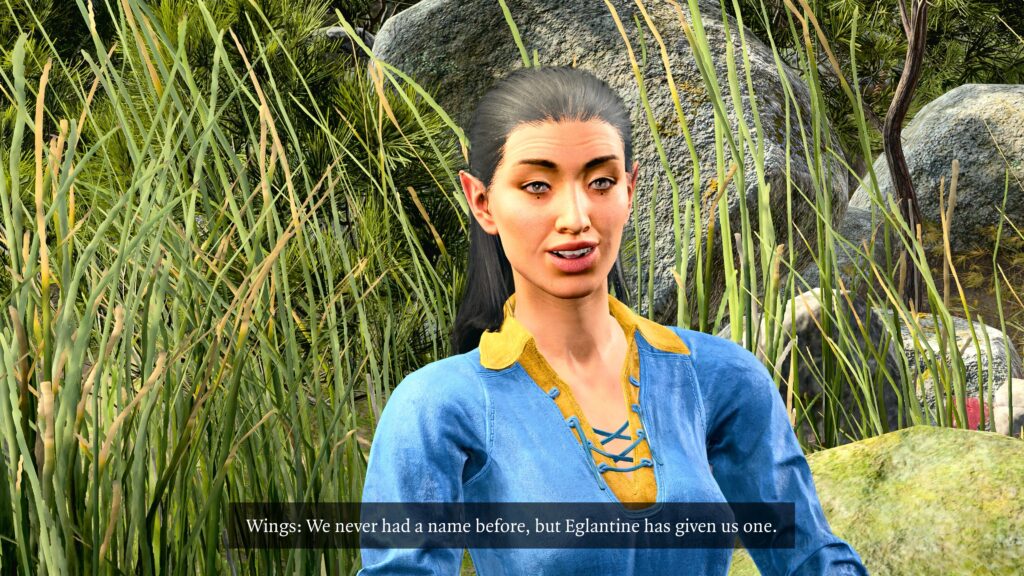
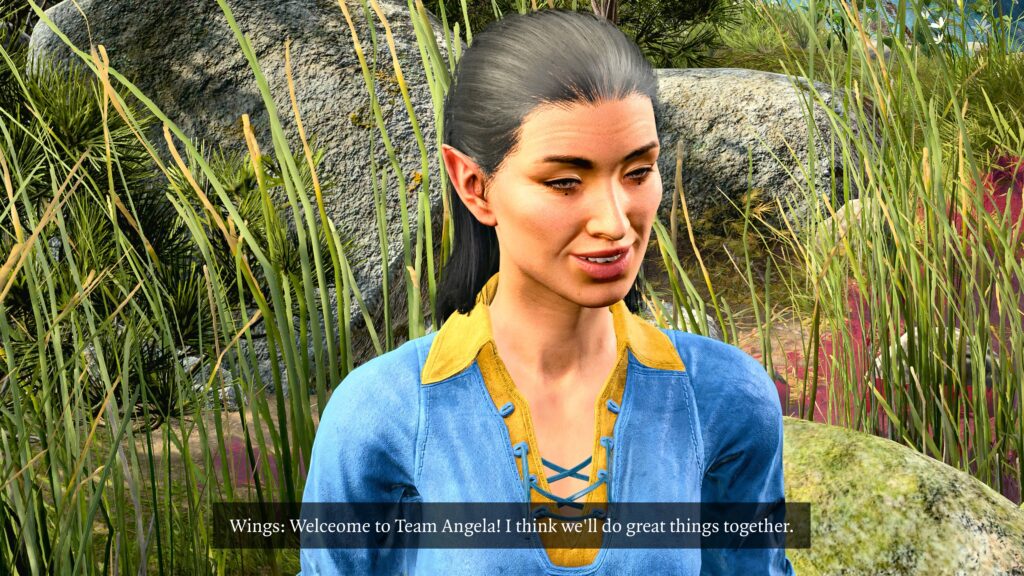
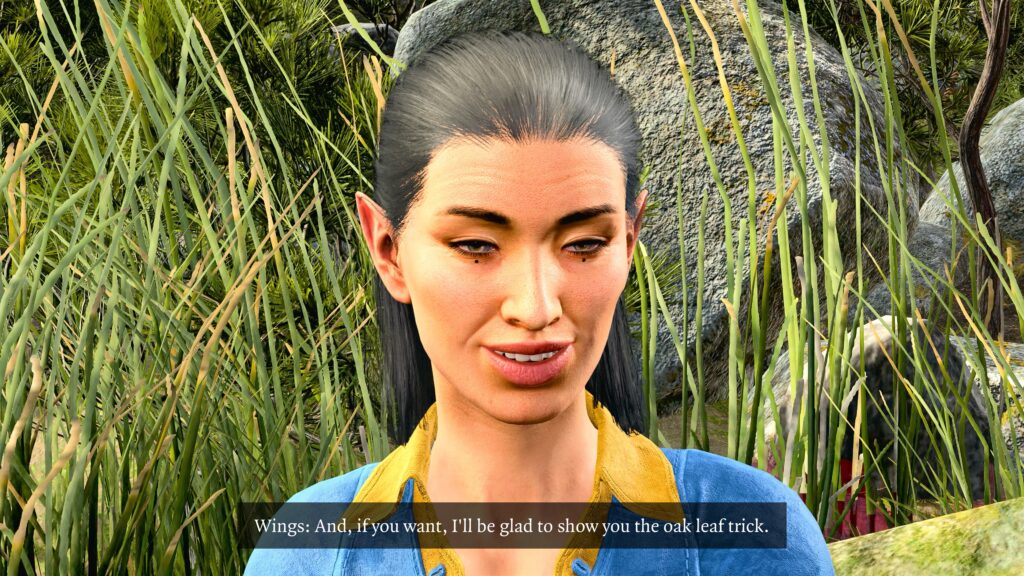
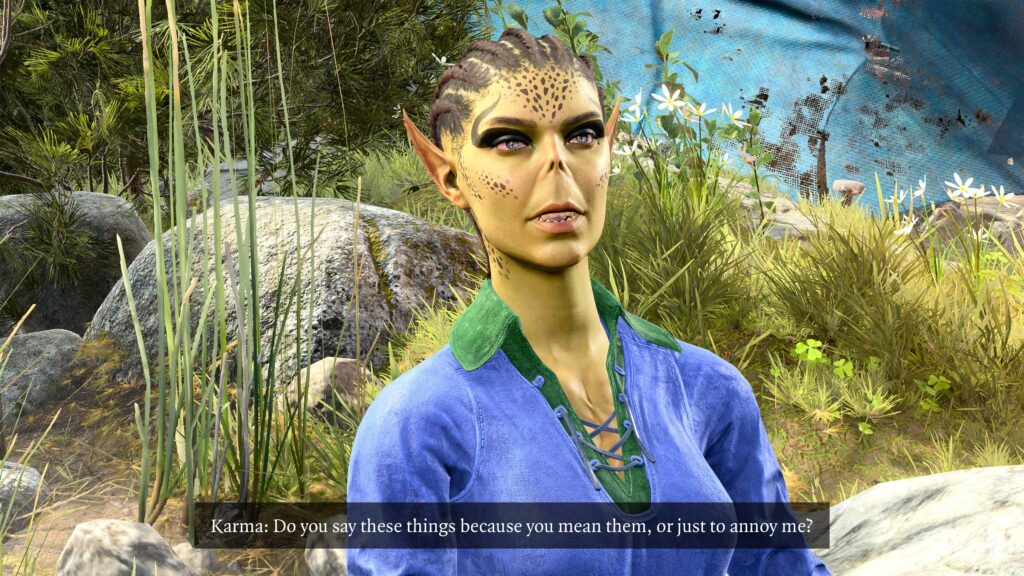
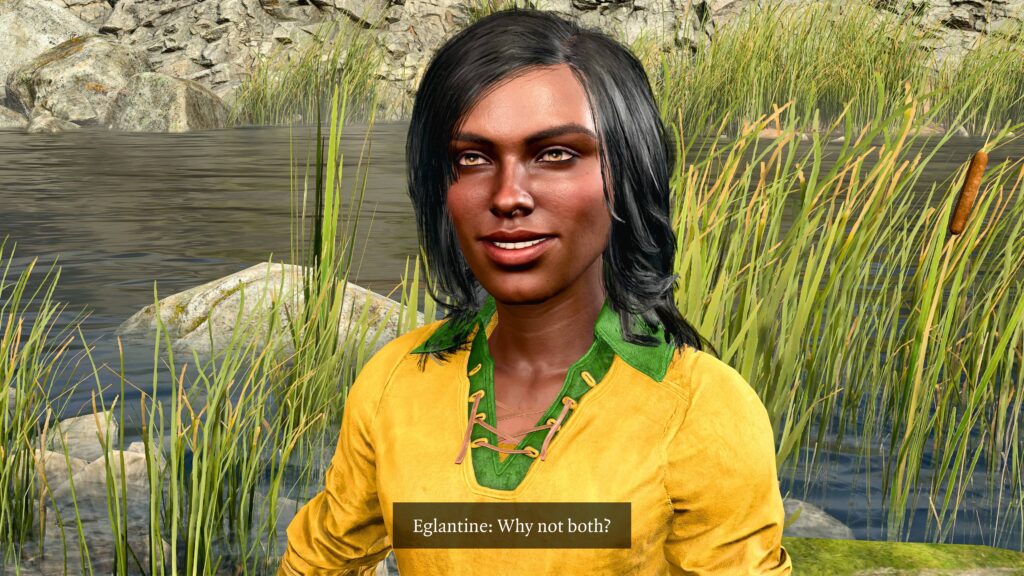
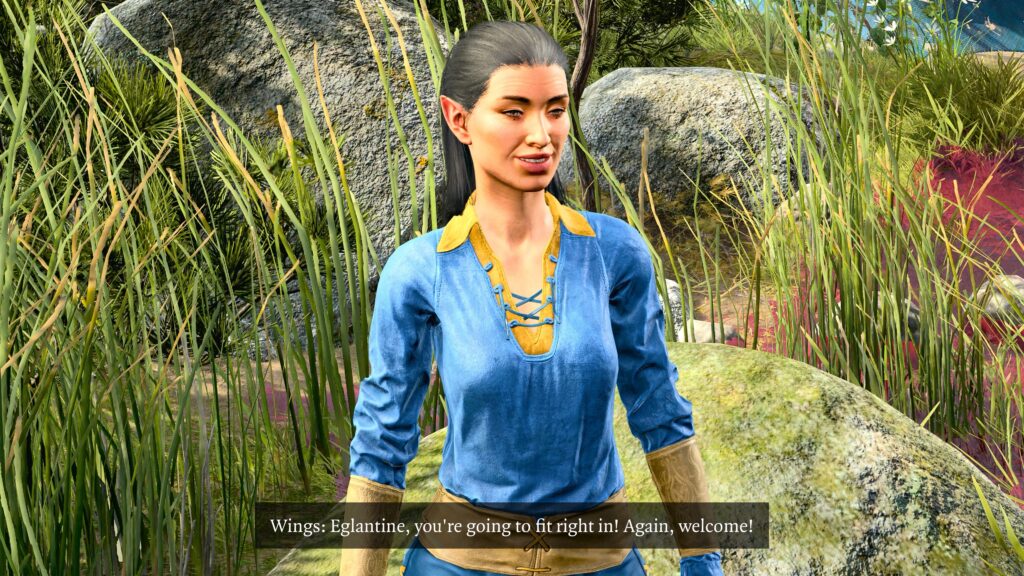
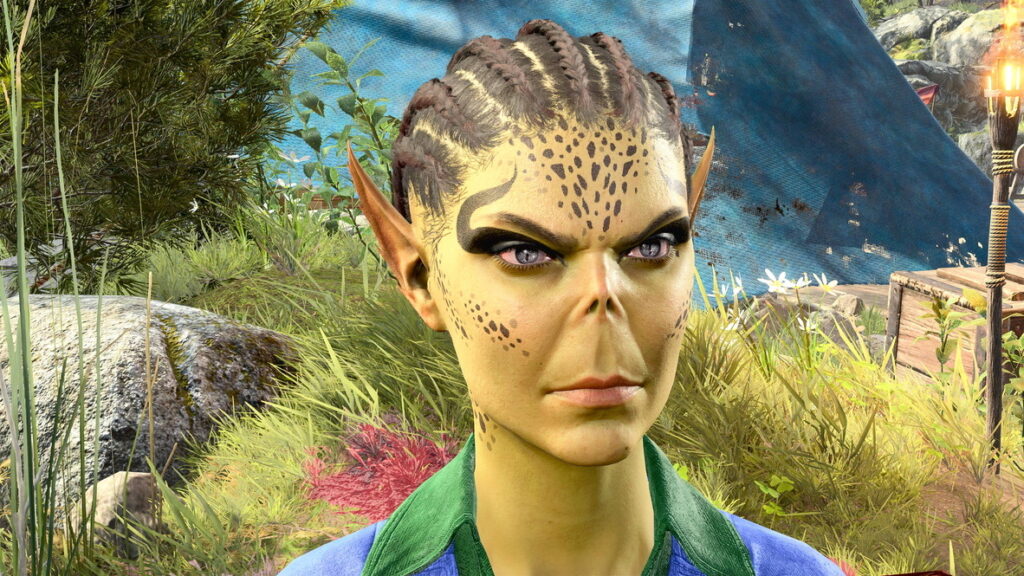
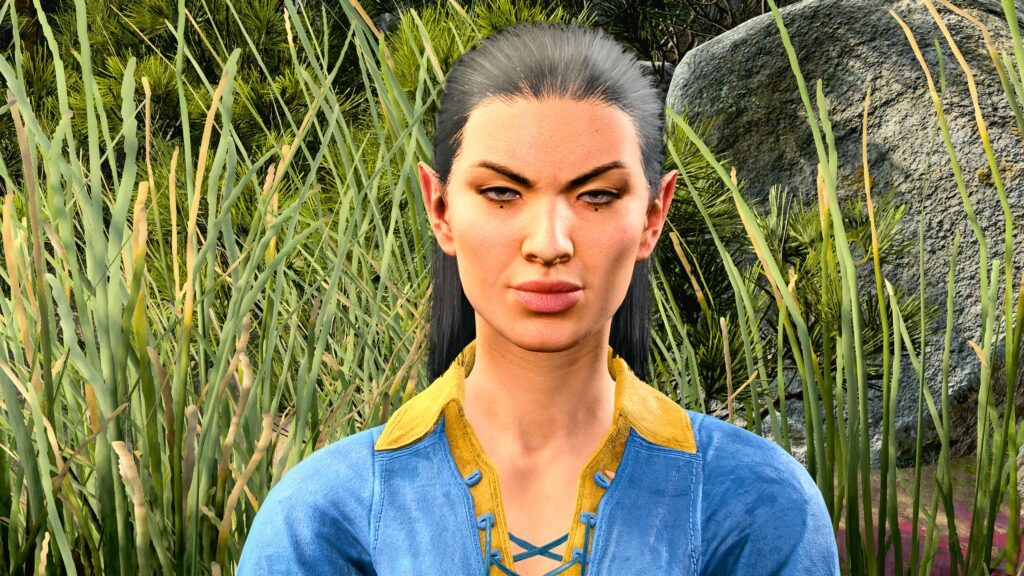
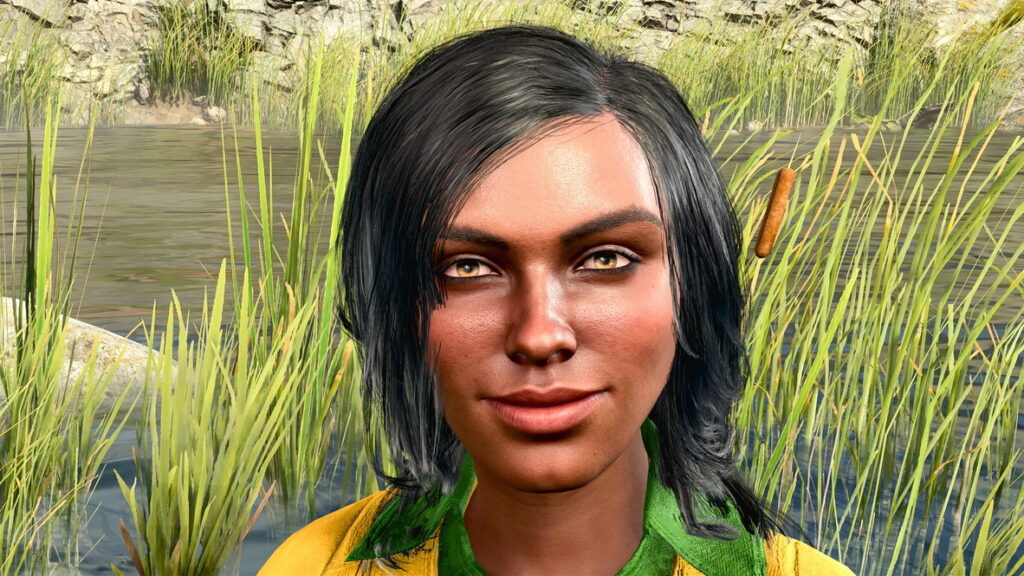
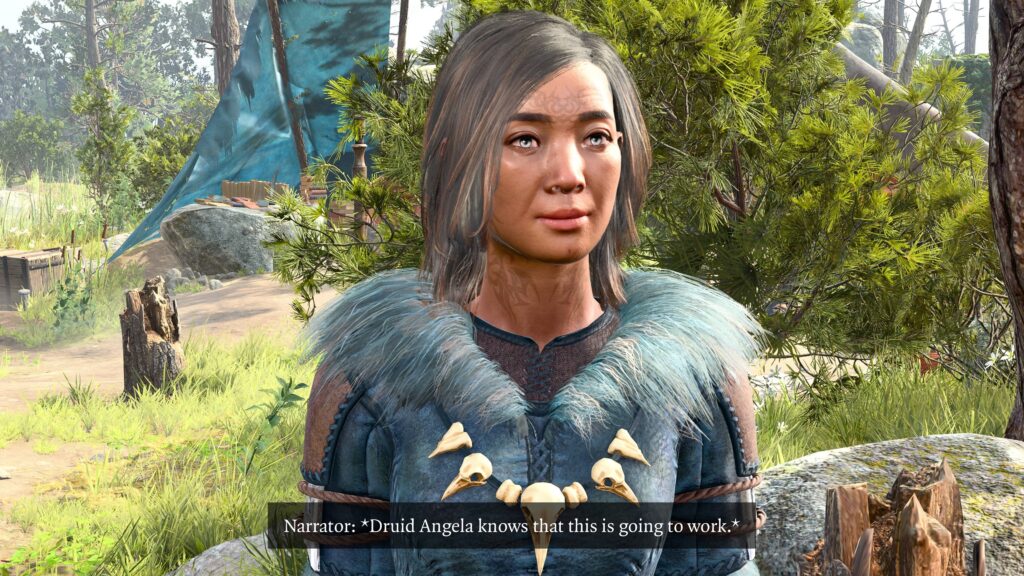
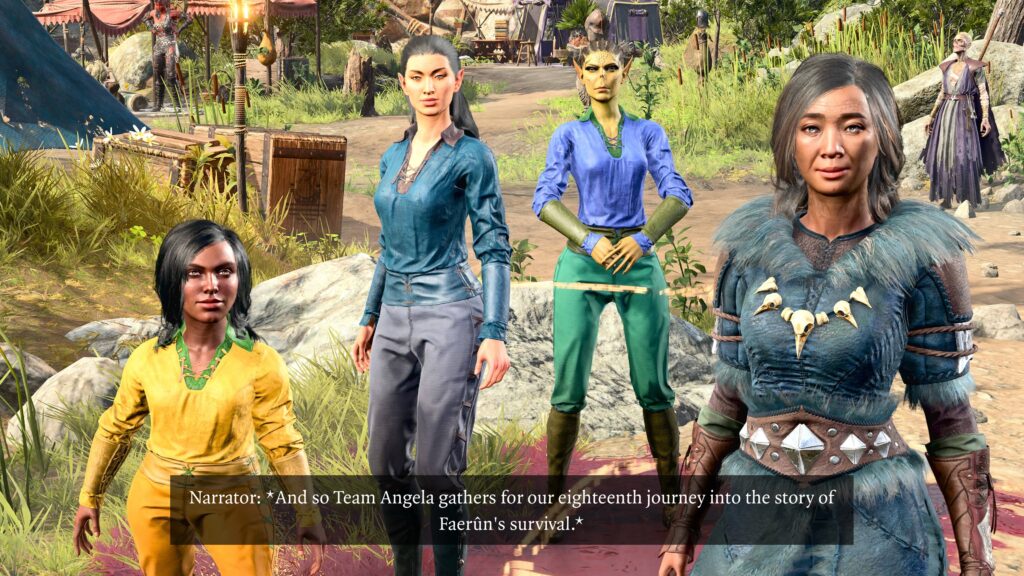
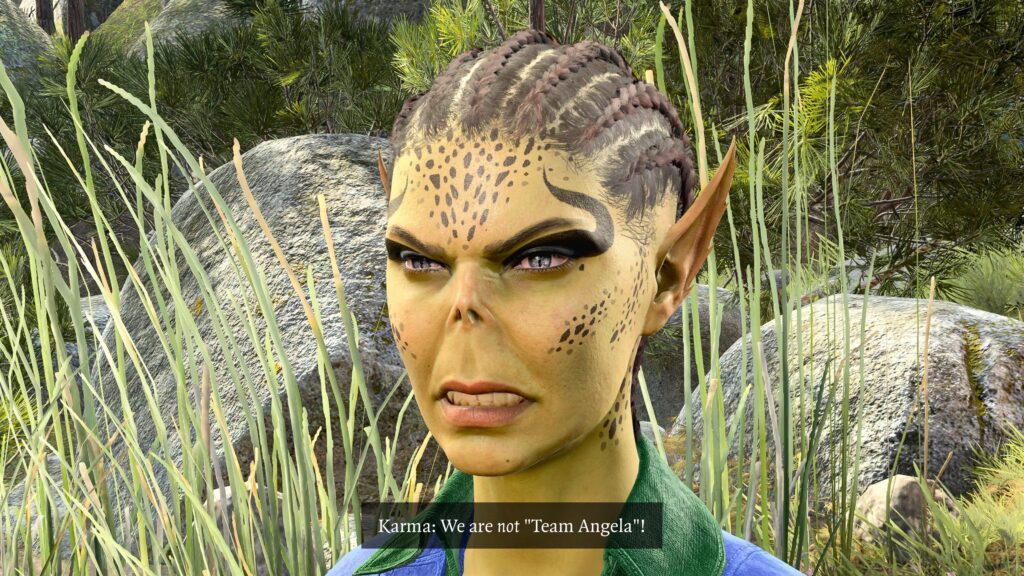
If you’ve kept track (and there’s no reason why you should), you may be puzzled by the mention of an 18th playthrough when I haven’t written about playthroughs 15, 16, or 17. I’ll save that story until just before the fanfic at the end of this post.
For now, let’s get into the substantive part of this essay: some notes on combining Transmutation Wizardry with Alchemy in Baldur’s Gate 3.
Disclaimer
None of this is original with me. You can find a more concise explanation elsewhere.
My goal is to explain a Transmutation Hireling in the context of my previous essay on dice checks. I’d like to show another function of those concepts outside of combat and pickpocketing.
Why is this useful?
When I did my tests of the Arctic Druid Angela build, I observed that an important part of her strategy was to give potions and elixirs to her summons.
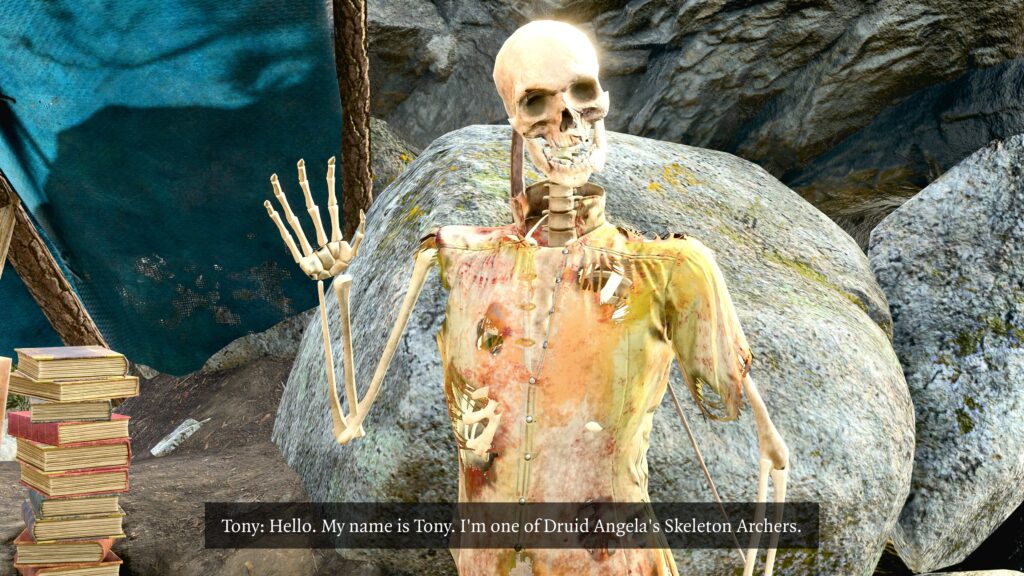
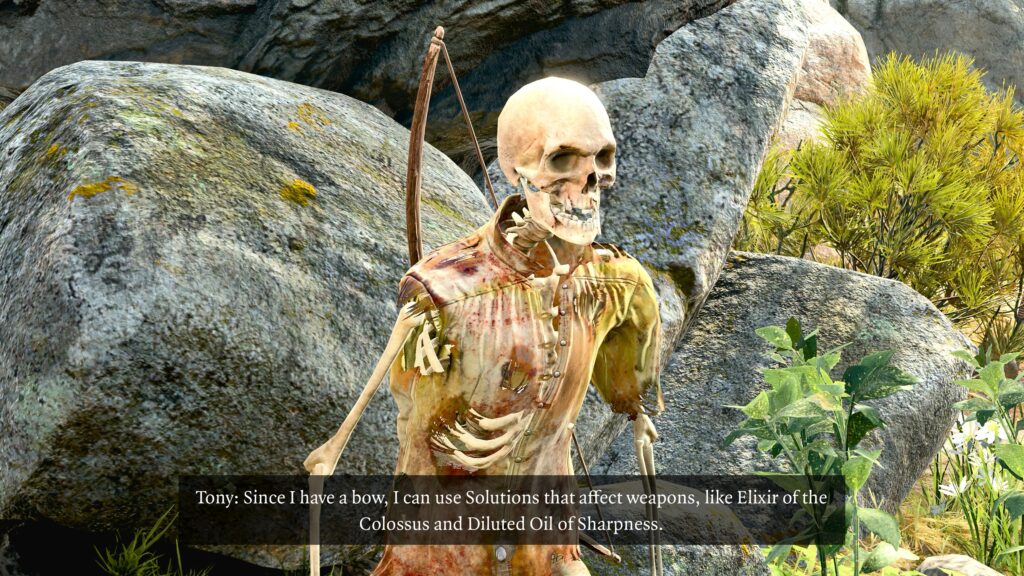
Aside from those tests, while working with Skeleton archers summoned by Animate Dead I learned that even a single skeleton with only 1 HP left can do a great deal of damage if they coated their arrows.
Playthrough 18 is a “solo” Druid Angela run. The tests showed that she needs the help of many minions to survive. That means a lot of consumables, especially since if a minion dies all they carry (including any consumables) vanishes with them.
You can purchase (or pickpocket) consumables from vendors. However, these same items can often be “brewed” by a character, using Alchemy.
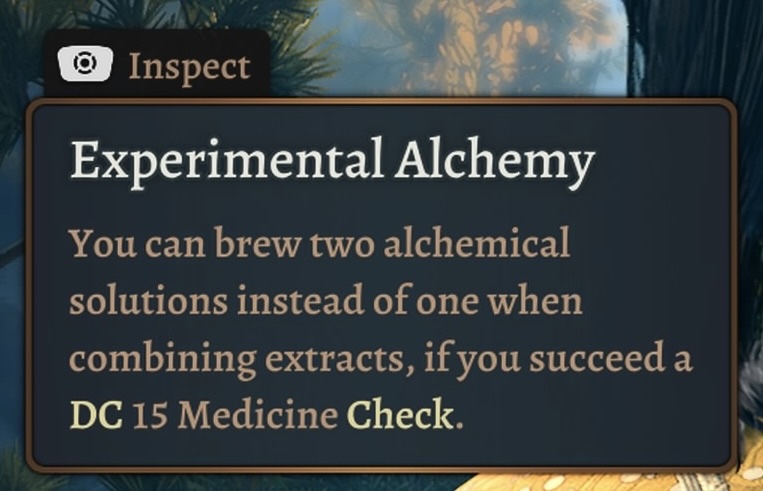
A Transmutation Wizard has a special ability, Experimental Alchemy. If the Wizard passes a Medicine check while crafting with Alchemy, they get an extra copy of whatever they were making.
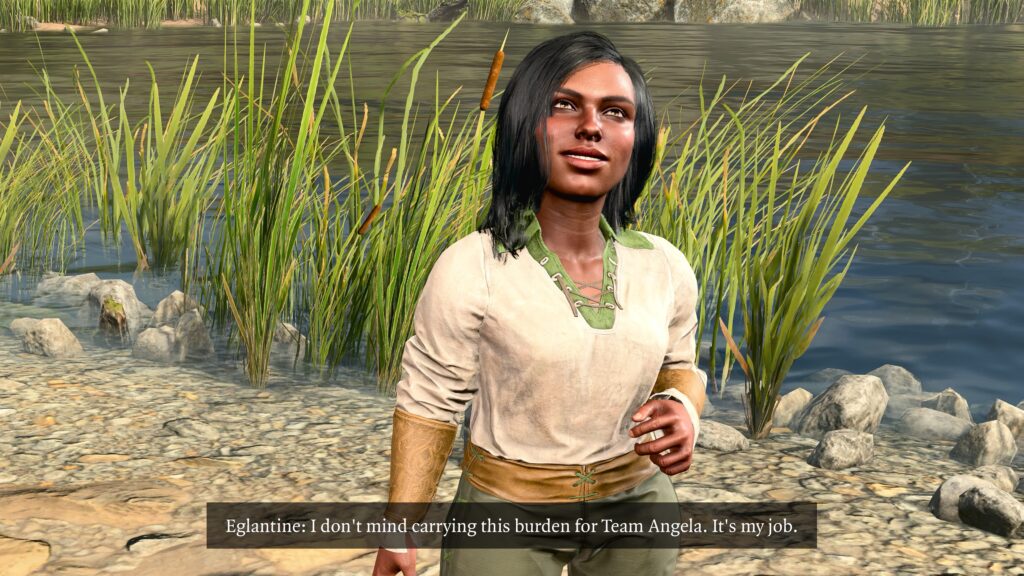
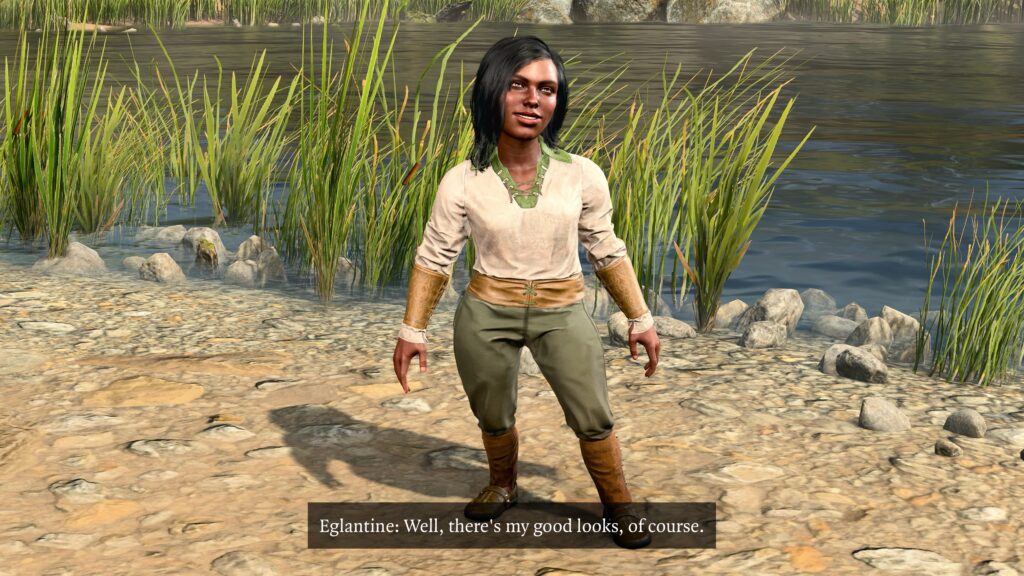
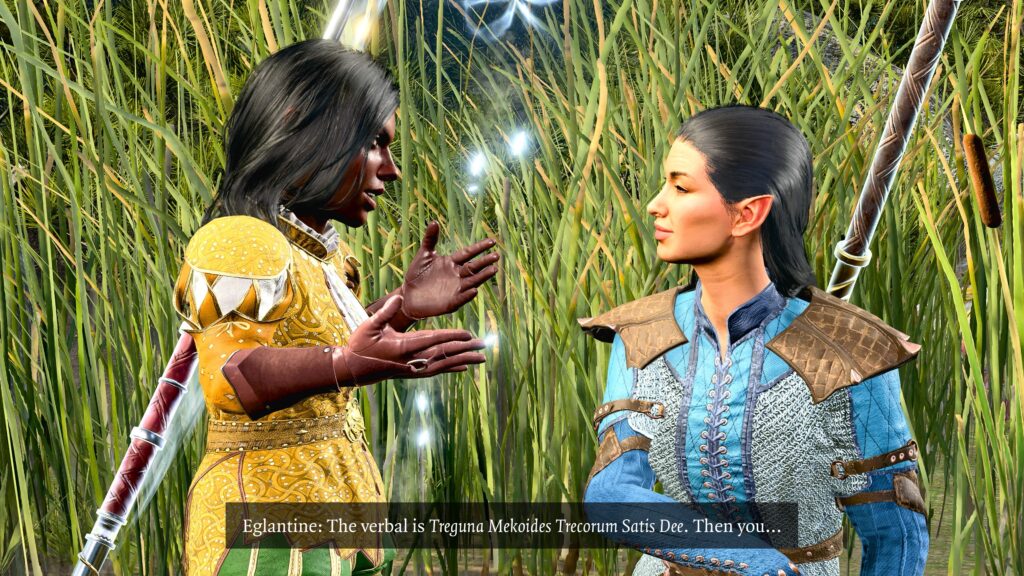
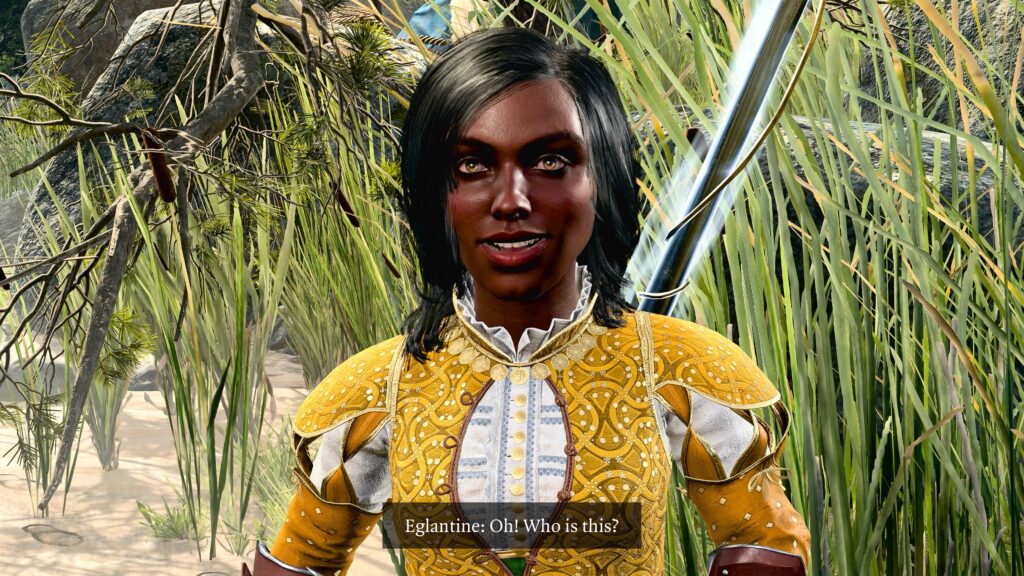
That is why Eglantine joined Team Angela…
…to more efficiently brew potions from the available ingredients.
Alchemy
Before I launch into an explanation of Alchemy, a couple more disclaimers.
- If you’re already familiar with Alchemy in BG3, or in pretty much any other game of this sort, skip or skim this section. Move on to “Optimizing Eglantine” below.
- These rules are easy enough for someone to figure out on their own. I know this because that’s how I learned it.
(In contrast, the alchemy rules in Divinity Original Sin II were baroque, broke, and bespoke; I certainly hope that Larian doesn’t duplicate that system for their new Divinity game.)
Ingredients
Alchemy starts with ingredients. Many of them you’ll find scattered about the world.
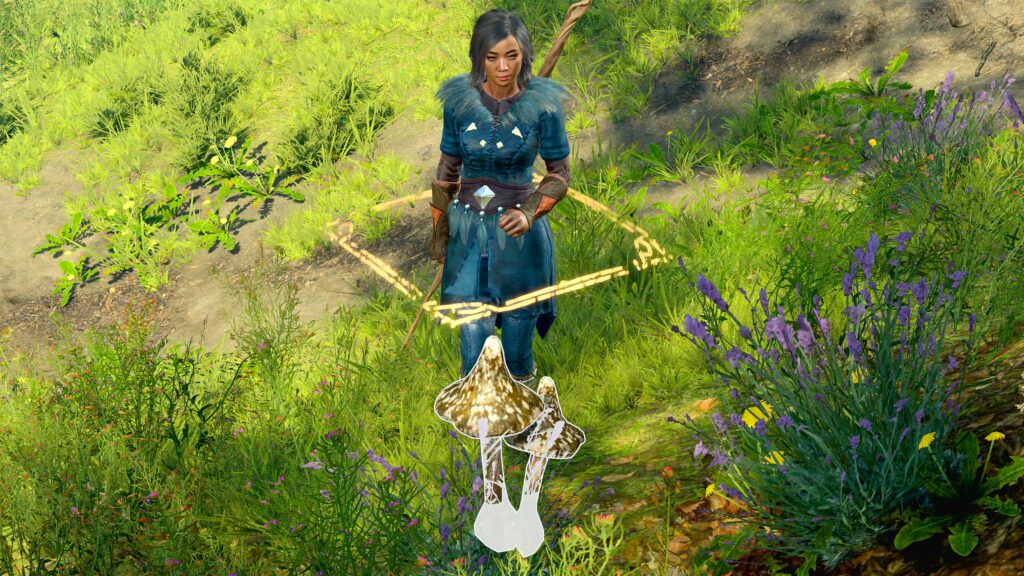
Others can be found on the corpses of slain enemies. Many more can only be found in the inventories of vendors.
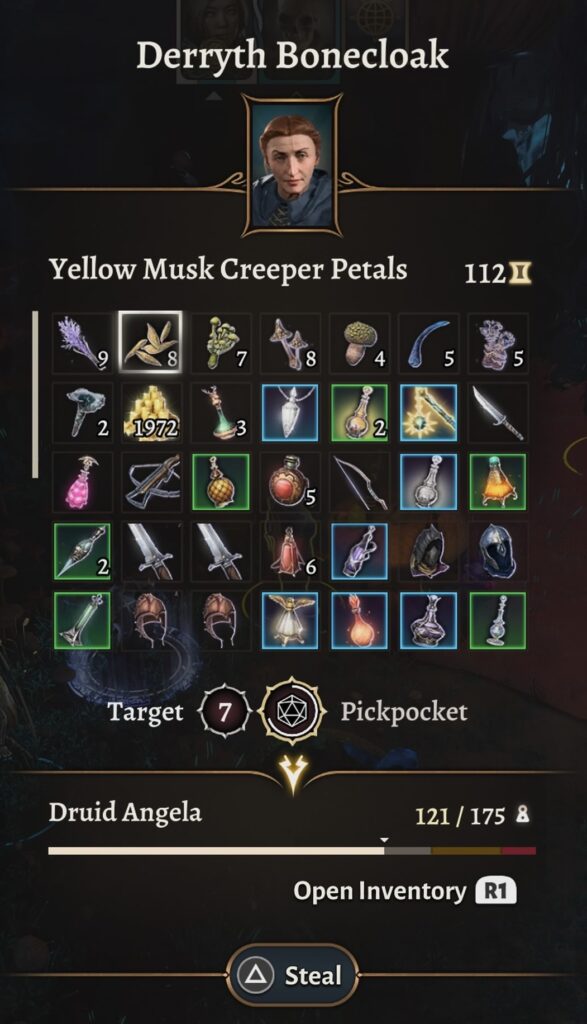
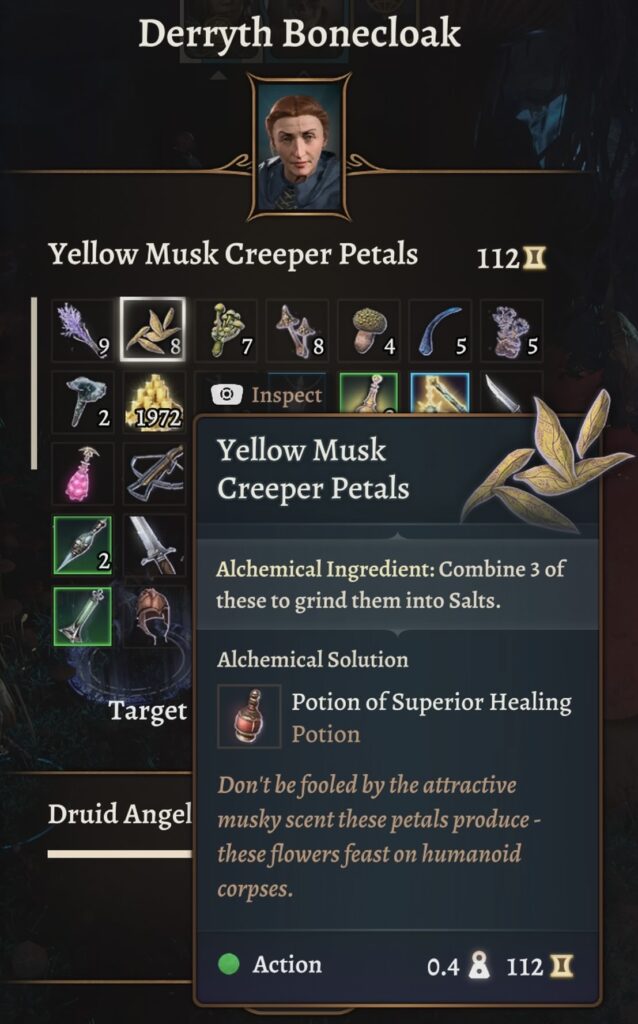
For Druid Angela’s adventures, Eglantine is in charge of all the Alchemy. Druid Angela sends all the ingredients to her. Then it’s Eglantine’s job to do some brewing.
Extracts
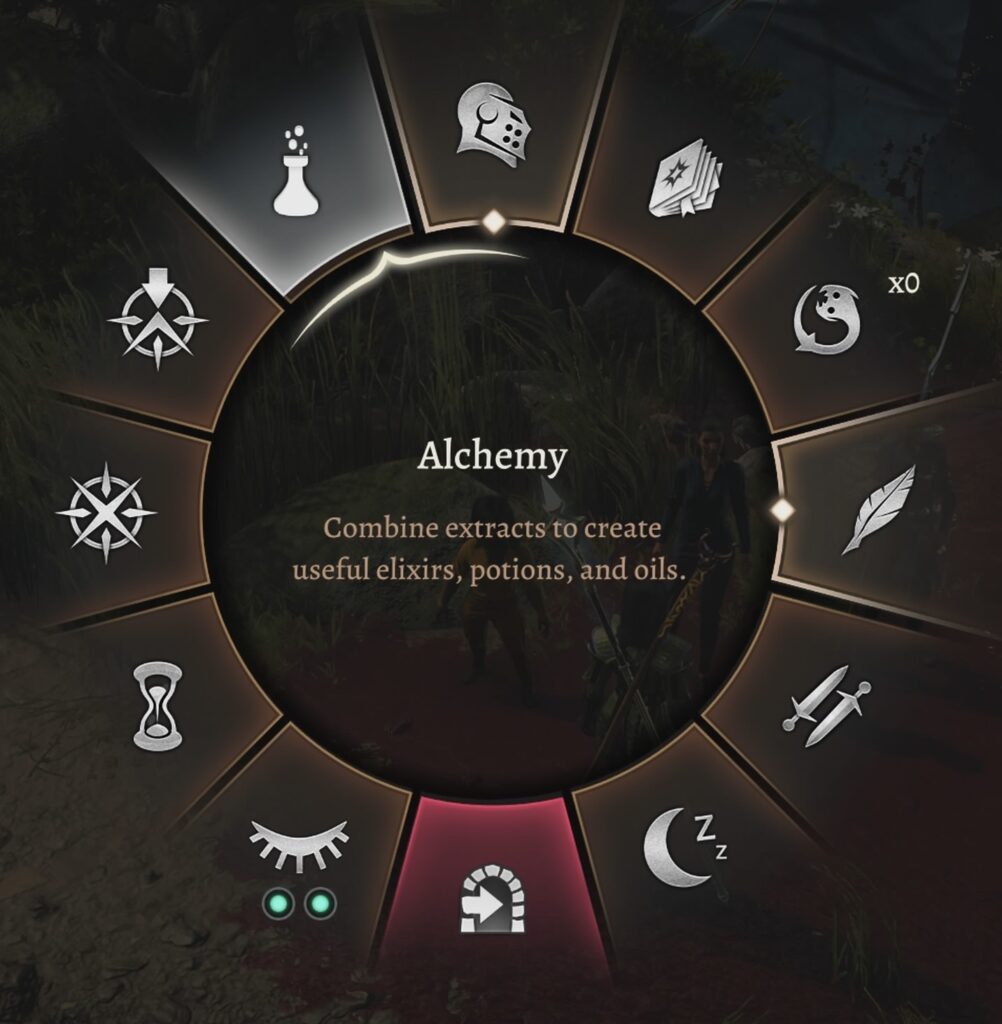
The Alchemy display has two panels: Solutions and Extracts.
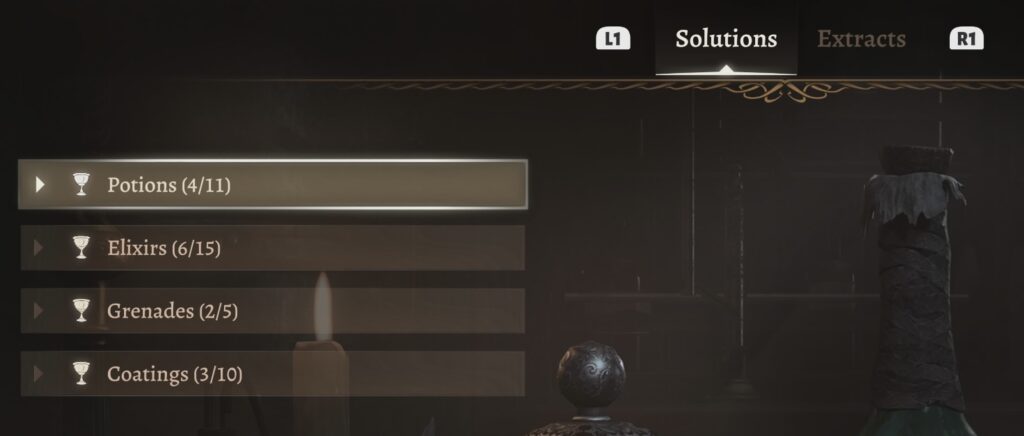
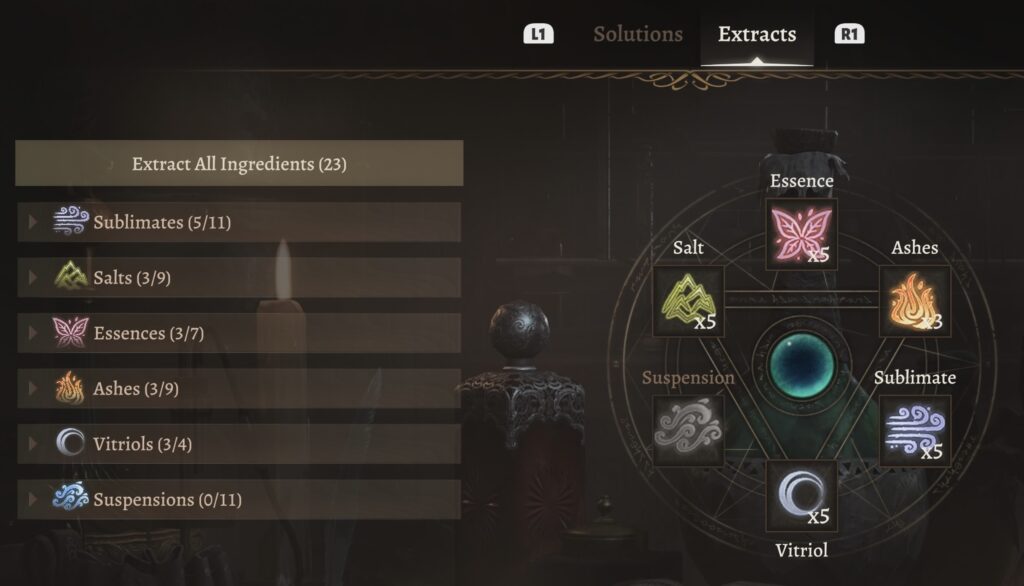
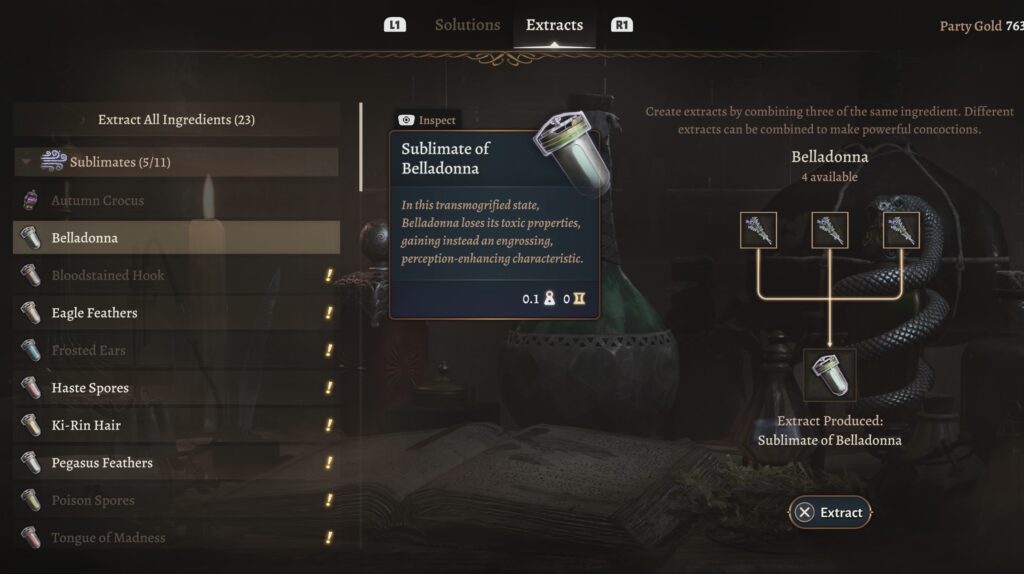
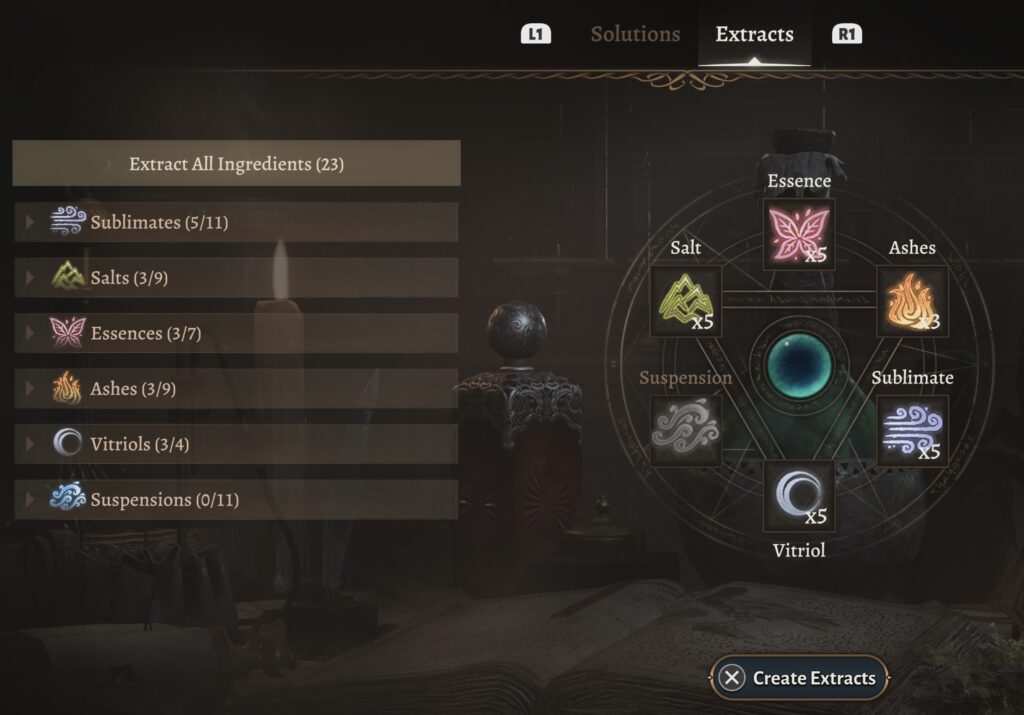
A couple of notes:
- There is very little reason not to create every possible Extract. I know of only a couple of circumstances in the game in which one might choose to exclude one particular ingredient from being used up. One is a pleasant story moment. However, Eglantine can get replacements, by sending Druid Angela to (ahem) extract ingredients from Derryth Bonecloak’s shop. That’s why most players have never seen that individual screen to create the Sublimate of Belladonna, or any of the other Extract-creation screens. They’ll just switch to Extracts, click X, then go back to the Solutions panel.
-
Every ingredient, every Extract, and every Solution that can be created (there are 64 of each) has their own flavor text and icon. I want to give a shout-out to Larian for their attention to detail.
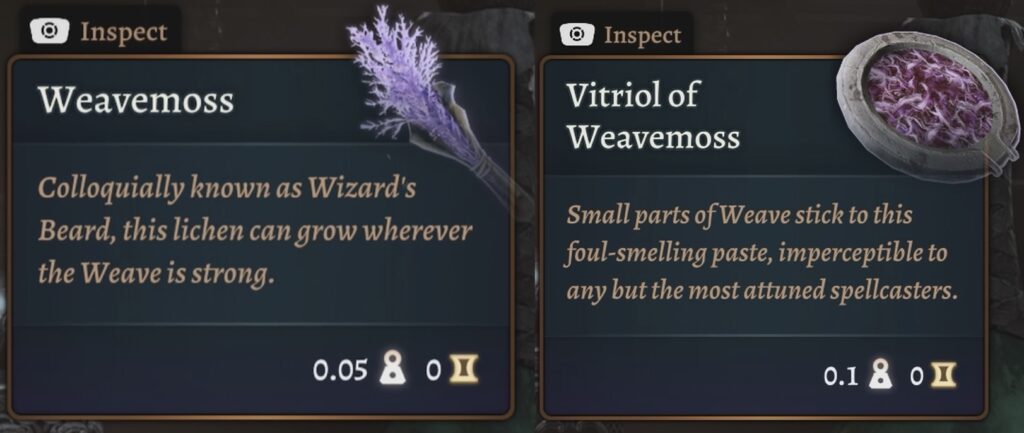
To be fair, I’ve seen this level of detail in other video games. But someone had to do the work, in order so that Eglantine can learn background details such as Yellow Musk Petal Creepers feast on human corpses, or that the Sublimate of Belladonna loses the toxic properties of its component herb.
To the unsung asset creators and librarians who create and manage all of this for any video game: Thanks!
Extracts are the first step in a two-step process. The second step is the important one: brewing actual solutions from the Extracts.
Solutions
Solutions come in four categories:
- Potions – These have effects of varying duration: instant (e.g., Healing Potions); three combat turns (Potion of Speed); ten combat turns (e.g., Potion of Flying); until the next Long Rest (e.g., Potion of Animal Speaking); etc. A character can have the effects of multiple potions at once.
-
Elixirs – These last until the next Long Rest. However, you can only be affected by one Elixir at a time. If you drink an Elixir of Hill Giant Strength, and then drink an Elixir of Bloodlust, it’s the second Elixir that takes precedence.
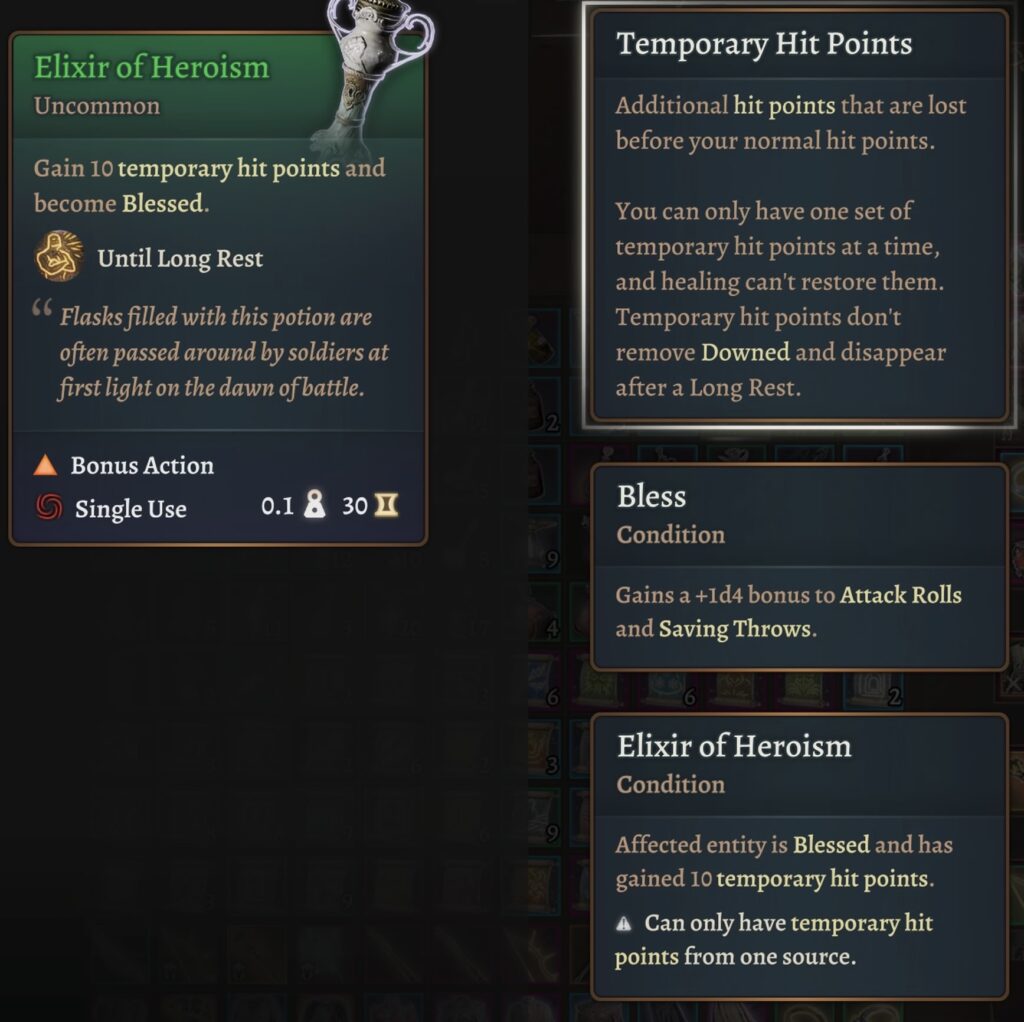
This is another Solution that Druid Angela likes to give her minions. The creatures she summons tend to have few hit points, so ten more can make a substantial difference. The extra hit chance isn’t bad either. -
Grenades – You throw them. They explode. Stuff happens.
I don’t have much experience with grenades. They haven’t been part of my general combat strategy. This might be a mistake; I understand that a Hearthlight Bomb can be useful against Shadow Undead that can turn invisible.
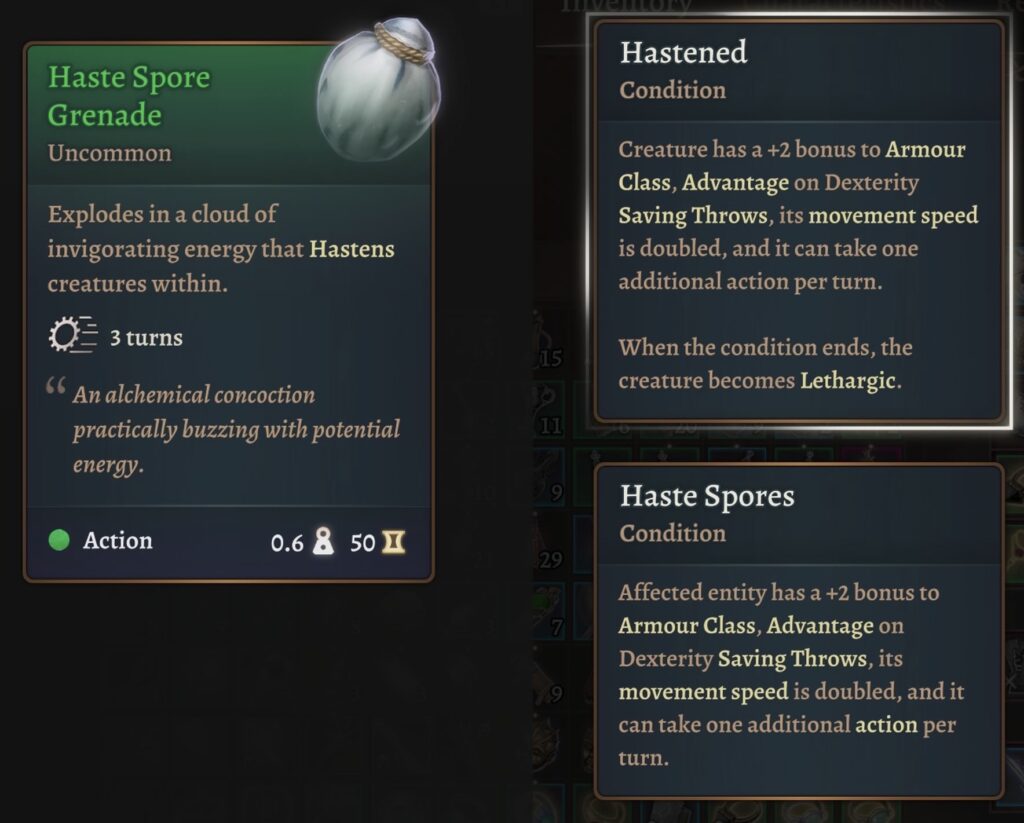
The only grenade that Druid Angela bothers with is the Haste Spore Grenade. It has roughly the same effect as a Potion of Speed, but it leaves a cloud on the ground that several characters can pass through to get its effects. Although the tooltips suggest otherwise, after the effects of the grenade wear off you are not made Lethargic. -
Coatings – When used, these are applied to the weapon the character holds. They last ten combat rounds.
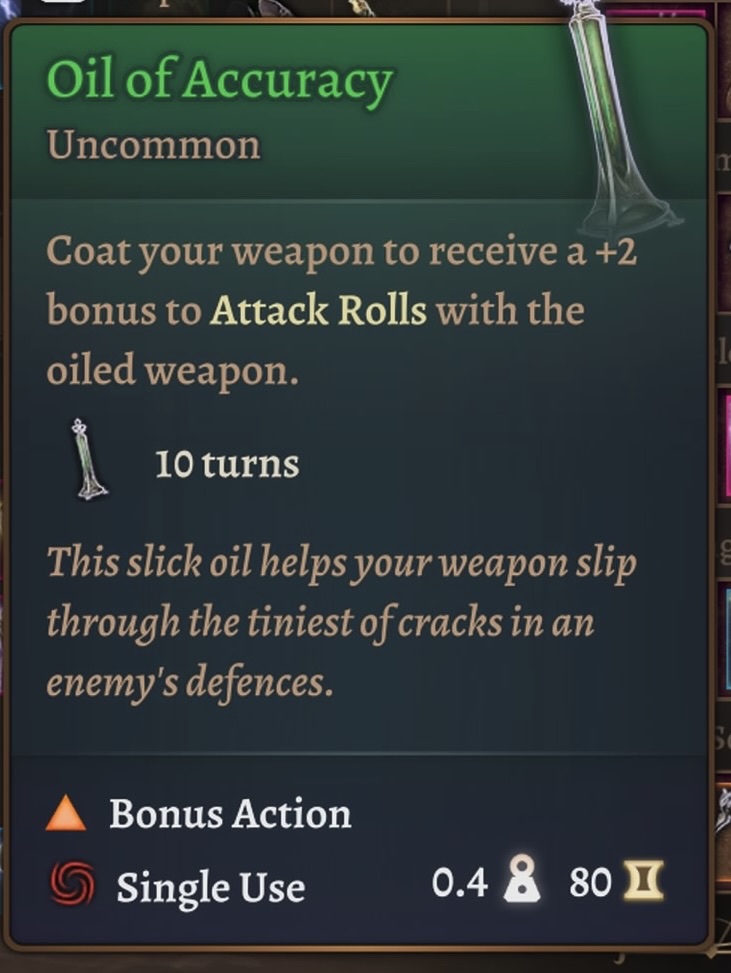
I like to give Coatings like this to Skeleton Archers, to amplify the effects of their arrows.
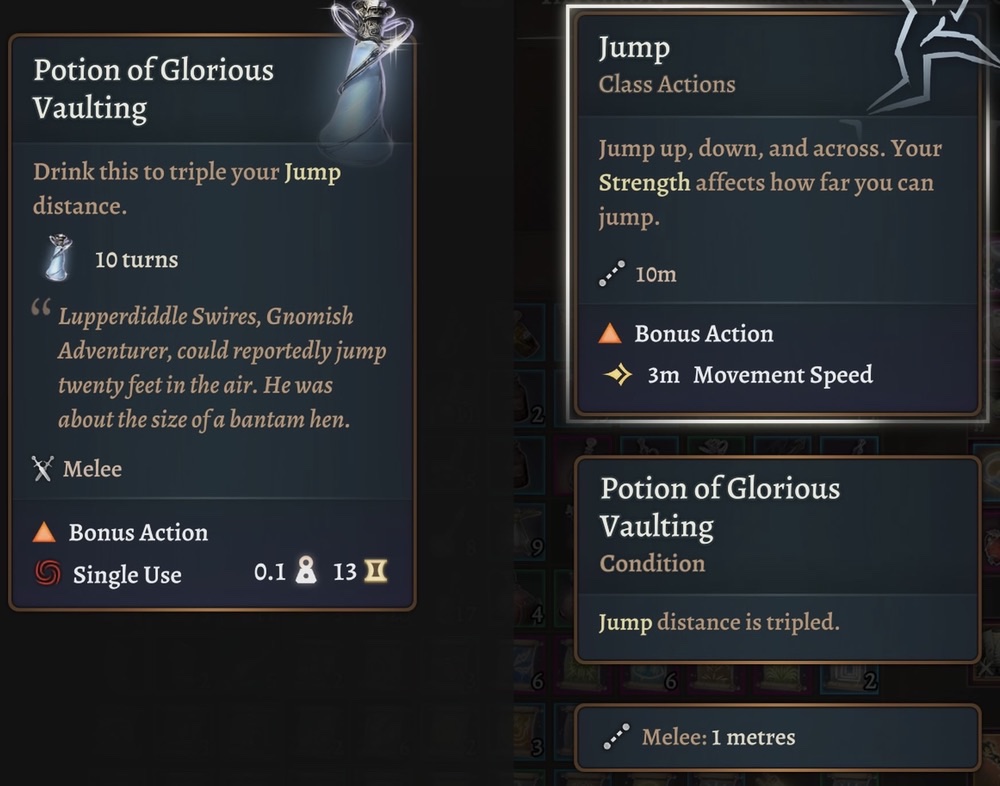
You may have noticed the emphasis that I place on giving these to minions. That’s because using a Solution takes a Bonus Action. For an Elixir, this doesn’t matter much, as one tends to consume those outside of combat (though Druid Angela has switched Elixirs mid-combat as needed). Main characters generally have a use for their Bonus Actions; minions don’t. So minions have the Bonus Actions to spare at the start of combat to coat weapons or drink a potion.
The recipes for Solutions follow a pattern:
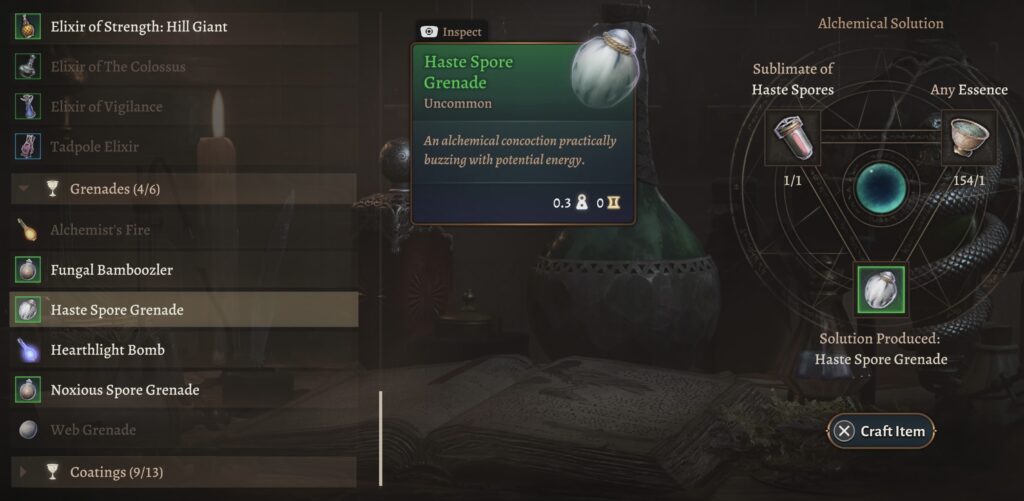
The pattern is to use one specific Extract, and another from a general category of Extracts. There are six categories (you can see the list in a couple of the images above).
This may seem complicated. I have the following observations:
- Believe it or not, compared to other Alchemy/Crafting systems I’ve seen in other games, this is fairly simple. I’ll have more to say about this below.
-
In practice, it’s normally quite swift, especially for a dedicated brewer like Eglantine:
- Druid Angela sends her all the ingredients she obtains.
- Eglantine creates every possible Extract with a couple of clicks on the controller.
- Eglantine looks over the list of Solutions she can create, and makes the ones that seem useful. Again, each one takes just a couple of clicks on the controller.
There’s something that Eglantine has to watch out for. While every recipe requires a second generic Extract, the game does not distinguish hard-to-find extracts from ones that are easier to make.
A specific example:
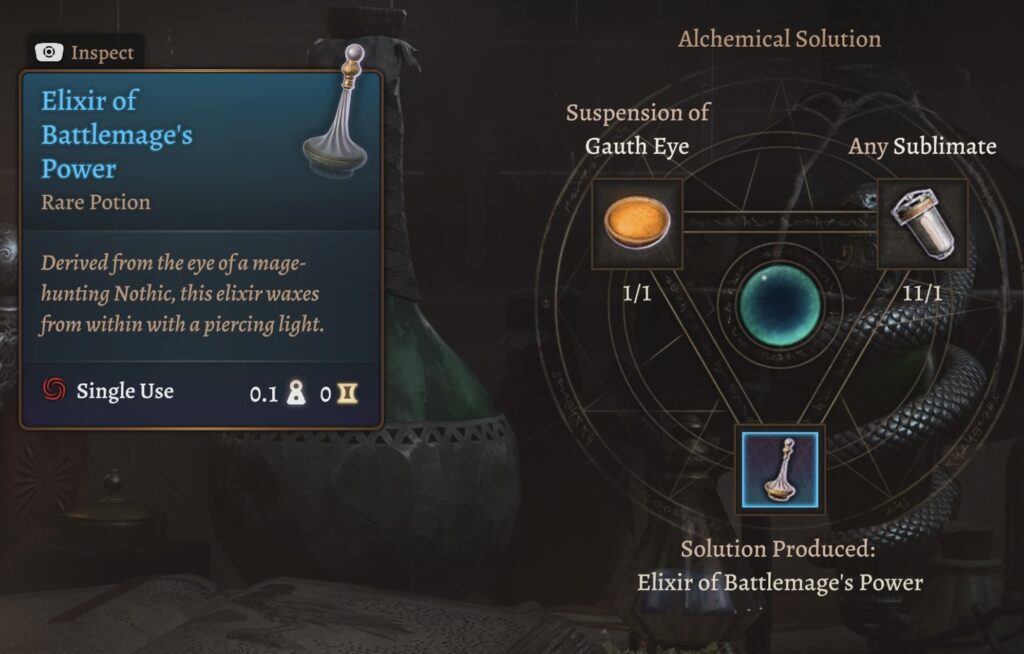
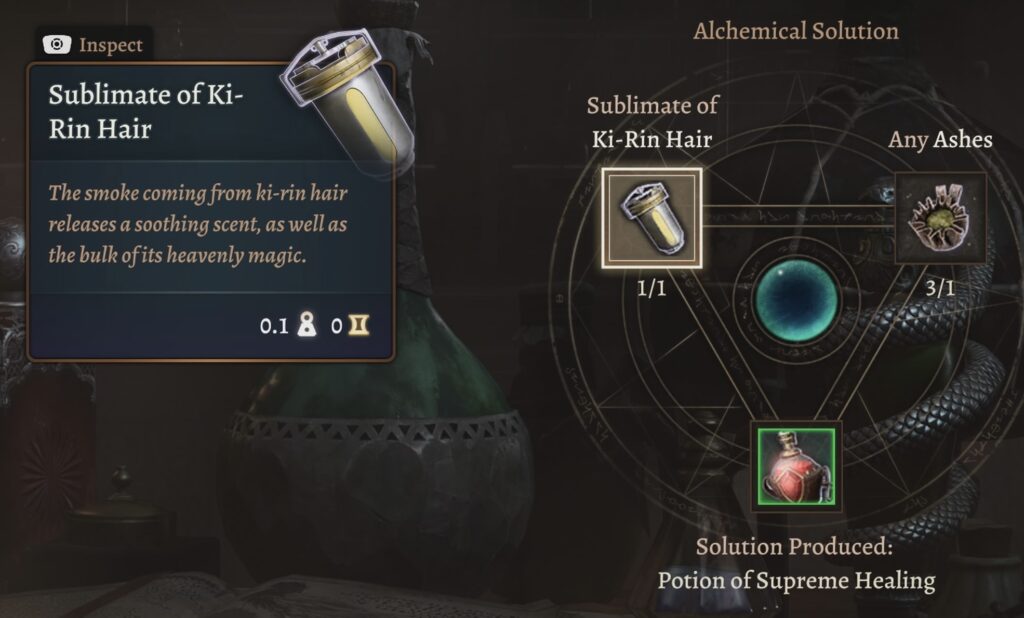
The answer is to look at the Alchemy screen carefully, and pick the exact secondary Extract you want to use. Here’s how that’s done:
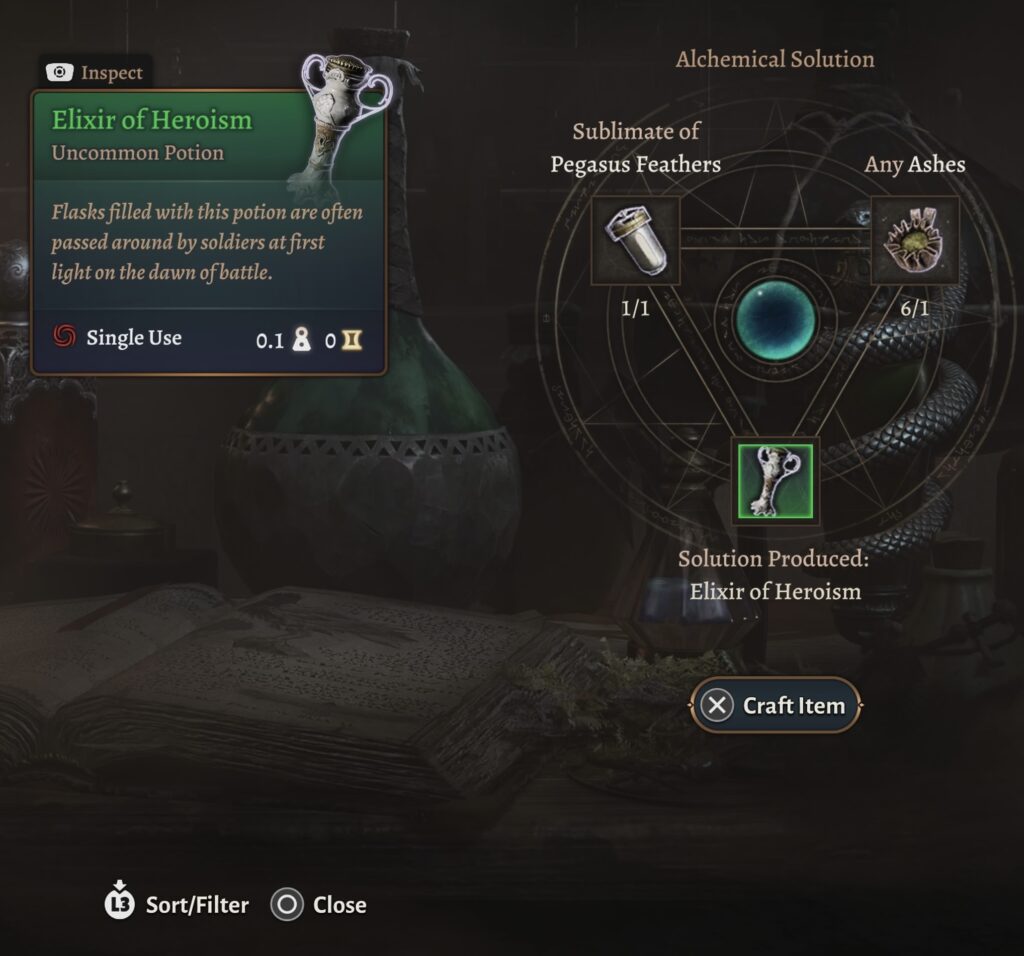
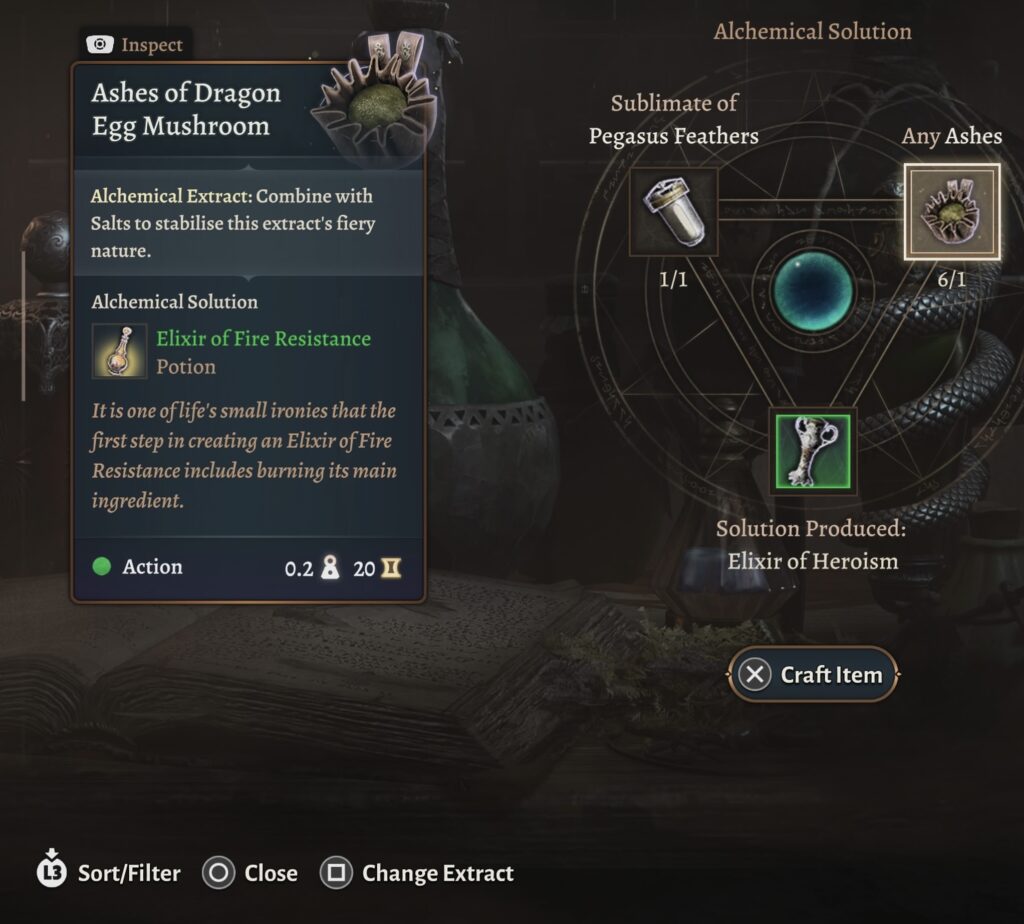
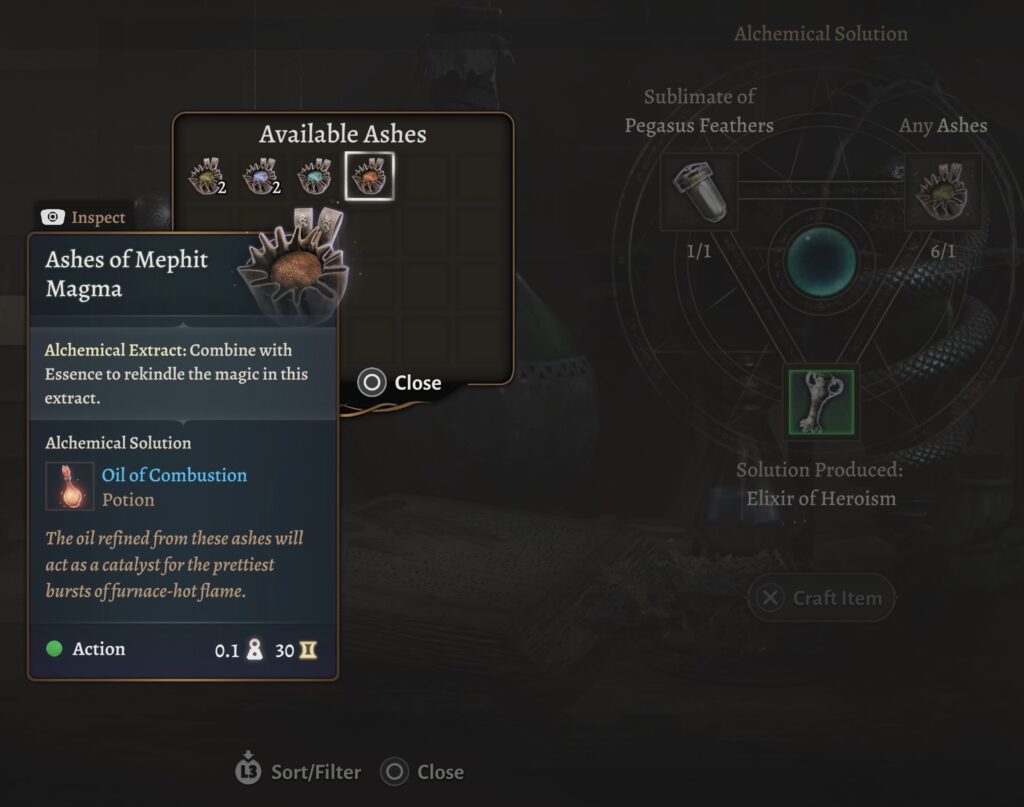
Eglantine doesn’t always have to worry about this. If you scroll up and look at the screen with the Haste Spore Grenade recipe, you’ll see that, at that time, Eglantine had 154 Essences. It’s not likely that she’d randomly use one that was useful in another important recipe, though of course it never hurts to check.
Again, while it may seem complicated, this system is pure joy compared to the one in Divinity Original Sin II. In BG3, Eglantine automatically learns any recipe once she has the components to make it. In DOS2, you have to find a recipe book, or throw combinations of components into the Crafting screen in the hope you’ll find something useful.
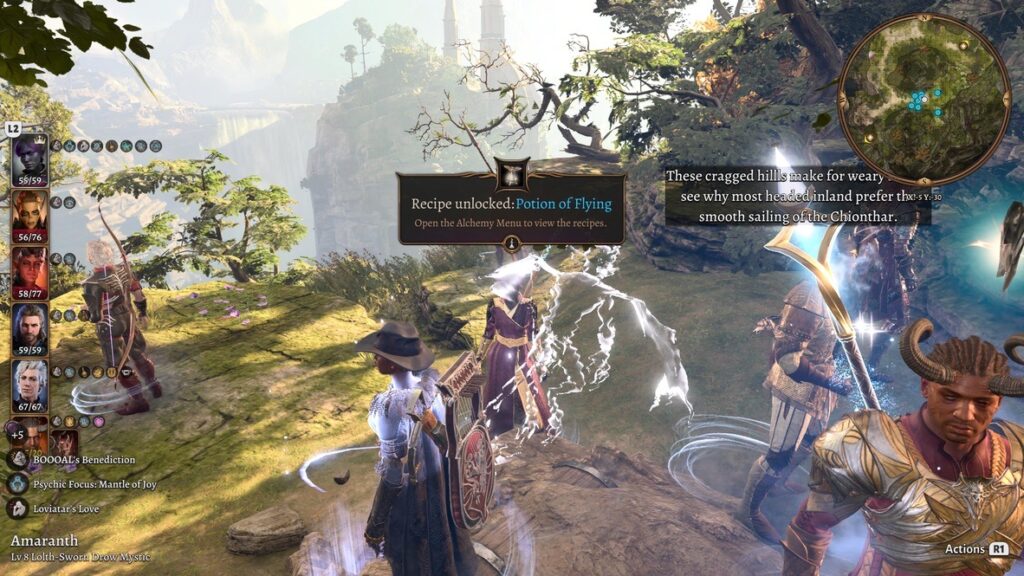
As you wander the world in BG3, you’ll occasionally find recipe books. Eglantine never needs them, so they can just be sold. But it’s a hint that, at one time, Larian contemplated a similar system for BG3. I’m very glad that they did not do that, and hope they won’t for Divinity either.
There’s one problem with this system, one shared by DOS2 and almost every game I’ve seen with an inventory limited by size or weight: The sheer number of different alchemy ingredients and Extracts can make inventory management difficult. Even though the components themselves are light individually, by the time you get to 128 of them (Extracts and left-over ingredients) the weight can be substantial.
That’s one more advantage of having a dedicated hireling Transmuter/Alchemist: The inventory problem rests on their shoulders alone. Druid Angela can focus on the next problem: how many Scrolls she’s got.
Optimizing Eglantine
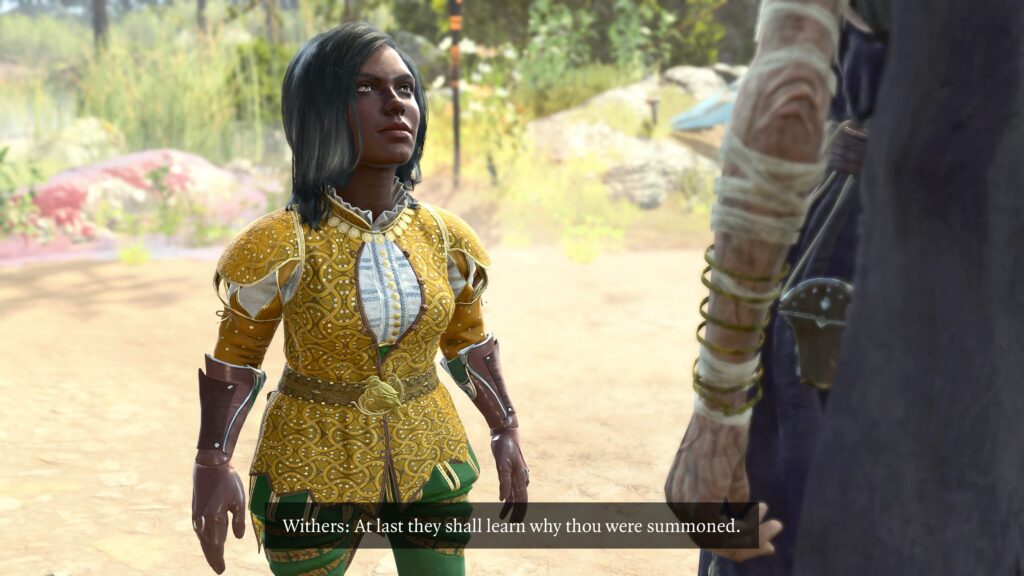
We’ve got an system of Alchemy. Any character in BG3 can use it. Apart from the inventory management, for which any hireling might be used, why set up a special character for it?
In the above example images, you may get the sense that some of the components are rare or hard to get. As you might guess, the more useful the Solution, the more difficult it can be to find its key ingredient to make an Extract.
For example, Gauth Eyestalks, Ki-Rin Hair, and Pegasus Feathers are only available from vendors. The vendor may only stock it irregularly, and one at a time. Vendors restock ingredients after every Long Rest and every time a character gains a level, but it might take time to collect three rare ingredients to make a particular Extract like Suspension of Gauth Eye, Sublimate of Ki-Rin Hair, or Sublimate of Pegasus Feathers.
Transmutation Wizards have an ability that they automatically receive when they reach level 2: Experimental Alchemy. When they brew a Solution, they will create two instead of one, if they pass a DC 15 Medicine Check.
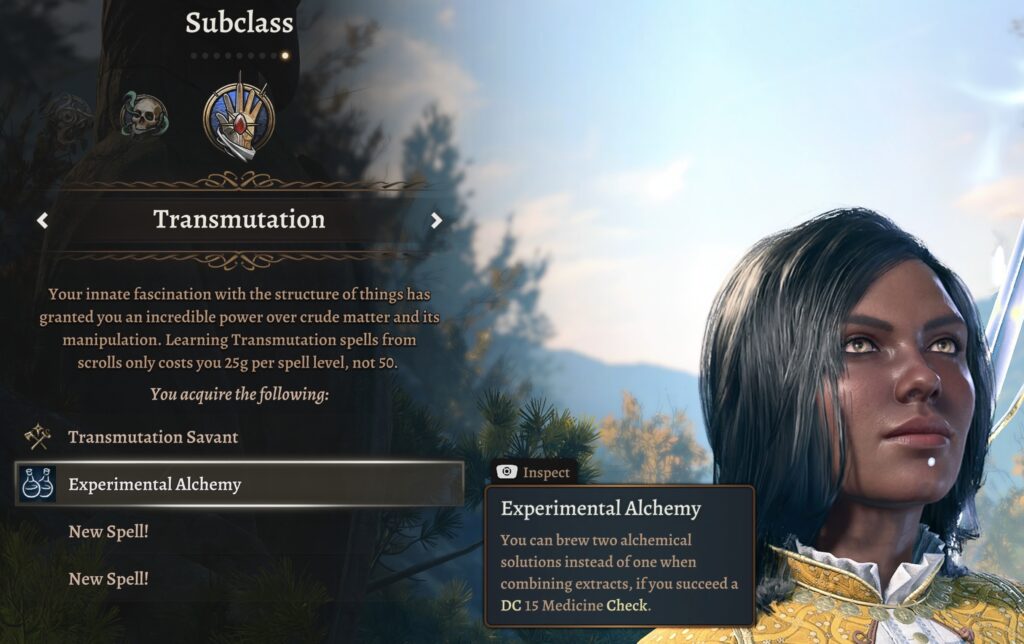
We’ve come to the connection to my dice-checks article: Eglantine wants to maximize the chances that she’ll pass that check for every Solution she makes.
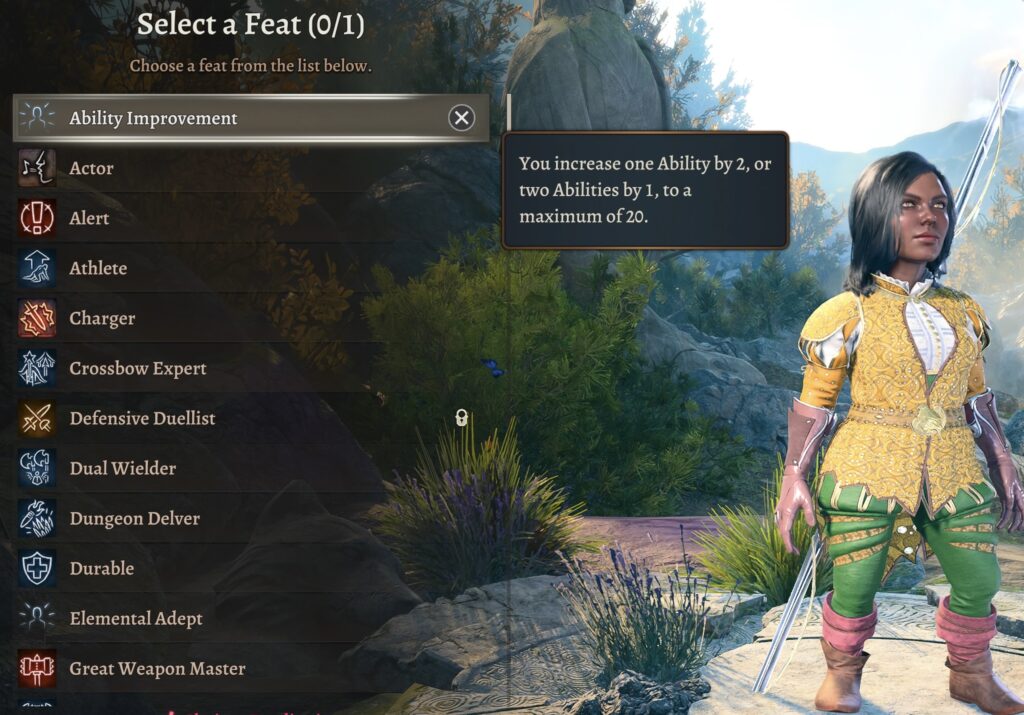
The process begins with the creation of the character:
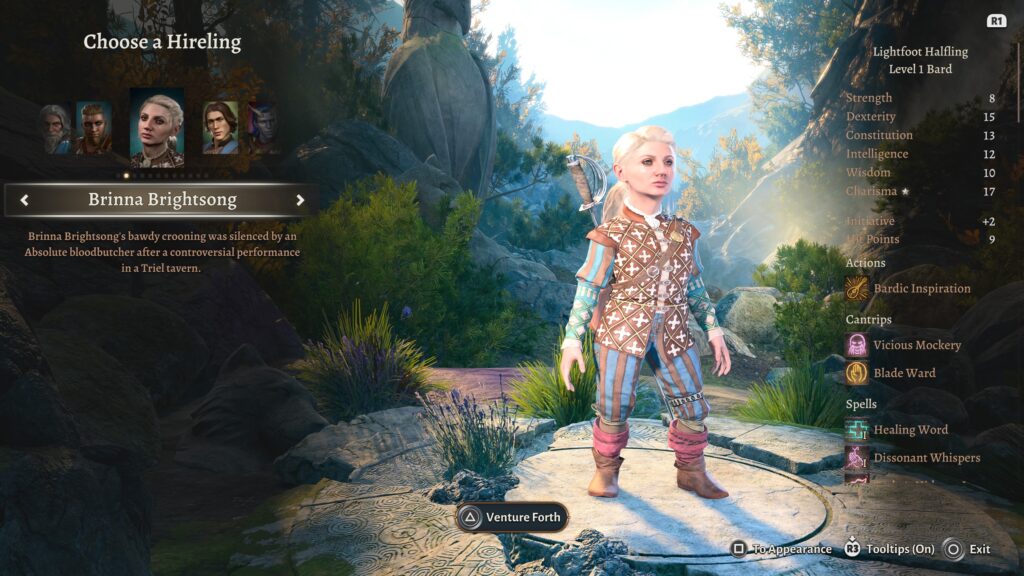
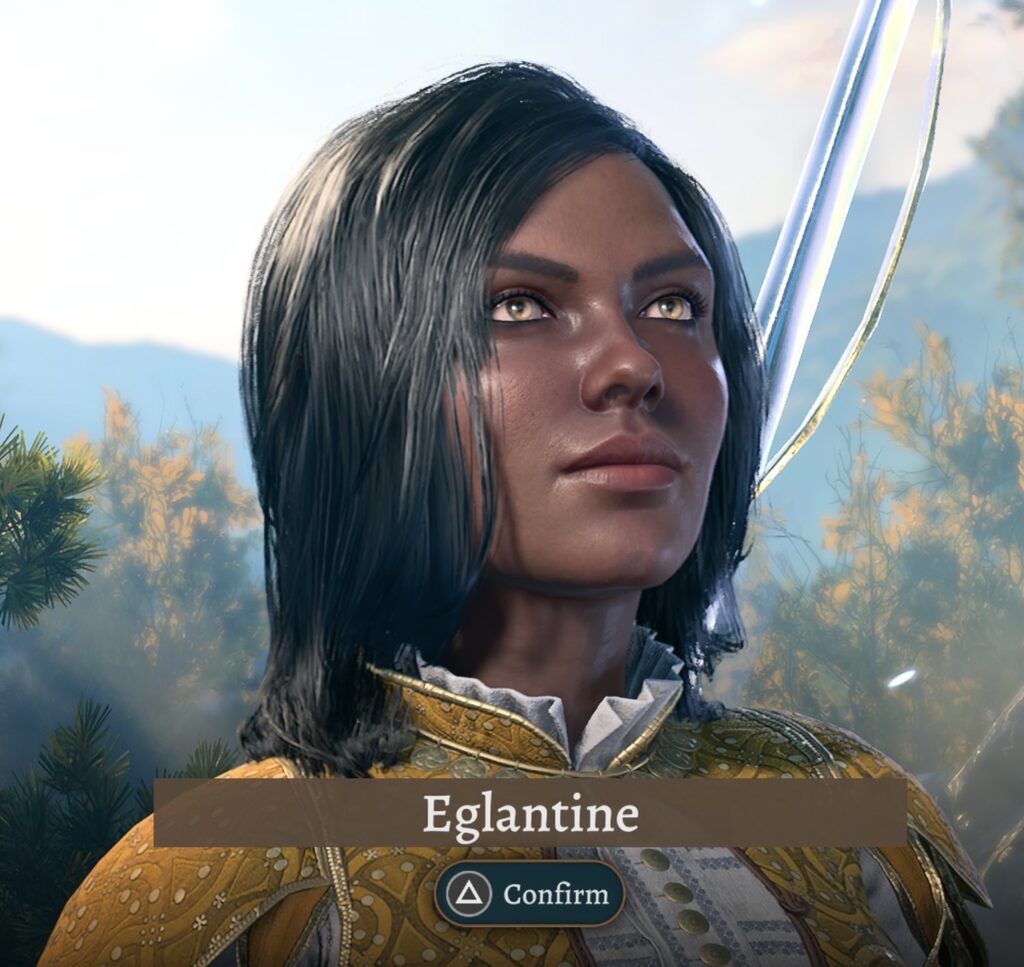
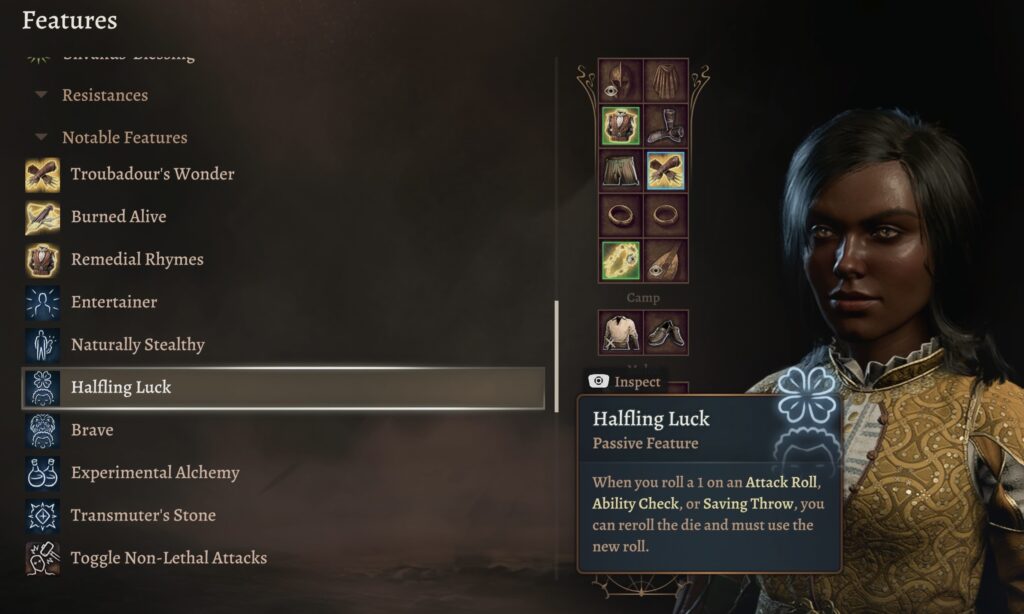
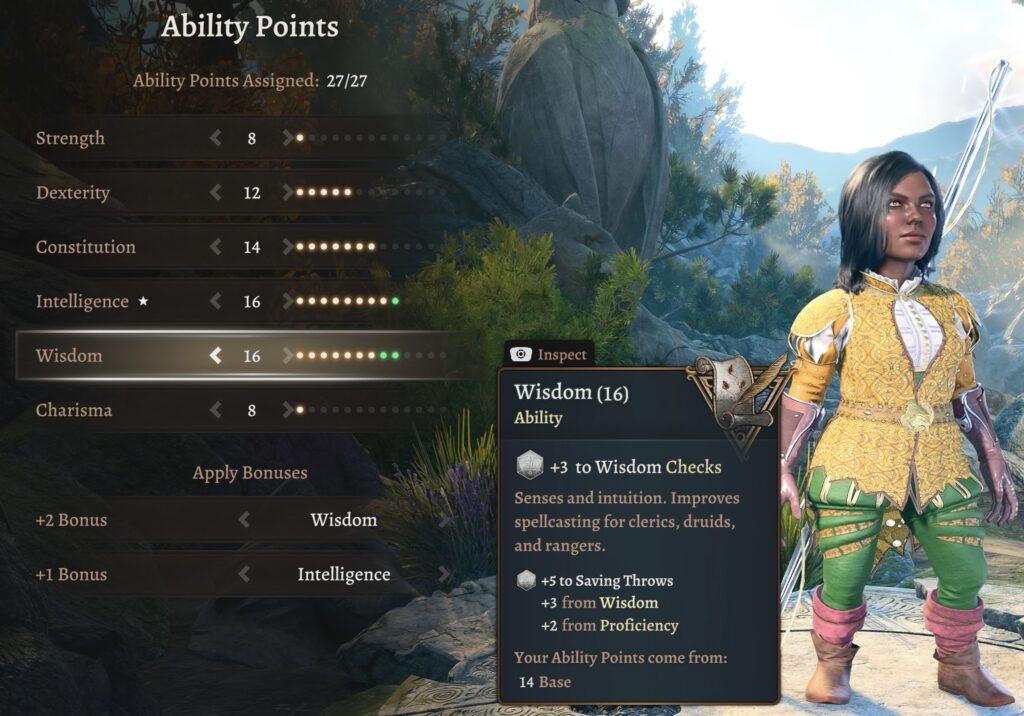
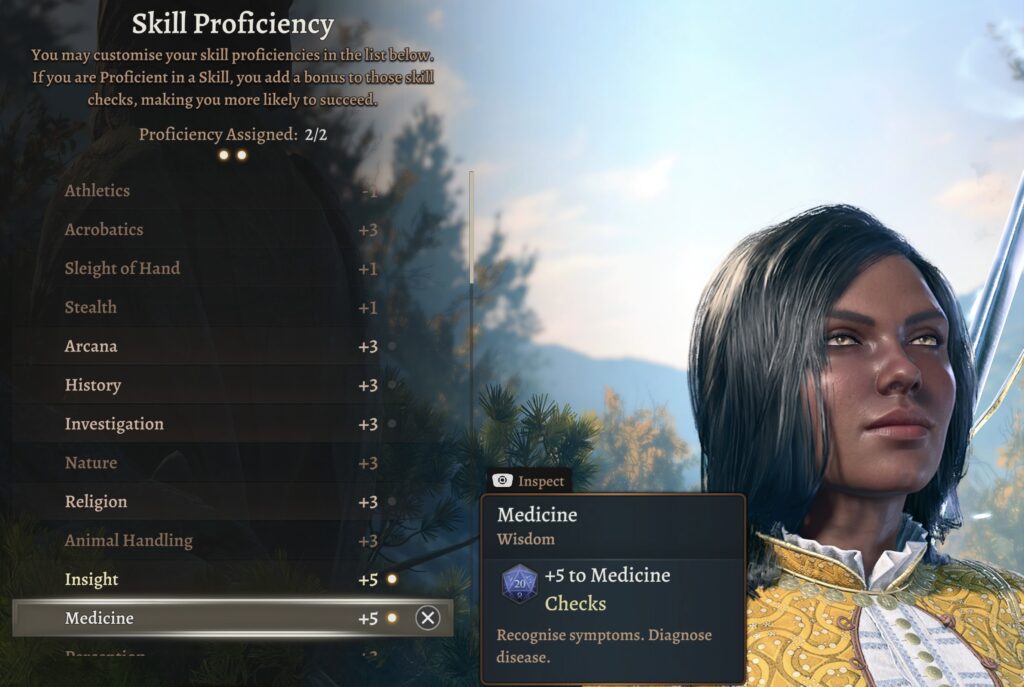
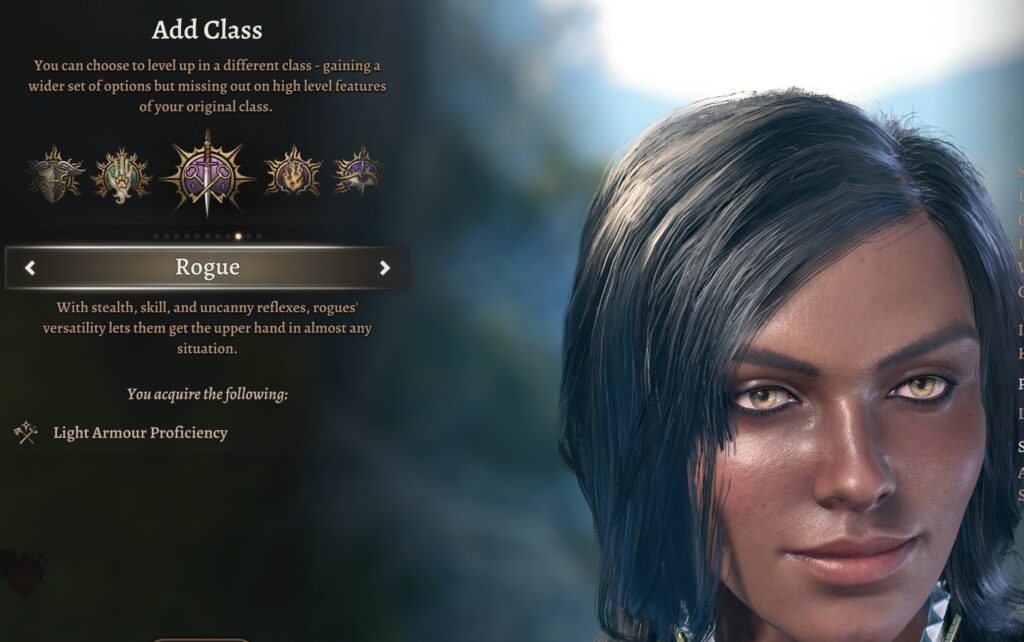
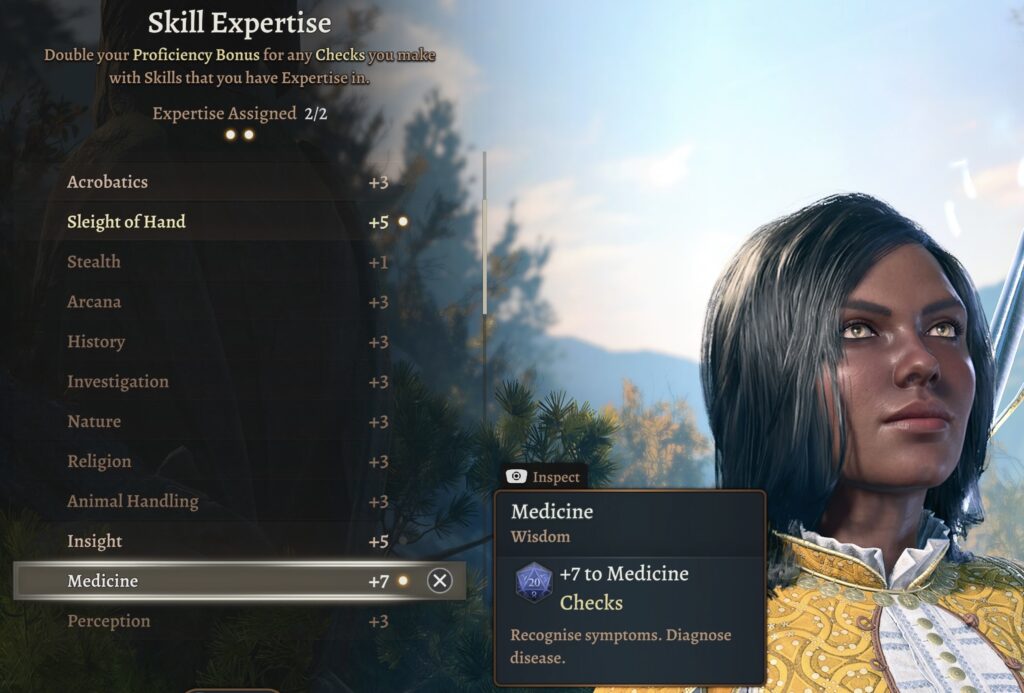
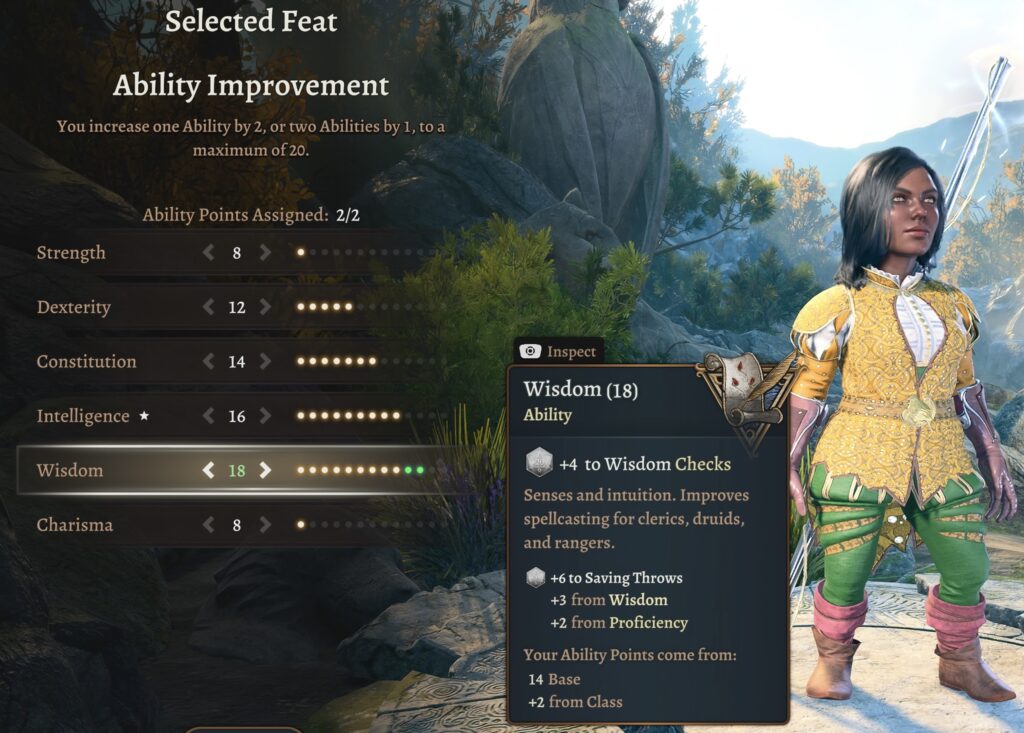
As I’m writing this, Eglantine is character level 7: a level 6 Transmutation Wizard and level 1 Rogue. This gives her +10 to her Medicine skill checks:
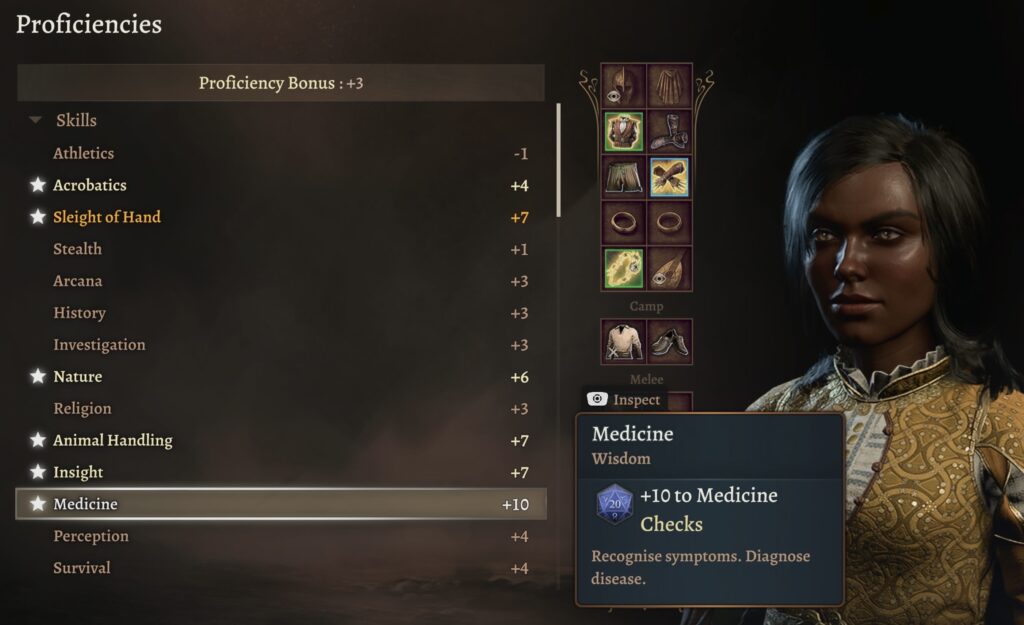
Let’s understand where that “+10” comes from, especially in context of my dice-checks article:
- +4 comes from her Wisdom of 18.
- +3 is the Proficiency bonus at character level 7, and she has Medicine Proficiency.
- +3 comes from Expertise in Medicine, which adds the Proficiency Bonus again.
If that were the whole story, what does my spreadsheet say the chances are of succeeding at that DC 15 Medicine Check?
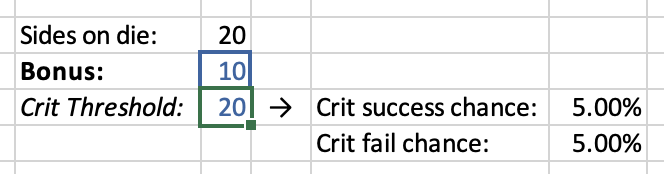

Right now Eglantine has an 80% chance of success. It’s actually a bit more than that, since my spreadsheet does not include Halfling Luck.
That’s pretty good, but it’s not good enough for Eglantine. She’s a perfectionist, if nothing else.
Getting help
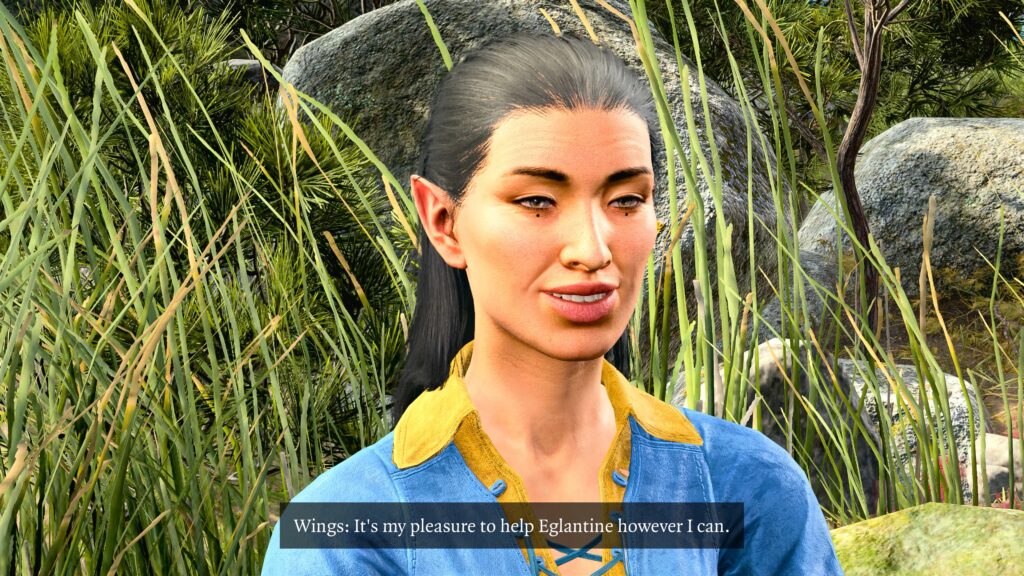
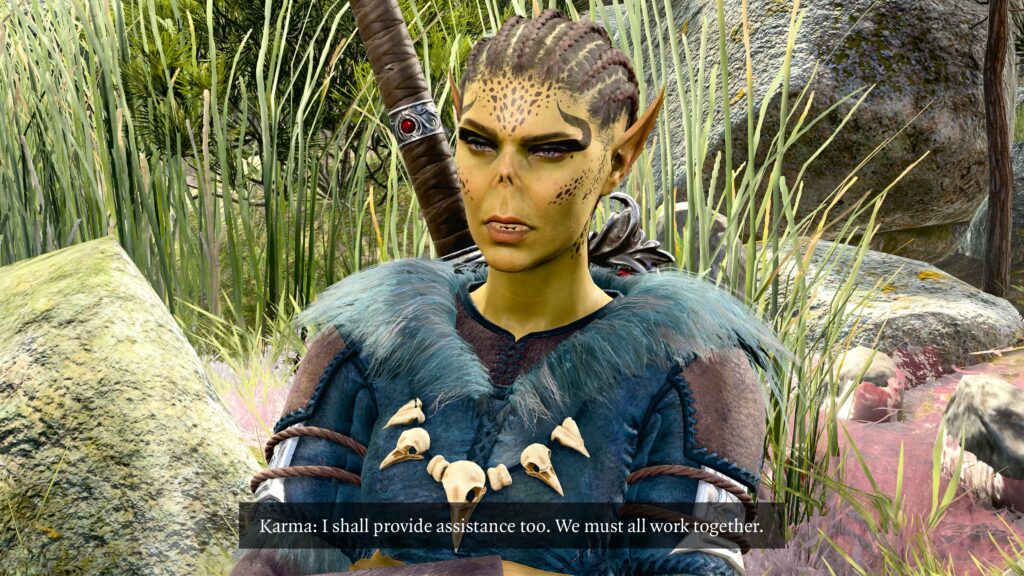
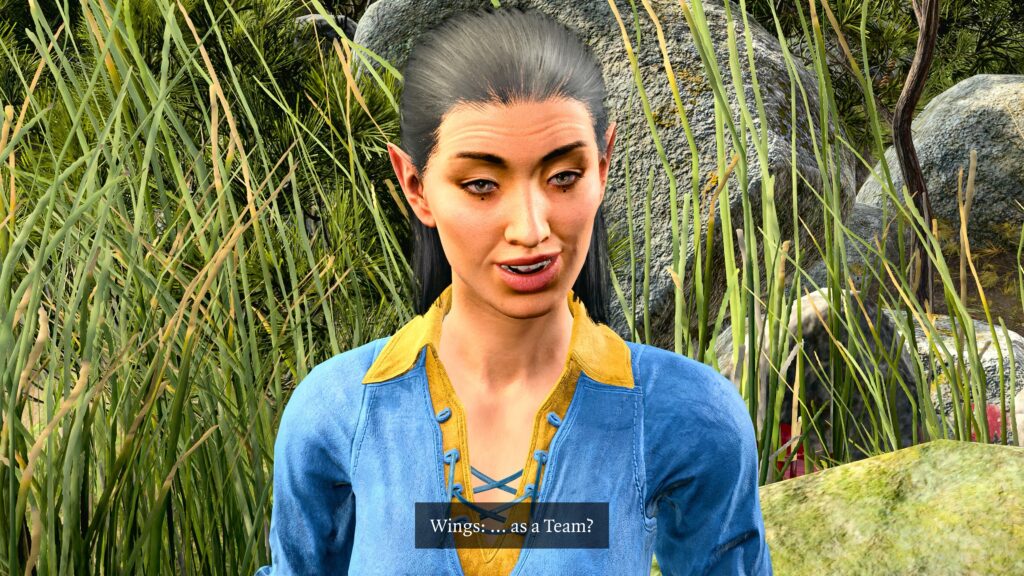
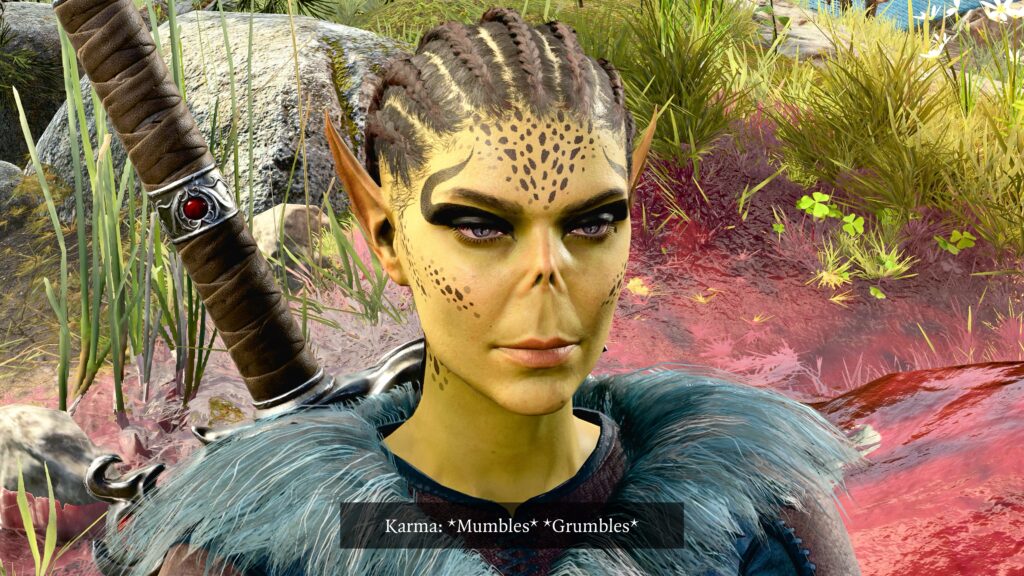
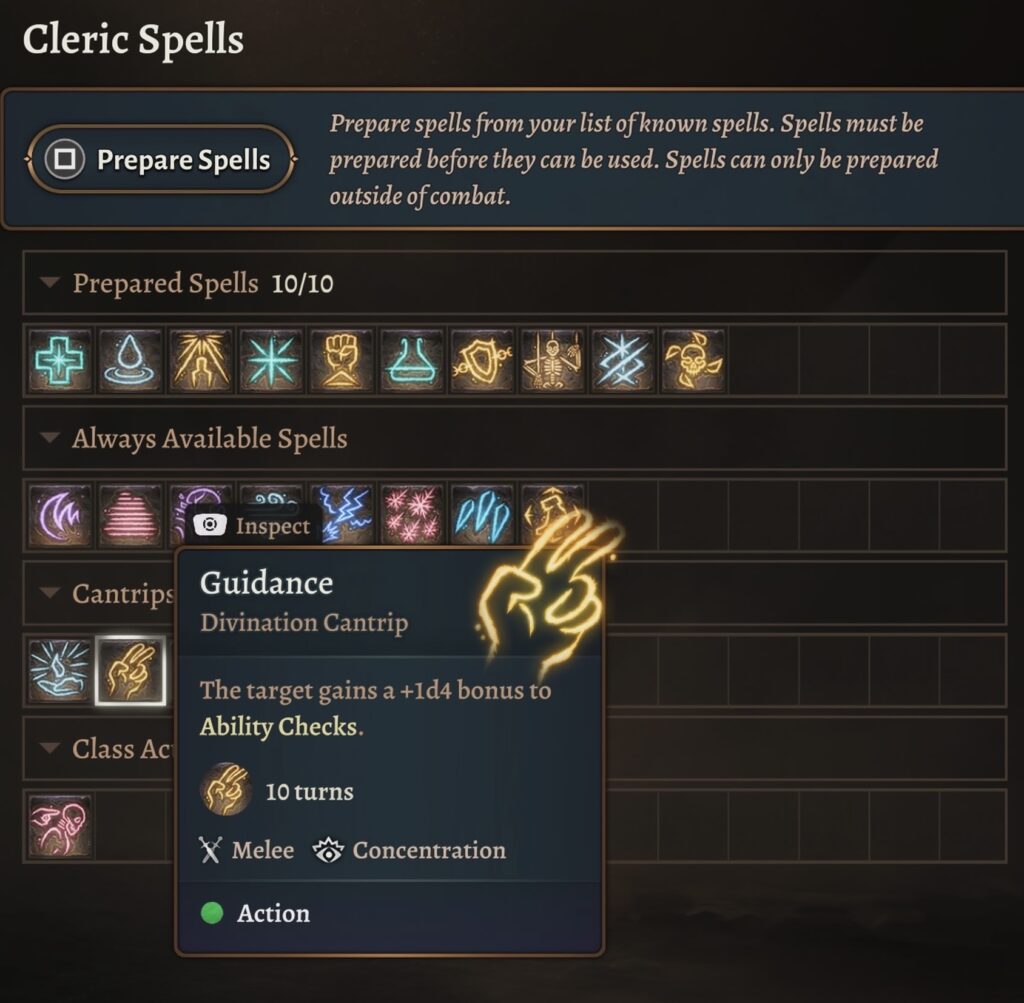
Karma and Wings are both Clerics. They can cast spells that can improve success at Ability checks:
- Guidance:
-
Enhance Ability. When cast to give Advantage to Wisdom checks, the effect is called Owl’s Wisdom.
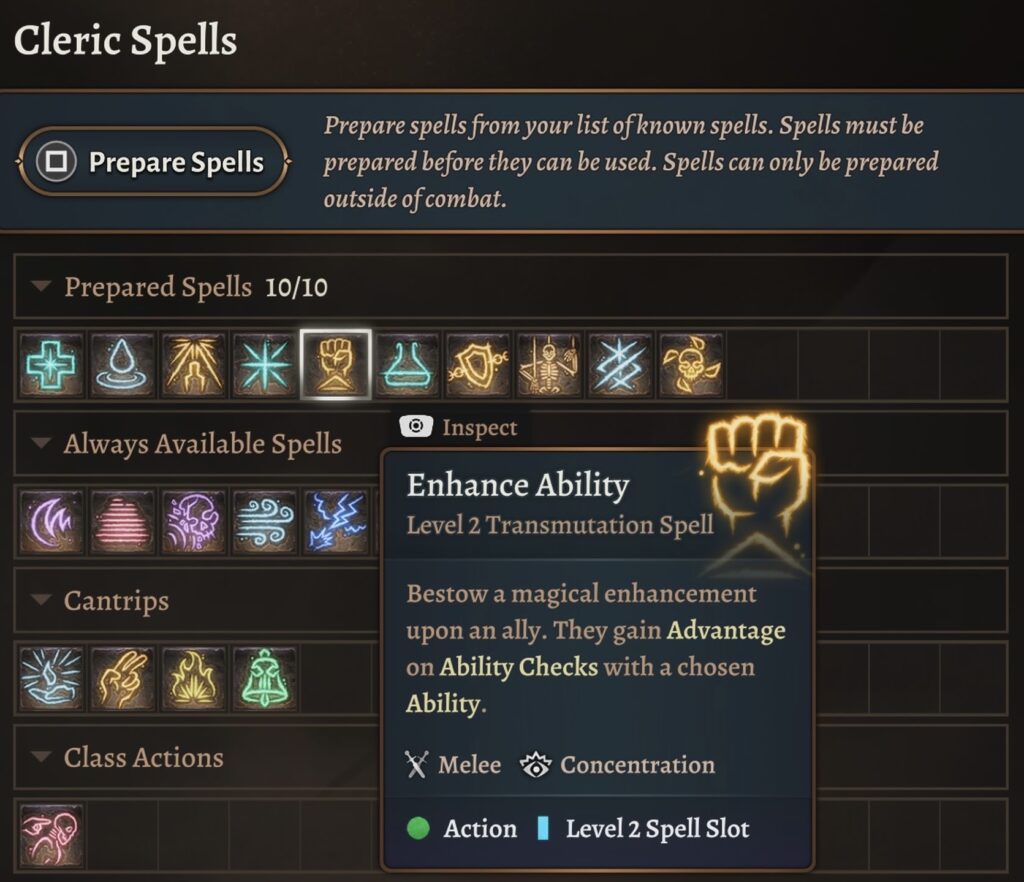
For the duration of these effects, Eglantine has Advantage on her Medicine Skill Checks, and adds a +1D4 bonus.
While my spreadsheet has a separate column for dice checks with Advantage, it can’t take a random Bonus into account. Let’s look at a minimum +1 additional bonus:
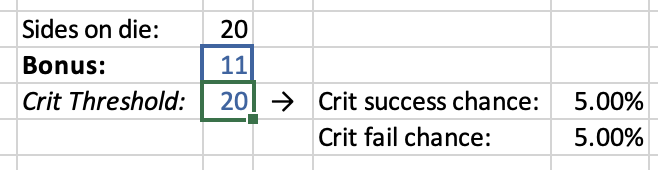

That’s at least a 98% chance success.
Eglantine is not yet done. When she reaches character level 9, she’ll be a level 8 Wizard and get a second Feat, which will be another +2 WIS. Her Proficiency Bonus will be +4. The resulting Medicine skill will be +13. Her chance of succeeding her Medicine skill be close to 100%. (With Halfling Luck, there’ll be only a 1/160000 chance of failure.)
She’ll still have three more character levels beyond that, and perhaps one more Feat to go. She hasn’t decided what to do with those extra abilities yet.
Transmutation Wizards in general
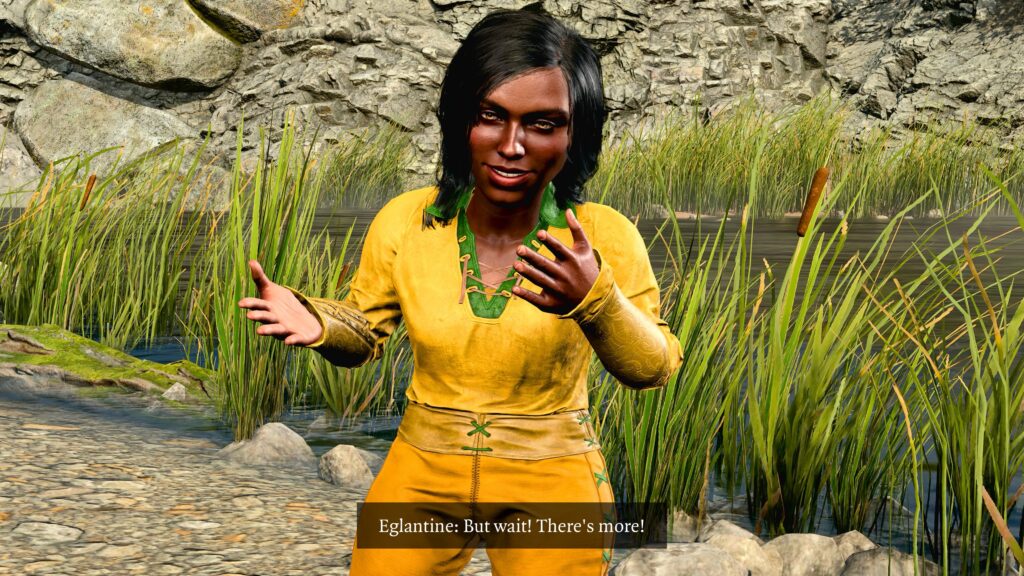
As a hireling, Eglantine has other bonuses she can offer Druid Angela other than Alchemy.
-
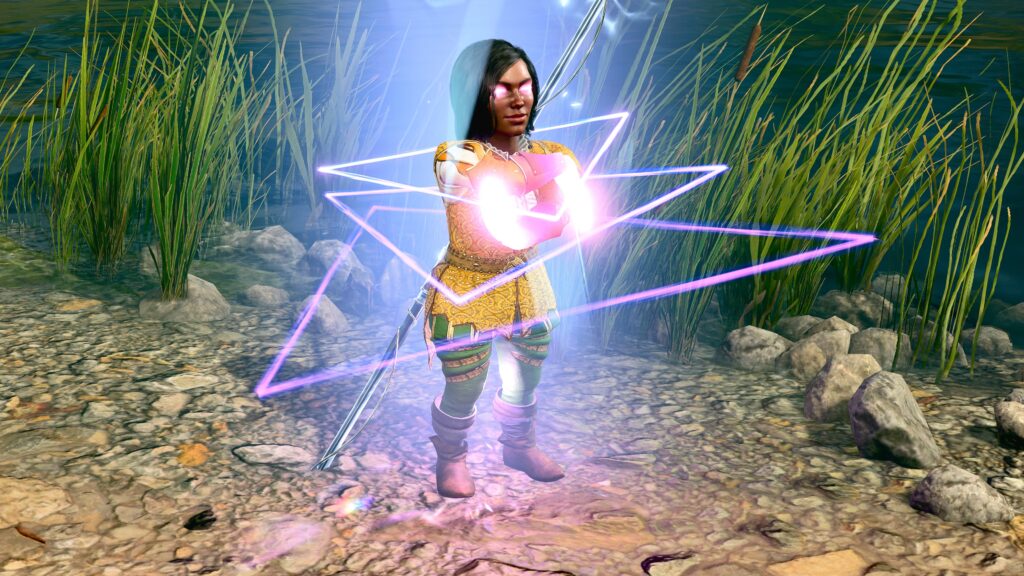
She can cast Mage Armor on creatures that don’t wear a armor (given that Clothing is considered “unarmored” in BG3). At level 7, Druid Angela is wearing Adamantine Scale Mail and can’t benefit from this spell. But many of her minions, such as Skeletons and Zombies, can have this cast on them.
-
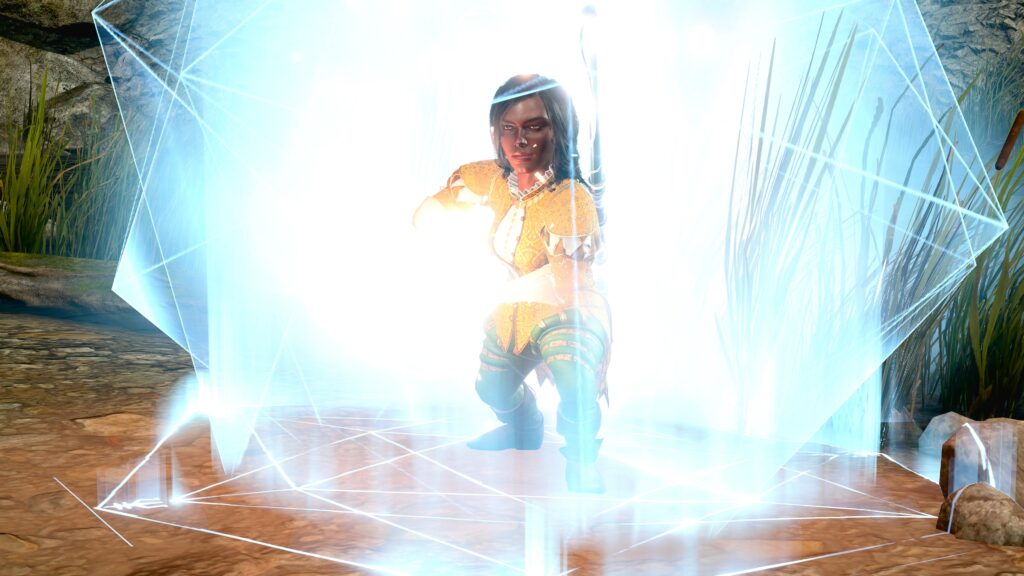
She can cast Protection from Evil and Good. As long as she Concentrates on the spell, Druid Angela is protected against Aberrations, Celestials, Elementals, Fey, Fiends, and Undead. Those comprise the majority of magical creatures in BG3.
-
At level 6 in Transmutation Wizard, Eglantine gained the ability to create a Transmuter’s Stone. This provides a chosen benefit for whatever character carries it. Druid Angela found the Constitution Stone to be the most useful, though there will be times that the Speed Stone will be handy.
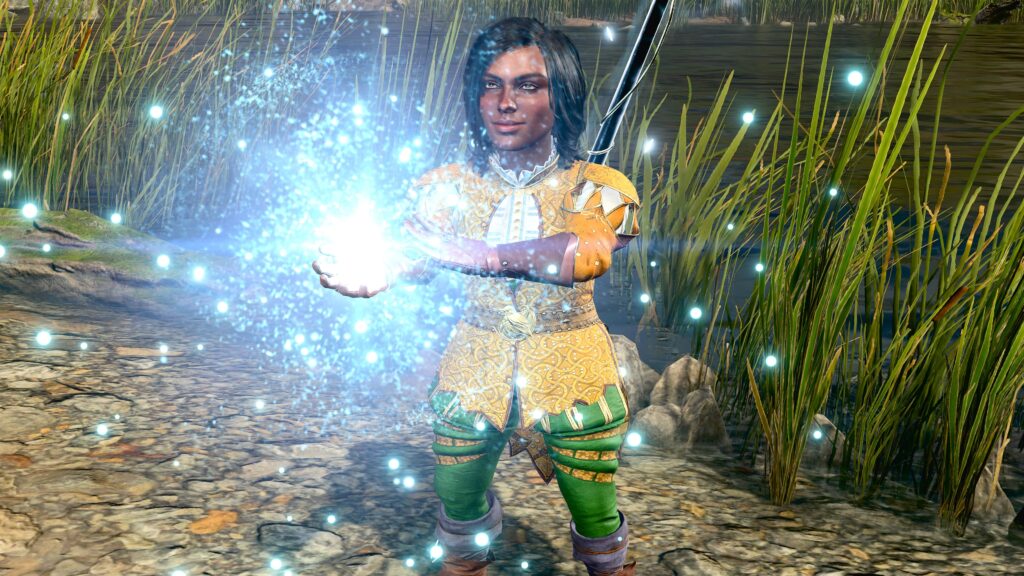
However…
The last two spells on that list only work while Eglantine is a member of the party. For a “solo” Druid Angela run, this is not a problem; Wings, Karma, and Eglantine stay in the camp while Druid Angela and the minions face the dangers.
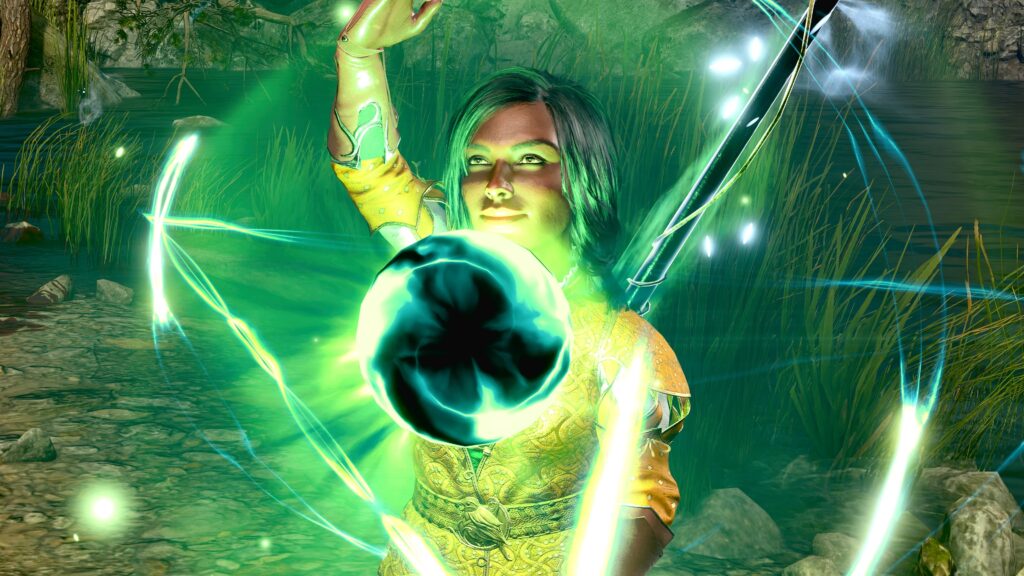
For a normal four-character party, a “stay in the camp” hireling could not Concentrate on any spells. Any character loses Concentration when they’re dismissed from the active party.
Would a Transmutation Wizard be valuable as a regular party member?
Well, they could cast spells just like any other Wizard could. But there are far more powerful combat Wizard subclasses in the game, such as Evocation and Abjuration. Putting a Transmutation Wizard on the battlefield merely diminishes the party’s combat readiness (though not as much as a “solo” run, of course).
The only adventure-relevant ability that Transmutation Wizards have is Shapechanger, which is available at Transmutation Wizard Level 10. This transforms the Wizard into a Blue Jay for 5 rounds. Druids already have a more powerful version of this ability. The only improvement is that Transmutation Wizards can cast this any number of times per day, while Druids are limited.
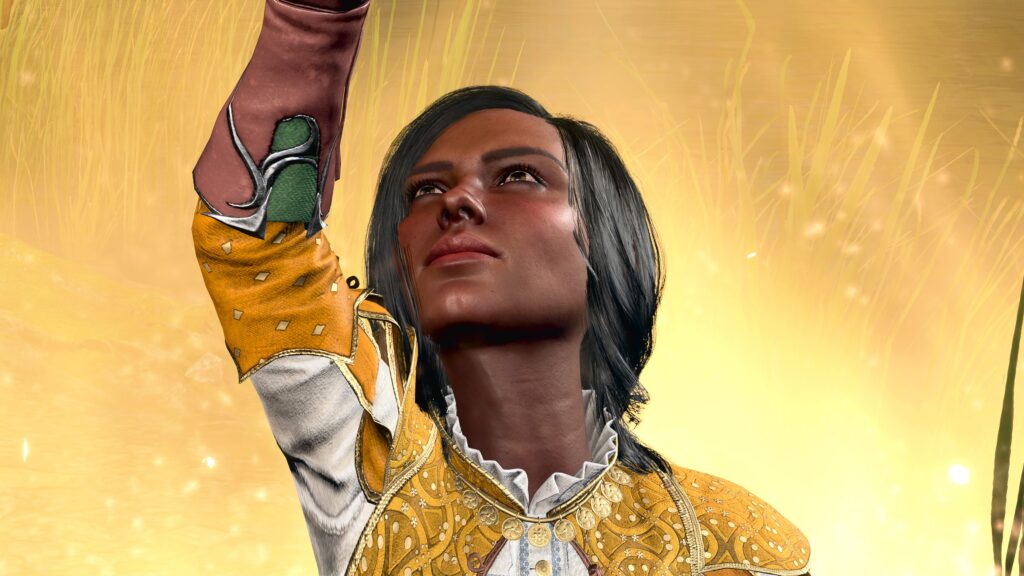
Given that I know little of the history of the development of the D&D rules, the Transmutation subclass “feels” to me like a class introduced into D&D to give some concrete rules for Alchemist shopkeepers in the game, and implemented in BG3 because it was easy to code.
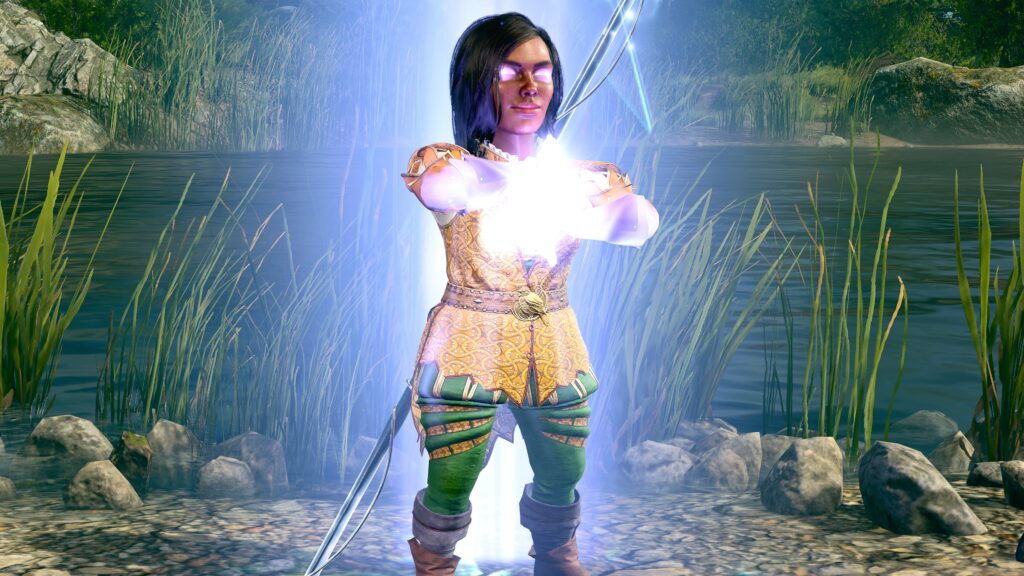
Eglantine is of great benefit as a hireling in a “solo” run. But she wouldn’t be very effective in the field.
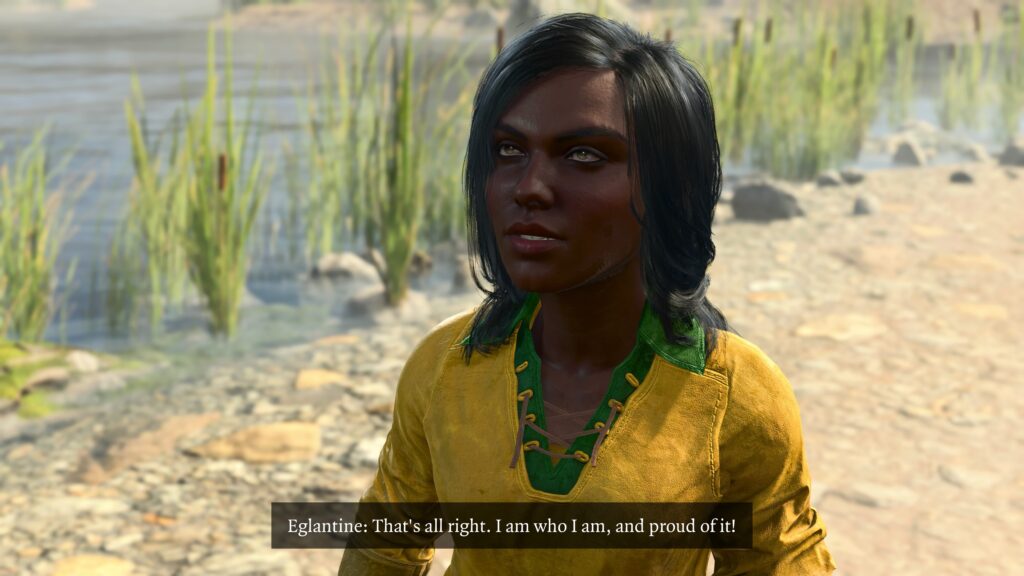
Easing into the fanfic
I’ll go over this in more detail in subsequent blog posts. Since I said earlier that I’d clarify the multiple playthroughs:
-
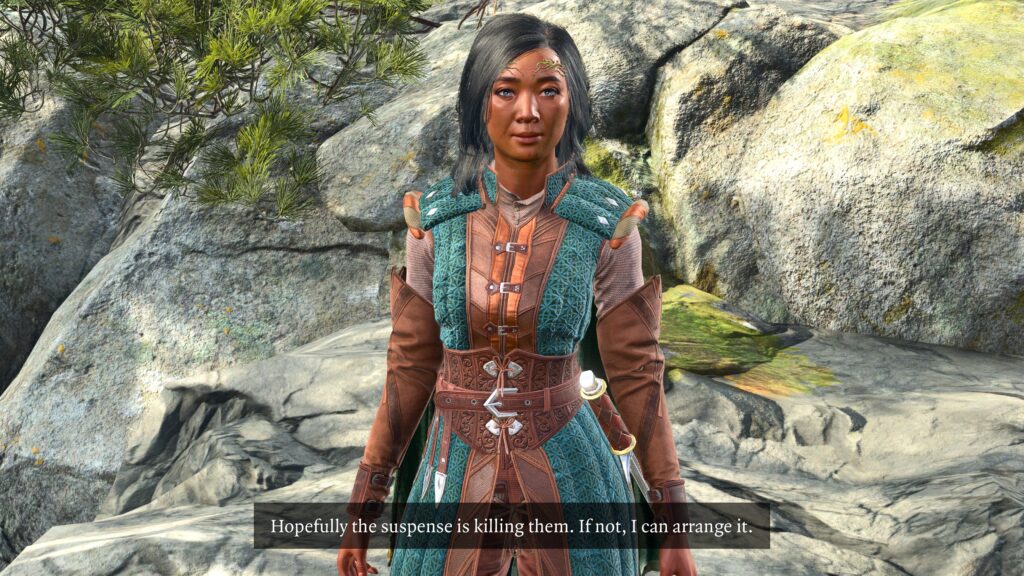
I’ve dropped enough hints that my playthrough 15 is a full-fledged Dark Urge run.
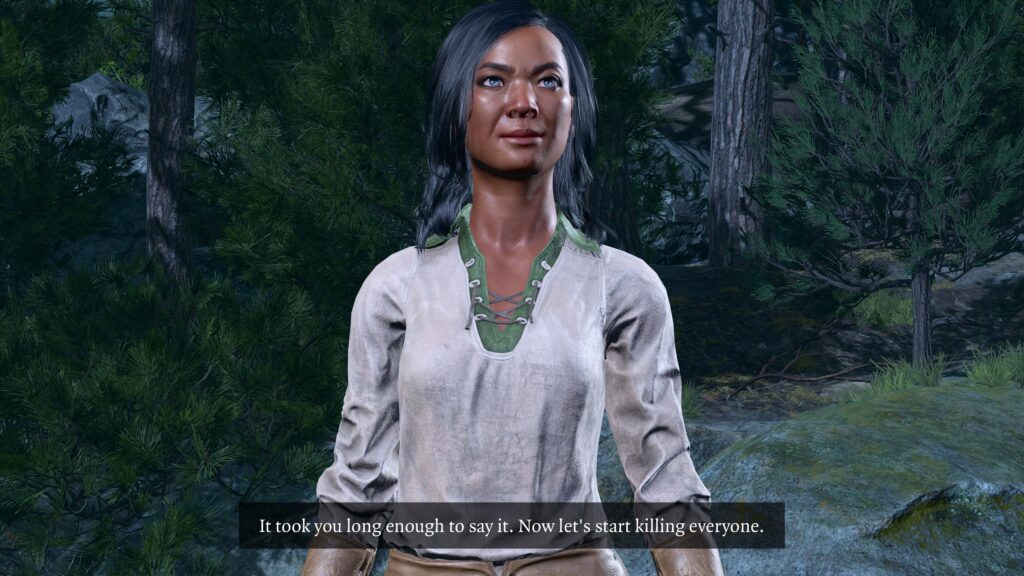
No, that’s not Druid Angela. I’ll get into the details some other time.
-
Playthrough 16 is, to be formal, playthrough 1/16. It’s a joint playthrough with Actual Sabrina as the host.
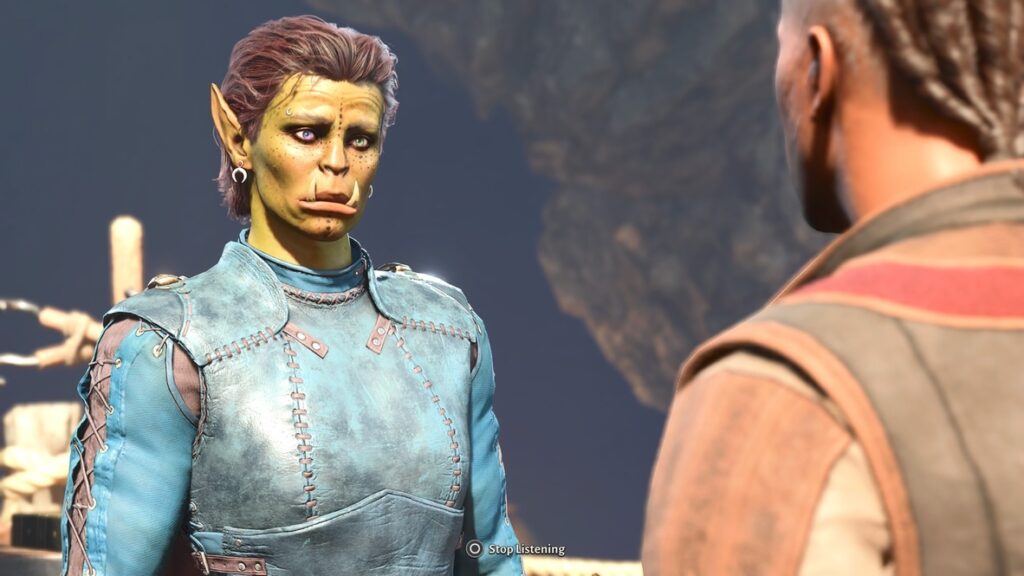
This is Scylla, Actual Sabrina’s character, talking to Wyll. Playthrough 1/16 is progressing slowly, since Actual Sabrina doesn’t have the dedicated time to play video games that Real Angela and I have. I’ll have a write-up when it’s done, but it will probably take months.
-
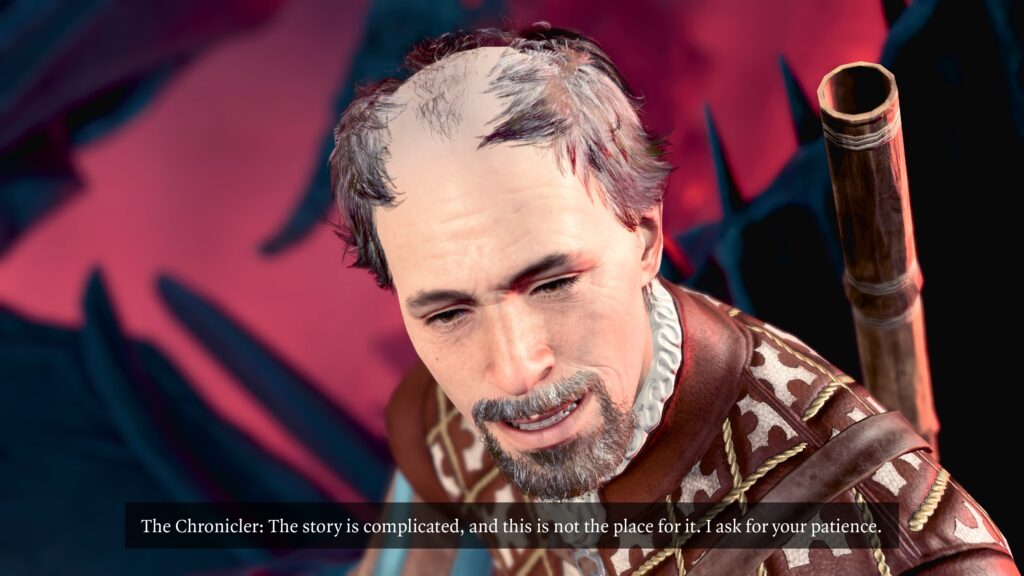
Playthrough 17 is a “photography support” run for my eventual write-up of playthrough 15.
-
As I was writing the dice check article, I realized I needed some additional character-creation screenshots. So I created a new game to use Druid Angela to illustrate some concepts.
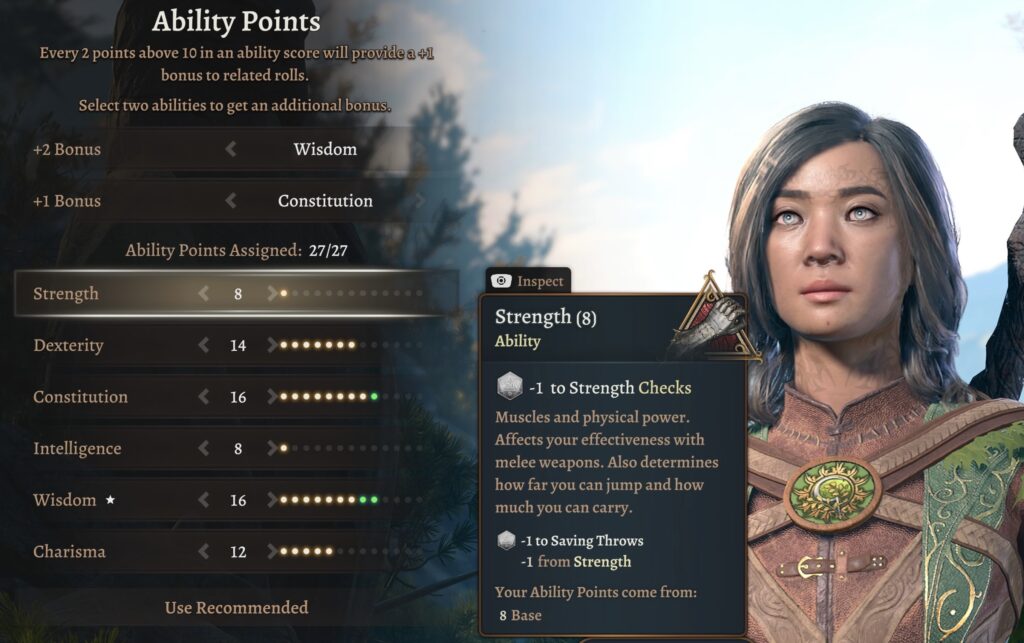
I took the pictures. That left her at the beginning of the game’s tutorial. I’ve been thinking about a solo Druid Angela run, just to see if I could do it. So I went through the tutorial, setting any Origin characters aside. I wanted to see if it were even possible.
Druid Angela got through the tutorial on her own. Then there she was, with an adventure before her.
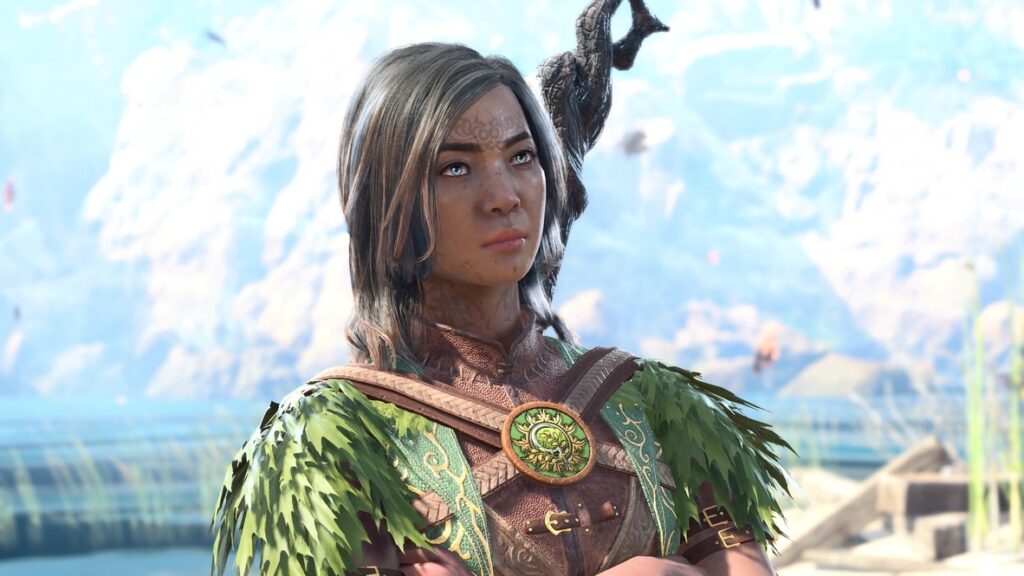
One thing led to another. And I wanted to test out Eglantine for this article. Speculation turned into reality.
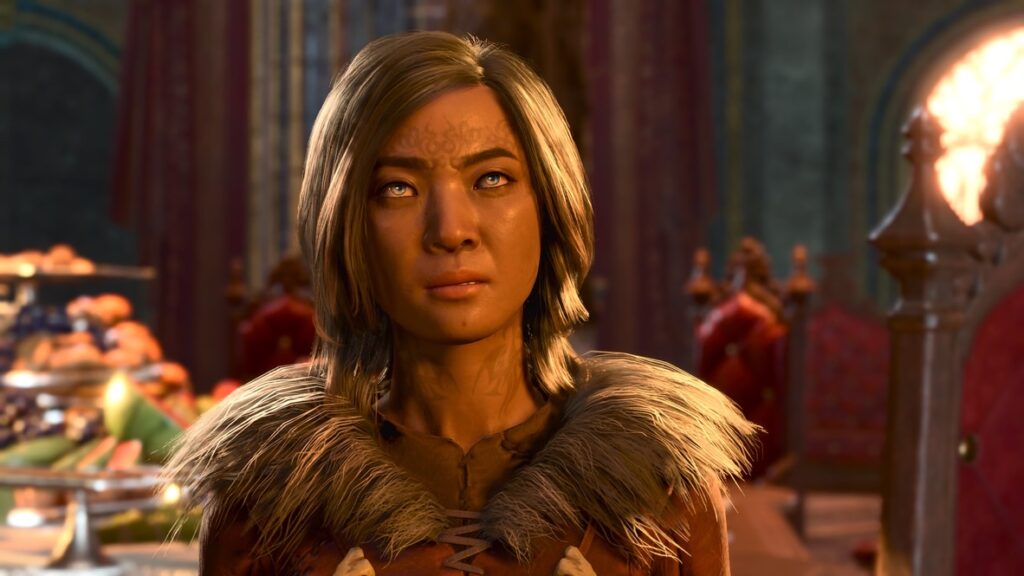
Playthrough 18 is therefore my “solo” Druid Angela run. I’ll explain why I put quotation marks around “solo” when I finally write up that playthrough.
When will that be? I don’t know. So many playthroughs… so many plans… and so many photos…
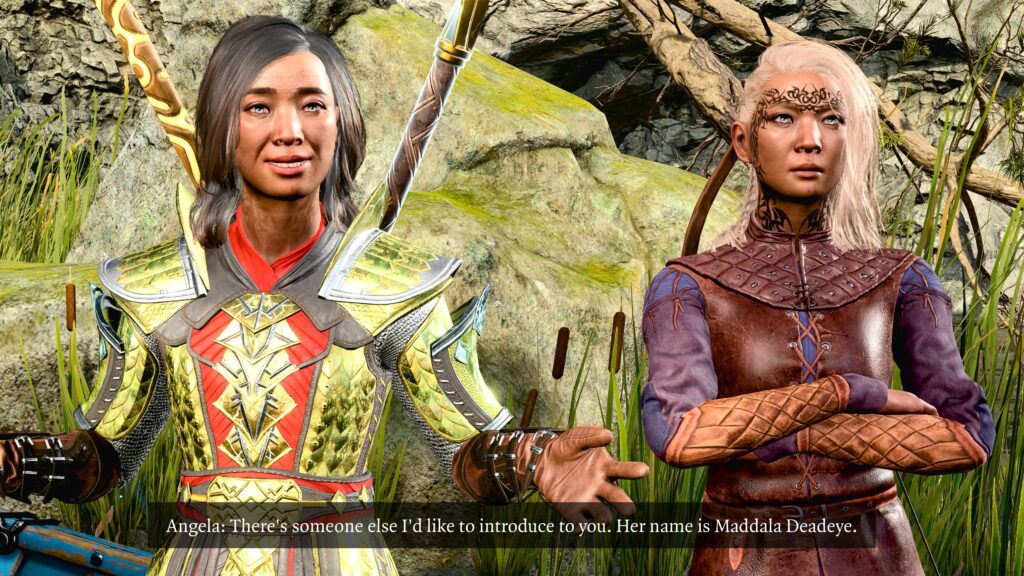
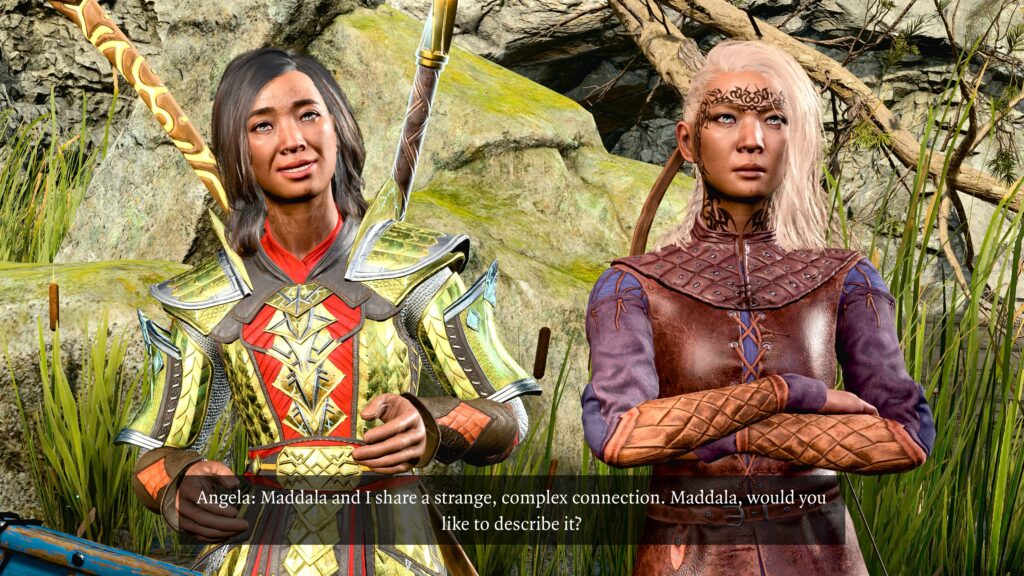
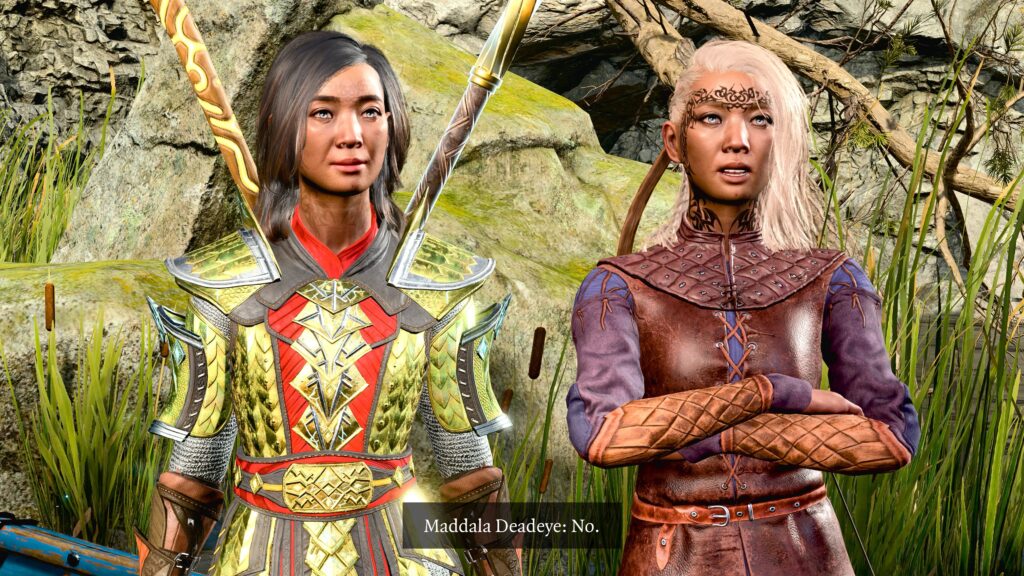
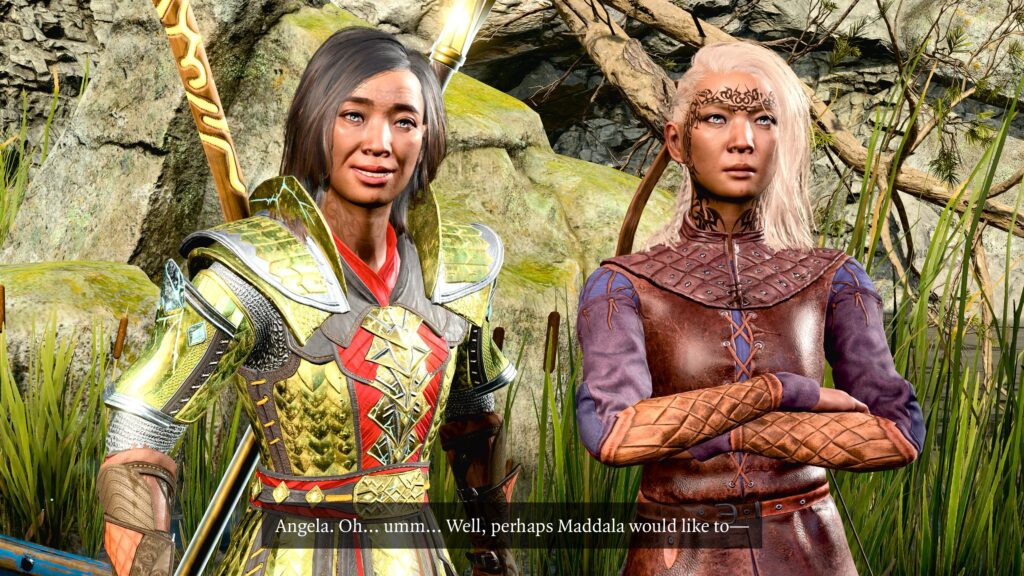
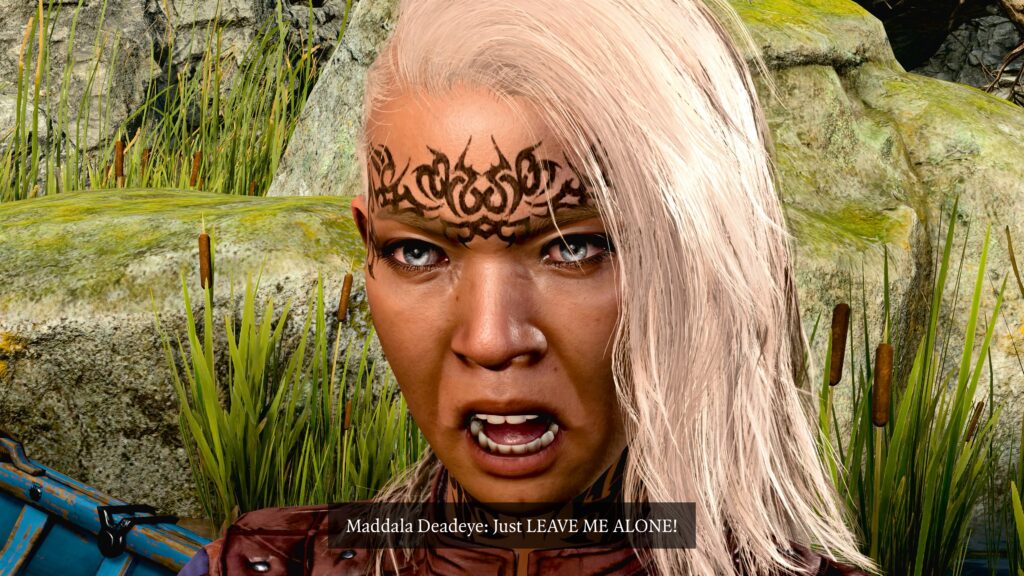
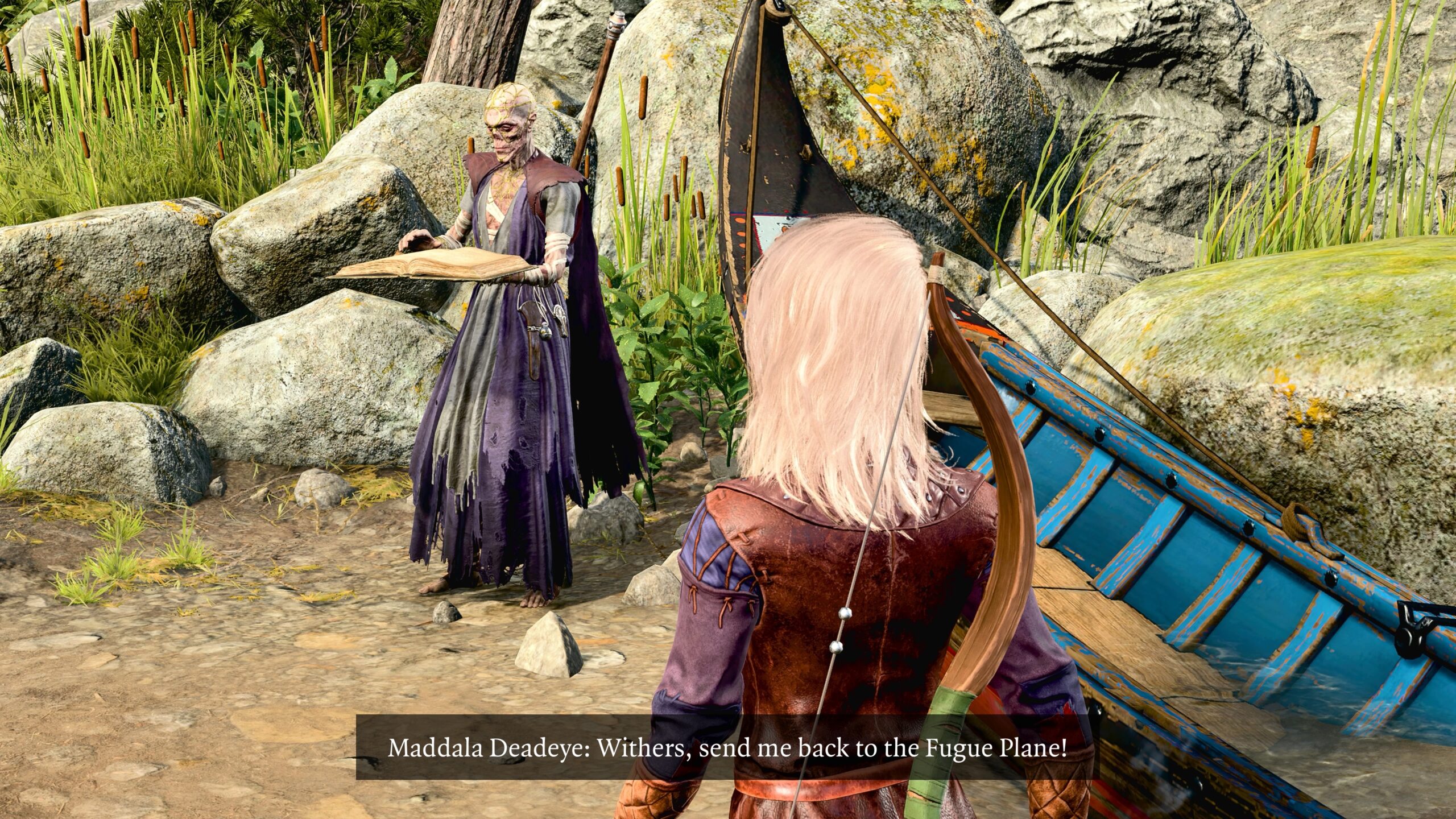
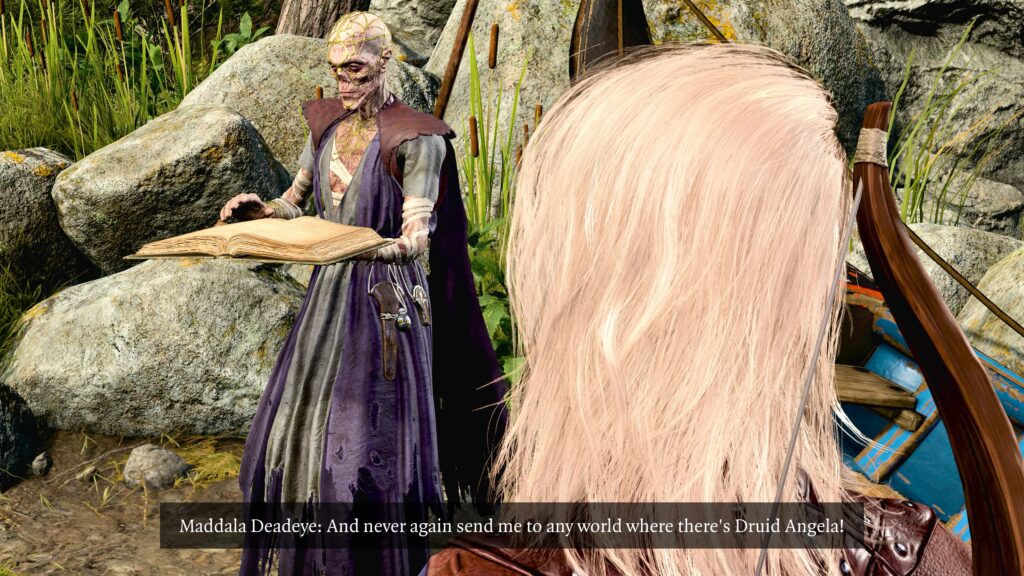
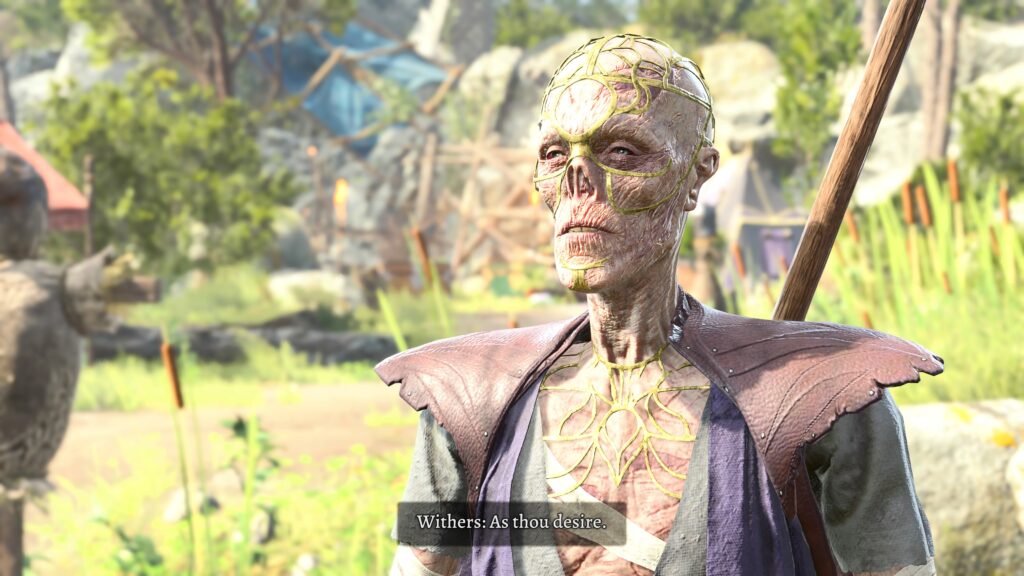
Another introduction



Pingback: BG3 – Playthroughs and fanfic – The Argothald Journal
Pingback: BG3 – Virtual Photography – 1 of 4 – The Argothald Journal
Pingback: BG3 – Virtual Photography – 2 of 4 – The Argothald Journal
Pingback: BG3 – Virtual Photography – 4 of 4 – The Argothald Journal
Pingback: Real Angela’s playthrough 7 – Druid Honeylocust – The Argothald Journal