Goals
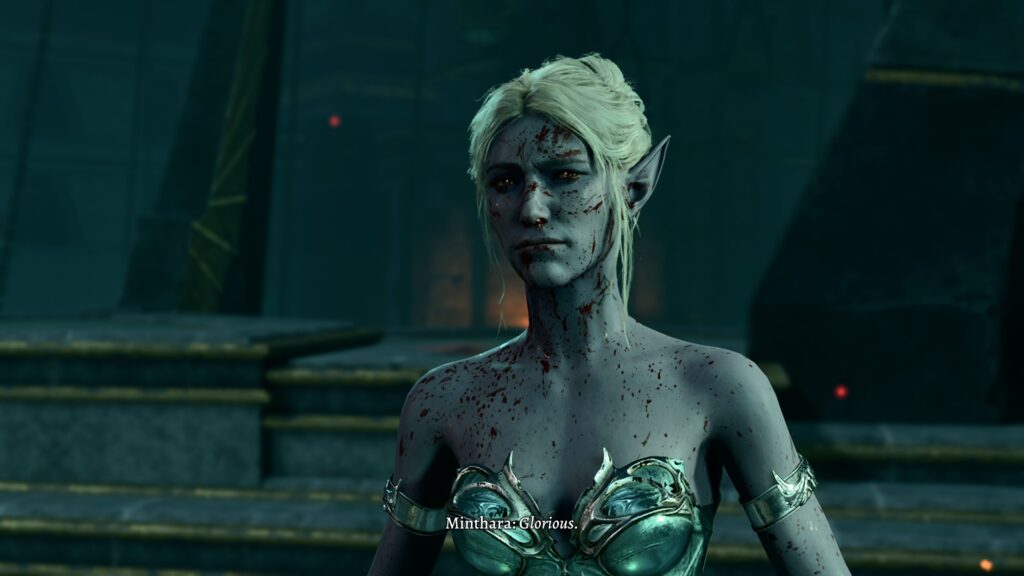
The main goal for playthrough 8 was to try a “solo” mode — sort of. I wanted to see if I could play most of the game with just one character. However, I still wanted to try out a romance I hadn’t done yet, and Minthara has been (im)patiently waiting her turn. She doesn’t show up as a possible love interest until the end of Act 2, so she’s a good choice for trying solo mode out for the first half of the game. Since I wanted to have it be me and her against the world (very apt for Minthara), I guess I should revise it to “duo” mode.
I was also curious how the story would progress without the companion characters. For instance, Lae’zel is the one that keeps pushing the team to go to the githyanki creche in Act 1, and the reason that you are able to get in the door without a fight. What would happen when you don’t have Lae’zel?
That gave this playthrough a new vibe for me. Every possible companion character that I came across, I either ignored completely or actively chased them away.
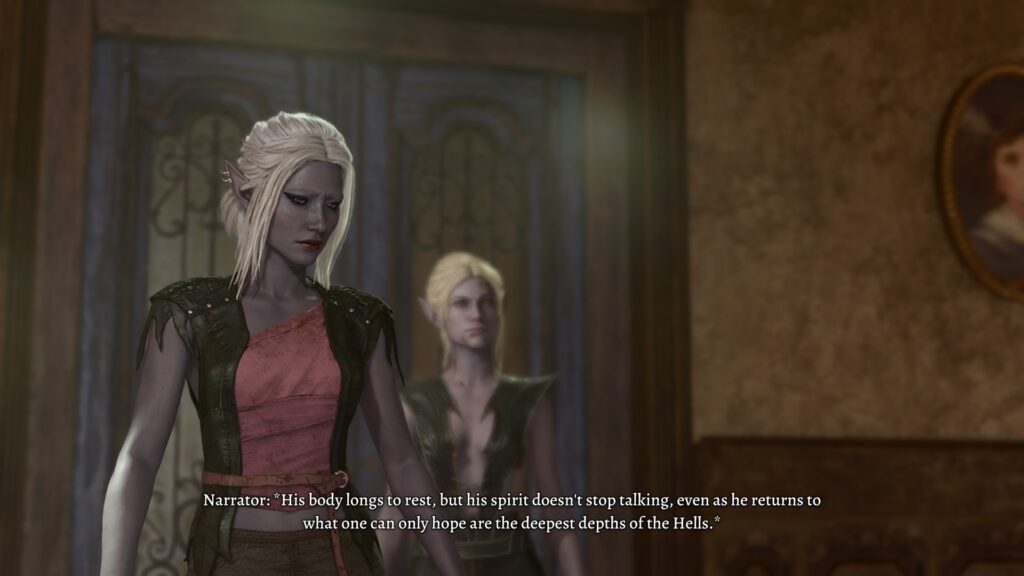
Some of these were easy – I just avoided certain areas where I knew I would come across the companions (specifically Wyll, Karlach, and Lae’zel). Some of them were not, which we’ll get into.
This also implied that I had to be more careful about picking and choosing my battles. Bill had warned me that I would have to ignore certain optional quests, but I didn’t want to, because I’m stubborn like that.
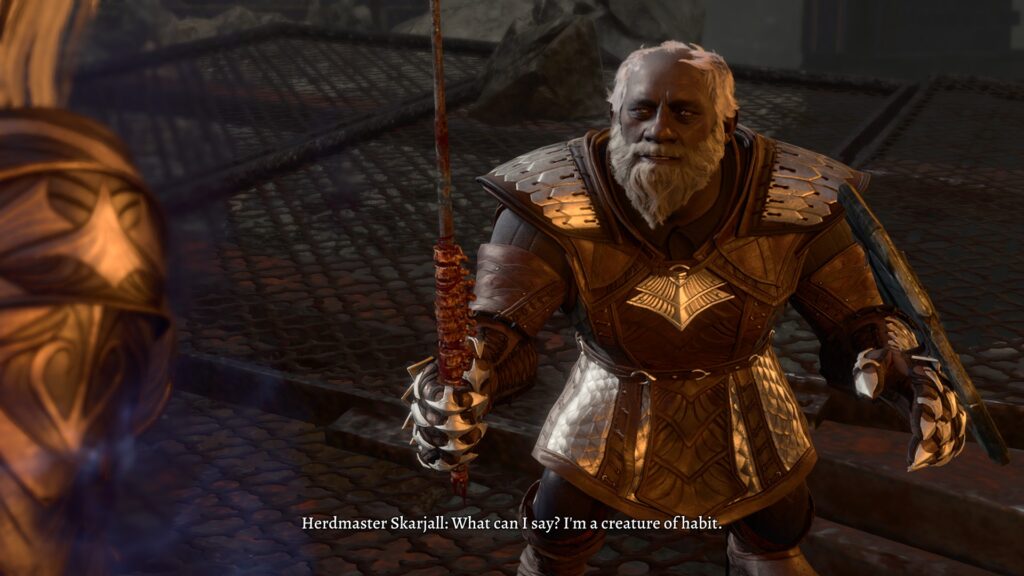
As it turns out, I didn’t really. It might be because I’ve been used to Tactician mode for several playthroughs now (including adding the mods to make it harder in playthrough 7) but I did every quest I wanted to, even if it wasn’t necessary. This may change when the inevitable Honor mode happens.
Character
Meet Nightshade.
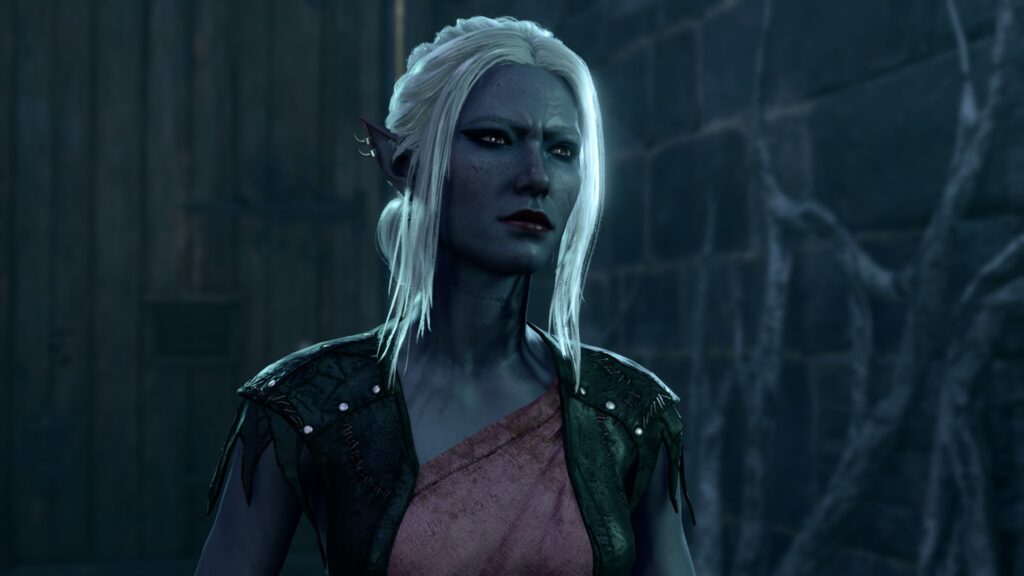
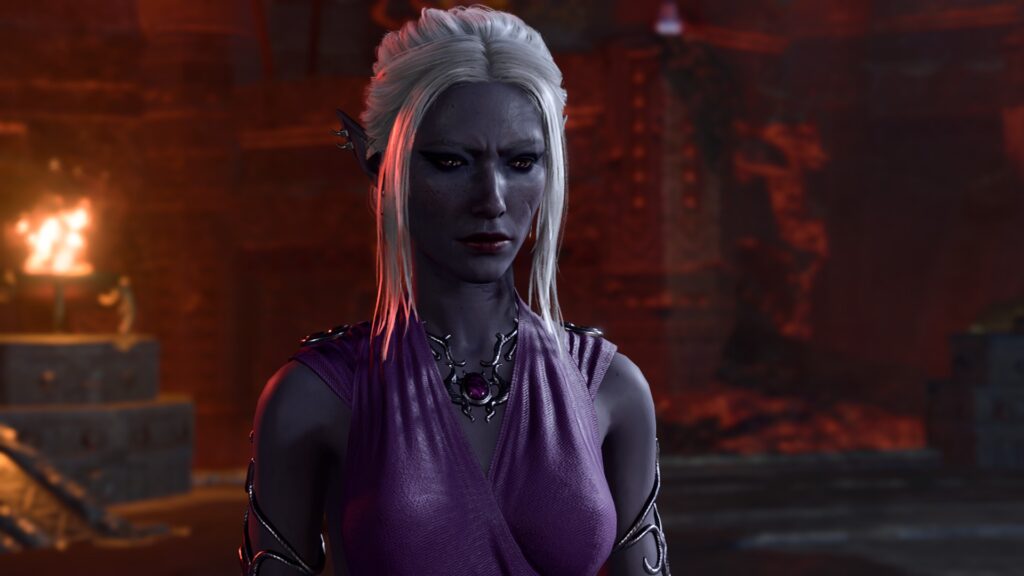
The name is a nod to the Underdark where the drow live, in addition to naming her after something poisonous because, well, I’m me. Also, the plan was to romance Minthara, who talks about poisoning all the time.
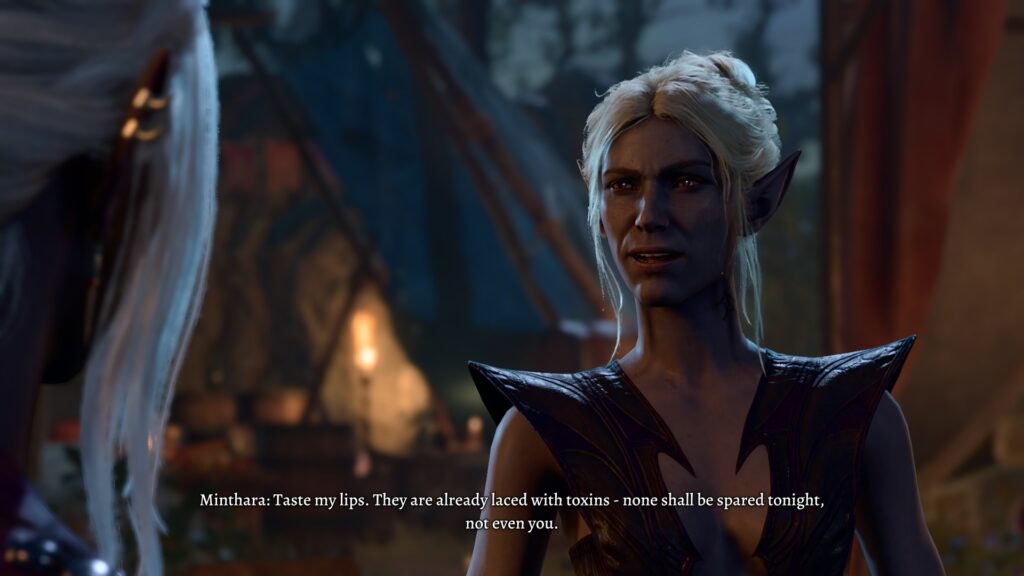
It made sense to me to make a character who was already used to this, and had probably also used poisonous lipstick and developed resistance to it.
Fun personal fact: when I was younger and still used lip gloss, my favorite was a tingling one named Venom. I’ve also grown poison gardens, and study it for fun. So this character was not a difficult jump for me.
We’ve come across drow before in the game, and they are typically either brutal or sexual, and oftentimes both. Minthara is a great example, for instance. She is a proud member of House Baenre, one of the most powerful houses of Menzoberranzan, the drow capital, and despite the game never bringing us there, she paints quite the picture.
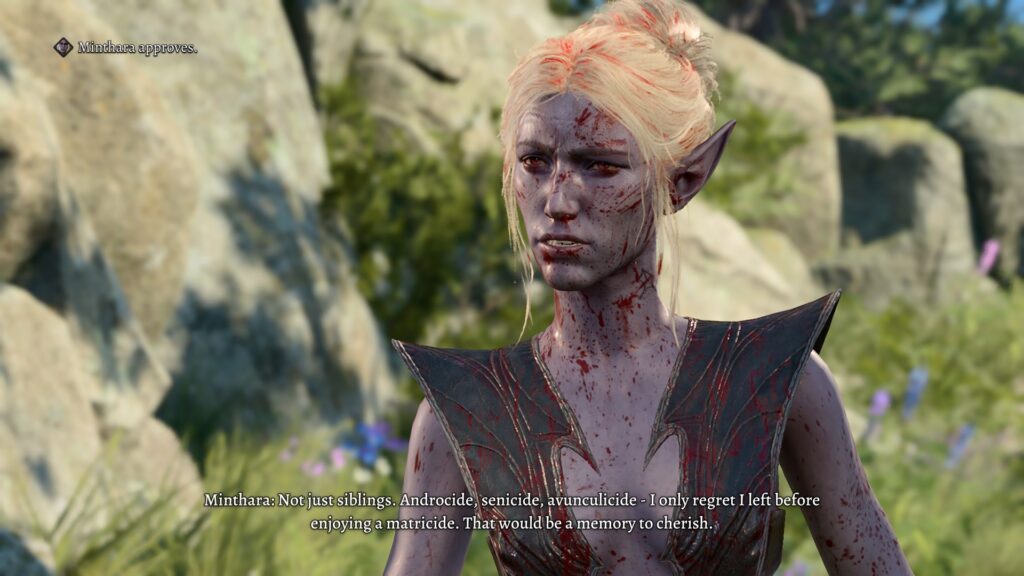
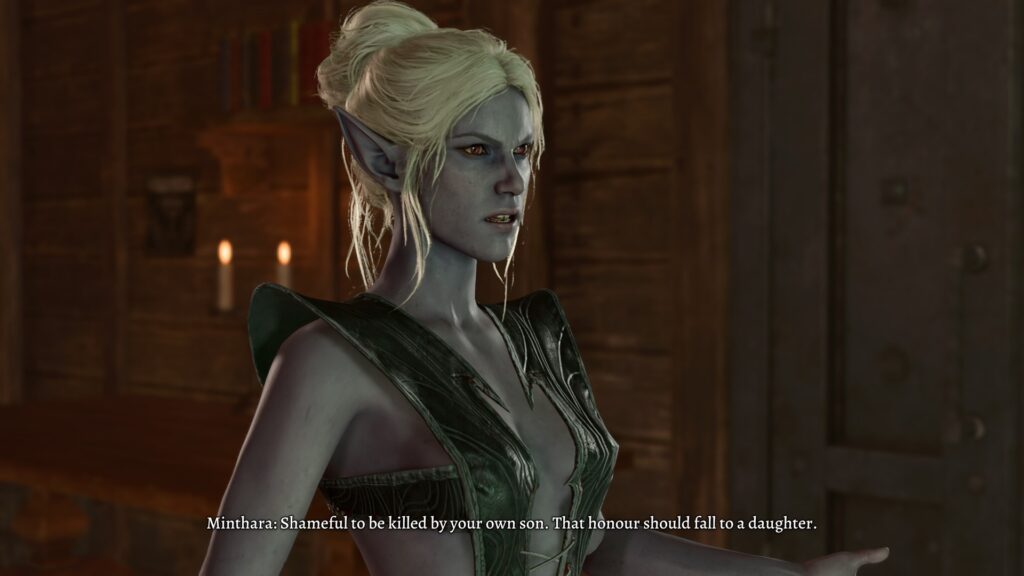
As we already can already assume from the above, drow societies are matriarchal, and men are treated as second-class citizens. Part of what made me decide on a female drow character is that we come across one particular character in the Underdark: Dhourn, a male drow, a third son, and very much a pretentious dick to any previous characters. I wondered if he would change his tone if he was being confronted by a female drow, and I was not disappointed with the dialogue options.
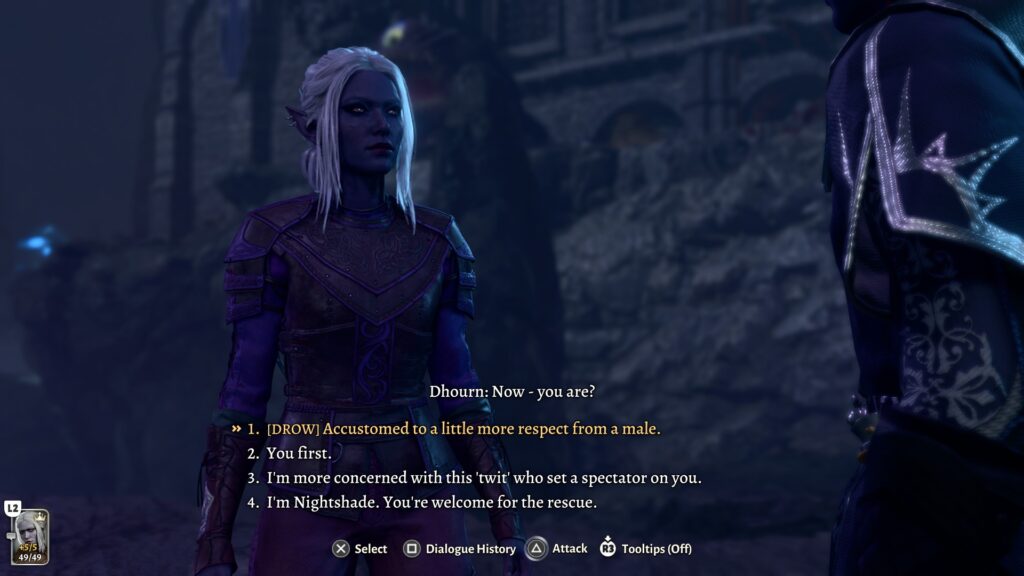
He humbled real quick.
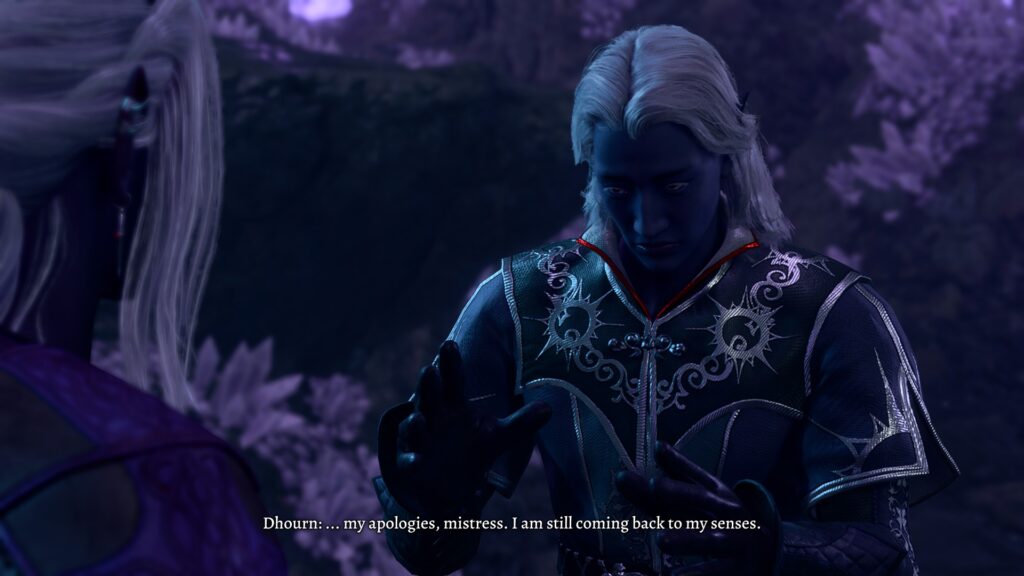
I cannot stress how much of a jerk this guy was in other games. He betrayed his previous allies, and immediate tries to betray you as well, even if you help him. But would he dare to do it with Nightshade staring him down?
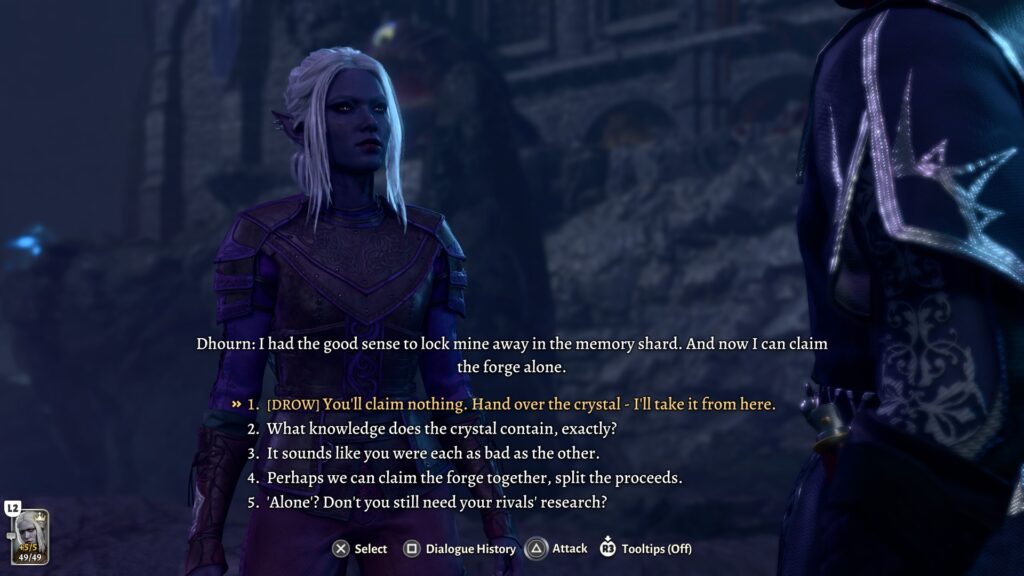
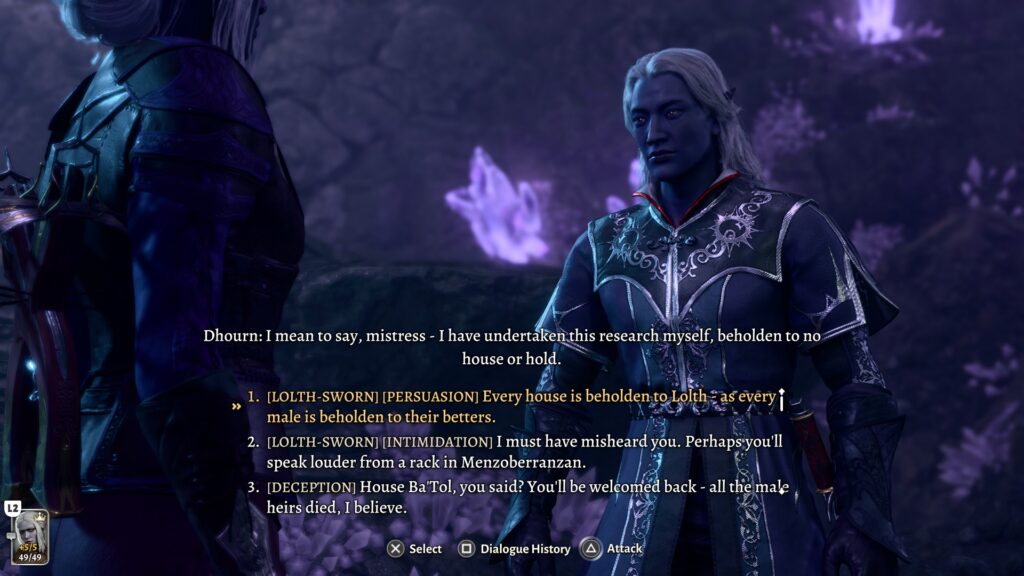
Holy shit, it actually works. You can bully him into handing his research over, and he just stands there and sulks for the rest of the game. Nightshade let him live, because why waste arrows on someone who already doesn’t matter?
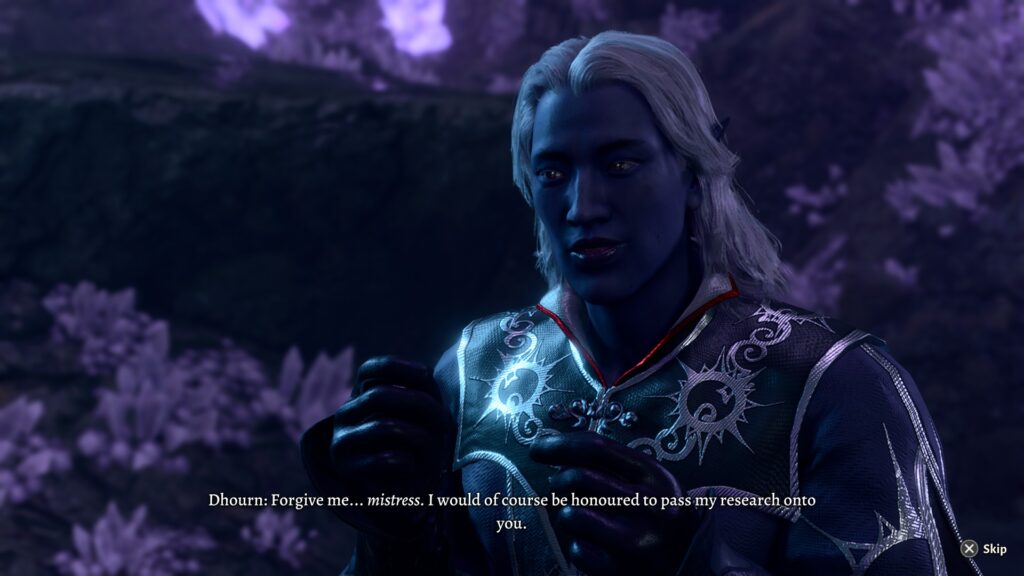
Is this how misogynists in the patriarchy feel?
Other Responses
Because the drow we’ve met previously tended to be on the evil side of the plot, the early parts of the game are very polarizing in terms of responses. As a drow, Nightshade did not have to fight or intimidate the sentries to the goblin camp — they just let her right in, bowing and scraping. But on the flip side, many people treated her with hostility or mistrust.
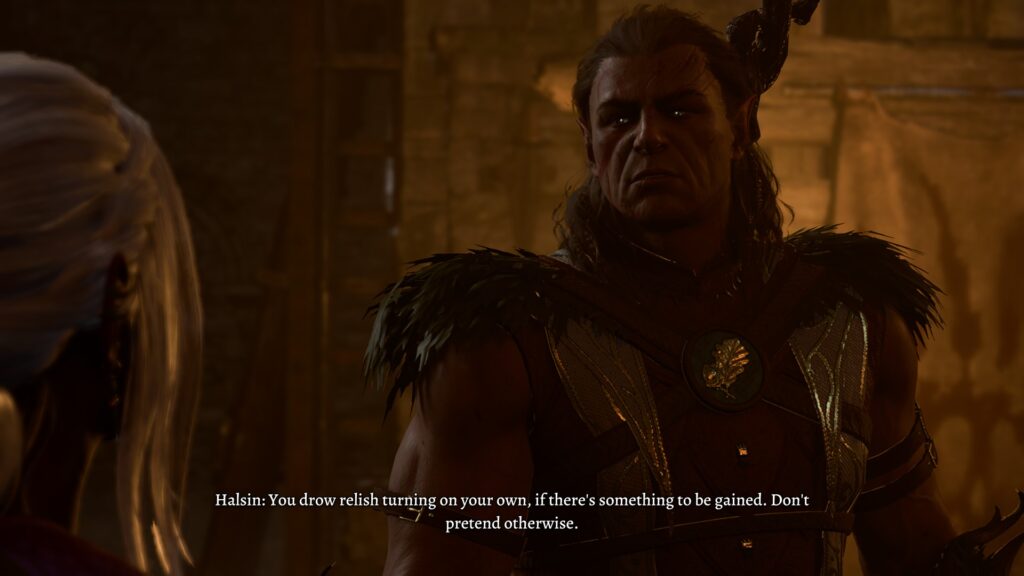
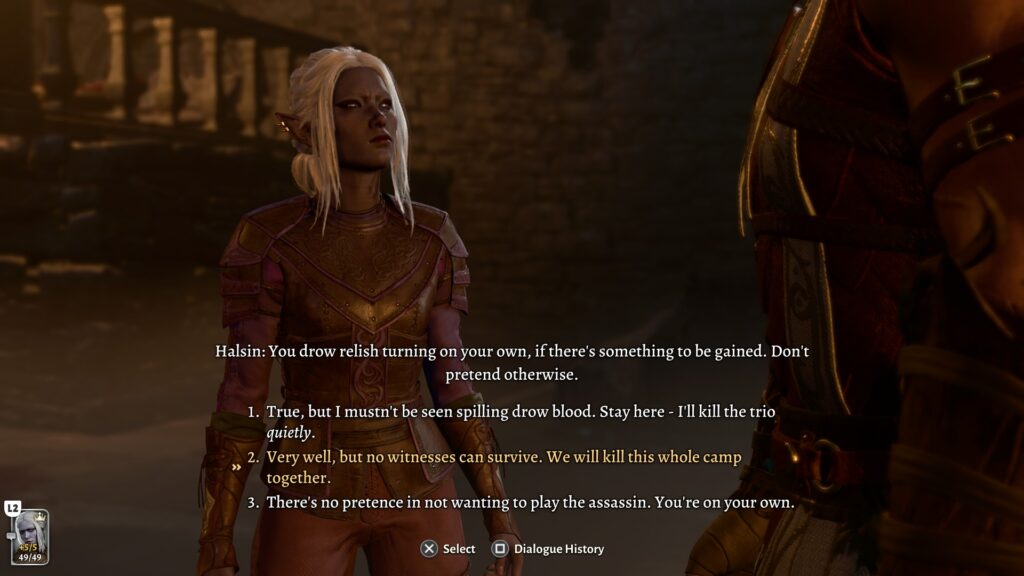
At least the racism gives pretty privilege sometimes?
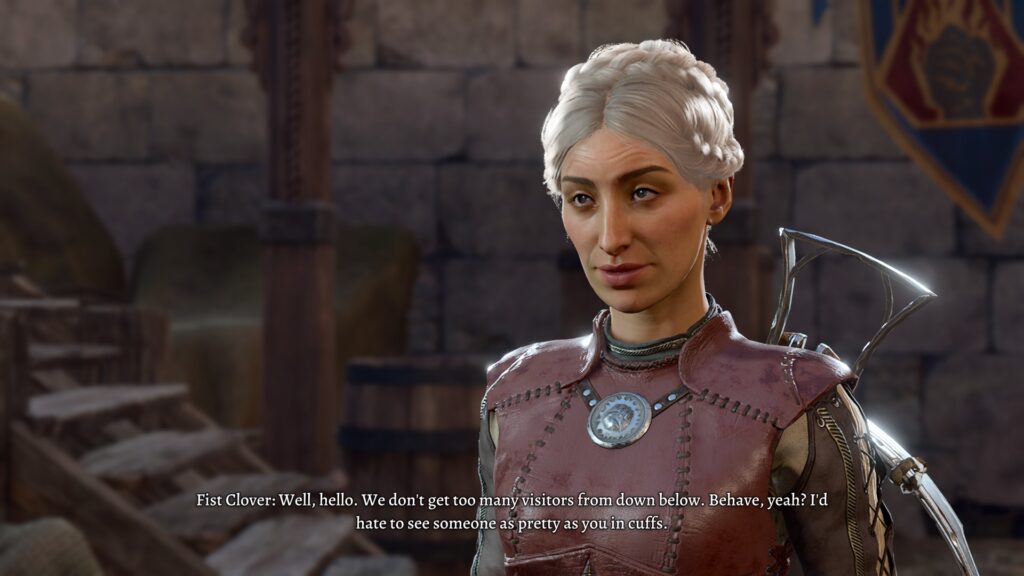
All in all, it was one of the races for which there was actually a difference in how people responded, as opposed to the typical high elves, humans, etc.
Hirelings
Although we have been using the term solo mode, it’s a bit of a spectrum. If only one person is fighting, and the other three members are hanging back and holding concentration for spells to buff, is that solo? If you have one person out in the world, but there were hirelings at camp that cast those (non-concentration) buffs at the beginning of the day, is that solo? What about if you have camp pets just so it isn’t so lonely? Or is it only if there is a single character with nothing else at camp?
I elected to have camp hirelings, but never have them leave the camp. This time around, I made Bathory, Lucrezia, and Wu Zetian, named after infamous female ruthless rulers, because… well. Drow. Unfortunately, I forgot to take pictures this time around.
Limitations to being Solo
Many of these I had already expected, like not having a ‘party face’, a charismatic character to schmooze vendors and persuade people into doing things. It meant I couldn’t talk my way out of certain fights, although that didn’t bother me as much because I’m always up for a fight. I also figured that I wouldn’t be able to develop team synergy for proccing conditions on enemies.
However, there were also a couple of difficulties I did not fully anticipate. We’ve talked at length about DC checks, and normally, your character can have up to 4 Inspiration Points, to be used to re-roll a failed check. You accumulate Inspiration Points by choices or events that happen in the story, based on the “background” of the characters around. For instance, characters with an Urchin background get an inspiration point after succeeding an epically deceptive lie, characters with a Noble background get an inspiration point after the first purchase at a bougie boutique, etc. A party that has a wide array of backgrounds can accumulate inspiration points in various settings, or if you know there is a situation coming up that will give Outlander inspiration points, then you could make sure to have Karlach and Halsin in the party, to get inspiration points from both. However, in solo/duo mode, I didn’t accumulate inspiration points very often, and only in certain situations, which meant I had to be VERY careful about spending them.
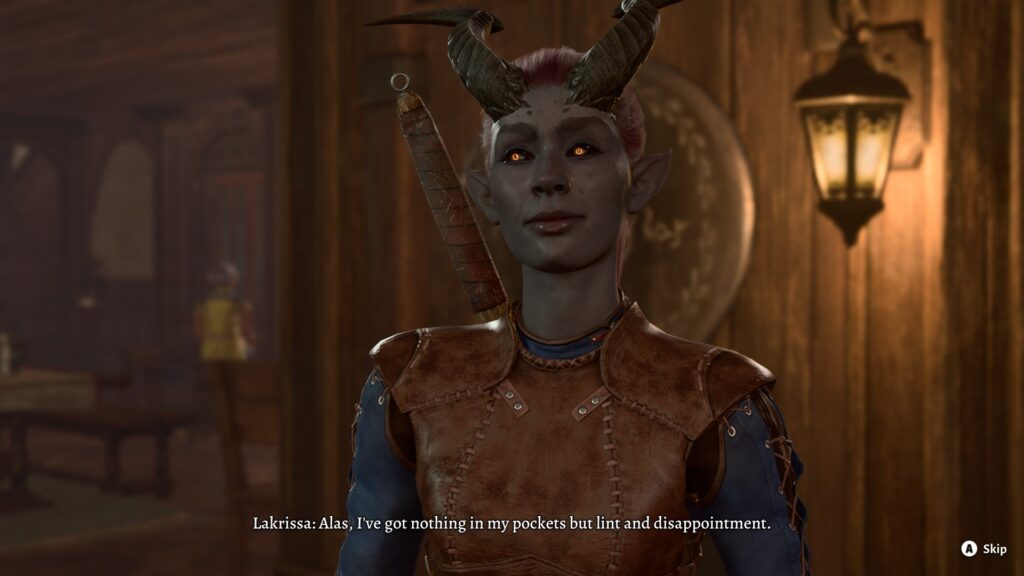
Another difficulty I came across was failing passive checks. Baldur’s Gate 3 revolves around “checks”, whether in battle or out in the world. Outside of battle and dialogue, they tend to be “passive” checks — rolls that happen without letting you see the DC or the result. When wandering around in the wilderness, your character may have a ‘survival’ check to notice a strange dirt mound, under which is buried treasure. When in discussion with another character, you may pass an “insight” check (which just barely flashes by in the upper left hand corner) that lets you know that this person is acting shifty and is probably hiding something, and opens up new dialogue where you can call them out.
Inspiration points can only be spent for active rolls, so if you fail a passive check, you only get that one chance. Sometimes it is for smaller things like recognizing a trap or an ambush, in which case, you just gird your loins and take the shrapnel to the face. But sometimes it is for bigger situations like noticing that the nice person you have been trading with is actually an evil boss, and if you don’t notice it, they will just go on with their evil boss self forever.
I came across this situation in Act 1, with a certain person that WE ALL KNOW IS EVIL. Like baby-kidnapping eye-blinding monkey’s paw kind of evil. However, my character failed that crucial Perception check that let her know there was something else going on, and therefore could not walk into the hidden parts of their lair (where they were keeping very WTF things) Without that check, my character just had to keep interact with her as a harmless vendor.
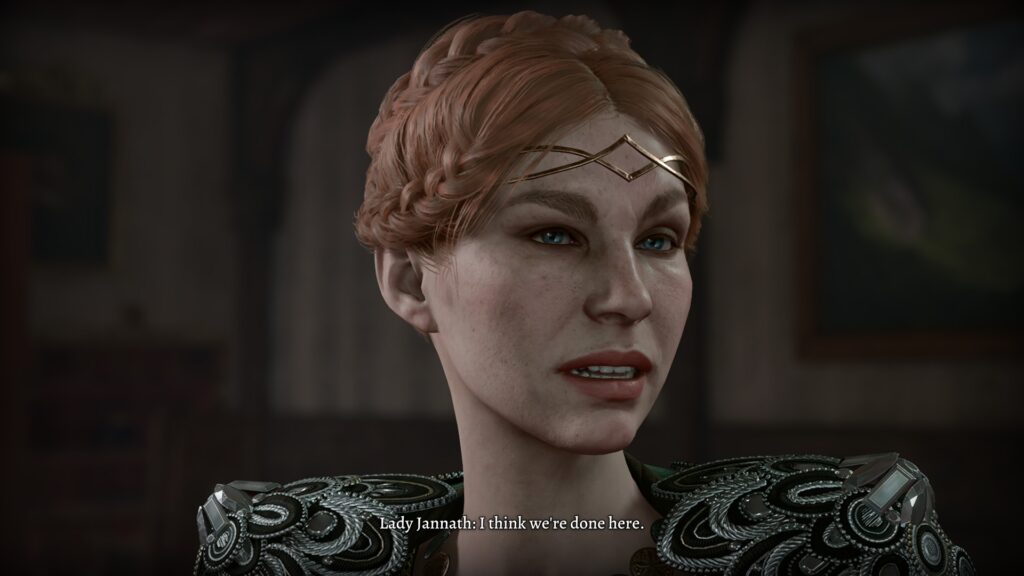
Gameplay Changes
Nightshade was my Gloomstalker Assassin build, so once she got up and going, most fights were easier than I thought. The archery aspect meant that she could stay fairly far away, making it easier to kite enemies around and inflict more damage than they could. However, when facing multiple enemies in early game, I only had one attack to three or four enemies, so it took a lot of running around.
The Grymforge fight was also extremely annoying. It is a boss fight in which you can only do damage when a few criteria are met:
- The valve is open, and lava is pouring around the forge (auto shuts off in certain conditions)
- Grym has been walking through lava and is “superheated”, meaning he is vulnerable to bludgeoning damage
- He walks right underneath the anvil and stays there
- You hit the lever and smash him in the anvil
Grym will only walk around to follow the last person that attacked him. Since this was a grand total of me in my solo run, this meant that I had to be in multiple places in the right sequence of events, and Grym had to be following me at exactly the predicted rate and turns. It is doable when you have multiple people, just make sure they are out of his range. It is extremely annoying as a single person trying to make this happen.
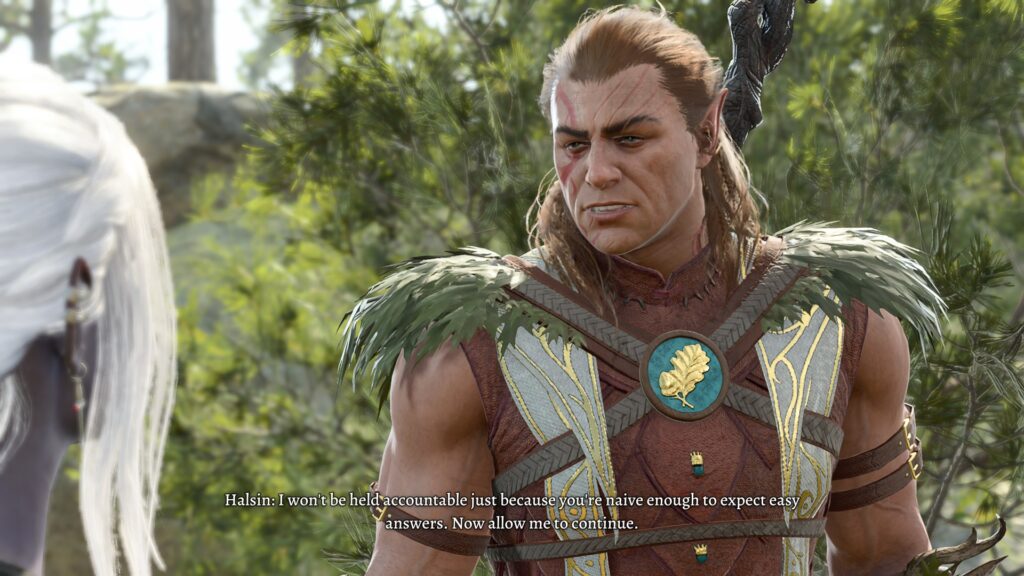
The biggest fear I had did indeed come true: Hold Person became screamingly frustrating. Enemies have a high-level spell called “hold person” which (hold onto your butts) holds a person, freezing them in place for as long as the enemy concentrates on the spell, or 10 turns, whichever breaks first. In regular BG3, when a character gets Held, it’s annoying, but I just shift my other party members to target that enemy and break their concentration. In solo mode, all I could do is howl in frustration. At one point, my character was paralyzed, and then shoved right off of a cliff.
After this happened a couple of times, I prioritized taking out the spellcasters immediately, sometimes before battle even began. Since I was playing my gloomstalker assassin, I would take an invisibility potion, walk up behind the spellcaster, and stab them in the kidneys to trigger the fight.
Companion Outcomes
It started off with small things that changed in early game. I didn’t find the exsanguinated boar, because I didn’t have Astarion to comment on how it was no big deal. This didn’t make much sense to me because I would imagine that he would still be out there draining wildlife of blood even without me, but oh well.
The companions that I pushed away tried really hard to change my mind, sometimes to a hilarious level.
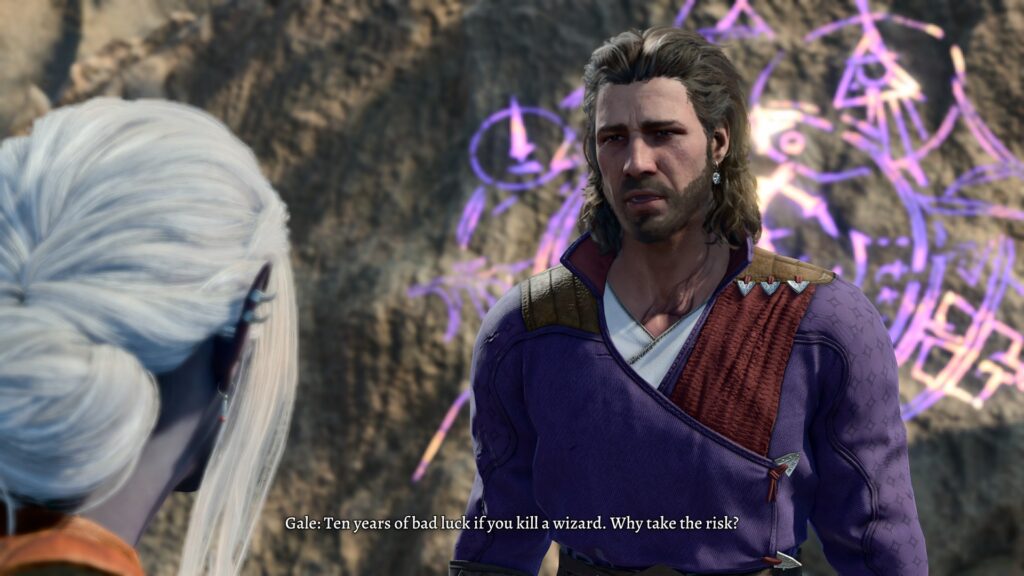
Shadowheart was the most persistent, although that makes sense for plot purposes. The argument could be made that she’s actually the main character of the game. She showed up at four different points, even to plot-relevant area even when it didn’t make sense. I suspect the implication is that she has been stalking your character. However, after I continued to turn her down, the artifact then just magically showed up in my pack when I moved into the mountain pass.
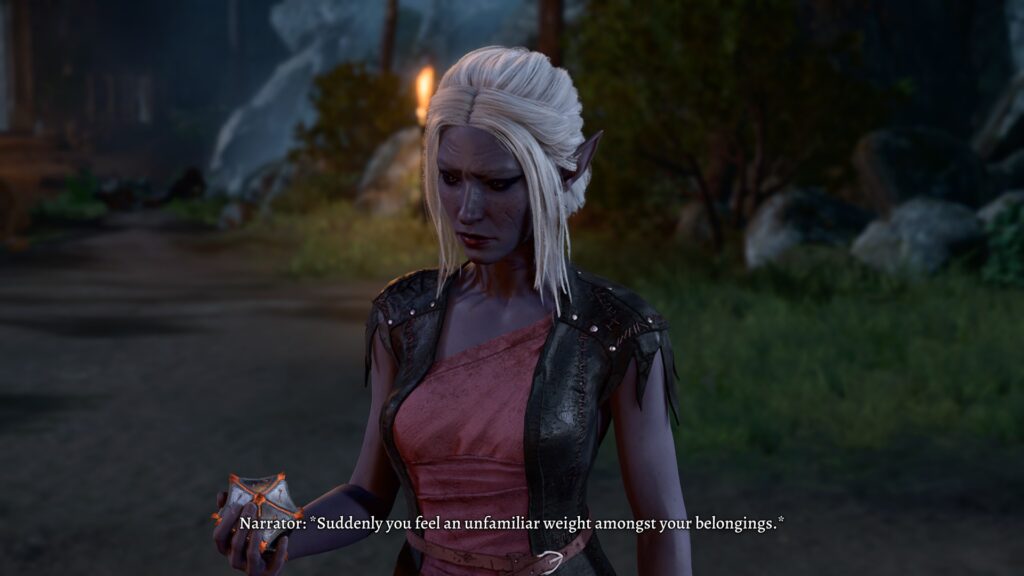
No explanation. Just there. What happened to Shadowheart? Does this imply that she dies (by whose hand? I killed everyone in Act 1) and so the artifact then comes to me? How did my stalker just randomly disappear? One could argue that maybe she was felled by the curse, but even in the regular game, she is the only one that does not need protection in the shadow cursed lands, ostensibly because her goddess is protecting her.
Lae’zel actually showed up dead at two points, which was hilarious. They were both points that would make sense for her to die when not protected/tempered by the main party, but it was funny to imagine her dogged laser-focused personality not even stopping at death the first time.
The companions faded away after Act 1 or early Act 2, but it did make me curious as to what would happen to their individual plotlines. Karlach was wounded and had the forces of Hell after her, so she probably got captured/went down fighting. Lae’zel and Shadowheart we saw or can assume. Gale and Wyll I never saw again after I left the areas that they first show up in. What about Astarion? His personal story is that he is running from his master, whom he is now trying to turn on. Well, when I got to the palace in the Lower City and confronted his master (because why not, it’s a fun fight), I came across this:
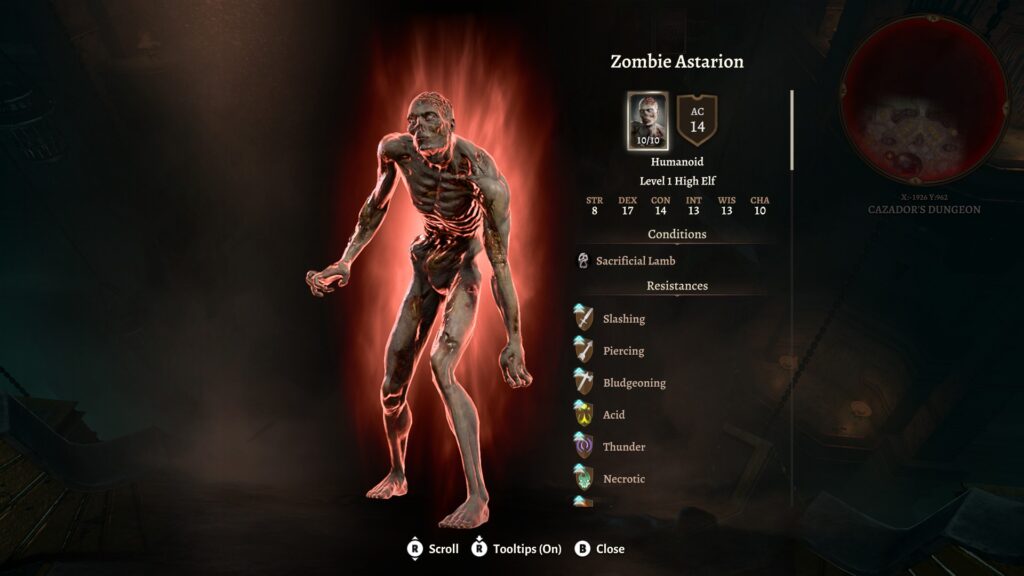
Welp. I guess he wasn’t able to go it alone after all.
So each of the individual companions don’t do well when they don’t join up with the party, which is unsurprising. Not every companion got closure, but it was interesting to watch the ones where the story did circle back around and show us what happened to them.
This also impacted the other NPCs you would have met otherwise. You don’t come across Voss, because why would he come to the camp to talk to someone who isn’t a githyanki? You don’t meet Elminster because his mission was to convince Gale to Do the Thing. You DO meet Ferg, since his whole mission was to wait at that camp for Shadowheart to show up. I relished the thought of him waiting there forever, at least until some unknown miscreant stabs him in the kidneys.
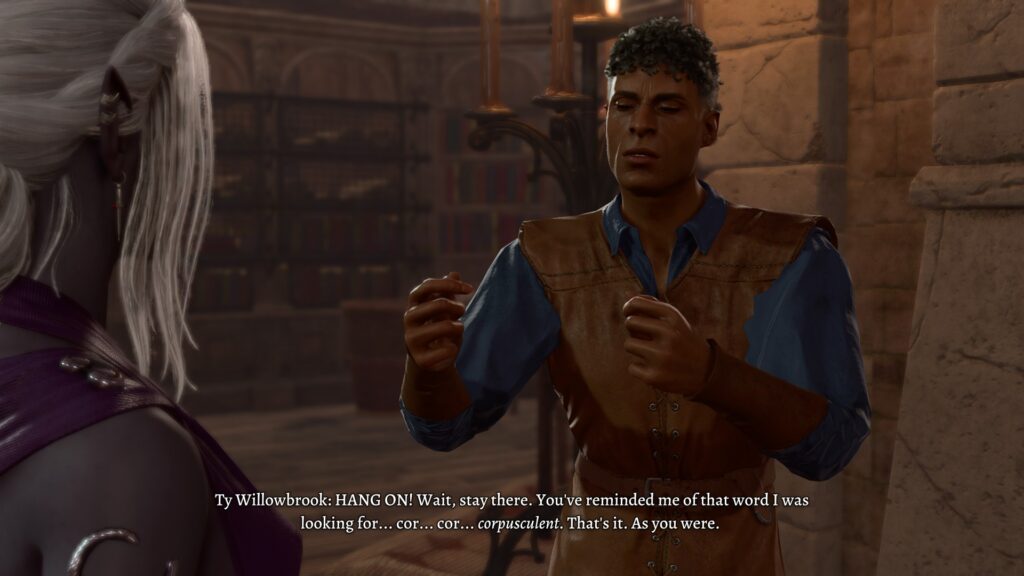
As the game went on, it became clear that it was very clearly not designed to do what I was doing. There were many fallback points to make sure that the main plot would still happen, but some parts of the game just…broke. There were lines of dialogue talking about characters that were not there. Sometimes dialogue would stuck or loop back onto itself indefinitely. Halsin (whom you cannot completely reject from your camp, as he is integral to the story in Act 2) had camp events and dialogue trees that didn’t make sense for where we were at, but I suspect that the game wasn’t expecting someone to lone wolf everything but still be interacting with NPCS.
Romance
Finally, it is Minthara’s moment to shine! Bill pointed out that in 1/14, I had said “Bill, you can have a relationship with Minthara if you want to, but I just don’t see it.”
Welp, I also said I would never play an evil character, or try solo mode, or attempt Honor mode, but you know, we live and learn.
Despite being a Lolth-sworn drow trying to romance a Lolth apostate, that was only brought up once in the entire romance, which was a bit disappointing.
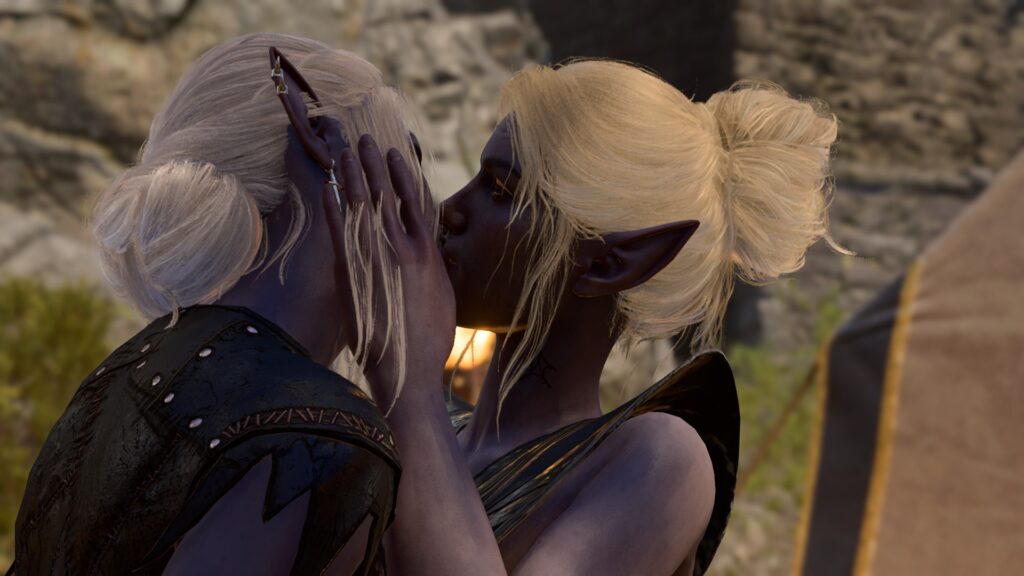
In her own way, Minthara is probably the most supportive of the companions. She certainly has her preferences and alignment, and on her own would probably be an ‘evil’ character, but she is very much a ride or die companion. If she’s with you, she has your back, no matter what.
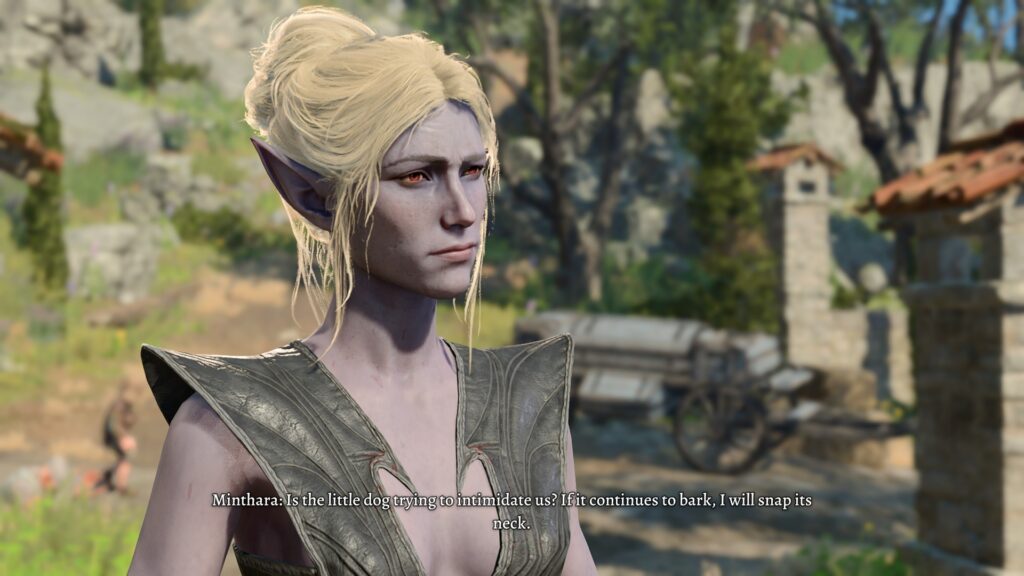
In a romance, that only gets amped up even more.
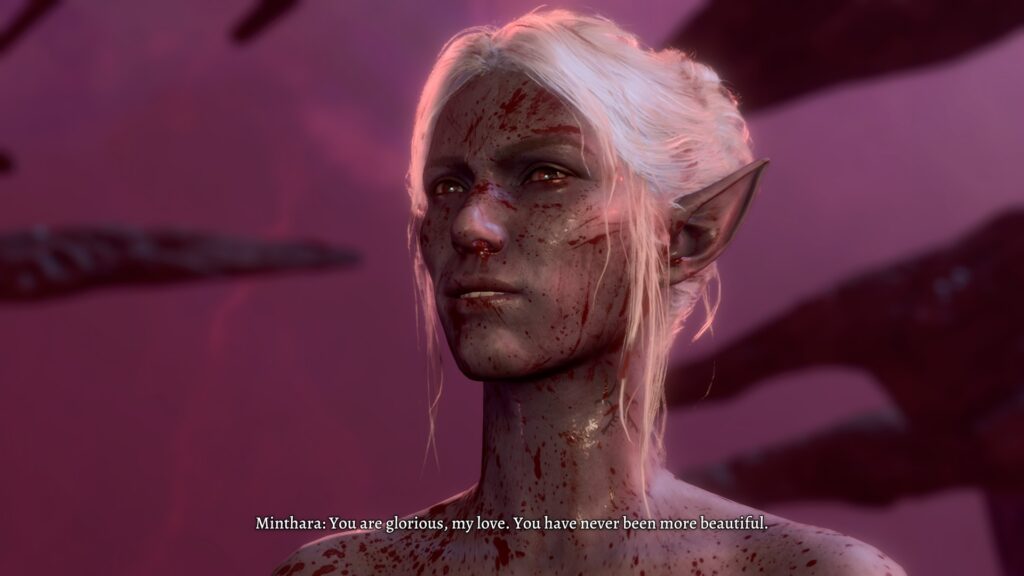
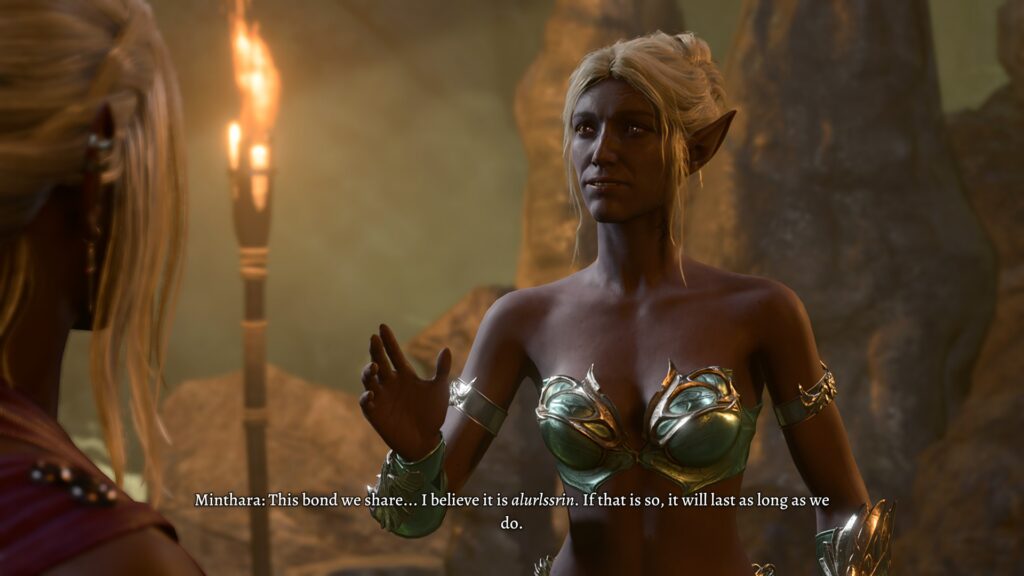
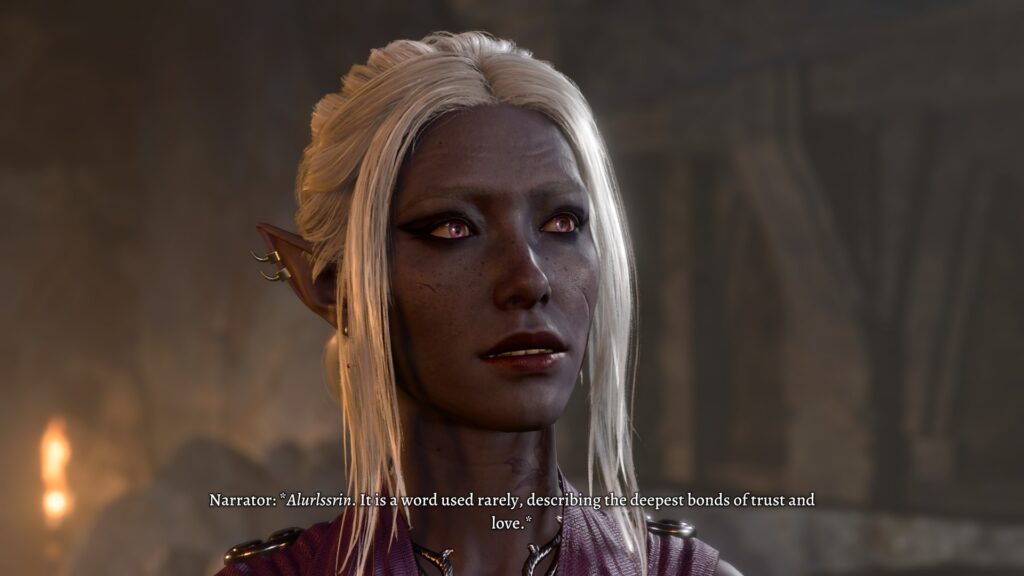
She’s passionate, intense, and ready to fight anything for/with/because of you. I can see why some people (cough cough) prefer her.
In a romance, you also see gentler sides of her, which are a pleasant surprise. I almost said they were softer sides, but then I remembered something profound she says: “Loving someone is not soft. It is one of the hardest things a person can do.”
Ugh. That would have saved me a lot of therapy bills if I had grasped that sooner.
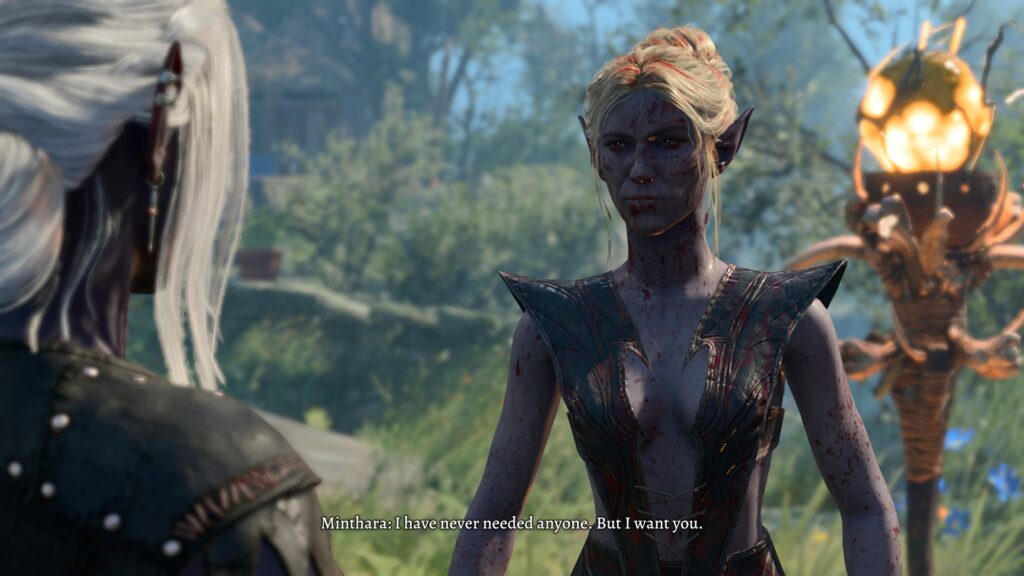
At some points, you actually see how insecure she can be sometimes too.
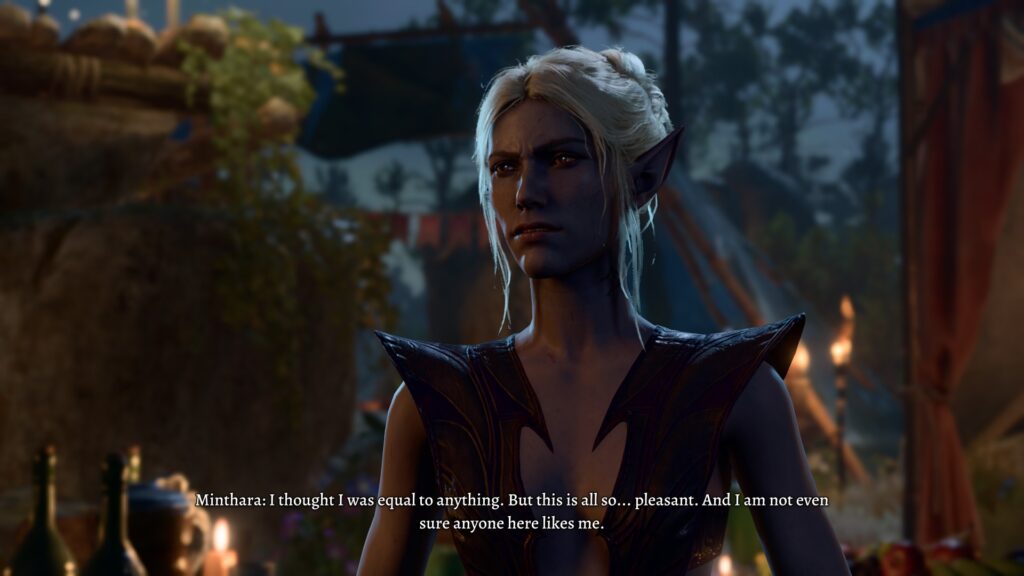
Minthara is definitely an interesting and nuanced character, even though, as Actual Sabrina puts it, she’s “such a pain in the ass.” She also comes from drow society, which we don’t know much (or anything) of in the game without her, so keep in mind that some of her “WTF” moments are normal from where she is from. I did get some of these mutual moments in the romance (such as when she asked me what my experience was in a drow marketplace) but I would have loved to see more. Ultimately, I think part of this is because she shows up as a companion fairly late in the game, and a romance option even later.
I’m not sure I would romance her in real life (or survive the attempt) but I love having her in the game. Even without romancing her, her banter in the party is absolutely worth it, and why she is frequently in my party.
Hilarious side story
This was (I assume) not exclusive to having fewer companions, but I came across an interaction that I hadn’t seen before, whether in my previous playthroughs or even online.
You know what’s worse than being swindled at the circus? Being swindled at the circus by a bad-tempered djinn who doesn’t like being called out, and responded to it by this:
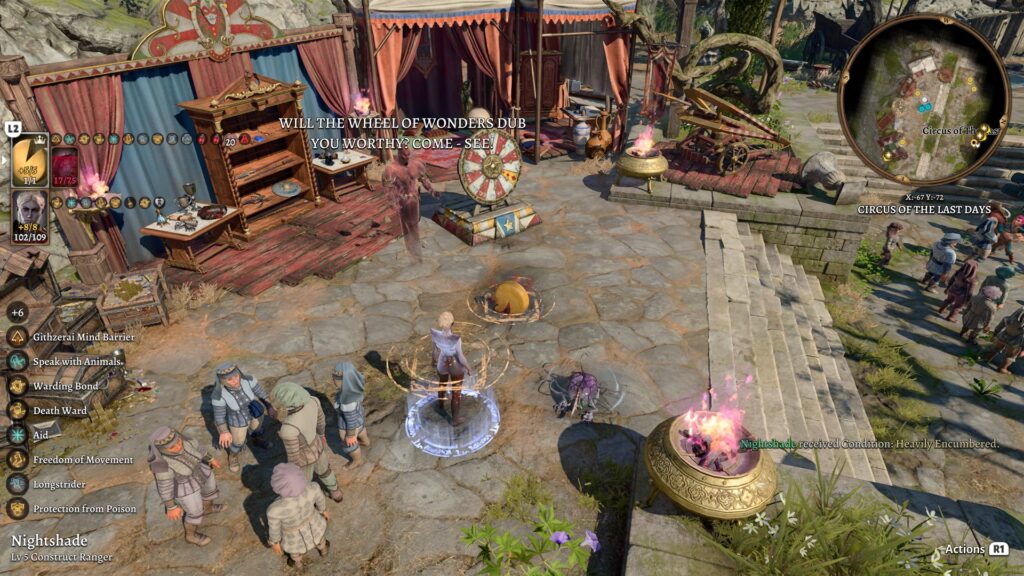
EXCUSE ME?
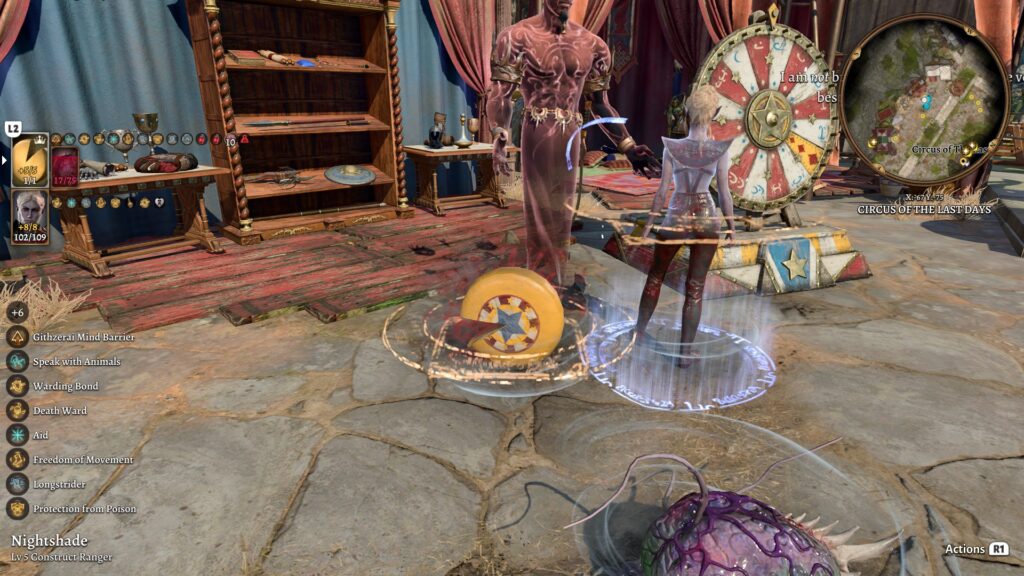
What did you do? Is that me?!
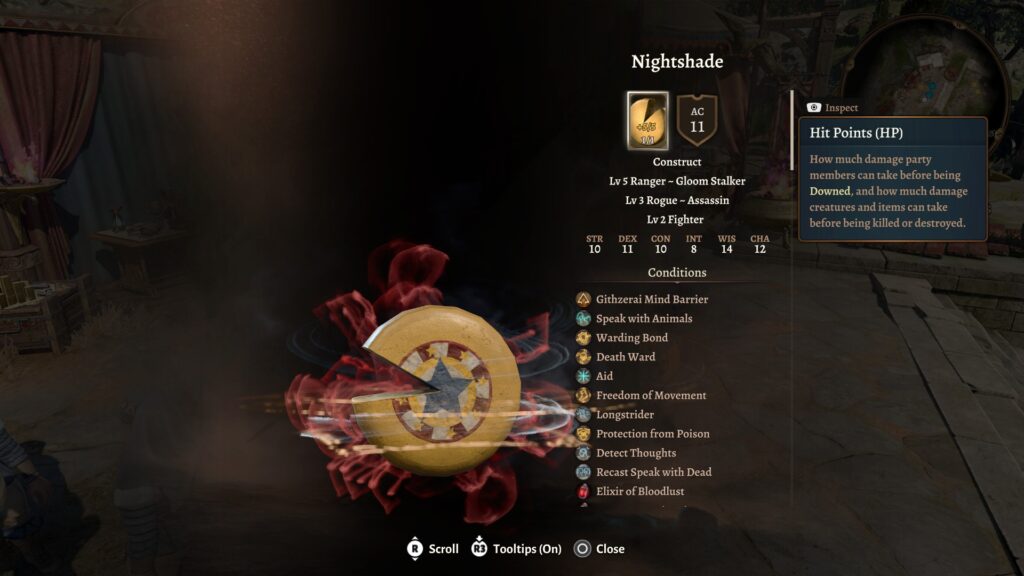
Yep. I’m a cheese. Motherfucker turned me into a wheel of cheese.
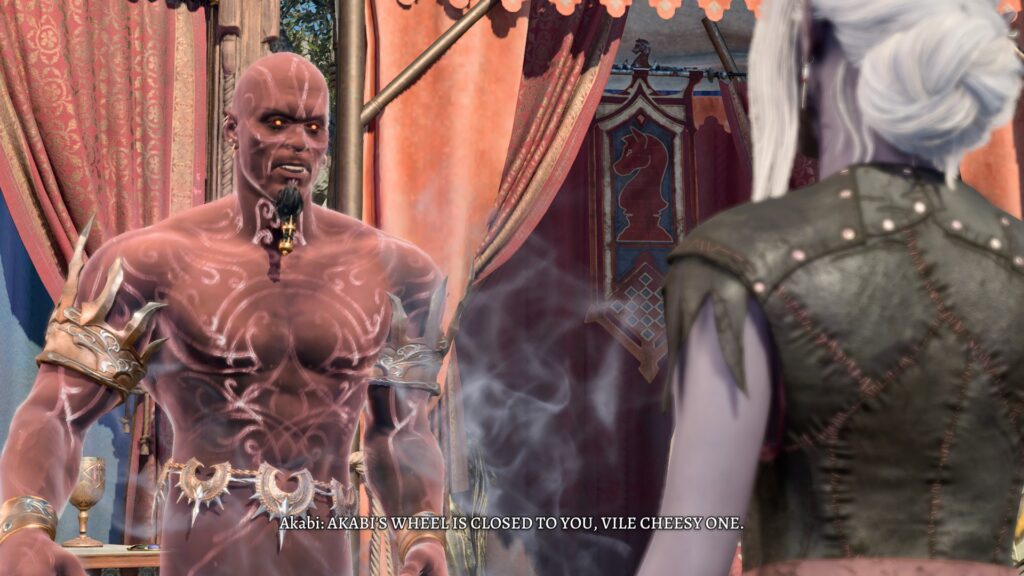
I would have been so mad except that I couldn’t stop laughing.
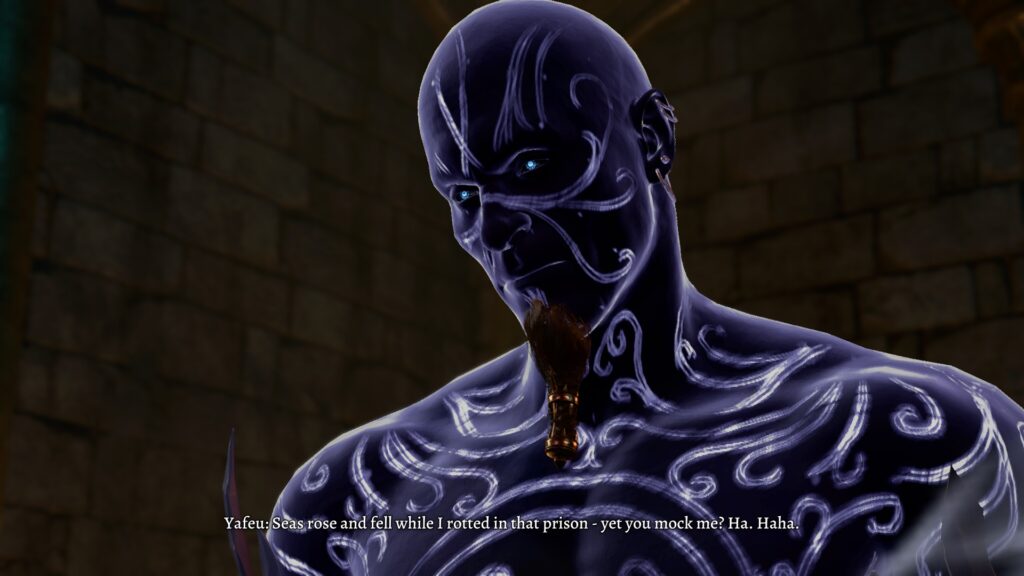
In general, all the djinn you come across in the game are jerks. You should definitely poke fun at them and see what happens.
Wrap Up
Pros of doing a solo/duo run:
- the game moved much faster. Most of my games take almost 150 hours, this one took closer to 100. I suspect this is because I cut down on a lot of conversation, but also a lot of exploration that I do around each companion’s quest, because why do it when they aren’t there to respond? My more recent games have also been faster because I’ve read most of the text in the game (both books and repeatable NPC dialogue) so I can skip through them.
- combat was much faster. I didn’t have to mess around with multiple turns and moving people into position
- camp buffs at the beginning of the day were also much faster, because I didn’t have to shuffle the party around, both numerically or spatially.
- It was fascinating to see how the game accommodated not being able to get some of the story information from the companions, and how it handled them not being there.
Cons:
- with only one/two characters, I didn’t get to try many builds
- the two builds I did try were so powerful that combat was over in only slightly more turns than I would have had otherwise, despite fewer people
- Some of the ways the game gets around giving you the story information doesn’t quite make sense, and felt like a quick fix (the artifact, for example)
- You don’t find out what happened to some of the companions. The Astarion plot is the only one that I felt really satisfied with. That being said, I guess that’s realistic.
- you do lose out on information for side quests you would have gained otherwise unless you meta-game (the great Wyrm, for example, is tied very much to Wyll’s presence/personal quest, and I did not receive that quest this playthrough, despite running into the people that would have told him about it)
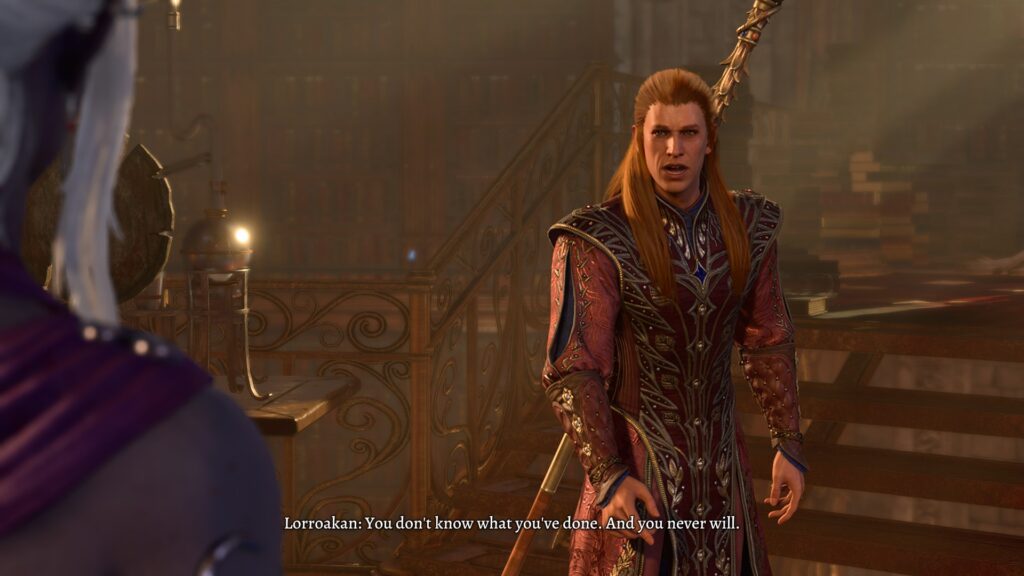
Overall, I got to try something completely new to me and see how far I could push the game (to the point of breaking, it seems). While I was impressed at some ways it could flex around something as big as “what if someone turned away all companions?”, it was also very clear that this is not what the game was designed to do, and was significantly less fun.
While this was an interesting new way to play the game, I almost wish I had done it in reverse. Imagine trying this game solo mode, struggling through each fight, slogging through the muck. And then the next game, you find well-developed characters with their own takes on why the world was the way that it was. And they’re noticing things in the world with their perception and investigation checks that you otherwise didn’t know!
Maybe a concept to promote multiplayer in a different game then.
Would I do this again? Maybe, but only if I wanted the challenge. I actually found it significantly easier than I thought it would be, once I got my builds up and running. Early game was difficult, but it always is. I might try it again after adding the more difficult mods, but ultimately, I liked having the companions around, and I enjoy the banter of their reactions and interactions.