One of the main plotlines in BG3 involves a bad guy named Ketheric Thorm. You hear his name a lot in the first half of the game, both from allies and enemies, and the final boss battle of act 2 revolves around him. He was once a powerful general, and the driving force behind the curse of the shadows in Act 2. By the time we meet him, he is the Chosen of Myrkul, god of death. Ketheric also has one of the coolest villain intro scenes in any video game. That’s all you need to know about him at baseline, and honestly, you could enjoy the game perfectly well from there.
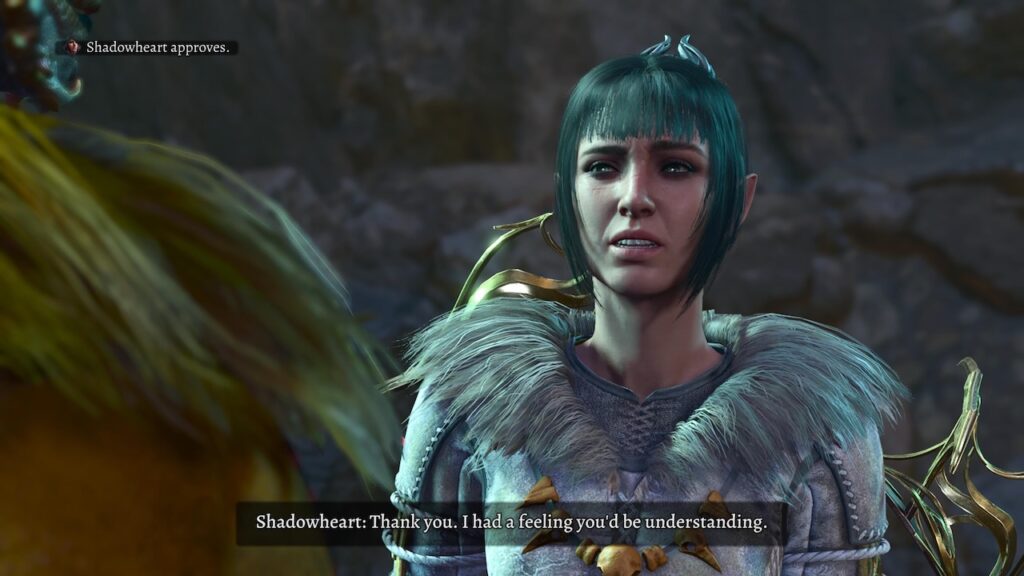
In the very large pantheon of BG3, two of the big ones are the sisters Selune and Shar. Selune is the goddess of the moon, light, healing, etc. Shar is the goddess of darkness, loss, trickery, etc. Their duality is fought out by their followers, and in fact, Shadowheart, the most romanced female companion, is a cleric of Shar. She spends much of the first half of the game making snide comments any time she comes across Selunite symbols and art, and talking about how much she prefers the darkness.
We know that in the distant past, Ketheric and his wife Melodia were clerics of Selune. They lived beautiful moonlit lives, raised their daughter Isobel as a Selunite as well, and were all lovey-dovey and happy, until tragedy struck. As Tolstoy famously said: “every happy family is alike; every unhappy family is unhappy in its own way.”
This is what we know as fact and how:
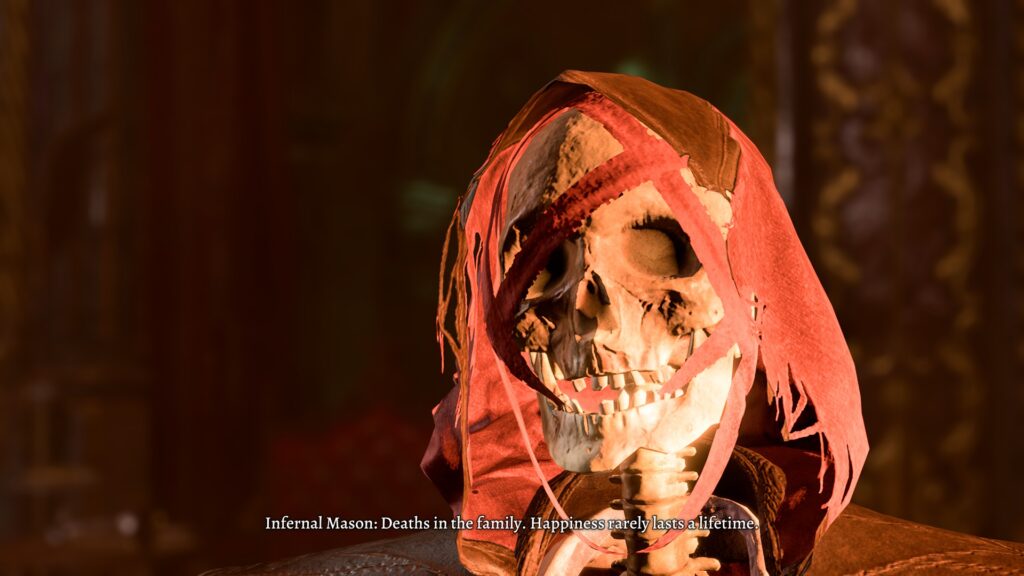
- Melodia falls ill — the game does not specify with what, but we find (snoop) keepsake letters that she writes to her husband and daughter, speaking of her impending death, that she loves them above all else, and that she will see them again in the afterlife.
- Ketheric grieves and questions his faith — we find a journal entry he wrote about how he cannot understand how Selune could allow this to happen to her most devoted follower.
- Isobel grows up, and falls in love with Dame Aylin, the daughter of Selune herself, a legit warrior angel, much to Ketheric’s concern — both the moon lesbians (as they are fondly called online) confirm this through direct dialogue.
- Aylin is sometimes called away to defend those that her mother cannot protect, sometimes with Isobel’s father — Aylin herself says this when she later explains a separate event.
- Isobel dies somehow, and Ketheric falls even deeper into despair. Having lost his faith in the goddess of light, he converts to Shar, hoping that she will fill his void and help him forget what he has lost. We learn this through conversation with him and through multiple journals/notes.
Poor grieving man, so unlucky to lose his beautiful family, of course it makes sense that he would try to turn to someone known for granting solace to those in loss, right?
Right?
Well… yes. That’s the problem.
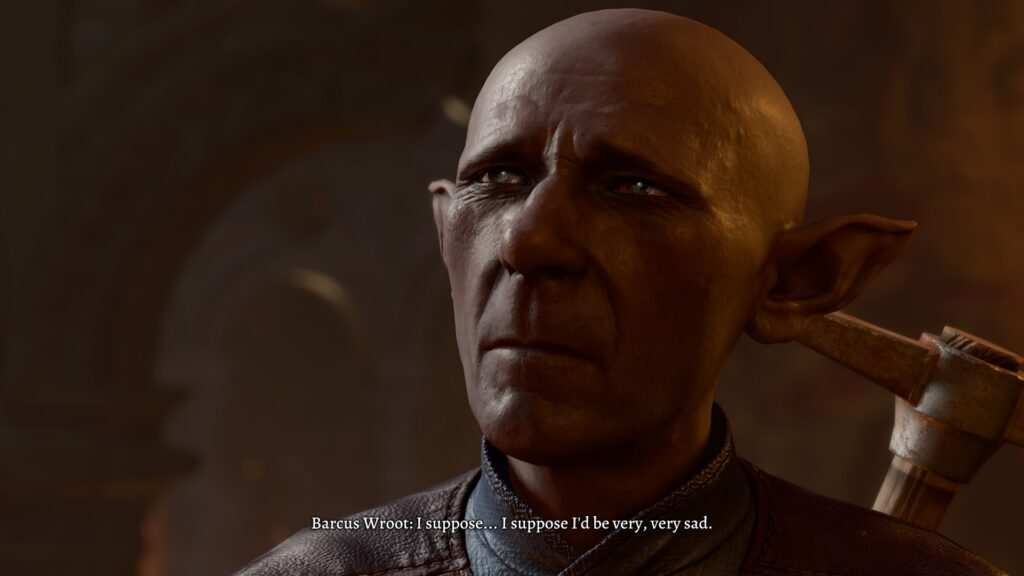
To be fair, I don’t think my following theory has been confirmed by anything concrete in the game. We are pretty much in thumbtacks and string territory.
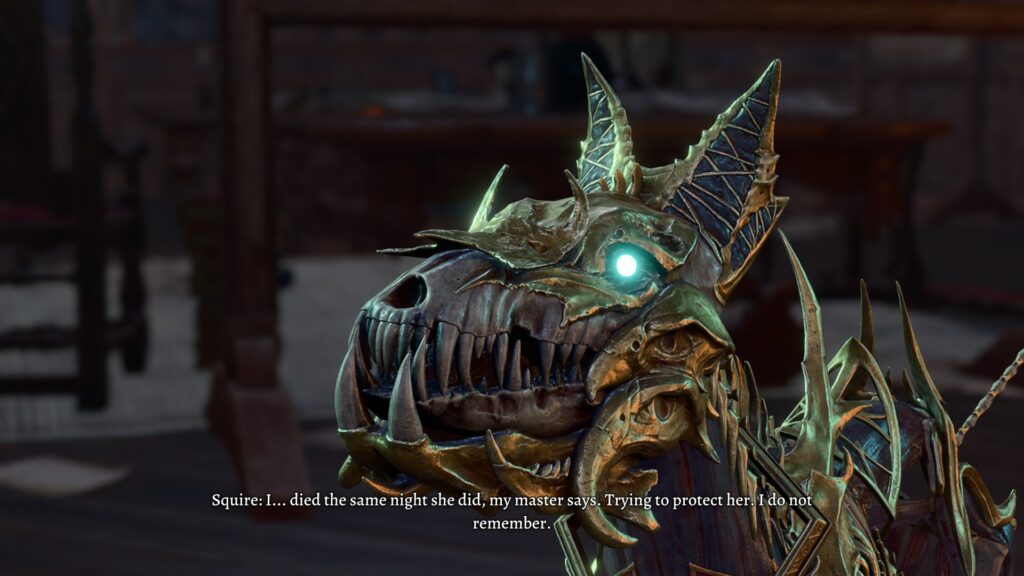
The key piece for me occurs when we talk to Squire, the goodest necrodoggy girl, whom we meet in Ketheric’s quarters. It is very easy to miss this dialogue, as it requires passing multiple checks/choices to work with the enemy, sneak into the general’s quarters, calm down her hostility enough to talk to her, and giving a damn about what a zombie bionic doggo says. When asked about her past and why she was resurrected, Squire says that she died the same night Isobel did, with the implication that she died “protecting” her mistress. Given that Ketheric has enough emotional attachment to her to have her guard his personal quarters, that makes sense. But this means that Isobel did not die of the same disease that took her mother, but by an attack.
Who would want to kill Isobel, by all accounts a sweet cleric just like her mother, with no real enemies? Where was Aylin during this? Between her warrior father and her angel lover, you’d think Isobel would be guarded like Fort Knox. Unless they were called away on a mission, as we know they were sometimes wont to do. What if Isobel wasn’t the target due to her own self, but for what her death would do? What if someone had distracted her powerful guardians, and orchestrated her assassination?
The death of Isobel did three things:
- Killed a cleric of Selune, the moon goddess
- Pushed the powerful Ketheric Thorm further off the edge, away from Selune
- Distracted and isolated Aylin, Selune’s own daughter, and made her vulnerable to future game events
Who would do such a thing, and why?
Who is known for being all about deception, trickery, and shadows? Who trains her acolytes in sneak attacks and assassinations?
As the eternal question goes: cui bono?
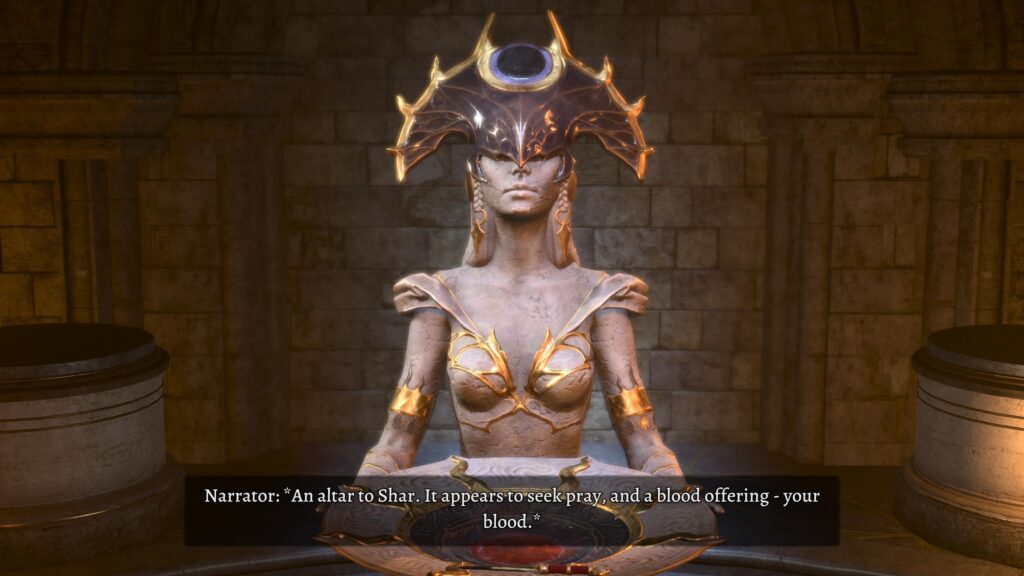
Shar is the one that has the most to gain. She has the motive, the means, the opportunity, and this is consistent with her modus operandi. By pushing Ketheric Thorm away from her sister, she drew him over to hers. She acquired a powerful general for her armies, and likely would have taken over much more of Faerun, were it not for (redacted for future blog post)
I said it before, and I will say it again: Shar is utter fucking garbage.
Again, none of this is explicitly said in the game. You don’t need any of it to enjoy the events. But it’s fascinating to me that the writers scattered in so many details that someone could reasonably piece these things together.
PS: remember up there when I said that Shar is behind the bad shit about 50% of the time? What about the other 50%? Well, that’s the next one…