Maria couldn’t make it, and Andrew and I weren’t feeling up to an intense brain-burner game. So John brought Inkwell.
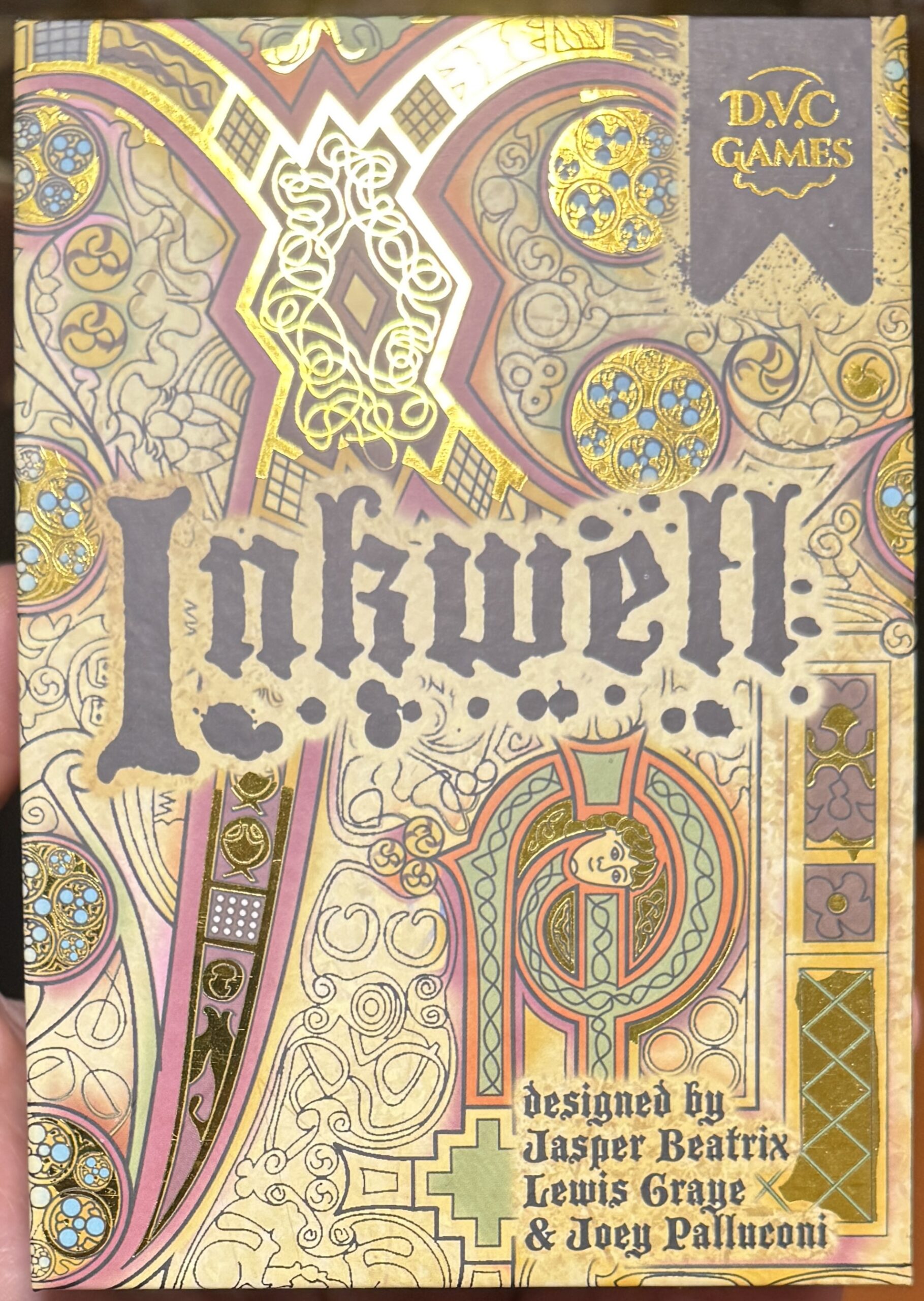
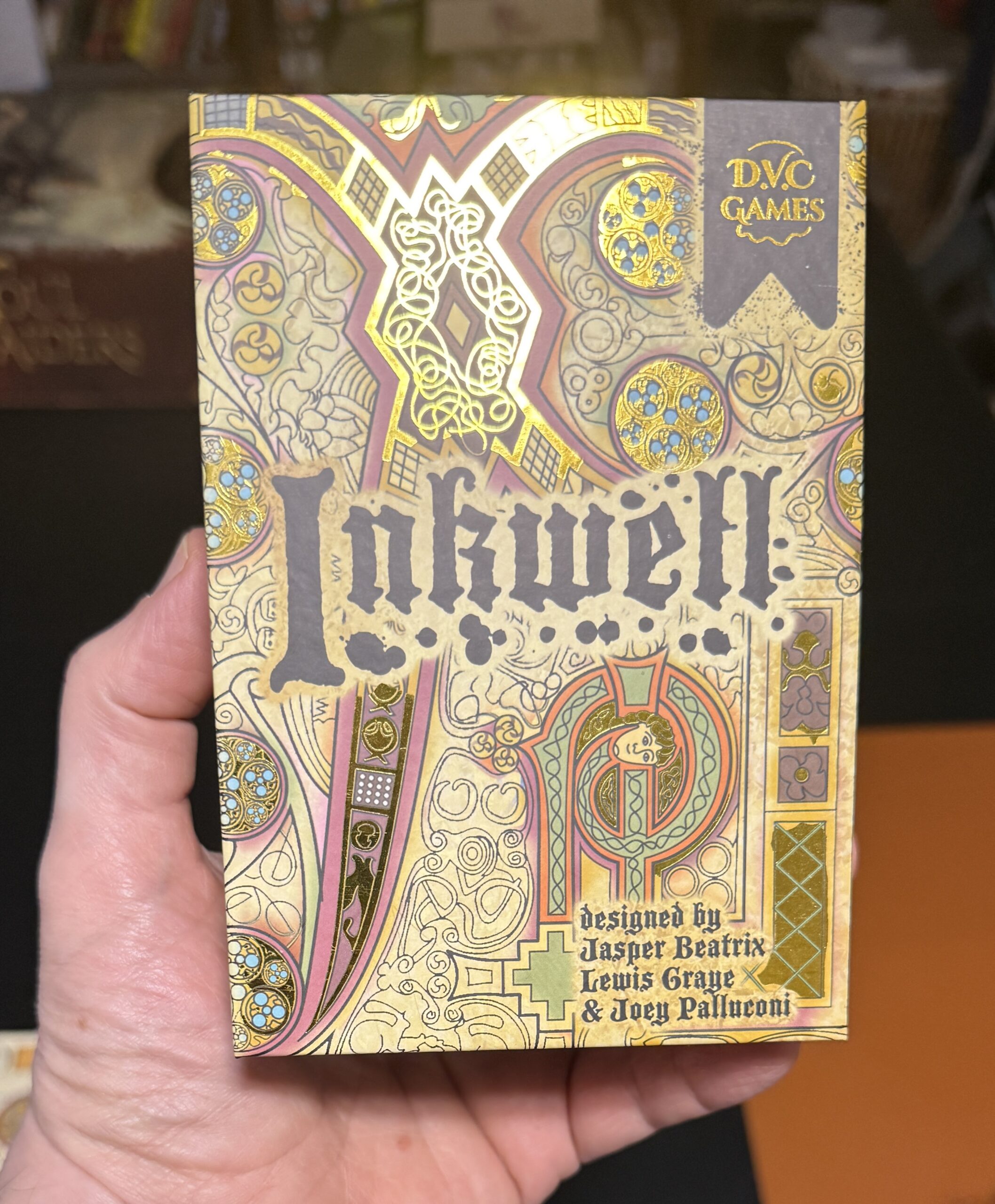
This is the box cover for Inkwell. This picture doesn’t convey how small the game box is, so I include the uncropped photo below.
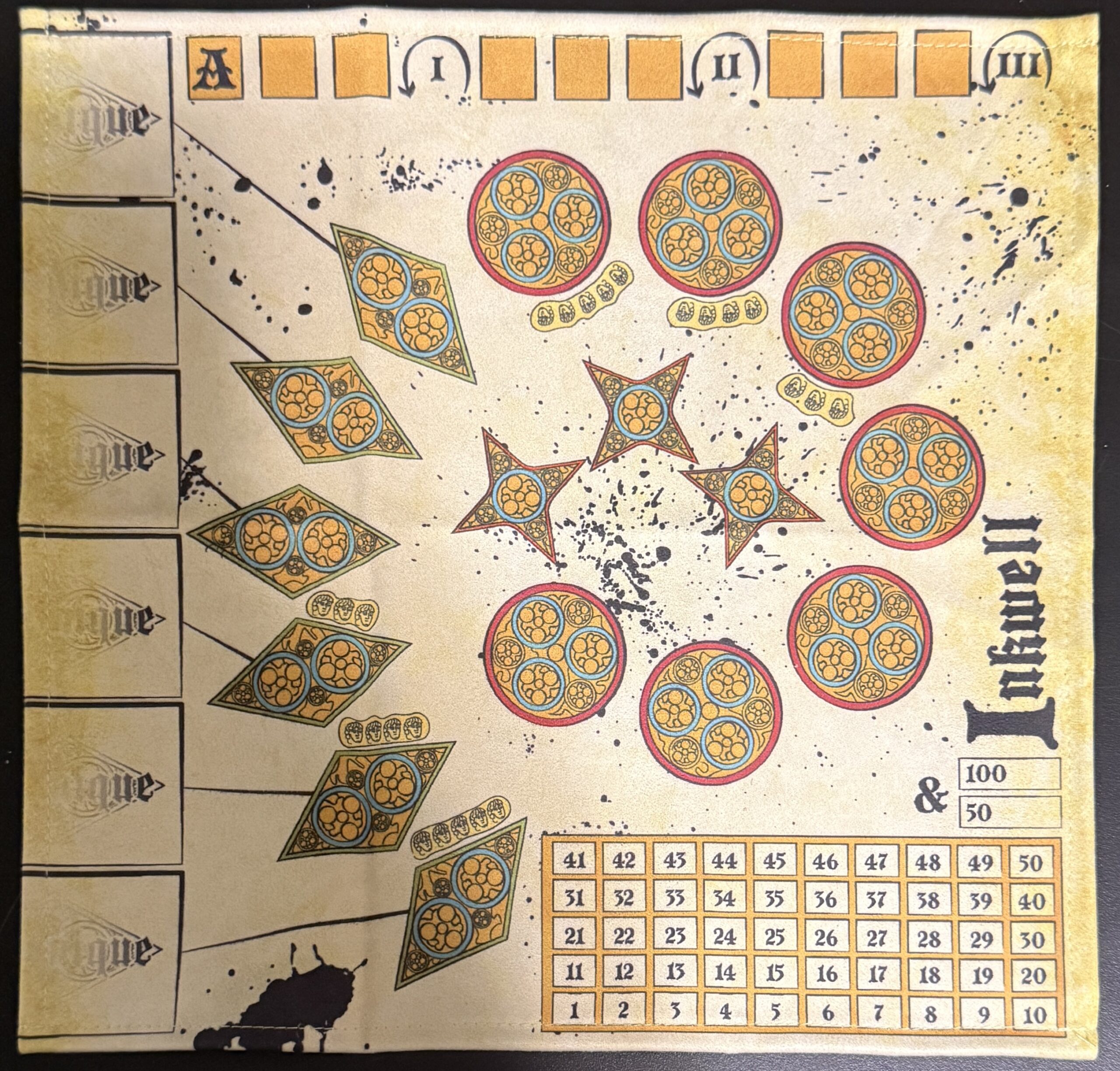
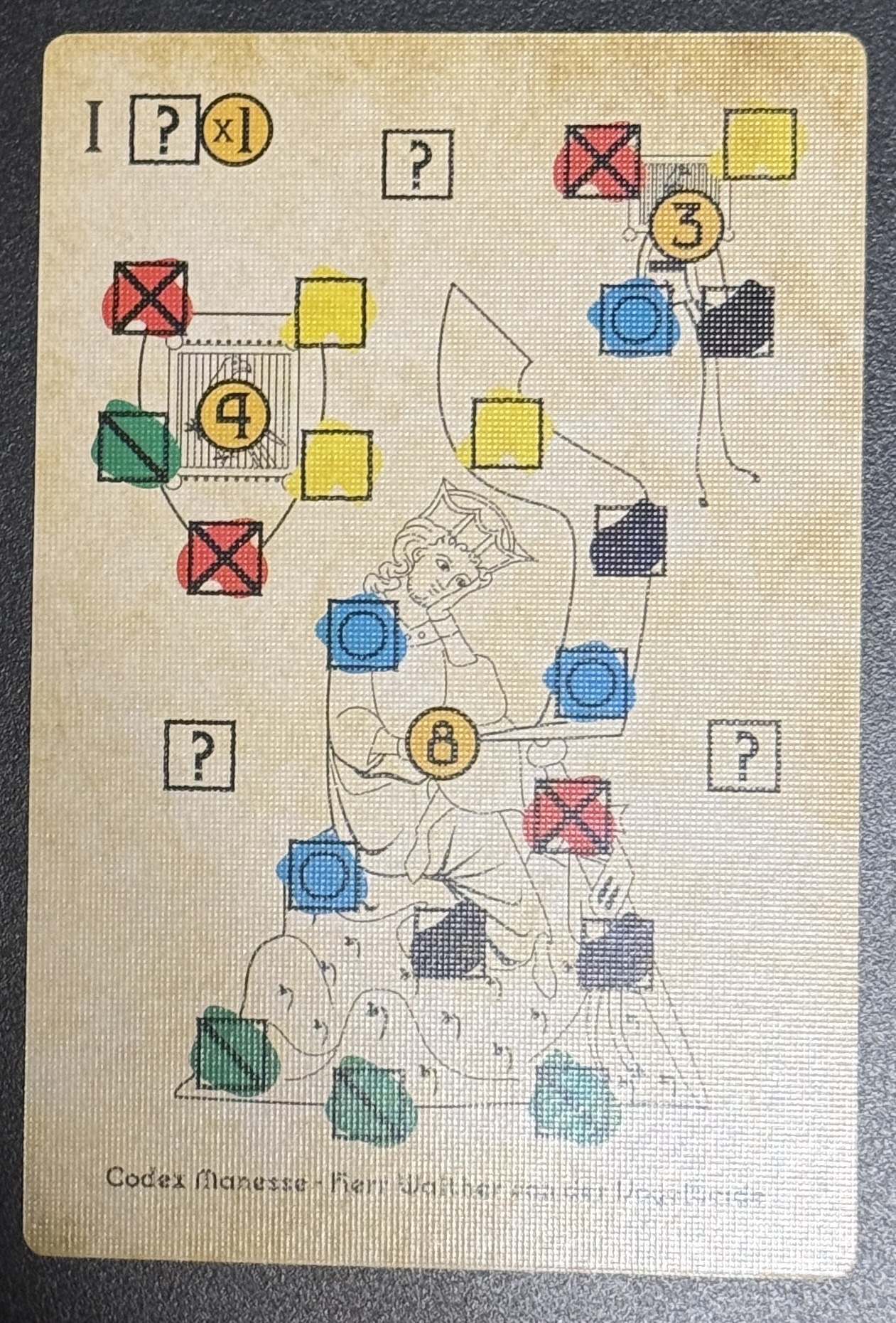
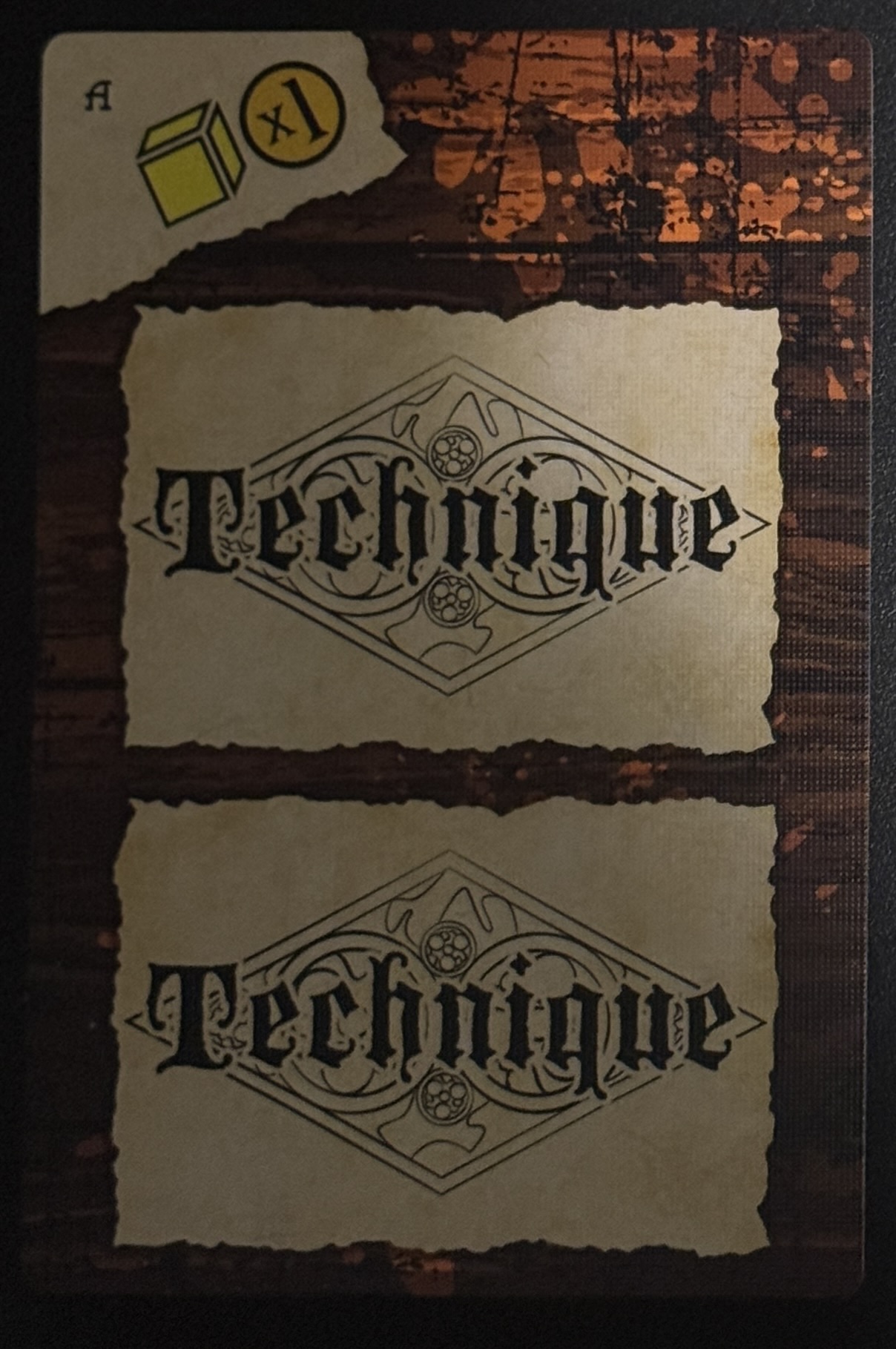
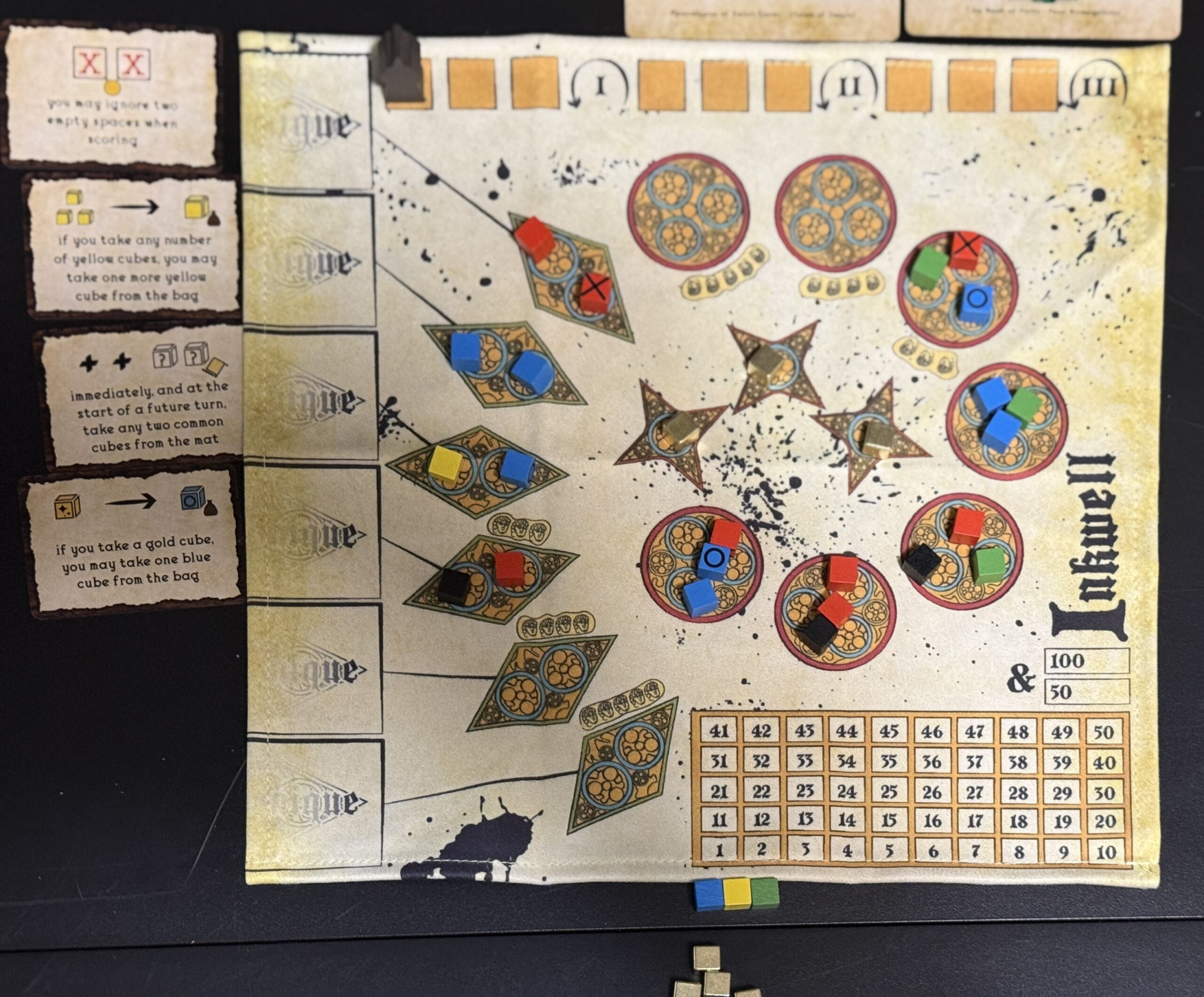
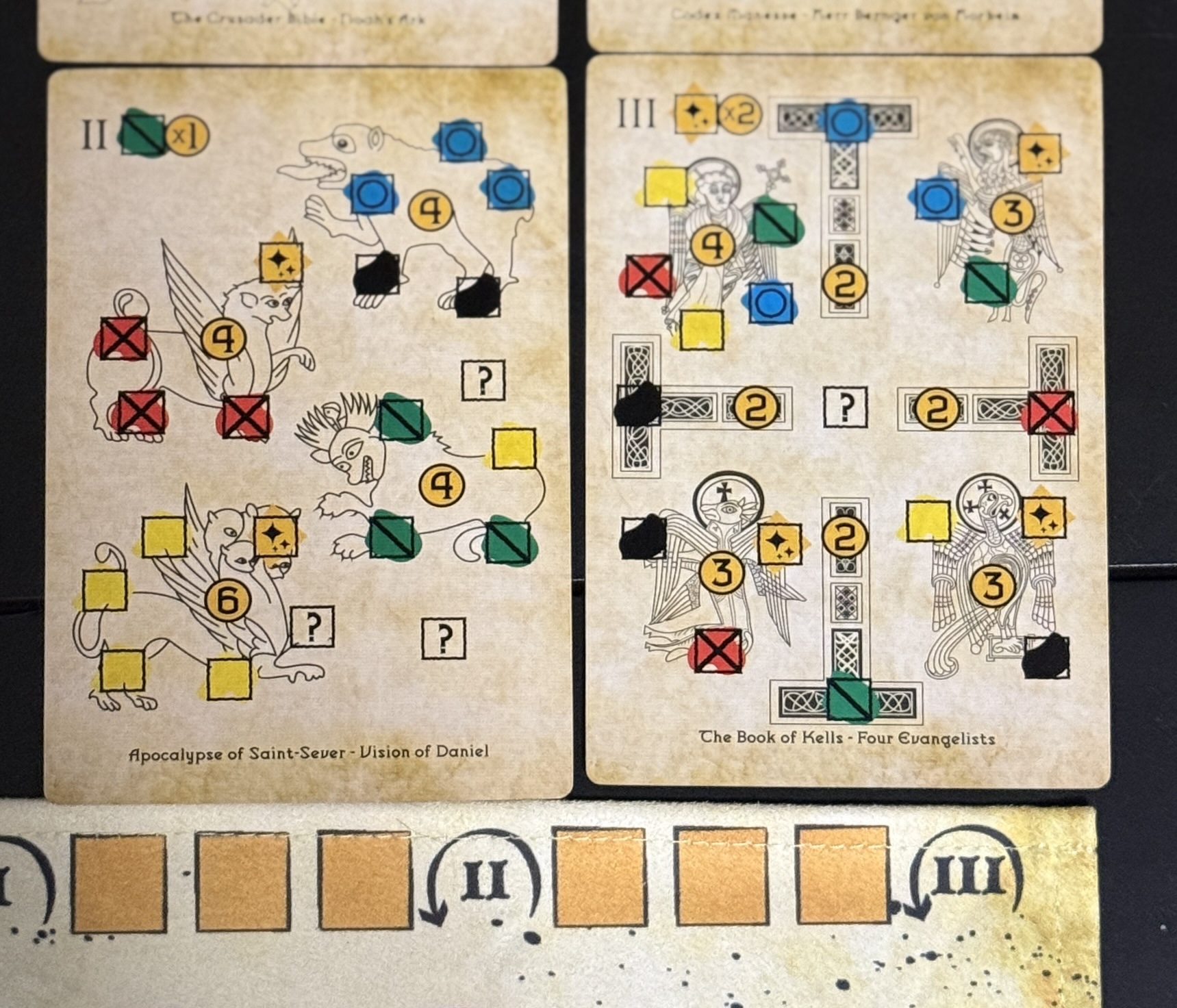
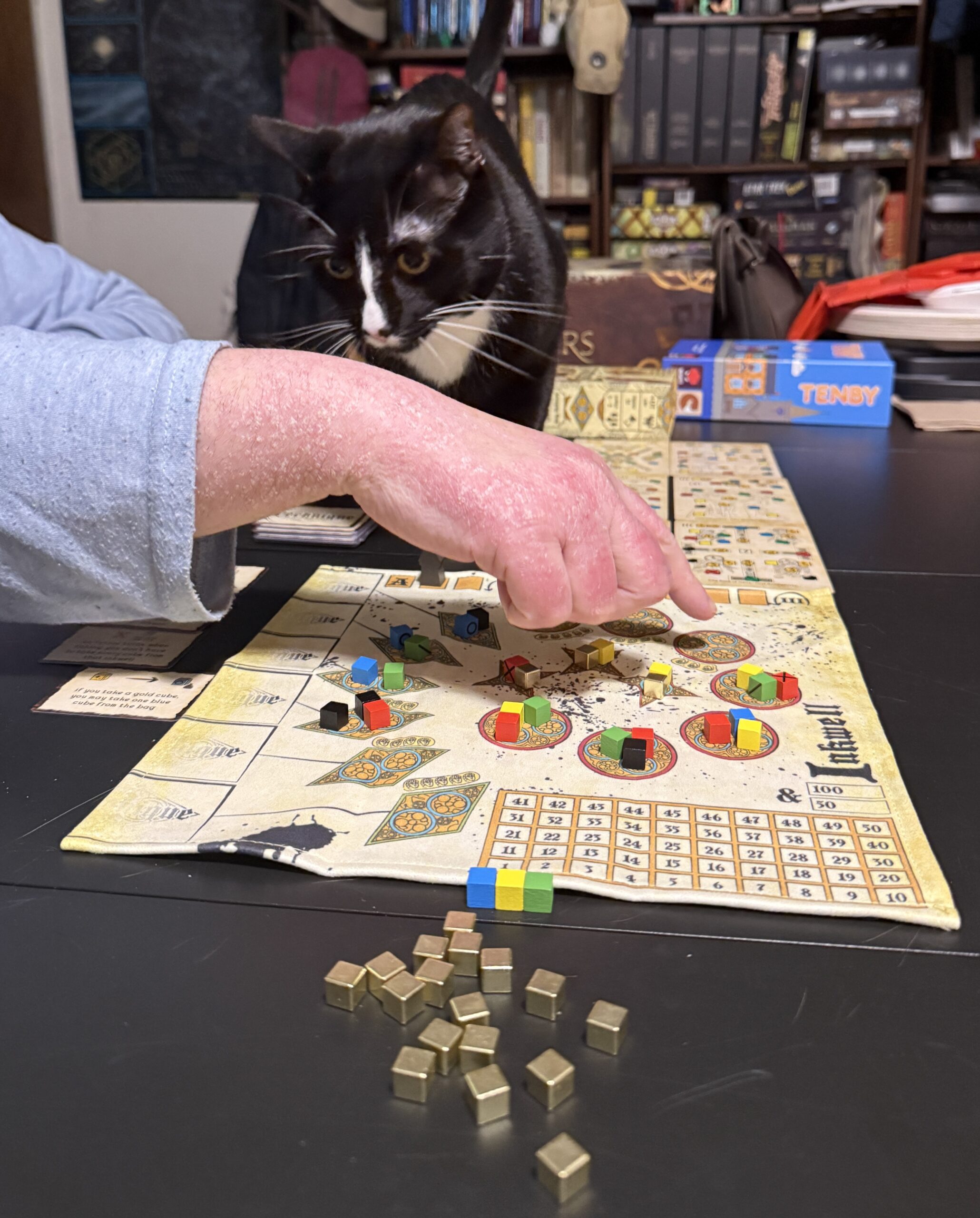
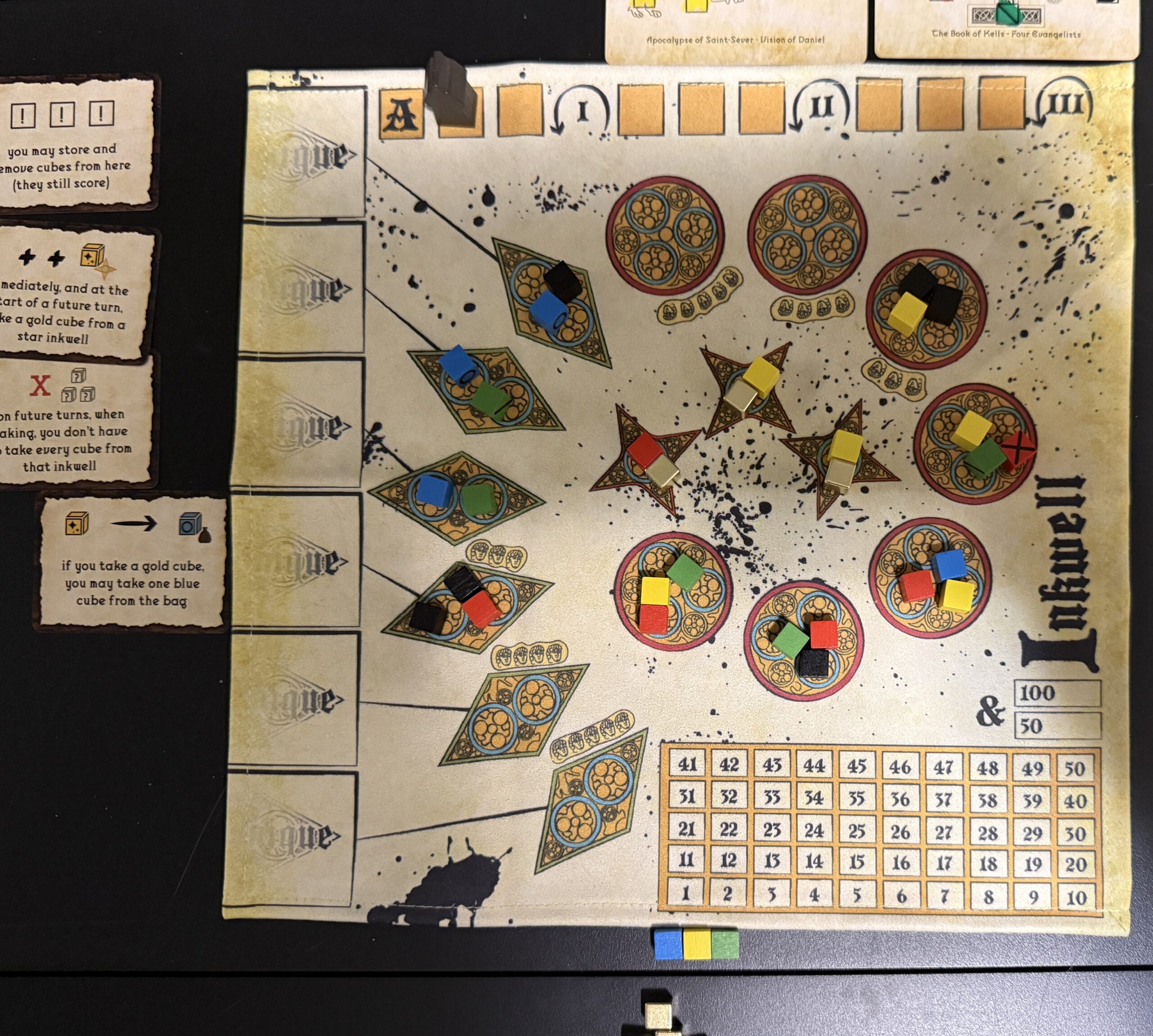
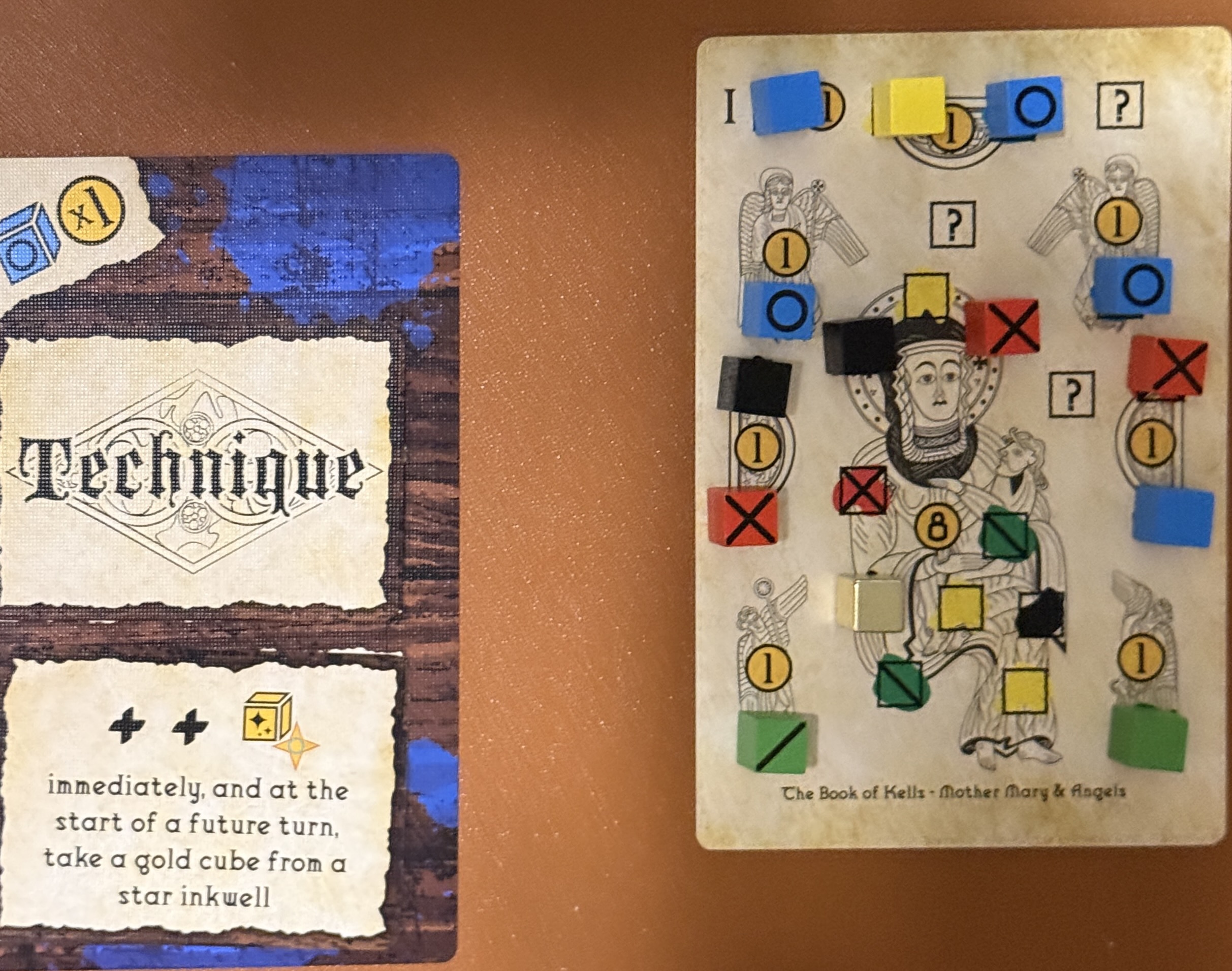
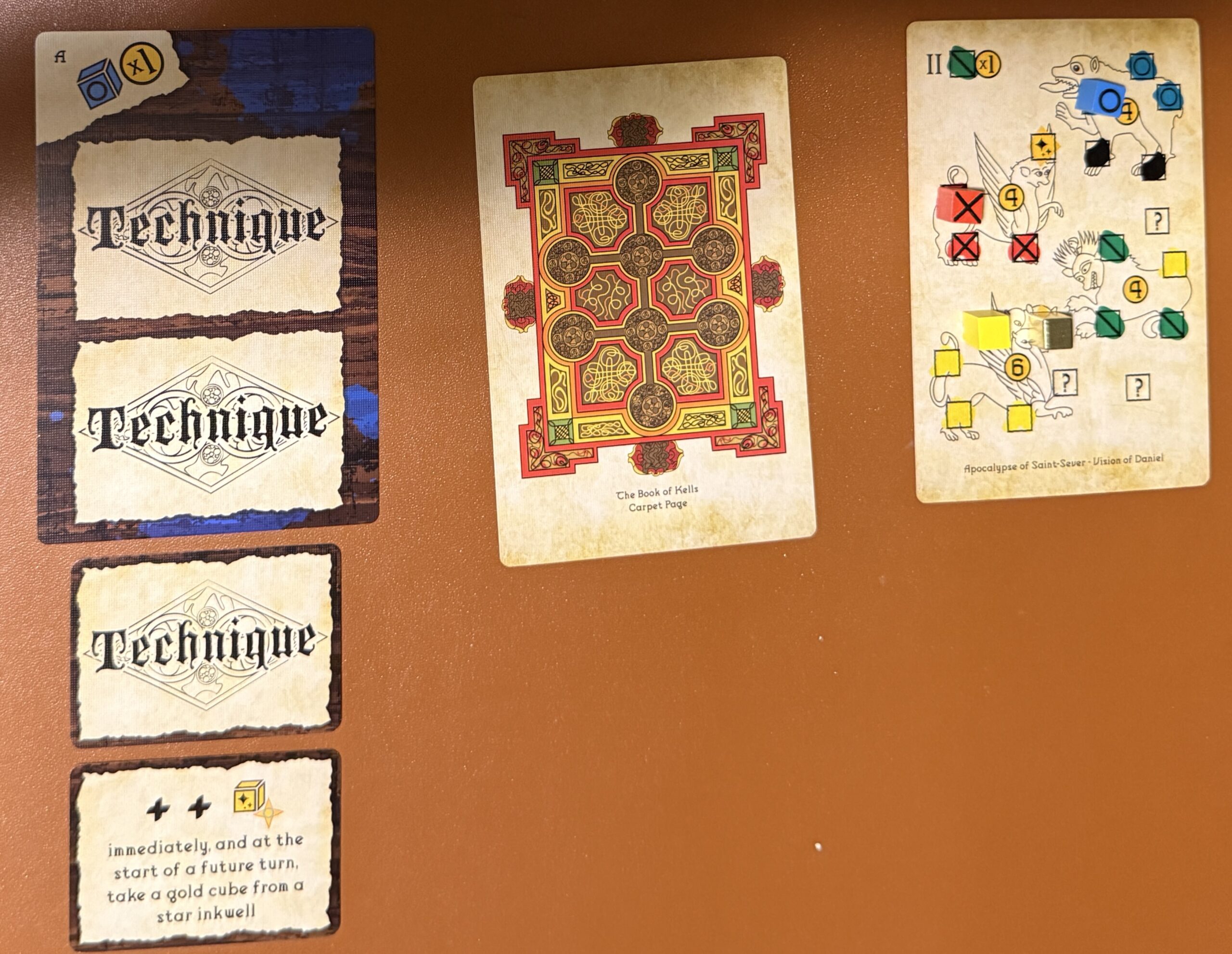
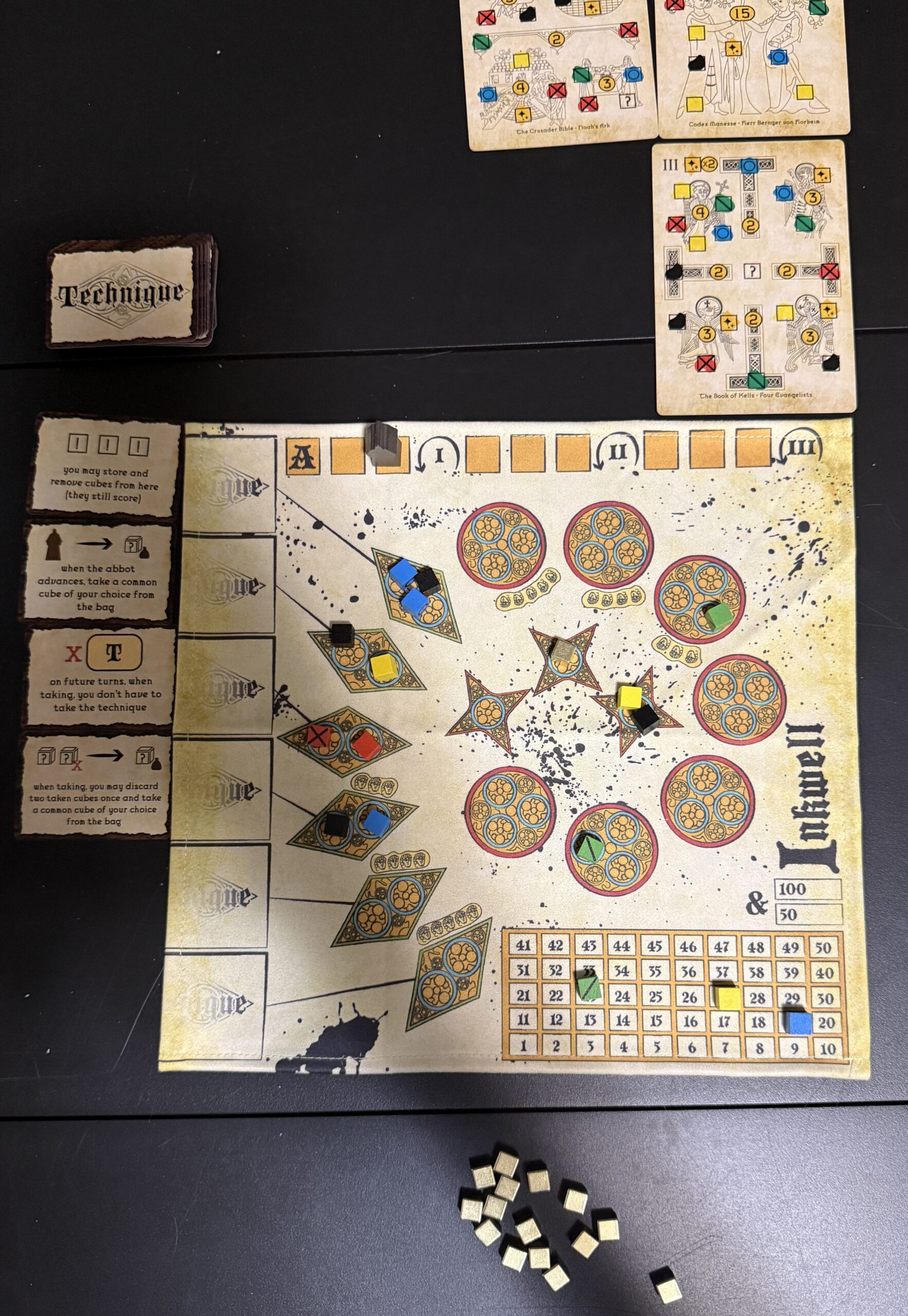
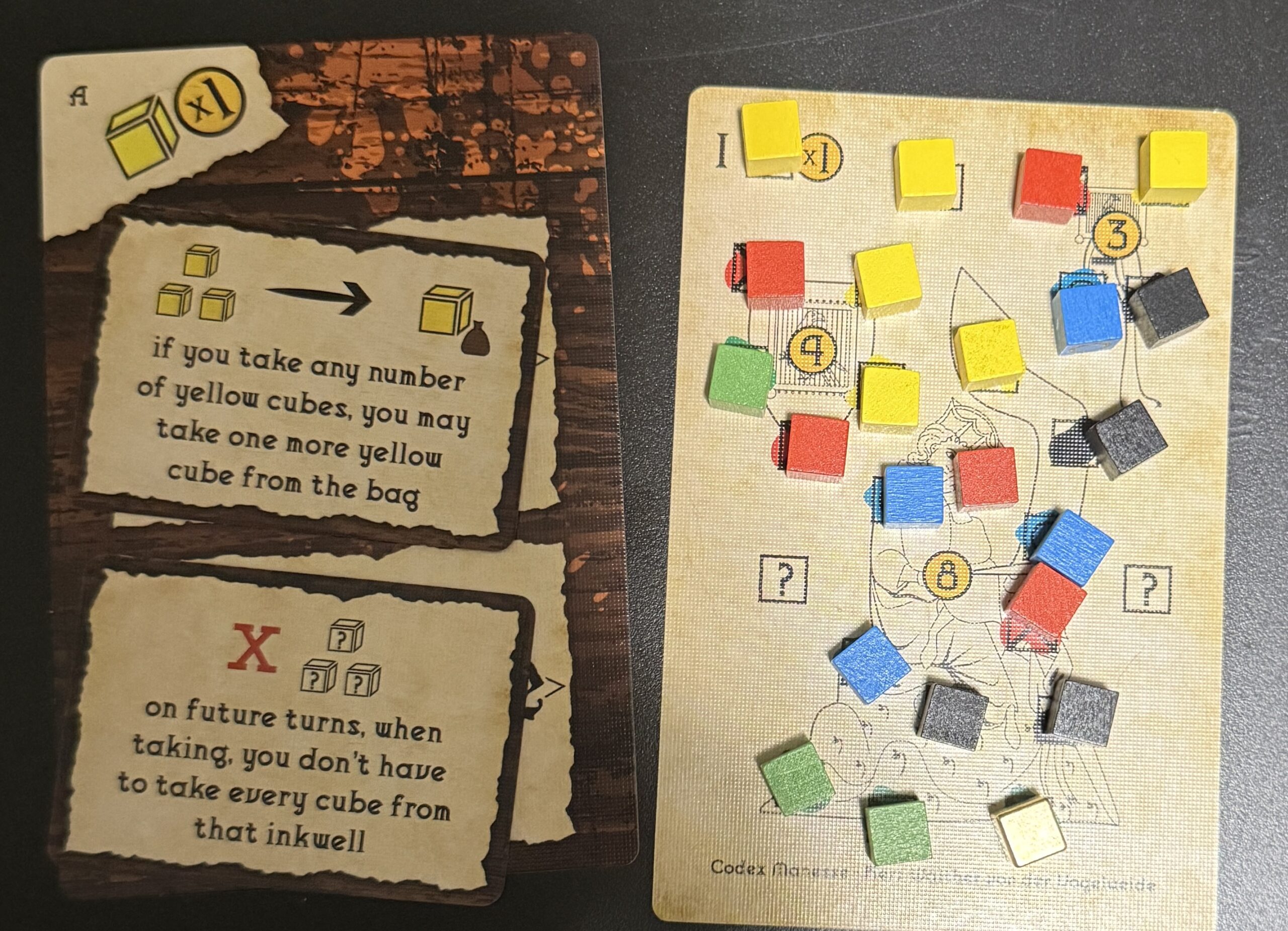
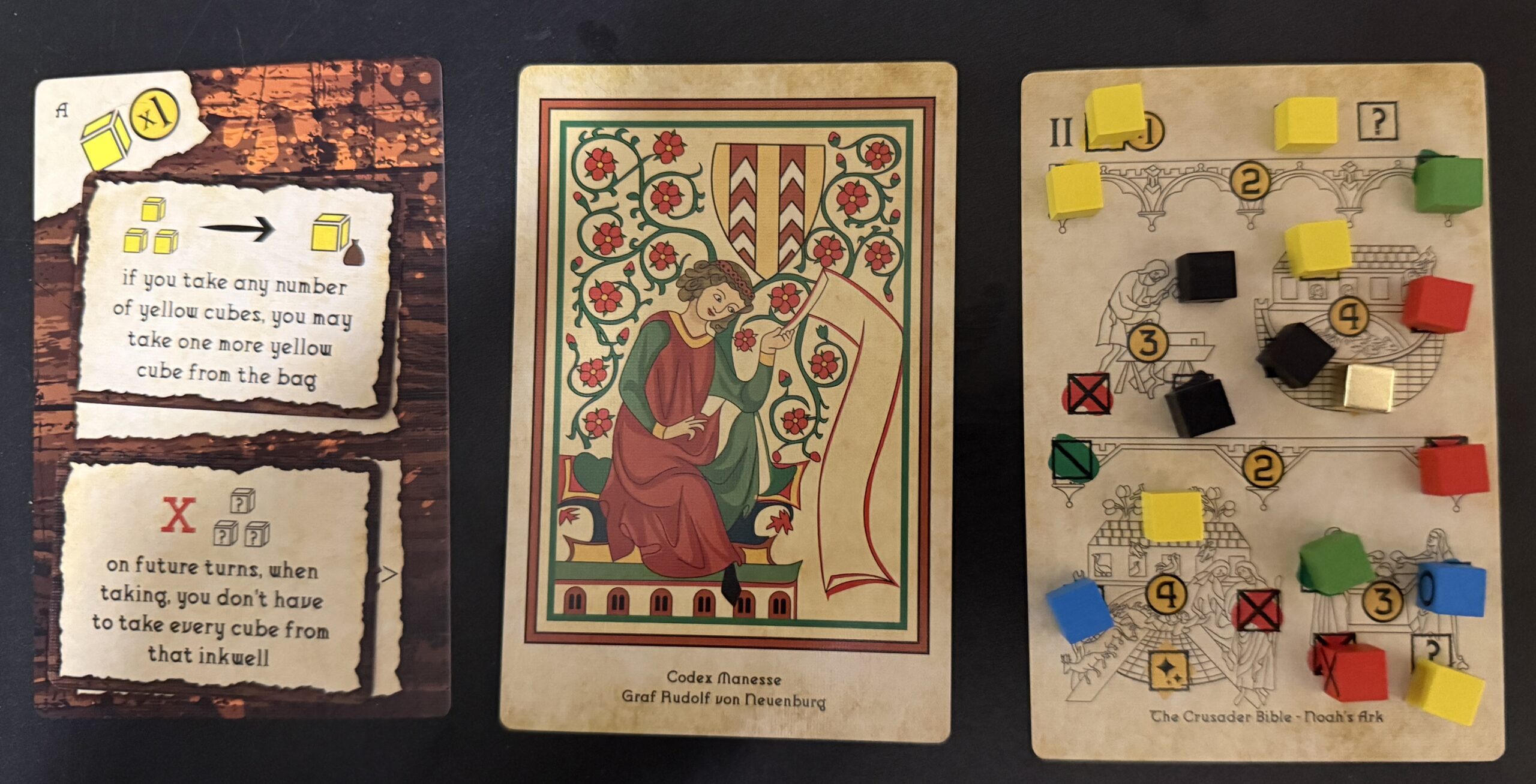
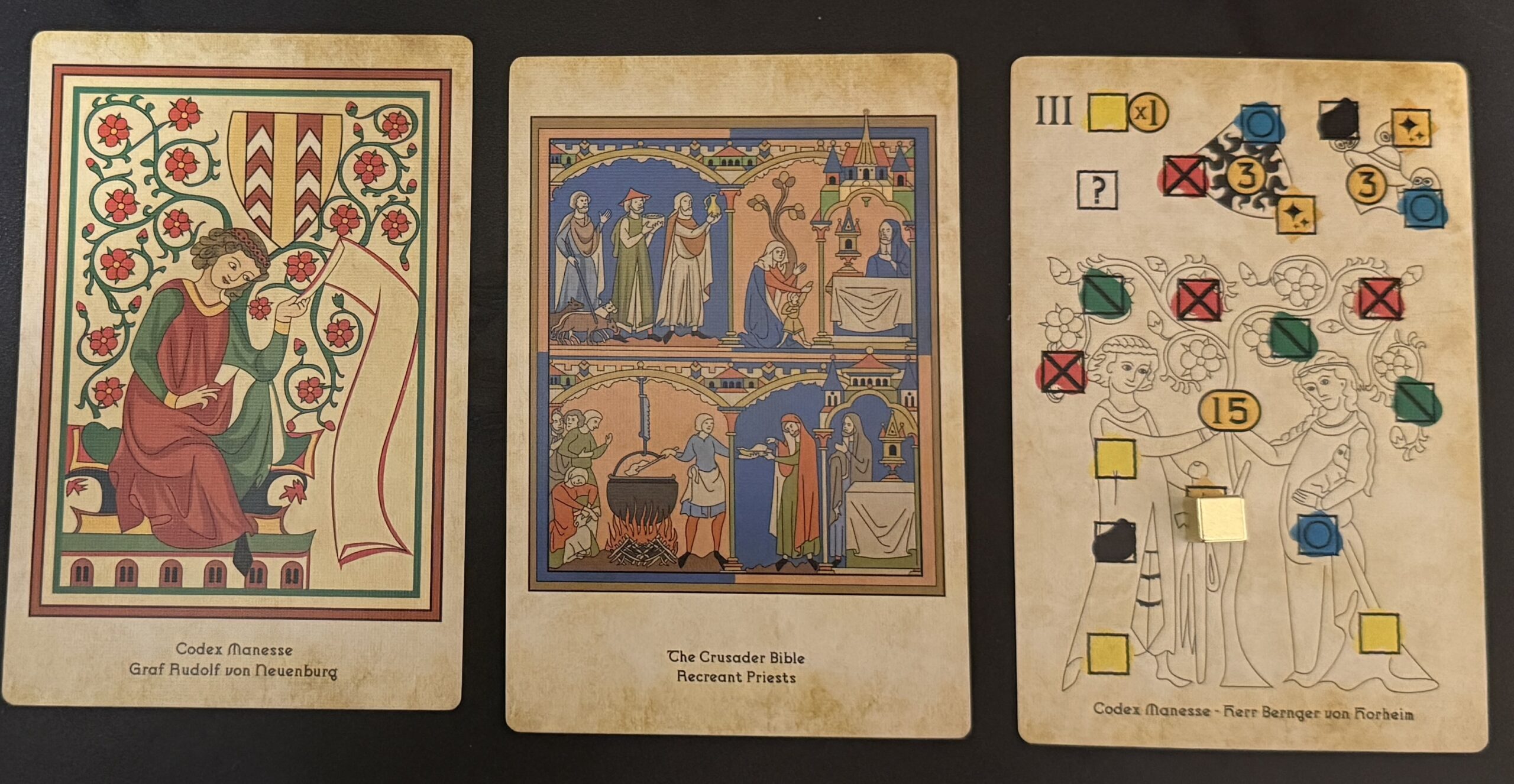
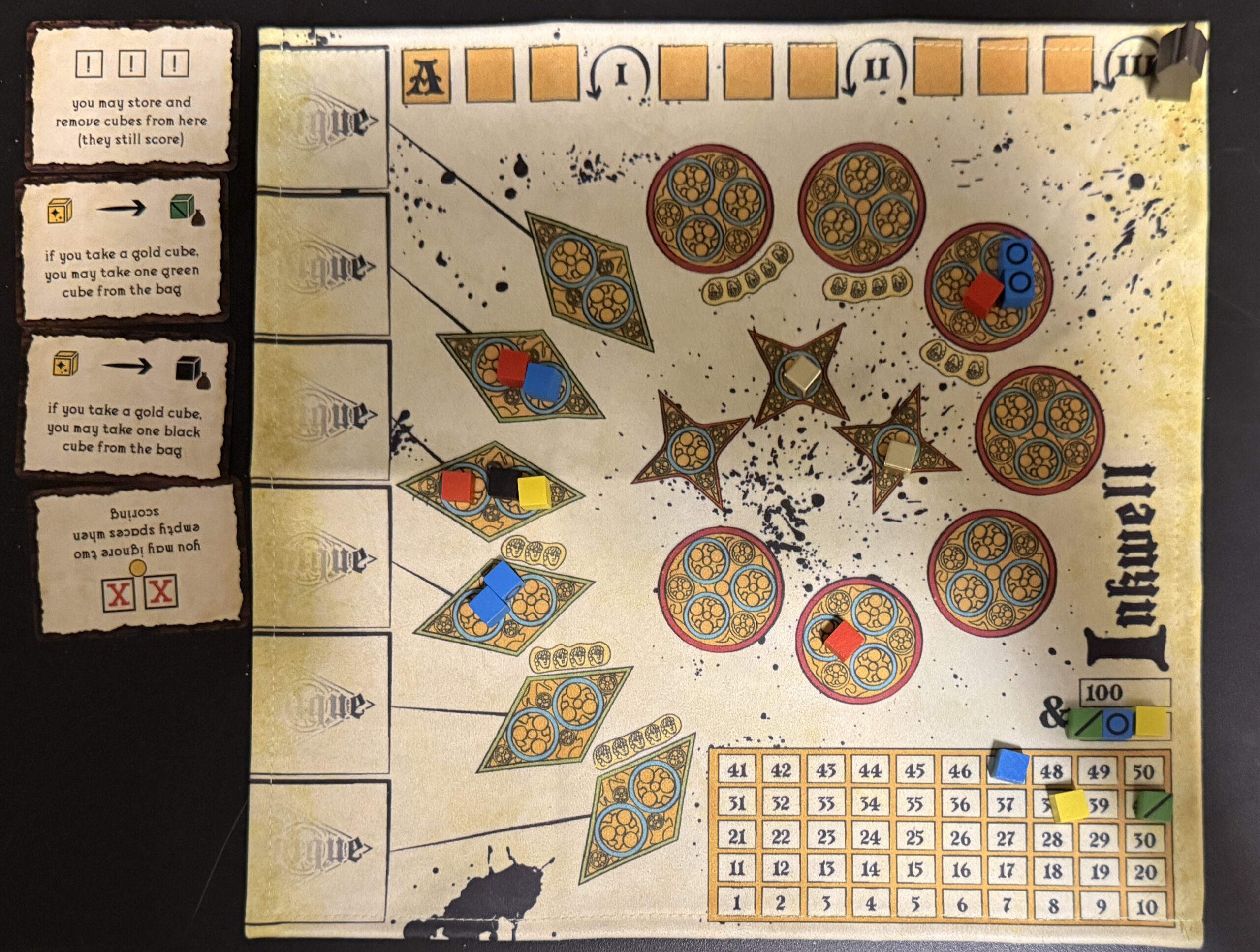
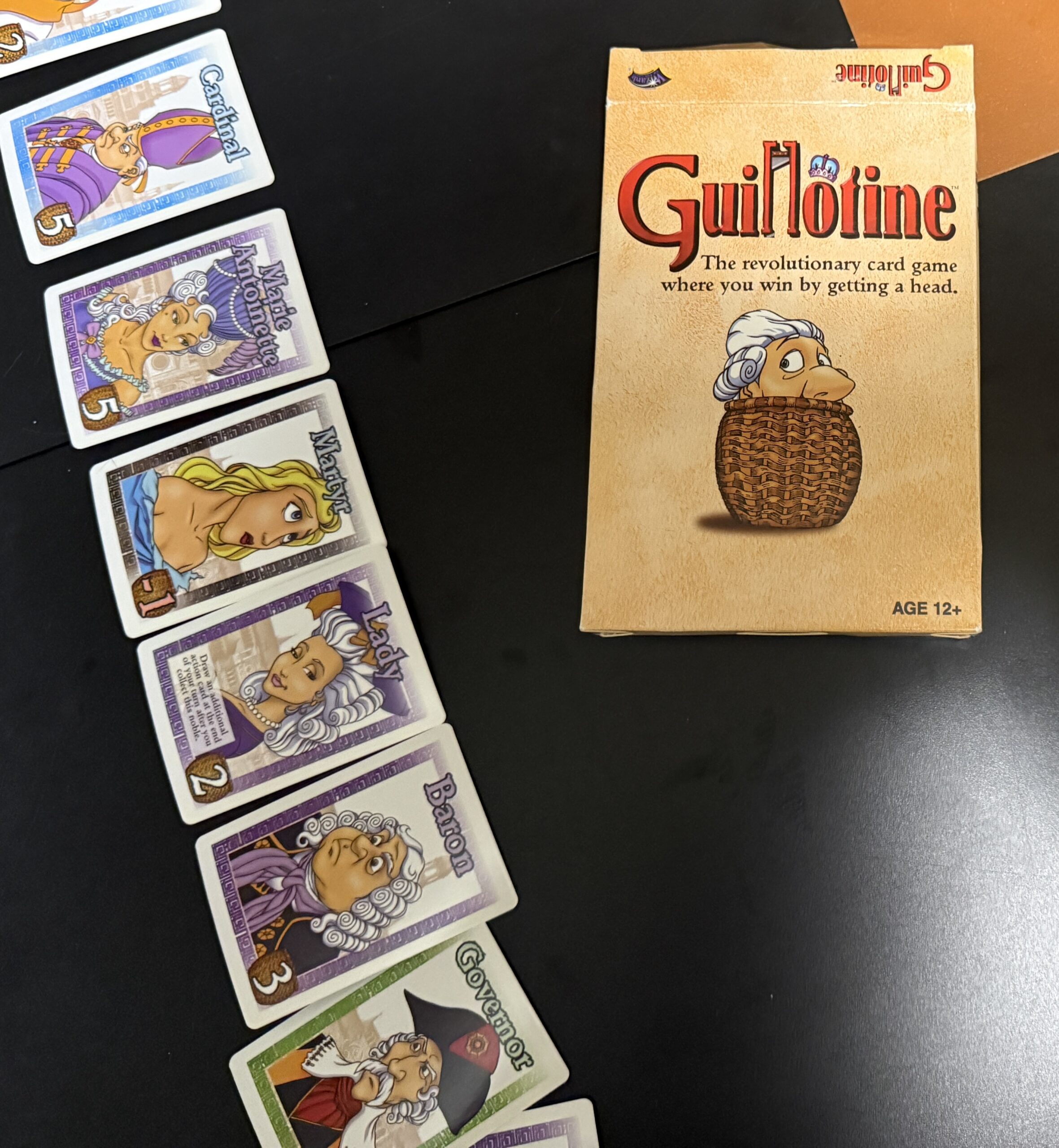
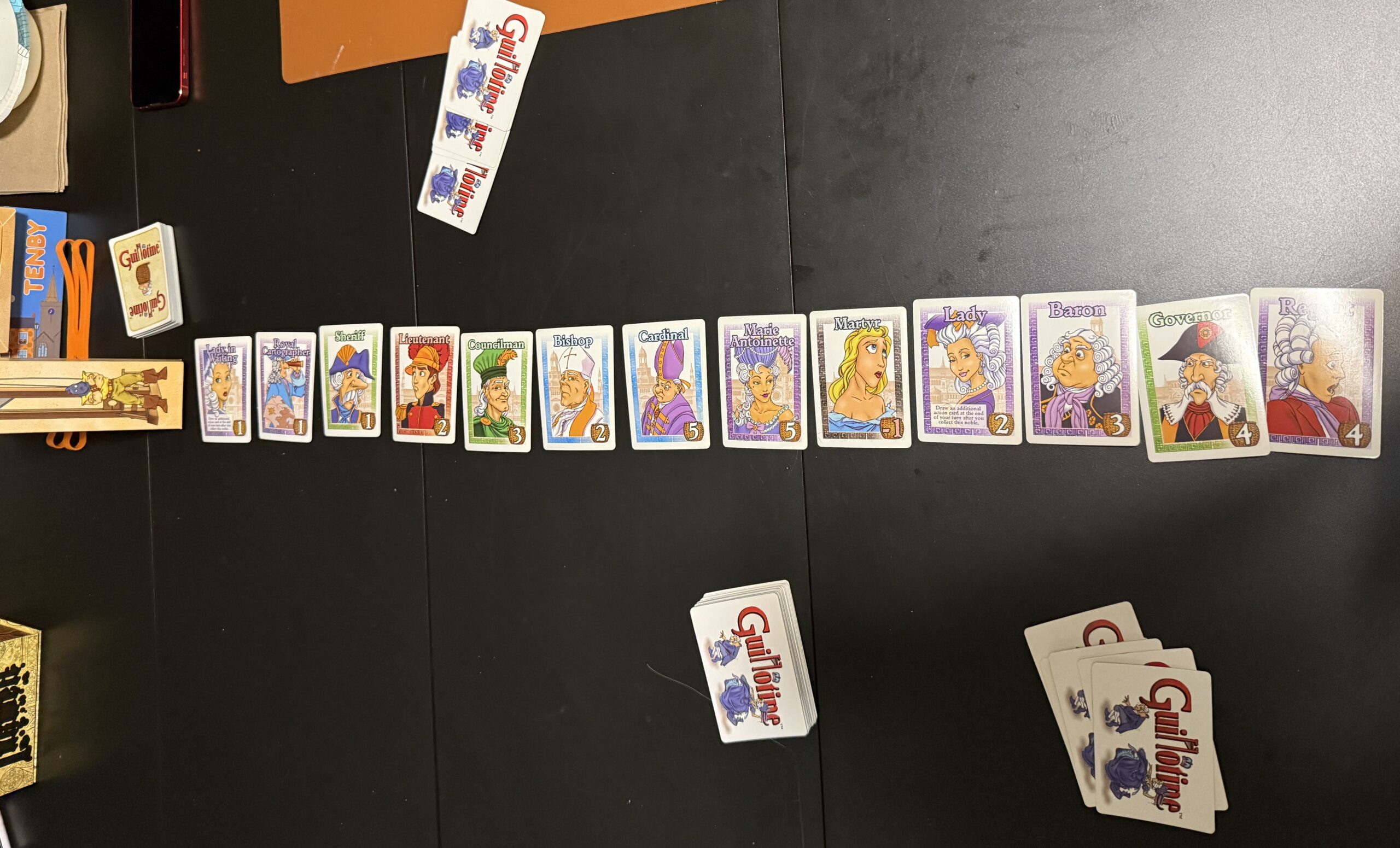
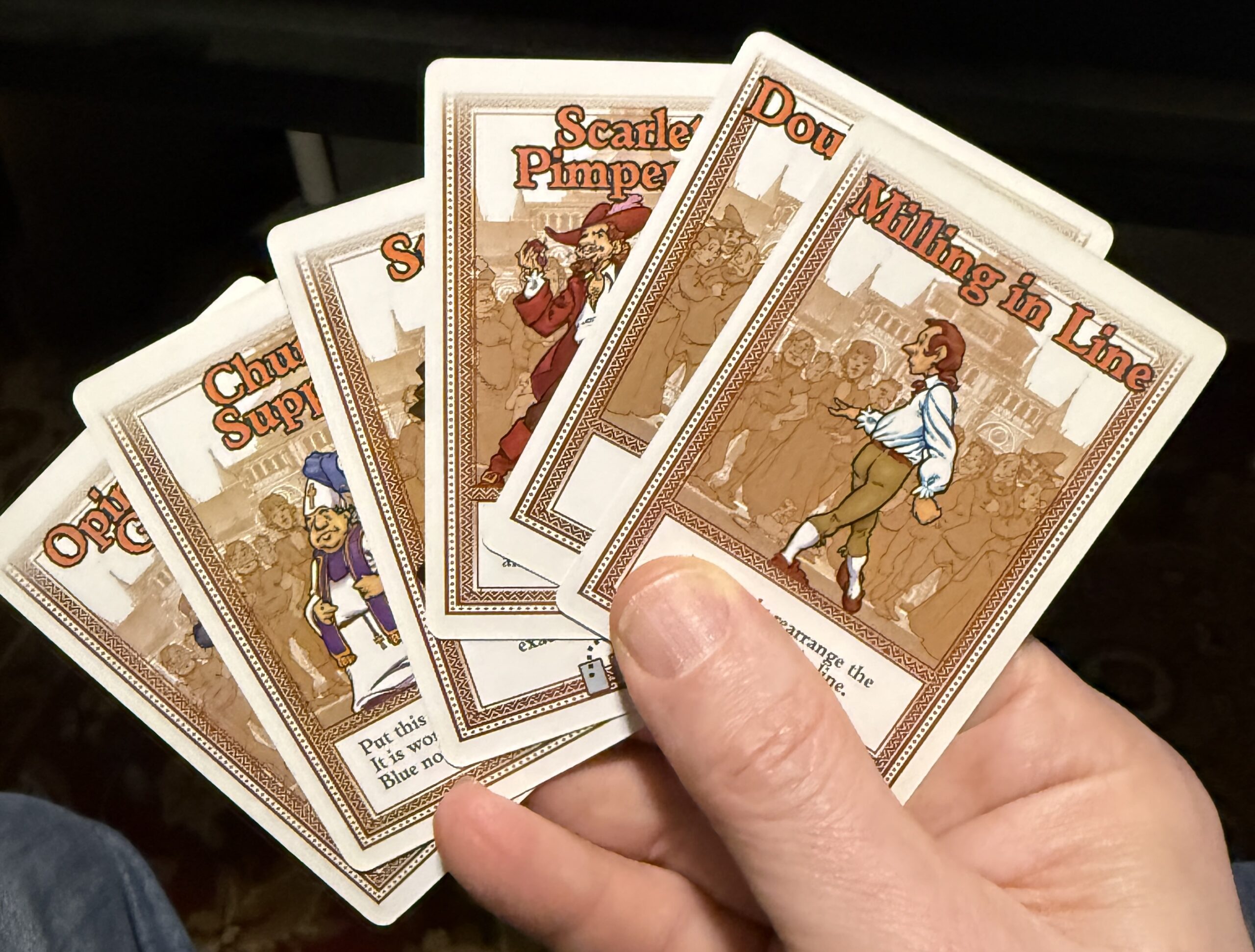
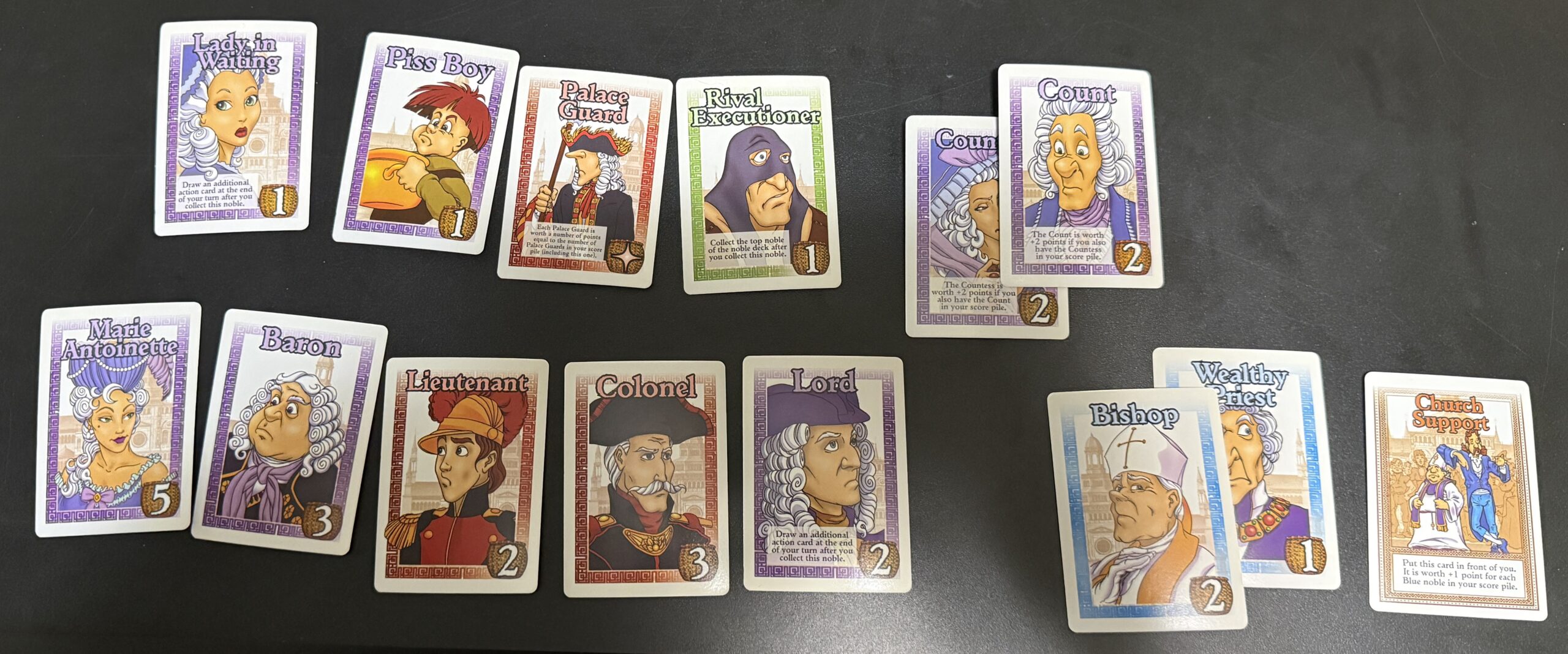
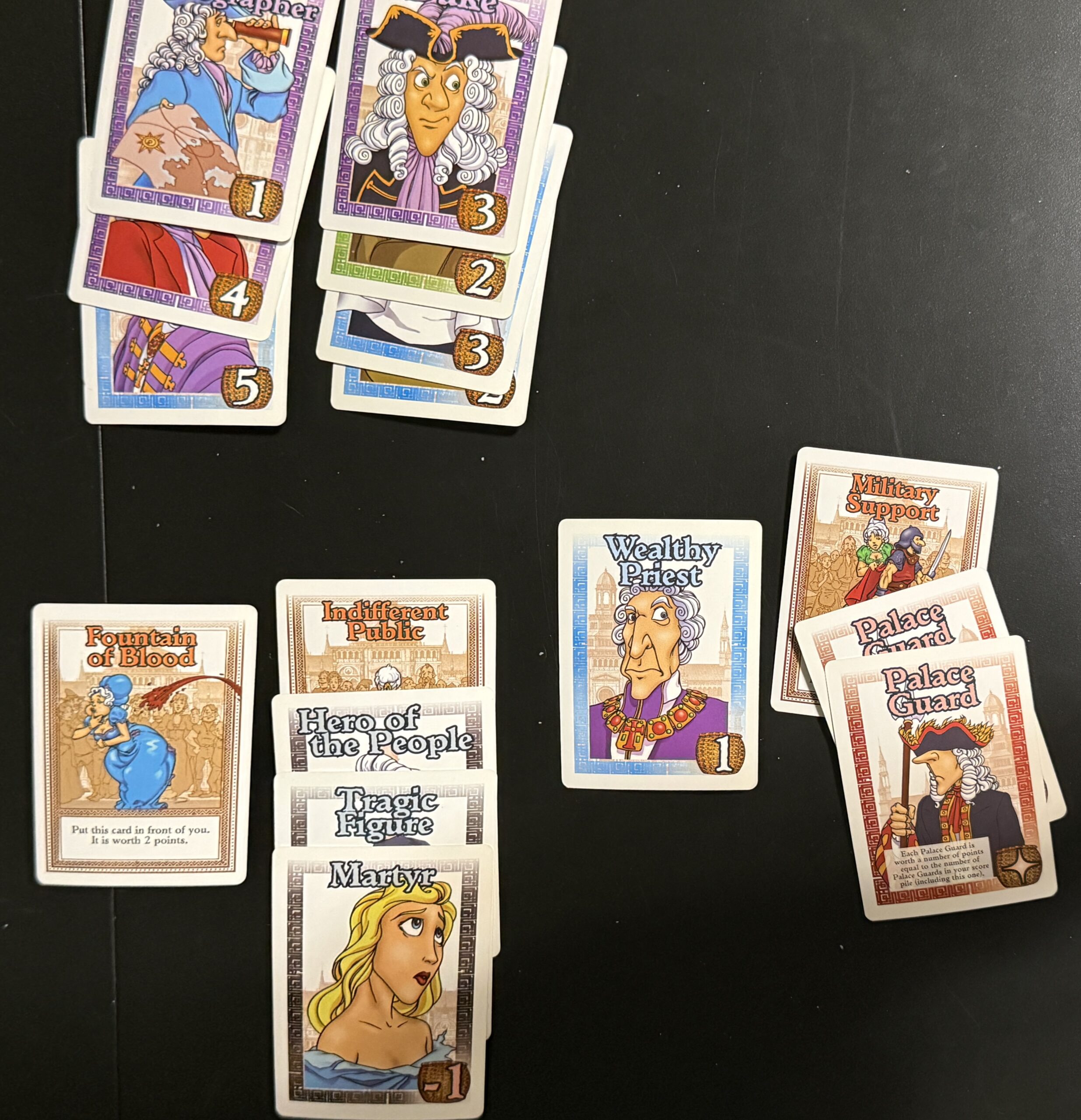
Just because a game comes in a small box doesn’t mean it skimps on production quality. This central player board is made of good-quality fabric, to simulate an old canvas. The general theme of Inkwell is that players are illuminating manuscripts under the watchful eye of an abbott. This board looks more complex than it actually is. The game resembles, and is only slightly more complex than, Azul.The cards are good-quality linen. This card represents a manuscript page that I’m trying to illuminate. I only score points for a given image (e.g., the four-square pattern in the upper right) if I’m able to place colored cubes in all the image’s squares. In addition, if a player puts a colored cube in the square in the upper left, any other cube of a matching color scores an additional point.Each player also gets a a placeholder for Technique cards. You can only gain two new Techniques per manuscript page. These cards add special rules, a couple of which we’ll see below. The icon on the upper left means, in my case, I get an additional point for every yellow cube I place on my manuscript.The central board after it’s been randomly populated with cubes. During their turn, a player takes all the cubes in a “inkwell”: a star, a circle, or a diamond. They must place those cubes in their manuscript. If they can’t place a cube, then they can’t collect any of those cubes in the first place. The gold cubes are wild and can represent any color. If you take the cubes from a diamond space, you also get the associated Technique on the far left.These are a couple of more advanced manuscript pages that are available later in the game. The squares with little stars inside must be filled with gold cubes to complete the image.Shuba listens intently as John explains the rules of the game. He doesn’t want to make any mistakes. He was bitterly disappointed later to learn that we only set up the board for a three-player game.The central board a bit later in the game. Every time all of the inkwells with the same shape are emptied of cubes, every empty inkwell is refreshed. If an inkwell wasn’t emptied, it gets an additional cube. Also, the abbot (the black meeple at the top) moves forward one square. The abbott is anxious to get these manuscript pages completed; you want to finish your page before he reaches one of the Roman numeral circles on his track.Andrew was the first of us to “flip a page”: Declare that the page was as illuminated as it was going to get. You can see that he didn’t complete the 8-point image in the center-bottom area of his page, but he decided it was better to go to his next page early than reach for completion. Will this strategy work for him?When Andrew flipped his page, he got to see the fully-illuminated manuscript on the back. He selected a different page, a Level II, to work on. When you flip a card before the abbott reaches a circular space (see the abbott track in the pictures above), you start your next page with a gold cube. Also note that he kept all the Techniques he accumulated in his previous page, and moved them down to free up two new Techniques that he might gain as he worked on his current page.A little further on: All three of us (John = green, Andrew = blue, me = yellow) have flipped a page before the abbott reached the circled I; if we hadn’t finished our level I page by the time the abbot crossed that circle, we would have had to flip our page no matter what its current state.The state of my manuscript at the time I took the picture above. I took a different strategy than Andrew’s “flip early; flip often”: I illuminated all my images to get the most points out of the card. You can also see that I “doubled down” on yellow cubes: I get two points for every yellow cube (one point from each card), plus I had a Technique that let me gain yellow cubes easily. Would this strategy work for me?My player area at the time I flipped my level II card, which I managed to do before the abbott reach the II space on his track. The level II manuscripts all require gold cubes to fill images. I gave up on total completion and flipped when I filled most of the images. Notice that I didn’t pick up any new Techniques as I illuminated my level II pages; none of the available ones appealed to me, or their associated spaces didn’t offer cubes I wanted.After I flipped my level II card, I selected the level III card you see on the right. I decided to focus entirely on completing the 15-point image and ignore the others. Would this work?Answer: no! Andrew won the game with 97 points; notice that all three of us reached the “&50” space just above the main scoring track. Congratulations, Andrew! The abbott was impressed the most by you.After Inkwell, Andrew and I were feeling tired; I couldn’t stop yawning. So we finished out the evening with an old and simple classic: Guillotine.In Guillotine, players take the role of executioners during the French Revolution. During your turn, you’ll take the frontmost card next to the guillotine (the cardboard standee on the far left). Before you take that card, you can play an action card that can affect the order of line-up, affect another player’s collected nobles, offer scoring opportunity, etc. The goal is to collect as many high-value cards as you can, while leaving “junk” cards for your opponents.To show you some action cards for this blog post, I took a picture of my hand near the start of the game. With a display of cleverness that is rivaled by the insight of the Goddess Athena, I placed my thumb over the only description that you could have possibly seen.Behold the final scoring tableau of the winner, me, with 32 point from the cards themselves, plus various scoring bonuses from the text on the cards—
Wait a moment…Behold the scoring tableau of the winner, John, with 32 points. Some idiot (whose name is strikingly similar to mine) gave him the Tragic Figure card. Normally gray cards are worth negative points, but the Tragic Figure flips that and turns them positive. John even warned me of this, but I didn’t pay attention.
In other words, we tied!
It was another fun night. Hopefully Maria will be able to join us next time.