This weekend was a bit different for me. Instead of a game night on Friday, I went to one on Saturday. The people were different too: Mike, Michael, and Real Angela.
Real Angela, not Druid Angela. It’s not always about you.
At the Friday-night sessions, the gamers tend to play newer or more obscure games. For yesterday’s gathering, we played tried-and-true classics.
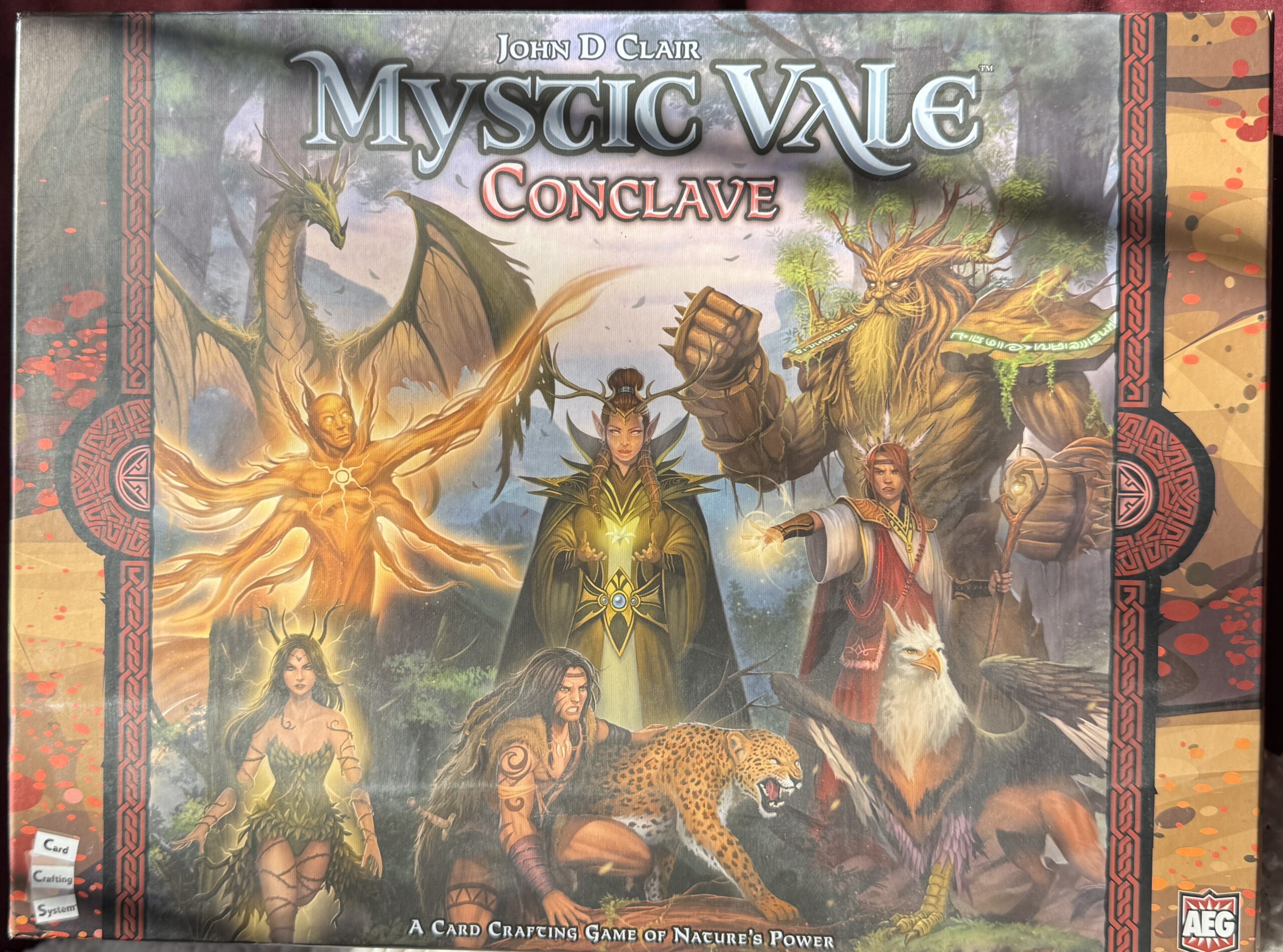
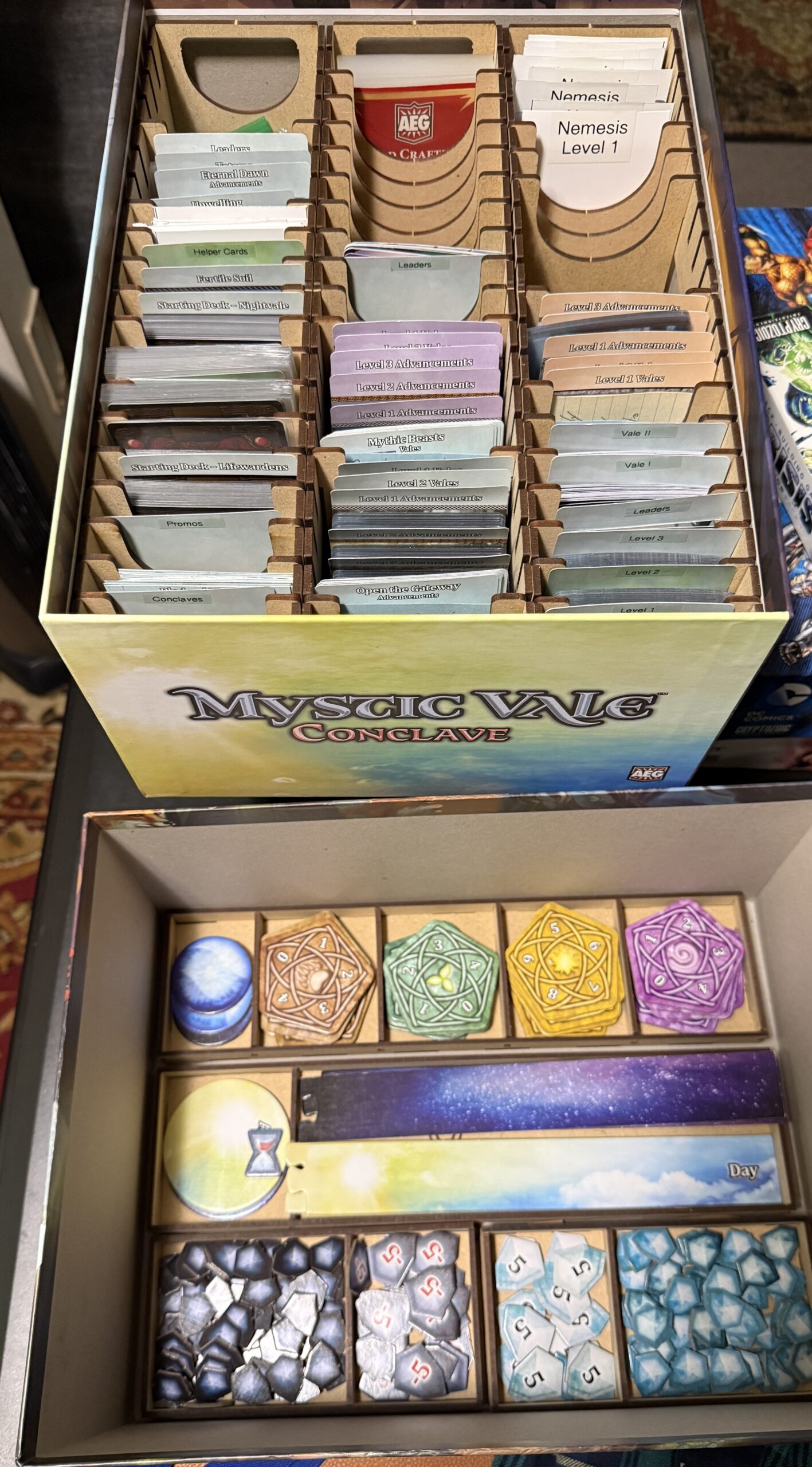
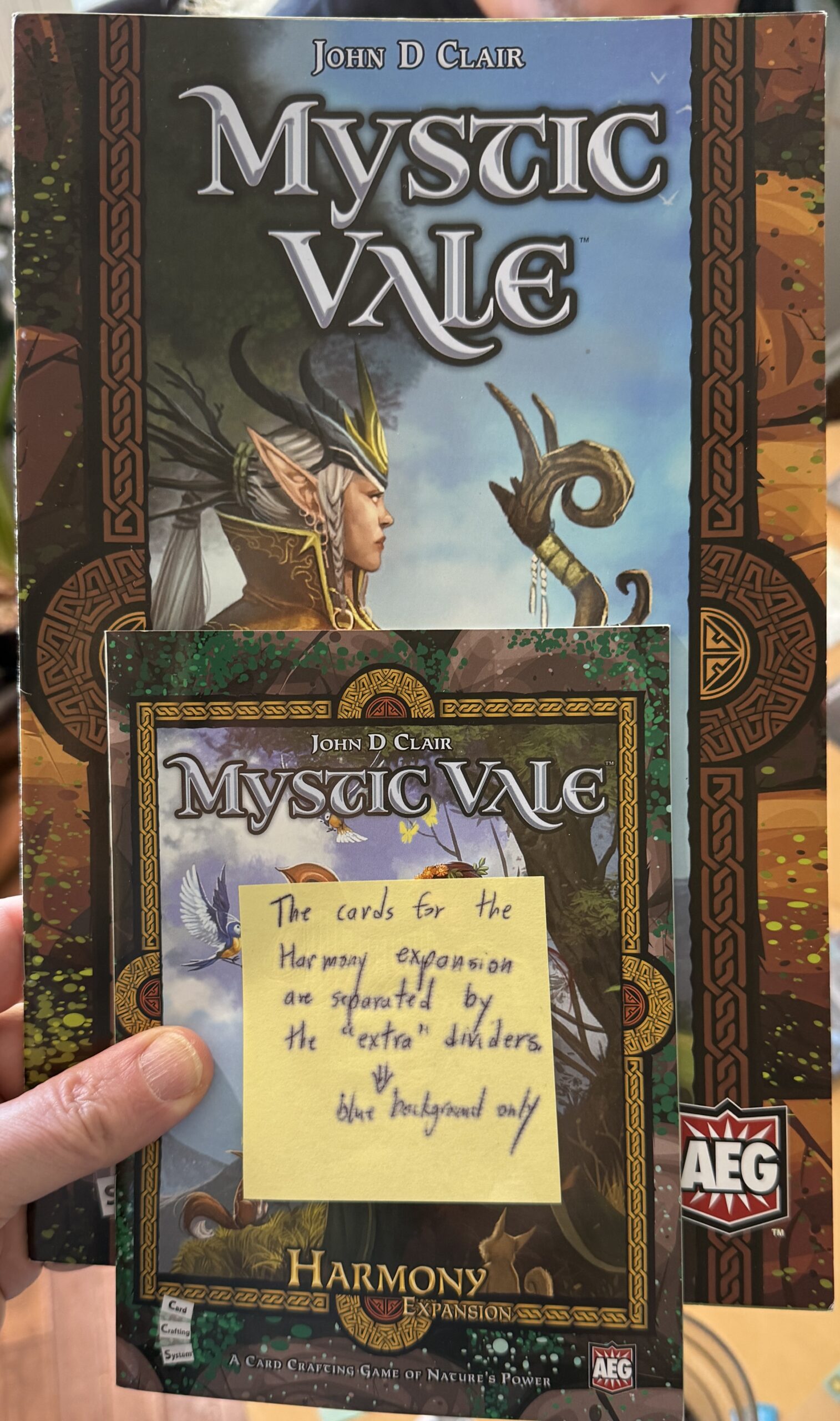
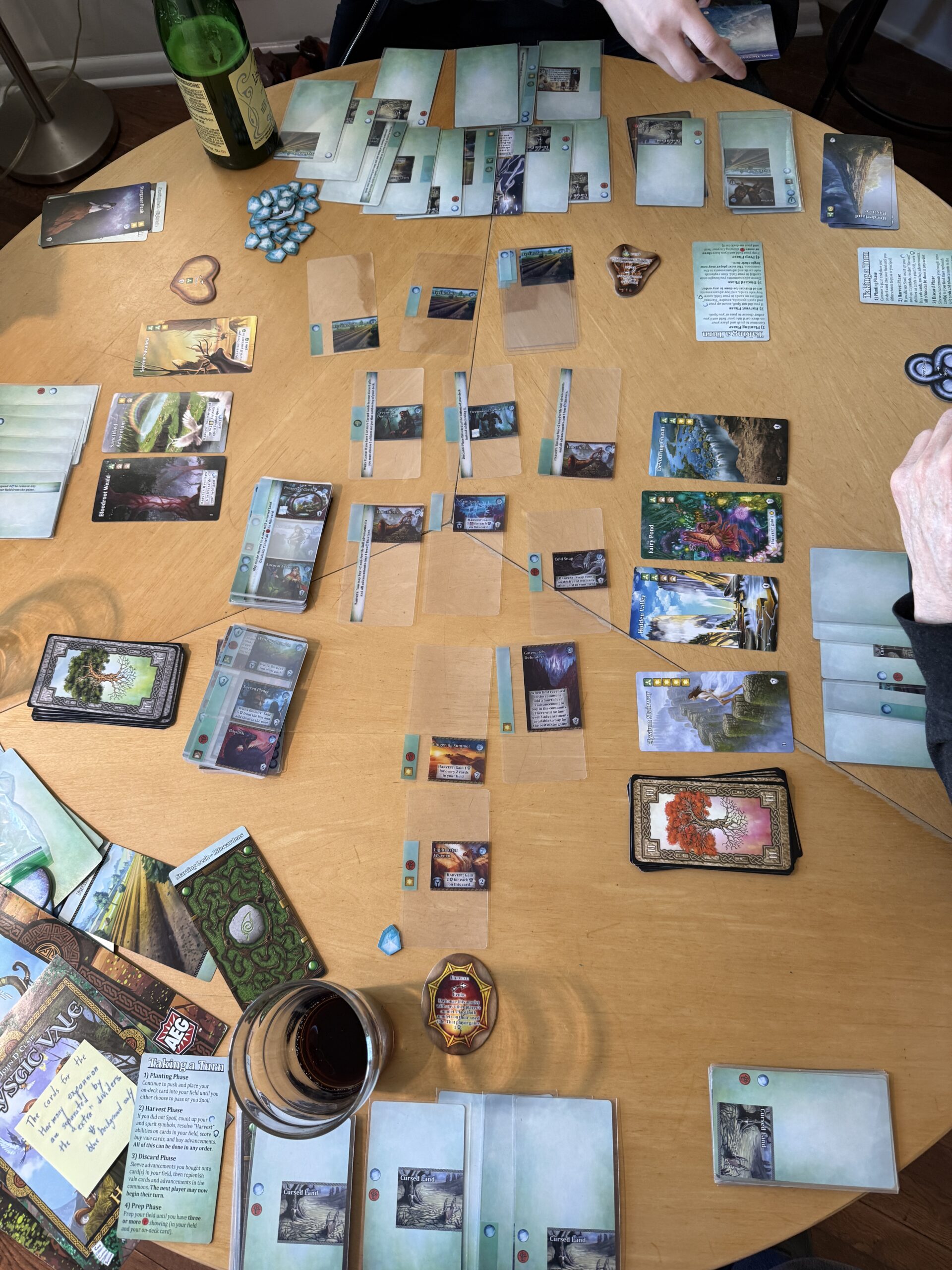
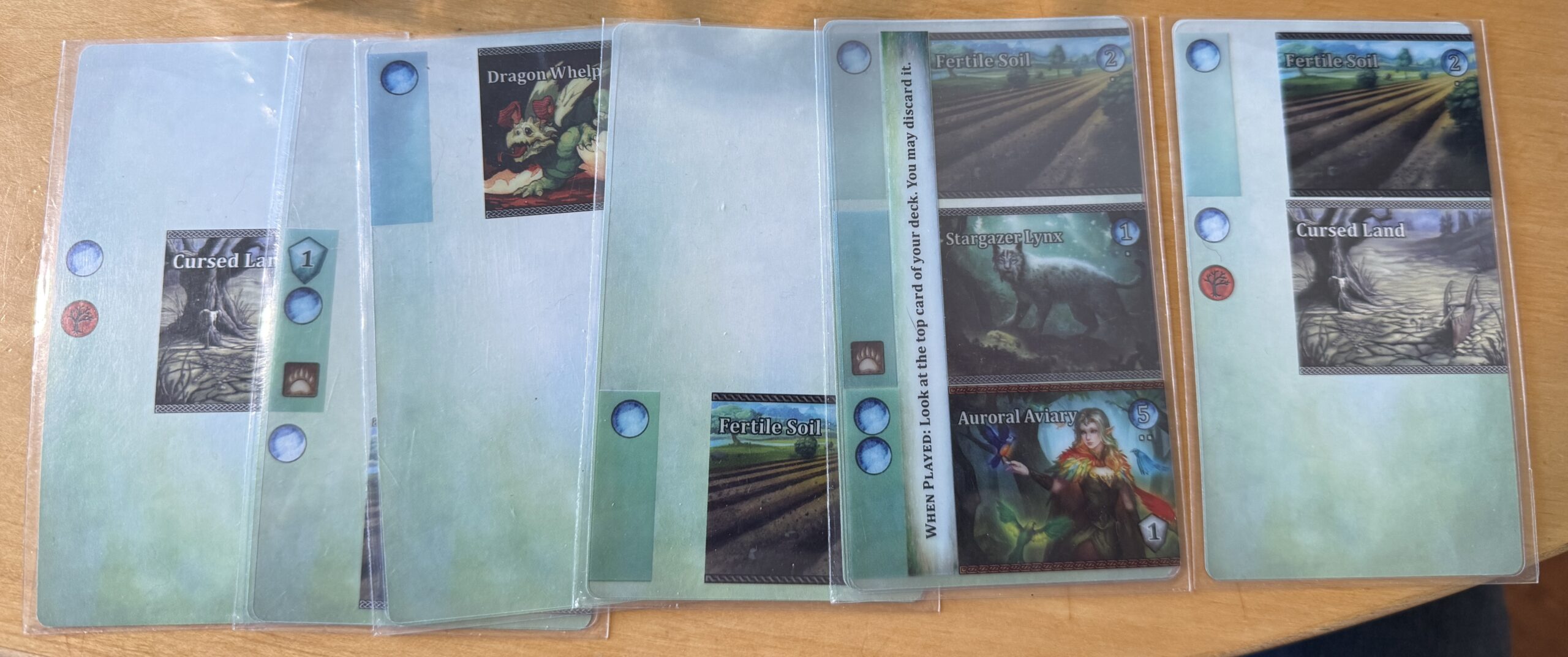
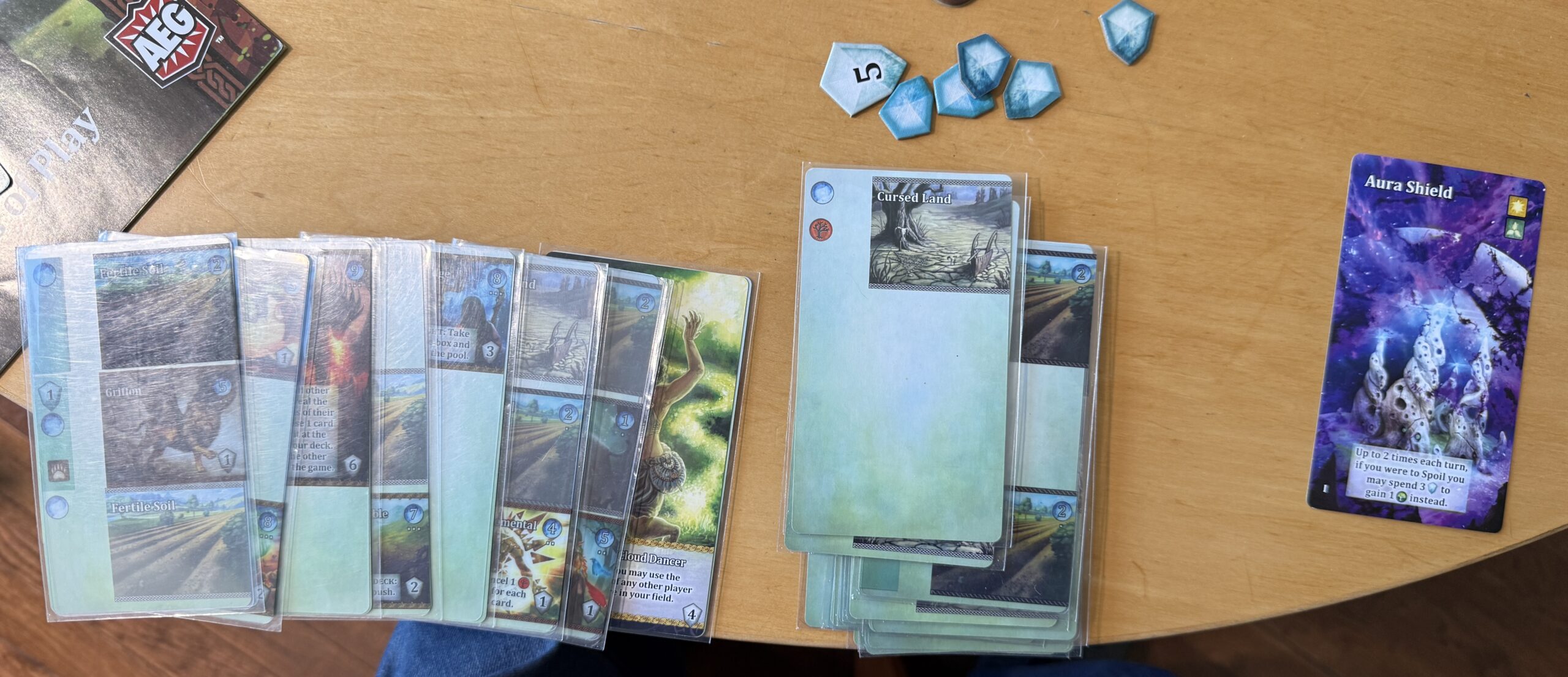
We started with Mystic Vale Conclave, a game I described about eight years ago.I purchased a game box insert for Mystic Vale Conclave a couple of years ago. I use it to organize every Mystic Vale expansion I own. I think I have most (if not all) of them.The expansion we played was Mystic Value Harmony.Mystic Vale is a card-crafting game. You start with a deck of 20 cards. The number of cards is normally fixed. What changes are the cards themselves: You purchase inserts that you slide into card sleeves.Here’s an example; it’s one of the sets of cards I played during the game. If you see a darker shade of blue/gray on the left-hand side of the top/middle/bottom of card, it’s from a transparent insert I purchased with mana (the blue circles you see on the cards). The second card from the right is entirely filled with inserts I purchased.The general rule for playing cards is that you can put down cards until three of those red-tree icons are showing. You can choose to draw more cards, but if four (or more) red icons show, you “spoil” and lose your turn.
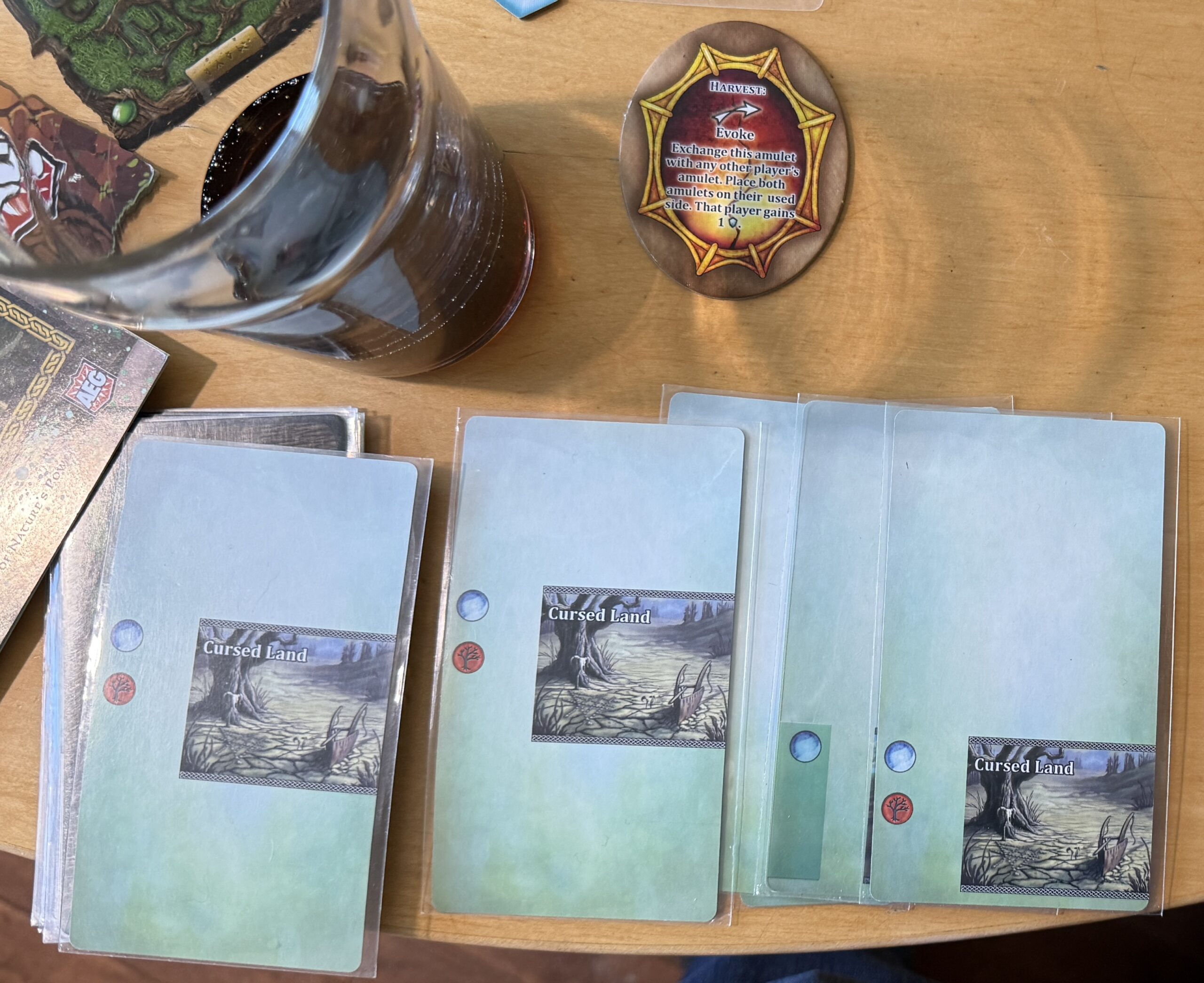
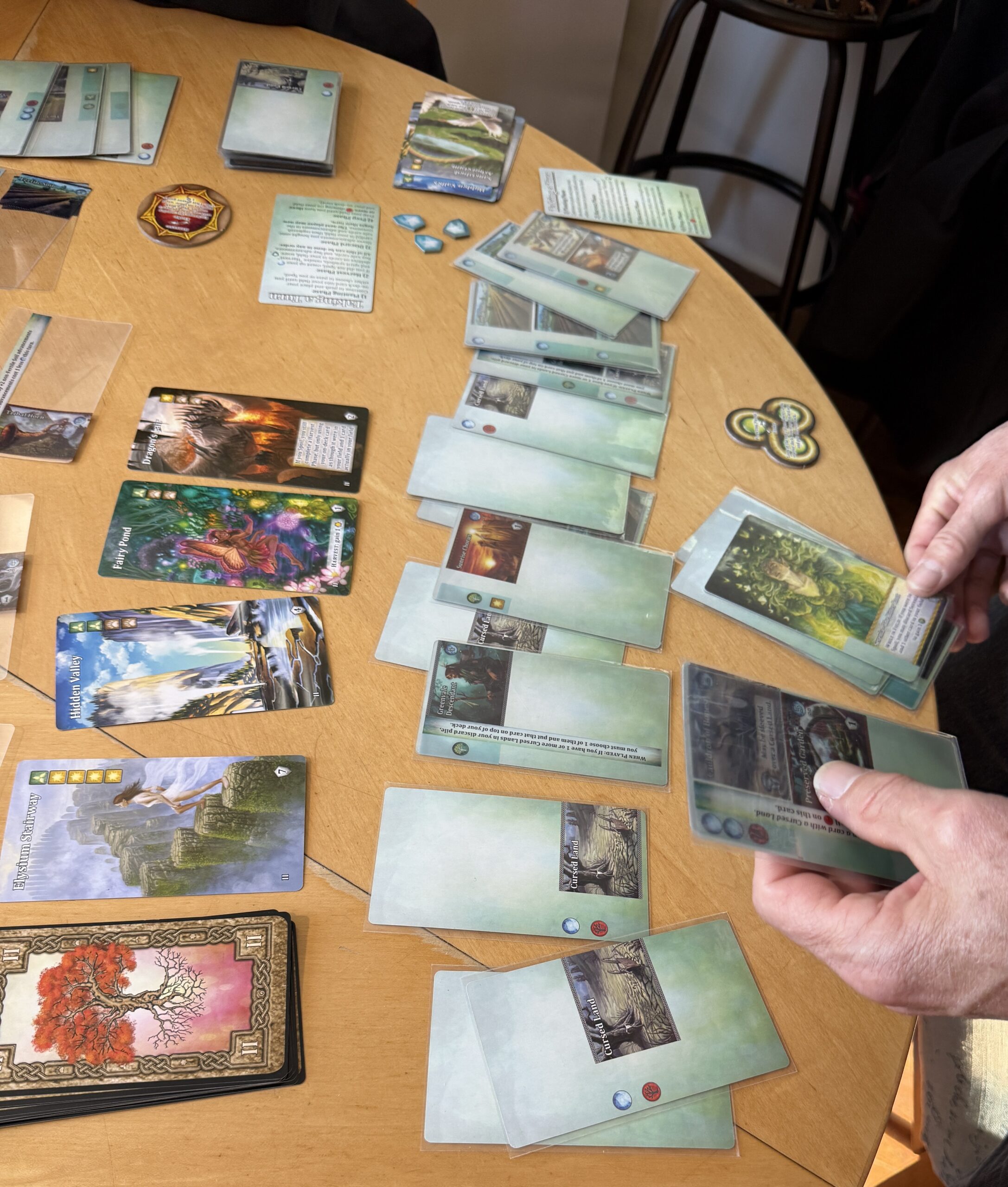
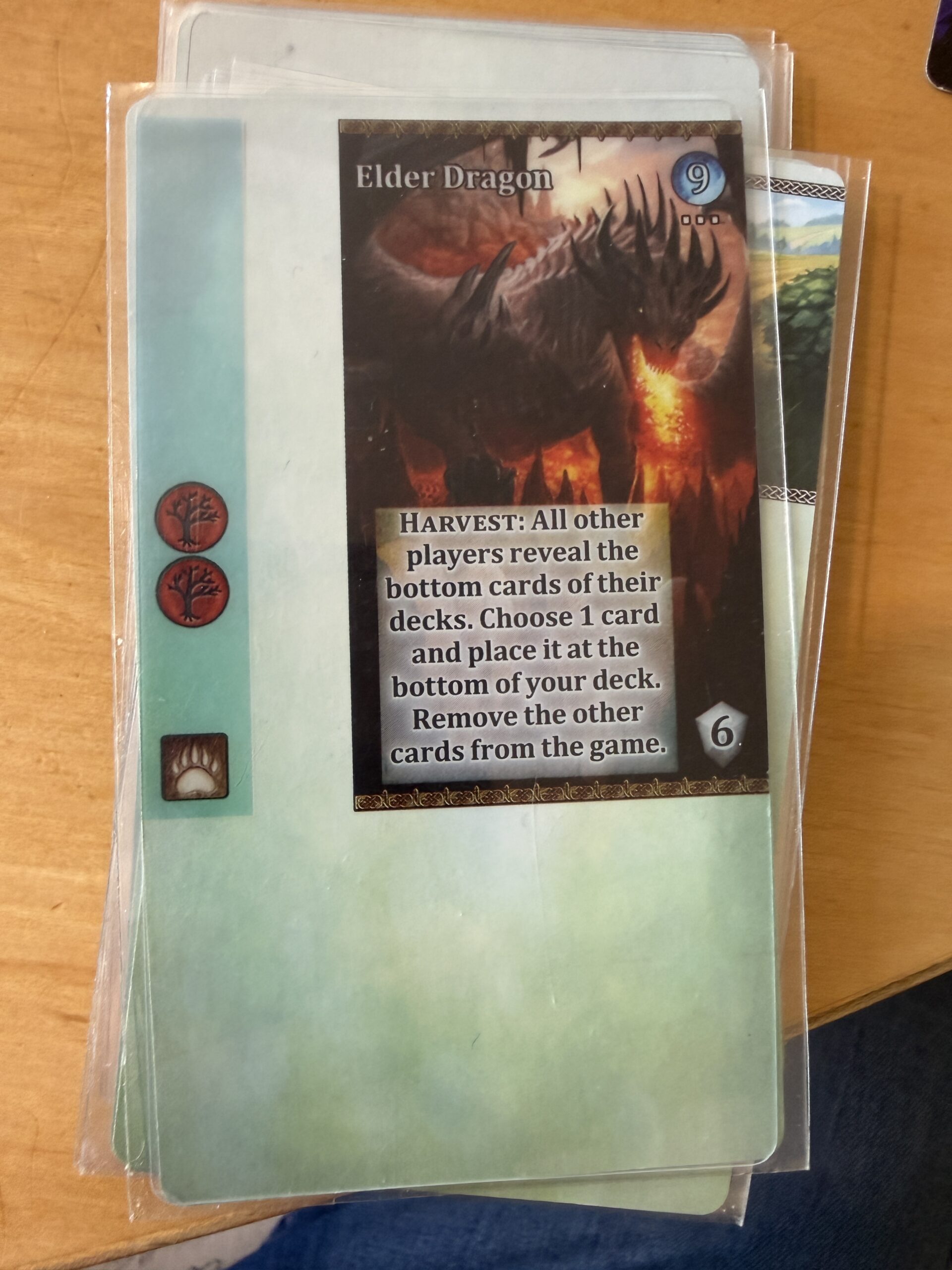
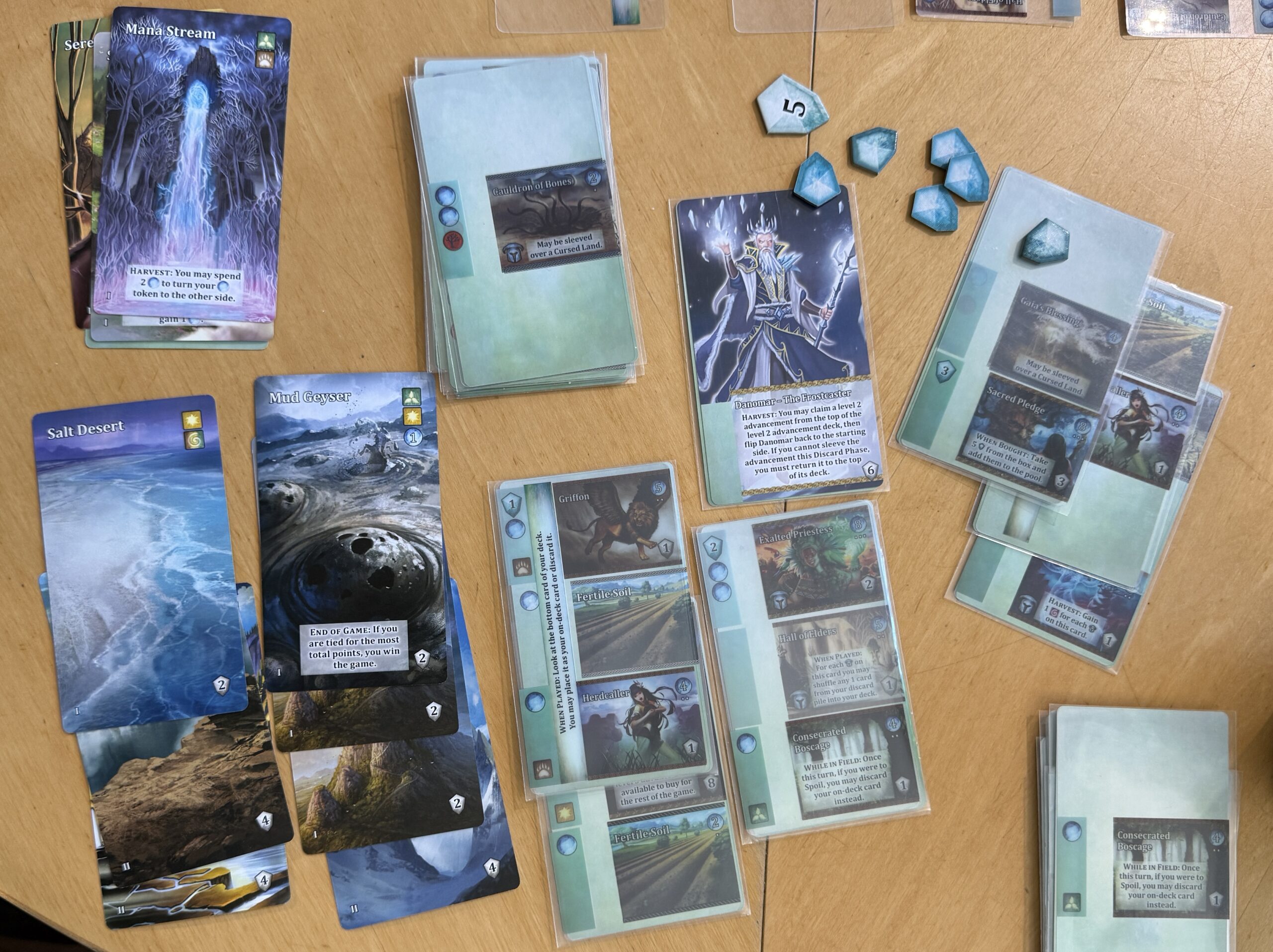
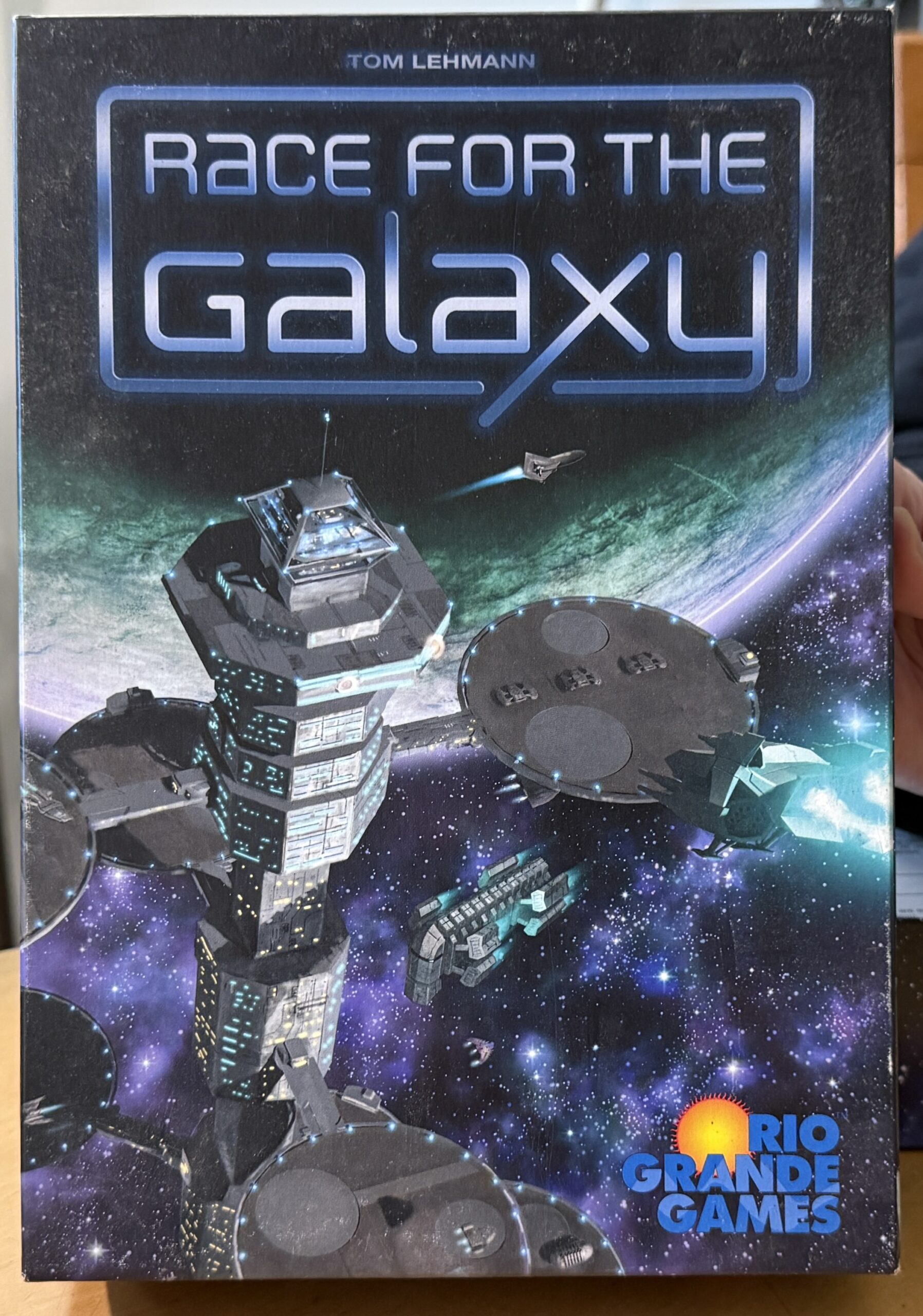
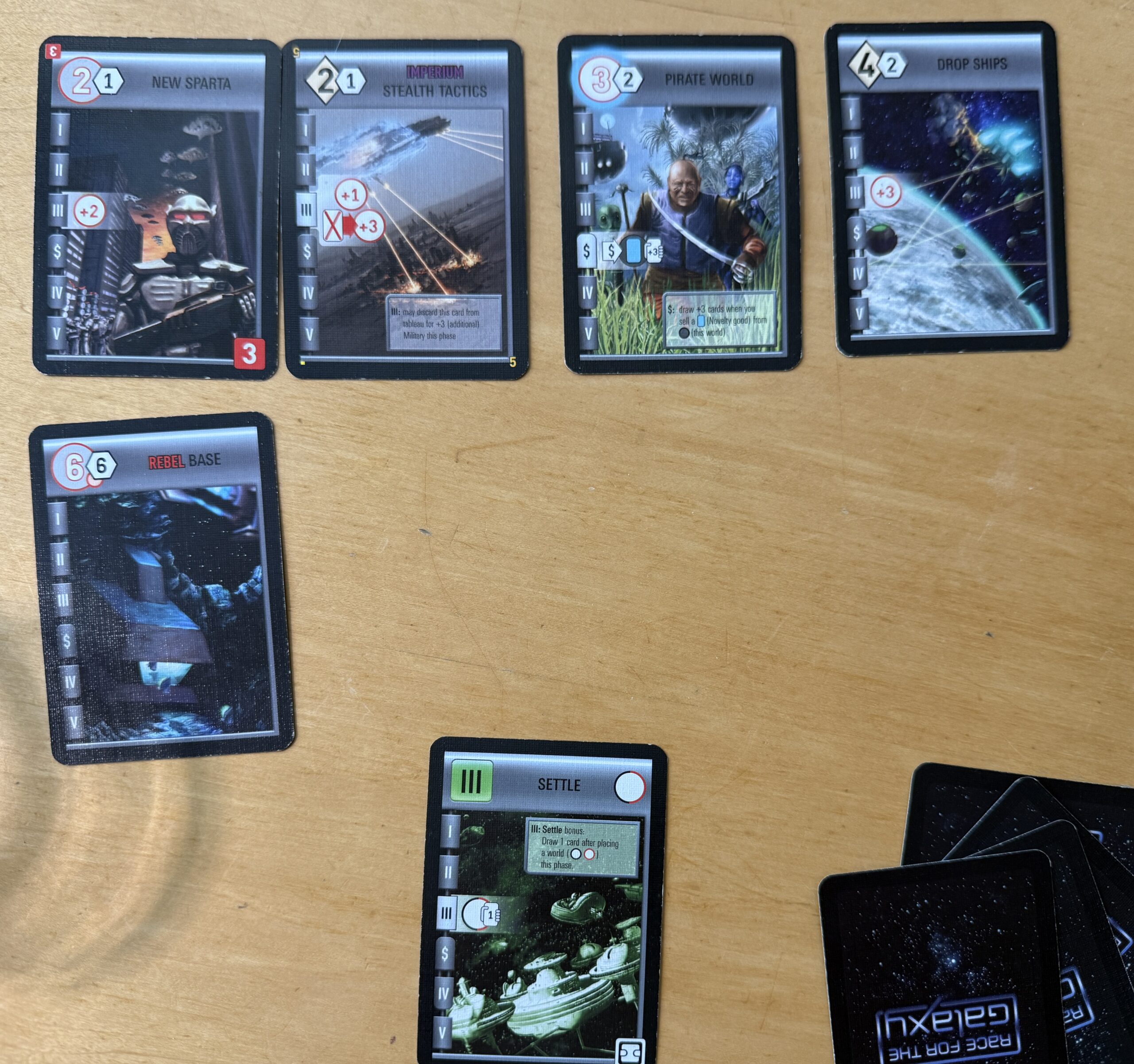
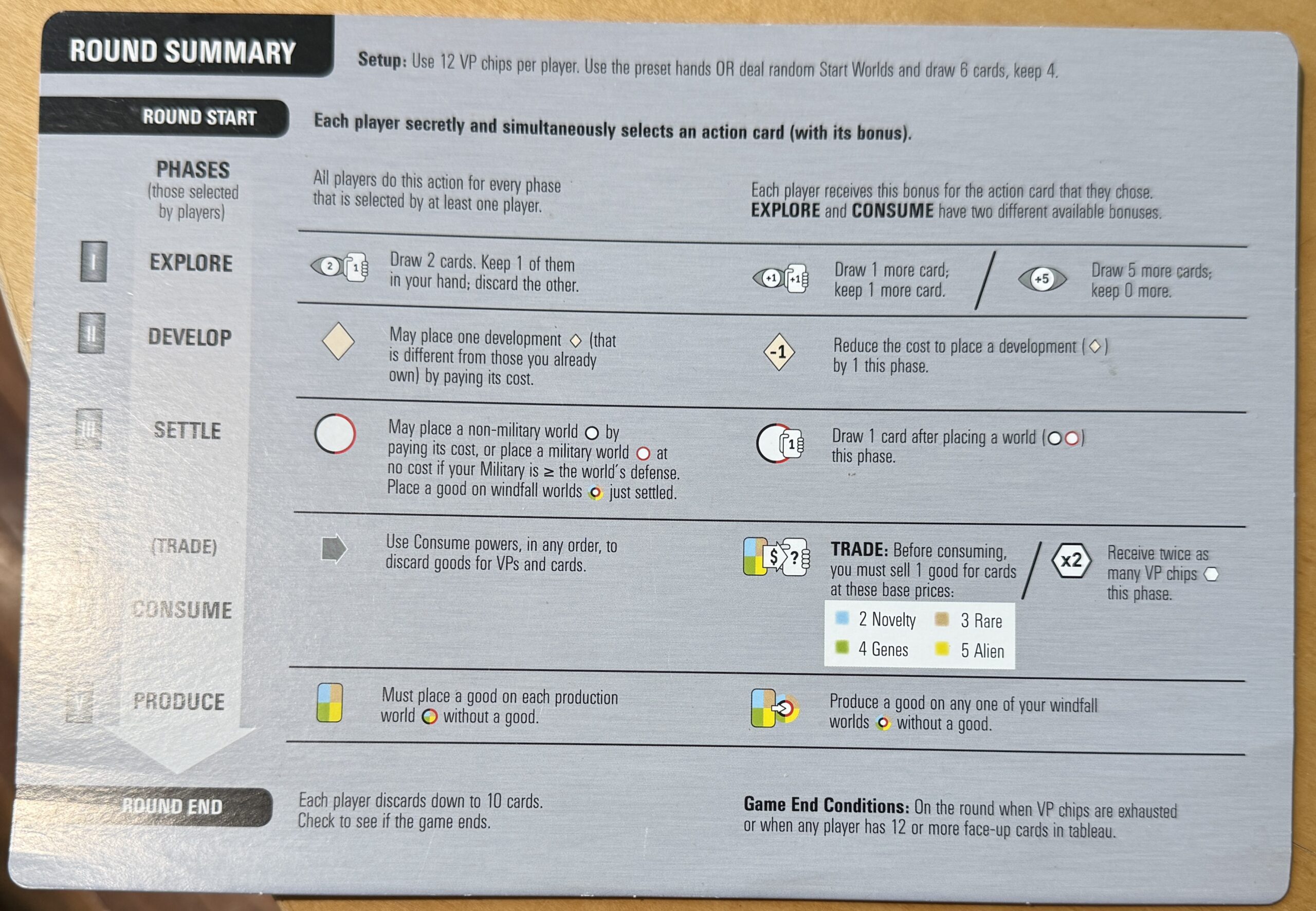
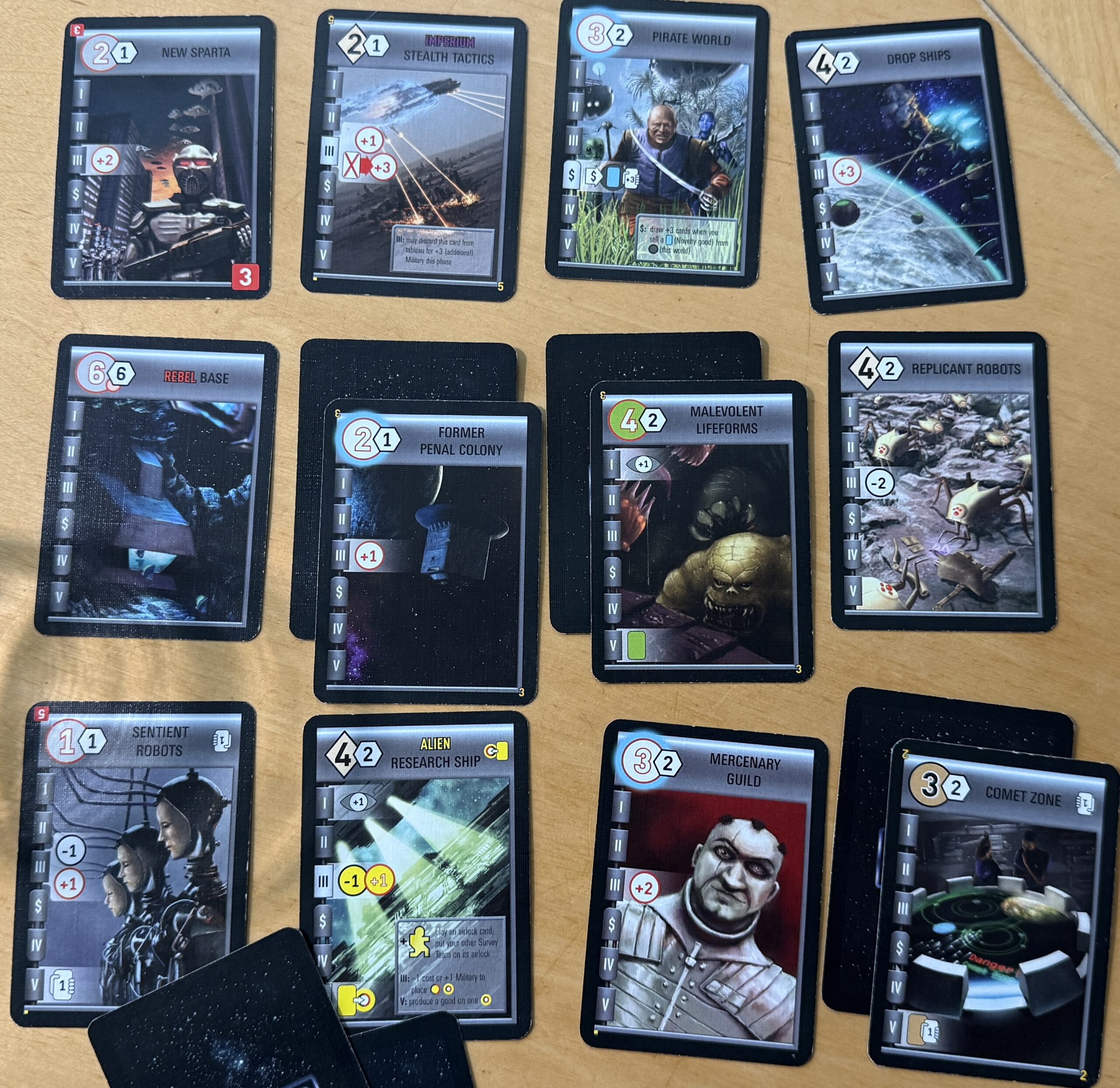
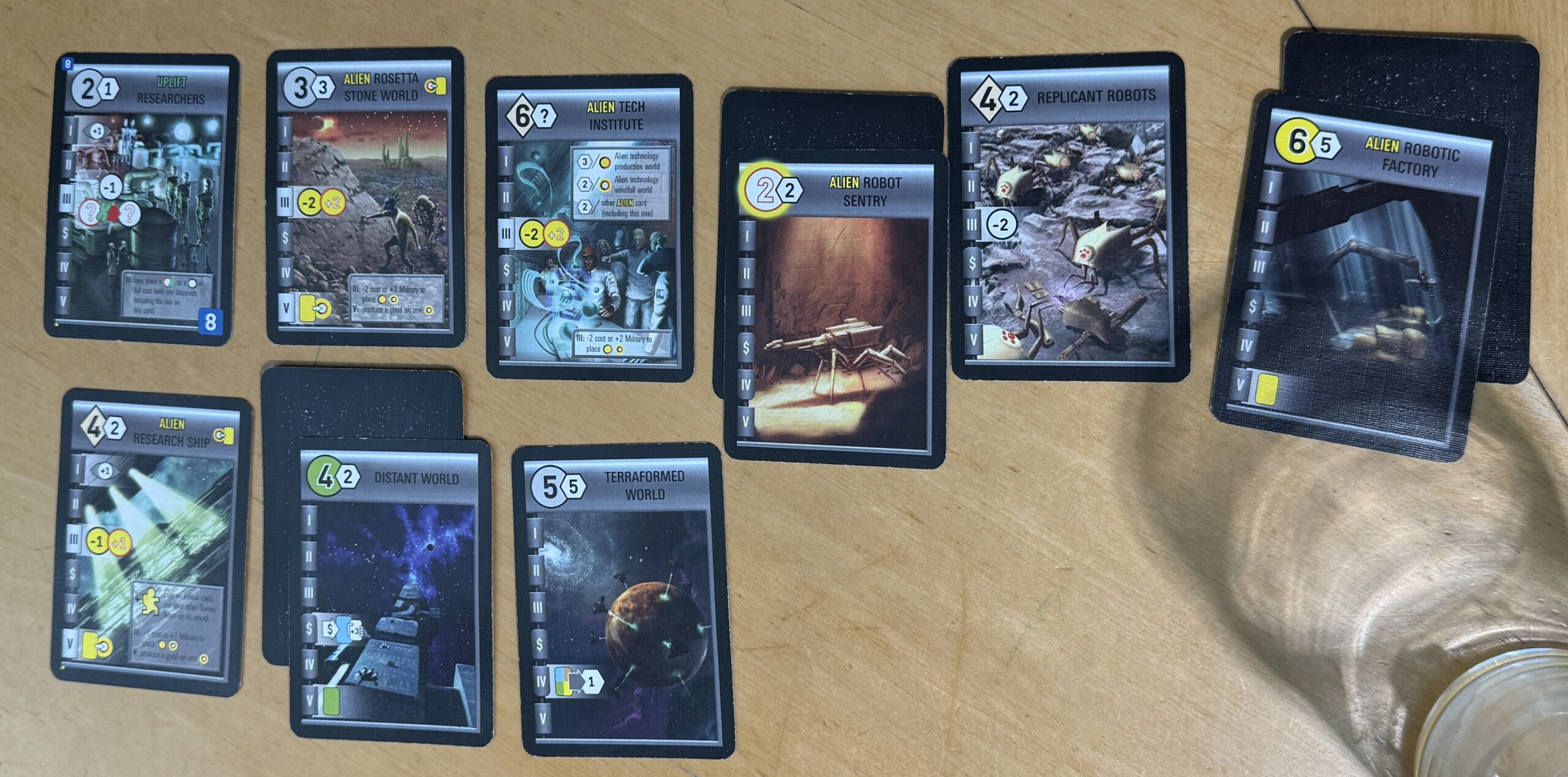
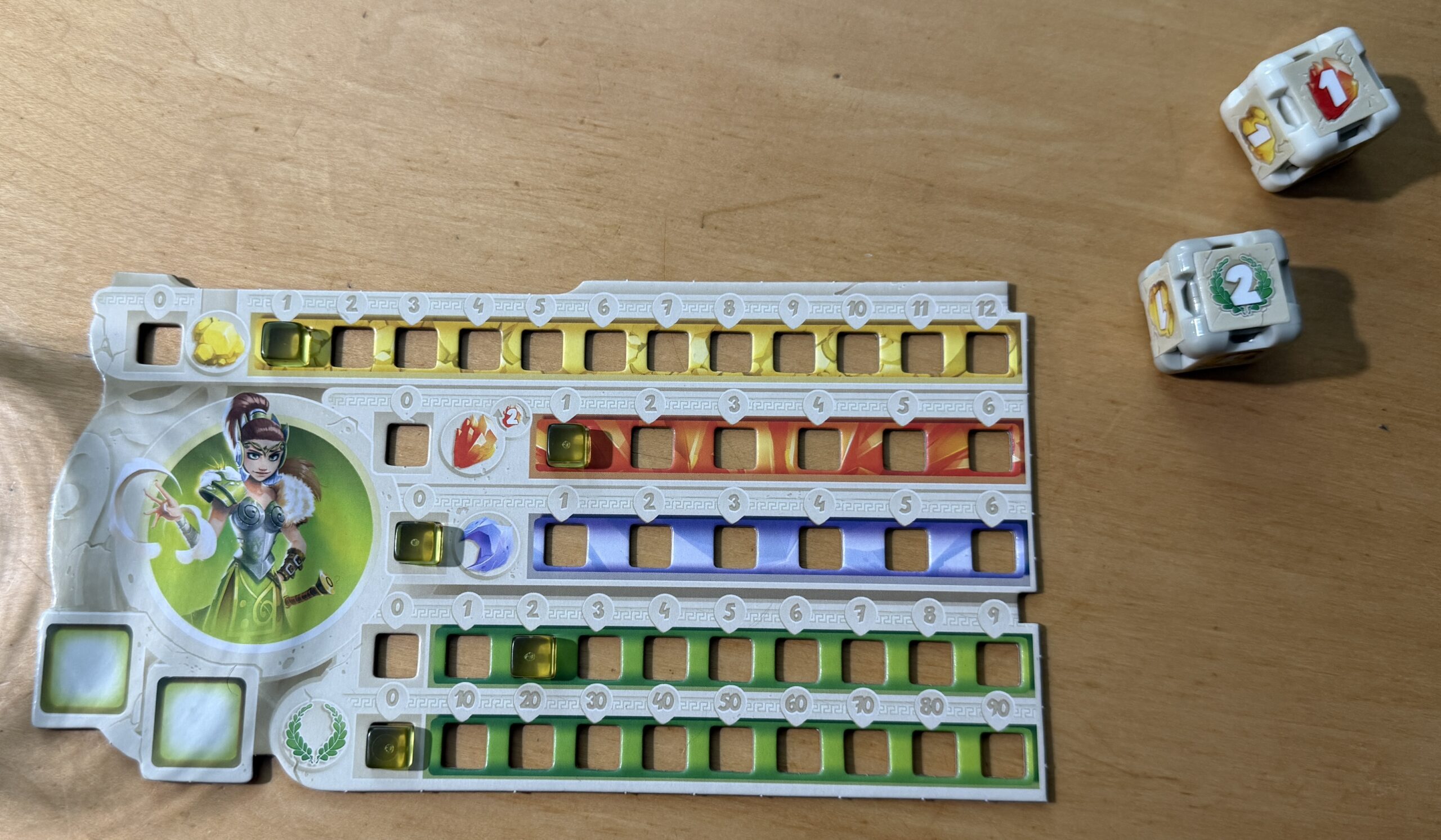
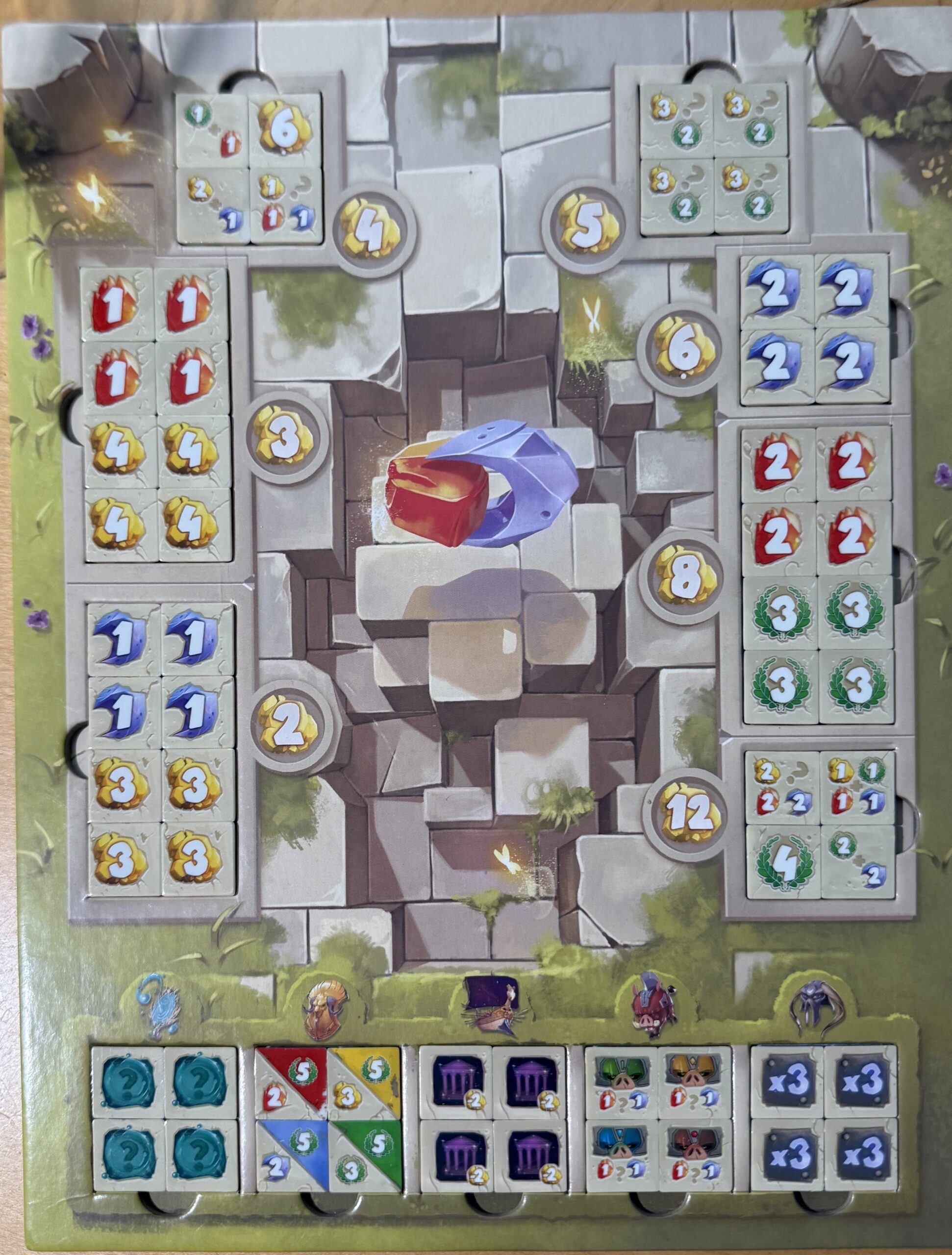
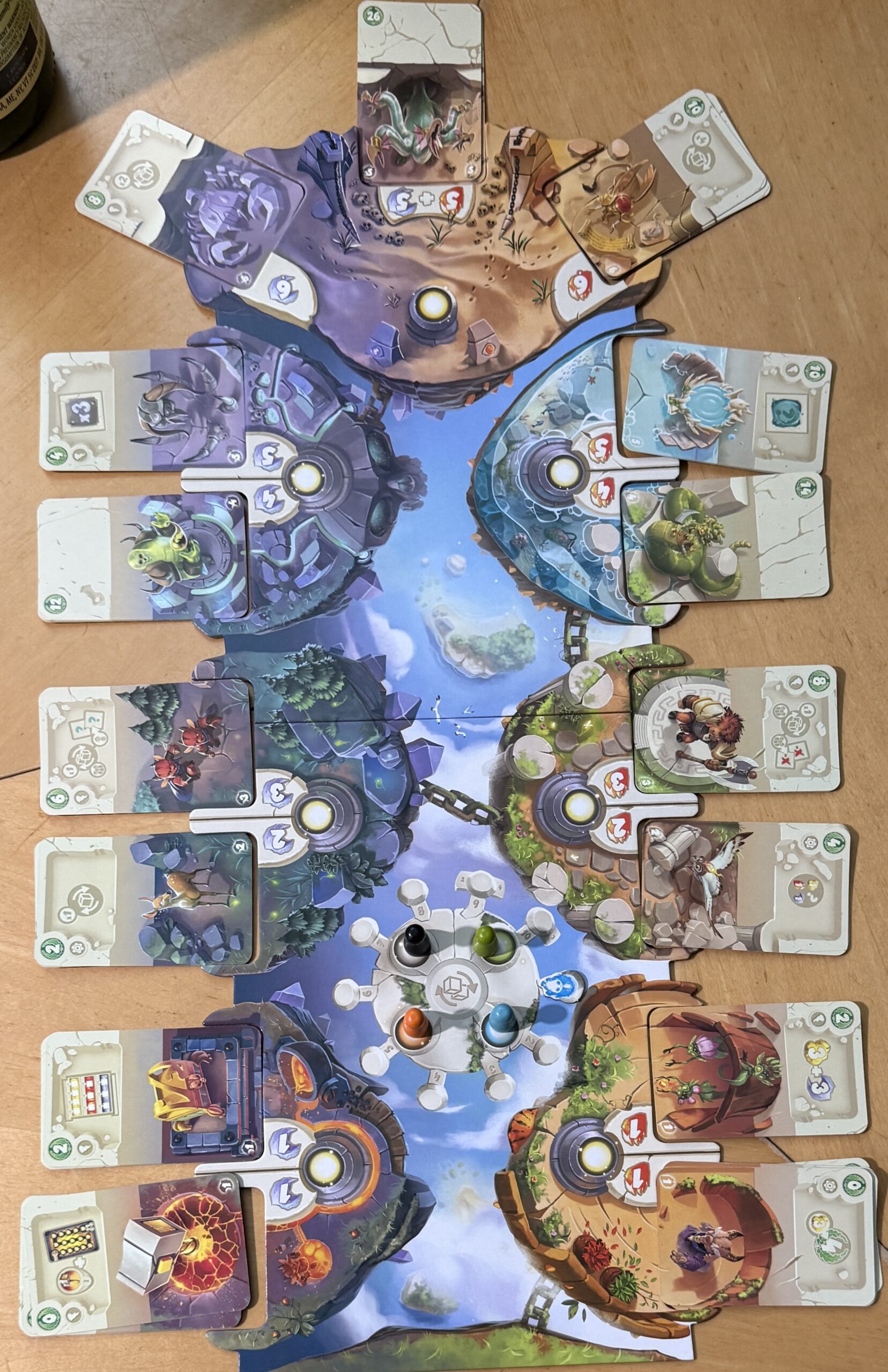
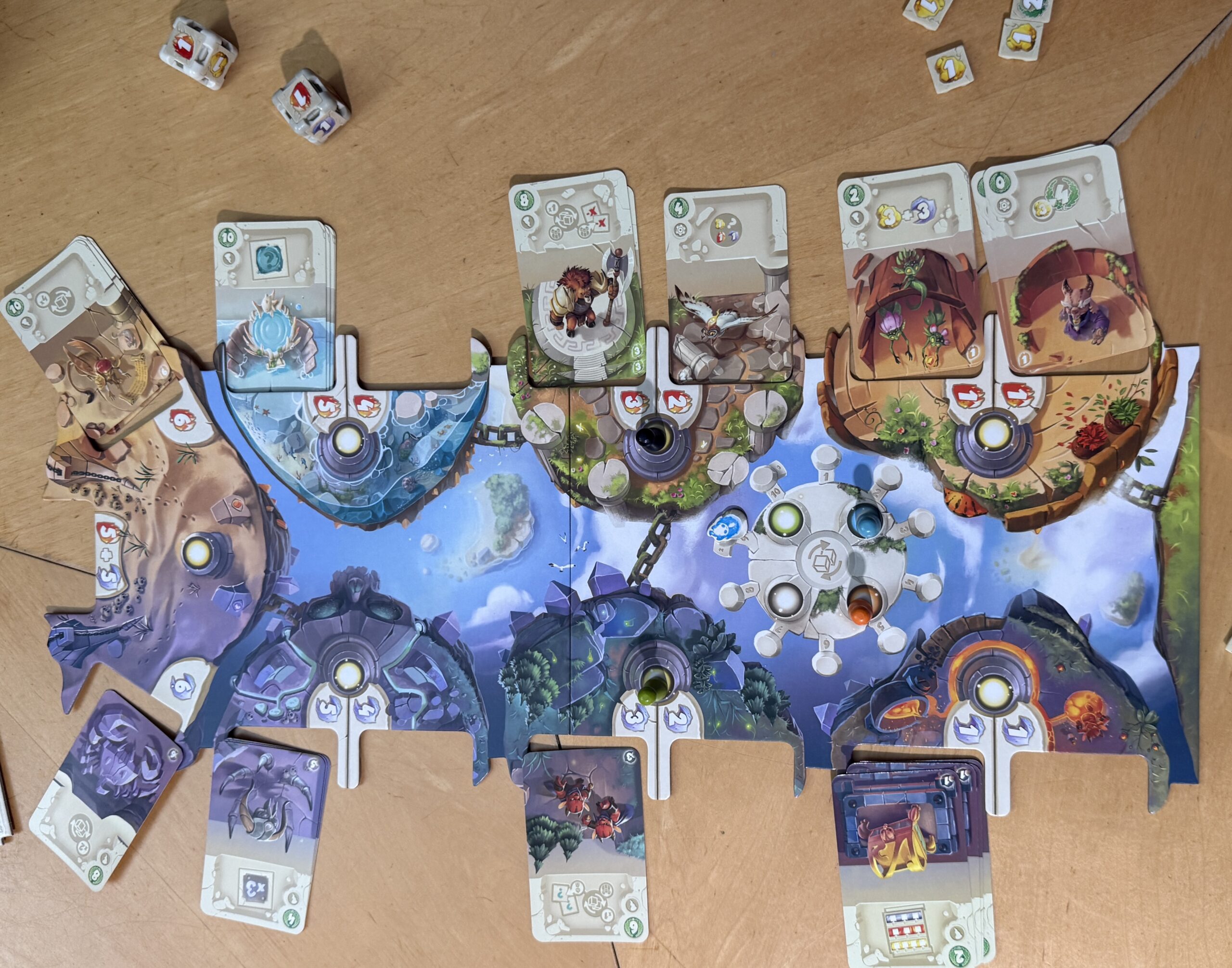
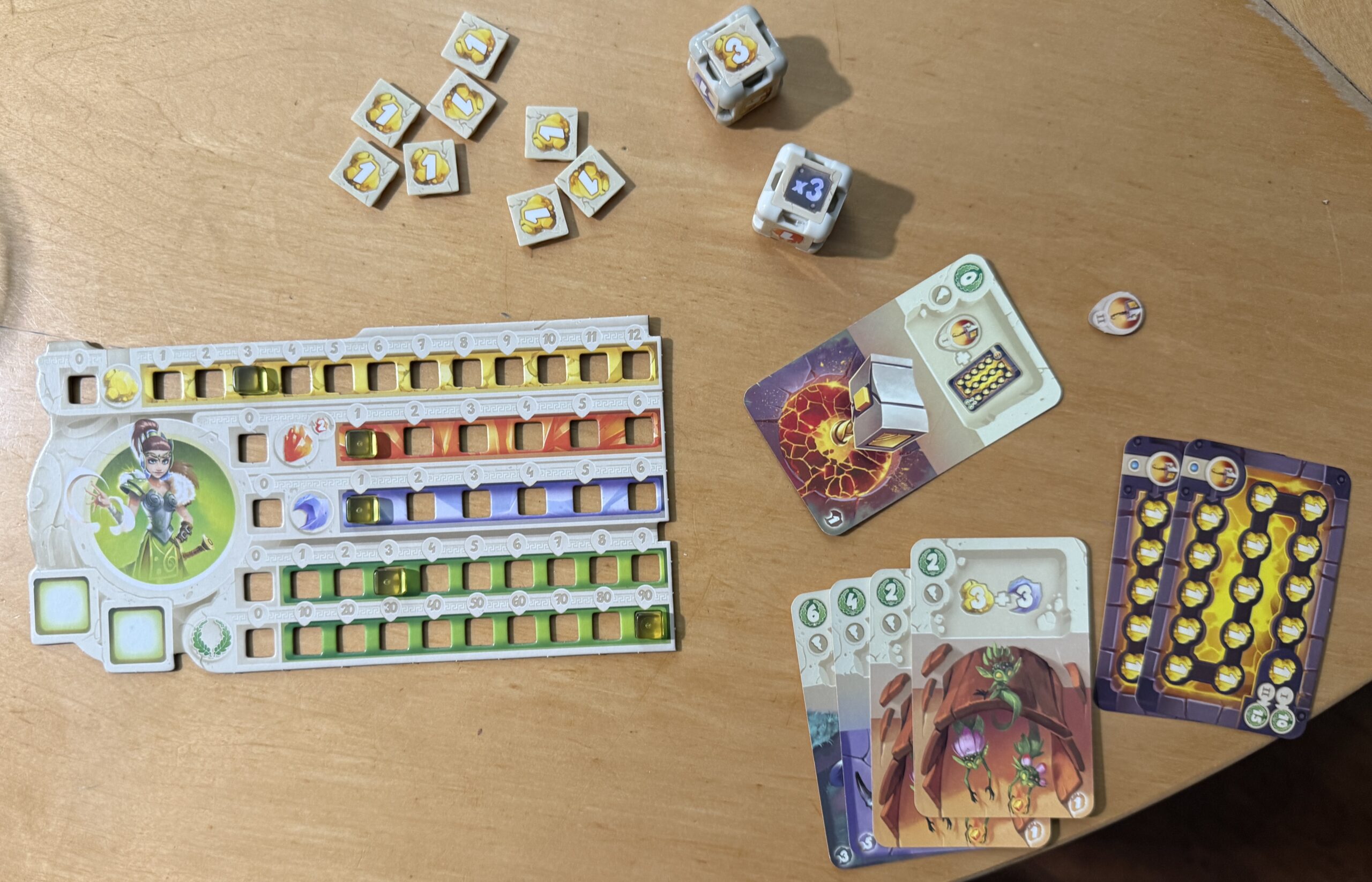
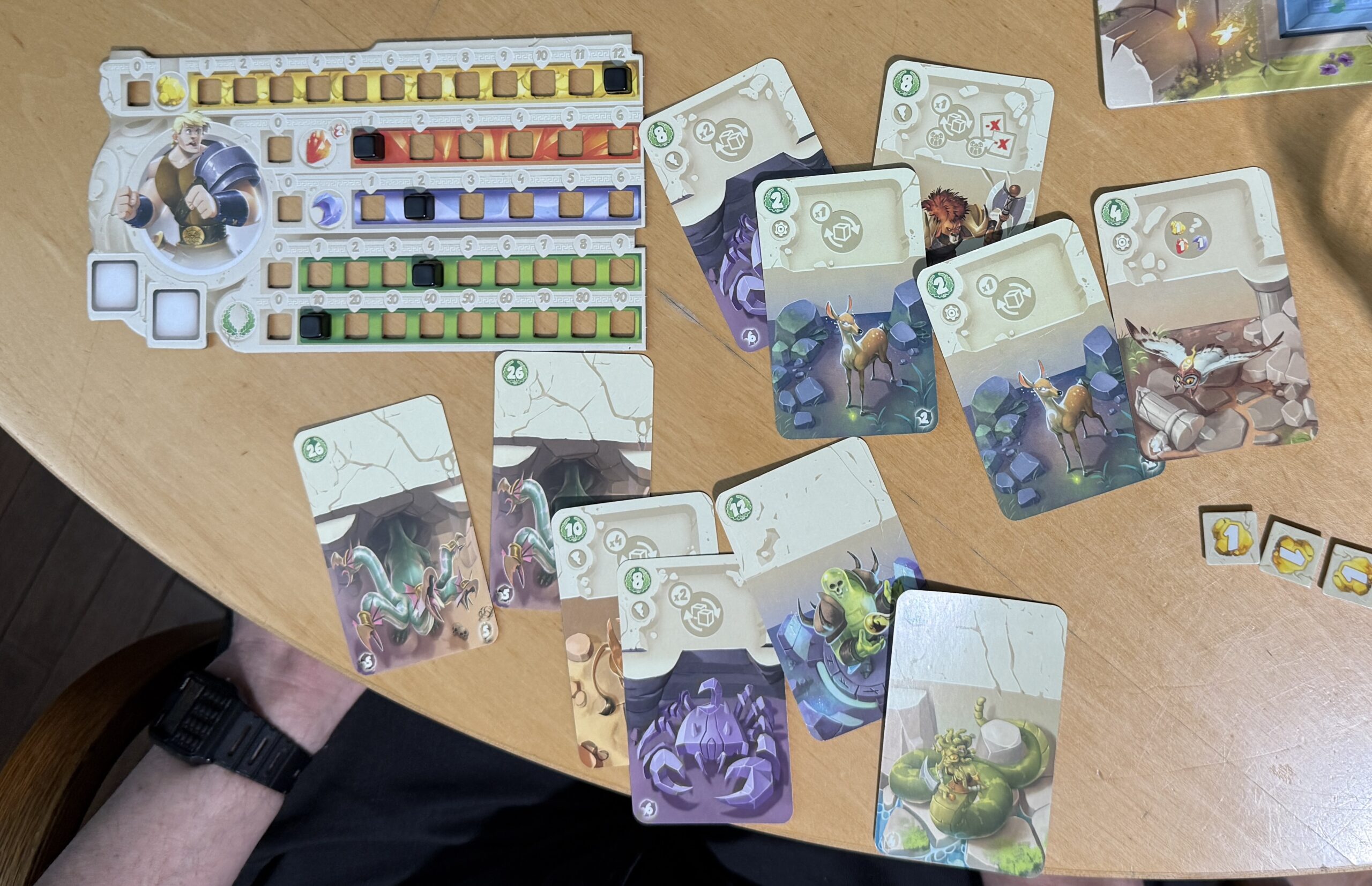
The “Harvest” token you see at the top of the picture is one of the features of the Harmony expansion (the partly-filled glass of diet soda is not included). It replaces a more generic “mana token” from the base game which can be used to compensate you for when you spoil.A general strategy to pursue is to find combinations of cards that cancel out the effect of those red-tree icons. Here we see that Michael has set things up so that he could play all 20 cards in his deck at once. On the left you can see Vale cards that a player can purchase if they have the matching icons on the card inserts they’ve purchased.There was heavy competition to purchase this insert. It’s one of the many that are unique to the Harmony expansion. This is one of the few cards among all those in all the Mystic Vale expansions that can affect the size of a player’s deck. I was the one who managed to purchase the card, but the game ended before I had the chance to use it.My scoring tableau at the end of the game. The end-game score is the total victory points from the inserts (blue shields in the lower right of an insert’s artwork) plus other points you can earn during the game (upper right). At the end of the game I had 31 points.Behold the scoring tableau of the winner, Real Angela with 65 points. She had a clear idea for a strategy at the start of the game, and took more risks than I did, which paid off handsomely.As a reward for winning, Real Angela went off to make dinner. Mike, Michael, and I played Race for the Galaxy. This is a card game that uses much of the same concepts as the dice-based Roll for the Galaxy that I described a couple of weeks ago.In Race for the Galaxy, players build a tableau of settlements (circle in the upper left of the card) and developments (diamond in the upper left). The action economy is controlled by cards each player chooses every round. In the bottom of the picture you can see that I chose a Settle action for the round. That means that every player has a chance to put down a settlement card (if they can pay for it). As one who put down the Settle card, I get an extra benefit (an additional card for my hand).As with Roll for the Galaxy, my chief complaint about Race for the Galaxy is the confusing use of icons. But after a while the game-play makes sense. It’s simpler than what you might guess from reading this helper card.This was my tableau at the end of the game. I triggered end-game by having 12 cards in my “empire.” I chose a military strategy; that is, I focused on acquiring settlements with a red-outlined circle in the upper left of the card.Behold the tableau of the winner, Mike. While I focussed on putting down as many cards as I could, Mike pursued a strategy of acquiring cards that synergized well for gaining victory points.We rounded out the evening with another tried-and-true classic, Dice Forge.As Mystic Vale is a card-crafting game, Dice Forge is a dice-crafting game. The dice have detachable faces. As you roll the dice, you accumulate resources on your player board. Here you see that I rolled one “red” icon and two points of “green” (victory points), and I’ve indicated that on my player board. The one point of gold was from being the third player to go in the game’s first round.This is the pool of dice faces that players can purchase with gold. I pursued a “gold strategy,” purchasing and replacing the faces of my dice so I might accumulate more gold. The other players chose faces that helped them earn the red and blue currencies.Those red and blue points can be used to purchase cards. A card can give more victory points, offer additional options for scoring (I picked the cards on the lower left to earn VP from gold), or to modify the rolling of the dice in some way.By the end of the game, most of the available cards had been purchased.My player area at the end of the game. I earned a total of 107 points, mostly from accumulating gold. At the top of the image, you can see the detached 1-gold die faces that I’d replaced.Behold the player area of the winner, Mike. I see 120 points in the picture, but my memory suggests that he’d earned more than 130.
It was a pleasant evening. I had a chance to play games I was already reasonably familiar with, which was a nice change of pace. I also had a chance to play with folks I hadn’t seen in person for years.