M and A had received a special edition of the classic board game Puerto Rico. We looked at this edition, with beautiful new artwork, board design, minis with separate sculpts based on player count, and so on.
However, J pointed out that none of us really knew the rules. The suggested time on the side of the box says 90-150 minutes, which means that for our group it would take four hours minimum, not including the length of time it would take to go over the rules from the rulebook.
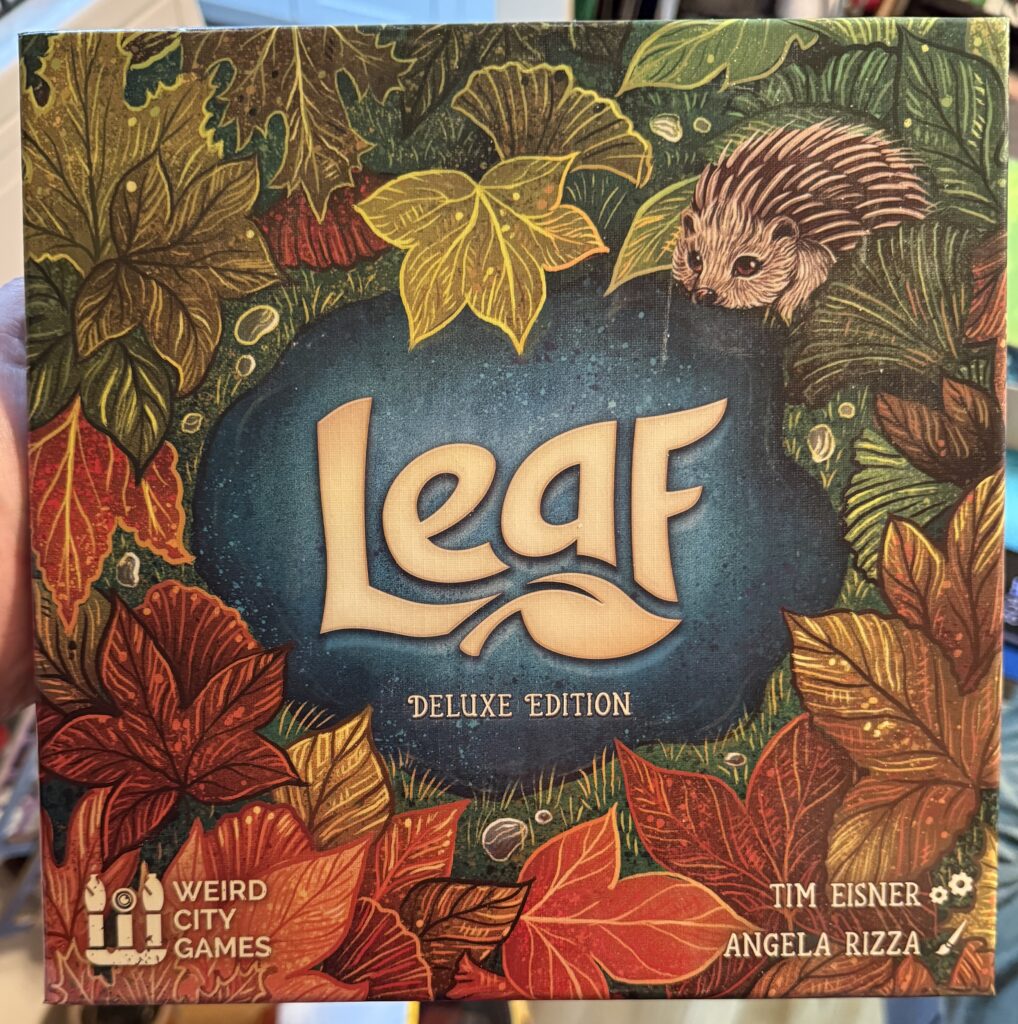
Instead, we played a couple of shorter games, which curiously had similar names: Leaf and L’Oaf.
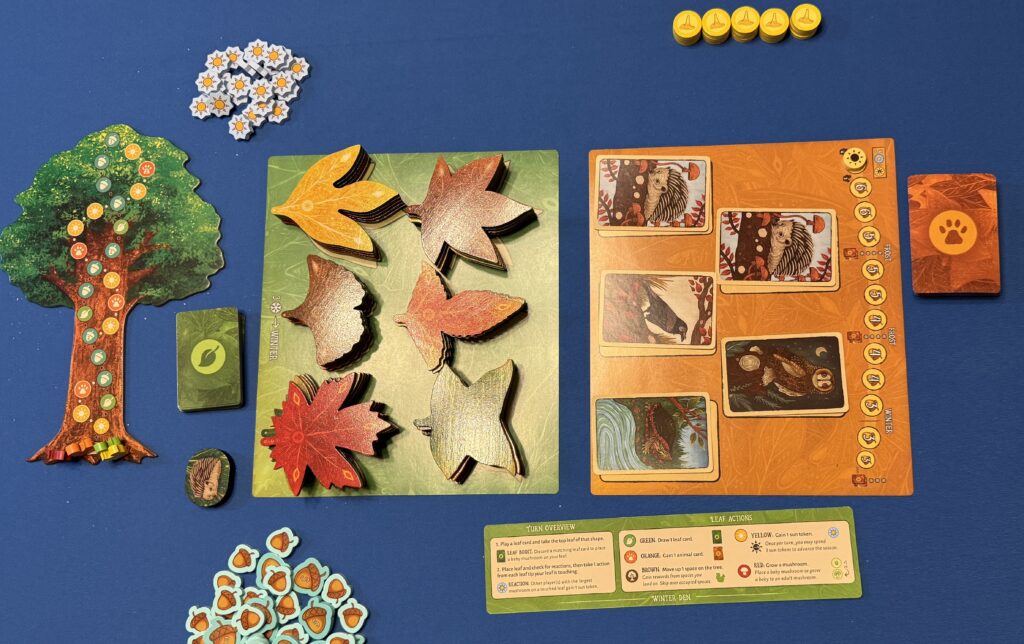
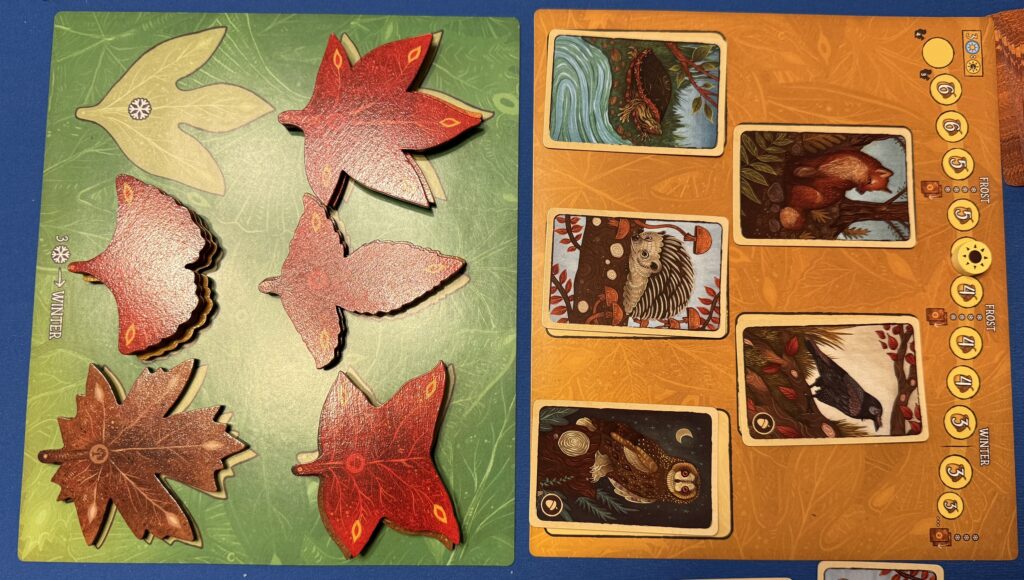
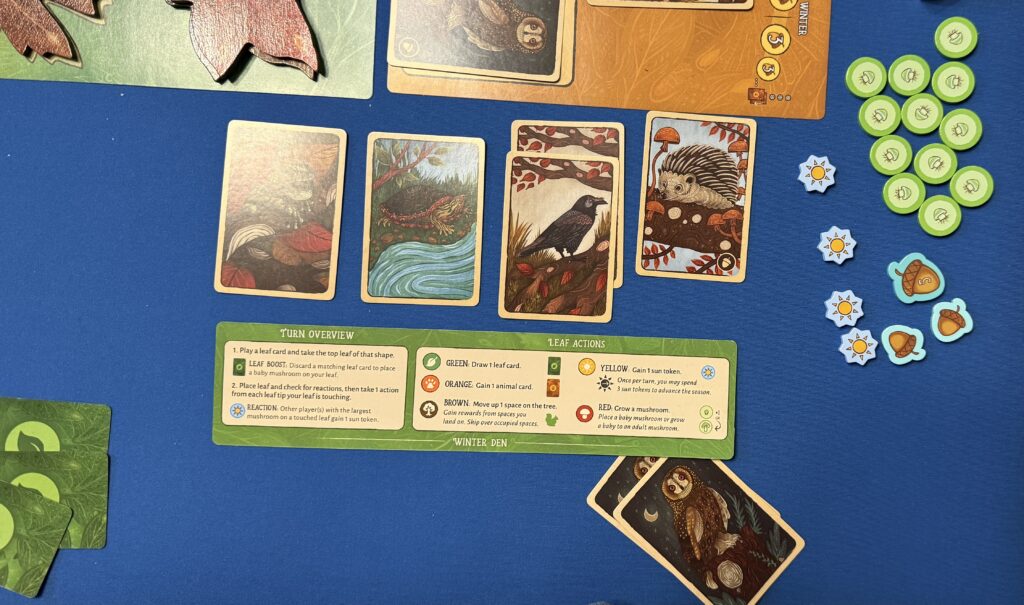
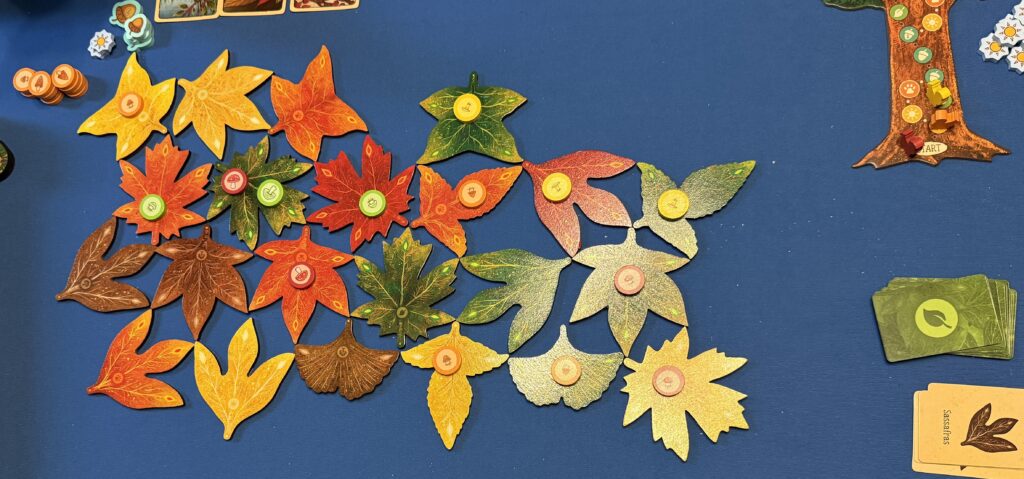
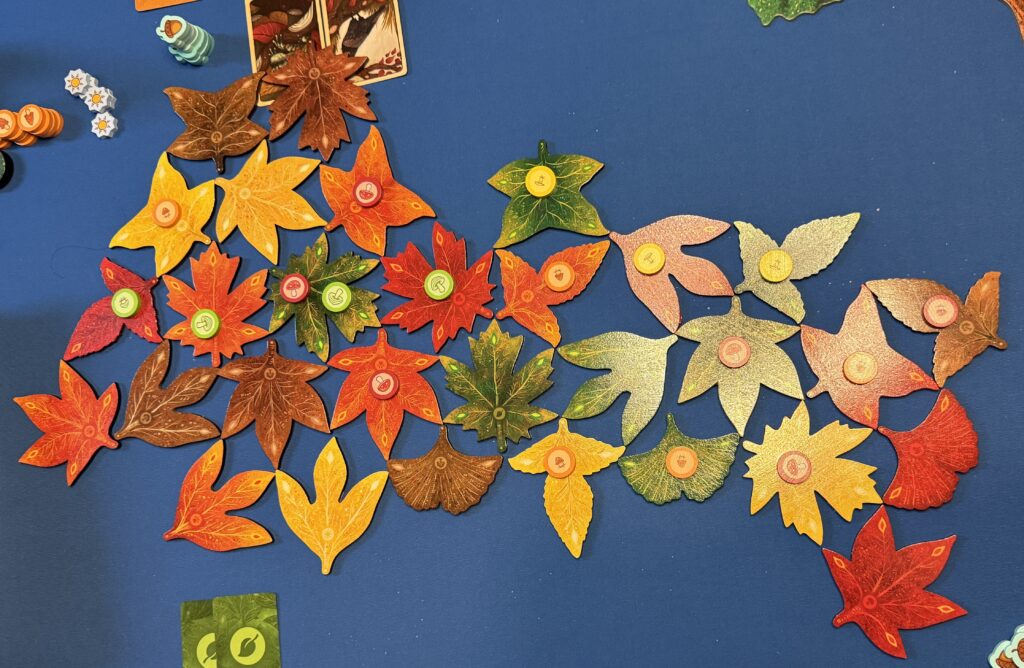
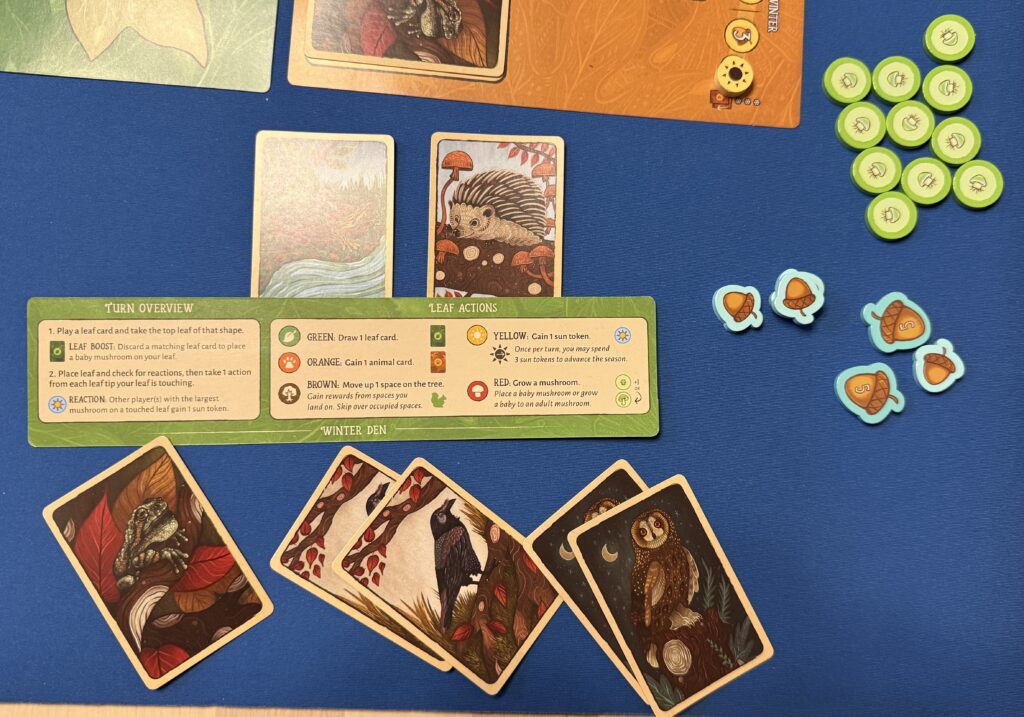
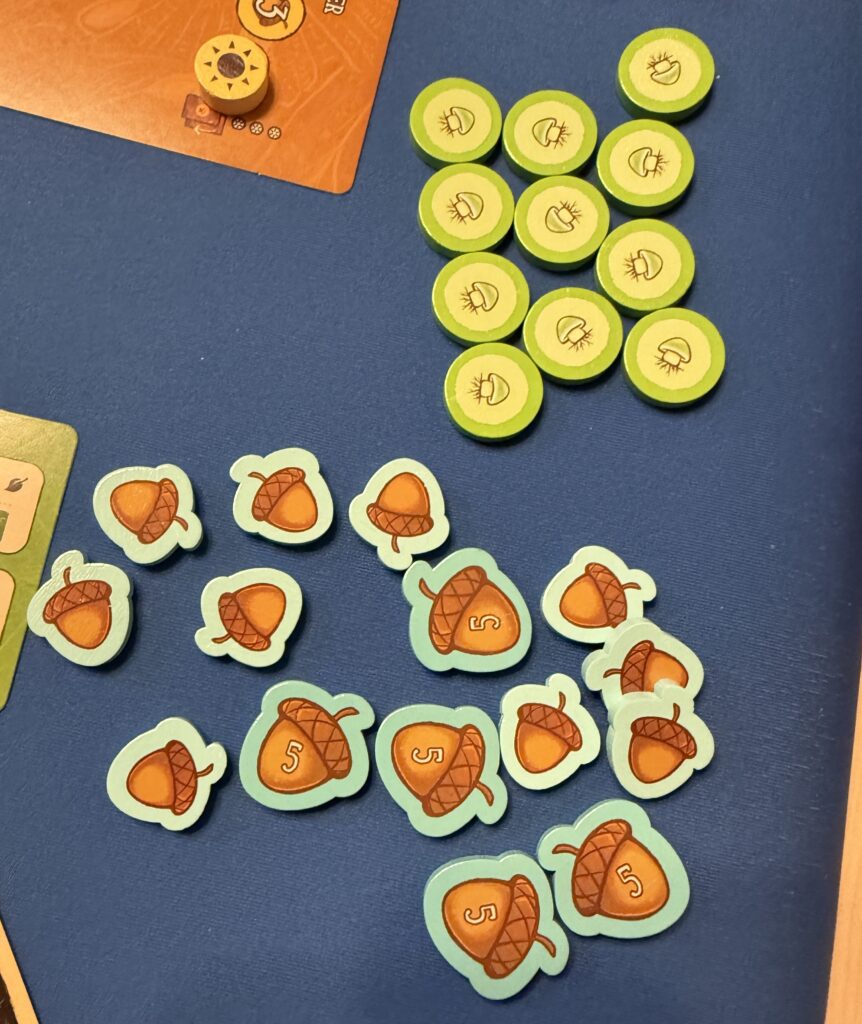
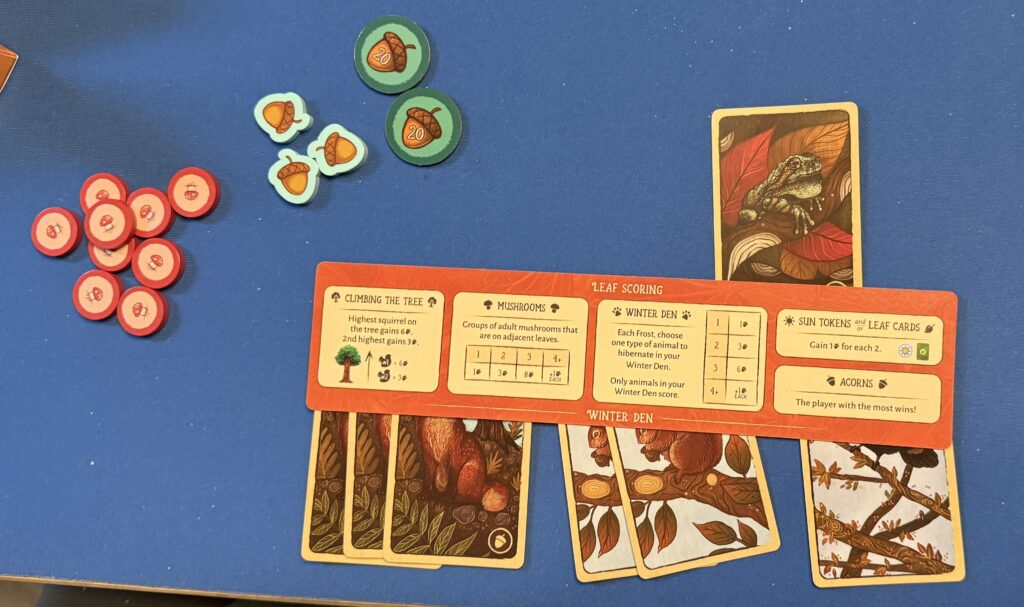
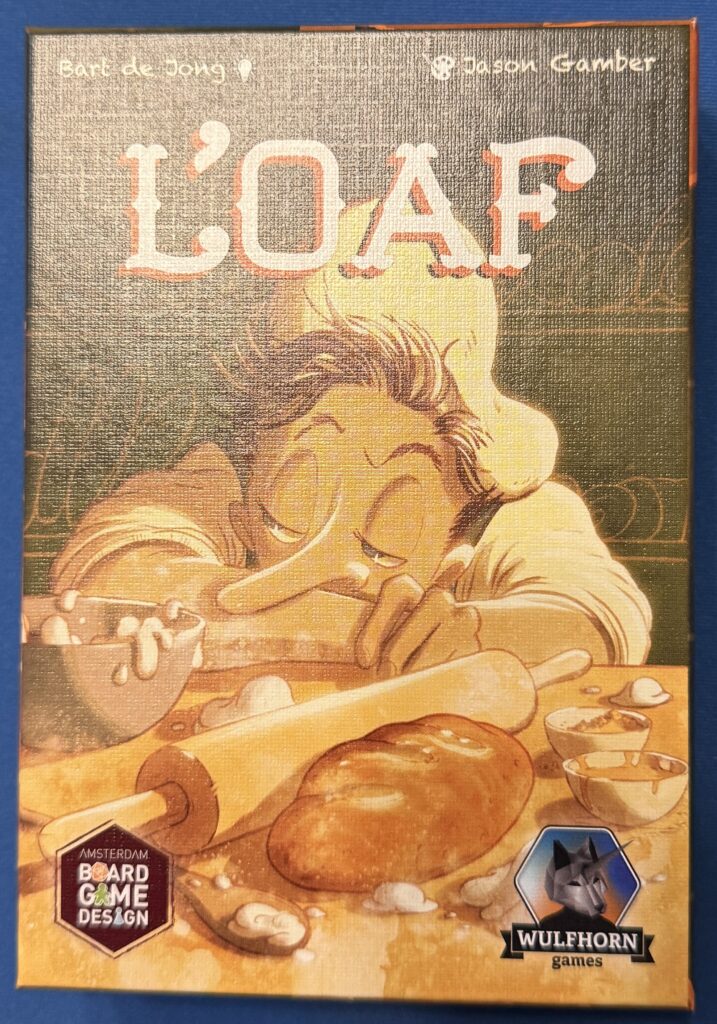
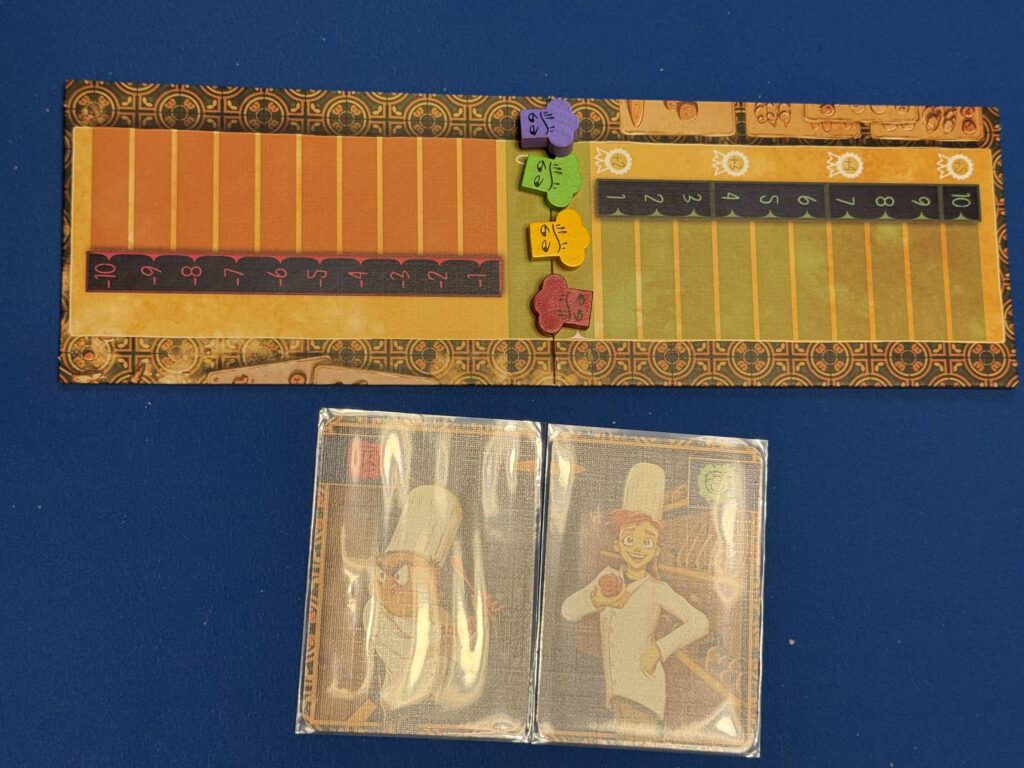
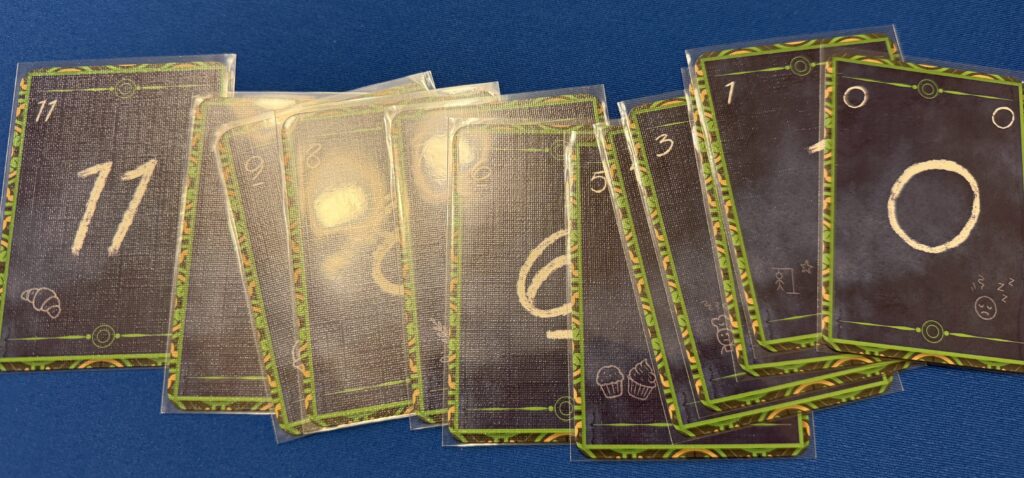
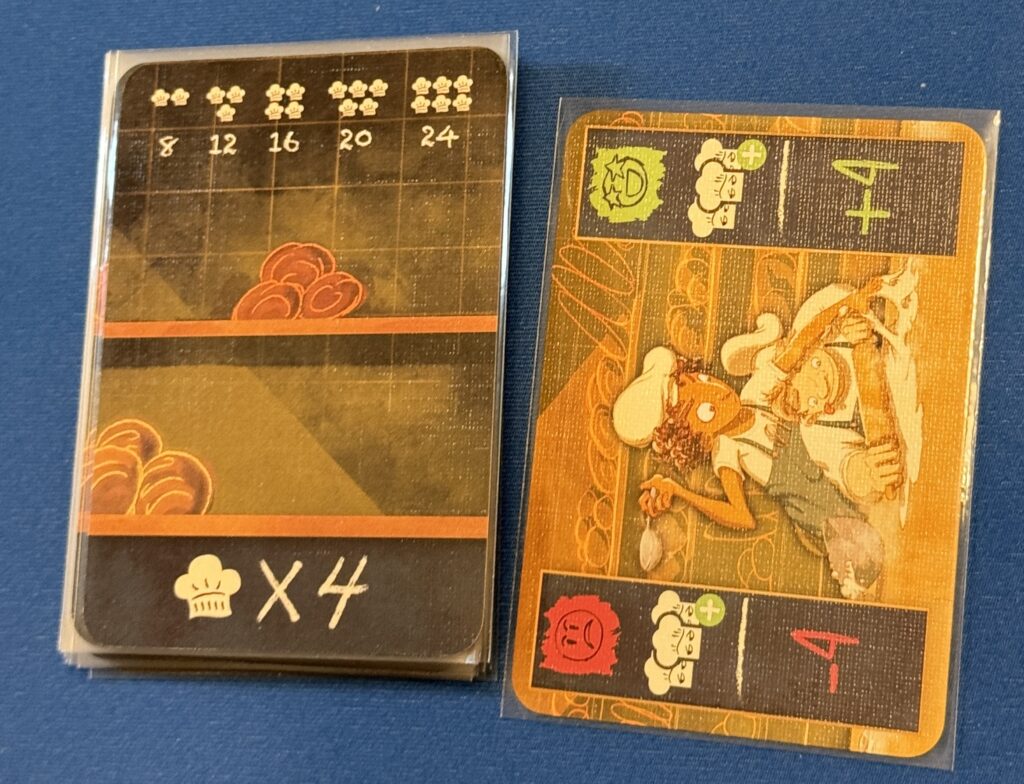
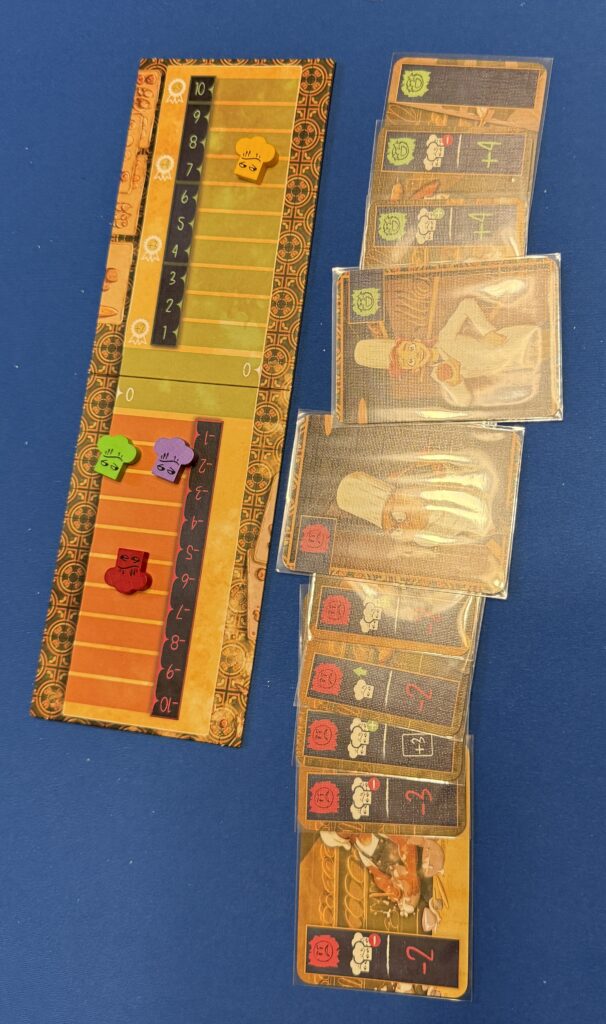
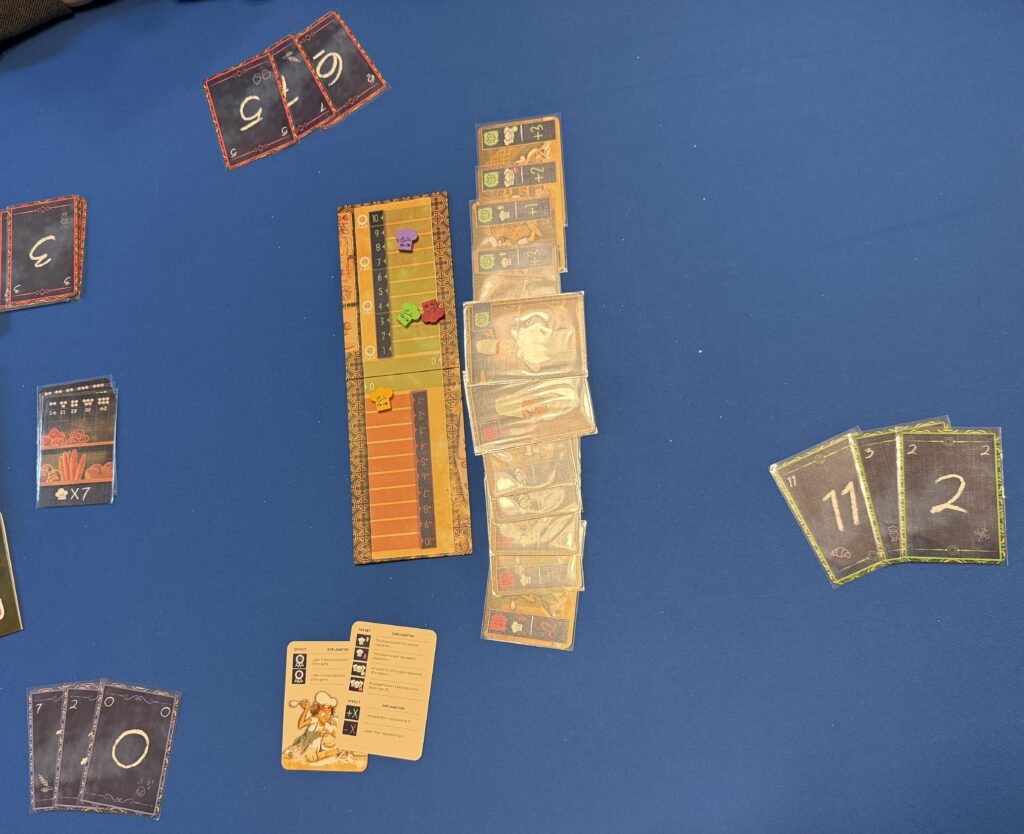
In Leaf, you’re playing the role of the wind blowing leaves around. I got this tidbit from the web site; we didn’t focus on our role any more than a Splendor player recognizes that they’re a jeweler for nobility.The central play area near the start of the game. Players take turns placing leaves from the green board near the center of this picture, playing cards to choose which leaf to place. There are several ways to score in the game. One of them is by moving your squirrel meeple (squirple?) up the tree on the left. Another is to provide safe hibernation for the animals whose cards you see on the right.The central play area as we headed towards the end of the game. Notice that the season marker on the far right has advanced as we head towards winter (Winter is coming!). Yet another way to score is to collect sun tokens (you can see those in the previous image) and use them to advance the season token, collecting the acorns (victory points) shown on the track.My play area at the same point in the game. I’ve managed to provide safe hibernation for a couple of owls. So far I’ve managed to collect seven points. In the upper right you can see my mushroom tokens, which are yet another way to gain points.The leaves we’ve placed at the same point in the game as the previous two photos. When you place a leaf, you can perform actions associated with the colors of the other leaves that your own leaf touches. For example, the player who put the green poplar leaf in the upper center (the one with the yellow mushroom token on it) was able to perform two red actions and two orange actions, because those were the colors of the points that touched the leaf they’d just placed. Mushrooms are scored by forming chains of fully-grown mushrooms in adjacent leaves.The leaf arrangement at the end of the game. You can see that the leaves take up so much table space that we had to place them on top of A’s animal cards. J’s tokens are red; it’s hard to tell because of the glare, but J has one “chain” of three adult mushrooms towards the right and another pair of adjacent mushrooms on the left.My play area at the end of the game. I was able to provide a home for a few more woodland creatures, but not as many as I’d’ve liked. In the upper right you can see that the sun token has reached the end of the track, which is one of the end-game triggers; the other is when three piles of leaves are exhausted. As it happens, we got both conditions in the same round.At the end of the game I had 35 acorns/points……which was good enough to come in second to J, with 43 points. Congratulations!We moved on to a couple of games of L’Oaf. We’re bakers in the L’Oaf bakery.We’re trying to get bread-baking tasks done, by spending the least amount of effort possible. In other words, we’re both loafing around and loafing around. We try to avoid the wrath of the red baker while impressing the the green baker.Every player starts with twelve cards, numbered 0 to 11. You play a card every round. You don’t necessarily play to succeed in each task; there’s an aspect of “double-think” where failure can drive the others players’ scores into the negative. But play too low a card, and it’s your own score that’s decreased.An example of a typical task. The card on the left says that, for a four-player game, the total points on the sum of the cards played must be reach at least 16; the card helpfully points out that’s an average of 4 points per player. The card on the right shows what happens after cards are played; in this particular case, if the baking order succeeds all the players in the green section of the scoring track get four points; if the job fails, all the players in the green section of the track lose four points. It looks like someone stuck in the red section has little incentive to cooperate!The game ends when there are five tasks that have succeeded or five tasks that have failed. If it ends with your token on the red side of the track, you automatically lose. M (yellow) played cleverly; she was the only one on the positive track, so she automatically won and any other end-game scoring didn’t matter.The end of the second game was a bit more complex. M was in the negative, and so automatically lost. While it looks like green (me) and J (red) are tied, we’re not. At the end of the game, you add the total points on the cards left in your hand to the number in the medal on the left side of that green track. If you add it all up, you’ll see that A and I tied, and shared the victory.
Both of these games were fun. In Leaf, the challenge was to find way to maximize the number of actions you could take given the weird geometry of the leaf shapes. In L’Oaf, there was social deduction involved as we tried balance the need to gain points versus what the others might play in keep higher-point cards in their hand.
Leaf took us two hours to play. Each game of L’Oaf took about twenty minutes, making it ideal filler.
Pingback: Last Night’s Game – Gnome Hollow – The Argothald Journal