Character
After back-to-back playthroughs of Origin characters, I wanted to go back to playing a Tav character, one that I could sink more into and hopefully use as a palate cleanser.
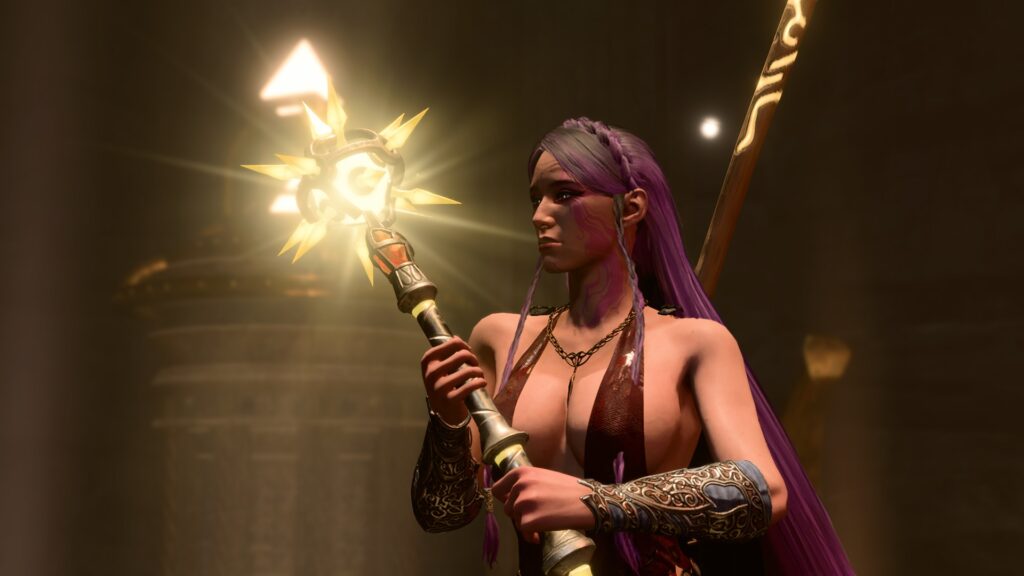
Meet Persephone, my Light Urge/Resist Urge character.

I wanted to roleplay her as being naive and wide-eyed and gullible, someone who is aware that something is not right inside her head, and overcorrects by being extra sweet to try to convince herself that this is the real her.

This is also the first time that I’ve played a human character, which meant that there was a plot twist early on that I had never seen before that human Persephone reacted to but my previous other races didn’t. Six playthroughs in and I’m still seeing new things that make me squawk in joy and surprise. I love this game.
This is also the first time I used a lot of appearance-changing and outfit mods, so Persephone changed her looks a few times.


As I have started to see more of the repercussions of multiple choices in the game, it becomes significantly harder not to ‘meta-game’. This is where sticking to the role-playing aspect becomes more important. For instance, there is a scene later in the game where you can tell a victim that you killed the person trapping them. Seems like a great idea, right? I certainly did so in 1/14. As it turns out, this person is really upset that you killed their captor, and never saw themselves as a victim at all. This person then gets mad enough that they no longer help you out or even speak to you for the rest of the game. This is non-intuitive to me, and therefore in subsequent games, I have just remembered the correct dialogue choice.
However, that doesn’t feel quite right to me. I’m trying to play the game as if it is a new character each time, so how would she know that the person would respond this way? Since Persephone was meant to be more naive and unable to read the room on things, I had her make choices as if she had never been in a video game before. It made some people pretty mad, but hey, at least I’m role-playing here.

Goals
In the vein of trying to struggle against those dark urges, my goal was to try to believe and save as many people as possible. This pertained both to story choices (do you believe the hysterical woman that says the entire bar helped kidnap her child or literally everyone else in the bar that says she’s an angry drunk and doesn’t even have a kid) as well as general battles. So I had non-lethal blows toggled on the entire game.
This does not always work, which makes sense. You can turn a melee attack non-lethal by smacking someone in the head with the haft of your greataxe (although the medical professional in me feels obligated to point out that that has a high risk of skull fractures, intracranial bleeds, and only somewhat slower death), but there’s no way to make arrows or lightning bolts non-lethal. So in terms of actually being non-lethal, it was probably more pescatarian than vegan.
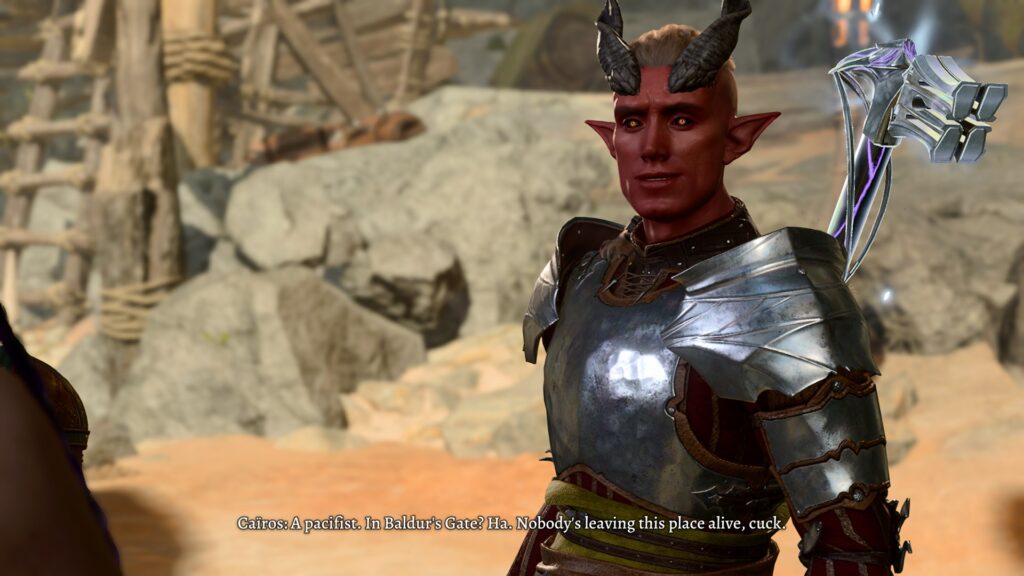
That being said, I did also want to do this to see if this made any difference to the story, and the short answer is: not really. I did not find any plot-relevant story changes for knocking out a character instead of killing them, at least, not any more than the big ones we already know about. I suspect that the option is there solely for role-playing purposes, such as paladins that can’t break their oaths by killing people.
And because I will never pass up the chance to quote Firefly:
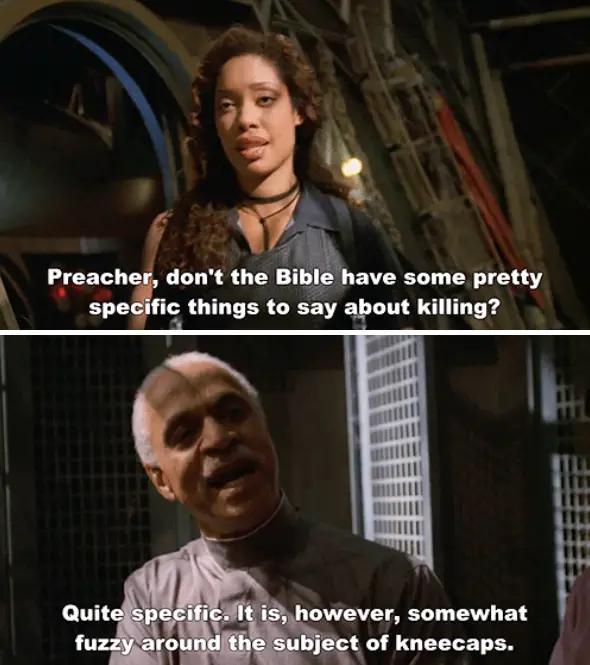
Occasionally, I would come back to a place and the enemies I had knocked out were back up and I’d have to fight them again, but that was actually a bonus for me. The downside is that I couldn’t cast as much “speak with dead”, since they weren’t, you know, actually dead. Maybe the next run will be a ‘lethal’ playthrough.
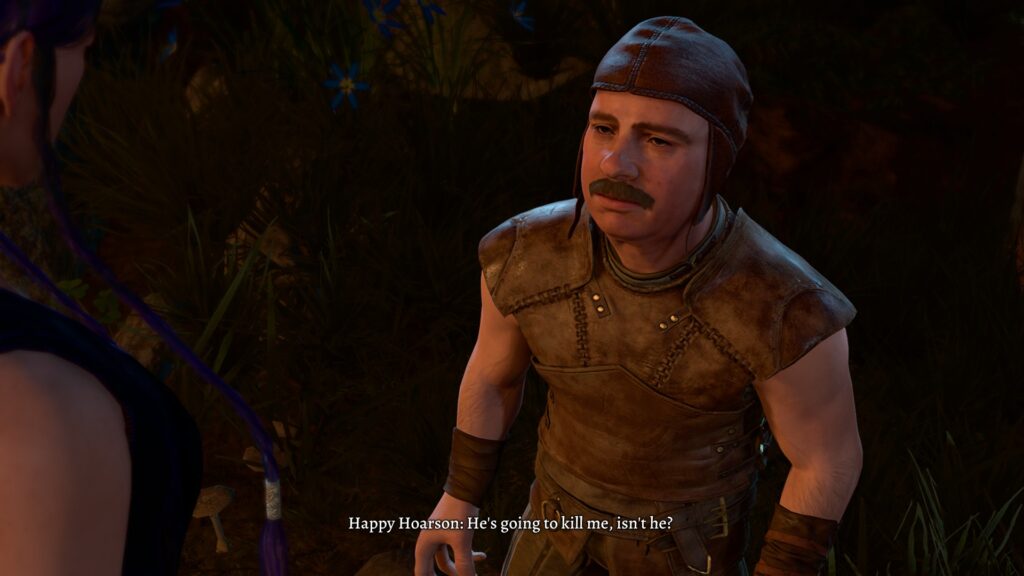
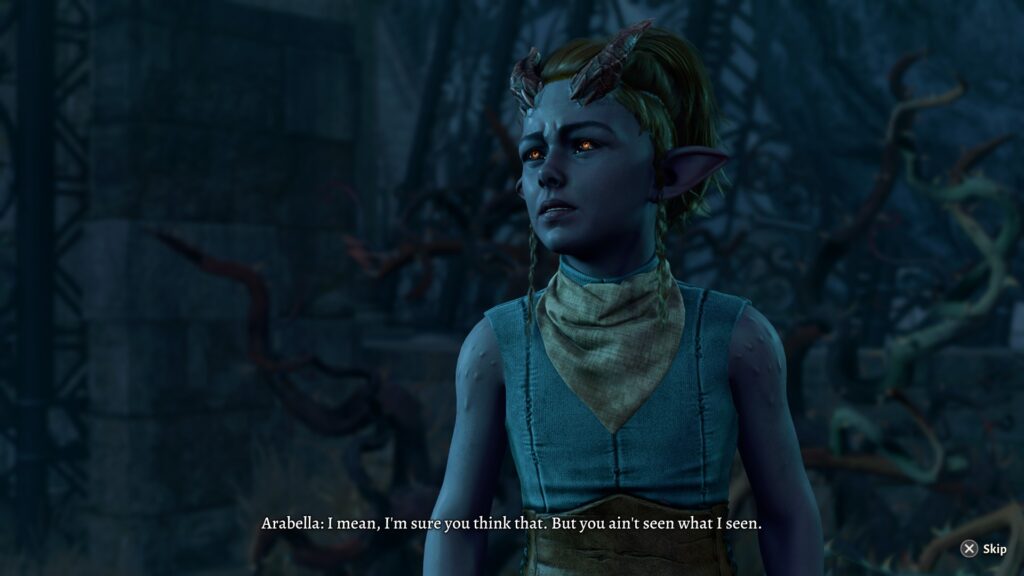
There is one side character that I have always accidentally killed in previous playthroughs. Well, the first couple of times were on purpose, since she is an enemy, and an awful person. But I learned that there is a difference in the dialogue if she stays alive, so I tried keeping her alive in subsequent playthroughs. However, she kept ending up as collateral damage in chain lightning spells, or an uncontrollable ally would kill her, or whatnot. Playthrough 6 is the first time I’d managed to keep her ungrateful ass alive, which fits in a non-lethal-ish playthrough.
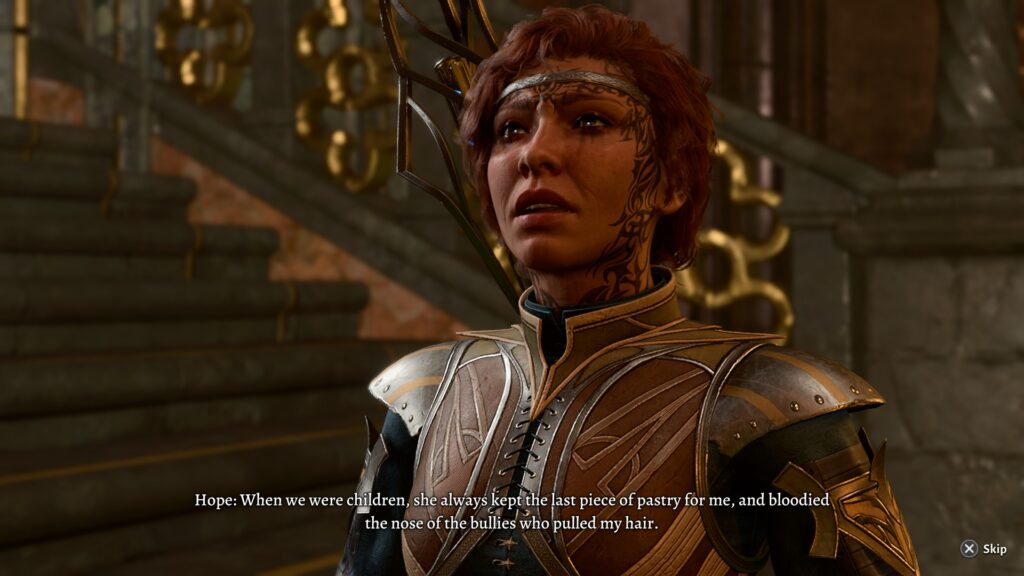
Persephone’s naivete and “believe everyone” also made my character very easy to trick or seduce, so she ended up sleeping with two characters that I normally hate. I have actually not had ANY of my characters sleep with these characters until this playthrough, and I still feel slightly slimy for it.
Other smaller goals:
There is a fancy bank in the city of Baldur’s Gate that has nine ‘high security vaults’, with nine keys scattered around the city. Some of those keys you will come across just as the story unfolding, but I’ve usually just lockpicked the vaults because I didn’t have the patience to find all of them, but this time gave myself the goal of getting all the keys first. Target achieved.
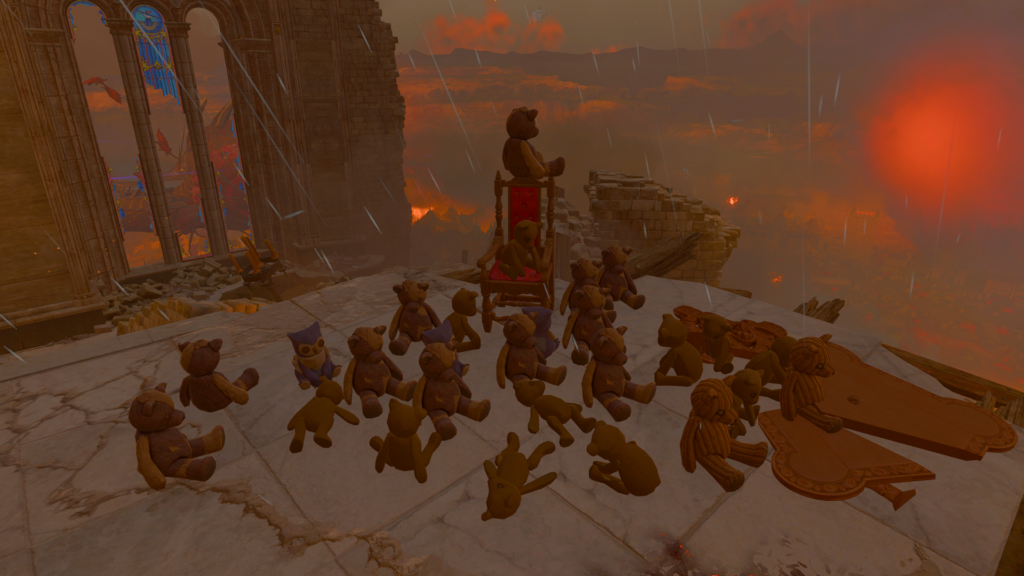
I also had her collect stuffed animals in the game, which again made sense for someone struggling to overcompensate against her dark urges. I found significantly more this time around! The final count was at 24 stuffed bears and 3 owlbear toys.
Strategy
I kept hearing about the darkness strategy and how overpowered it was. Bill extolled its virtues in a previous playthrough as well. I didn’t quite understand it, so I tried to make a party team around it. My Tav was a shadow sorceress, and that stumbled at the first hurdle — shadow sorceresses are only able to see through their OWN darkness. If I used a scroll or an arrow of darkness, she became blinded just like everyone else. It meant that she needed to be using her concentration on holding the darkness, which means that she isn’t using her concentration on twin-casting more powerful spells like haste or chain lightnings. This…seems like kind of a major design flaw for a character that revolves around darkness.
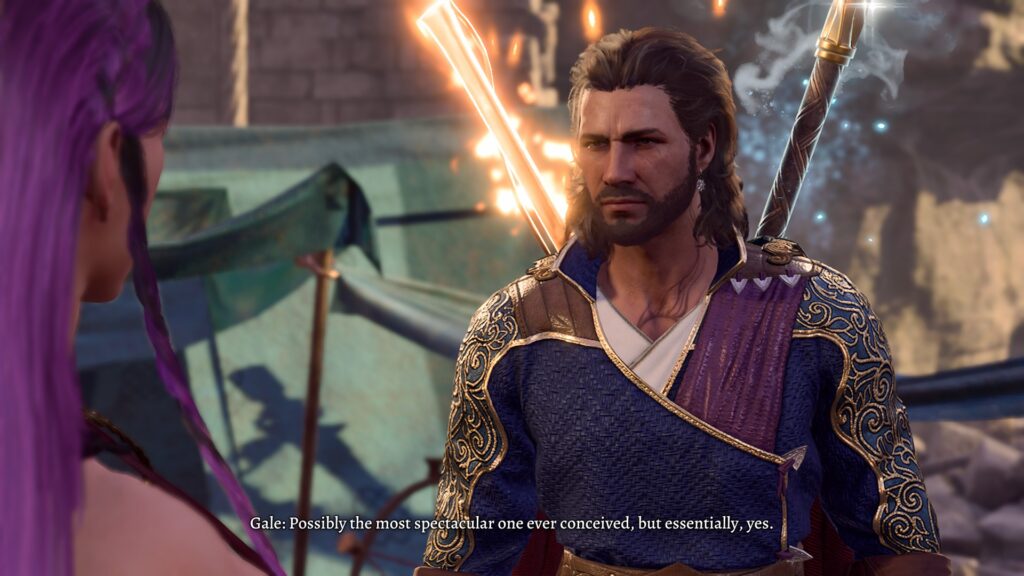
While Karlach was a shadow monk, I didn’t see it as playing any differently than a regular open hand monk. Her special subclass ability was being able to use a bonus action teleport herself into an area of darkness, but it only worked when she was STARTING from an area of darkness as well. Given that my Karlach had great mobility across the field, I preferred to have her run up most of the times and save that bonus action for more punching. She also does not have any particular protection from blindness until I gave her the Eversight Ring in the middle/end of act 2.
In fact, the only classes that come with darkvision are the warlocks that take ‘devil’s sight’ as one of their incantations. Due to this, Wyll was actually quite helpful in the party, since he could hide in the middle of the darkness and lob eldritch blasts out into the enemy.
Given that I didn’t want to re-spec everyone to have two levels of warlock, this was a little frustrating. It did work to have a dark cloud space to hang out in, because enemies don’t like to approach it or shoot into it, but it meant having to scurry in and out each turn. It was doable for my archers and spellcasters, but didn’t do great for my melee characters. It’s also much more defensive than I’m used to, since I’m extremely offensive.
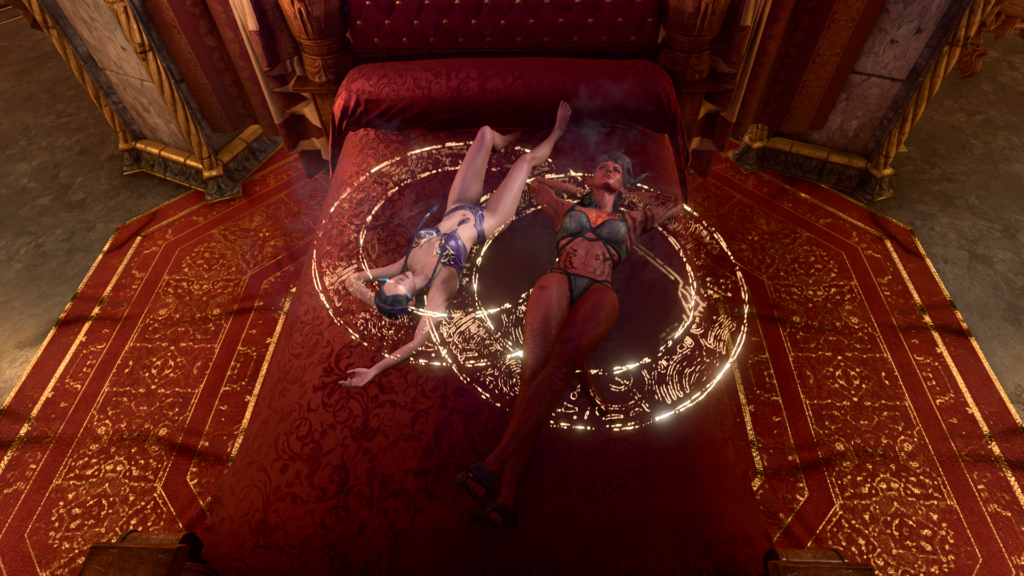
Since all of my previous main characters were weapon-focused (barbarian, paladin, archer, barbarian, swords bard), one of the challenges I gave myself this playthrough was to have an entirely magic-focused character. Astarion last game was a swords bard, which ended up being half and half, but I wanted Persephone to be entirely magic without melee. I had also not quite understood the point of sorcerers prior to this, so I chose that as her base class, and kept her mono-classed in it. It did hurt to see a melee attack do only 2 damage. I’ve had sneezes do more damage than that.
Aside from having spell slots, a sorcerer has the added mechanic of “sorcery points”, a separate resource that can be used to augment the spells — either by twinning a spell (target two creatures instead of one), making it faster (meaning you can cast it as a bonus action, giving you TWO spells per turn, or four if you combine it with the twinned haste!), or other changes. However, you have a fairly small amount of sorcery points too, so it just became another limited resource that made keeping track of things annoying. Previous sorcerer builds I’d tried on side companions were fun for a couple of turns, when I got to do those above things, but I quickly phased them out of the rotation when I got tired of tracking two types of slots.
This time around, Persephone was a Shadow Sorceress, and that came with a new mechanic that became a game-changer for me.
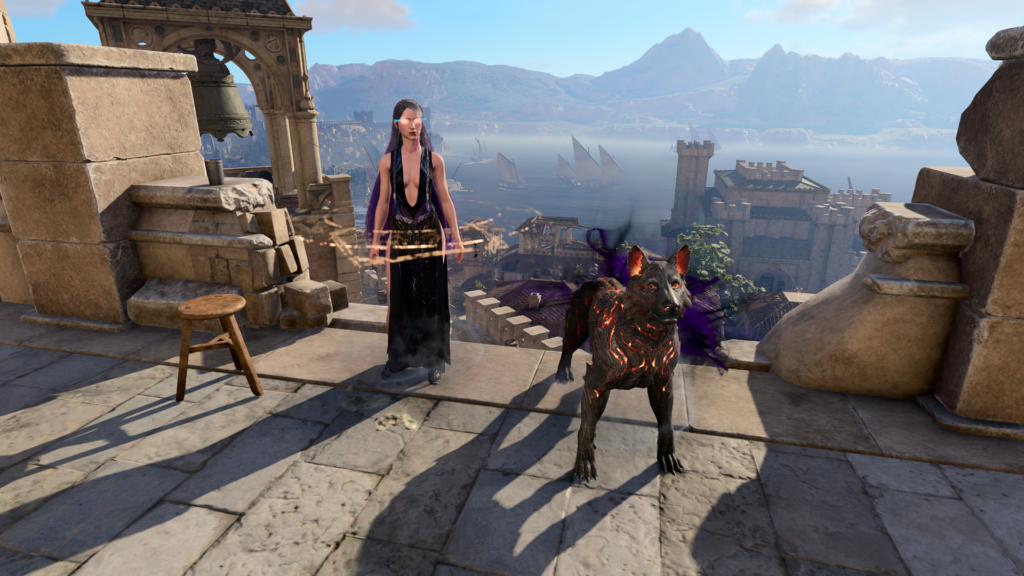
This is Nimbus, the shadow hound. Nimbus is a companion you can summon only as a level 6 shadow sorcerer, and he is a good boi. His bite attacks on the enemies have the chance to apply an elemental Omen to that enemy, in a random selection of the six elements: fire, ice, lightning, thunder, poison, or acid. If that enemy subsequently takes damage of that element, the sorcerer regains a sorcery point. After several rounds of experimentation, I also found out that the damage did not have to be from a spell. It could happen from an arrow, a bomb, or even just a damage rider previously applied to someone’s weapon. This made it much easier when it was an omen of acid, since acid spells are typically not worth the spell slot, but arrows of acid are a dime a dozen. I also found that it doesn’t have to be the sorceress herself doing the damage! It could be a companion or even the environment — the enemy just has to take damage of that type within the next two turns.
Is this a fast gain? No. Most of the good sorcery spells require three points, and this only regains one per turn. But this did mean that I could reload sorcery points just by attacking, and we all know how much I love attacking.

Romance
Dark Urge playthroughs still have the same romance options, but it unfolds somewhat differently due to the secret pasts and dark urges and all that. I wanted to see how that romance would unfold with a couple of different characters, specifically Karlach and Astarion, who are the ones I’ve had the most emotional connection with. I’d also heard that the writers had written the Dark Urge storyline to be romancing Astarion, so I was curious if there was something special about it. However, Bill’s Tav in his playthrough 3 had romanced Karlach, and he highly recommended it, so Karlach it was.

There was one scene in particular in Act 2 that was lovely, and funny, and a little horrifying. Karlach was an absolute gem during it, and made it totally worth it. Just unquestioningly loyal, but firm about you working out your shit. Out of curiosity, I looked up on YouTube how the other companions would react (aside from Astarion, so I don’t spoil myself), and Karlach was absolutely the best one to romance for that scene.
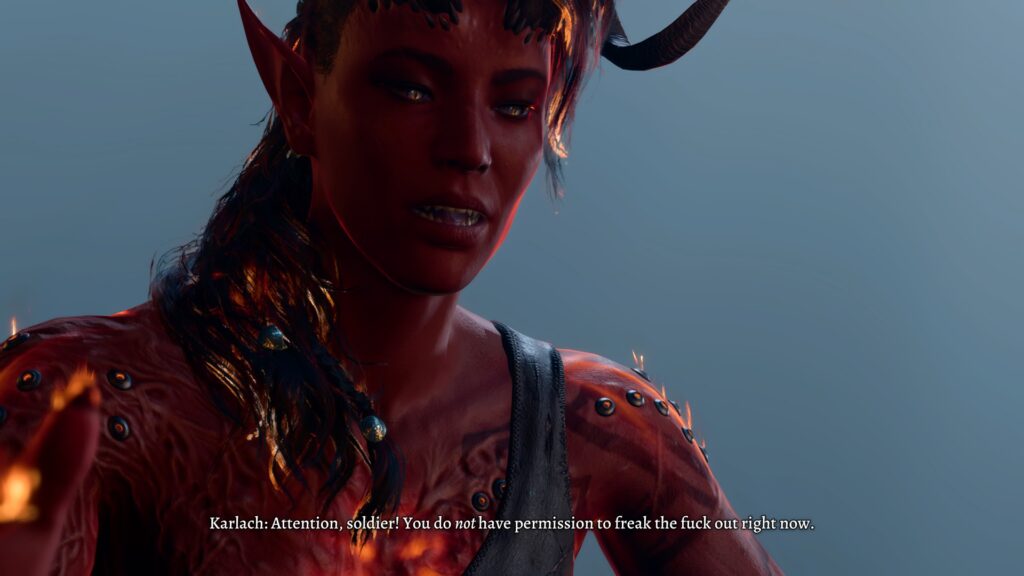
Karlach’s personality is enthusiastic, passionate, and loyal. She’s a brawler, a lover, and a kind-hearted friend, happy to just be alive. She wants to believe the best in people, even though she knows how bad it can get when people don’t live up to those beliefs. This makes her an apt companion to romance during a Light Urge playthrough, where your character is struggling really hard to cling to sanity and goodness.
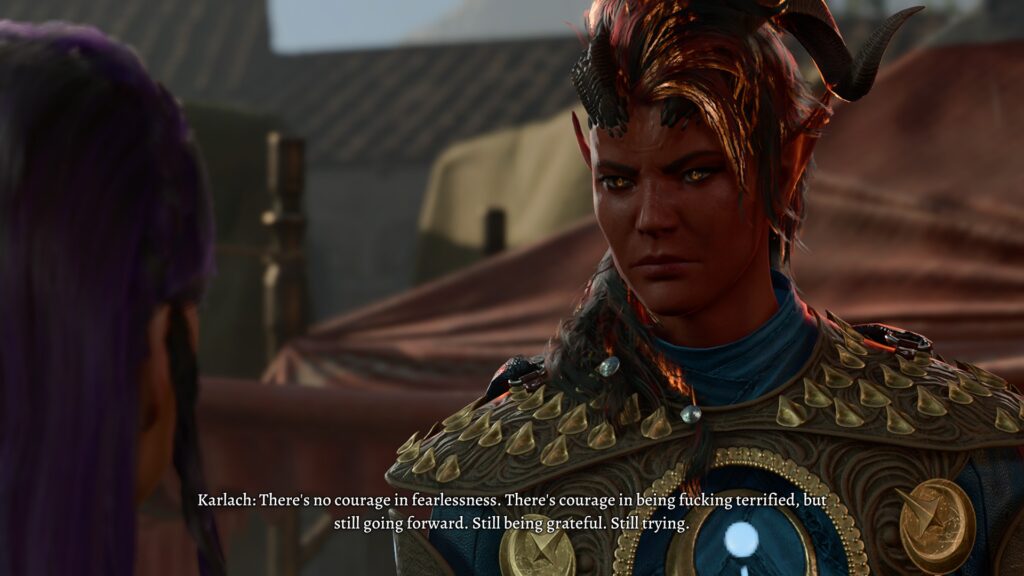
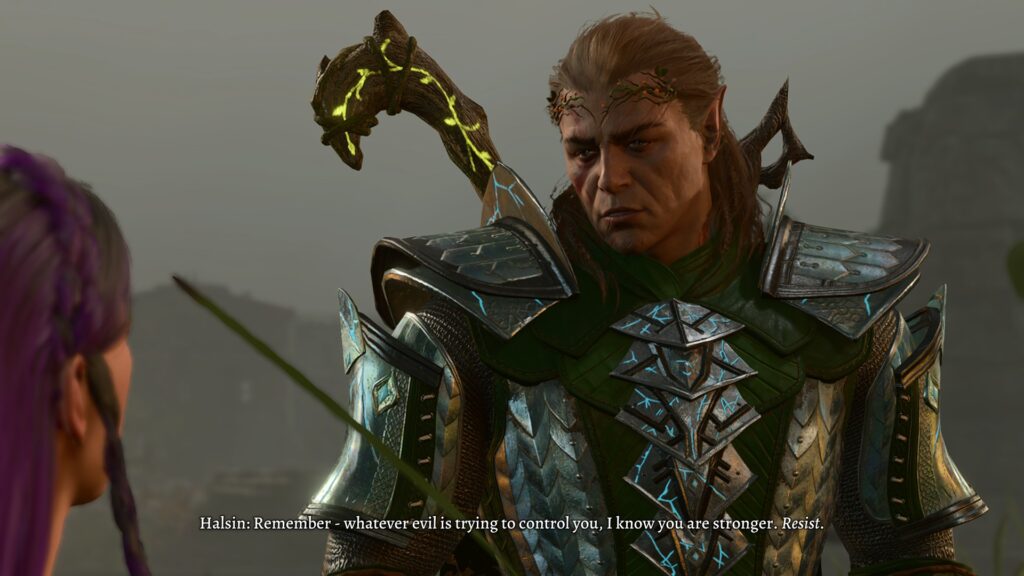
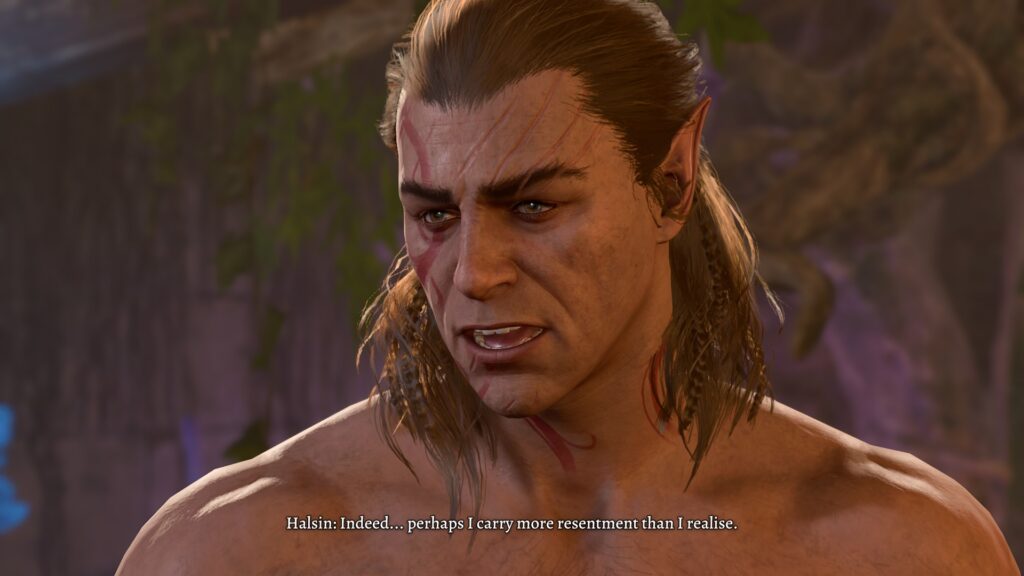
Since I knew from playthrough 1/14 that Karlach would be okay with it, I also romanced Halsin, making this the first time in three playthroughs that I was able to. Persephone’s rose-colored glasses tended to work well for trying to cheer up Halsin, even though he is correct on some of his observations of the city life.
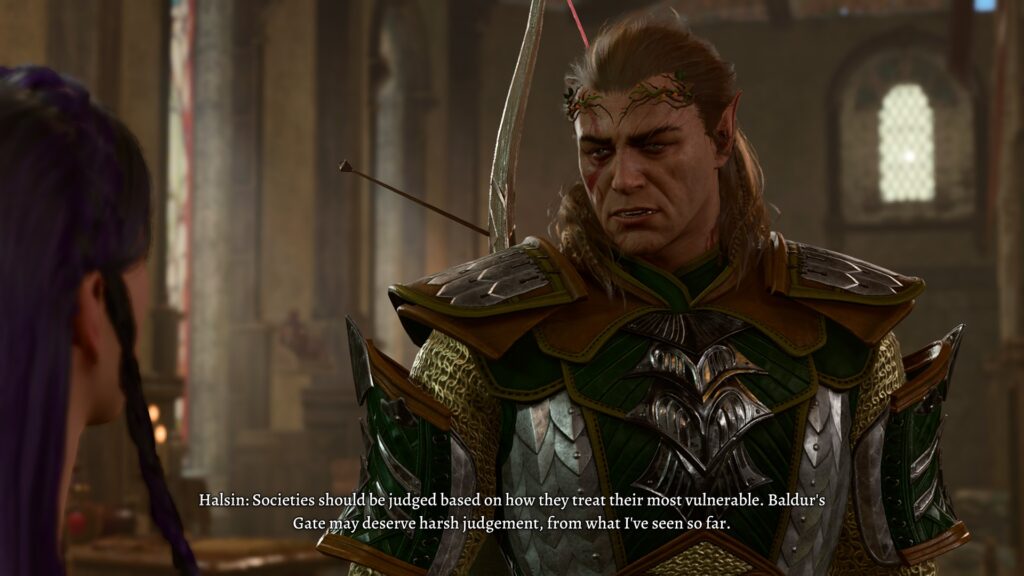
This meant that I had two of the most supportive companions as my romantic partners in this playthrough, which also felt right for a Resist Urge character. Light Urges also have more dialogue choices that are in the typical “the true treasure was the friends we made along the way” vibes, and that felt much more accurate by having really supportive sweethearts.
Hirelings
I like my hirelings to be a matched set, and at first I was going to have visitors to the Greek Underworld, but stuff happened and I ended up with these:
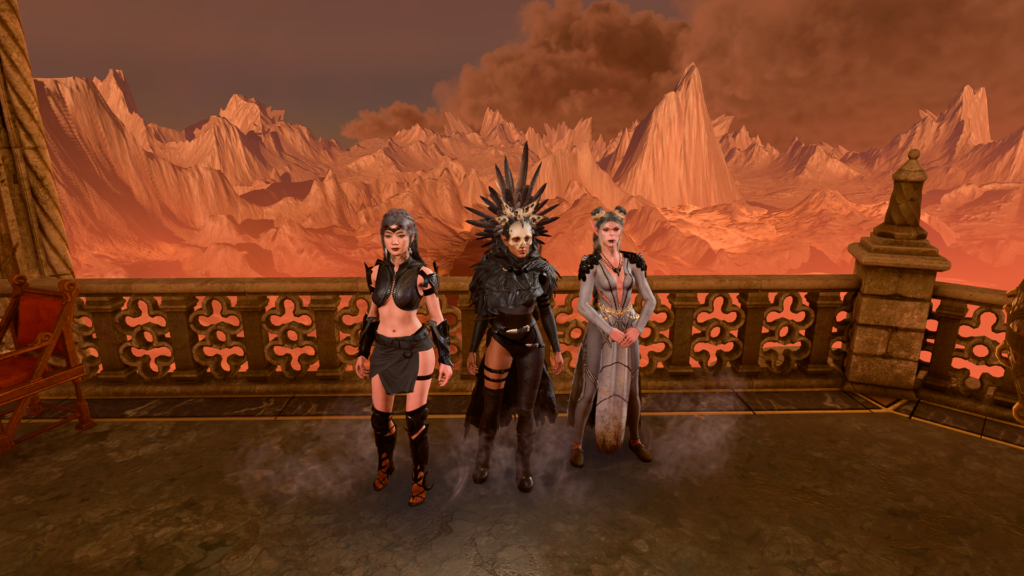 Praxidike, Ereshkigal, and Hel. My badass queens of the underworld (Greek, Sumerian, and Norse, respectively). Here all wearing fancy clothes/modded outfits.
At this point, the later parts of the game are getting easy enough (even on non-modded runs) that I probably don’t need the hireling buffs, but I do like having my matched sets.
Companions
I’ve made no secret that one of the characters I can’t really stand is Shadowheart. I just find religious zealots to be dull, and she’s so tedious about her Lady Shar until over halfway through the game. Since I was playing someone gullible and without much nuance, when it came time to make the crucial plot decision for her, I told her straight up that she shouldn’t do it. She did not respond well to this, and I ended up killing her.
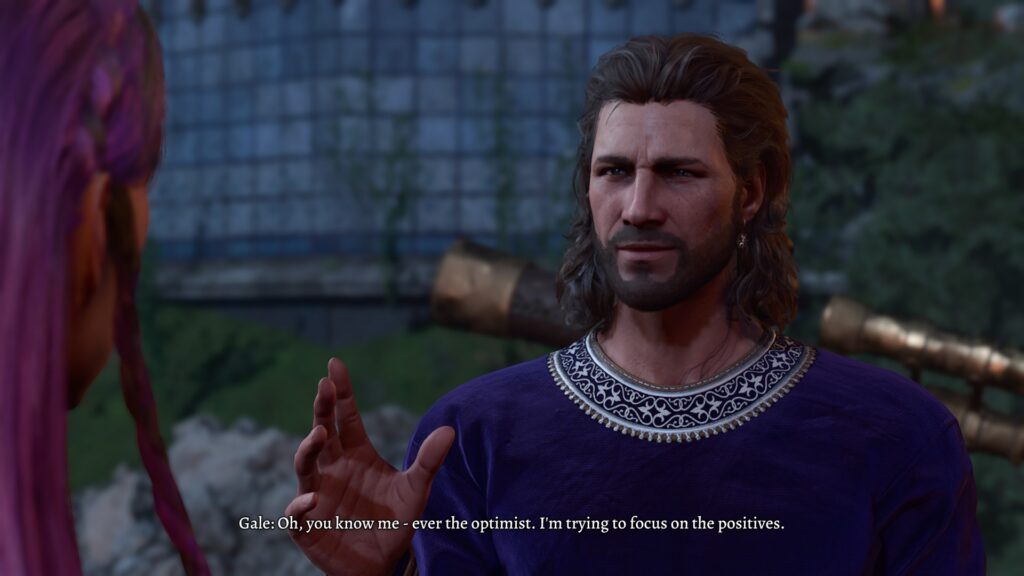
With Shadowheart gone, I gave her radiant gear to Gale to combine with his Magic Missile build, and it was surprisingly powerful. My issue with the magic missile spells have always been that despite the increasing number of darts he can cast with each level, each one only does a tiny amount of damage. Great when I need to simultaneously kill a bunch of enemies with 1 HP, but tedious otherwise, not to mention it easily eating up spell slots. However, with the radiant gear and a couple of other equipment pieces in place, he was able to do consistently high amounts of damage, to the point that it even overrode my usual choice spells like Fireball and Chain Lightning. Maybe I’ll keep this in mind for future playthroughs.
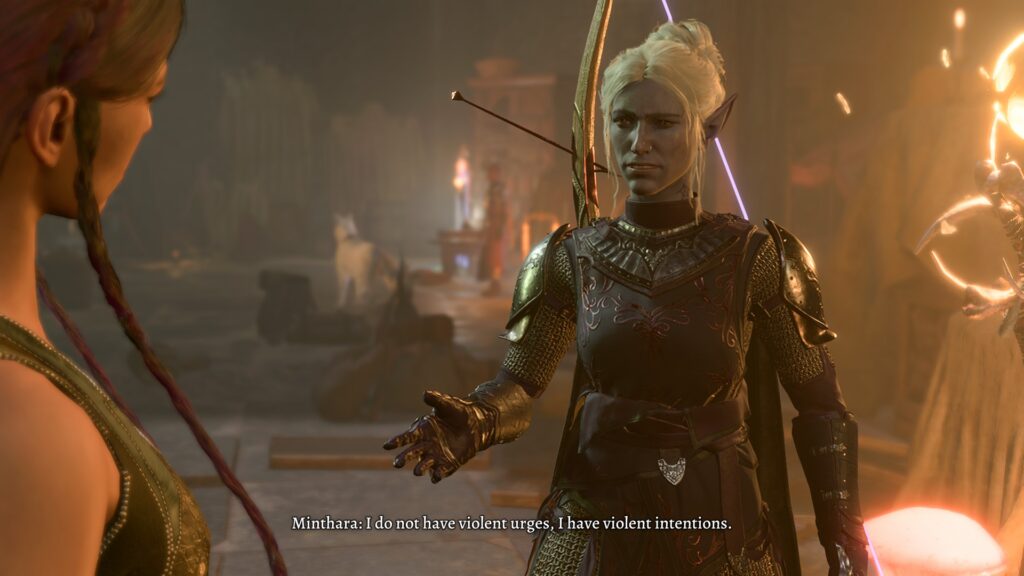
Another side effect I should have seen coming was that I would not do well with the more self-absorbed and pragmatic companions: Minthara and Astarion. For my Dark Urge playthrough, they were my ride or dies, because they were very much on board with seizing power. In Light Urge, I gave up power whenever possible, tried to save everyone, and chose the ‘goody-goody’ options. Predictably, it was like whack-a-mole in the upper left corner with their “disapprove” judgments. However, Minthara is a little easier to gain back some approval points by choosing dialogue options supporting her vengeance against those that wronged her (which Real Angela is very much for). Astarion has fewer direct dialogue options that way, and I also flubbed a fight that would have gotten me approval earlier in the game.
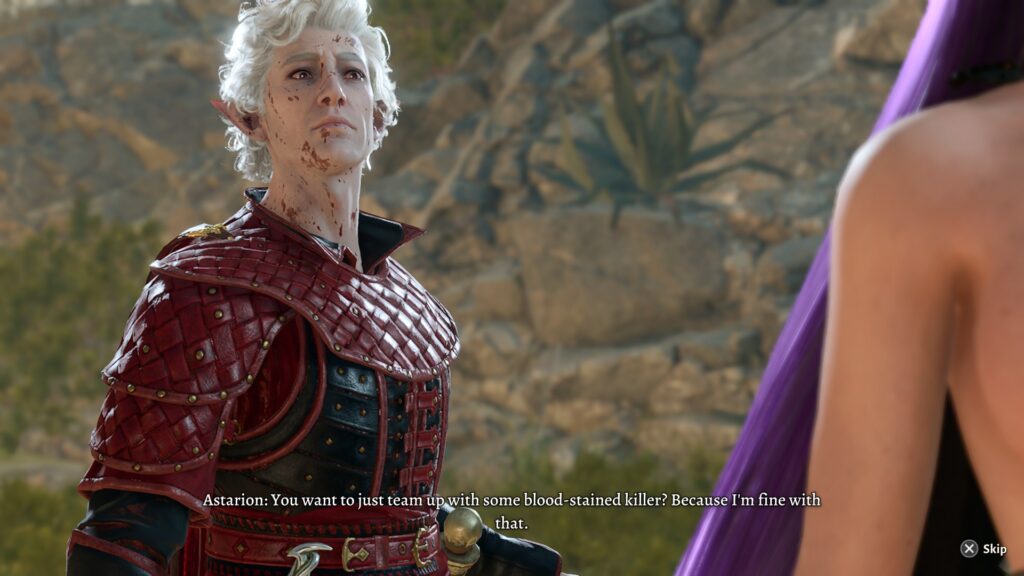
As a result, by the time we got to the crucial decision on “choose to break your generational trauma” or “kill thousands of innocents, lean into your power-hungry nature, and turn into the next version of your abuser”, he elected for the latter, and I did not have enough approval with him to persuade him otherwise. So I ended up with the same version of Astarion that I raged against in 1/14 — screw this, die screaming, if I can’t be free, no one else can either, storm off, yadda yadda. At least this time he did not take all my gear with him.
Bill points out that Astarion probably did give me back my gear in 1/14, but either I was too much of a noob to realize it, was too infuriated to double check, or I had used him so infrequently that he didn’t really have any gear to return so it just got lost in my inventory. In hindsight, I admit that all three are not only possible, but probable.
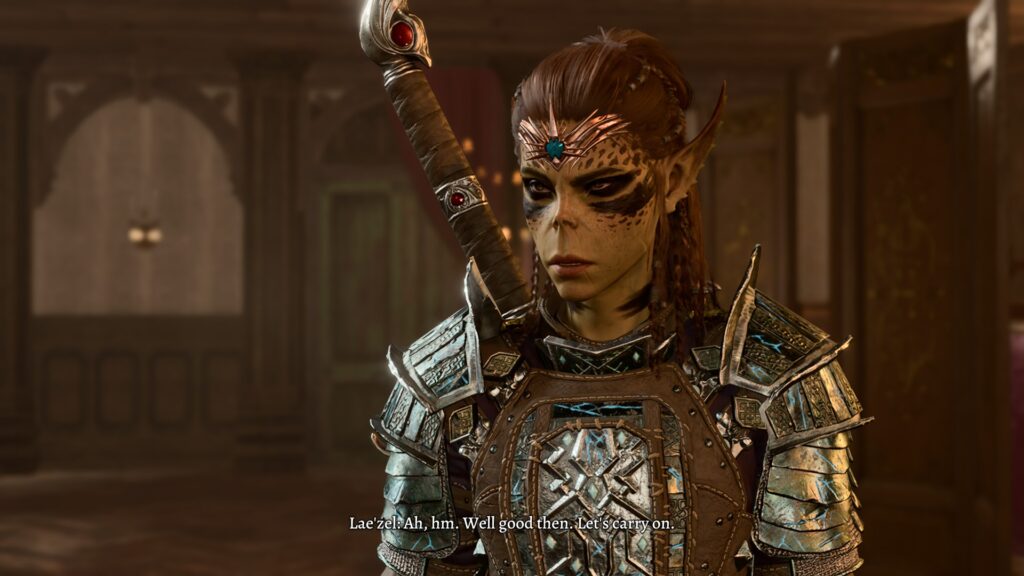
I tried something new with Minthara this time, a build I saw on Cephalopocalypse’s video: the Tyrannical Taunter. Was this because I loved the idea of Minthara’s confidence drawing people to her and then making them kneel before her? Mostly. The purpose of the build is to have the party member “challenge” everyone in range, making them all charge to her, and then she knocks them down like bowling pins. I really like the concept but it never quite seemed to work out. She drew enemies fine, but wasn’t consistent at smacking them down. This meant that they just whaled on her over the next few turns, and even in heavy armor, she went down a few times. I tried to give her a few levels in barbarian in order to get ‘tiger’s bloodlust’ and knock them prone, but the heavy armor she wears as a paladin impeded her rage. It feels like I’m missing something that would unlock a lot of potential, so I have tasked Bill with trying it out and giving his opinion.
Changes
As I found out in playthrough 3, there are some pretty big story reveals in a Dark Urge playthrough. It doesn’t change the story beats, and the plot still progresses, but there are some doozies that affect the story and the companions.
There is a Big Choice that occurs in Act 3 that basically decides whether your Urge character is Dark or Light. With Oleandra, I made the Dark choices, with horrifying, horrifying consequences. With Persephone, I rejected the choice and got an entirely new cutscene. The length and depth of this cutscene tells me that this is what the writers were happy to have someone choose, because it’s a cool as hell cutscene, drawing in a side character that we don’t usually see very often.
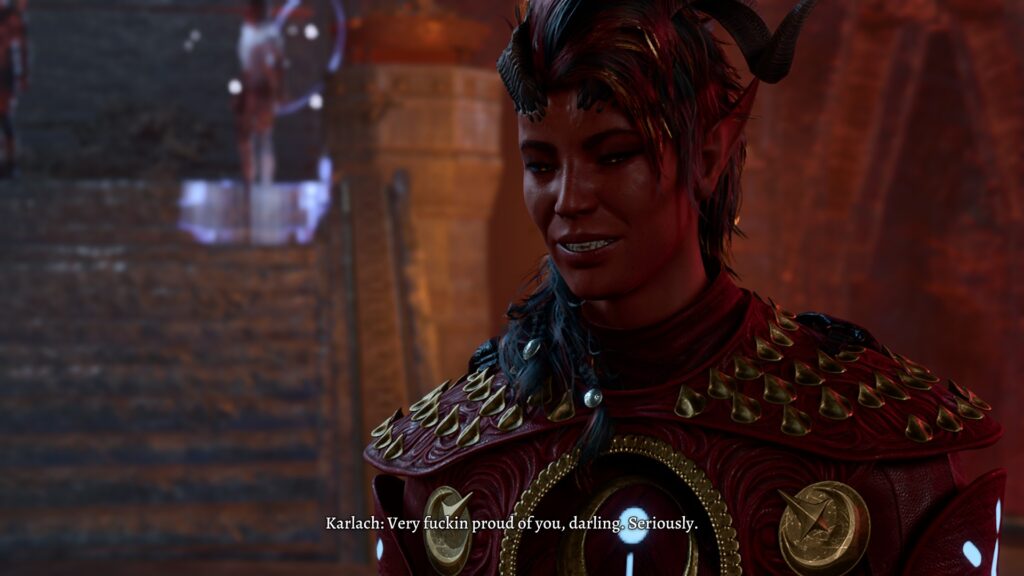
It was cool enough that I’ll be happy to make the same choice again when I do my second Light Urge playthrough and romance Astarion.
I was somewhat disappointed that it doesn’t seem to change any of the endings of the game. When I played Dark Urge, there were SEVERAL new endings available. (I remember crying as I kept reloading hoping to get something different) With Light Urge, you get the exact same ending that you get with a Tav. There is one more dialogue option that is available at the very end, but that’s it. I recognize that the awesome scene after the Big Choice is probably the stand-in for those changes, but it is still a bit bit of a letdown, since Dark Urge had so many possible bad endings.
One of the other things I managed to do this game was to save the cluster of hostages in Act 3 that I’d let die for the past three playthroughs. Oleandra was evil and wanted them dead, Karlach made a separate plot decision that made it impossible to save them (without meta-gaming), and Astarion couldn’t be arsed to save them. So it was one of my goals this game to actually do it. It also worked with the non-lethal strategy.
However, there is a reward that is supposed to happen at the end of it that I did not end up getting. I don’t know if it was a bug (always possible) or if it was because I didn’t get a “perfect” score in how the game judges you for it. Ah well. Maybe next time.
Takeaway
I felt much more connected with playthrough 6 than I have with my previous few. It made me feel a lot better about it, since I was really hoping that I hadn’t shot myself in the foot when it came to my BG3 obsession. I was emotionally invested and experienced enough new things that I felt good about the amount of hours I’ve put into this game.
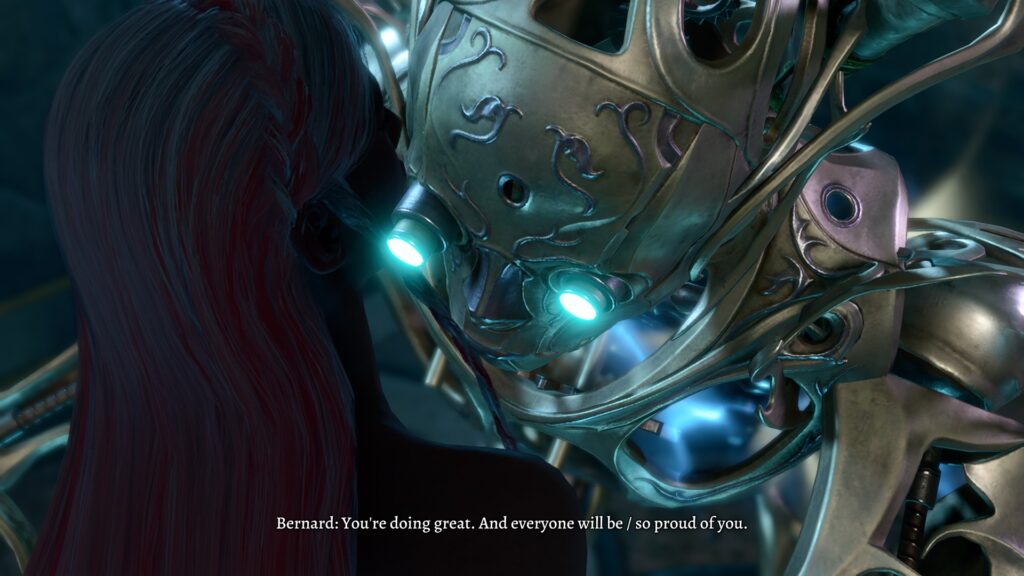
After six playthroughs though, I think I’ve basically tried most of the ‘endings’ for the companion characters. This means that there won’t be as many plot-related reasons to replay the game, but I can still give myself smaller goals for repeat playthroughs. Just someone please warn me if I start making giant photo-driven storyboards based on an egregore.
Pingback: Real Angela’s playthrough 7 – Druid Honeylocust – The Argothald Journal